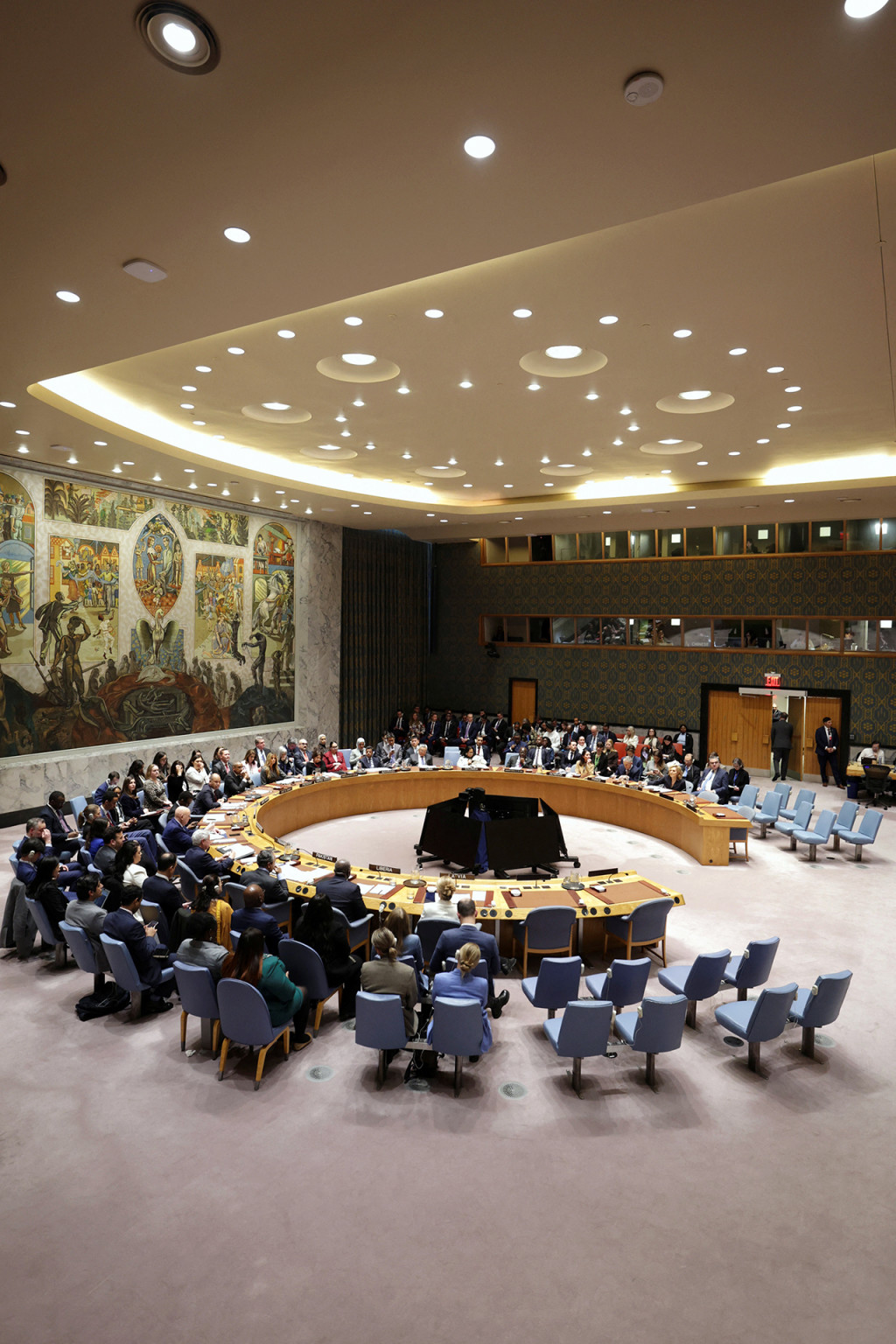
What Does the UN Security Council Do?
Updated
The UN Security Council is the principal global body for maintaining international peace and security, but it has long faced calls for reforms—including greater regional representation and expanded membership—to better address modern challenges.
- The fifteen-member UN Security Council seeks to address threats to international security. Its five permanent members—the United States, China, France, Russia, and the United Kingdom—each have veto power.
- The Security Council fosters negotiations, imposes sanctions, and authorizes the use of force, including the deployment of peacekeeping missions.
- Critics say the Security Council’s outdated composition undermines its legitimacy and the increasing use of the veto inhibits its functionality—as seen in its paralysis over the wars in Gaza, Iran, and Ukraine.
What are backgrounders?
Authoritative, accessible, and regularly updated Backgrounders on hundreds of foreign policy topics.
Who Makes them?
The entire CFR editorial team, with regular reviews by fellows and subject matter experts.
Introduction
The UN Security Council (UNSC), the United Nations’ principal crisis-management body, is empowered to impose binding obligations on all 193 member states to maintain international peace and security. The Security Council—comprising five permanent members and ten elected members—meets regularly to assess threats to international security, including arms proliferation, civil wars, natural disasters, and terrorism. In response to these threats, it can impose sanctions, establish peacekeeping missions, and, in certain instances, authorize the use of force.
Structurally, the Security Council has remained largely unchanged since its founding in 1945, aside from an expansion from eleven to fifteen members in 1965 that fueled debate over the need to reform it to improve regional representation and reflect modern geopolitical realities. In recent years, members’ competing interests have often stymied the Security Council’s ability to respond to major conflicts and crises, including the COVID-19 pandemic, Russia’s 2022 invasion of Ukraine, the Israel-Hamas war, and the Iran war. The paralysis has renewed long-standing concerns about the Security Council’s effectiveness and ability to address twenty-first-century challenges.
What is the Security Council’s structure?
The Security Council has five permanent members—the United States, China, France, Russia, and the United Kingdom (UK)—collectively known as the P5. Any one of them can veto a resolution. The P5’s privileged status has its roots in the United Nations’ founding in the aftermath of World War II, when Allied powers sought to maintain international peace and prevent future global conflicts. The Security Council also has ten elected members, which serve two-year, nonconsecutive terms, but lack veto power.
As the Allied powers planned the United Nations, U.S. President Franklin D. Roosevelt insisted on including the Republic of China (Taiwan), envisioning a postwar security order presided over by “the four policemen”: the United States, China, the Soviet Union, and the UK. (In 1971, the People’s Republic of China—mainland China—replaced the Republic of China at the United Nations and on the Security Council.) Meanwhile, British Prime Minister Winston Churchill, recognizing in France a European buffer against potential German or Soviet aggression, championed its restoration to great-power status and inclusion in the P5.
The Security Council’s presidency rotates on a monthly basis among the fifteen members. This ensures some agenda-setting influence for its ten nonpermanent members, which are elected by a two-thirds majority vote in the UN General Assembly. The main criterion for eligibility for nonpermanent membership is contribution “to the maintenance of international peace and security,” often defined by financial or troop contributions to peacekeeping operations or leadership on matters of regional security likely to appear before the Security Council.
A secondary eligibility consideration—“equitable geographical distribution”—gave rise to the regional groups the United Nations has used since 1965 for elections: the African Group has three seats; the Asia-Pacific Group, two; the Eastern European Group, one; the Latin American and Caribbean Group, two; and the Western European and Others Group (WEOG), two. Each has its own electoral norms. An Arab seat alternates between the African and Asia-Pacific blocs by informal agreement. Turkey and Israel, the latter of which has never served on the Security Council, caucus with the Western European and Others Group.
Subsidiary organs that support the Security Council’s mission include ad hoc committees on sanctions; counterterrorism; and nuclear, biological, and chemical weapons; as well as the international criminal tribunals for Rwanda and the former Yugoslavia. Within the UN Secretariat, the Department of Peace Operations and the Department of Operational Support manage field operations. The Peacebuilding Commission, established in 2005 as a repository of institutional memory and best practices, serves an advisory role.
What is the veto, and how does it work?
The veto gives each member of the P5 the power to block any substantive resolution or decision that threatens their national interests, security, or foreign policy objectives. If a permanent member disagrees with a resolution but does not want to cast a veto, they can choose to abstain.
Since the UN Charter came into force in 1945, members of the P5 have exercised their veto power to varying degrees. Counting the years when the Soviet Union held its seat, Russia has been the most frequent user of the veto, blocking 162 resolutions since the Security Council’s founding, as of August 2026. The United States has used the veto ninety-five times, often to protect Israel from Security Council decisions.
China has vetoed fewer resolutions, but has done so more frequently in recent years; Russia joined China in more than three-quarters of those votes. By contrast, neither France nor the United Kingdom has exercised its veto power since 1989, and each has advocated for other P5 members to use it less.
What are its tools for conflict management?
The Security Council aims to peacefully resolve international disputes in accordance with Chapter VI of the UN Charter, which authorizes it to call on parties to seek solutions via negotiation, arbitration, or other peaceful means. Failing that, Chapter VII empowers the Security Council to take more assertive actions, such as imposing sanctions or authorizing the use of force “to maintain or restore international peace and security.” Peacekeeping missions are the most visible face of the United Nations’ conflict-management work; as of 2026, the Security Council oversees eleven operations across three continents.
The Security Council acted infrequently in the four-and-a-half decades between its founding and the end of the Cold War, often constrained by the U.S.-Soviet rivalry. During that time, it authorized eighteen peacekeeping operations [PDF]. In the post-Cold War period, the Security Council became significantly more active, greenlighting dozens of peacekeeping operations after the dissolution of the Soviet Union in 1991. Many of these operations responded to failing states, civil wars, or complex humanitarian emergencies, deploying to conflict zones in the absence of ceasefires or parties’ consent. Under more muscular mandates, peacekeeping missions have combined military operations—including less restrictive rules of engagement to protect civilians and refugees—with civilian tasks such as policing, electoral assistance, and legal administration. Developing nations provide the lion’s share of personnel.
However, since Russia’s annexation of Crimea in 2014, tensions have flared between Russia and the Western members of the P5, leading to concerns that the Security Council is less able to defuse crises. The Security Council’s response to Syria’s civil war underscored these tensions: Russia, sometimes joined by China, used its veto sixteen times to block resolutions aimed at holding the Bashar al-Assad regime accountable for atrocities documented by UN sources, according to a 2020 report [PDF] by the Syrian Network for Human Rights. Relations between the Western members of the P5 and Russia worsened further after Russia invaded Ukraine in 2022, and Moscow has since used its veto power to block several Security Council resolutions condemning the war.
Regional organizations have played an increasingly important role in peacekeeping and conflict resolution, in some cases prodding the Security Council to take action, and acting as subcontractors on its behalf in others. For instance, the Security Council authorized the use of force in Libya in 2011 after the Arab League called for a no-fly zone, which NATO then executed. Experts also highlight the increased will and capacity of the African Union, which has partnered with the United Nations to carry out missions in Somalia and the Darfur region of Sudan.
Despite these partnerships, the Security Council has still sometimes struggled to effectively respond to emerging global crises. At the start of the COVID-19 pandemic in 2020, it passed Resolution 2532 [PDF], which called for a ninety-day “humanitarian pause” in armed conflicts worldwide, with an exception for conflicts against designated terrorist groups. However, the effect was minimal, with just one conflict party—Colombia’s National Liberation Army—explicitly citing it in an offer to end hostilities.
What sanctions measures are available to the Security Council?
The sanctions provisions in Article 41 of the UN Charter, dormant during much of the Cold War, have become one of the Security Council’s most frequently employed tools. The UNSC imposed mandatory international sanctions just twice prior to the fall of the Berlin Wall in 1989: in the form of a trade embargo against Southern Rhodesia (now Zimbabwe) in 1966, and an arms embargo against apartheid-era South Africa in 1977. The Security Council began to make regular use of sanctions in the early 1990s, starting with Iraq, the former Yugoslavia, and Haiti. There are currently fifteen sanctions regimes in place.
So-called smart sanctions emerged in the mid-1990s as an alternative to what UN Secretary-General Kofi Annan (1997–2006) called the “blunt instrument” employed in Iraq following the first Gulf War. Smart sanctions target discrete economic and political matters and specific individuals deemed threats to international security. Arms embargoes, travel bans, asset freezes, and import/export bans on individual goods, rather than comprehensive embargoes, are now the norm.
But targeted sanctions have raised human rights concerns of their own, and they infrequently result in changed behavior. To be delisted, blacklisted individuals, entities, and items—often those with dual uses, such as agricultural or medicinal applications—require an affirmative vote of sanctions committees, in which all Security Council members are represented.
What role does the Security Council play in authorizing military force?
The UN Charter generally prohibits the use of force except in cases of self-defense or when authorized by the Security Council. However, members and coalitions of countries have often used military force outside of these contexts.
NATO’s seventy-eight-day air campaign in Kosovo in 1999 is the most-cited case in favor of the legitimacy of humanitarian interventions that lack Security Council authorization. After Russia indicated it would block authorization in the Security Council, NATO forces undertook a bombing campaign to protect Kosovar Albanians from ethnic cleansing by Serbs in rump Yugoslavia. The Independent International Commission on Kosovo later deemed the intervention “illegal but legitimate.”
The emergence of the Responsibility to Protect (R2P) in the early 2000s renewed debate over whether humanitarian intervention could justify the use of force without Security Council authorization. The doctrine, adopted by the UN General Assembly in 2005, stipulates states have a responsibility to protect their populations from crimes against humanity; the “international community” has a responsibility to use peaceful means to protect threatened populations; and when a state “manifestly fails” to uphold its responsibilities, the international community should take collective action through the UNSC, in accordance with the UN Charter.
Successive U.S. administrations have argued that humanitarian intervention can be legitimate with the backing of regional organizations or “coalitions of the willing.” But Secretary-General Ban Ki-moon (2007–2016) rejected this position in 2008, saying R2P, “does not alter, indeed it reinforces, the legal obligations of member states to refrain from the use of force except in conformity with the Charter.” Debate over the use of force resurfaced around the 2011 NATO-led Libya intervention and during the Syrian civil war, and has intensified following Russia’s invasion of Ukraine. Moscow invoked the protection of Russian nationals as part of its justification for the war—a rationale legal experts say clearly violates international law.
What criticisms does the Security Council face?
Criticisms of the Security Council are numerous and include:
Outdated structure. Many critics, including member states from the developing world, contend that the Security Council’s structure does not reflect current geopolitical realities. Its membership was expanded from six elected members to ten in 1965, and in 1971, the People’s Republic of China took the permanent seat previously occupied by the Republic of China (Taiwan). Since then, the body’s composition has remained unchanged. Regional powers such as Brazil, Germany, India, Japan, Nigeria, and South Africa have sought to enlarge the Security Council or secure permanent seats of their own. In 2021, Britain announced its support for Germany receiving a permanent seat. In 2023, China, France, and Germany called for two permanent seats for African countries on the Security Council.
The debate about expansion is often framed as a trade-off between legitimacy and efficacy. Saudi Arabia took the unprecedented step of declining a nonpermanent Security Council seat in 2013, announcing a day after it was elected to a 2014–15 term that it would not serve in the absence of institutional reform.
Veto and political paralysis. Other critics of the Security Council include advocates of R2P, who say the veto gives undue deference to the political interests of the P5, leading to inaction in the face of mass atrocities. Russia’s vetoes of Security Council action on Ukraine, for instance, have spurred calls to kick Russia out of the P5. This criticism predates the 2022 invasion; Zeid Ra’ad al-Hussein, the UN human rights chief from 2014 to 2018, repeatedly criticized the outsize power of the veto-wielding member states, warning that without institutional change the United Nations could collapse. Critics also argue the threat of a veto alone can prevent action, allowing P5 members to shape Security Council outcomes even when no vetoes are cast.
It is not just P5 members who have demonstrated reluctance to use force. Aspirants to permanent-member status, including Brazil, Germany, and India, have generally opposed interventions as violations of sovereignty. While R2P advocates criticize the Security Council and its members for a lack of political will, other critics question the United Nations’ broader conflict-management capacity, often citing 1990s peacekeeping crises in Somalia, the former Yugoslavia, and Rwanda.
Peacekeeping failures. In the shadow of its 1993 experience in Somalia, in which eighteen U.S. Army Rangers were killed in an attempt to capture a warlord, the United States was among the powers that prevented a robust UN response in Rwanda. Despite alarming reports received by the Security Council in 1994, it declined to respond as an estimated eight hundred thousand people were killed in a genocide committed against ethnic Tutsis. The United Nations also suffered major failures in the Balkans, where peacekeepers were used as human shields in the siege of Sarajevo and failed to protect civilians in the designated safe area of Srebrenica from massacre.
Experts say these missions were undermined by both logistical and political problems, including muddled mandates, inadequate resources, and the parochial interests of major powers. In an effort to combat these and other problems, delegates have advocated for more transparency and efficiency in the Security Council’s decision-making process, as well as more interaction with the General Assembly.
Peacekeeping mandates continue to be scrutinized for their scope, cost, and cases of peacekeeper misconduct. A 2000 self-evaluation, commissioned by Annan and led by veteran envoy Lakhdar Brahimi, said the United Nations had “repeatedly failed,” and would continue to do so absent “significant institutional change and increased financial support.” Peacekeepers deployed to Haiti in the wake of the devastating 2010 earthquake, for example, faced intense criticism for being linked to a cholera outbreak that killed approximately ten thousand people between 2010 and 2019.
What are the prospects for Security Council reform?
Despite broad agreement among UN member states that the Security Council’s makeup is outdated, the prospects for substantial reform remain slim. Amending the UN Charter to change the Security Council’s composition or voting rules requires a two-thirds majority in the General Assembly and domestic ratification by two-thirds of member states—including all five permanent members, which are unlikely to support measures that would curb their own influence.
Proposals also divide member states over which countries or regions should gain greater representation. Some call for additional permanent members, while others call for a new class of elected seats with the possibility of renewal. In the absence of UN Charter reform, smaller states have advocated for procedural changes, including greater transparency and closer consultations with troop-contributing countries.
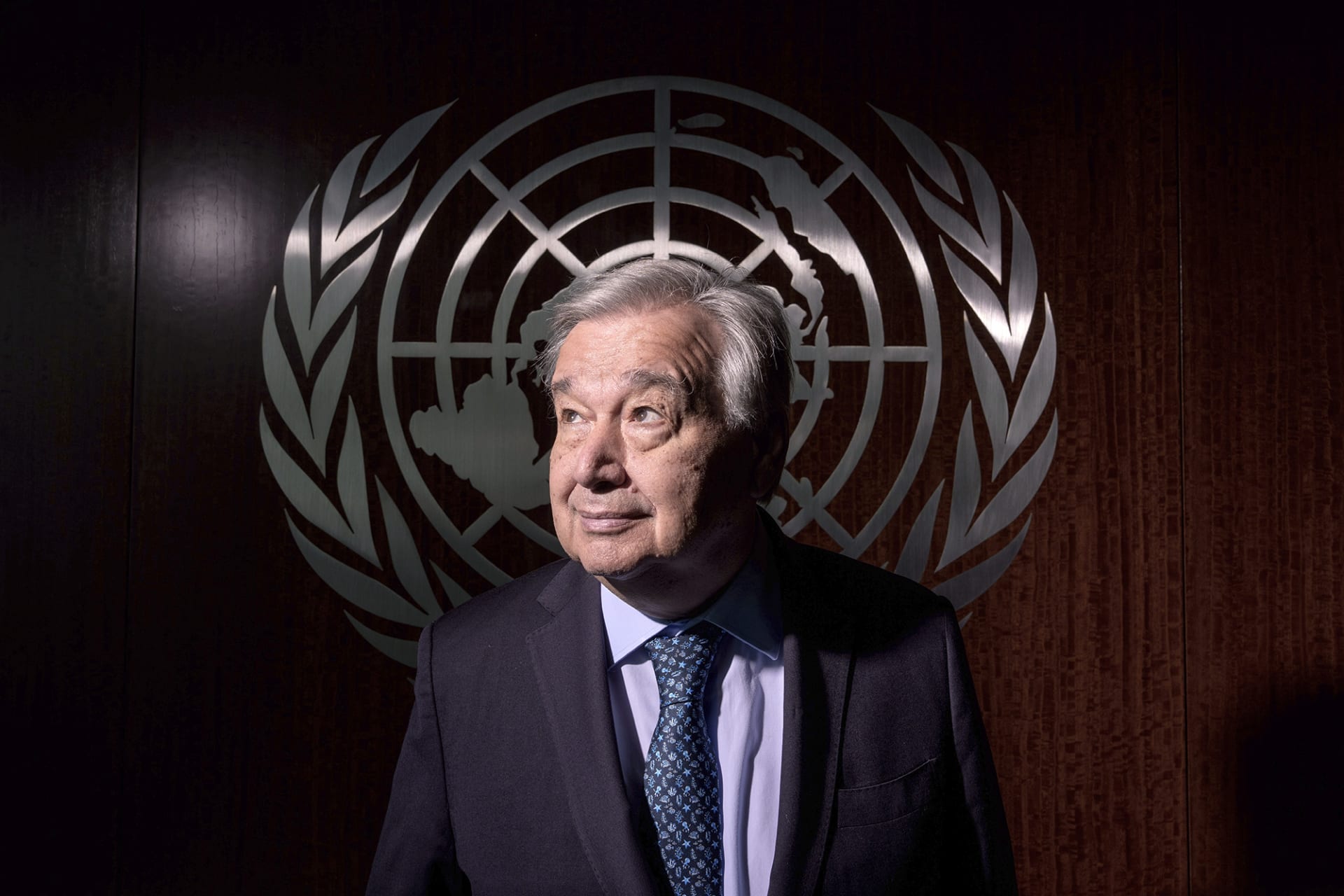
UN Secretary-General António Guterres (2017–2026) has long acknowledged the need for reforming the Security Council, describing it as “a serious problem of legitimacy and of ineffectiveness,” and calling for expanded membership to better reflect global demographics.
The position of the United States, a permanent member and major financial contributor to the United Nations, further complicates reform prospects. In 2022, UN General Assembly President Csaba Korosi and U.S. President Joe Biden both said reforming the Security Council should be an important objective. In his UN address that year, Biden called for enlarging the Security Council—particularly by adding more members from Africa and Latin America and the Caribbean. He went further in 2023, announcing that the United States supported expanding both the permanent and nonpermanent membership of the Security Council.
In contrast, U.S. President Donald Trump has long been a vocal critic of the United Nations, including its peacekeeping efforts. In his second term, as was the case during his first term, his administration has positioned itself as skeptical of multilateralism, and has helped block international consensus at the United Nations on issues like Gaza and the extension of certain peacekeeping missions. Trump has also directed the United States to withdraw from dozens of international organizations and UN entities while pressing the organization to cut costs.
Recommended Resources
The United Nations maintains a list of P5 vetoes from 1946 to the present.
These explainers look at the UN General Assembly and how the United States funds the United Nations.
This timeline explores major moments in UN history.
In this 2025 article for Time magazine, the International Crisis Group’s Richard Gowan argues that while the Security Council is increasingly divided on major crises, it remains valuable as a forum for major powers to cooperate.
On the sidelines of the 2024 UN General Assembly, then U.S. Ambassador to the United Nations Linda Thomas-Greenfield talked to CFR about U.S. commitments to reforming the Security Council to be more inclusive and representative.
In a 2024 book review for Foreign Affairs, former UN Secretariat official Thant Myint-U argues that with more funding, the United Nations could again scale to new heights.
Colophon
Staff Writers
- CFR Editors
Additional Reporting
Diana Roy, Mariel Ferragamo, Kaleah Haddock, Rhea Basarkar, Sara Ibrahim, Nathalie Bussemaker, and Zachary Rosenthal contributed to this report.
Header image by Jeenah Moon/Reuters.
 Backgrounder
 Backgrounder
 Backgrounder
 Backgrounder