Dismantling China’s Supply-Chain Weapon
A Transatlantic Strategy for Critical Minerals
- Joris Teer
Introduction
Western governments have long treated their dependence on China-controlled critical raw materials, the backbone of the global economy, as a latent risk. Between 2023 and 2026, Beijing imposed export controls on gallium, rare earths, and at least seven other materials. Those controls also covered many essential components produced with these materials, such as permanent magnets and semiconductor wafers. Usually, these control measures followed the United States’ imposition of new tariffs or high-tech export restrictions. Yet in April 2025, when China squeezed exports of predominantly heavy rare earths and magnets, the U.S. government and European governments were caught entirely unprepared. Instead of merely retaliating against President Donald Trump’s new tariffs and his administration’s push to impose far greater restrictions on Dutch ASML’s semiconductor manufacturing equipment exports, Beijing slashed supply to almost all countries—drastically weakening the United States and Europe in their relations with China ever since.
China has continued to manipulate material supply chains to achieve geopolitical advantages since then, despite the so-called Busan détente struck between the United States and China in October 2025. To de-risk, the United States, Japan, and to a lesser extent the EU have sought to plug holes in material supply chains through grants, equity stakes, and offtake agreements for specific materials. Such state support is essential but insufficient. After all, rare earths are just one part of a much wider network of Beijing-controlled industrial chokepoints spanning far more materials, magnets, batteries, and increasingly niche chemicals, gases, and legacy semiconductors.
The cornerstone of any transatlantic de-risking strategy should instead be restoring the markets for rare-earths and other industrial enablers through demand-side protections: in particular, aligning tariffs and procurement rules. Simultaneously, the United States, its European allies, and other Group of Seven (G7) countries should threaten greater restrictions on China’s access to allied markets and semiconductor technology. Together, those moves would serve as a powerful deterrent, raising the costs of China’s ongoing use of the critical raw material weapon and dissuading Beijing from squeezing the supply of critical manufacturing inputs even further.
The Busan Façade
After halting rare earth supply almost entirely in April 2025, Beijing again increased exports for most materials during the remainder of 2025 and the first half of 2026. Yet it kept them at much lower-than-normal levels, even after the supposed détente between Trump and Chinese leader Xi Jinping following their October 2025 meeting in Busan, South Korea. As promised, Beijing did postpone its more extreme October 9 rare earth controls until November 2026 (while announcing that it would use the time to “study and refine specific plans”). Among other things, those controls would have introduced export license requirements on five more rare earths. Most importantly, the October 9 controls would have obliged any exporter that sought to ship components (and perhaps even end-products) between third countries (e.g., from the EU to Ukraine) to obtain a Chinese export license, even if those parts contained just traces of China-produced rare earths. Beijing made more concessions: it also suspended its explicit ban—active since December 2024—on exports of gallium, germanium, and antimony to the United States for the same period.
Yet China did not reverse the April 4, 2025, rare-earth controls, nor the even older controls on gallium, germanium, and seven more materials. Based on those earlier controls, China had already squeezed supply of different materials at different points in time between mid-2023 and the end of 2025—and continues to do so throughout 2026. In fact, the Chinese side never publicly announced it would suspend or remove them. Yet the U.S. summit fact sheet claimed that China pledged the “de facto removal of [all] controls China imposed since 2023,” through the issuing of “general licenses.” In a China-EU meeting the day after the summit, the Chinese reluctantly confirmed that the conditions of the Busan deal reached with the United States would also apply to the EU.
Yet exports of key materials from China to the world have not rebounded to original levels, and China has approved far fewer general licenses—at least for European companies—than originally promised. The materials China did export came with strings attached. Beijing has structurally leveraged the license procedure to its benefit: it has used information requirements to gather intelligence on sensitive intellectual property and defense-industrial networks, has rejected licenses for defense companies categorically, has used the prospect of more licenses to seek concessions in other policy areas, and has reduced supplies of several rare earths and gallium to Tokyo to near zero throughout 2026. The last measure was ostensibly China’s punishment for Japanese Prime Minister Sanae Takaichi’s statement that her country could defend Taiwan if it were attacked by China. Anyone seeking to raise the cost of China’s “reunification” with the island republic will pay an industrial price.
Beijing inflicted that punishment despite Trump’s post-Busan assurances that critical material exports would resume—not just to the United States but “for the world.” Top U.S. and European leaders have not publicly condemned China for its specific economic coercion against Japan following Takaichi’s Taiwan comments. Beijing making an example of Japan has raised the cost for the United States and the European Union of leveling the playing field on trade with China, too. Chinese state media and government spokespeople constantly threaten “countermeasures” against the European Union’s Industrial Accelerator Act and other efforts to better protect its economy. Such threats have become more common in the lead-up to a defining confrontation between China and the EU this fall over the rules of trade between them.
But things could get much worse. Western policymakers and executives know that Beijing can cut their companies off entirely at its discretion. Without access to a wide variety of critical materials, Europe would likely be unable to complete its much-needed rearmament, and the United States would fail to replenish the ammunition used during the U.S.-Iran war. Because of the specter of greater supply cuts, material licenses dominated the agenda in China-EU and U.S.-China summits in 2025 and 2026, while China’s unfair trade and industrial policies and dual-use support for Russia became secondary items (if mentioned at all). U.S. access to critical materials is expected to again be the top issue during the Trump-Xi Washington summit in late September 2026. That leverage incentivizes Washington to deprioritize thorny issues, including Beijing’s military pressure on Taipei and in the East and South China Seas.
With the October 9, 2025, controls (now postponed until November 2026), Beijing could inflict further damage—providing itself even more leverage. The International Energy Agency (IEA) estimates the cost of China entirely blocking “just” rare-earth permanent magnet supply to be around $3.5 trillion per year [PDF] in the United States and Europe combined, even when not accounting for second-order effects. As of May 2026, in conversations [PDF] with European industry, Beijing had not ruled out imposing the most expansive version of those controls. Under those conditions, China would effectively require an export license for any end product of which China-origin rare earths or related components account for 0.1 percent or more of the value, or that was directly or indirectly produced with rare-earth machinery “originating in China.” Beijing’s controls would cover large swaths of global trade. Despite all the recent evidence of the dangers of dependence on China, the material scarcity that China has created outside its borders has proven a strong incentive for foreign downstream producers to actually expand their production capacity in China.
Rare Earths: Just One Beijing-Controlled Industrial Chokepoint
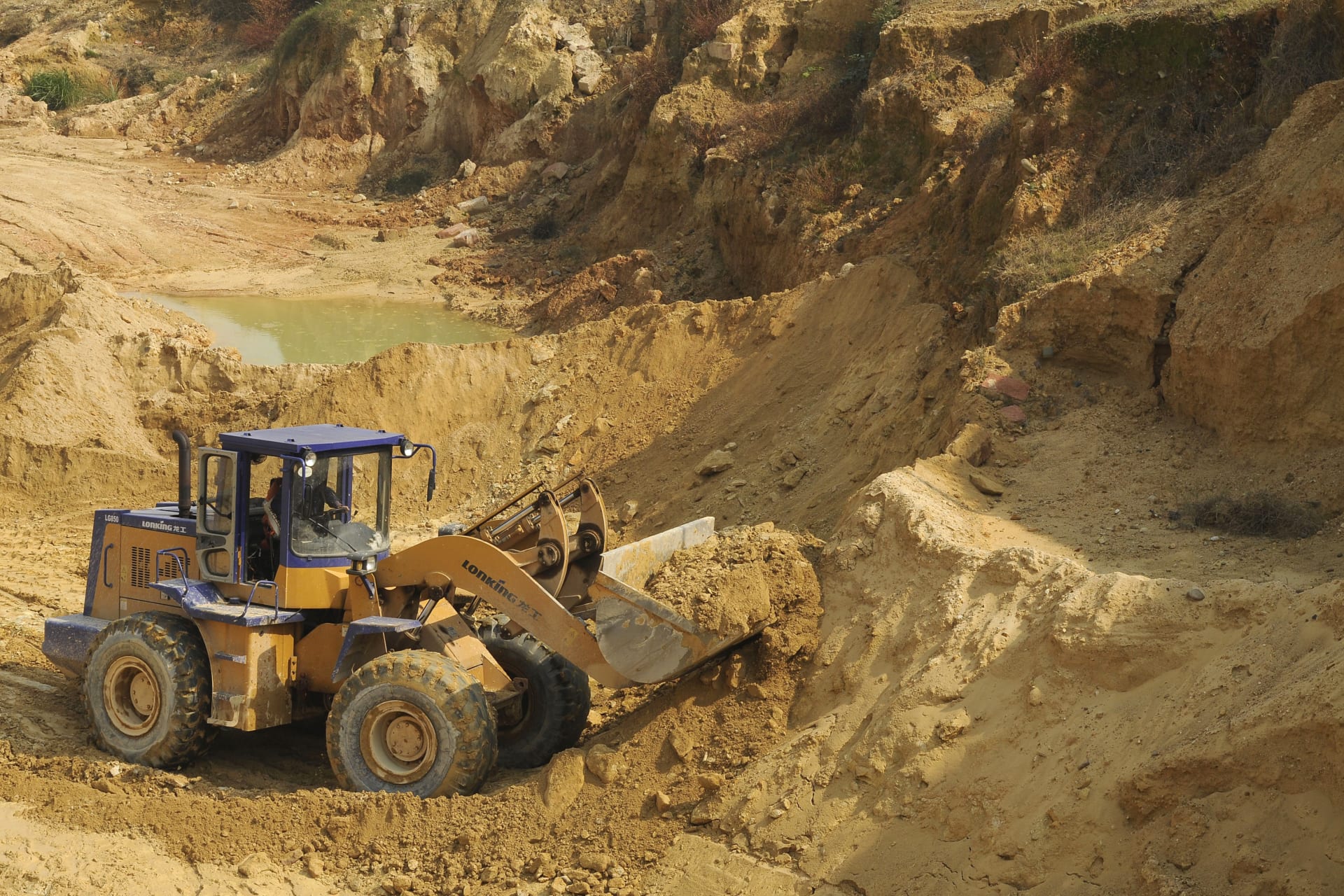
The United States, Japan, Europe, and other partners cannot inoculate themselves against China’s economic coercion through a narrow strategy of plugging holes in allied rare-earth mine-to-magnet supply chains. China’s leverage extends much further: for seventeen materials out of the thirty-four that the EU deems critical, China controls at least a 70 percent share of global mining or refining. Except for rare earths, refining of most IEA-surveyed “key energy minerals” [PDF] became even more concentrated in China between 2023 and 2025. Beijing has plenty of room to escalate: it has not yet imposed export controls on ten additional rare earths (but will impose them on at least five more if the Busan “truce” expires in November 2026), as well as nine more critical materials, including silicon metal, manganese, and magnesium. All of those materials also have important end uses throughout critical end-user industries and are overwhelmingly refined—and some also mined—in China, too (see table 1).
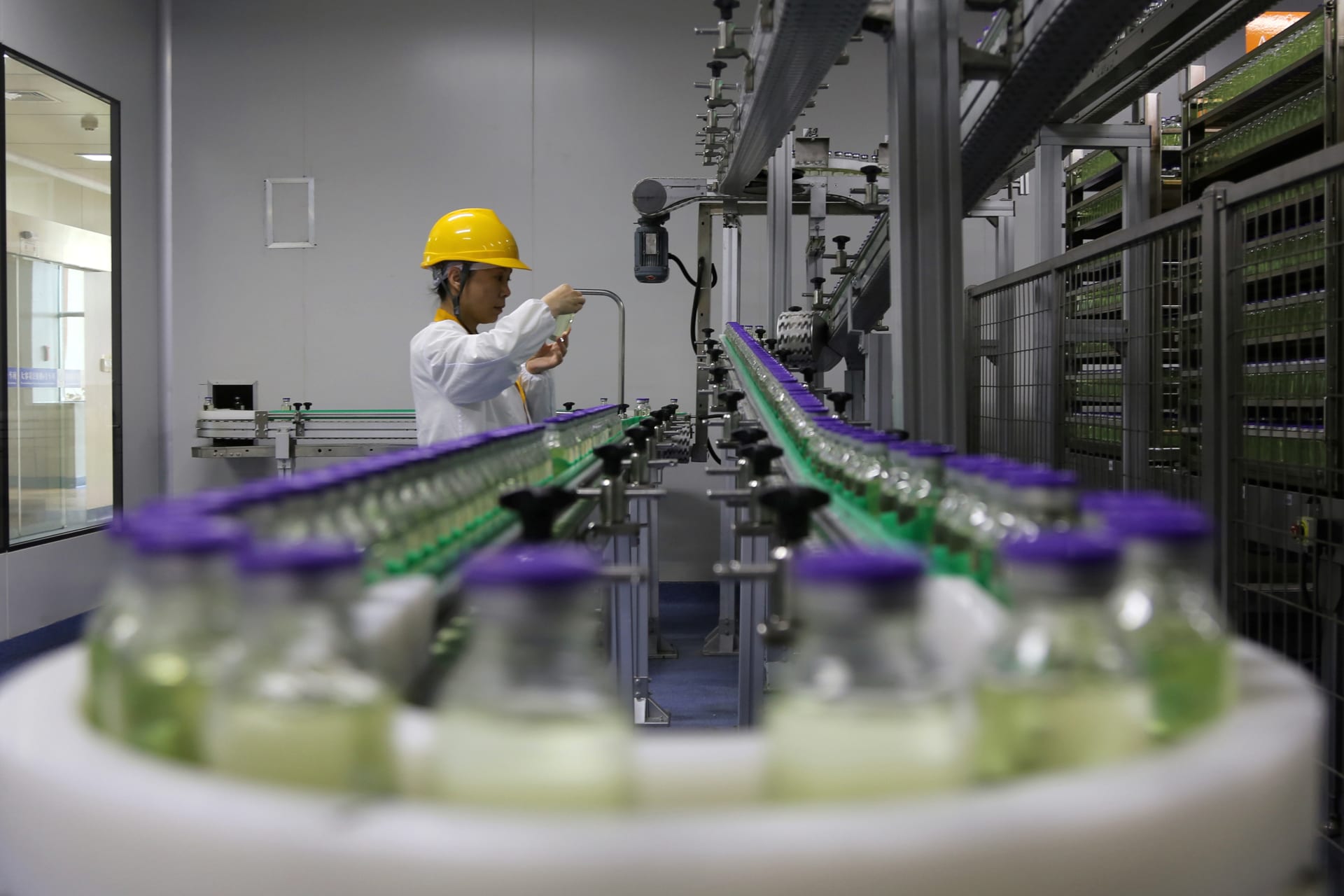
China’s dominance extends beyond the realm of materials; it largely controls the production of batteries and battery cells, and its production share of chemicals, industrial gases, semiconductor wafers, legacy semiconductors, and critical manufacturing inputs in general continues to grow (see table 1). Behind closed doors, industry players have warned the EU Institute for Security Studies (EUISS) that China already exclusively produces a wide variety of essential gases for semiconductor manufacturing. As a result, Beijing is likely already able to switch off American and European chip fabs by blocking the exports of those gases. The United States and the EU are losing ground beyond these industrial enablers too: one UN study projects China’s share of all manufacturing globally to grow from over 30 percent to over 45 percent [PDF] by 2030. Many of these essential manufacturing inputs are already on China’s eight-hundred-plus-item dual-use list and therefore subject to its export license procedures.
Beijing is already leveraging these legal means to weaponize supplies other than rare earths. In response to Takaichi’s Taiwan comments, China’s Ministry of Commerce (MOFCOM) banned the export [PDF] of all items on this dual-use list to Japan for any “end-user purposes that could enhance Japan’s military capabilities” in January 2026. Among other manufacturing inputs, the list contains a wide variety of essential industrial gases. Similarly, China added the German defense major Rheinmetall and thirteen other European entities—including a Dutch shipbuilding company, a research lab, and a technical university—to its “export control list” in July 2026. As a result, Beijing may have already started to categorically reject license requests from any party, both inside and outside China, that seeks to export any China-origin item that Beijing lists as “dual-use” to these fourteen companies. After all, MOFCOM claims that only in “special circumstances where export [to these listed companies] is truly necessary” can suppliers still apply. Without a Trump-Xi extension of the détente, Beijing’s export controls on a wide range of batteries, battery components, and battery-production technologies will also become active in November 2026. Like permanent magnets, batteries are widely used components in defense, medical, and other critical systems.
Why Industry-Alone and Supply-Side-Only Approaches to De-risking Will Fail
Without policy intervention, American and European industries will not overcome their dependence on Beijing even for rare earths. Beijing has long directed state-owned enterprises (SOEs) to overproduce while maintaining massive stockpiles and banning the exports of key production technologies (some as early as 2008). The result: China’s SOEs can flood global markets at the country’s discretion.
But even the impressive state-directed American and Japanese diversification campaigns are not on track to solve critical material dependencies before 2035. Despite the combined tens of billions of dollars Washington and Tokyo have spent and pledged in grants, equity stakes, guaranteed offtake agreements, and other measures to onshore or friendshore wide-ranging critical mineral supply chains, dependence on both Chinese materials and the technologies to produce them remains. The IEA found that an additional $60 billion [PDF] in public-private investment is needed to “just” meet the rare-earth and permanent magnet demand of industries outside of China by 2035.
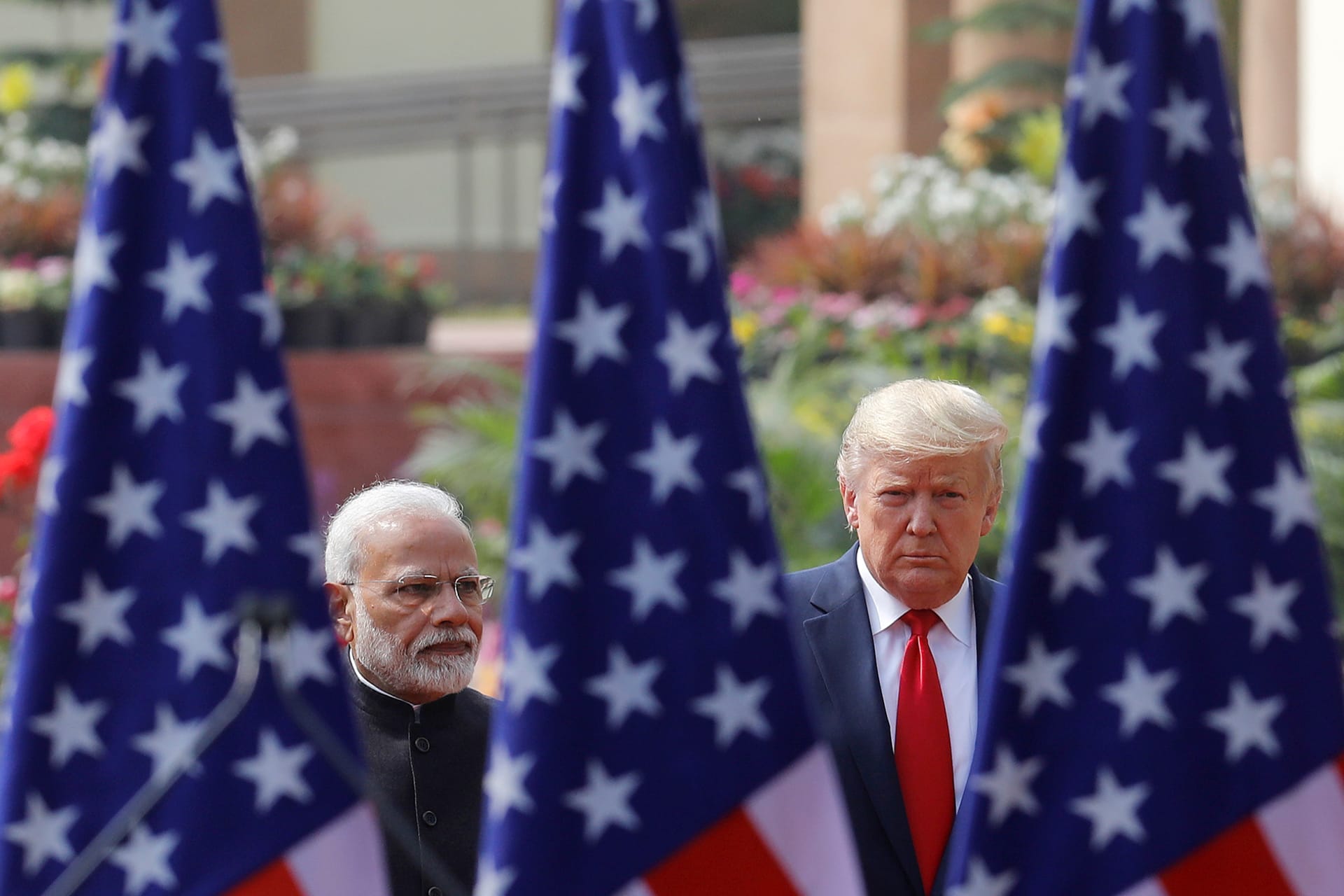
Washington may even fail to achieve its short-term goal of kick-starting ex-China production to de-risk U.S. defense production. Reportedly, U.S. defense companies are “clamoring” to delay the January 2027 moratorium on using China-produced magnets in U.S. weapon systems. Bloomberg reported in July 2026 that “major contractors and subcontracting partners” struggled to supply the Pentagon with defense platforms on time, citing a shortage of magnets from China. Unsurprisingly, the United States has continued to push for access to Chinese materials. Following the May 2026 U.S.-China summit, the White House asserted that China will “address U.S. concerns regarding [critical mineral] supply chain shortages” and “prohibitions or restrictions on the sale of the rare earth production and processing equipment and technologies.” By contrast, the Chinese readout merely mentions that on export controls “both sides will jointly study and resolve each other’s legitimate concerns.”
The Way Out: Restoring Markets Through Allied Demand-Side Protections and Joint Economic Deterrence
The United States and Europe have not proposed comprehensive responses to China’s full rare-earth challenge: how to make non-Chinese production of a far broader range of manufacturing inputs financially viable, despite Beijing’s market distortions, and how to pool transatlantic resources to deter China’s ongoing use of the critical raw material weapon and prevent more extreme supply cuts in the future.
At present, the United States, Europe, and other allies already cooperate ad hoc on de-risking critical raw material value chains, based on supply-side government support and comparative advantage. Washington’s massive investment in material production provided a financial impulse for both American and European industries, the latter being traditionally strong in refining. California’s Mountain Pass Rare Earth Mine brought back rare-earth mining to the United States, receiving state support as early as the early 2020s to expand activities. European refiners will likely continue to depend on this, too, as Europe is unlikely to open a rare-earth mine before the late 2030s, if ever. Partially through U.S. federal government financial support, American companies have obtained greater means to purchase and invest in European companies. For example, Energy Fuels acquired Vacuumschmelze, Europe’s largest permanent magnet producer. Likewise, USA Rare Earth acquired an equity stake (12.5 percent) in Carester, a leading French company active in rare-earth recycling and separation. Partly, those investments are synergistic: strengthening the supply chains of U.S. defense firms is in Europe’s interest, too, considering that its rearmament will also rely on U.S.-produced weapon systems and ammunition. To the benefit of American and European industries more generally, these U.S. investments contribute to providing the required financial certainty to kick-start production (despite the risk of Chinese dumping). Once supply is online, other European and allied industries can help rare-earth refiners and magnet makers scale by pledging additional offtake.
Yet even as transatlantic trust dwindles, U.S. investments in European rare-earth expertise carry risk. Many in Europe fear the Trump administration will weaponize dependencies against Europe to achieve other aims. Trumpian threats to discontinue the supply of “technology and chips” over Europe’s digital regulations do not help. Europeans should therefore ensure that key refining and magnet-making expertise and capital do not disappear from Europe following these U.S. investments.
Parties within the G7 are also cooperating to overcome dependence on China’s material production technologies. No matter how much money each ally throws at the problem, they will continue to face human capital and technological bottlenecks. The United States graduating only “200 to 250 mining engineers” per year, according to Senior Director for Global Supply Chains David Copley at the 2026 Critical Minerals Ministerial, is a case in point. Furthermore, some demand-side alignment exists: U.S. tariffs already exempt imports of critical materials from Europe and other partners. As part of the U.S.-EU and G7 negotiations [PDF], Washington and Brussels are progressing on creating better data, analysis, and other information on critical mineral benchmark prices and volumes. Based on those data points, G7 and other partners can advance price floors and broader demand-side alignment, even though the implementation of these measures at present still seems distant.
No cooperation exists on an economic deterrence agenda, however. Although Trump’s priority appears to be continuing the deeply flawed Busan détente (at least until his September meeting with Xi), Europe is likely entering a trade fight with China as it seeks to better protect its industries in the remainder of 2026. If China curtails even more critical material exports to maintain its asymmetric access to the single market, Europe may finally activate its Anti-Coercion Instrument. That would give the European Commission far greater means to deter China, most importantly by restricting market access. Similarly, Europe plans to launch an internal compensation mechanism for member states and industries affected by Chinese economic coercion. It has not indicated that it will cooperate on this with the United States or other partners.
Europe further restricting exports of semiconductor equipment and other key industrial inputs appears less likely. If anything, the Trump administration’s more permissive policy—allowing both Nvidia’s H20 and H200 to be exported to China—has strengthened industry arguments within European policy debate to export more, not fewer, semiconductors and manufacturing tools to China. Yet combining broader export controls with the threat of restricting market access is essential: the latter is a meaningful but limited tool to strengthen deterrence through punishment.
The United States and Europe can expand alignment based on their ongoing de facto collaboration. Most important, they can both adopt steep tariffs on Chinese materials and align local and partner content requirements in public procurement to create an ex-China market for key materials. That would protect allied industries from the threat of China flooding global markets to kill de-risking efforts. The United States could open Project Vault—a U.S. critical material stockpiling scheme backed by a $10 billion loan from the Export-Import Bank of the United States—to U.S.-based European companies, while Europe could include EU-based American companies in Europe’s stockpiling pilot too. Those tools would prevent both partners from hoarding already-scarce resources—and thereby avoid additional tensions between them.
Washington and European capitals should copy those policies in other markets. Their industries still produce batteries, legacy semiconductors, industrial gases, and chemicals outside China, despite a loss in market share. They should defend that footprint. After all, ongoing U.S. and allied efforts to resurrect rare-earth production, technologies, and expertise through state support are costly and prone to failure. Preempting the collapse of existing industries threatened by Chinese overproduction is the safer and cheaper option. Expanding U.S. tariff exemptions for European critical materials and semiconductor manufacturing equipment to a broader range of chemicals and other important manufacturing inputs would powerfully contribute to creating an ex-China market.
If transatlantic relations regain traction entirely, then the United States, the EU, and other key partners should go much further with tariffs and local-plus-partner content requirements. They should leverage the global GDP of the G7 and other key partners—still almost 60 percent—to protect end industries in renewable energy, automotive, and data centers, as well as other industries that generate plentiful demand for materials, semiconductors, and various components produced at home and in partner countries. In combination with Washington removing its tariffs on Europe, ensuring that these industries survive will help anchor plentiful demand for non-China-produced critical inputs. Likewise, if Beijing continues to squeeze critical material supplies, Washington and Brussels should formulate a broader threat of curtailing Beijing’s access to allied markets and semiconductor and other technologies. An allied compensation mechanism would help ensure China does not split individual allies from the coalition—for example, by halting material supply almost entirely, as it already did against Japan throughout 2026.
Conclusion
In 2025, Beijing woke up to the enormous power it wields through its control over critical materials and other value chains. If the United States and Europe do not dismantle this weapon (and deter its use in the interim), China may press its advantage to achieve much greater aims in the coming years—most dangerously, a forced “reunification” with Taiwan. After all, material shortages will continue to pose formidable obstacles to replenishing dangerously low U.S. ammunition stocks and will hinder American and European weapon systems production, helping to erode deterrence in East Asia and eastern Europe. Meanwhile, by threatening to derail foreign industries by cutting supply more dramatically, Beijing can try to definitively break American and European willingness to deter China from using greater force around Taiwan, or in the East and South China Seas. Targeting Japan with the most extreme supply cuts so far, while admonishing the country for “pursuing remilitarization at full throttle,” shows that China already closely connects its export controls and regional imperatives.
Undoing Beijing’s leverage above all requires restoring markets through coordinated demand-side protections, extended beyond rare earths to other materials, batteries, chemicals, legacy semiconductors, and manufacturing more broadly. The transatlantic partnership—complemented with other G7 and non-G7 partners—has the economic weight to act. All it needs now is the strategic coherence to move forward.
About the Author
Joris Teer is the policy analyst leading the portfolio on economic security and technology at EUISS. This report is drawn from his report “Beijing’s Critical Raw Material Weapon—and How to Dismantle It,” published in May 2025 by EUISS.
Acknowledgments
This report was informed by a Council on Foreign Relations (CFR) meeting convened in cooperation with the Mercator Institute for China Studies (MERICS) as part of a project on transatlantic cooperation on China policy.
This work represents the views solely of the author(s). The Council on Foreign Relations is an independent, nonpartisan membership organization, think tank, and publisher, and takes no institutional positions on matters of policy.
 Report
 Report
 Report
 Report
 Report
 Report