India After the Liberal Order
How Washington’s Retreat Is Reshaping a Difficult Partnership
Overview
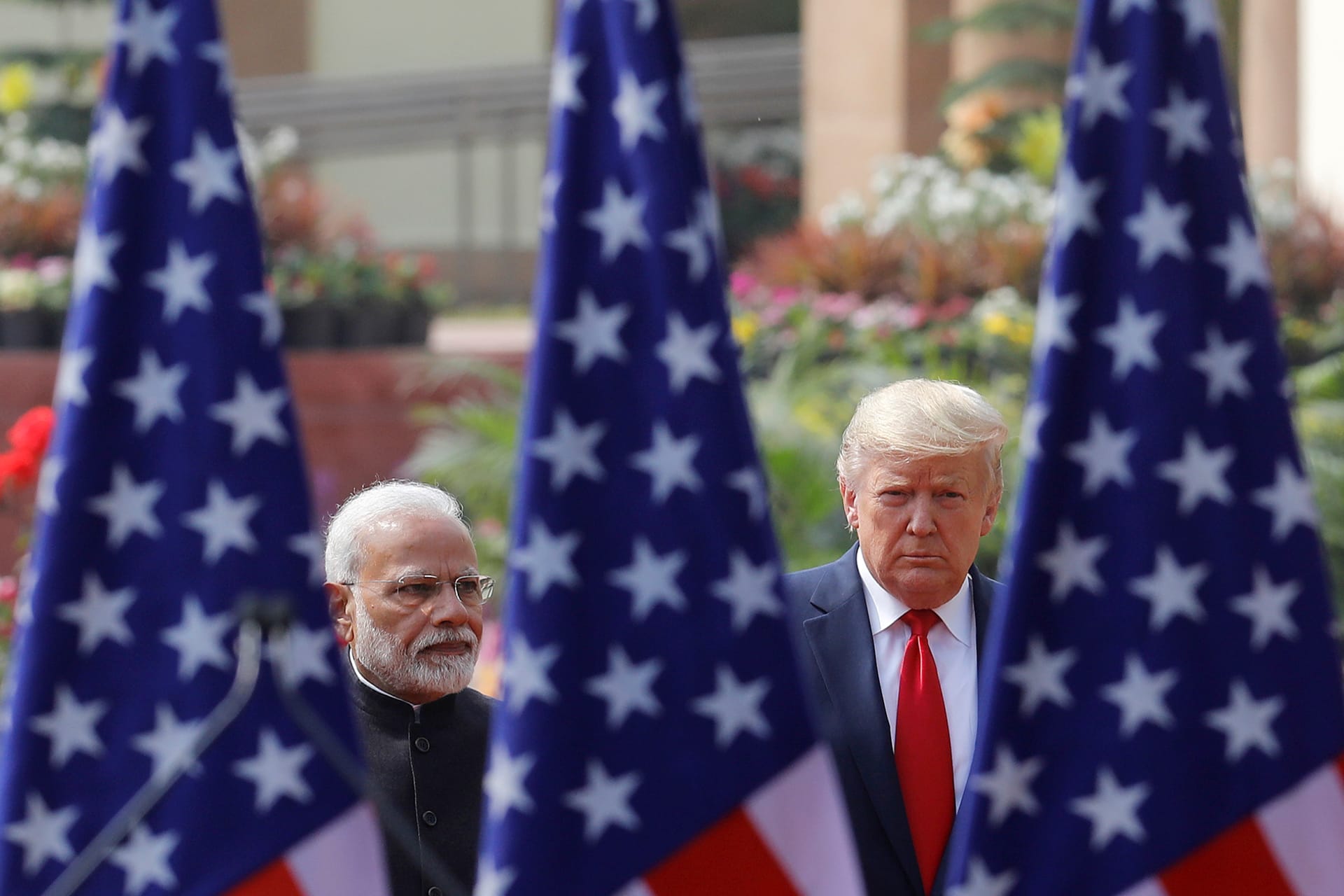
India has been skeptical of the U.S.-led liberal international order since its independence. Now, the United States also seems keen to abandon the order it once championed. This transition period poses a host of challenges—and a few opportunities for collaboration—for the world’s two largest democracies.
 Manjari Chatterjee MillerCFR ExpertSenior Fellow
From
Executive Summary
Despite being the world’s two largest democracies, the United States and India have often been at odds over issues of strategic autonomy and Western-dominated rules and institutions. The end of the Cold War presented the two with a window for rapprochement, and while the bilateral partnership progressed, India largely remained a reluctant participant in the U.S.-led global order.
India has been skeptical of that order from the start. It won its independence from the United Kingdom at the same time the United States was creating the institutions—the UN, World Bank, and International Monetary Fund—that would govern the liberal international order after World War II. The vast majority of states, many emerging from centuries of colonial control, had little say in those institutions’ founding charters. Indian leaders, fresh off their own anticolonial struggle, were loath to resubmit to Western dictates and opted for formal nonalignment during the Cold War. The two found some common ground in defense and a shared China threat after the Soviet Union fell. But India’s deeply held skepticism remained, even as it participated in the institutions of the liberal order and responded to U.S. overtures to deepen the relationship.
That uneasy balance was upended with the election of Donald Trump in 2016. Suddenly, the United States was openly turning on the norms that it had (at least nominally) championed, such as free trade and multilateralism. Whatever vindication India felt over its suspicions of the United States and the order was cold comfort: the defining issues in the bilateral relationship—defense, trade, climate and energy, and democracy—are as sticky as ever.
The weakening of the liberal international order has raised a host of challenges but also some common ground for the two countries. On defense, the U.S.-India partnership faces thorny questions of technology transfer and unilateral U.S. military action. On trade, India’s long-standing protectionism has run headlong into the United States’ new tariff regime, prompting it to overcome its historic reluctance to sign free trade agreements. On climate and energy, India’s attempt to balance climate change mitigation with its growing energy needs has been complicated by the United States’ turn from green energy and efforts to control the global crude market. And finally, on democracy, both countries face questions over their commitment to the liberal values underpinning the order. Both countries remain extremely wary of China and have signaled willingness to amend their supply chains accordingly. Frontier technologies such as artificial intelligence, space exploration, and digital trade also hold some promise for cooperation.
Beyond the specifics of the U.S.-India bilateral relationship, those dynamics give a glimpse of the post–liberal order world to come: one defined by a patchwork of smaller orders that are sometimes durable and sometimes transactional, but that eschew universal rules and norms.
Introduction
Since India’s independence in 1947, many have had great hopes for a strong and enduring partnership between the world’s largest democracy, India, and the world’s oldest continuous democracy, the United States. But that relationship has not materialized; during the Cold War, India’s initial commitment to nonalignment gave way to a robust relationship with the Soviet Union, while the United States drew close to India’s archrival, Pakistan. U.S.-India relations remained strained after the Soviet Union’s collapse, and Washington and New Delhi did not build a true strategic partnership until the 2000s, motivated by mutual concerns over China.
Bilateral relations proceeded in fits and starts but seemed overall to be on a steady trajectory. That partnership never solidified, however, and today, the long-present trust deficit is glaringly apparent. President Donald Trump’s protectionist economic policies and rapprochement with Pakistan have unsettled Indian leaders, forcing them to reassess their expectations of the relationship.
The new dynamic is emblematic of two underlying points of contention in the partnership, one old and the other more recent. The first is that U.S. officials have historically underestimated India’s deep skepticism of the U.S.-built and -led liberal international order. That skepticism has driven much of Indian foreign policy, including toward the United States. The second matter of dispute—apparent in the first Trump administration and the Biden administration—has been thrown into stark relief in the second Trump administration: the United States is itself dismantling the international order it created.
Today, many divergences have sharpened in the United States’ and India’s uneasy partnership. As the United States moves away from norms and rules it once championed, India believes its long-standing objections look increasingly justified. But there have also been convergences—not because India has moved toward the order but because the United States has moved away from it. Neither country has developed a blueprint for what comes next. India’s strategic posture was built for a world in which the liberal international order would persist; the United States is dismantling that order without articulating what should replace it. This report draws on conversations between U.S. and Indian officials and the author in the United States and India and five workshops hosted by the author and held between 2024 and 2026. It also incorporates the findings of sixteen short articles—four written by the author, and the remaining by twelve outside experts—on India’s positions on trade, defense, climate and energy, and democracy. This report argues that the U.S.-India bilateral relationship cannot be understood through the narrow lens of granular self-interest but instead through each country’s acceptance and rejection of the rules and norms of the liberal international order. Further, it argues that as that order fragments, the relationship between these two consequential countries gives us a glimpse into the workings of a post–liberal order world—constant in a few domains but transactional and bilateral in others, all moving away from shared and aspirational understandings. In doing so, the report highlights just how consequential the fading liberal international order has been in shaping relations between countries, even those such as India that have long been skeptical of it.
The Seesawing U.S.-India Relationship: 1947–2000
In the early years following India’s independence from the United Kingdom in 1947, the United States was optimistic about winning the new nation over to its side in the Cold War. India, Americans hoped, would act as a check on Soviet interests in South Asia. It was a democracy, a large country with economic potential, and a leader of the anticolonial movement in the 1950s and 1960s when expelling European powers and rewriting borders was the dominant issue for African and Asian nations. That optimism faltered as India’s leaders, particularly its first prime minister, Jawaharlal Nehru, made it clear that India would not simply join the U.S. camp.
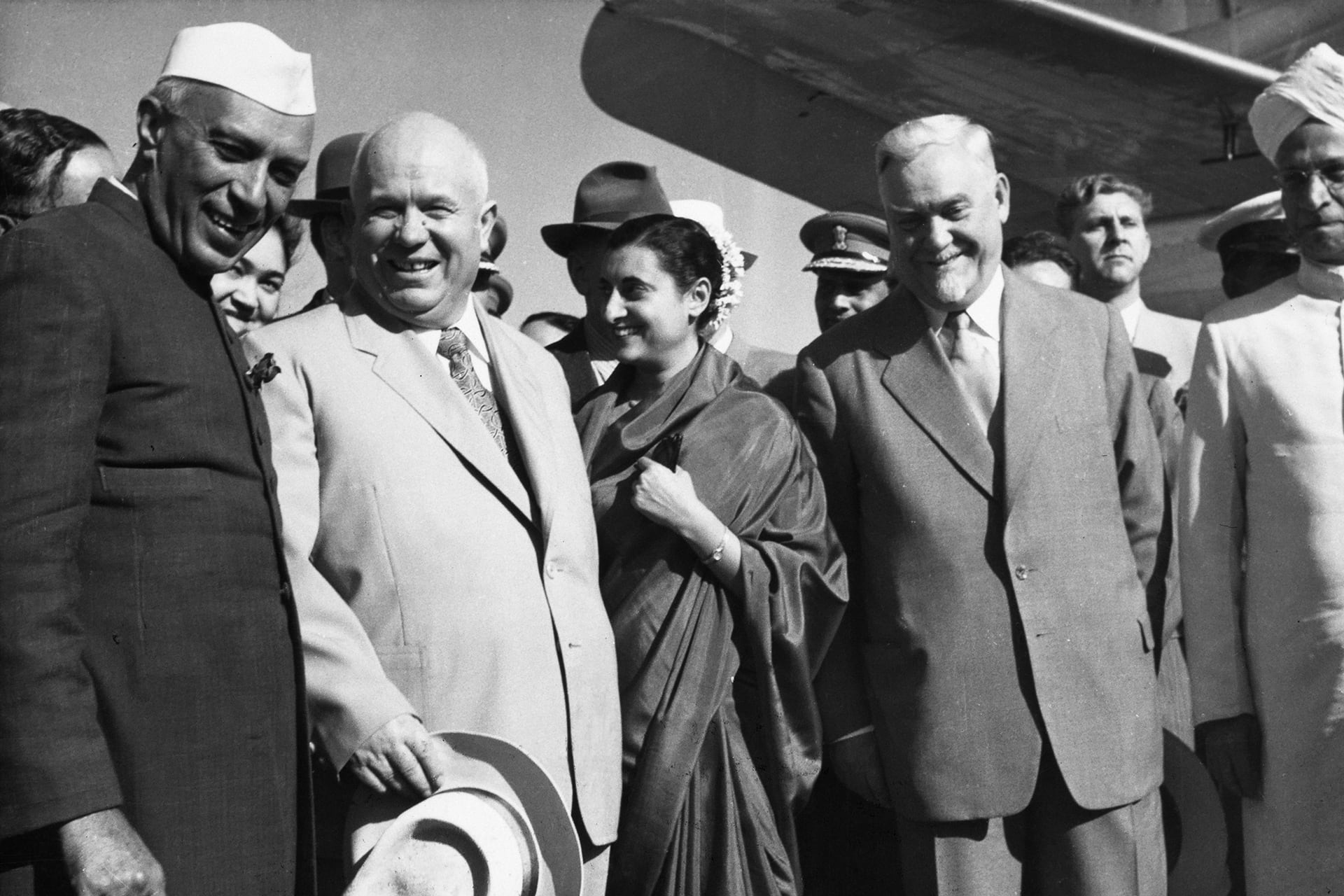
For Indian leaders, allying with the United States was inconceivable for many reasons: they were wary of becoming enmeshed in great power politics, they saw the United States as under the sway of their colonial nemesis Great Britain, and they worried about U.S. interference in South Asia, particularly the wars with Pakistan. Any possibility that the relationship could deepen also decreased as India embraced the doctrine of nonalignment—a refusal, shared by many other former colonies, to join either Cold War bloc—and the United States showed little sympathy for the nonaligned movement and its anticolonial ideology. The Soviet Union, on the other hand, seemed to understand India’s concerns of great power dependence, and it framed nonalignment, as India did, in the context of the struggle against colonialism.1 Consequently, India built an affinity with the Soviet Union, leaning toward it as a source of military supplies, expertise, and aid. As this affinity grew, alienation from the United States increased. Thus, up until the end of the Cold War, the U.S.-India bilateral relationship was not particularly warm, and occasionally bordered on fractious—engendering frustration on the part of the United States and hostility on the part of India.
The end of the Cold War created two different geopolitical contexts for the United States and India. Whereas the United States emerged as the sole superpower, triumphant over the demise of communism, India entered a more precarious world. It had already, in the 1960s, lost a border war and territory to China, which remained its number one adversary, and its rivalry with Pakistan continued unabated. With the demise of the Soviet Union, it had lost a powerful friend.
The U.S.-India relationship seemed ripe for a reset, drawing on a 1984 memorandum of understanding between the two countries that offered a path toward bilateral cooperation with economic exchanges, defense cooperation, and U.S. transfers of technology. But it was not to be: in the early 1990s, the two countries took incremental steps to improve the bilateral relationship but made little actual progress. During the Gulf War, many in India criticized the United States for resorting to military action, suggesting that the multinational force was dominated by American interests.2 And when the Indian government allowed U.S. warplanes en route to the gulf to stop and refuel on Indian soil, it prompted a domestic outcry that nearly brought down the government of Prime Minister Chandra Shekhar. The Indian government subsequently refused all assistance to the war effort, outraging the United States.
India’s 1998 nuclear tests were another low point in the relationship. U.S. intelligence services were embarrassed when they failed to detect the tests in advance, while President Bill Clinton denounced the tests as “wrong … just wrong” and imposed extensive sanctions as punishment.3 India, bordering a nuclear-armed China and worried about Pakistan’s nuclear ambitions, saw Clinton’s response as yet more evidence that the United States did not understand Indian interests. Despite those setbacks, the United States took a series of small steps to improve the relationship. Back-channel communications to address India’s approach to nonproliferation continued, and in 1999, when war broke out between India and Pakistan in the Kargil area of the disputed region of Kashmir, the United States “flabbergasted” India by taking its side.4
U.S. Strategic Assumptions About India in the 2000s
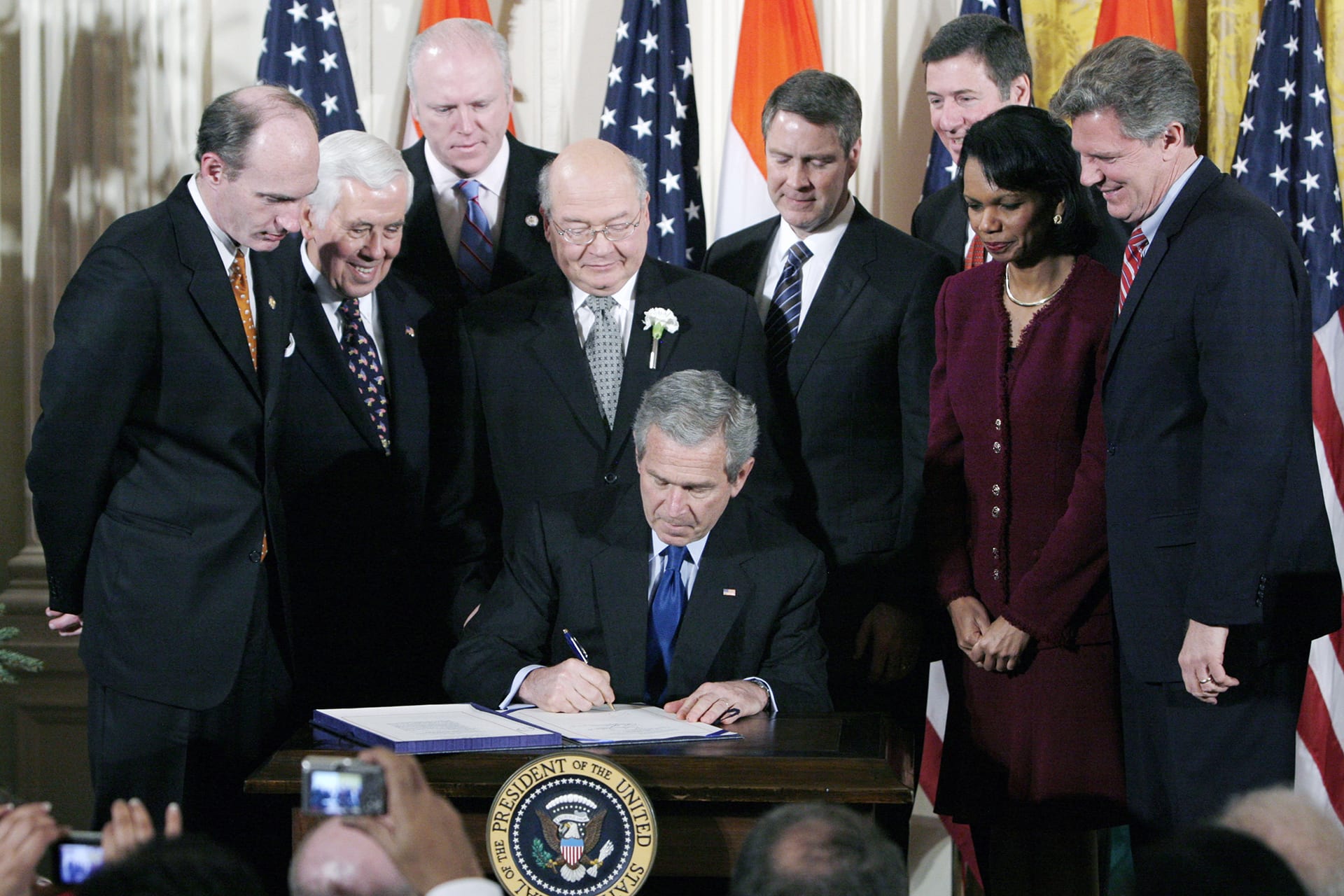
A breakthrough in the bilateral relationship came with the election of George W. Bush in 2000. His national security adviser, Condoleezza Rice, was convinced of India’s potential. The United States was now attuned to the challenge of a rising China, and Rice argued that India had a role to play in the regional balance. “India is an element in China’s calculation, and it should be in America’s, too,” she had written during the campaign. “India is not a great power yet, but it has the potential to emerge as one.”5 Rice, along with other senior officials—including Donald Rumsfeld, the secretary of defense; Robert Blackwill, the U.S. ambassador to India; and Douglas Feith, the undersecretary of defense for policy—saw India as a natural ally and like-minded partner.6
Their assumptions about India in those years were in some ways drawn from the playbook their predecessors in the Clinton administration had tried with China. By engaging China economically, the thinking in the 1990s went, the United States could turn it into a country that would abide by the rules and norms of the liberal international order. Likewise, if the United States were able to successfully enmesh India—a nuclear weapons state and Indian Ocean hegemon with a democratic regime, growing economy, and large population—into the U.S.-led order, the country would become a full-fledged partner that would help maintain U.S. primacy by counterbalancing China and constraining it in South Asia and the Indo-Pacific.
Even when India chose in 2003 to officially oppose the U.S. invasion of Iraq (it even refused to back the eventual UN authorization of a multinational force), the Bush administration chose not to let the dispute derail its long-term effort to build a closer partnership.7 By 2008, the United States had offered India a game-changing nuclear deal. The 123 Agreement, as it was known, was a bilateral civil nuclear agreement that offered India, which was not a signatory to the Nuclear Nonproliferation Treaty (NPT), the same benefits as other prominent nuclear states, de facto legitimizing its status as a nuclear state. Through this agreement, the United States made a concerted decision to prioritize the bilateral relationship over its commitment to nonproliferation.
The United States’ assumptions about India as a like-minded partner were not unreasonable. India had robust democratic institutions, deep suspicions of China, a large market that the government was opening to foreign investment, a population of one billion people (including a large, young, educated workforce), and English as its official lingua franca.8 Yet there were problems. The response of the Indian government to U.S. enthusiasm as expressed in the 123 Agreement, for example, was perfunctory; it was the commitment of senior U.S. officials, rather than the eagerness of the Indian government, that was crucial for successes. Thus, the U.S.-India partnership deepened, but not to the extent Washington expected.
In some areas, such as defense cooperation, enormous progress was made. India, which had long depended on Soviet military hardware, accelerated its diversification away from Russia and began to purchase high-tech defense goods from U.S. suppliers. Since 2002, India has purchased more than $22 billion in defense equipment from the United States.9 India’s diversification toward the United States as a source of military equipment accompanied some landmark steps taken during the 2000s to develop the defense partnership. In 2005, the two countries signed the New Framework for the U.S.-India Defense Relationship, a ten-year agreement setting out a plan for defense cooperation that included the expansion of defense trade relations, joint participation in multilateral operations, and the possibility of technology transfers and cooperation. By 2010, the two countries had launched the U.S.-India Strategic Dialogue, setting up meetings that would guide the bilateral relationship. In 2012, they created the Defense Trade and Technology Initiative to further the joint development and production of military equipment. And by 2016, the United States had designated India a “major defense partner,” signaling that while it was not an official ally, it had trusted status.10 Over the past five years, the United States has conducted more military exercises with India than with any other non-NATO country.11 U.S.-India defense collaboration has grown as U.S. and Indian relations with China have worsened, including a 2023 framework on critical and emerging technologies. That framework, renamed the Transforming the Relationship Utilizing Strategic Technology (TRUST) initiative in 2025, includes joint collaboration on manufacturing semiconductors and has expanded into rare mineral supply chains, artificial intelligence (AI), biotechnology, and energy and space cooperation.12
The United States and India’s failure to build a deep and trusting relationship cannot be attributed to individual leaders, political parties, or specific issues. Rather, the very foundation of their relationship has been undermined by the two countries’ contrasting approaches to the liberal international order.
Despite the TRUST initiative’s expansive goals, the partnership has remained lopsided toward defense. The bilateral trade relationship is deeply imbalanced, and the United States has regularly complained about India’s protectionism (in 2025, the United States had a $58.4 billion trade deficit with India).13 Much of the existing trade relationship is made up of defense goods.
And in 2025, India shocked U.S. officials by attempting to assassinate a U.S. citizen on American soil—an act that, had it been carried out by the United States on Indian soil, would have led to enormous domestic blowback against the partnership.14
When President Trump returned to office in 2025, the relationship was brought to its lowest point in years. Indian officials were shocked when Trump imposed tariffs and followed with further incitements: he declared that India would face further tariffs for importing Russian oil, claimed credit for ending hostilities between India and Pakistan in May 2025, and improved relations with Pakistan.
The United States and India’s failure to build a deep and trusting relationship cannot be attributed to individual leaders, political parties, or specific issues. Rather, the very foundation of their relationship has been undermined by the two countries’ contrasting approaches to the liberal international order. India’s approach has been fundamentally different since the country’s inception and has explained many of India’s positions on the world stage and frustrated the United States for decades. But by 2025, the U.S. commitment to the liberal international order had itself become something of a relic. That change has counterintuitively brought the two countries together in some ways while deepening divergences in others and validating, India believes, some of the assumptions it has long held about the United States—including the suspicion that many norms of the liberal international order, far from being universal, were tools the United States used and discarded at will.
To Uphold or Reject the Liberal International Order?
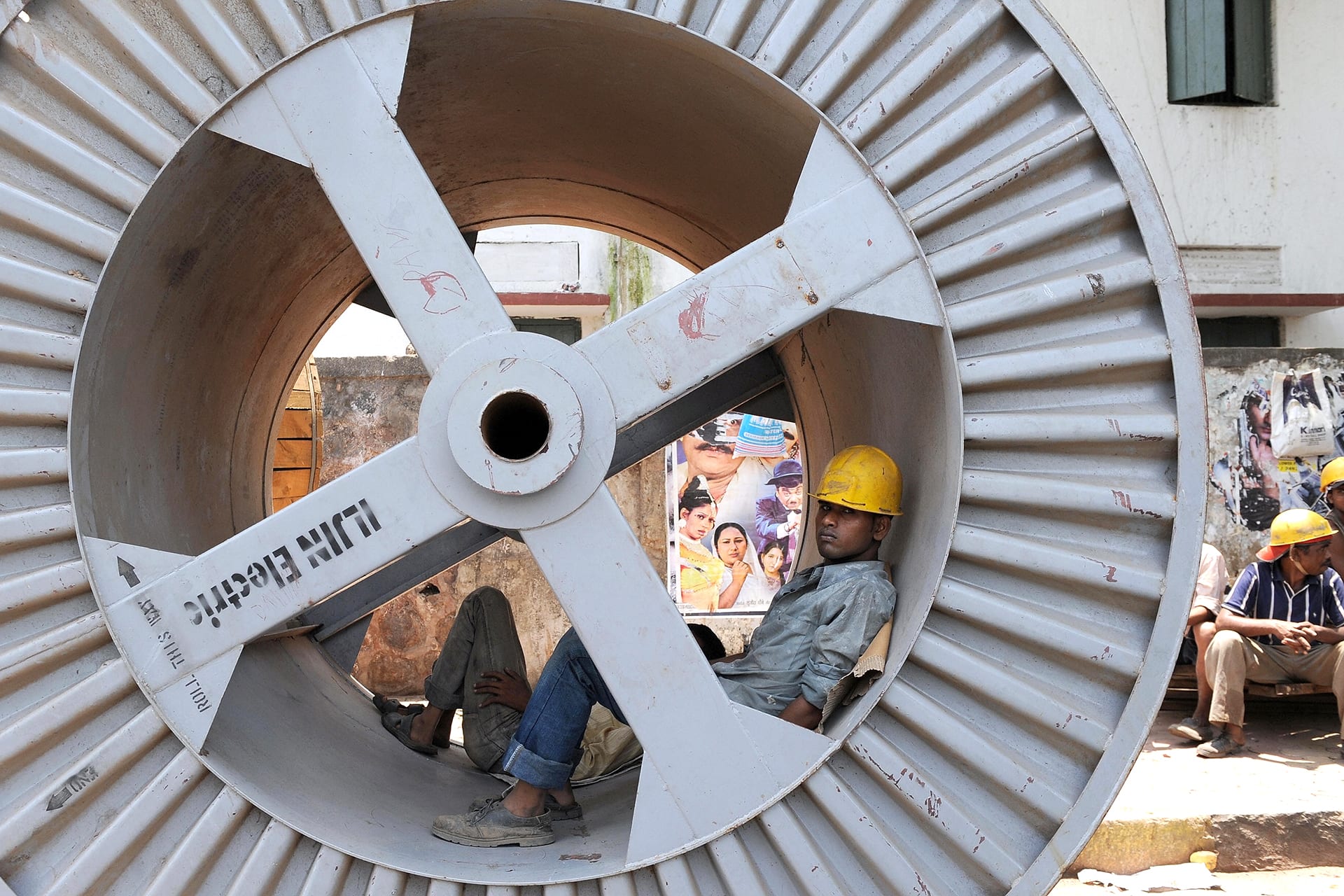
International order is the shared rules, norms, and institutions that help countries retain their independence, preserve their societies, and regulate conflict.15 The United States and its allies created the current liberal international order (or rules-based order) after World War II based on multilateralism, open markets, collective security, and a commitment to human rights and democratic norms, enacted through organizations such as the United Nations and World Bank and treaties on nuclear nonproliferation and international health, among others. During the Cold War, the liberal international order drew together primarily Western industrialized nations, with the Soviet Union offering an alternate socialist order. Afterward, the U.S.-led order went global, but non-Western nations have remained ambivalent.
The political scientist Alastair Iain Johnston has argued that the international order is not a homogeneous system of governing arrangements. Writing on China (which has been accused since the late 1990s of subverting the liberal international order), Johnston characterizes the current order as a set of different orders in different domains—“a world of multiple orders”—such as military, trade, and human rights.16 Envisioned this way, he found that China’s approach to the liberal international order varied dramatically depending on the issue: strong support for UN constitutive norms, medium support for international trade, and very low support for human rights.17 That issue-specific approach also applies to Global South countries and their behavior during and after the Cold War.
Many countries strongly disputed that the liberal international order was, in fact, liberal. To them, it was both hierarchical and exclusionary. Its governing rules were written before many countries emerged as independent nations and therefore needed reform to reflect a more multipolar world. They accused the West of selectively applying the order’s rules and norms to suit its own interests. But it would be a mistake to think that those countries rejected the liberal international order wholesale. They became active members of the UN system, signed key agreements, and participated in the World Trade Organization (WTO), for example, and they accepted some principles underlying the order, such as sovereign equality and self-determination. And many understood the benefits of multilateral cooperation and international institutions. But their attitude toward the order depended on the issue and their interests. The nonaligned movement is a Cold War–era example of how Global South states navigated that ambivalence, refusing to join either superpower in a conflict they believed was thrust on them. The BRICS (the bloc of nations including Brazil, Russia, India, China, and South Africa, among others) is a more recent example of how those countries think that the governance structures of the liberal international order were designed to exclude them.
As a leader among postcolonial countries, India embodied many of those views. From its founding, it never fully embraced the liberal international order, setting up a fundamental disagreement with the United States that has continued for decades.
India and the Liberal International Order
India’s first leaders cut their teeth in the struggle for independence against the British and championed anticolonial movements around the world. They were determined to never again be dominated by imperialist powers and to fiercely retain an independent foreign policy. Prime Minister Jawaharlal Nehru was perhaps the most adamant of those leaders. An anticolonial socialist, he not only opposed Western imperialism but also harbored a deep admiration for the Soviet Union.18 At the same time, however, Nehru was equally committed to democracy and the liberal principles of rule of law, human rights, and egalitarianism.
All the while, India contended that despite the liberal international order’s purported equality, in practice, the United States and its allies consistently flouted it.
India’s approach to the U.S.-founded order was therefore dichotomous. On the one hand, India accepted many parts of the liberal international order. It was a founding member of the United Nations and enthusiastically participated in many UN institutions; it contributed financially to UN peacekeeping efforts around the world, helped mediate the 1953 Korean War Armistice, contributed to the UN Operation in the Congo in 1960, and participated in the UN-led disarmament efforts; and it participated in the Bretton Woods conference and signed the General Agreement on Tariffs and Trade (GATT), the predecessor to the World Trade Organization. India also received large amounts of aid and technology from the United States and Western nations for both economic and military development.19
On the other hand, it contested important parts of the liberal international order. India was, for example, strongly opposed to the conception of collective security. It saw security institutions such as NATO and the Southeast Asia Treaty Organization as a way for the United States and its allies to pull developing countries into their endless conflicts. Such institutions would only impede postcolonial states from developing independent foreign policies. India’s nonalignment, repackaged as strategic autonomy in the post–Cold War era, was a direct outgrowth of this approach. India also believed that Western states were hypocritical when it came to human rights and democracy, ignoring both when it suited them and using them to discipline some states but not others. India eventually drew close to the Soviet Union, which it believed was committed to anti-imperialism, and treated India respectfully—for example, selling defense equipment to India at lower prices than the West and without conditions.20
India also chafed at the United States’ frequent bypass of the multilateral procedures it supposedly championed. In 1999, for example, India strongly opposed NATO’s bombing of Yugoslavia, arguing that military action taken outside the UN Security Council was illegitimate.21 In 2003, India opposed the U.S.-led invasion of Iraq on similar grounds.22 All the while, India contended that despite the liberal international order’s purported equality, in practice, the United States and its allies consistently flouted it. It saw institutions such as the International Monetary Fund, the NPT, and the UN Security Council as tools of Western governance that excluded and discriminated against less powerful states.23 India criticized smaller institutions as well. For example, it railed against Western export control regimes, such as the now-defunct Coordinating Committee for Multilateral Export Controls, seeing them as “technology denial regimes” that allowed a small group of Western states to coordinate restrictions on the transfer of advanced technologies without broader international participation or oversight.24
Finally, India resented the liberal international order’s failure to account for the hundreds of years of Western colonization that had stunted developing countries. That legacy, India alleged, thwarted their economic growth even after independence, and so India contended that the victims of colonialism had responsibilities different from those of the former colonizers. That belief can be seen in New Delhi’s approach to climate negotiations, where it has resisted binding requirements to phase out coal and pushed for subsidized clean energy technology to be made available to Global South countries. It has also defended special and differential treatment (SDT) at the WTO, including provisions giving developing countries certain rights and favorable treatment that account for their lower-income status, as a right.
The United States Contests the Order It Built
By the early 2000s, it was clear that China was rising by using the norms, practices, and institutions of the liberal international order.25 Chinese-led institutions such as the Shanghai Cooperation Organization, the Belt and Road Initiative, and the Asian Infrastructure Investment Bank operated on the multilateral principle of economic cooperation, the bedrock of the liberal international order. Meeting the challenge from China became a core goal of U.S. foreign policy, and many U.S. policymakers attributed their country’s inability to contain China to the norms and institutions of the liberal international order.
By 2016, the architect of the order became one of its primary disruptors. Beginning with the first Trump administration (and continued through the Biden administration and second Trump administration), the United States systematically turned away from the international order.
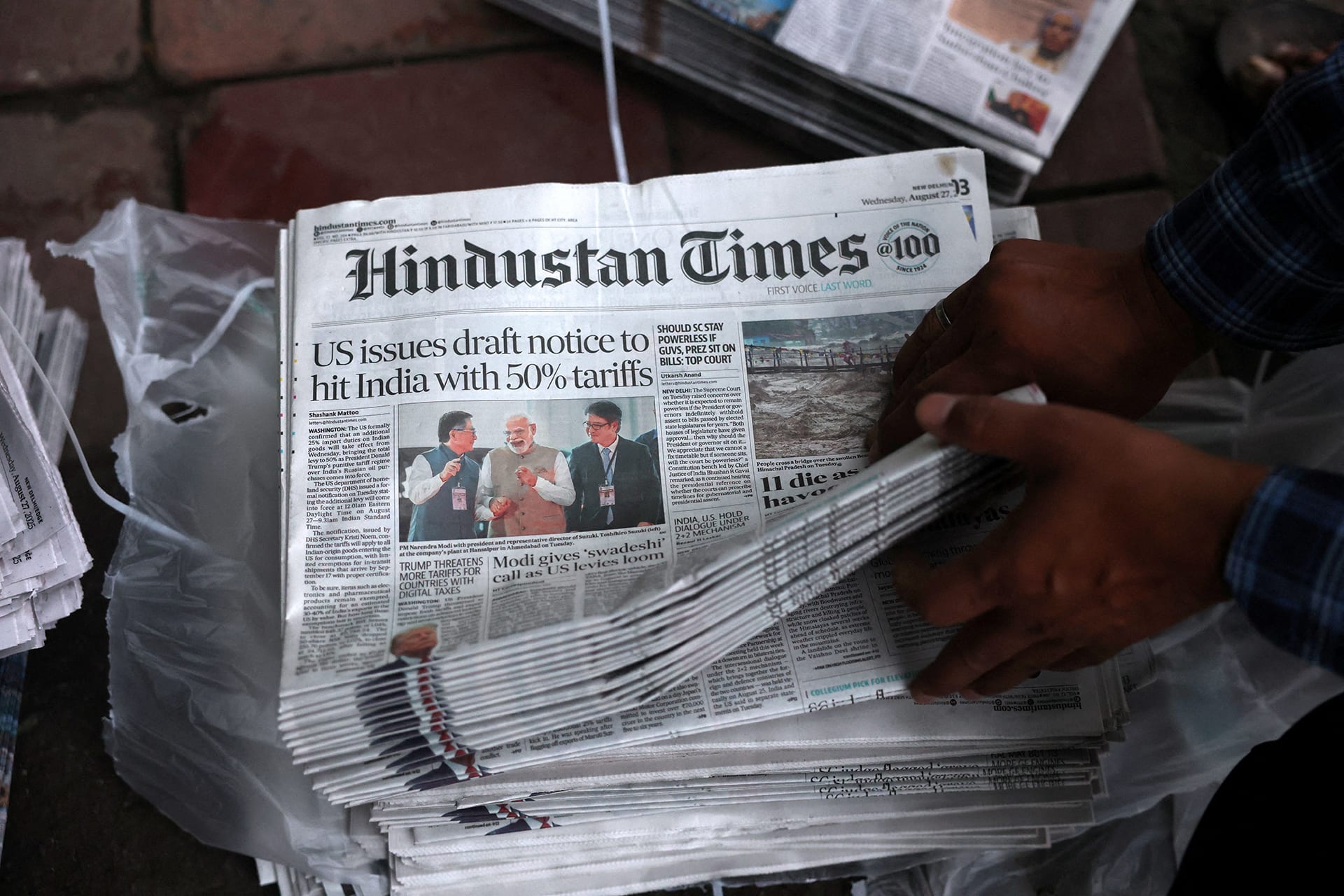
When Trump took office in January 2017, one of his first actions was to pull the United States out of the Trans-Pacific Partnership.26 That marked a shift in U.S. trade policy and a turn away from multinational trade agreements. Trump also elevated tariffs from the margins of U.S. trade policy to its core.27 By the end of 2019, the United States had taken a series of actions to disrupt core liberal international order institutions. It refused, for example, to approve new judges to the WTO’s Appellate Body—rendering the organization unable to hear appeals and threatening its very ability to function. Trump also repeatedly threatened to abandon NATO, arguing that defending Europe was too costly, and began withdrawing troops from Germany.28
Although President Biden campaigned on a return to multilateralism and alliances, he continued many of his predecessor’s protectionist policies. The administration maintained most of the tariffs that Trump had imposed on China and on steel and aluminum. Specifically, it retained section 301 tariffs on China and section 232 tariffs on steel and aluminum, enshrining such tariffs as a permanent part of U.S. trade policy.29 In 2022, Treasury Secretary Janet Yellen declared that the administration would use a “friendshoring” strategy to shift supply chains away from China to trusted friends and partners that shared U.S. values. The strategy and its benefits were never clear.30 But, more problematically, it undermined multilateral economic cooperation and promoted minilateral clubs, excluding and alienating large numbers of diverse countries.31 The Biden administration also continued to undermine the WTO, blocking Appellate Body appointments as the Trump administration had done.32 Further, it abandoned a digital trade deal that the United States had once supported.33 Meanwhile, the Inflation Reduction Act deployed vast subsidies to U.S. electric vehicle and clean energy industries in violation of WTO rules.34
Trump sped up the erosion of the liberal international order on his return to office in 2025. He signed a memorandum that withdrew the United States from sixty-six international organizations, thirty-one UN entities, and thirty-five non-UN bodies on issues spanning climate change, conflict prevention, development, health, and human rights. Secretary of State Marco Rubio dubbed those institutions, once pillars of the liberal international order, “wasteful” instruments of “globalist agendas.” On April 2, 2025, dubbed Liberation Day, Trump declared the U.S. trade deficit a national emergency and invoked emergency economic powers to impose the most sweeping tariffs since the 1930 Smoot-Hawley Tariff Act: a universal 10 percent tariff on all imports plus steeper country-specific rates. Further tariffs followed. Allies were not spared. At the time of this writing, the United States is withdrawing from the U.S.-Mexico-Canada Agreement and has imposed 50 percent tariffs on select Canadian imports. Meanwhile, the United States has also again threatened to withdraw from NATO and annex the territories of two NATO members, Canada and Denmark.
Divergences in the U.S.-India Relationship
India’s historic critique of the liberal international order and the United States’ recent rejection of that order have primarily affected the U.S.-India bilateral partnership in four issue areas: defense, trade, climate and energy, and democracy. The first three are core to the international order itself and anchor some of its most fundamental principles and institutions. Democracy, meanwhile, has always been a source of tension in the order. Many Global South states have asked whether the liberal international order was ever truly liberal. Certainly, on many occasions the United States and its allies engaged in democracy promotion only when it suited their national interests, and torched democratic regimes when they did not. Yet the expectation of liberal values in the international order made it unique, and in many cases served the interests of Global South states—decolonization, for example, was lent credence by such liberal expectations. The Soviet Union disintegrated due to such expectations. And even today, in an era of rising authoritarianism, no country would say it was notcommitted to liberal values. Thus, where countries stand on the liberality of the liberal international order is bigger and broader than whether a country has a democratic government or not.
Defense
Since the Bush administration’s outreach, the U.S.-India partnership has been heavily skewed toward defense, perhaps the greatest area of convergence. India is today considered a major defense partner of the United States.35 Yet significant disagreements have continued to plague the relationship.
For India, self-reliance and independent foreign policy are its highest priorities, resulting in an emphasis on strategic autonomy. The country is wary of being drawn into global problems that it believes do not concern it, and, somewhat paradoxically, it is also sensitive to clubs that exclude it. As scholar Sameer Lalwani points out, on capability, deterrence, and strategy, India has a very distinct set of priorities.36 For one, its defense spending is a fraction of that of the United States—just 1.9 percent of GDP compared to nearly 4 percent.37 India’s primary goal is domestic economic development, and the military supports that as a source of employment. As a senior U.S. official once mentioned in conversation, in the United States there is civilian control of the military, but in India there is a “civilian stranglehold” on the military.38 That results in “an absent dialogue” between the civilian government and the military that impedes defense procurement, organization, and strategy.39 In technology, India is determined to be independent and prioritizes indigenous development and self-reliance. That is different from the defense partnerships the United States has built with its allies.40
India is also primarily concerned about South Asia and its neighborhood rather than global problems such as Ukraine, which it believes is the West’s concern.41 For India, a multipolar world is preferable to a world dominated by the United States and Russia. Thus, its independent relationship with Russia continues to be important: India continues to rely on Russia for its military capabilities, “including nuclear power, space-launch capabilities, missiles, nuclear submarines, and advanced integrated air-defense systems, all [of which] pose a direct challenge for greater U.S.-India military interoperability.”42
India is also sensitive to exclusion—for example, India abstained from the U.S.-led 2022 and 2024 UN resolutions banning anti-satellite weapons missile testing and reducing space threats through responsible behaviors, seeing those procedures as insufficiently representative of Global South countries.43 When AUKUS (the trilateral security agreement among Australia, the United States, and the United Kingdom) was launched in 2021, India bristled that the United States was willing to share sensitive nuclear submarine technology with Australia, a Quad partner, but not with India, another Quad member.44
India’s positions have been hardened by the United States’ own changing approach to the liberal international norms it established. The U.S.-Israel war with Iran (a conflict that India sees as contravening the international order) and Trump’s condemnations of NATO members have reinforced India’s preference for diverse partnerships and independent relationships. Further, India argues its export control regulator SCOMET is aligned with international regimes, such as the Missile Technology Control Regime and Wassenaar Arrangement’s Munition List, that the United States is turning away from. The United States has in recent years pushed instead to restrict access to technologies only to certain countries. In addition to AUKUS, the United States has established the Global Export Controls Coalition with thirty-nine countries that denies access to certain military items for Russia, and signed semiconductor export controls accords with Japan and the Netherlands.45
Trade
Bilateral trade ties between the United States and India have grown over the past decade, reaching a record $157 billion in two-way goods and services trade in 2021, and the United States is now India’s largest export market.46 As the U.S.-India relationship has skewed toward defense, the trade relationship is dominated by defense products.47 Even during the Biden administration, senior U.S. officials signaled the trade relationship was not where it should be.48
That is due to the significant discrepancy in how the two countries think of trade and development. For India, its development is of paramount concern, while the United States is consistently frustrated by India’s protectionism. That dynamic has played out in different ways. In the WTO, for example, trade expert Inu Manak points out that India has been increasingly obstructionist, objecting to all plurilateral deals—arrangements crucial to WTO architecture that allow groups of members to discuss a specific subject (provided they meet a sufficient quorum).49 India sees plurilateral deals as a way to bypass multilateral institutions and skew outcomes toward Western nations.
The United States’ turn away from free trade and open markets toward India’s long-held protectionism and tariffs has, ironically, created more distance between the two.
India has also been particularly firm on agriculture. India strongly adheres to the Doha work program, which emphasizes the difficulties that developing countries face in implementing the WTO agenda, and it resists any efforts to spur new thinking on agriculture.50 Citing its commitment to domestic development and farmers, India procures and maintains goods from farmers at set prices and subsidizes them for low-income populations. Despite being the leading global exporter of rice, India is the only WTO member in breach of its subsidy limits.51
India also believes that Global South countries need the support of special and differential treatment mechanisms, which afford developing WTO members more flexibility in meeting their commitments and better treatment by other members. But SDT status lacks an objective measure and instead relies on developing countries to self-declare their status. Consequently, even as countries get richer and develop, many insist that they still qualify. The United States has pushed for reform, but India strongly resists any change to SDT or any tailored approach based on each country’s needs.52
Similarly, in digital trade, India has argued that developing countries in the WTO can generate significant tariff revenue by imposing customs duties on electronic transmissions, and that they should oppose the liberalized digital trade preferred by the West.53 Finally, India’s emphasis on self-reliance and independence has greatly shaped its industrial policy. India has instituted laws that require the components of certain projects to be made in India. For example, from 2010 to 2013 the Indian government required projects using crystalline silicon solar technology to procure solar modules domestically. In 2014, that policy prompted the United States to launch a trade dispute against India for providing incentives for the domestic production of solar cells and modules. The WTO’s Appellate Body sided with the United States over India.54
The United States’ turn away from free trade and open markets toward India’s long-held protectionism and tariffs has, ironically, created more distance between the two. First, it has given credence to India’s accusations of U.S. hypocrisy and undercut the United States’ historic demands of India. It is difficult for the United States to ask India to honor its agricultural support limits while it flouts WTO rules with unilateral tariffs. Simultaneously, the bipartisan weakening of the WTO means there is no architecture to resolve U.S.-India disputes. For example, the United States has imposed steel and aluminum tariffs on India, arguing they are national security measures covered under the GATT. India argued that they were safeguards in disguise and escalated the case to the WTO. However, with the WTO Appellate Body disabled by the Trump and Biden administrations, there is no neutral authority to rule on the tariffs’ legality. Further, Russian defense and security firms, which have used Indian supply chains to import sensitive goods originally made in Europe since the Ukraine war began in 2022, are now likely to get further opportunity—in 2025, there was a distinct increase in exports from India to Russia of sensitive or dual use goods that originated in France (over 98 percent), Switzerland (over 131 percent), the United Kingdom (over 180 percent), and Sweden (over 455 percent).55
Climate and Energy
India’s stances on norms and obligations have similarly influenced its positions on climate and energy, often in stark contrast to those of the United States. Scholar Karthik Nachiappan points out that India has long emphasized both development sovereignty and distributive justice.56 This meant that India had the sovereign right to focus on its economic development without lectures from rich states on climate change, while rich states had the obligation, as they bore historical responsibility for emissions, to help developing countries such as India with finance and technology. India particularly emphasized the principle of common but differentiated responsibilities (CBDR), which provided a legal shield and justification to oppose any environmental and mitigation commitments that it thought would hamper its developmental goals.57 For years, those positions have led India to diverge from the United States, which often took the lead on climate mitigation in multilateral institutions.
But by the mid-2000s, a shift was taking place in India’s climate policy. Although it still believed in CBDR, the real consequences of climate change necessitated a significant push toward clean, renewable energy sources.58 Thus, India has become an active and enthusiastic participant in relevant working groups at many multilateral forums.59 At the same time, the United States has moved away from climate change mitigation strategies under the second Trump administration; Trump has called climate change a “hoax” and green energy a “scam.”60
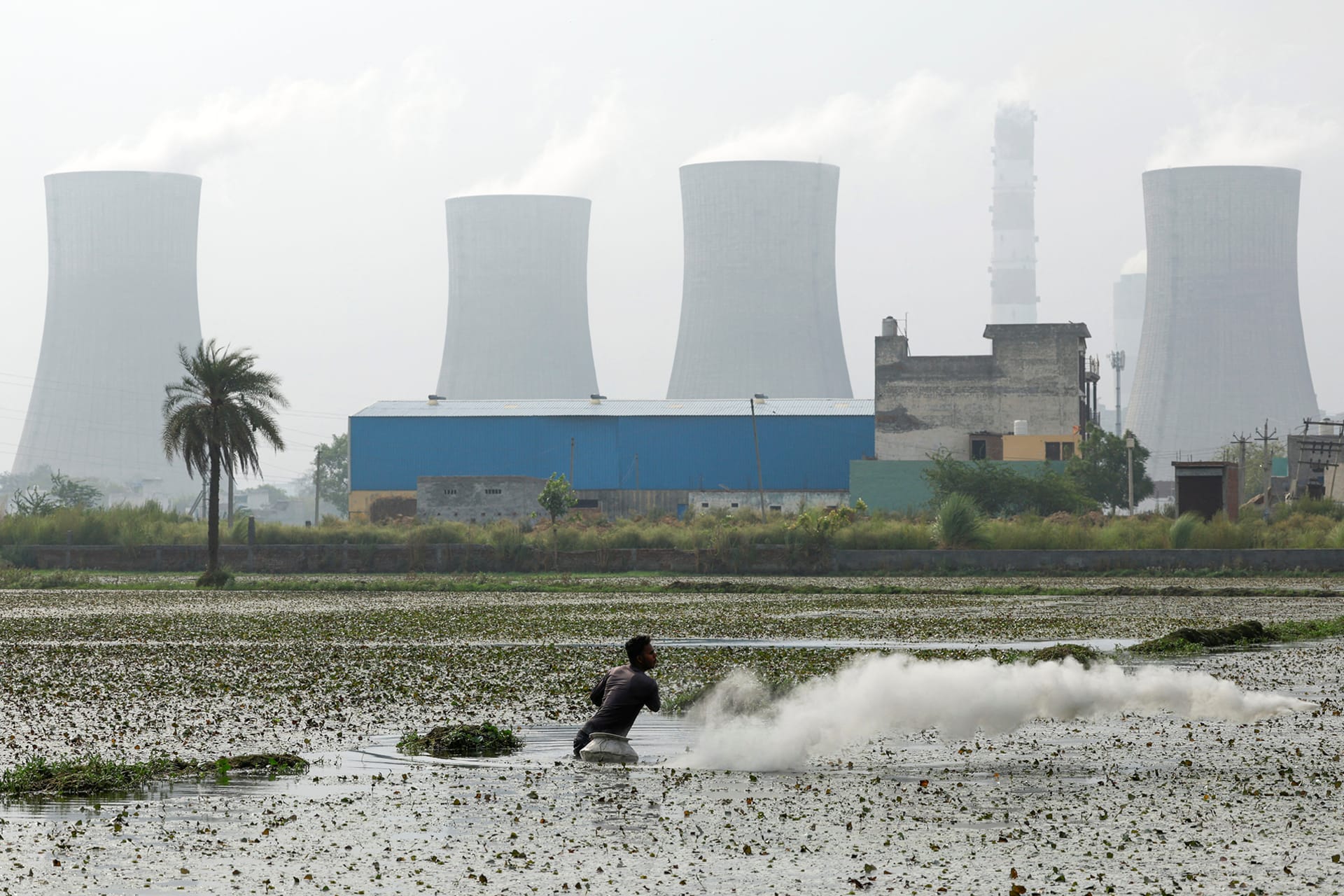
Two issues divide the United States and India on energy. First, there is the question of India’s coal usage. India refused to commit to a date to phase out coal at the 2021 UN Climate Change Conference (COP26). Despite India’s newfound commitment to climate change mitigation, coal plays a huge role in its economic development, and closing its relatively young coal plants would be extremely costly.61 India has thus far refused to join U.S.-led initiatives such as the Just Energy Transition Partnerships, which would give India financial support for closing coal plants, arguing that it would not change the underlying costs of phasing out coal.62
The second issue is oil. More than 40 percent of India’s energy needs are met through imports, with about 88 percent of its crude oil coming from foreign markets.63 With scant domestic reserves, energy security is a crucial issue for India. Until the mid-2000s, Iran accounted for more than 10 percent of India’s crude oil imports. India even invested in special infrastructure to process Iranian crude.64 However, as the U.S.-India partnership progressed, the Obama administration and first Trump administration pressured India to reduce its Iranian imports to negligible levels.65 It began to diversify its crude oil sources accordingly. Following the invasion of Ukraine, Russia began offering substantial discounts on its crude oil to Asian countries to work around Western oil sanctions.66 Subsequently, India’s crude oil imports from Russia skyrocketed, going from less than 1 percent before the Ukraine war to 35.8 percent in 2024–25.67 That became a source of tension with the Biden administration and was hugely exacerbated when the second Trump administration slapped tariffs on India for its imports of Russian crude. Trump has repeatedly vowed to raise tariffs to 500 percent on India should it continue to import Russian crude.68 The Indian government has allegedly agreed to lower its Russian oil imports. However, by how much and whether the Indian government will actually proceed with this reduction is still unknown.69
Democracy
Both India and the United States are democracies—even as each has been accused of creeping authoritarianism—but their commitments to liberal values in the international order have long diverged.70
India never engaged in democracy promotion abroad and did not support the United States and its allies when they did. But India’s skepticism about the sincerity of U.S. democratic values pushed it onto a road that ran parallel to that of the United States’. As scholar Sarang Shidore points out, India pushed for a multialigned and inclusive international order, arguing that democratic values necessitated such an approach.71 That meant diversifying its relationships—whether defense and energy ties with Russia or a robust strategic relationship with France—and not imposing democracy on other countries. That pluralistic vision also meant that India pushed to reform and sometimes rejected international institutions that it deemed exclusive. It insisted on including the African Union in the Group of Twenty, refused to sign the NPT, and spearheaded the creation of the BRICS to oppose global governance systems dominated by the West.
India has also resisted many security norms that are underpinned by liberal values. As scholar Kate Sullivan de Estrada argues, norms such as shared defense commitments, cooperation in times of crisis, and restraint-based security frameworks have led to some of the core security institutions of the liberal international order such as alliances, security communities, crisis management, and nuclear governance. India’s commitment to strategic autonomy has largely precluded it from participating in such institutions.72 India is not a member of any alliance or security community, and its approach to crisis management involves legal limits—it articulates its positions in legal terms—and the advocacy of diplomacy through UN forums.73 There have been some exceptions: India has fostered a reputation for “responsible nuclear stewardship,” sought entry into export control regimes, and negotiated access to civil nuclear trade.74 But by and large, the United States and India have historically not held similar positions on the liberal underpinnings of the international order.
The Convergences
Although the divergences between the United States and India are many, the two countries have seen some significant convergences. Perhaps surprisingly, shifts in the U.S.-India partnership have not been the result of India changing its thinking about the liberal international order, but of its recalibration to new geopolitical realities—particularly, the United States’ moves away from the order.
For example, India is eager for the United States to prioritize China over Russia as the most important threat. Wariness toward China has been a touchstone for U.S.-India relations for decades, and India’s foreign policy elites have long believed the Ukraine war is a distraction from the China threat. Consequently, as U.S. support for Ukraine fluctuates, the U.S.-India defense partnership is likely to deepen. Both the Biden and Trump administrations have championed defense technology cooperation between the two countries, including on autonomous technologies and AI applications for war.75 The United States is India’s primary partner for military exercises, and India has joined U.S.-led military and intelligence-sharing coalitions.76 In 2023, in a move that surprised the Indian space community, India signed the U.S.-led Artemis Accords, which set out nonbinding principles for lunar exploration, transparency, interoperability, and resource utilization.77 This move reflected India’s uneasiness about the Sino-Russian cooperation emerging in space.78
The United States’ and India’s positions on digital trade were also in sync during the Biden administration, when the United States, citing national security concerns, moved away from its previous liberal position on digital trade and withdrew its proposals on cross-border data flows, data localization, and source code.79 India also responded well to the Biden administration’s emphasis on friendshoring. That strategic turn resulted in the launch of the framework on critical and emerging technologies in 2022 to support U.S.-India cooperation on critical minerals and semiconductors, resources important to digital trade.80 The Trump administration’s policies on digital trade and friendshoring are still evolving, and it remains to be seen if this convergence will continue. In the meantime, India’s protectionist industrial policies and its contravening of WTO rules align with the United States.81 Whether this means that the Trump administration will be understanding of India’s protectionism in areas such as agriculture remains to be seen.
On climate and energy, the Trump administration has little interest in developing renewable resources or curbing emissions—or leaning on developing countries to do the same. For India, which is beginning to embrace renewables and has taken the unprecedented step of opening its nuclear sector to foreign investment, this hands-off approach is likely good news. Similarly, the current administration’s disinterest in promoting human rights and democracy abroad aligns with India’s policies and its sensitivity to any comments on its own democratic practices or lack thereof. Finally, there could be convergence between the United States and India on constructing an architecture on AI governance. India is very interested in developing new cooperation frameworks, as expert Constantino Xavier points out, for technology governance.82 It is thus extremely willing to work with like-minded partners on alternatives to China’s authoritarian state-led model. And while the Trump administration may not be as interested in democratic coalition-building as it is in India as a tech market, it has also signaled that it is serious about AI governance, emphasizing deregulation and innovation while “attempting to set the terms on which AI governance will be understood globally.”83
A Window Into the Post–Liberal International Order
The U.S.-India relationship is consequential: the United States is a great power and likely to stay one for many years; India, with a population over 1.4 billion that skews young, vast market potential, and military power including nuclear weapons, is simply too large to ignore.84 Precisely because both countries are now ambivalent toward the current order, their partnership offers a window into what a post–liberal international order might look like.
The first thing that window reveals is a shock still reverberating through New Delhi. For all its criticism of the liberal international order, India also benefited enormously from it and, more importantly, built its entire strategic posture with it as the foil. Nonalignment and its successor doctrine, strategic autonomy, were postures calibrated to a world in which the order would persist and the United States would anchor it. Washington’s repudiation of its own creation removes that fixed point. India now has to develop a new strategic outlook toward both the United States and the order at large—and in this is representative of much of the Global South, which spent decades defining itself against a system that it expected would endure.
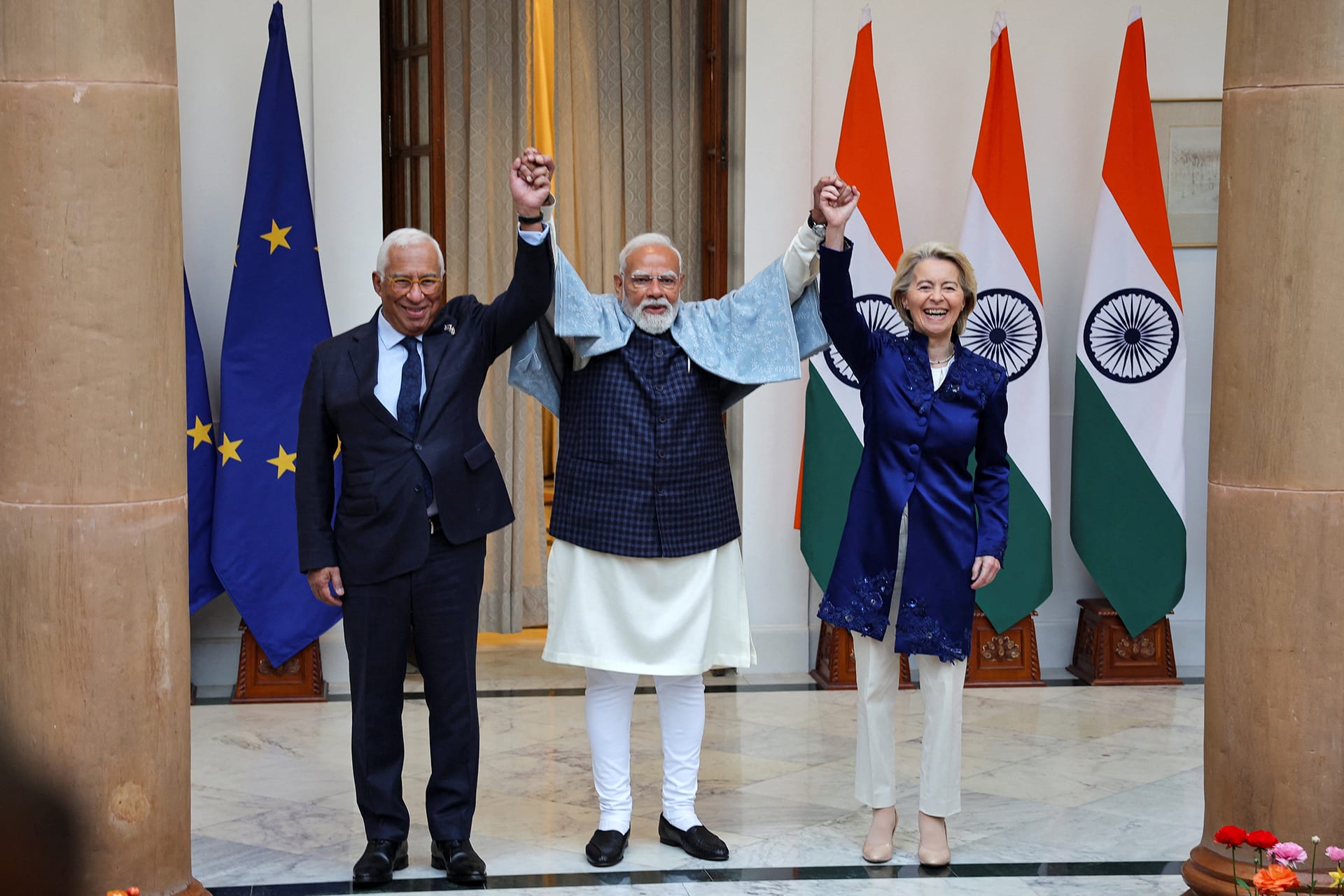
India’s recent scramble for bilateral trade deals is the clearest symptom. Despite its reputation for arduous trade negotiations, in a remarkably short span, India has concluded a wave of agreements, revealing that it was not so much antitrade as it was against procedures and norms it did not write. It signed a Comprehensive Economic and Trade Agreement with the United Kingdom in July 2025, which entered into force on July 15, 2026, and eliminates tariffs on 99 percent of Indian export lines. In January 2026, India concluded negotiations on a free trade agreement with the European Union—a deal nearly two decades in the making that European Commission President Ursula von der Leyen called “the mother of all trade deals,” covering two billion people and roughly a quarter of global GDP. Those trade agreements join ones concluded with Australia and New Zealand. And now India has buried its political differences with the Canadian government, and is in the process of negotiating yet another trade deal. Meanwhile, a potential trade deal with the United States continues to languish after President Trump imposed more tariffs globally.85
The second thing the window reveals is that established rules are becoming negotiable, and new standards could quietly become predominant. As India shifts its exports to the European market, it will increasingly have to comply with EU regulations—food safety, data protection, product safety, regulation on chemicals, and so on—that diverge sharply from those set by the United States.86 That will likely elevate EU regulations and standards over those of the United States over the next decade. In a nutshell, Brussels, and not Washington, may end up shaping how Indian goods are made.
What emerges is less a single successor order than a patchwork of mini-orders—some centered on blocs of countries, others on discrete issues. India will continue to prioritize the United States as its defense partner, because its worry about a powerful China is genuine and deep. But in trade, climate, and technology governance, cooperation may lessen as India diversifies toward Europe and others. Seen in this context, the coming order is not bipolar or multipolar so much as componential: durable in some domains, transactional in others, and held together by bilateral bargains and compromises rather than universal rules and norms.
Conclusion
The United States and India spent two decades building a partnership on an assumption that has not held. Washington assumed that drawing a wary New Delhi into the U.S.-led institutions of the liberal international order would gradually align it with U.S. interests and increase its comfort with U.S. leadership—a logic not dissimilar to the one the United States applied to China. But this assumption rested on a misreading of India’s motivations and beliefs about the order. India was not a reluctant participant who needed time. Its positions on the order—resisting norms it saw as selectively applied to the advantage of Western countries, opposing procedures it was excluded from shaping, and insisting on obligations it linked to the history of colonization—were both consistent and long held. They were bedrock ideas shaping India’s conduct for seventy years and have not substantively shifted even as the country’s foreign policy has changed.
But the U.S. position has shifted, and deliberately so. The United States concluded that the order it built was increasingly constraining rather than serving its interests in areas such as trade and burden-sharing, and that China was rising by gaming that very system. Thus, multiple U.S. administrations moved to revise the order—exiting institutions, moving toward economic protectionism, and weakening multilateral commitments. The United States’ gradual departure from the order has lowered the cost of positions India already held and helped cement Indian policymakers’ beliefs that the country’s decades-old divergences were justified.
The convergence between the two countries today is real but uneven. On defense, where both countries share a direct interest in balancing China, cooperation is likely to deepen. On trade, climate, and technology governance, it is more contingent and grounded in overlapping interests rather than a belief in the order, and liable to loosen as India diversifies.
The U.S.-India relationship offers a useful window into what could come next in a post–liberal international order. Both countries are now operating within a system neither is invested in preserving, and neither country has articulated a successor. What their partnership suggests is not a bipolar or multipolar order but one that is cooperative in some domains and transactional in others, organized around bilateral arrangements and compromises rather than universal rules. New Delhi will hedge accordingly: closer to Washington on defense, toward Brussels on commerce and standards, and toward the Global South diplomatically. For both countries, the implication is the same. Neither can rely on the norms, rules, and institutions of a fragmenting international order to create commonality and bring them together. What exists today is a partnership of coordination rather than convergence, consequential because both countries are too large to ignore, and durable only where their interests genuinely meet.
Acknowledgments
This project would not have been possible without the many who generously shared their time and thoughts over the past two years. Participants in the virtual workshops; think tankers; officials in the United States, India, and the UK; and colleagues in academia and at CFR offered thought-provoking ideas that shaped the arguments in this report. The memo writers who workshopped their first drafts, took on board comments from the participants and the moderators, patiently waded through the vast amounts of detailed line-edits, and revised drafts into amazing final products for publication on CFR.org were a joy to work with. A special shoutout to Inu Manak for her willingness to brainstorm workshop ideas with me for hours on end. The four moderators at the workshops—Sid Iyer, Tom Cutler, Rem Korteweg, and Kira Huju—were so kind to take the time to read and offer feedback on each of the memos and help steer the discussions. Two long-suffering and patient research associates—Chris Baylor and Andrew Huang—helped me organize every workshop, edit and publish the memos, and finish the report, and generally kept me on time and on track. I could never have pulled off this project without the support of CFR’s stellar Publications team—Christian Kreznar and Trish Dorff, you are my rock star heroes forever, and even though your tracked edits make my heart sink into my shoes they always make my writing better—and its diligent Digital team. Stuart Reid took the time for multiple meetings to discuss the project and report ideas and offered valuable feedback. And Shannon O’Neil supported the project for two years, including the idea of bringing an academic-style project to a think tank and taking time out of her schedule to attend workshops. Thank you all.
About the Author
Manjari Chatterjee Miller is a senior fellow at the Council on Foreign Relations (CFR) and professor of international relations at the Munk School of Global Affairs and Public Policy at the University of Toronto, where she also holds the inaugural Munk chair in global India. She is also an associate at the Harvard University Asia Center. An expert on India, China, and rising powers, she is the author of Why Nations Rise: Narratives and the Path to Great Power (2021), which was shortlisted for the 2022 Hedley Bull Prize in International Relations; Wronged by Empire: Post-Imperial Ideology and Foreign Policy in India and China (2013); and the coeditor of the Routledge Handbook of China-India Relations (2020).
Workshop Speakers and Moderators
Virtual workshops were held five times from December 2024 to June 2026. “Virtual Workshop: India, the Future of Trade Norms and the International Order,” was held on December 13, 2024. “Virtual Workshop: India, the United States, and the Future of Global Defense Norms,” was held on April 4, 2025. “Virtual Workshop: India and the Future of Climate/Energy Norms,” was held on November 24, 2025. “Virtual Workshop: India and the Future of Democratic Norms,” was held on March 17, 2026. “Virtual Capstone Workshop: Final Debrief” was held on June 26, 2026.
Konark Bhandari
Fellow, Carnegie Endowment for International Peace India
Tom Cutler
President, Cutler International LLC (formerly Director of European and Asia Pacific Affairs, U.S. Department of Energy)
Kate Sullivan de Estrada
Associate Professor in the International Relations of South Asia, University of Oxford
Clara Gillispie
Senior Fellow for Climate and Energy, Council on Foreign Relations
Kira Huju
Asia Correspondent, The Economist
Siddharth Iyer
Senior Growth Lead, Vannevar Labs (formerly Special Advisor to the Vice President for Indo-Pacific Affairs, Office of the Vice President)
Rem Korteweg
Senior Research Fellow and Head of Strategic Initiatives & Outreach, Clingendael Institute
Kholofelo Kugler
Head of Trade Law, Besso (formerly Counsel, Advisory Centre on WTO Law)
Sameer Lalwani
Senior Fellow, Carnegie Endowment for International Peace, (formerly Senior Expert, United States Institute of Peace)
Inu Manak
Senior Fellow, Peterson Institute for International Economics (formerly Senior Fellow for International Trade, Council on Foreign Relations)
Manjari Chatterjee Miller
Senior Fellow, Council on Foreign Relations; Professor of International Relations, Munk School of Global Affairs and Public Policy, University of Toronto
Karthik Nachiappan
Fellow, National University of Singapore
Sarthak Pradhan
Assistant Professor, Takshashila Institution
Sarang Shidore
Director of Global South Program, Quincy Institute for Responsible Statecraft
Dimitrios Stroikos
Head of LSE IDEAS Space Policy, London School of Economics and Political Science (formerly LSE Fellow, London School of Economics and Political Science)
Ashwini K. Swain
Director of India Program, Regulatory Assistance Project (formerly Fellow, Energy Transitions, Sustainable Futures Collaborative)
Constantino Xavier
Senior Fellow, Centre for Social and Economic Progress
Workshop speakers and moderators contributed insights and expertise to the report. The report itself is the responsibility of the author and does not necessarily reflect the views of the other workshop participants. This series of reports was made possible by a generous grant from the Smith Richardson Foundation.
Endnotes
This work represents the views solely of the author(s). The Council on Foreign Relations is an independent, nonpartisan membership organization, think tank, and publisher, and takes no institutional positions on matters of policy.
 Report
 Report
 Report
 Report
 Report
 Report