“Many of the same issues being debated at present have been at the heart of U.S. foreign policy discourse for two hundred fifty years—a theme the Council has sought to capture over the course of the year.”
— CFR Chairman David M. Rubenstein
“The Council entered this past year with the goal of ‘meeting the moment’—an institution-wide effort to tackle the set of challenges and opportunities confronting the United States and the world with unity of purpose and urgency.”
— CFR President Michael Froman
2026 Annual Report
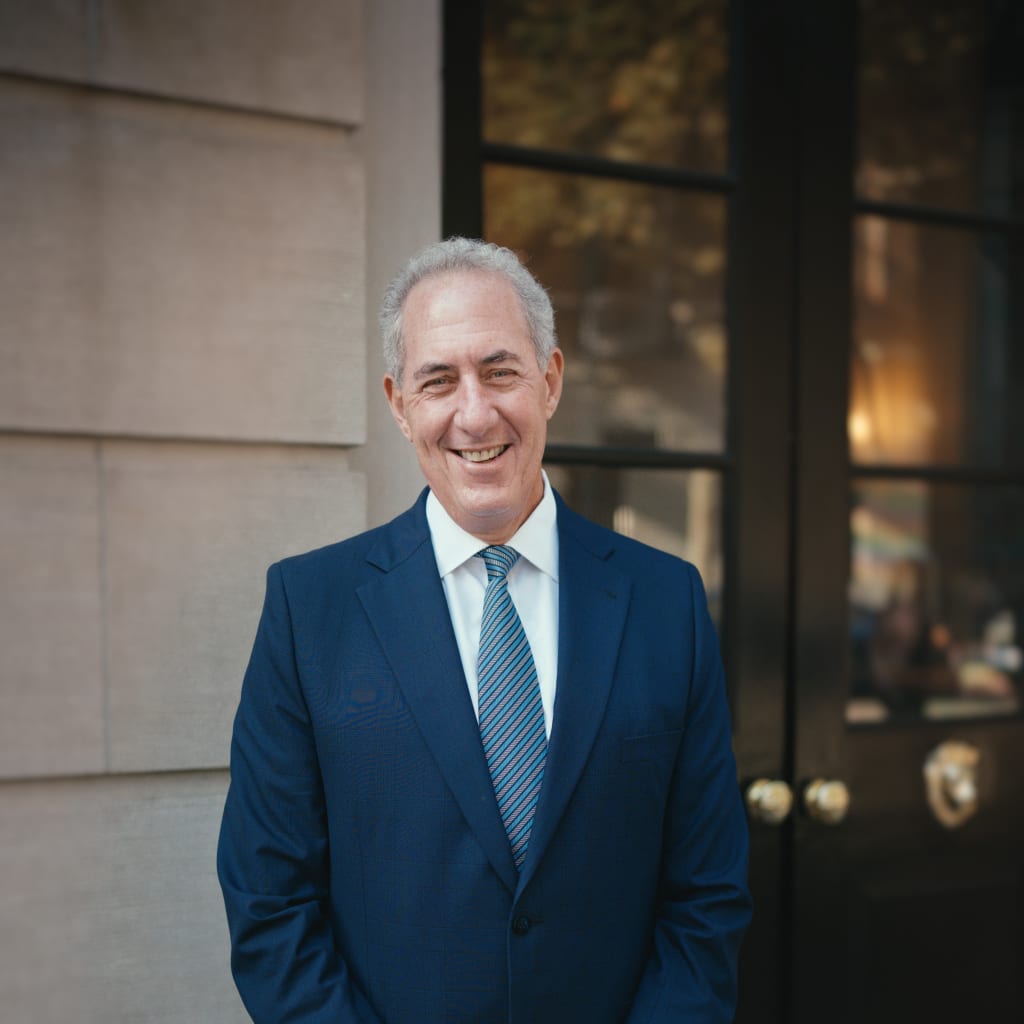
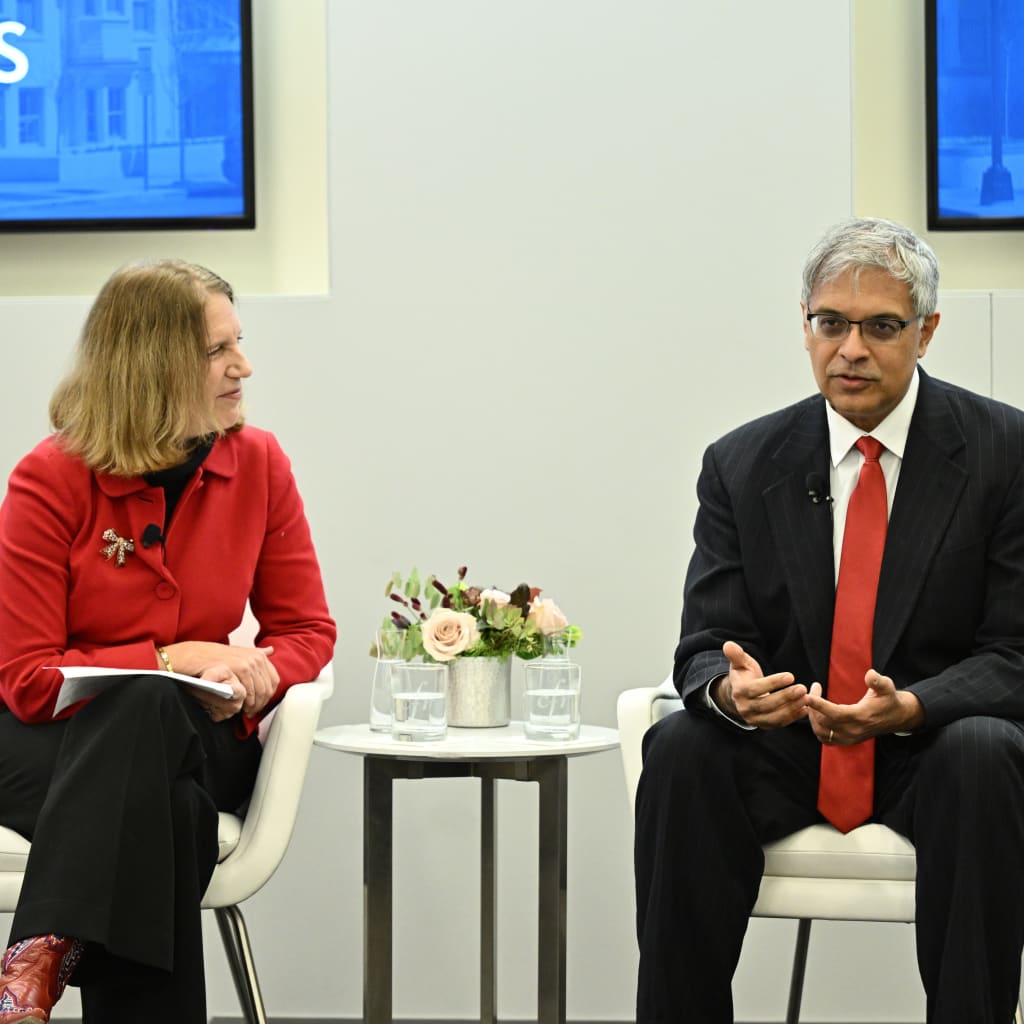
CFR in 2026: A Look Back
The Council—through its experts, content, convenings, and outreach—continued to inform U.S. engagement with the world throughout the year, as illustrated below and across this annual report.
The David Rockefeller Studies Program
The David Rockefeller Studies Program, CFR’s think tank, analyzes pressing global challenges and offers actionable steps that policymakers and citizens can take to address them. The work of the program remains vital to conversations surrounding U.S. engagement in the world. As the foreign policy landscape has shifted, so has the Studies Program, better positioning the Council to be a crucial source of relevant, nonpartisan perspectives on the most pressing questions of today.
The Studies Program welcomed nine new fellows over the past year, deepening the Council’s bench on issues of strategic importance. Jim Baker joined as senior fellow for strategic competition; Sadanand Dhume joined as senior fellow for India, Pakistan, and South Asia; Elisa Ewers joined as senior fellow for Middle East studies; Edward Fishman joined as senior fellow and director of the Maurice R. Greenberg Center for Geoeconomic Studies; Chris McGuire joined as senior fellow for China and emerging technology; Vinh X. Nguyen joined as senior fellow for artificial intelligence (AI); Tony Oweke joined as research fellow for AI; Stephanie Psaki joined as senior fellow for global health; and Joseph Torigian joined as senior fellow for Asia studies.
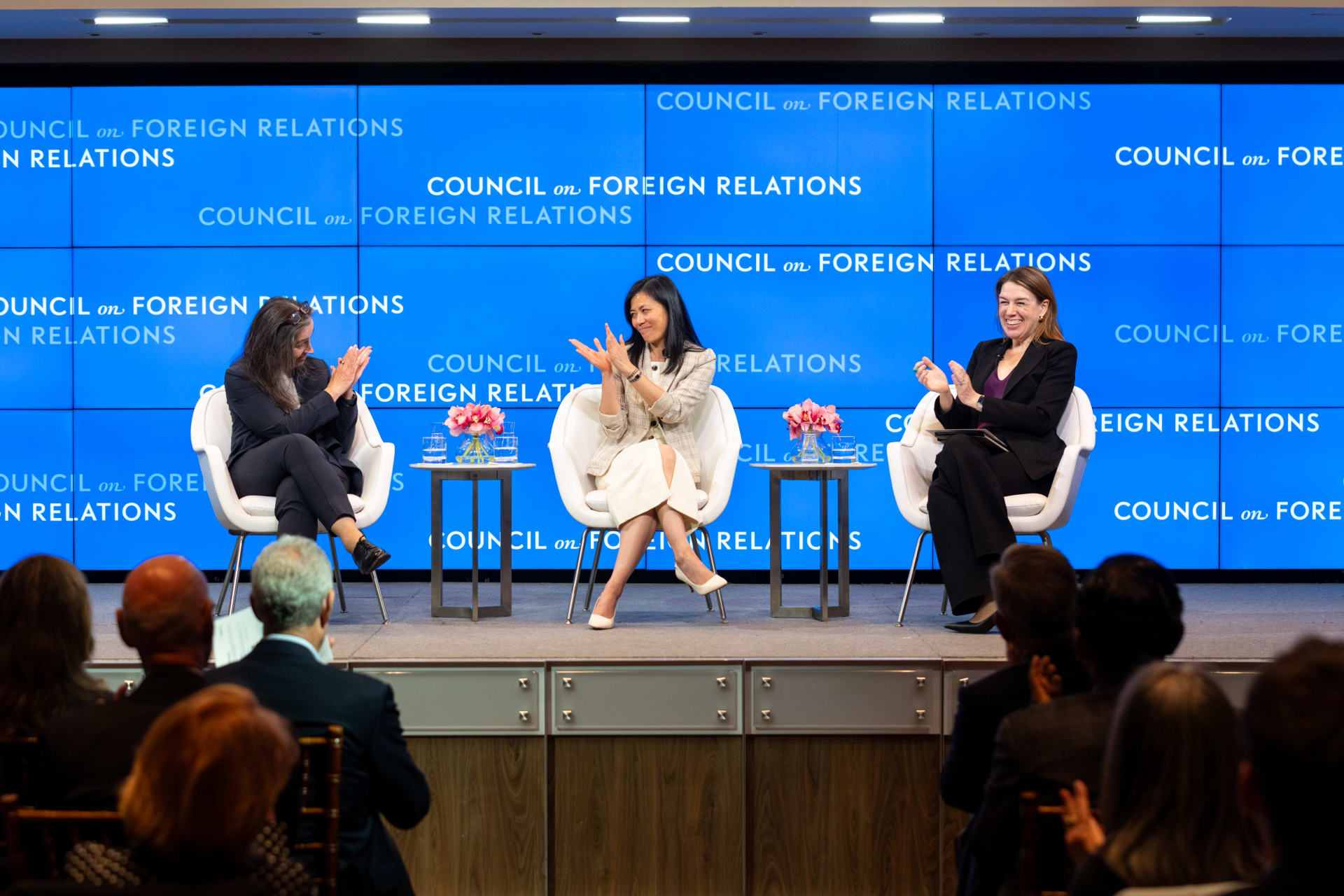
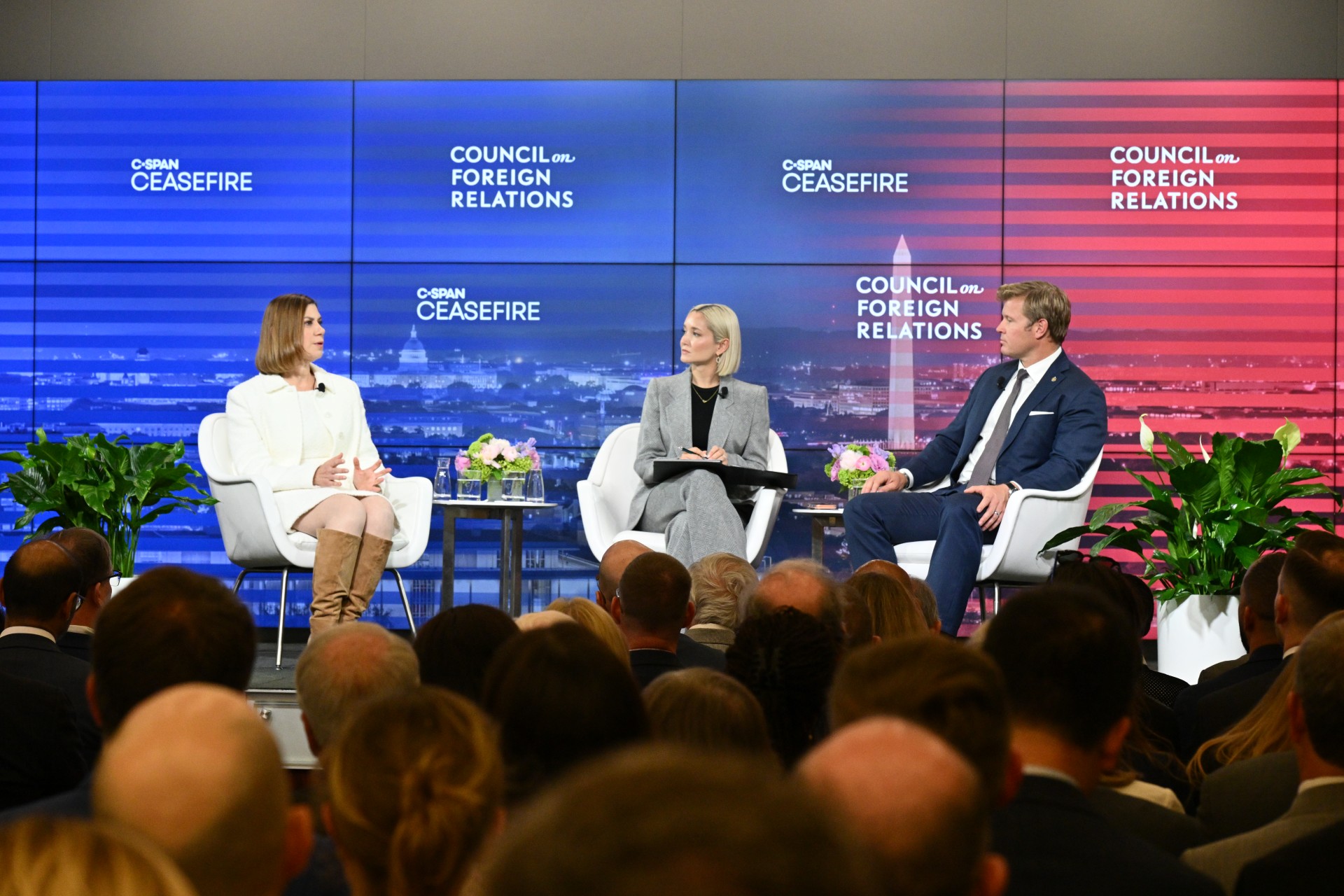
In May 2026, the Studies Program launched the Future of American Strategy Initiative. Directed by Rebecca Lissner, the multiyear, CFR-wide effort aims to chart a course for U.S. foreign policy and reevaluate American strategy—accepting the reality that there will be no going back to business as usual and seeking creative ideas for the future. The initiative launched with an event in Washington, DC, that featured sessions with Senators Elissa Slotkin (D-MI) and Tim Sheehy (R-MT) and former Deputy National Security Advisors Jon Finer and Victoria C. Coates. It also published a collection of articles from twenty-seven fellows exploring the evolving strategic environment the United States will face over the next decade. In the coming years, the Future of American Strategy Initiative will convene diverse thinkers to generate fresh, ambitious ideas that address the challenges and seize the opportunities of the world to come.
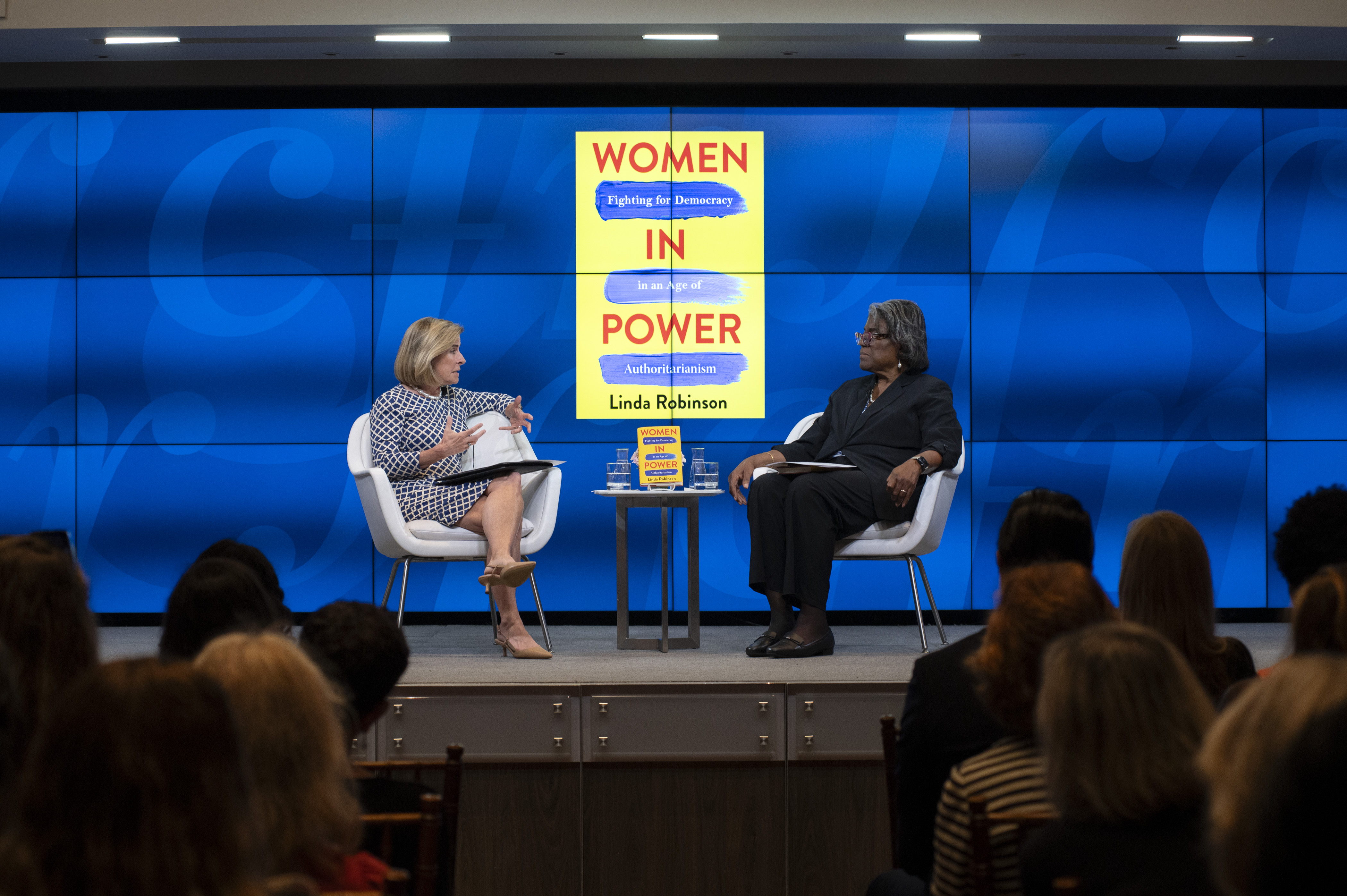
CFR fellows published three books in the 2026 fiscal year. Michelle D. Gavin’s The Age of Change: How Urban Youth Are Transforming African Politics explores how Africa’s surging and rapidly urbanizing youth population will reshape the continent’s politics and require great powers to reconsider how they compete there. Sebastian Mallaby’s The Infinity Machine: Demis Hassabis, DeepMind, and the Quest for Superintelligence, which became a New York Times best seller, profiles Google DeepMind’s CEO and casts him as a defining figure of the AI era. Linda Robinson’s Women in Power: Fighting for Democracy in an Age of Authoritarianism examines how women on the front lines of politics are defending democracy against rising authoritarianism, disinformation, and political violence.
In addition to those important works, CFR scholars published more than eight hundred articles, op-eds, and reports over the last twelve months, appearing in Bloomberg, the Financial Times, Foreign Affairs, Foreign Policy, the New York Times, the Wall Street Journal, and the Washington Post, among many other outlets. Fellows brought their expertise to bear on the U.S. war with Iran and tensions across the Middle East, competition with China, the war in Ukraine, the rise of AI, U.S. trade policy, the U.S. economy and the dollar, global public health, and dozens of other important topics.
CFR fellows took their first-rate knowledge directly to lawmakers on Capitol Hill, briefing and testifying on the reauthorization of the Development Finance Corporation, sanctions on Russia, religious freedom in Africa, export controls and semiconductor manufacturing, the national security implications of AI, competition with China, the U.S. war with Iran, energy security in the Middle East, accountability for the abduction of children from Ukraine, and more. Executive branch officials also sought out fellows for expert briefings on issues involving China, Russia, Europe, AI and emerging technology, Middle East tensions and the Strait of Hormuz, critical minerals, and conflict prevention.
[Video: https://www.youtube.com/live/kWBwua8BAkU?si=6TeQqOPwiCu7_NrA]

At a media briefing, CFR experts discuss the U.S.-Israeli strikes on Iran.
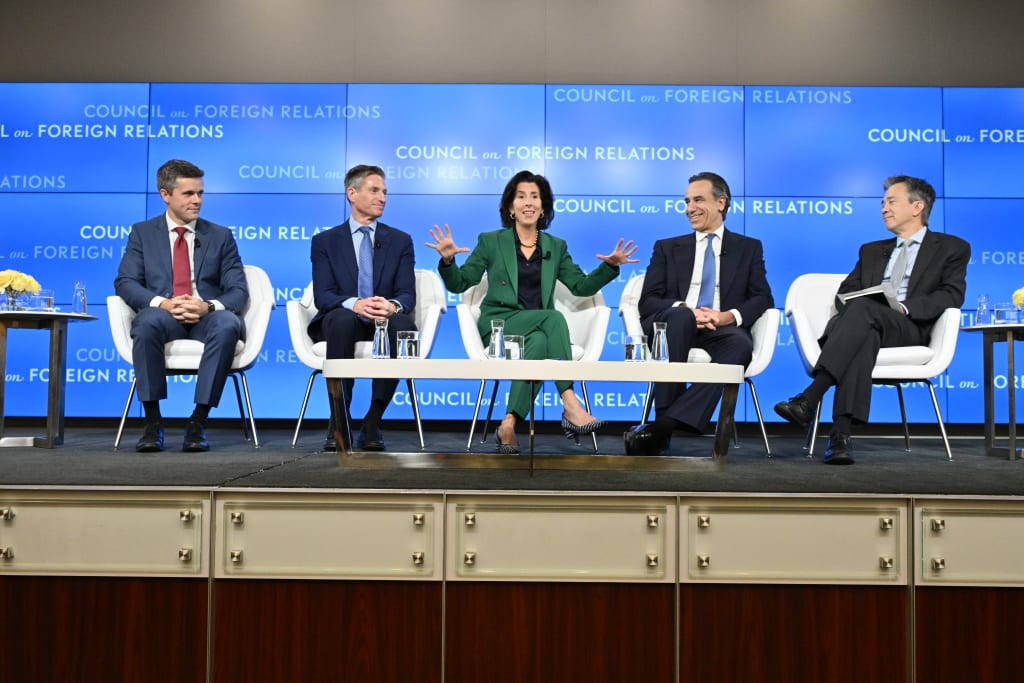
Meanwhile, the Studies Program launched several major cross-department efforts and built on the success of existing programs. In November 2025, under the Task Force Program overseen by Anya Schmemann, the Task Force on U.S. Economic Security released its report, U.S. Economic Security: Winning the Race for Tomorrow’s Technologies. It was cochaired by Justin G. Muzinich, CFR Board of Directors member and former U.S. deputy secretary of the treasury; Gina M. Raimondo, CFR distinguished fellow and former U.S. secretary of commerce; and James D. Taiclet, CFR Board of Directors member and Lockheed Martin chairman, president, and CEO. CFR Senior Fellow Jonathan E. Hillman served as the project director. The report garnered significant interest from policymakers, and the team briefed nearly thirty members of the House of Representatives and Senate from both the Republican and Democratic Parties. Several of the Task Force’s recommendations were incorporated into draft legislation, including the Independence Investment Fund Act, the Biomanufacturing Excellence Act, and a committee draft of the Economic Security Bureau Act.
The Task Force Program also announced two new Task Forces. The Task Force on Energy Security, Technological Innovation, and American Leadership will identify a long-term strategy to advance U.S. leadership in the global energy system. It is operated in partnership with the Harvard Kennedy School’s Belfer Center for Science and International Affairs and is cochaired by former Hess Corporation CEO John B. Hess, Stanford Doerr School of Sustainability Dean Arun Majumdar, and Belfer Center Director and CFR Board of Directors member Meghan L. O’Sullivan, with CFR Senior Fellow David M. Hart serving as project director. The Task Force on the Future of Cuba will examine what the United States can do to promote a stable, prosperous, and democratic Cuba over the next decade. Former Governor of Arkansas Asa W. Hutchinson, former U.S. Ambassador to Mexico Roberta S. Jacobson, and former World Bank Chief Economist Carmen M. Reinhart are cochairs. CFR Fellow Will Freeman serves as project director.
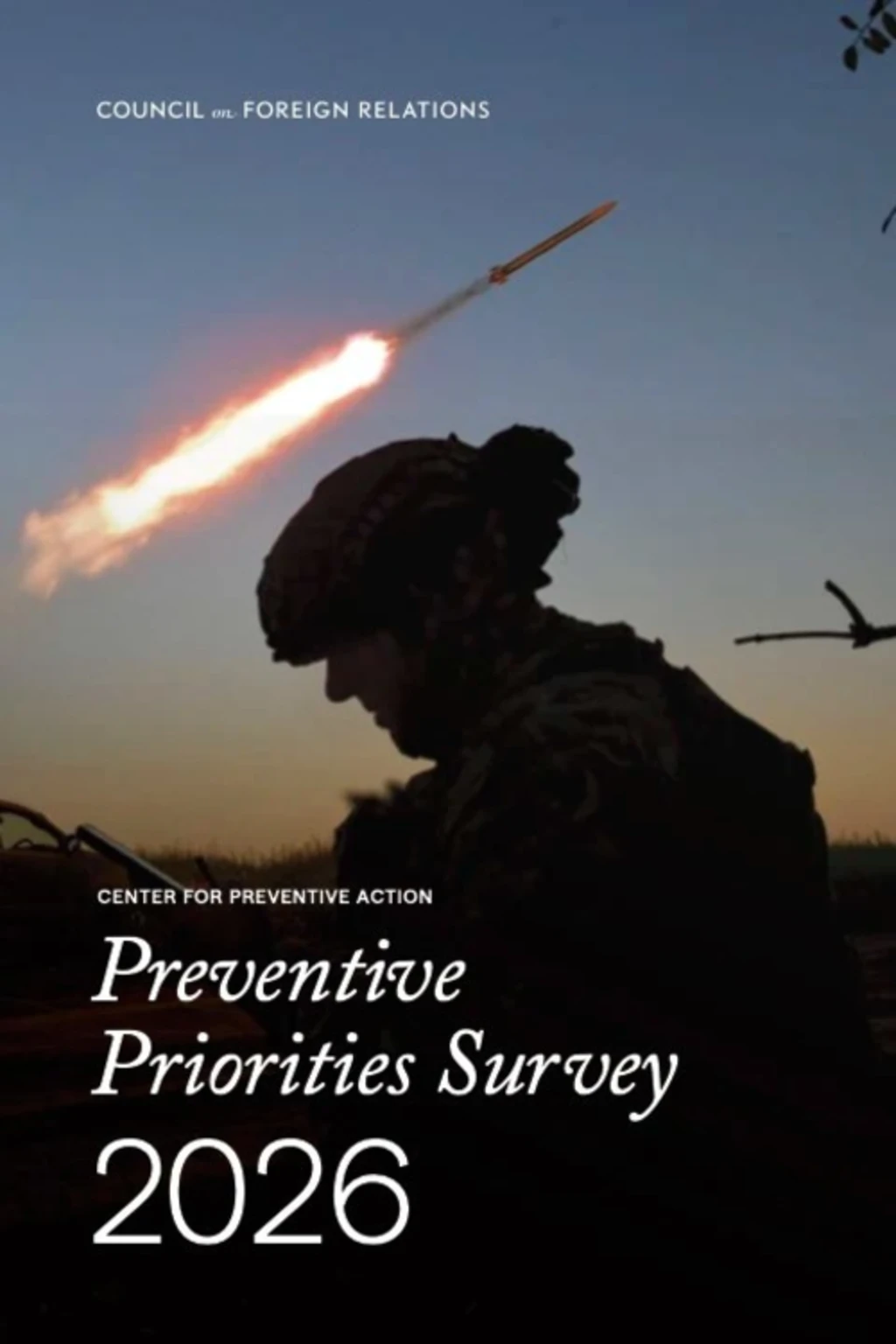
In December 2025, the Center for Preventive Action, directed by Paul B. Stares, released the eighteenth Preventive Priorities Survey—which polls more than six hundred U.S. foreign policy practitioners and experts—and ranked thirty possible conflict-related scenarios that could affect U.S. interests. In February 2026, CFR’s new Wachenheim Center for Peace and Security, directed by Stares, hosted its annual Ukraine Symposium. Panelists explored three critical issues for securing Ukraine’s future: achieving a just and durable peace, ensuring its long-term security, and helping it rebuild and recover from the war. The event featured several ambassadors, including Danish Ambassador to the United States Jesper Møller Sørensen, Estonian Ambassador to the United States Kristjan Prikk, French Ambassador to the United States Laurent Bili, and Ukrainian Ambassador to the United States Olga Stefanishyna, as well as Senator Jeanne Shaheen (D-NH), ranking member of the Senate Foreign Relations Committee and member of the Senate Armed Services Committee, and Senator Thom Tillis (R-NC), chair of the Senate Judiciary Subcommittee on Intellectual Property and member of the Senate Finance Committee.
In April 2026, CFR’s China Strategy Initiative, directed by Rush Doshi, hosted the second annual Endless Frontiers retreat in partnership with Baylor University, Rice University, Texas A&M University, and the University of Texas at Austin. The event featured White House officials, private-sector executives, scientists, investors, and experts who discussed how to rebuild the foundation of American strength to compete with China. In June 2026, the initiative and CFR’s Global Health Program, directed by Thomas J. Bollyky, published “The Pharma Choke Point: How to Reduce U.S. Dependence on Chinese Pharmaceutical and Biotechnology Supply Chains,” which exposes the United States’ troubling dependence on China for pharmaceuticals—and outlines what can be done about it.
The Council also launched the LEAD AI Program in fiscal year 2026. Directed by Kat Duffy, it unites leaders from the C-suite, the tech industry, government, and civil society to identify and scale AI deployment solutions that strengthen democratic principles. The program hosted a new Science Fair series that highlighted cutting-edge developments in emerging technologies that will affect foreign affairs, including quantum and nuclear fusion.
Finally, the Council awarded seventeen fellowships for the 2026–27 fellowship cycle, spanning domestic and international placements and including an Edward R. Murrow press fellow based in Washington, DC, and a military fellow from the U.S. Coast Guard based in New York. To learn more about CFR’s Fellowships Program visit cfr.org/fellowships.
Council of Councils
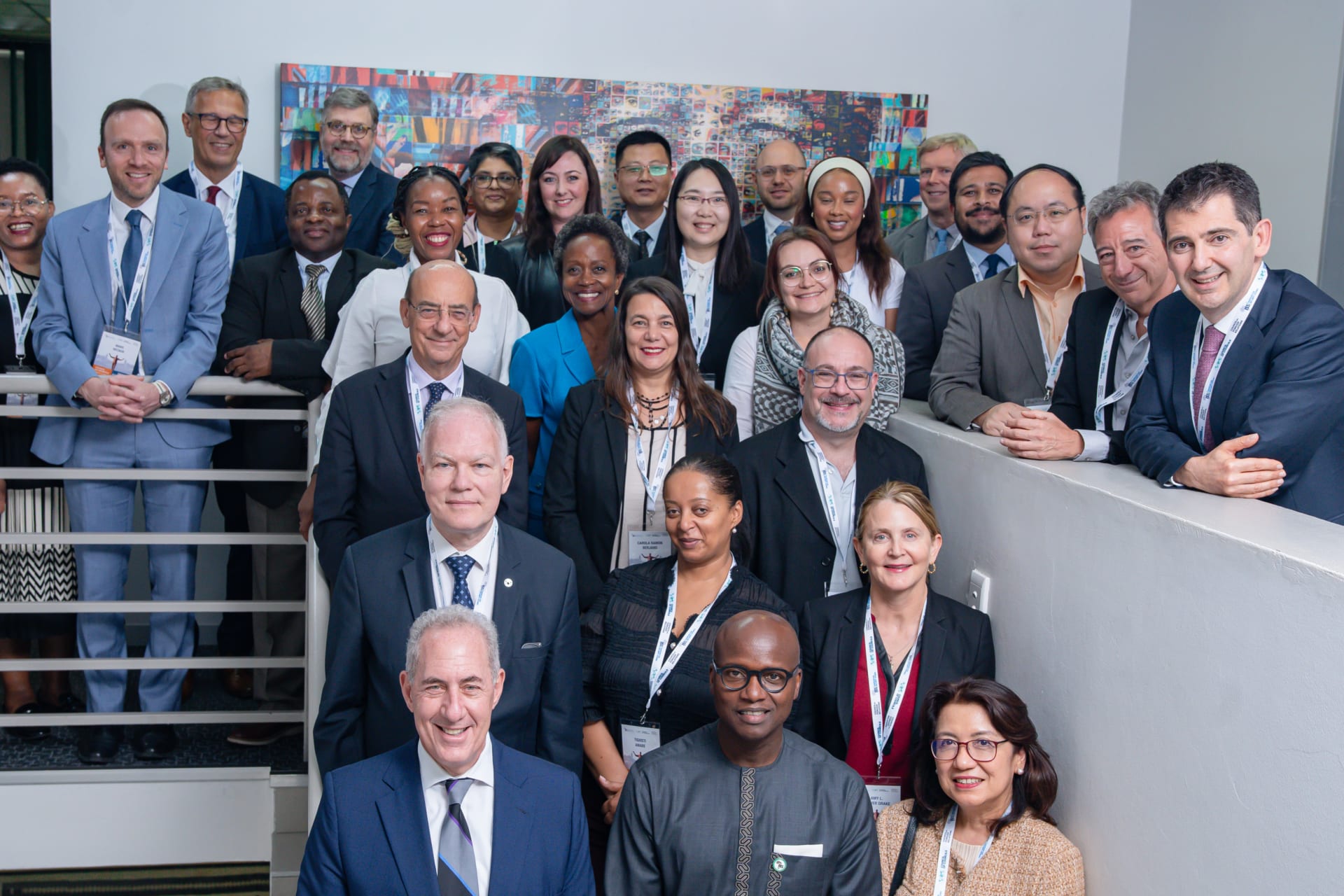
The Council of Councils, a CFR initiative led by Michelle D. Gavin, is a consortium of twenty-seven of the world’s leading think tanks. The group of top thought leaders meets four times a year in virtual and in-person settings to consider complex topics from different regional lenses, form consensus, and inform policymakers. Throughout the fiscal year, member institutes contribute to articles that analyze pressing geopolitical issues.
In May 2026, the Council of Councils marked its fifteenth annual conference. Participants convened in Washington, DC, to discuss the topics reshaping geopolitics, including the rise of AI, rapidly changing dynamics in the Middle East, and the rearming of the world. Those global challenges—taking place at a time when the post–World War II order has eroded—are best addressed through open dialogue and a reimagining of multilateralism.
In October 2025, the Council of Councils cohosted the sixteenth regional conference with the Institute for Security Studies in Pretoria, South Africa. Members from seventeen policy institutes in fifteen countries convened for the first time on the African continent to discuss the changing state of multilateralism, trafficking and terrorism, technology governance, and Africa’s place in global affairs, among other topics.
This past year, the Council of Councils published nine articles, including analyses of the Munich Security Conference, the United Nations at eighty years, and the changing dynamics of power and trade. Contributions also examined conflict and cooperation in the Red Sea, commencing a larger focus on that region within the initiative.
Meetings
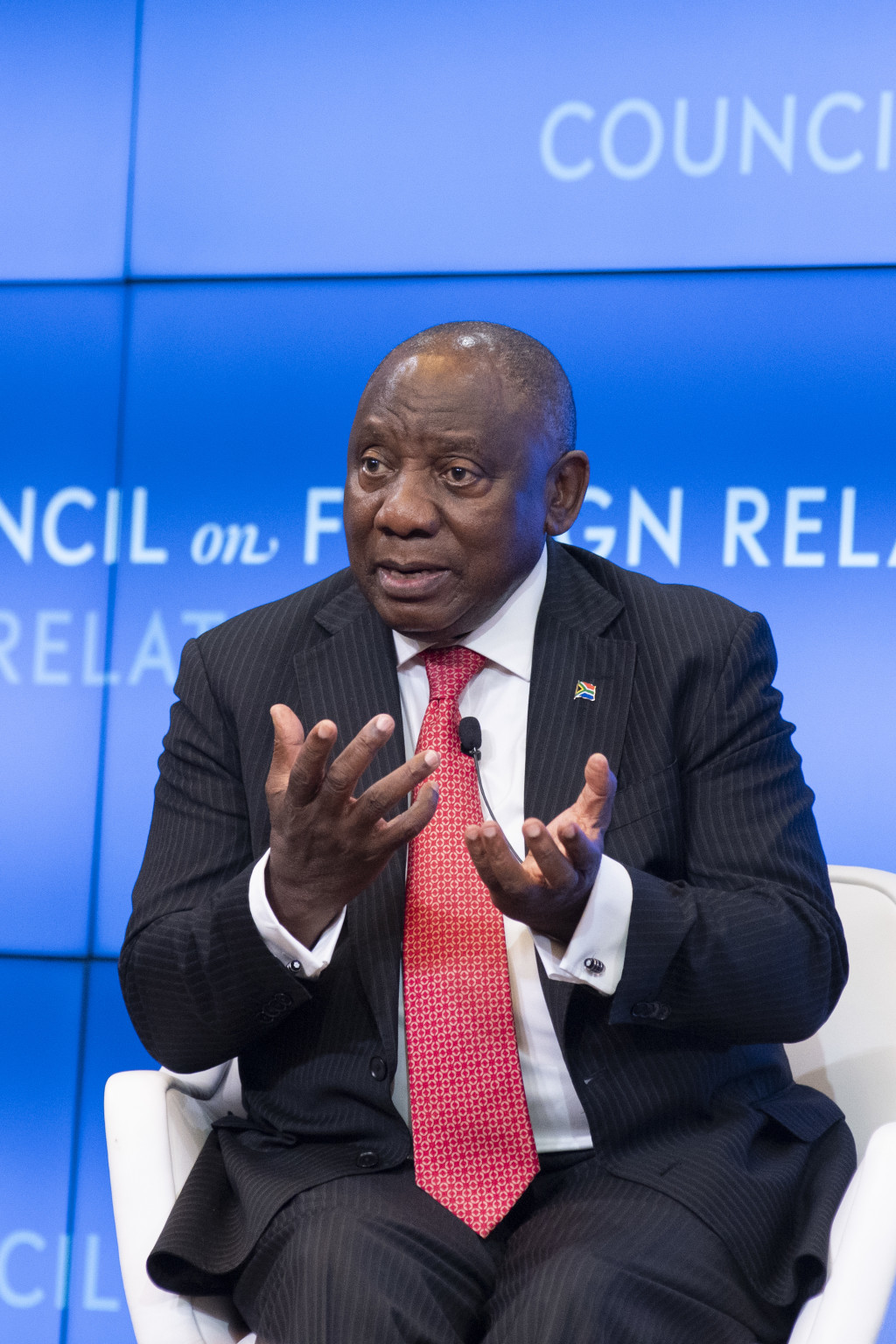
Every year, the Meetings Program brings leaders and experts in government, business, media, and academia to CFR for discussions with members on critical international issues facing the United States and the world.
During the UN General Assembly in September 2025, CFR hosted several heads of state, including Canadian Prime Minister Mark Carney, Finnish President Alexander Stubb, Namibian President Netumbo Nandi-Ndaitwah, Somali President Hassan Sheikh Mohamud, South African President Cyril Matamela Ramaphosa, Spanish King Felipe VI, and Yemeni President Rashad Muhammad Al-Alimi. The Council also hosted foreign ministers, including Ecuadorian Minister of Foreign Affairs and Human Mobility Gabriela Sommerfeld, Syrian Minister of Foreign Affairs and Expatriates Asaad Hassan al-Shaibani, Turkish Minister of Foreign Affairs Hakan Fidan, Iranian Minister of Foreign Affairs Abbas Araghchi, and United Arab Emirates Foreign Minister Abdullah bin Zayed Al Nahyan, and influential individuals, such as International Energy Agency Executive Director Fatih Birol, UN High Commissioner for Human Rights Volker Türk, and His All-Holiness Ecumenical Patriarch Bartholomew of Constantinople.
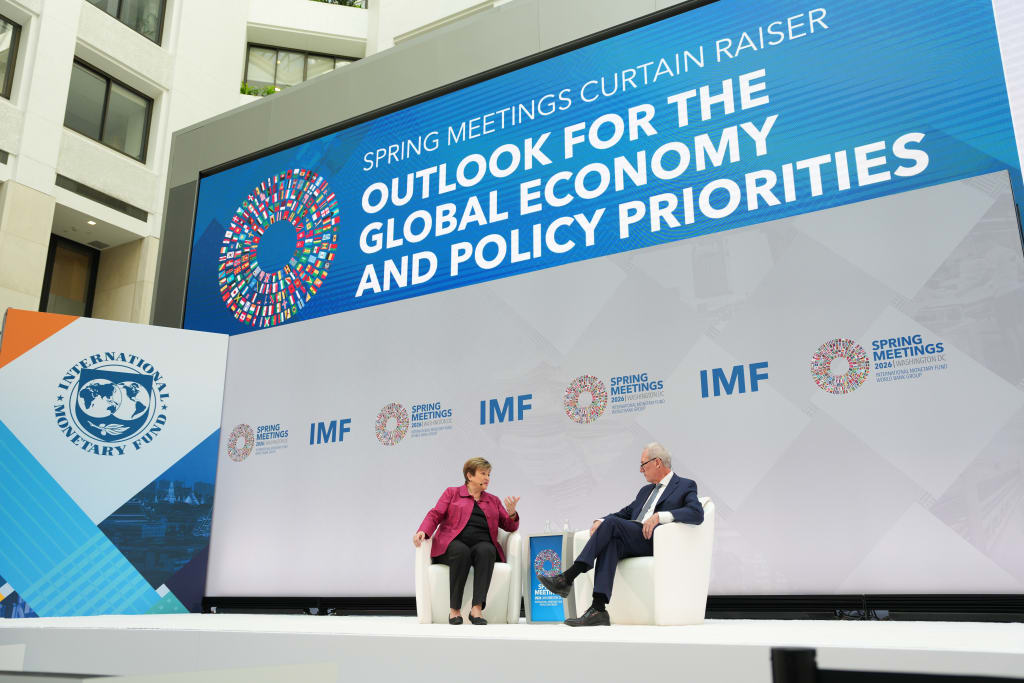
On the sidelines of the World Bank and International Monetary Fund (IMF) Fall and Spring Meetings, the Council hosted World Trade Organization Deputy Director General Jennifer D. Nordquist, Asian Development Bank President Masato Kanda, and French President Emmanuel Macron’s Chief of Staff Emmanuel Moulin, as well as partnered with the IMF for an event with IMF Managing Director Kristalina Georgieva and CFR President Michael Froman. Other foreign officials who spoke to CFR members included Qatari Prime Minister Sheikh Mohammed bin Abdulrahman Al Thani, Israeli Minister of Foreign Affairs Gideon Sa’ar, Greek Minister of Foreign Affairs George Gerapetritis, and Ukrainian Minister of Finance Sergii Marchenko. Several ambassadors spoke with members at the Council, including the Danish, Estonian, French, Israeli, and Ukrainian ambassadors to the United States, while others hosted members at their embassies such as Japanese Ambassador to the United States Yamada Shigeo and Singaporean Ambassador to the United States Lui Tuck Yew.
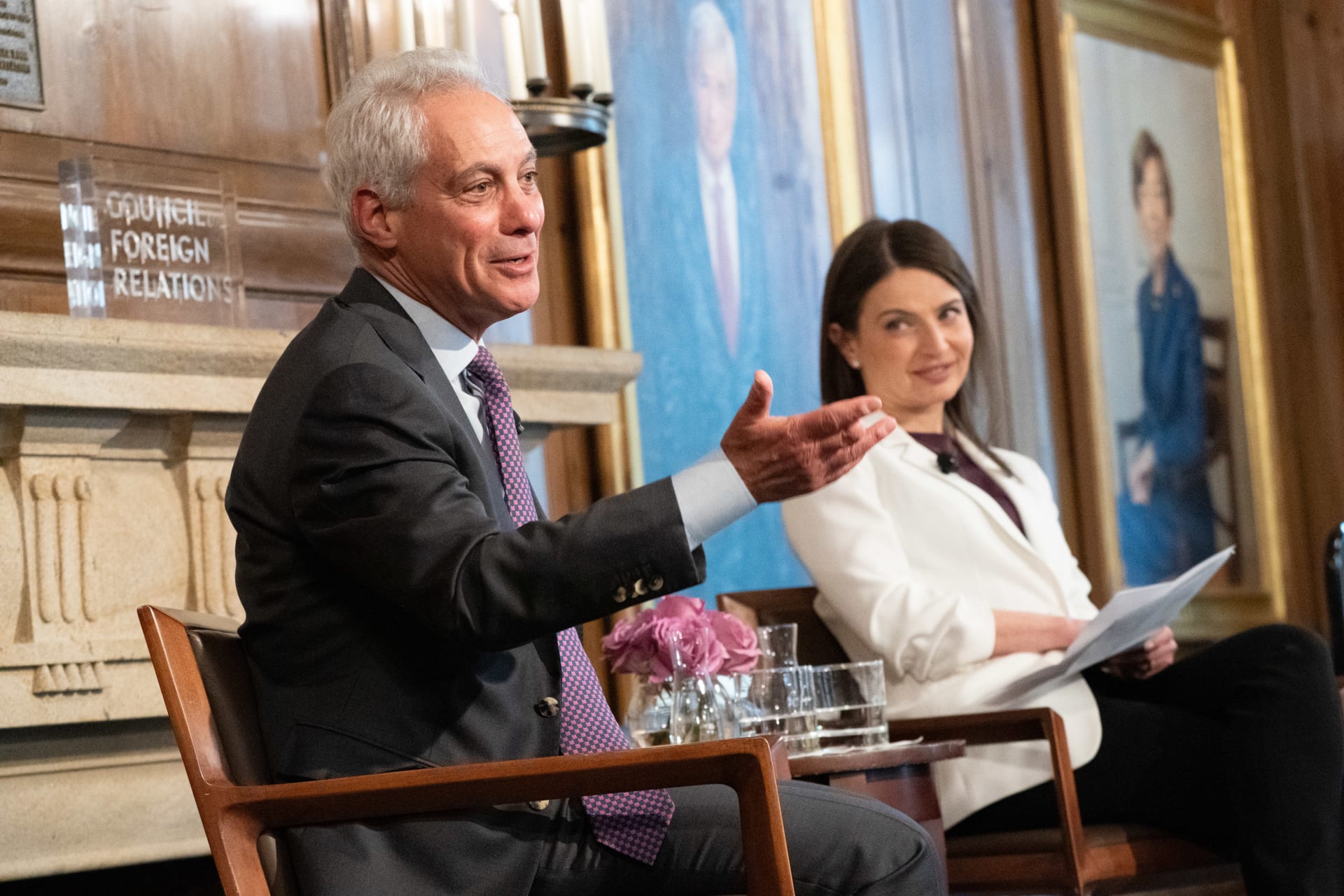
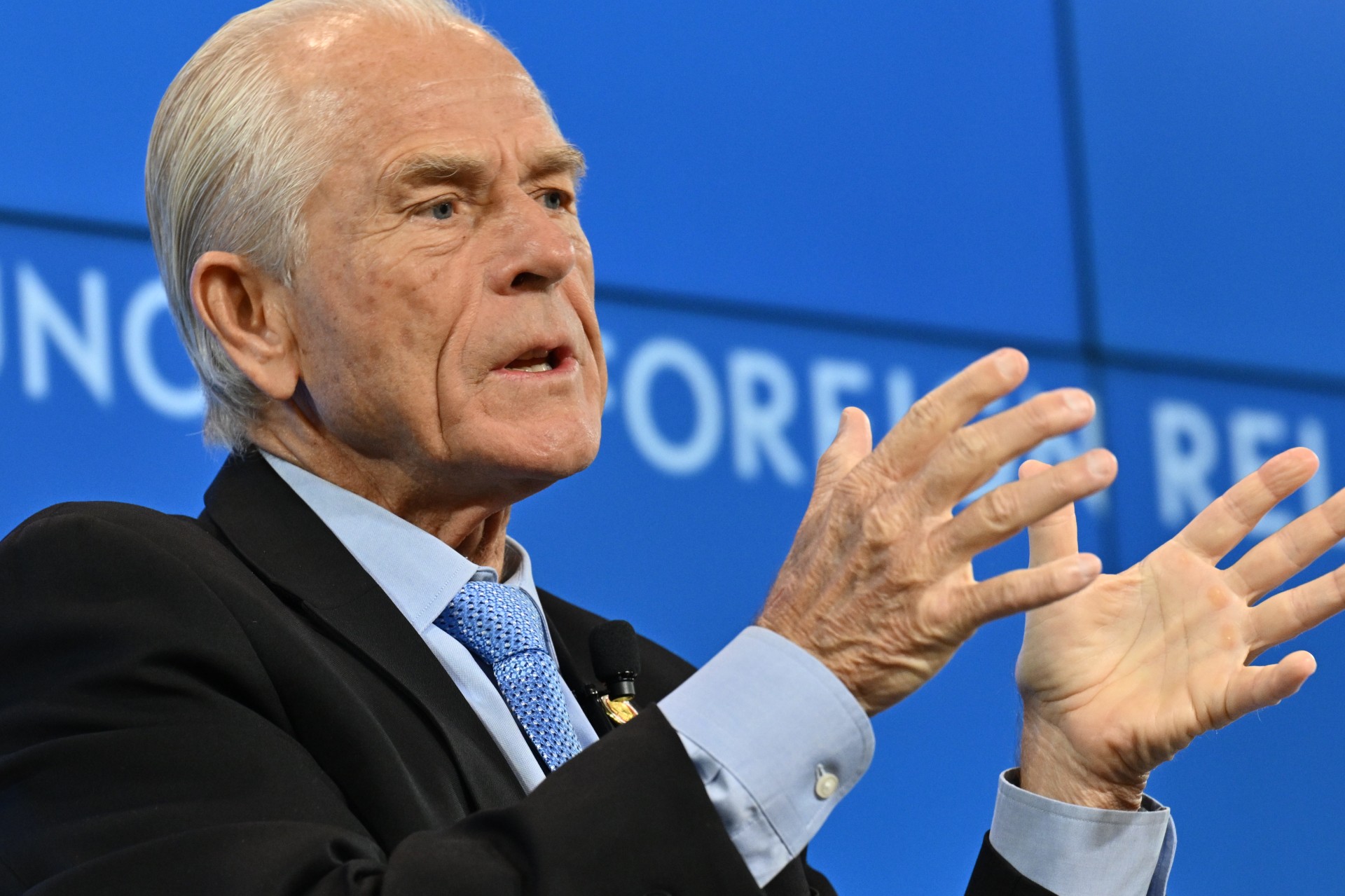
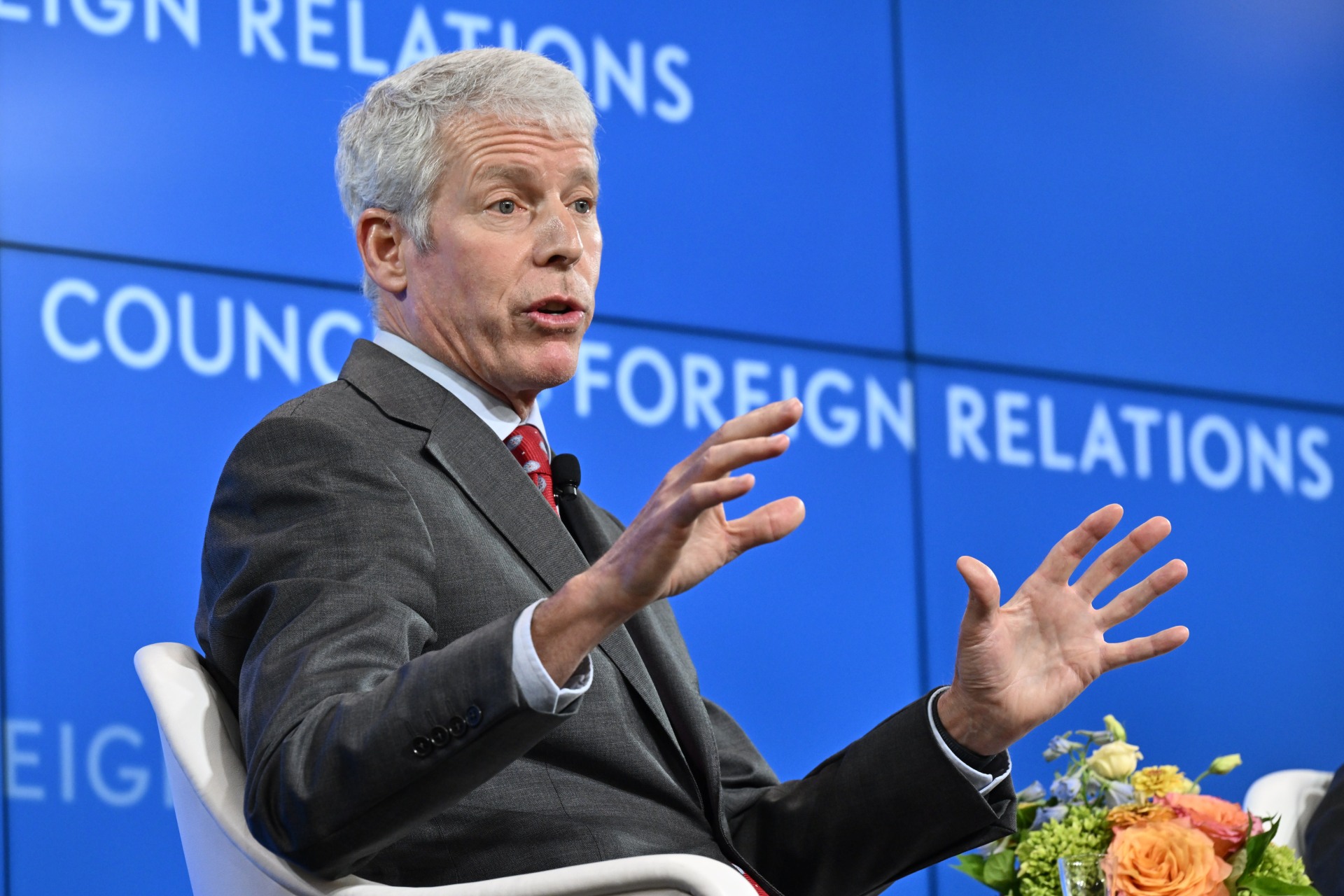
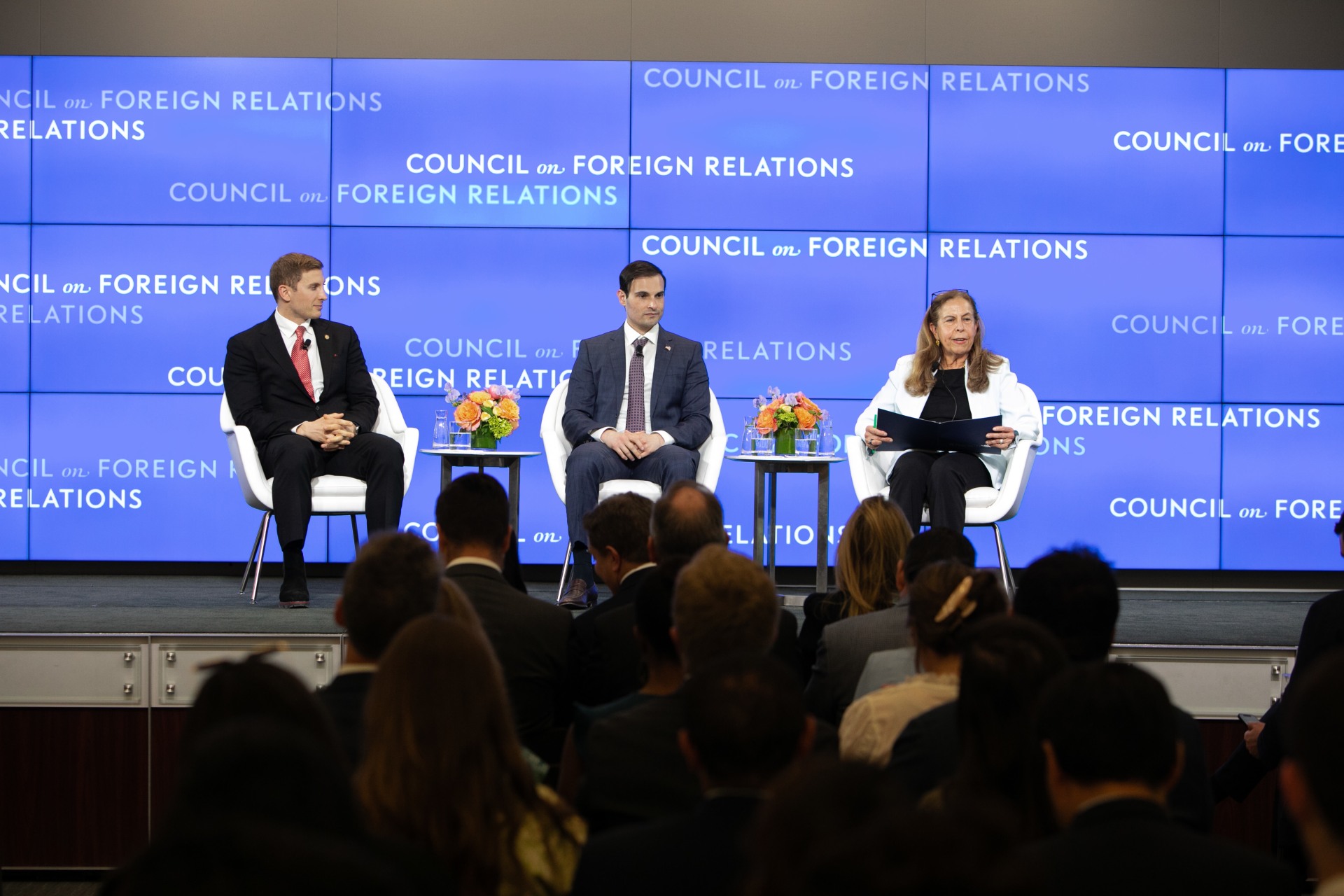
In line with its mission and its history of engaging every U.S. administration in office, this past year the Council focused its efforts on securing members of the Trump administration to speak with CFR members. CFR hosted nineteen events with current officials, including discussions with Secretary of Energy Christopher A. Wright, Assistant to the President and Senior Counsel for Trade and Manufacturing Peter K. Navarro, Director of the National Institutes of Health Jayanta Bhattacharya, Secretary of the Interior Douglas J. Burgum, U.S. Trade Representative Jamieson L. Greer, Acting Chair of the Council of Economic Advisers Pierre Yared, Undersecretary of Defense Elbridge A. Colby, Undersecretary of Energy for Science Darío Gil, Deputy National Security Advisor to the President and National Security Advisor to the Vice President Andrew Collison Baker, Export-Import Bank President John Jovanovic, and U.S. European Command and NATO Supreme Allied Commander Europe Alexus G. Grynkewich. The Council also hosted seventeen members of Congress, including four bipartisan panels.
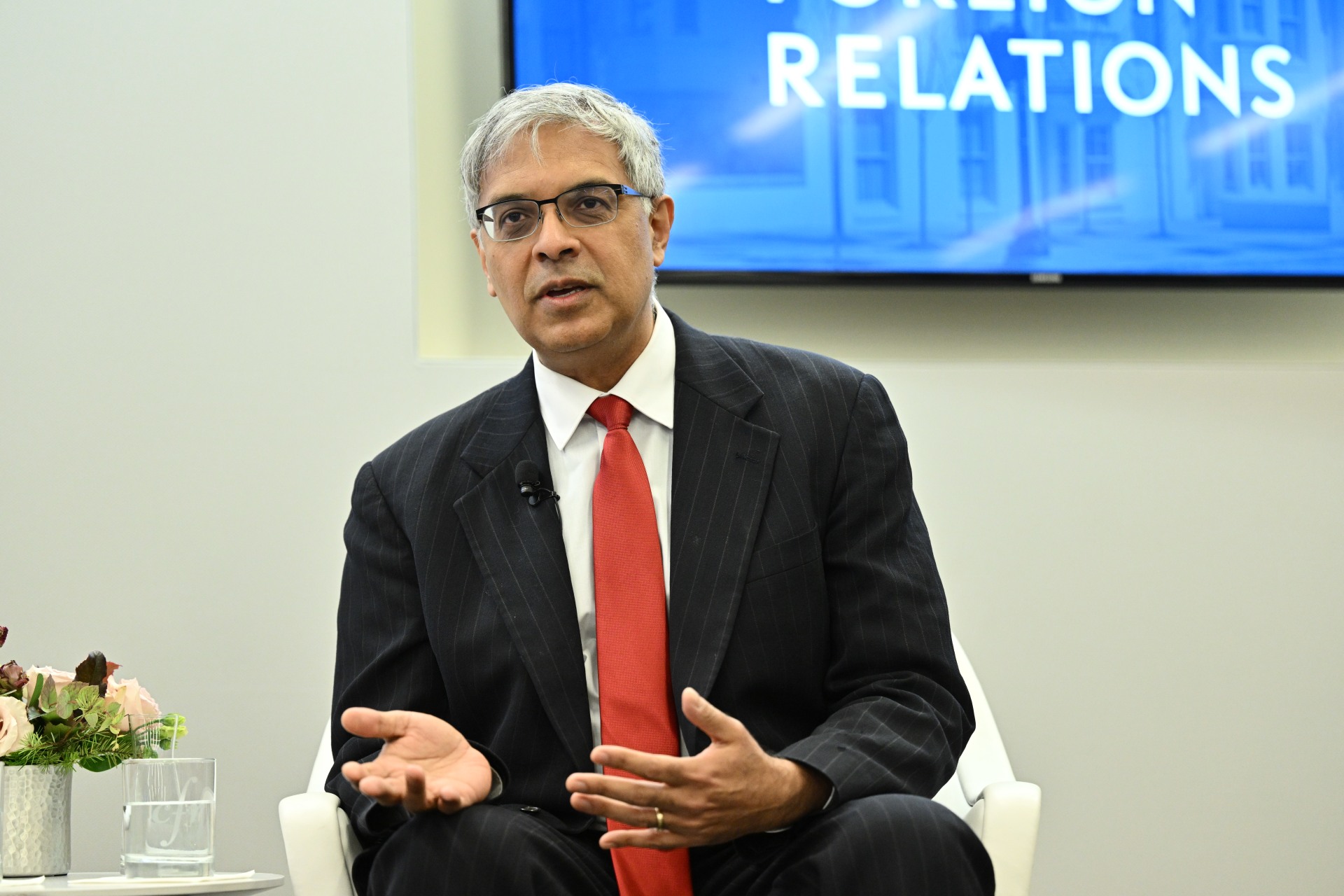
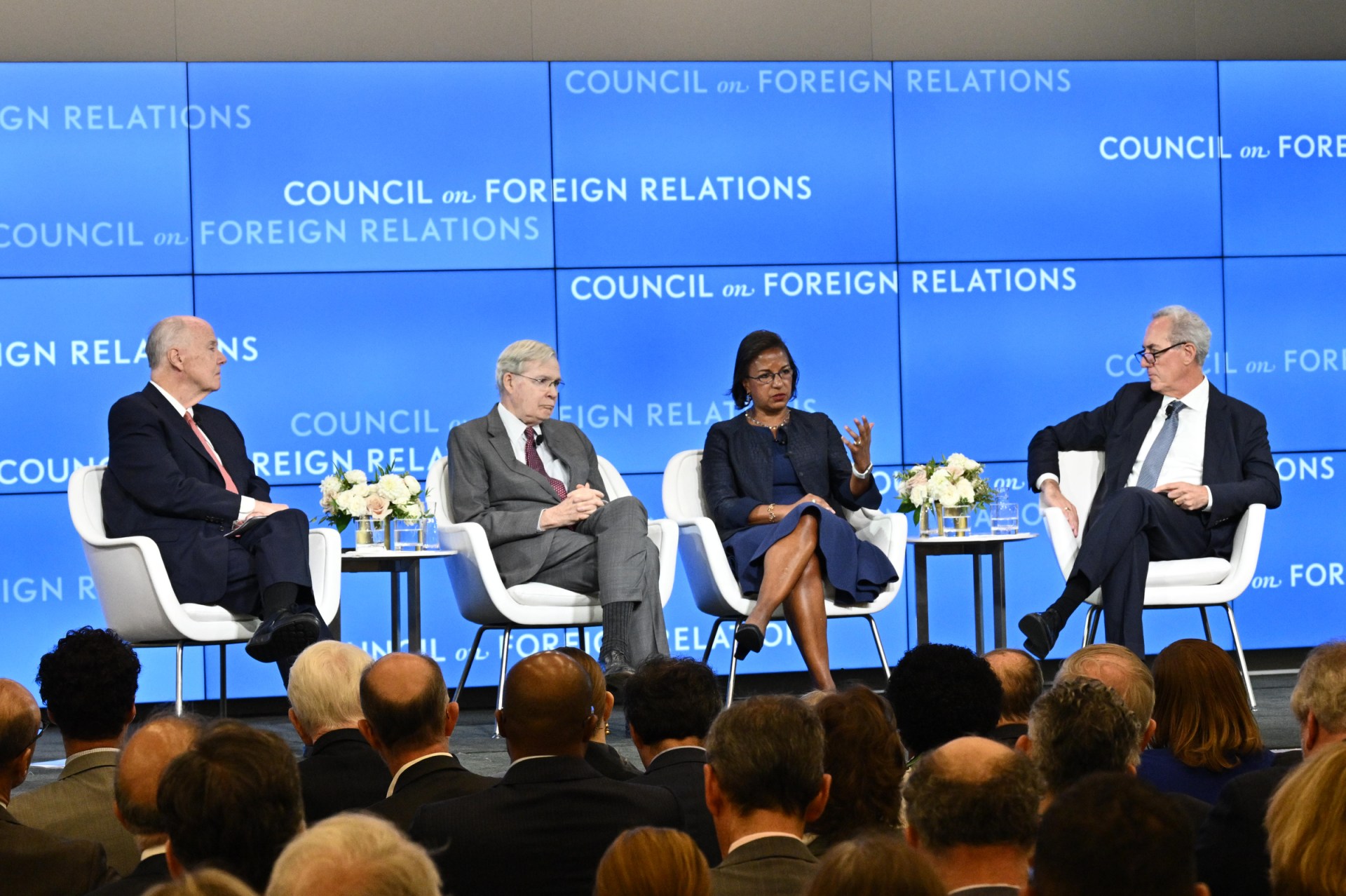
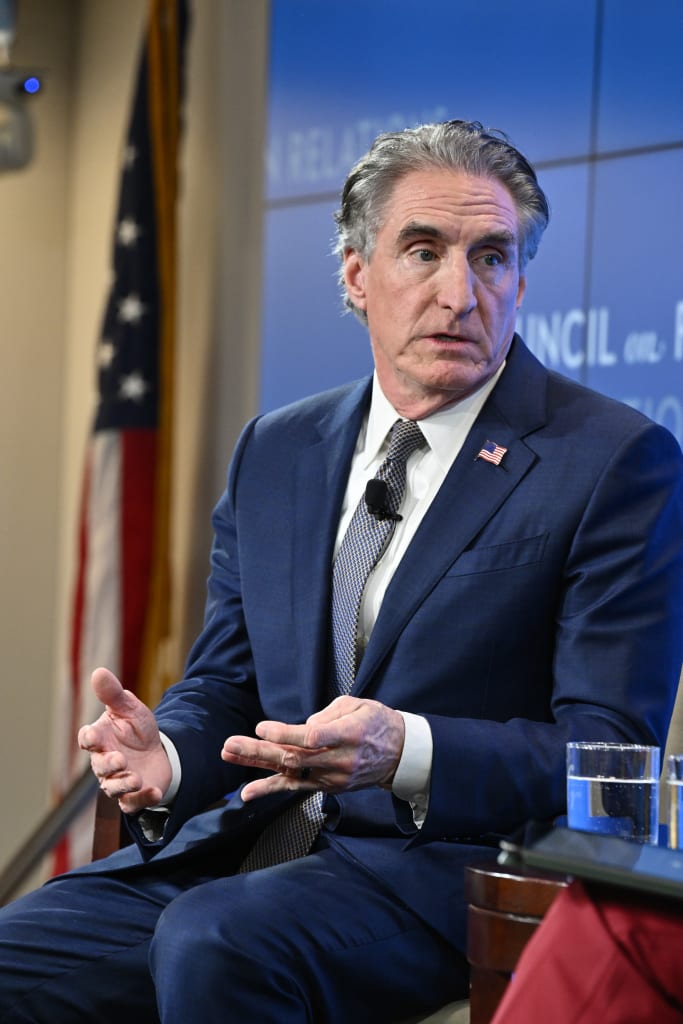
Since the outbreak of the U.S. war with Iran in February 2026, the Council has provided rolling coverage of the conflict’s wide-ranging implications, including Iran’s internal dynamics, geoeconomic consequences, the situation in Lebanon, the impact on the Gulf region and the U.S.-Israel relationship, food security, and the U.S. industrial base. The Council also continued to cover the wars between Hamas and Israel and between Russia and Ukraine, as well as U.S.-China relations.
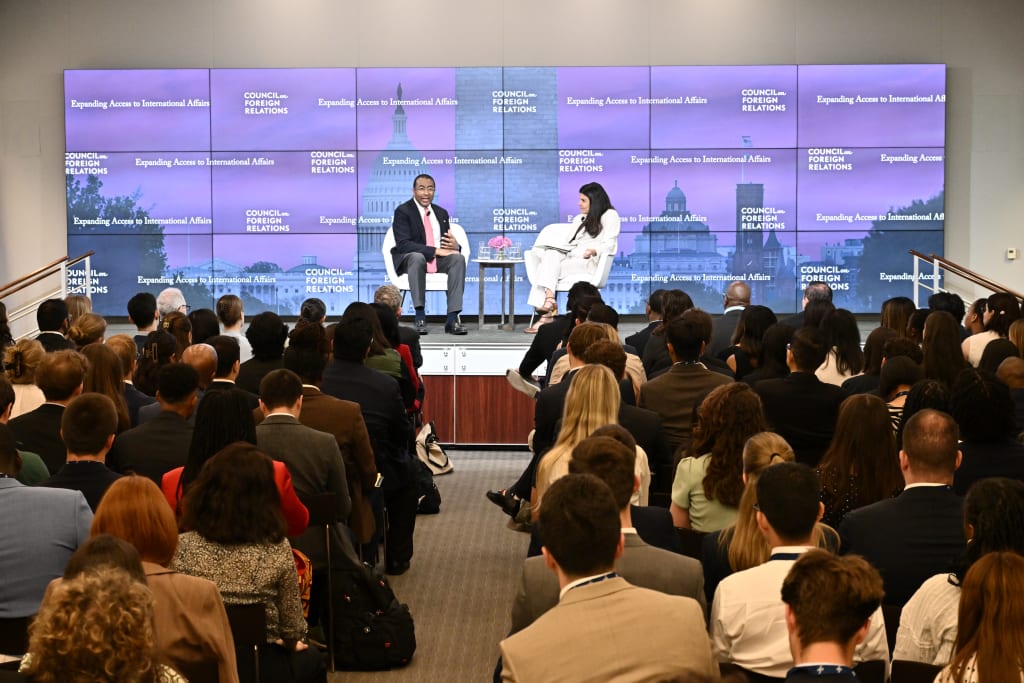
For the thirteenth consecutive year, CFR hosted the Conference on Expanding Access to International Affairs in June 2026, bringing together more than three hundred college and graduate students and young professionals from diverse backgrounds for two days of programming. That included keynote sessions with National Gallery of Art Deputy Director Eric L. Motley and MS Now’s The Weekend cohost Ayman Mohyeldin.
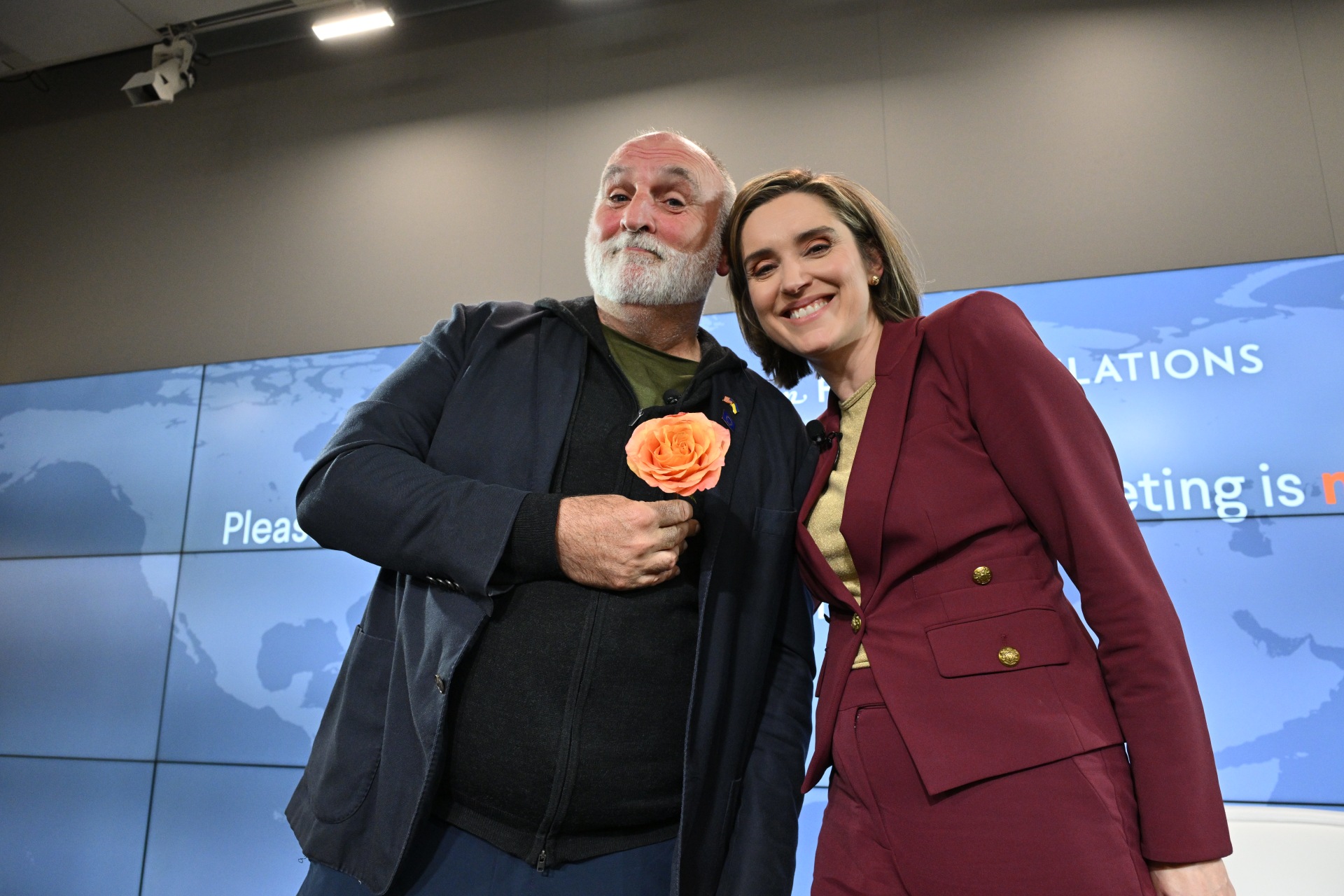
Innovative programming and partnerships continued this past year, including the Council’s partnership with Open to Debate; events at the 9/11 Memorial and Museum, International House, and Lincoln Center; live podcast tapings of Bloomberg’s Odd Lots, Wood Mackenzie’s Energy Gang, and a special episode of CFR’s The Spillover with World Bank President Ajay Singh Banga and Gina M. Raimondo. The Council partnered with the Reagan Institute to bring together pollsters on American viewpoints, the World Food Prize Foundation to host its annual award presentation and a panel on food security, and the International Rescue Committee for a discussion on delivering aid to conflict-affected states. The Daughters and Sons series—events open to members and their children and grandchildren—featured World Central Kitchen chef and founder José Andrés and Tulane University Distinguished Professor of History and Campaign Chair Walter S. Isaacson.
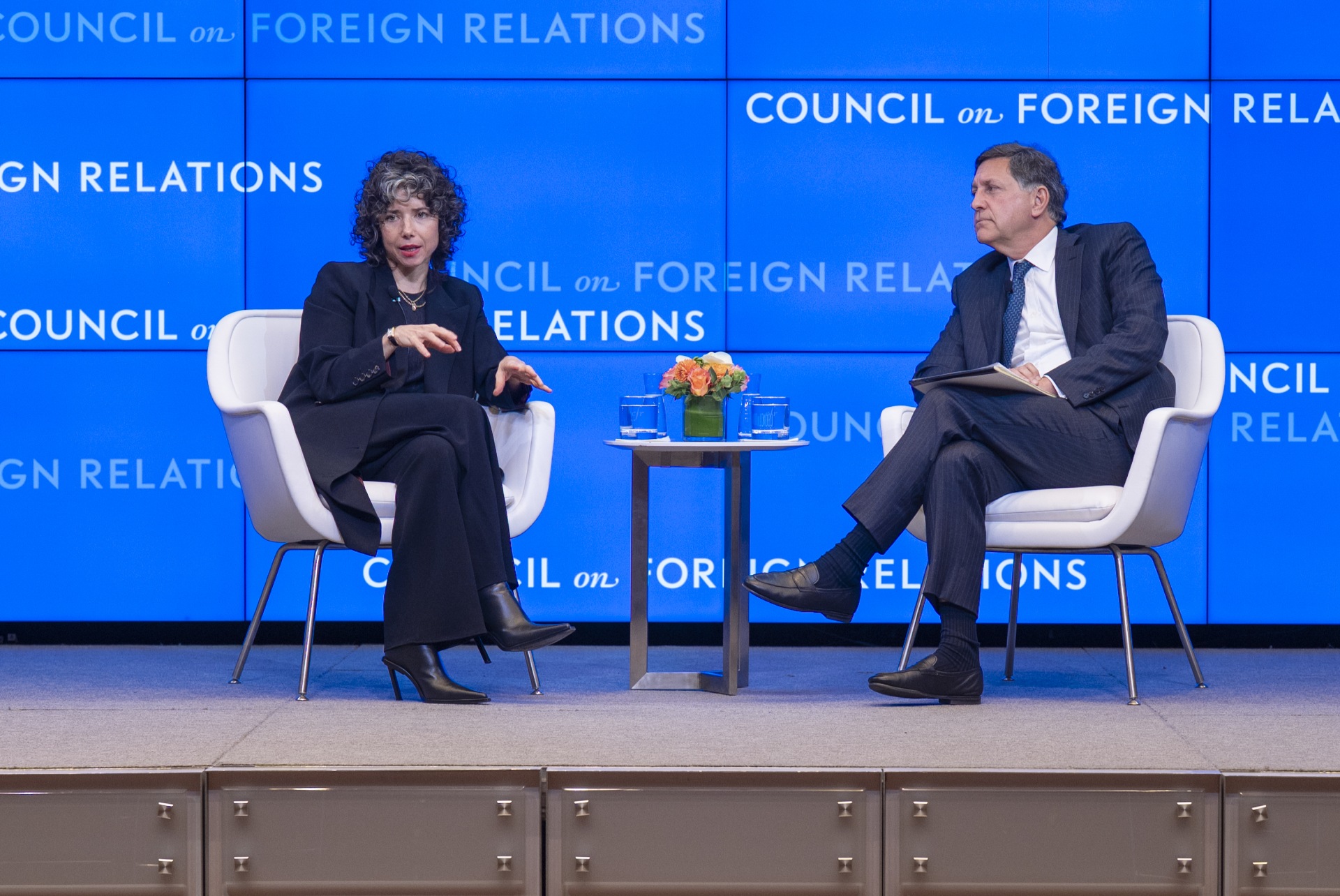
During the 2026 fiscal year, the Council examined the legacy of the September 11 attacks through a new series, Twenty-Five Years Later: Reflections on 9/11 and the War on Terror, featuring eyewitnesses and experts who discussed counterterrorism today and the attacks’ enduring influence on U.S. foreign policy. The Council launched the America at 250 series, which explores the evolution of the United States’ role in the world and the strategic challenges that lie ahead. Speakers have included Hoover Institution Kleinheinz Senior Fellow Stephen P. Kotkin and CFR Senior Fellow on Democracy Timothy Snyder. This year’s Hauser Symposium was part of the series and explored global engagement after 1945, the unfulfilled promise of the post–Cold War era, and the future of the U.S.-led international order under the Trump administration.
The Stephen M. Kellen Term Member Program, which provides five-year memberships for people age thirty to thirty-six, delivered a robust slate of programming spanning AI, national security, global economics, and leadership. A highlight was the thirtieth annual Term Member Conference in October 2025 in New York, the largest to date with more than five hundred attendees—a 15 percent increase from the prior year. It featured a keynote with former Chairman of the Joint Chiefs of Staff General Charles Q. Brown Jr., thirty-four member-led lunch discussions, and the first-ever off-site visits to Goldman Sachs, Nasdaq, Google, and Pfizer. This past spring, the program launched a monthly frontier AI series in partnership with CFR’s LEAD AI Program, covering benchmarking, AI threats, national security applications, and China’s AI progress.
CFR offered fifteen Council trips this past year, spanning biotechnology, AI, nuclear security, defense technology, and national security. A seven-day trip to Taiwan led by CFR Fellow David Sacks gave a group of term members high-level access to senior Taiwanese officials and key institutions, including the Taiwan Semiconductor Manufacturing Company. Other term member trips included visits to the New York Coast Guard and the Marine Corps Base Quantico in Virginia. Life members traveled to Boston to explore cutting-edge biotech research; to Albuquerque and Los Alamos, New Mexico, to visit the Los Alamos and Sandia National Laboratories for rare briefings on nuclear modernization; to Gettysburg, Pennsylvania, for the Council’s inaugural staff ride, an immersive exploration of leadership and strategy; and to Las Vegas to visit Nellis Air Force Base, where members met with senior commanders and watched F-35s launch from the flight line.
National Program
The National Program connects the plurality of CFR members who live outside of New York and Washington, DC, through events in a growing number of cities and an increasing range of formats, including in person and virtual. During the 2026 fiscal year, the National Program hosted ninety-six sessions across the country and around the world.
Across twenty-two cities, the National Program convened members and community leaders to discuss defining geopolitical issues such as shifting transatlantic dynamics, U.S.-China relations, AI, trade and tariffs, and the Middle East. Throughout the year, the program supported several CFR fellows in their national book rollouts, including Michelle D. Gavin, Linda Robinson, and Joseph Torigian, bringing each to multiple cities to exchange ideas with members across the country. The Council also partnered with City Arts and Lectures in San Francisco for a program featuring Google DeepMind CEO Demis Hassabis and CFR’s Sebastian Mallaby following the publication of Mallaby’s new book.
On the West Coast, the Young Professionals Briefing Series for Technologists gave early-career technologists the opportunity to engage with experts and policymakers to bridge the Silicon Valley–Washington, DC, divide and gain insights on the geopolitical landscape.
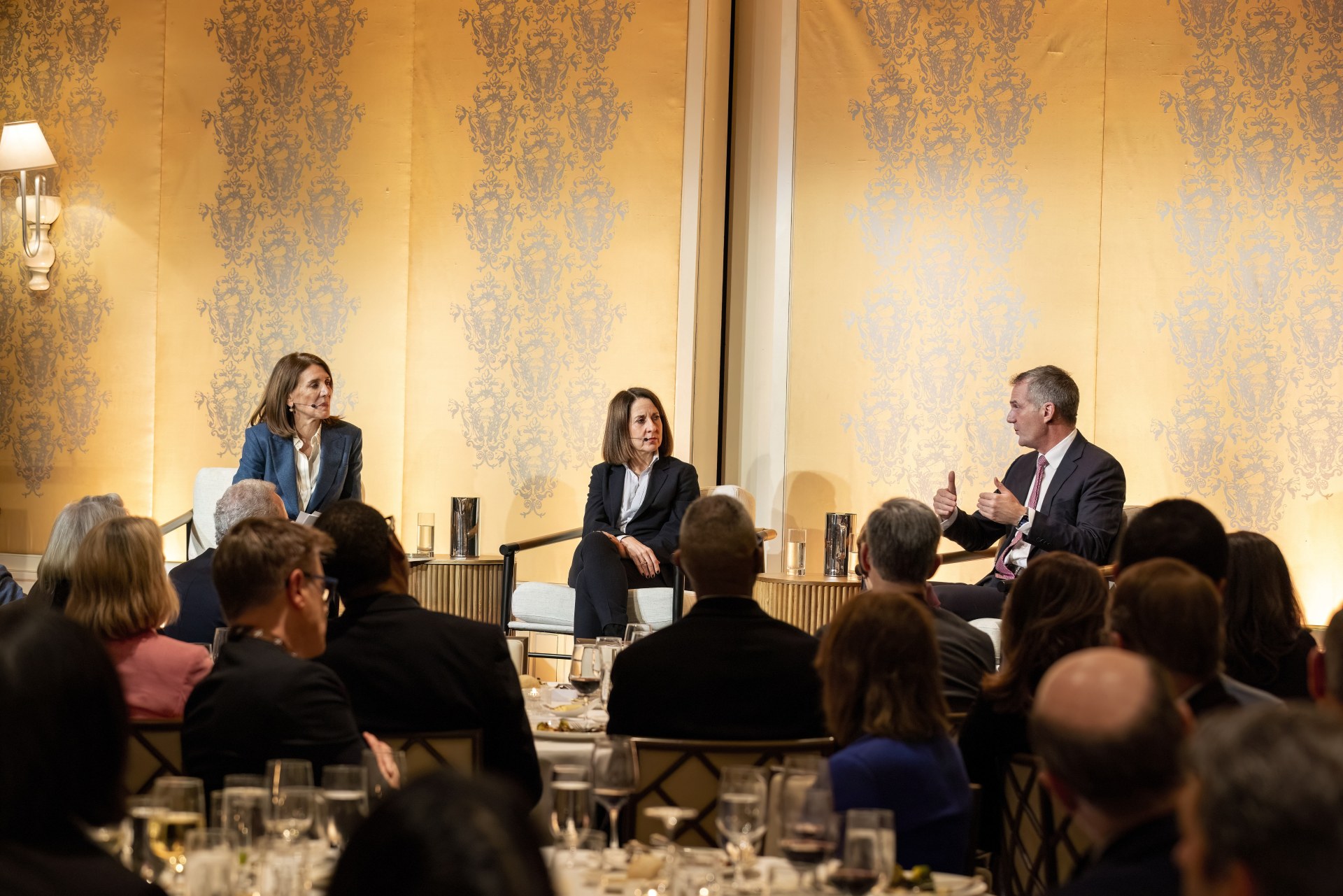
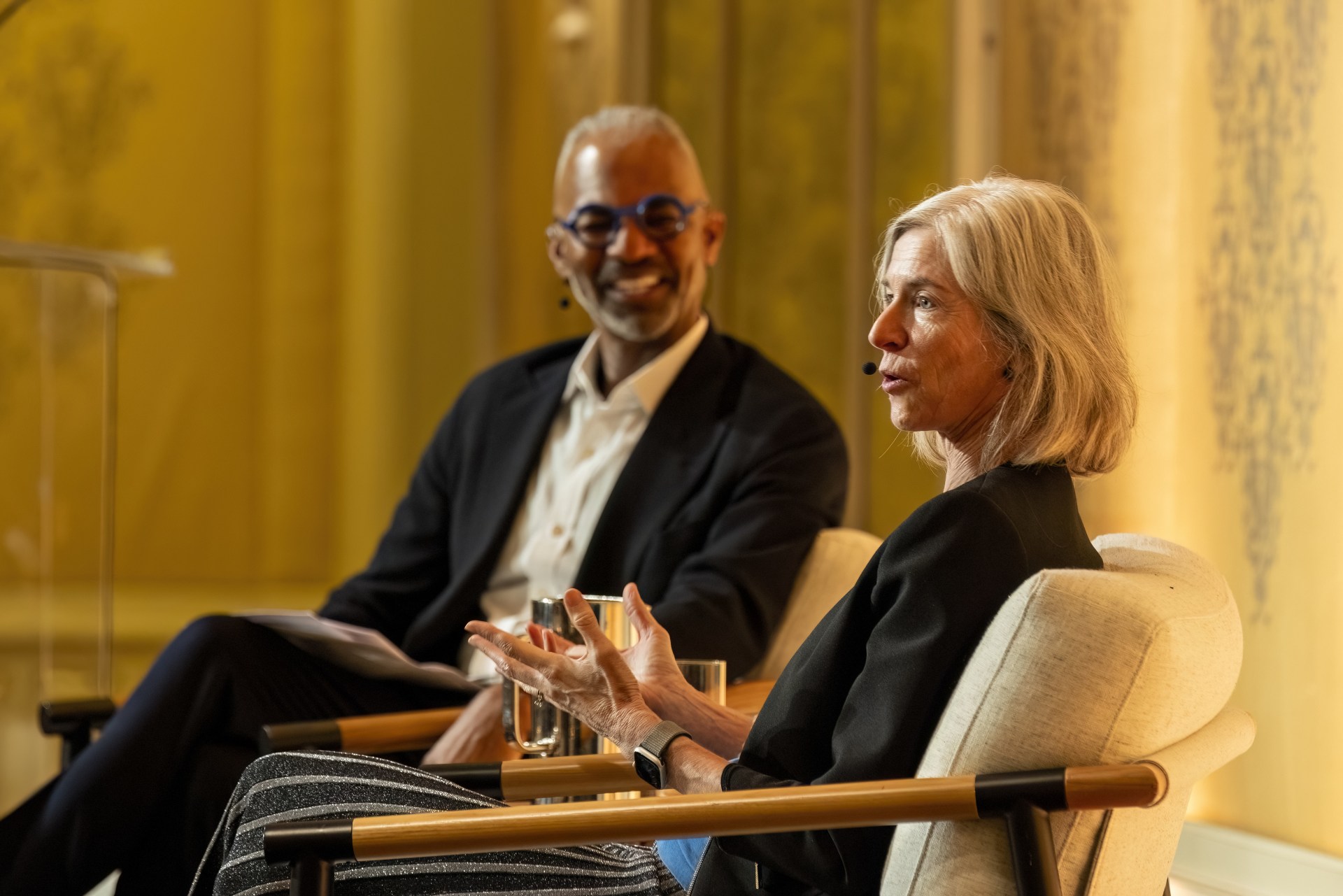
In December 2025, CFR held the eleventh annual National Symposium at the Rosewood Sand Hill in Menlo Park, California, gathering more than two hundred participants for discussions at the intersection of technology, national security, and American strategy. Keynote conversations featured Jennifer A. Doudna, founder of the Innovative Genomics Institute, Nobel laureate in chemistry, and biochemist at the University of California, and Alexandr Wang, chief AI officer at Meta, alongside sessions on U.S. economic security, dual-use technology, global hot spots, and perspectives on technological innovation from UK Secretary of State for Science, Innovation, and Technology Liz Kendall and UK Secretary of State for Business and Trade Peter Kyle. The symposium also included optional site visits to the Lawrence Livermore National Laboratory, Meta, Palantir, Planet Labs, and Salesforce.
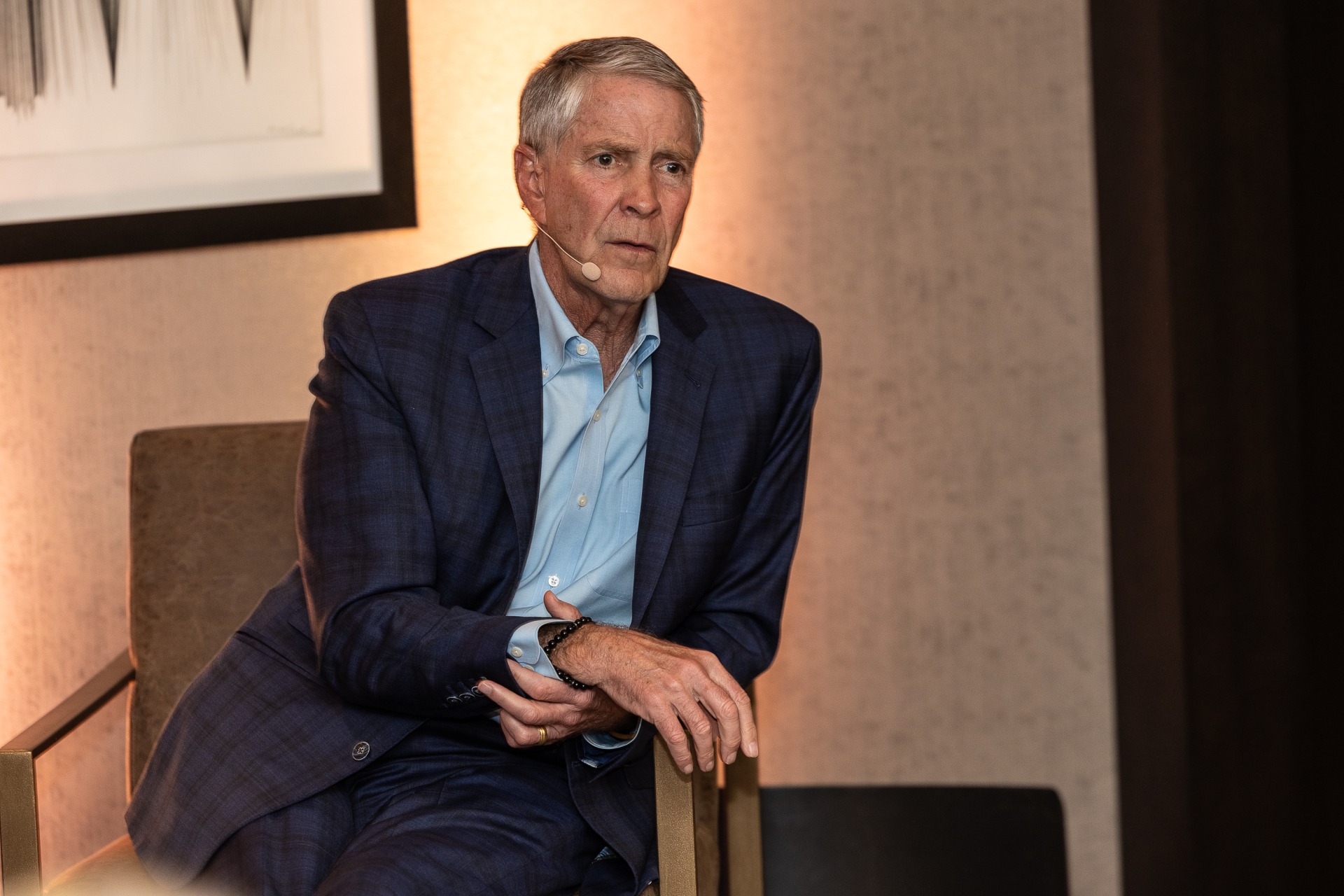
In March 2026, CFR launched its inaugural National Retreat in Nashville, Tennessee, bringing together members and local leaders over two days of programming on global hot spots, nuclear energy, the state’s role in emerging technology, and the future of American democracy. Sessions drew on the expertise of Vanderbilt University faculty, local industry leaders, and elected officials including former Senate Majority Leader Bill Frist (R-TN) and U.S. Senator Bill Hagerty (R-TN). The retreat, which will be held in a new city each year, aims to convene CFR members and community leaders in a location beyond New York, Washington, DC, and California for discussions on topics of both local and global relevance.
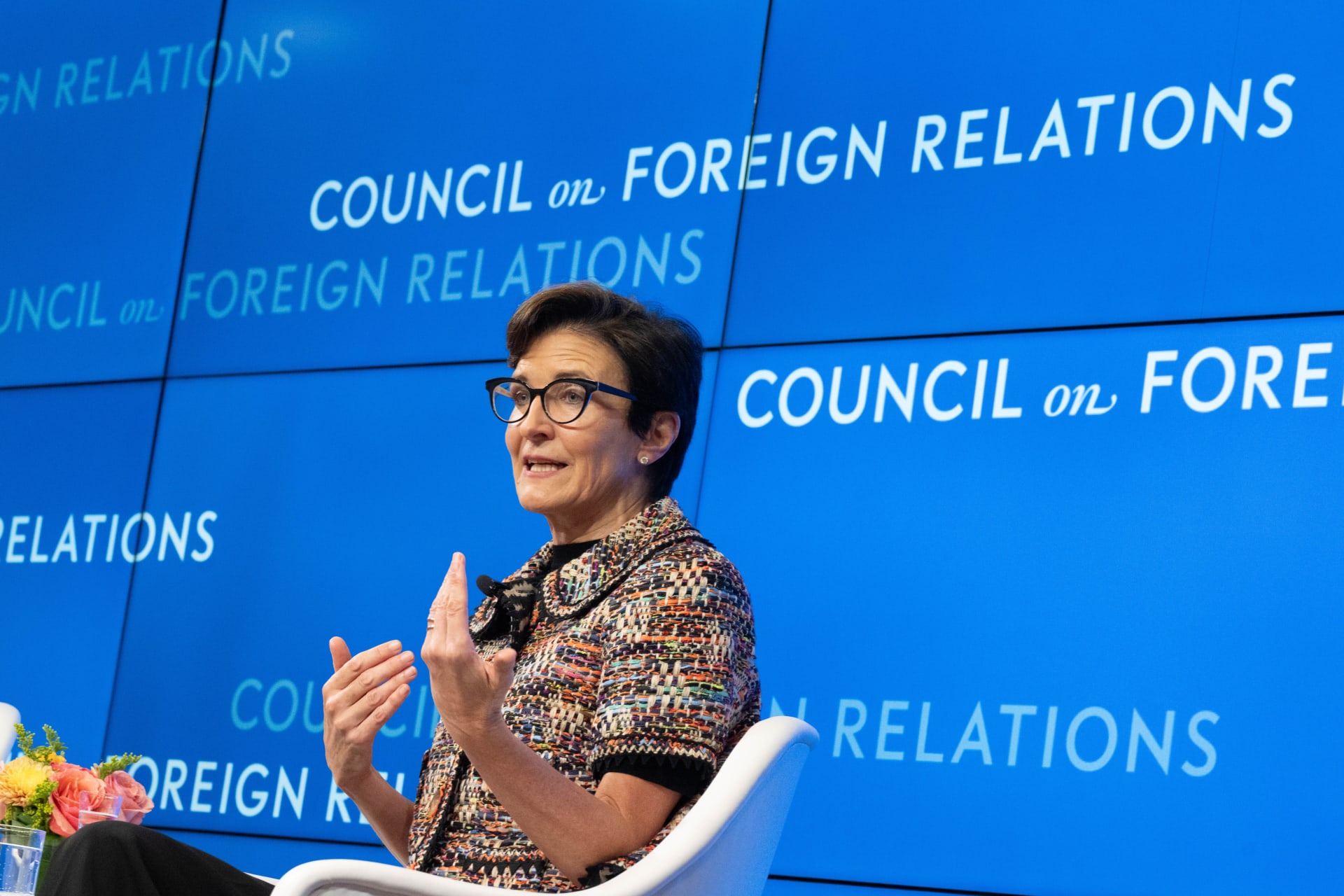
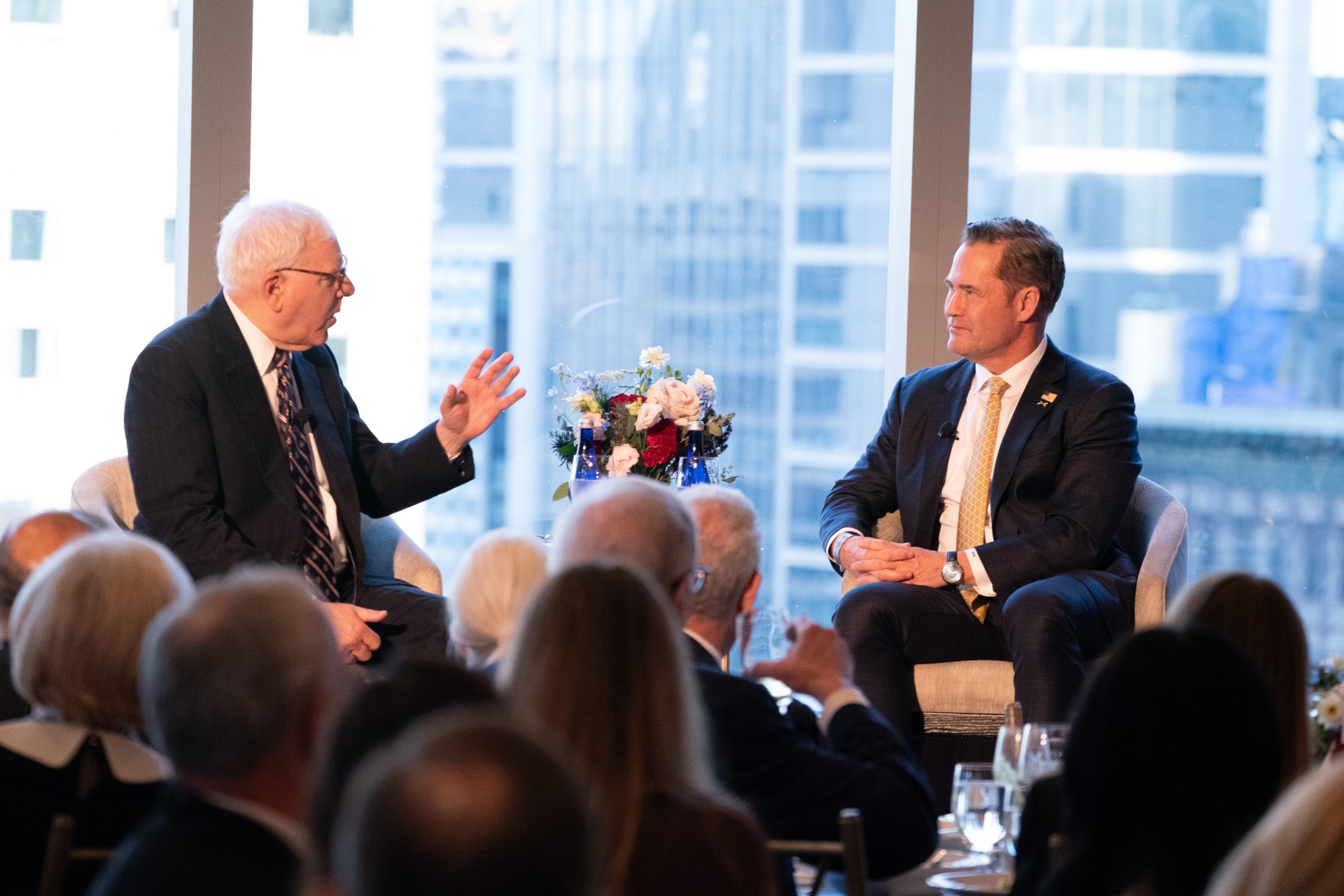
In June 2026, CFR hosted the thirty-first annual National Conference, which gathered members from across the country and around the world in New York. The opening keynote featured a conversation with CFR Board of Directors member and Citi CEO Jane Fraser, and the plenaries examined the new trade order, the transatlantic relationship, U.S.-China competition, U.S.-Latin America relations, and the future of AI. On Friday evening, CFR Chairman David M. Rubenstein moderated a discussion with U.S. Ambassador to the United Nations Michael G. Waltz. For the first time, the conference also offered site visits to Citi, the Metropolitan Museum of Art, Microsoft, Palantir, and the Tenement Museum.
Outreach
Local Journalists Initiative
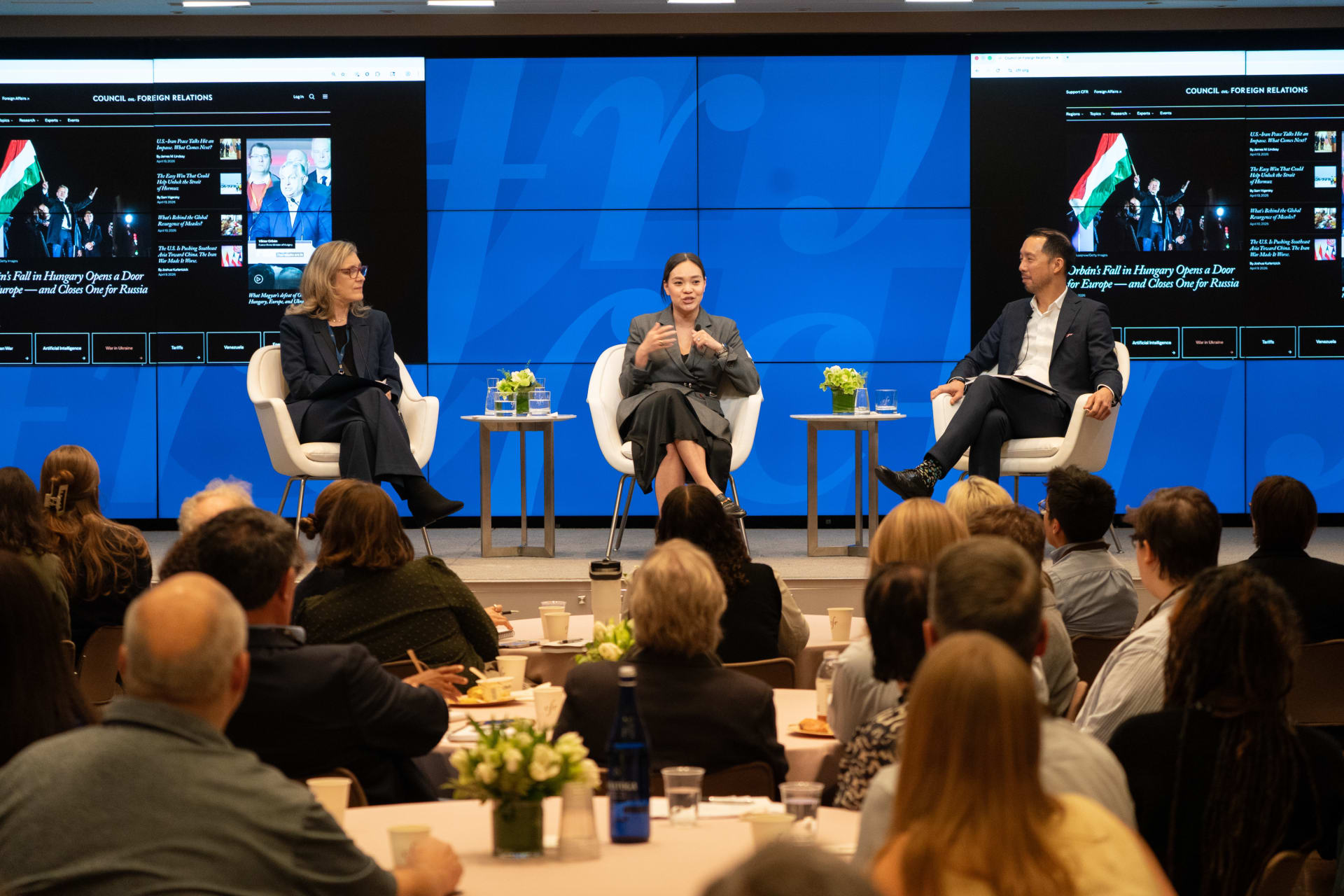
To highlight conversations on U.S. foreign policy, increase understanding of the geopolitical landscape, and bolster civic awareness of the global-local nexus, CFR’s Local Journalists Initiative helps print, broadcast, and digital-first journalists working for local and regional outlets across the United States draw connections between the local issues they cover and national and international events and dynamics.
The Council continued its webinar series, hosted by CFR Senior Fellow Carla Anne Robbins, that allows local journalists to speak with experts and provides a forum to share best practices on connecting global context to local stories. Topics included public health, energy demand, disinformation and online media manipulation, U.S. agriculture policy, community responses to the U.S. war with Iran, and U.S. economic uncertainty.
CFR organized the inaugural Journalism Boot Camp in January 2026, convening graduate student and early-career journalists from the greater New York tristate area for one day of plenaries and small group discussions. Topics included reporting on global topics and pitching stories with international angles in the newsroom, press freedom and journalist safety, and CFR resources journalists can use in their coverage.
The Council convened its fifth Local Journalists Workshop in April 2026 in New York, bringing together journalists from forty-one states and Washington, DC. The event featured a keynote session with ABC News’ Nightline coanchor Juju Chang; plenaries on U.S. economic security, immigration policy, and foreign policy implications of the U.S. midterm elections; and small breakout discussions.
To grow CFR’s network and meet journalists where they are, the initiative also represented the Council at four conferences: the Haymaker Group New York Media Summit; the National Association of Hispanic Journalists Student Summit in New York; the annual Investigative Reporters and Editors Conference in National Harbor, Maryland; and the annual Asian American Journalists Association Conference in Minneapolis.
Religion and Foreign Policy Program
Since 2006, CFR’s Religion and Foreign Policy Program convenes a national network of faith leaders, policymakers, scholars of religion, seminary heads, and representatives of faith-based organizations to discuss issues at the intersection of religion and global affairs. The program opened the 2026 fiscal year by hosting His All-Holiness Ecumenical Patriarch Bartholomew, the highest-ranking leader in the Orthodox Church, and His Eminence Archbishop Elpidophoros of America in New York.
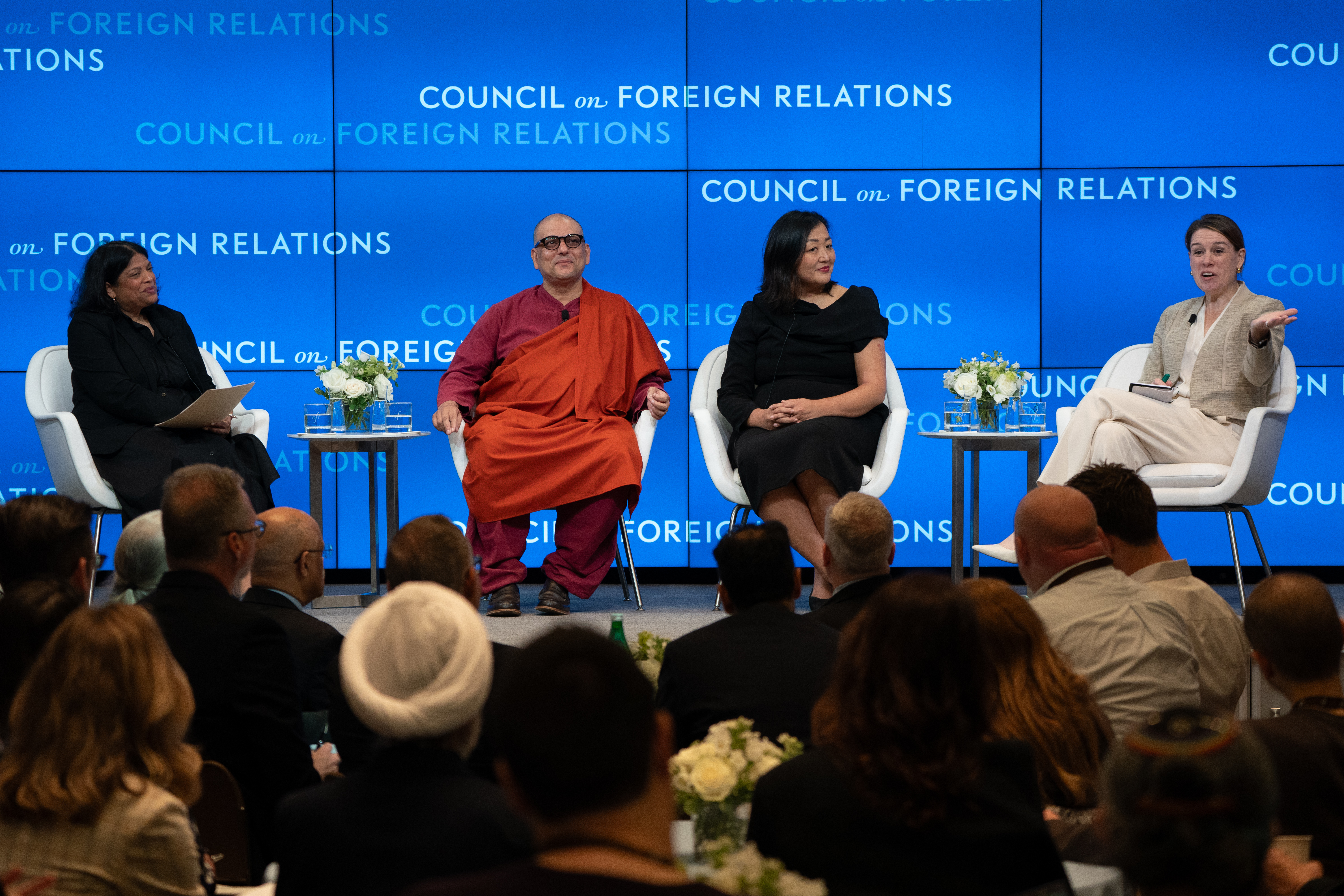
The program also hosted nine virtual discussions as part of its Religion and Foreign Policy Webinar series, which provides members of the religion community access to interreligious conversations on timely issues at the intersection of religion and international affairs. This past year, the series included discussions on Pope Leo XIV’s first one hundred days, Sustainable Development Goals, democracy in Nepal, religious persecution in China, the Russian Orthodox Church’s role in global affairs, religion and identity in the U.S. military, and faith and human rights in Venezuela.
In May 2026, CFR hosted the seventeenth annual Religion and Foreign Policy Workshop in New York, welcoming a national cohort of congregational leaders, seminary heads, scholars of religion, and representatives of faith-based organizations. Participants represented twenty-three faith traditions and sects and traveled from twenty-eight states and Washington, DC, as well as Italy. Session topics included the future of humanitarian aid; faith, ethics, and AI; the Middle East; and U.S. immigration.
The Religion and Foreign Policy Program participated in six external conferences: the Progressive National Baptist Convention in Chicago; the 2025 Forum on Faith in New York; the Festival of Faiths in Louisville, Kentucky; the American Academy of Religion and Society of Biblical Literature Annual Meeting in Boston; the Interfaith Center of New York Religious Resistance to Authoritarianism Conference in New York; and the National Association of Evangelicals Christian Student Leadership Conference in Washington, DC, during which the program organized a second annual briefing for participants.
State and Local Officials Initiative
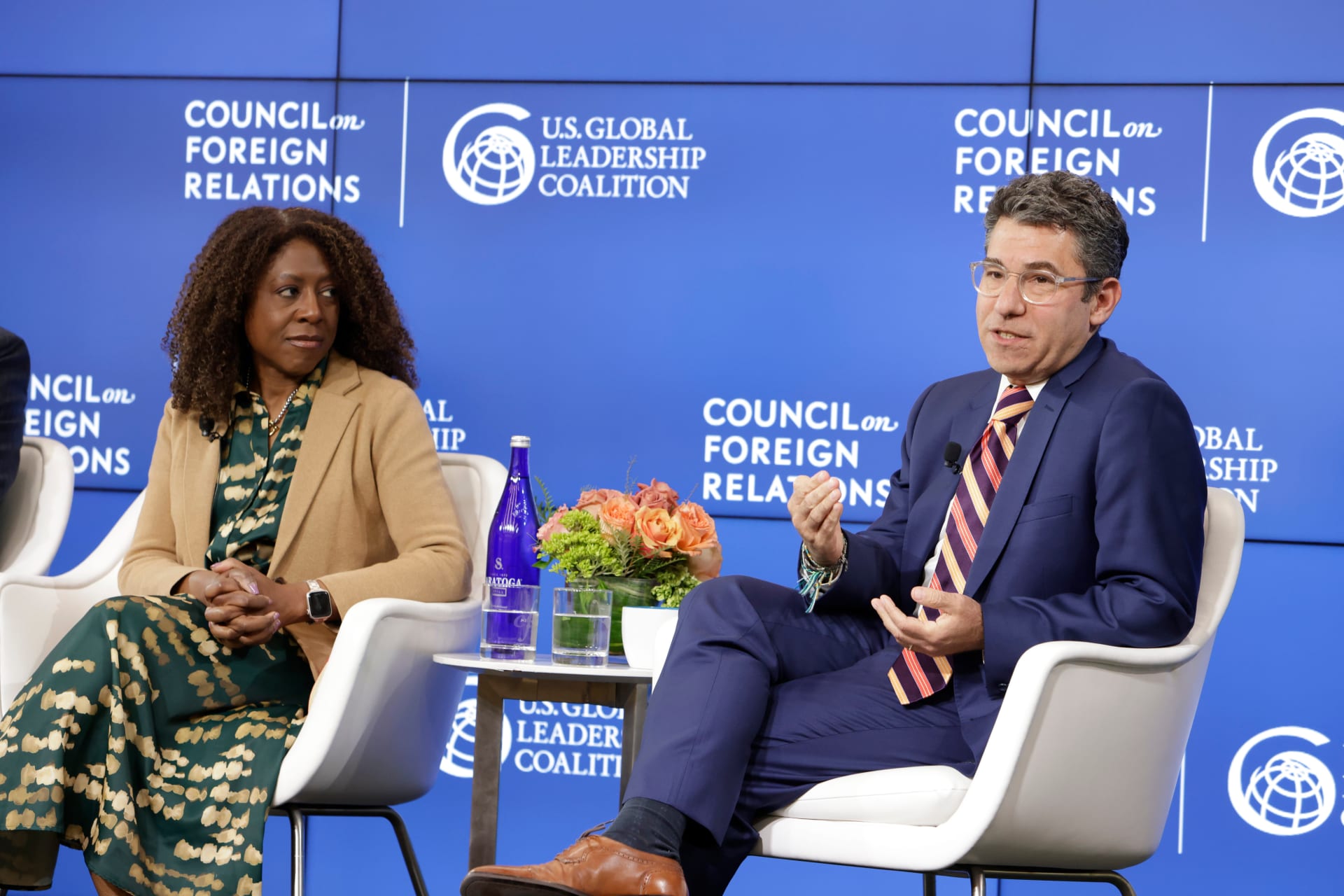
CFR’s State and Local Officials Initiative connects governors, mayors, state legislators, and city and county leaders with resources on pressing global issues that affect local agendas. The initiative has continued to strengthen CFR’s ties with subnational leadership at all levels, including holding two new cosponsored events to expand its network and deepen engagement.
In a new collaboration with the U.S. Global Leadership Coalition, the Council convened a bipartisan group of thirty-three mayors from nineteen states at its office in Washington, DC, for a two-day summit on consequential challenges facing local communities, the United States, and the world. At the state level, the Council worked with the Senate Presidents’ Forum to host a one-day foreign policy seminar in Washington, DC, for state senate leaders, featuring discussions on China, the Middle East, U.S.-Europe relations, and AI. The Council also continued its partnership with the Rodel Institute—the nation’s premier leadership development program for state and local officials—by hosting its second annual Foreign Policy Forum. The forum brought together municipal and statewide elected officials and featured CFR experts, who led seminars and panel discussions on topics including tariffs, trade, conflict in the Middle East, transatlantic relations, AI and defense, U.S.-China relations, and the future of energy.
CFR exhibited or provided speakers at annual meetings for five different national organizations: the National Conference of State Legislatures, the National Lieutenant Governors Association, the Council of State Governments, the State International Development Organizations, and the United States Conference of Mayors, at whose winter meeting CFR President Michael Froman gave plenary remarks.
The initiative hosted eight events as part of the State and Local Officials Webinar series, which paired CFR experts with local government leaders to discuss issues such as public health, energy innovation, trade and economic security, and infrastructure investment. Additionally, the Council provided high-level briefings to trade delegations from the offices of the governors of Arizona, Hawaii, and Oregon; Mayors Abdullah Hammoud of Dearborn, Michigan, Leonardo Williams of Durham, North Carolina, Craig Greenberg of Louisville, Kentucky, and Janet Cowell of Raleigh, North Carolina; state-federal affairs representatives in governors’ offices across the country; the Wisconsin Economic Development Corporation; and members of the Los Angeles Consular Corps.
Students and Educators Initiative
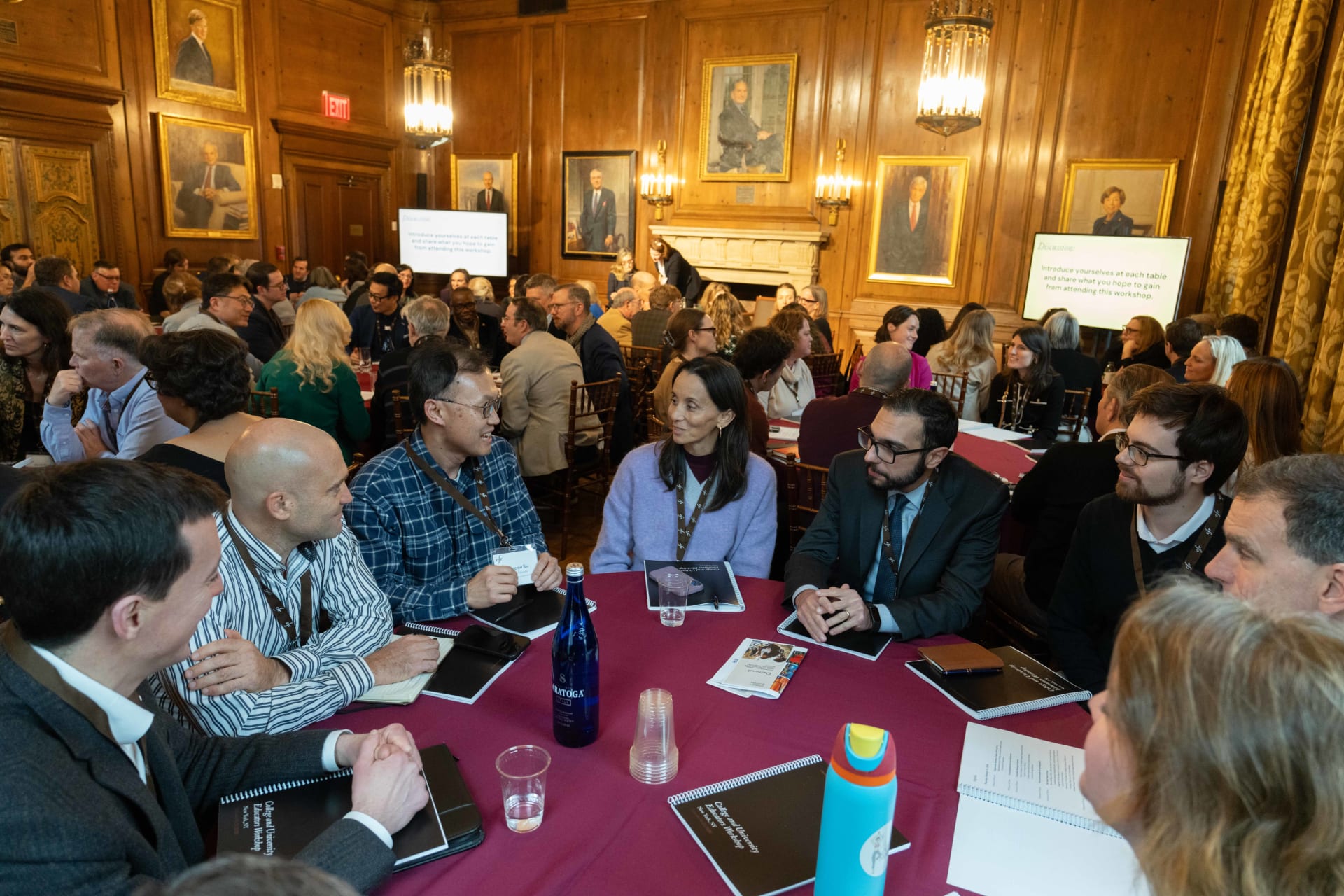
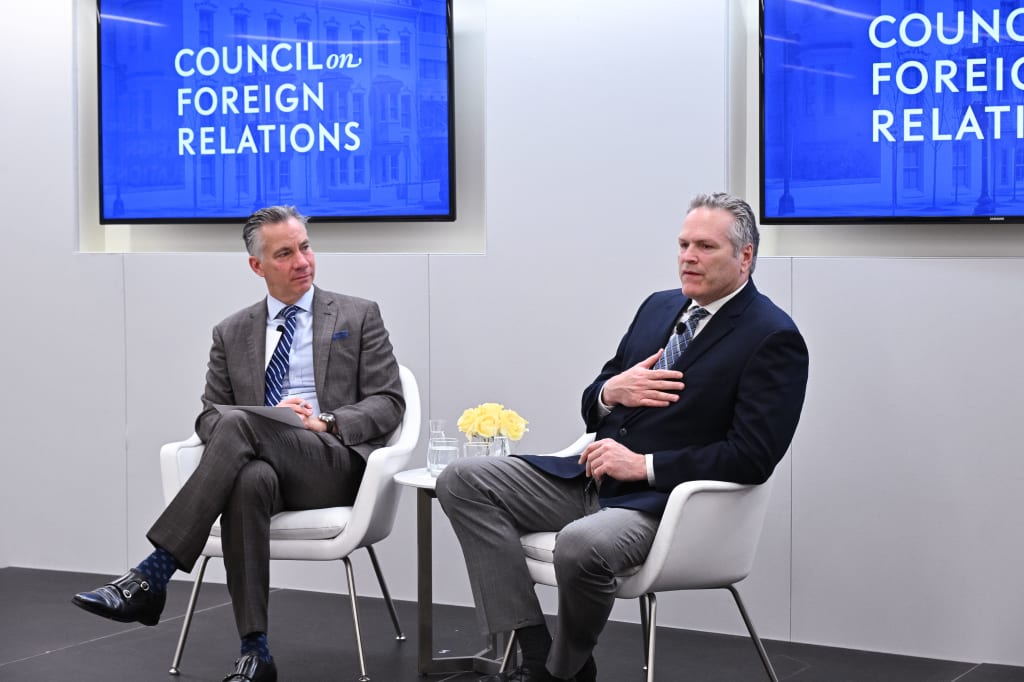
CFR’s Students and Educators Initiative connects college and university students and educators with programming for teaching and learning about international affairs, CFR and Foreign Affairs publications, and digital educational products.
The initiative continued its two flagship webinar series—convening sixteen virtual sessions—and made recordings accessible for on-demand viewing through the CFR Education website. Among the most well attended in the Global Affairs Expert Webinar series were discussions on Iran and the world; the China challenge; AI and geopolitics; and the American experiment. The Higher Education Webinar series for college and university leaders, administrators, and professors held sessions on brain drain in higher education and teaching in the era of AI in collaboration with CFR Education and the International Studies Association (ISA).
To reach students and educators across the country, the initiative participated in external conferences, including the Fulbright Association Conference in Miami; the Charleston Conference in Charleston, South Carolina; the ISA Convention in Columbus, Ohio; the National Model United Nations-New York Conference in New York; and the American Library Association Conference in Chicago. At ISA, CFR hosted a luncheon discussion on strategic frontiers in U.S. foreign policy, covering the Arctic, climate, and space.
In February 2026, CFR convened the fourteenth annual College and University Educators Workshop, bringing educators from ninety-seven colleges and universities across forty-eight states and Washington, DC, to CFR’s headquarters in New York. The workshop allows faculty to engage directly with CFR fellows, delve into pressing foreign policy issues, and strengthen their teaching of global affairs through panel briefings, group discussions, simulations, and forums for sharing innovative strategies and teaching tools.
Global Board of Advisors
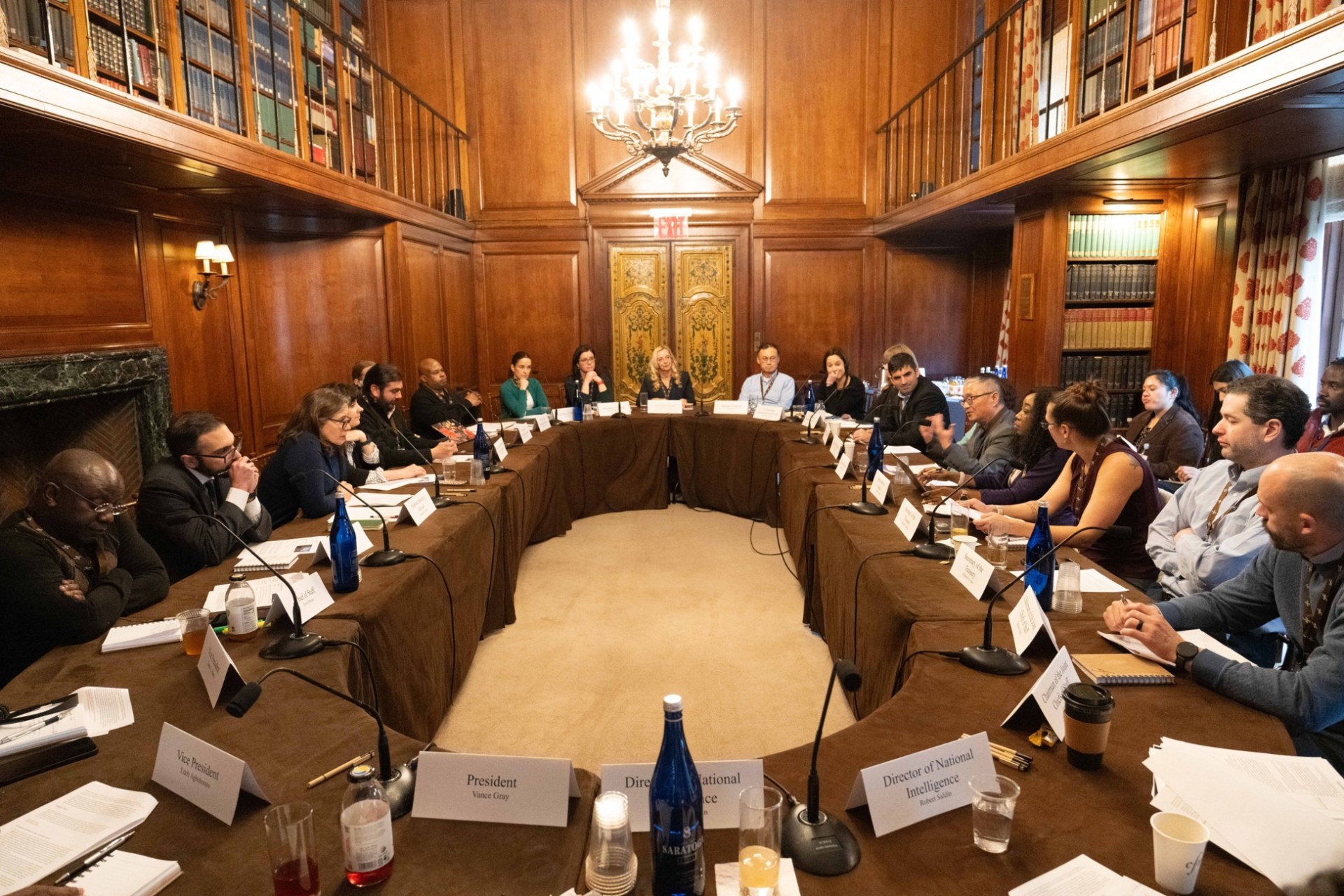
The Global Board of Advisors, chaired by CFR Chairman David M. Rubenstein, includes business leaders, noted academics, and former government officials from around the world. Members of the group provide the Council with insight about their regions and join discussions on international relations and the U.S. role in the world. The board has no role in CFR governance.
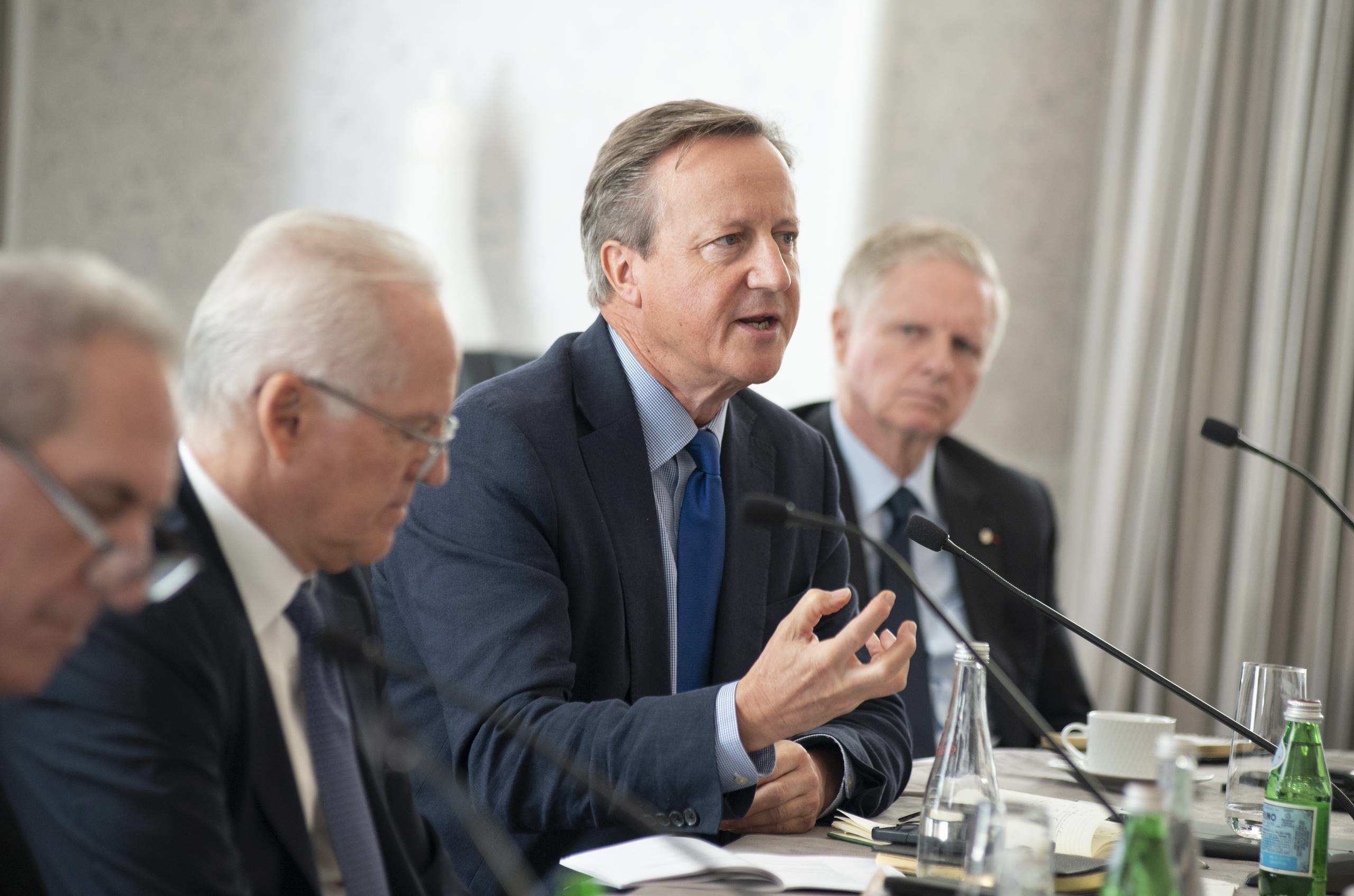
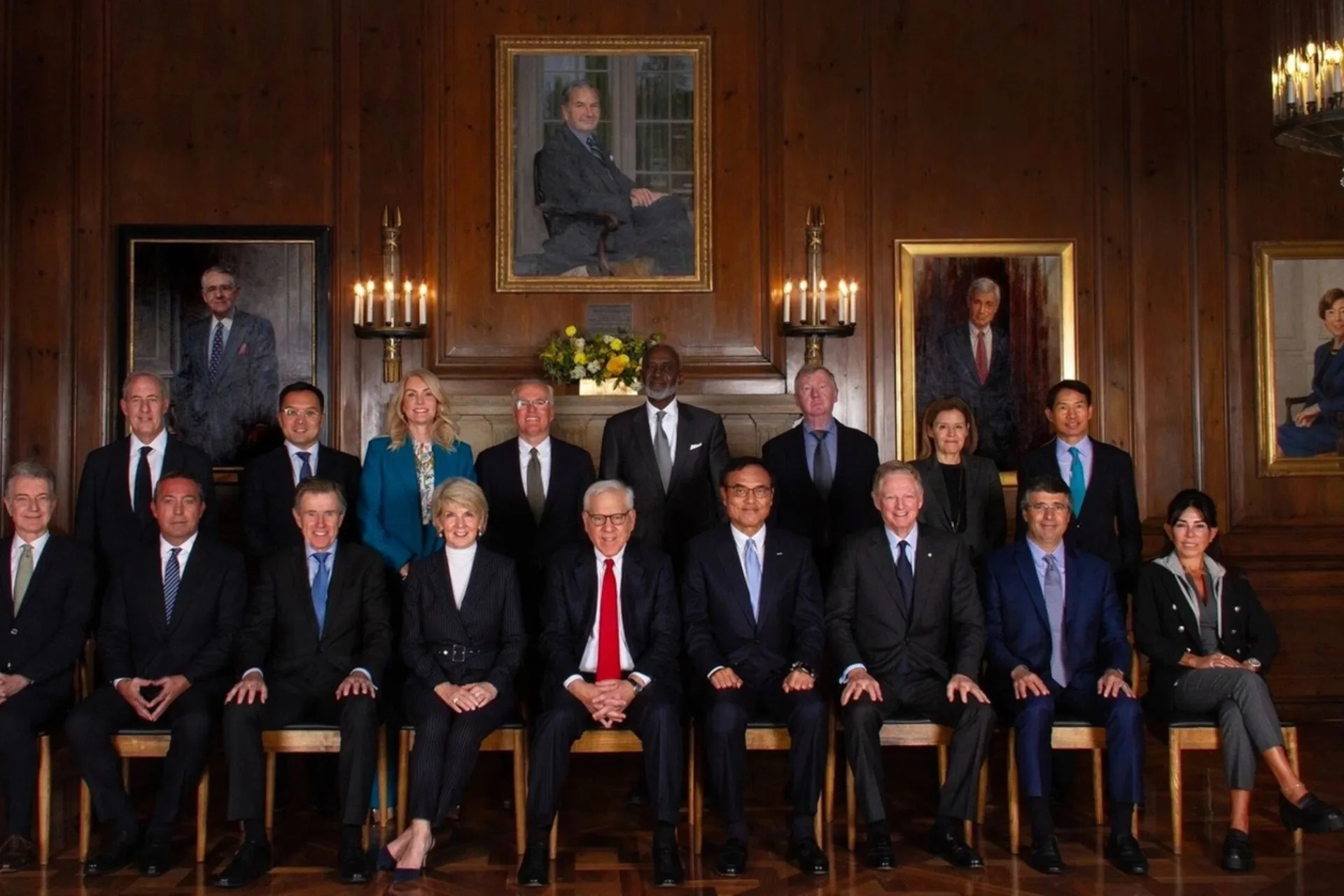
In October 2025, CFR hosted the annual meeting of the Global Board of Advisors against a backdrop of global uncertainty, technological acceleration, and shifting geopolitical power. Members engaged in forthright and often provocative dialogues that reflected a mood of cautious realism, tempered by strategic optimism and a shared sense of urgency. The overarching sentiment was clear: the international system is undergoing profound transformation, and institutions, governments, and businesses need to adapt quickly or risk falling behind.
Corporate and CEO Programs
CFR’s Corporate and CEO Programs link the private sector with world‑class geopolitical insight that helps executives anticipate risk and shape strategy.
Geopolitics continues to be a core business consideration, as geopolitical instability, technological competition, shifting U.S. policy, and economic fragmentation influence how organizations assess risk, allocate capital, manage operations, and plan for long-term growth. CFR’s Corporate and CEO Programs help C-suite executives and senior leaders understand those dynamics and what they mean for their companies and industries.
To help leaders navigate this evolving landscape, Corporate programming introduced two new series of salon dinners for leadership executives. One brings together executives responsible for managing risk and strategy. Another, developed in partnership with CFR’s LEAD AI Program, convenes executives overseeing AI deployment and adoption.
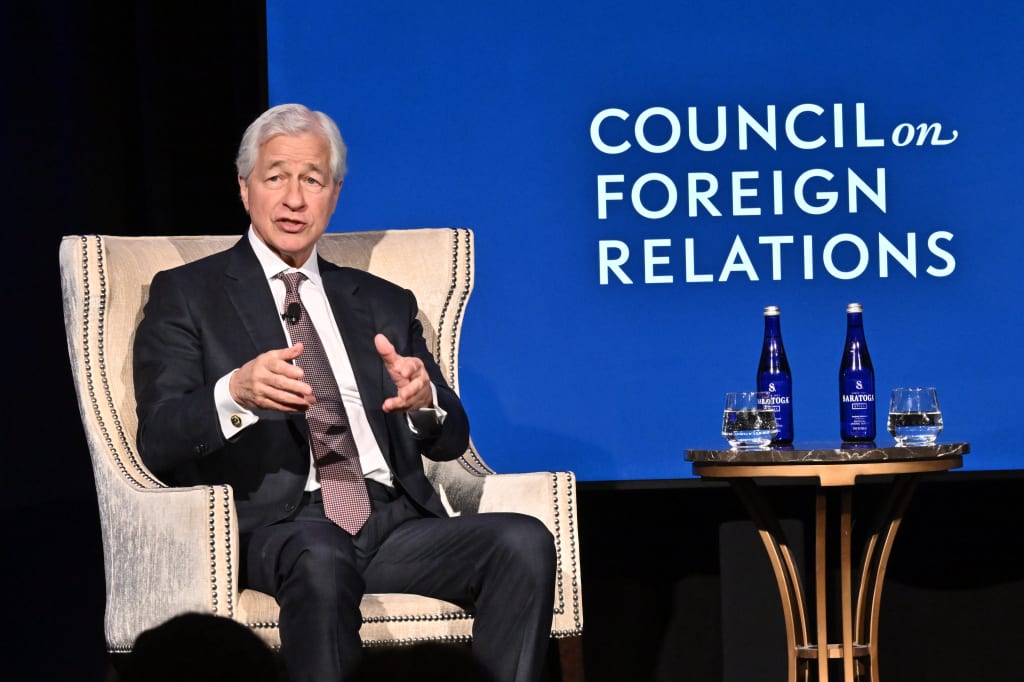
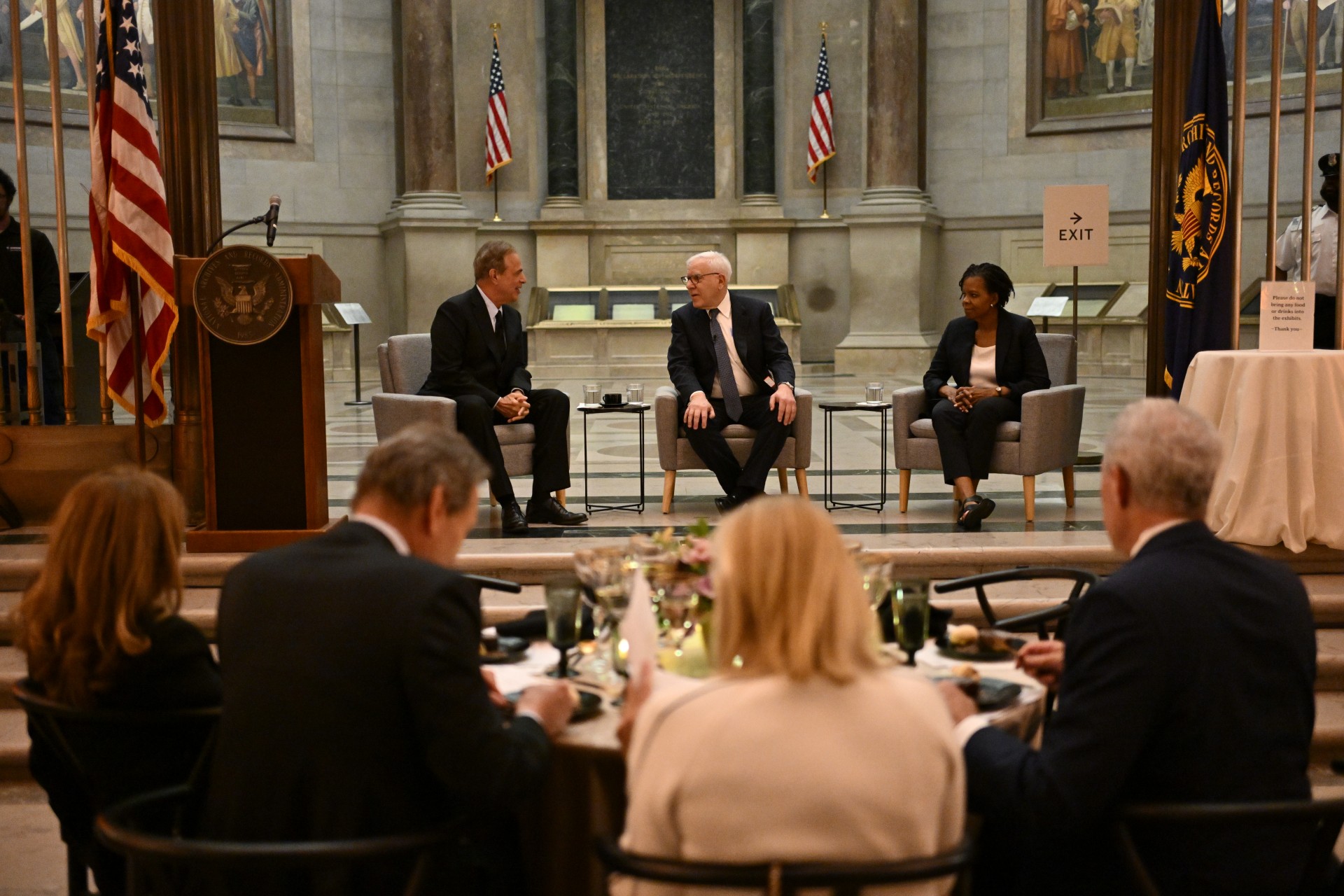
In New York in December 2025 and Washington, DC, in June 2026, the CEO Summits brought together more than thirty CEOs across various industries with CFR Board of Directors members and policy experts for discussions on the global economic outlook, advanced technologies, and energy security. In Washington, DC, CEOs gathered at the National Archives for a dinner and discussion with eminent historians on the United States at two hundred fifty years. Over the year, the CEO Speaker Series featured Jamie Dimon of JPMorgan Chase & Co., Jane Fraser of Citi, and Michael Miebach of Mastercard, who shared their perspectives on global developments and the intersection of business and geopolitics.
More than two hundred participants attended the 2026 Corporate Conference in May to discuss the American economy at two hundred fifty years, geopolitical hot spots, the role of the United States in an evolving world, and AI, among other regional and functional topics.
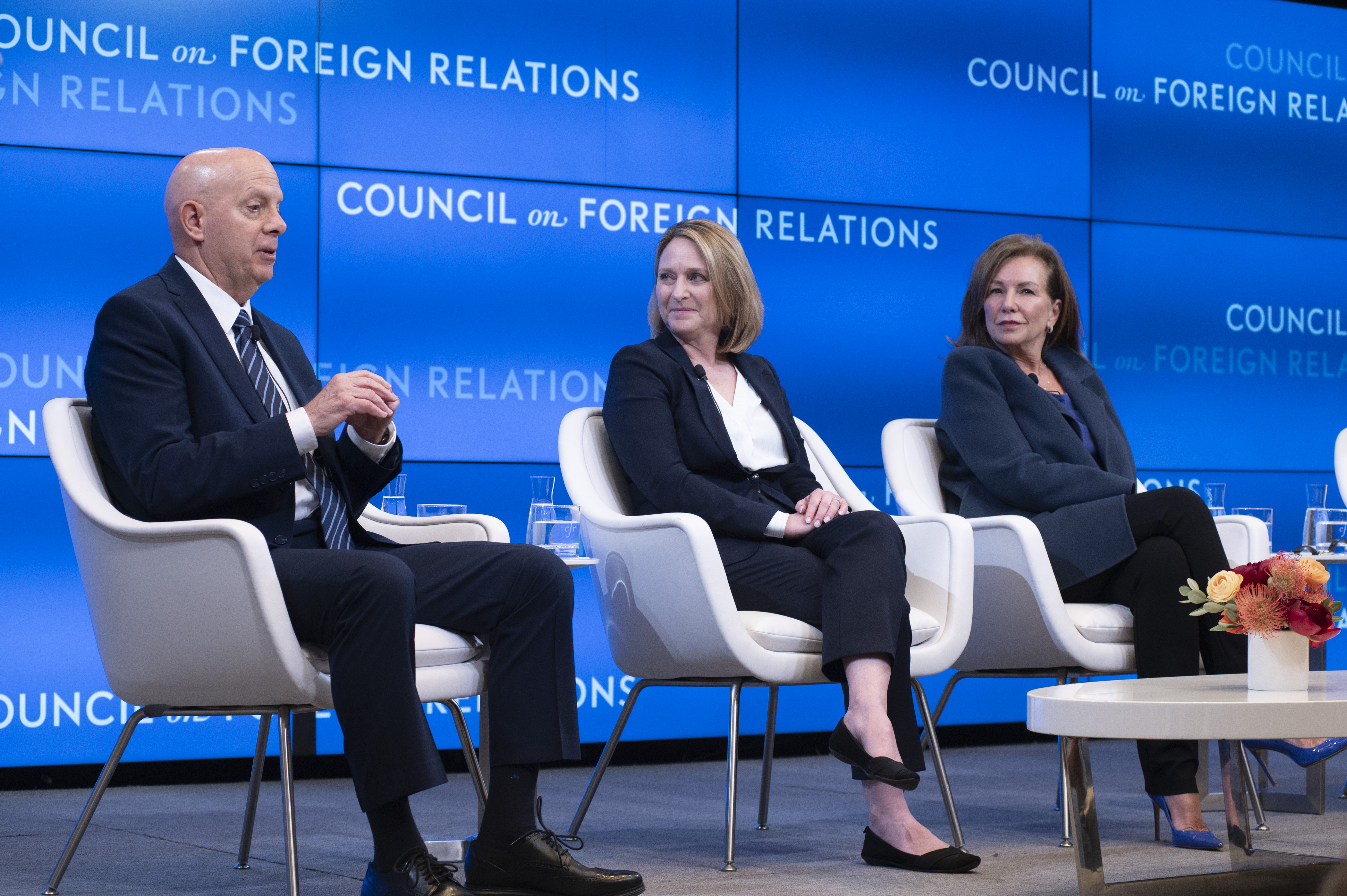
The Corporate and CEO Programs also launched the Emerging Leaders in Business and Geopolitics Program in the spring, a talent accelerator that equips rising executives with the strategic perspective needed to take on leadership responsibilities, and the Business and Geopolitics Hub in the fall, a central source of insights to help business leaders navigate a world where foreign policy affects corporate strategy and market conditions.
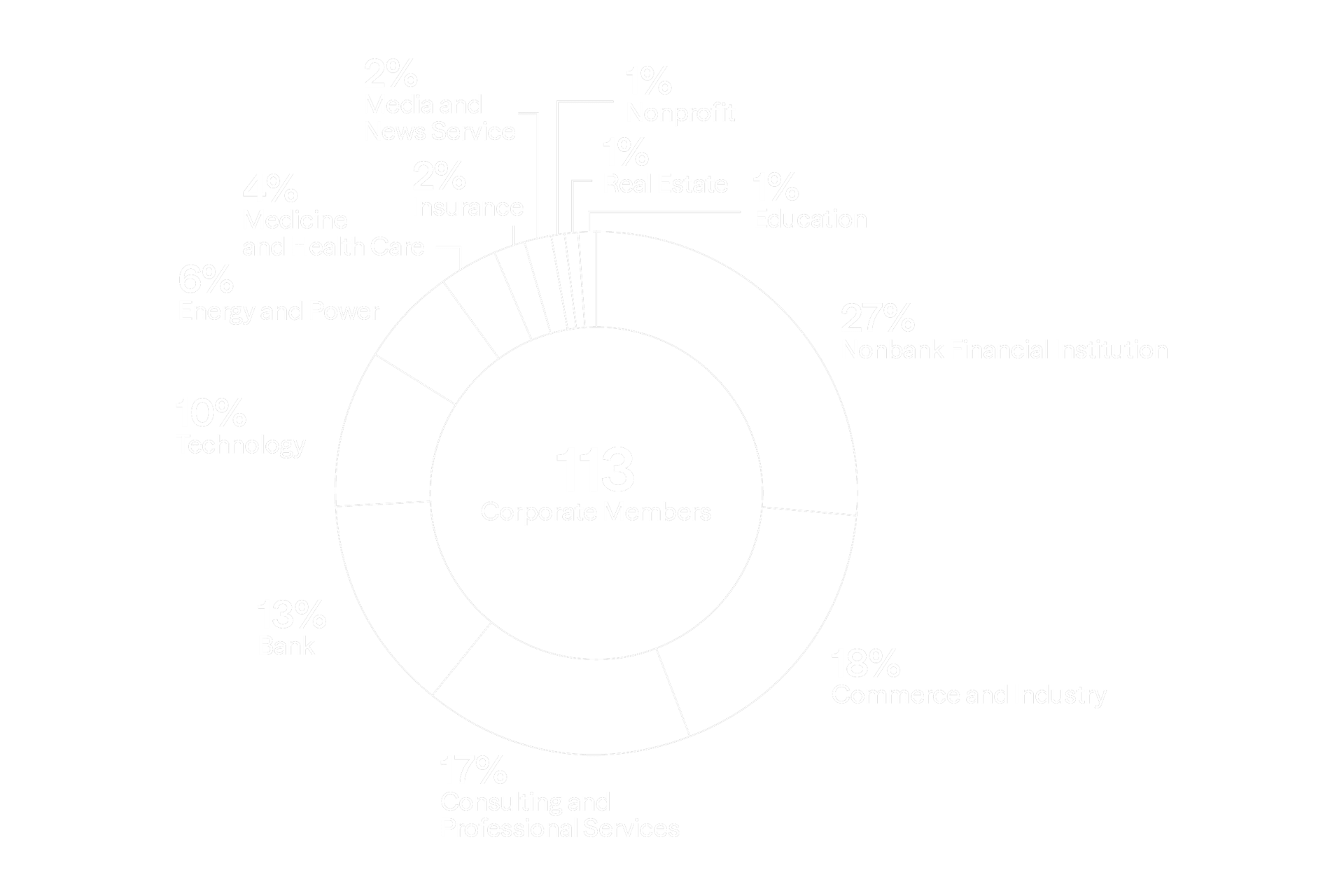
Profile of the Corporate Membership
Since 1953, CFR’s Corporate and CEO Programs have connected business leaders with the insights, expertise, and networks needed to navigate a changing world. Today, the program serves more than one hundred companies across industries and regions, helping executives, senior managers, and rising and early-career professionals understand the geopolitical and geoeconomic forces shaping business.
The programs’ centerpieces are the Corporate Conference, CEO Summits, Emerging Leaders in Business and Geopolitics Program, and Business and Geopolitics Hub.
Benefits of CFR Corporate Membership
Corporate membership is available at three levels: Gold ($100,000), Silver ($75,000), and Bronze ($50,000). Member companies are offered briefings with CFR fellows; curated high-level salons designed to foster candid exchange among executives, policymakers, and thought leaders confronting similar challenges; and invitations to CFR events.
Gold ($100,000+)
All Silver and Bronze benefits plus:
- Premium access to invitation-only CFR events
- The opportunity to bring clients to major CFR events
- Four one-hour briefings with a CFR fellow aligned with company priorities
- One briefing may be used for a client conversation, one with CFR President Michael Froman (advance scheduling required), and two for internal audiences
- Ten slots for high-potential executives in the Emerging Leaders in Business and Geopolitics Program, a rotational leadership development experience focused on accelerating growth, cross-sector exposure, and network building
- Six seats for senior executives at the Spring Benefactor Dinner and the Annual Dinner with CFR’s Board of Directors and Global Board of Advisors
- Discounted advertising in Foreign Affairs magazine, including a one-time complimentary premium position print advertisement in Foreign Affairs and 50 percent off one renewable print advertisement, and complimentary online and e-newsletter advertising benefits with Foreign Affairs valued at more than $20,000
- Annual complimentary rental of the historic Harold Pratt House ballroom and library, valued at $15,000
- Prominent logo placement on the Corporate and CEO Programs webpage and at the annual Corporate Conference
Silver ($75,000)
All Bronze benefits plus:
- Priority access to invitation-only CFR events
- The opportunity to bring clients to the annual CFR Corporate Conference (maximum of two guests)
- Two one-hour internal briefings with a CFR fellow aligned with company priorities, typically held virtually
- Six slots in the Emerging Leaders in Business and Geopolitics Program
- Four seats for senior executives at the Spring Benefactor Dinner and the Annual Dinner with CFR’s Board of Directors and Global Board of Advisors
- Discounted advertising in Foreign Affairs magazine, including a one-time complimentary full-page print advertisement in Foreign Affairs (redeemable within the first year of membership) and 30 percent off one renewable print advertisement, and complimentary online and e-newsletter advertising benefits valued at more than $15,000
Bronze ($50,000)
- One one-hour internal briefing with a CFR fellow aligned with company priorities, typically held virtually
- Access to the Corporate Conference, CFR’s annual gathering on geopolitical and geoeconomic issues for business leaders
- Invitations to hundreds of virtual and in-person events, roundtables, and salon dinners each year in New York, Washington, DC, and other major cities, including Atlanta, Austin, Boston, Chicago, Dallas, Houston, London, Los Angeles, Miami, Palm Beach, San Francisco, and Seattle
- Talent development opportunities for early-career professionals
- Full access to Foreign Affairs magazine online (personal print subscription discounts available)
- Exclusive discounts on Foreign Affairs magazine digital and print advertising, including a one-time 50 percent discount on one full-page print advertisement, complimentary online and e-newsletter advertising benefits valued at more than $9,000, and a one-time 50 percent discount on sponsored content that is prewritten or crafted with the Foreign Affairs marketing team
- Recognition on CFR’s corporate membership roster
Note: Corporate membership dues are 65 percent tax deductible. Corporate dues provide unrestricted funding that helps CFR maintain its role as an independent, nonpartisan resource for its members and the general public on current and emerging foreign policy issues.
For more information, please contact the Corporate and CEO Programs at [email protected] or 212.434.9684.
The Council on Foreign Relations receives charitable contributions from various private sources, including its members, corporations, and foundations.
Development
In fiscal year 2026, CFR secured more than $80 million in new major gifts—the most successful fundraising year in the institution’s history. Those contributions are supporting transformative investments across the organization. That includes the establishment of the Wachenheim Center for Peace and Security through a groundbreaking $50 million gift from the Sue and Edgar Wachenheim Foundation, the largest single contribution in the Council’s history.
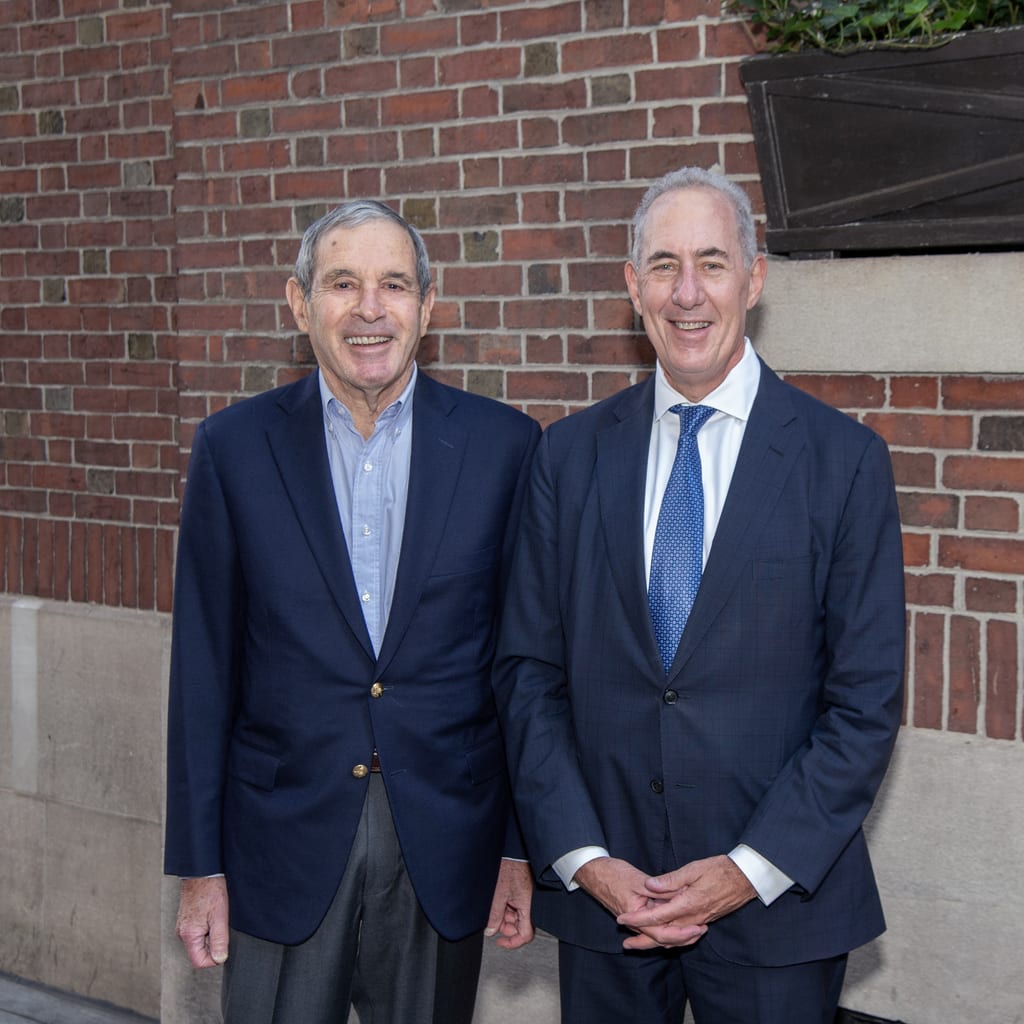
Other leadership commitments included $10 million from Hartley Rogers to strengthen CFR’s work in geoeconomics, congressional outreach, and the Task Force Program; $6 million from the Denise and Michael Kellen Foundation and the Marina Kellen French Foundation, facilitated by Andrew S. Gundlach, for the Stephen M. Kellen Term Member Program; $3.8 million from Daniel B. Poneman to advance CFR’s work on nuclear energy, climate, and national security; $2.7 million from several donors for the Future of American Strategy Initiative; and $2.7 million from Hyundai Motor Company to establish the Chung Mong-Koo International Affairs Fellowship in the Republic of Korea. Together, those gifts and many others will help ensure that the Council remains a trusted source of analysis and a leading forum for addressing the critical issues of today.
The Council’s Annual Fund also achieved a historic milestone, raising a record $12.4 million and surpassing last fiscal year by 11 percent. Driven by the generosity of more than 1,200 members and benefactors, the increase in support reflected the broad confidence in CFR’s mission and reaffirmed the importance of independent, nonpartisan analysis during a period of significant geopolitical change.
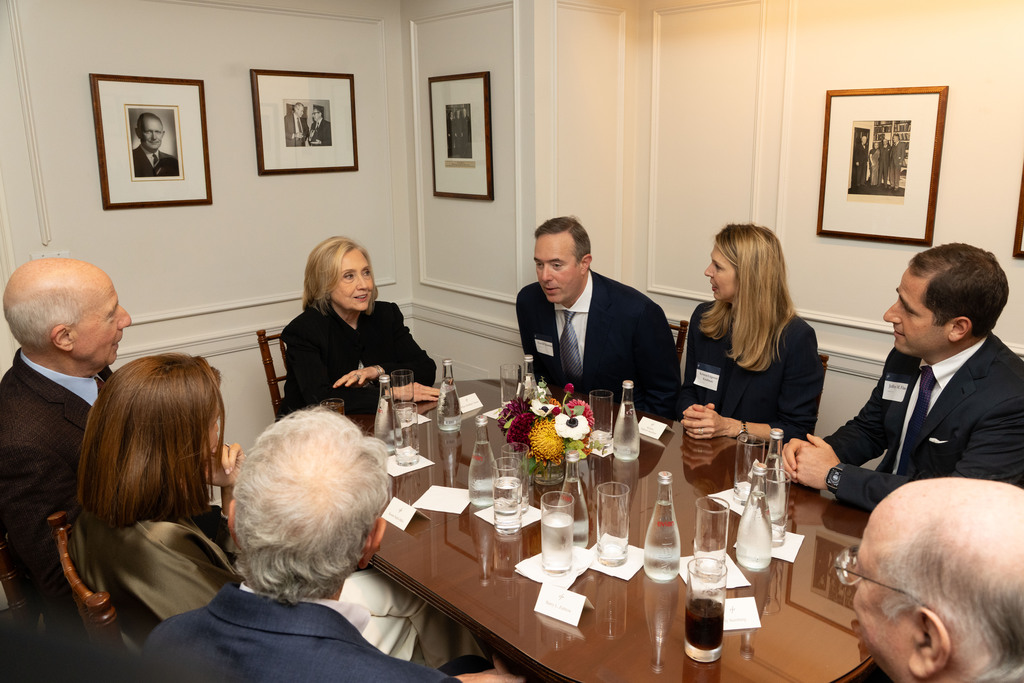
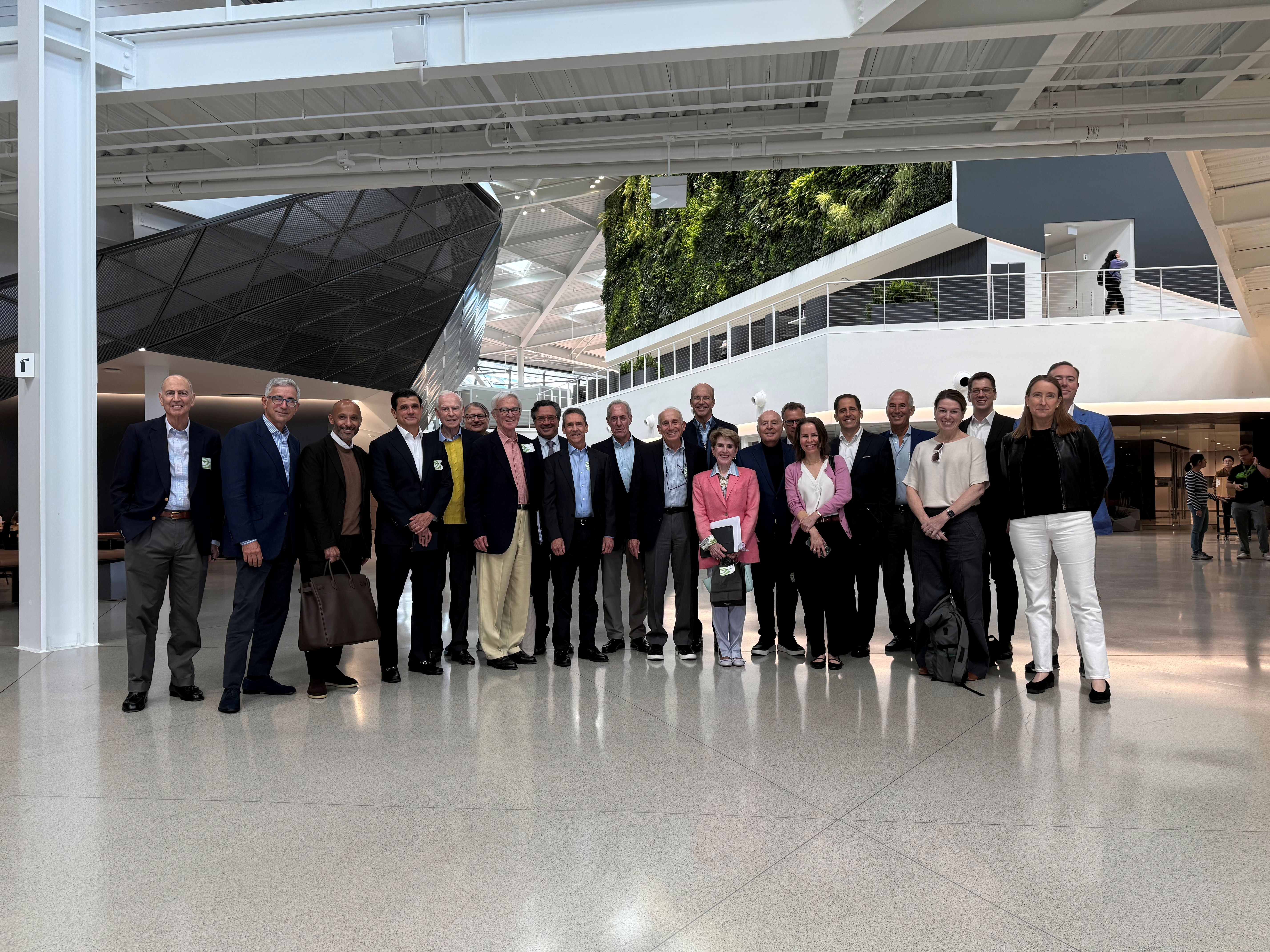
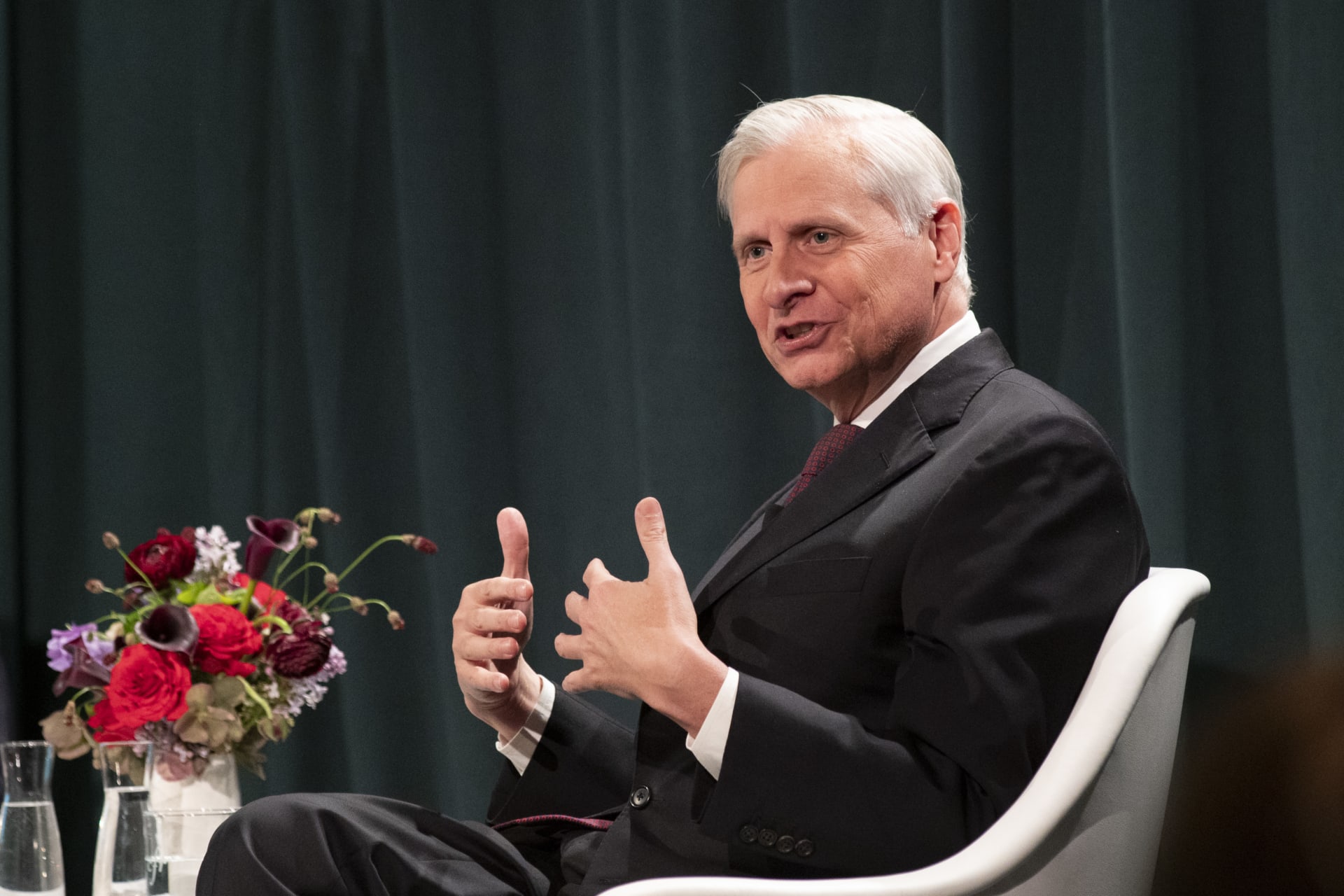
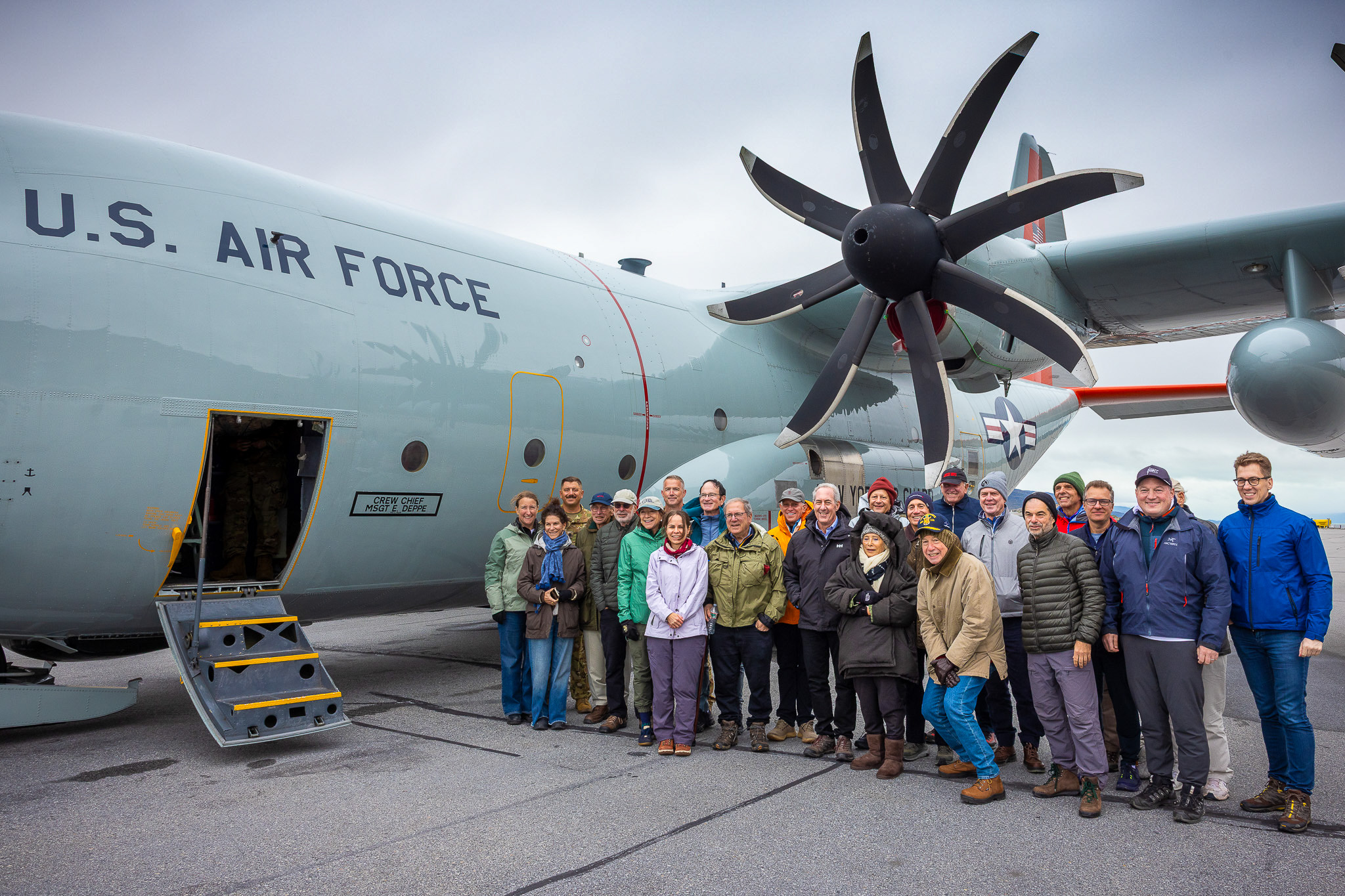
Major benefactors embarked on exclusive travel experiences throughout the year, including a visit to Greenland; an AI boot camp in Silicon Valley hosted by Nvidia and Google; a trip to Southern California to meet with defense tech innovators and military partners; and a visit to Cape Canaveral, Florida, to engage with the U.S. Space Force and its commercial partners. Annual anchor events included the fall reception for visiting fellows at the home of Richard A. Bartlett, the Annual Dinner, and the Spring Benefactor Dinner featuring Pulitzer Prize–winning author Jon Meacham. The Council also hosted four President’s Roundtable Breakfasts, highlighting fellows’ insights on global affairs, and relaunched its Institutional Advancement Committee.
CFR Digital
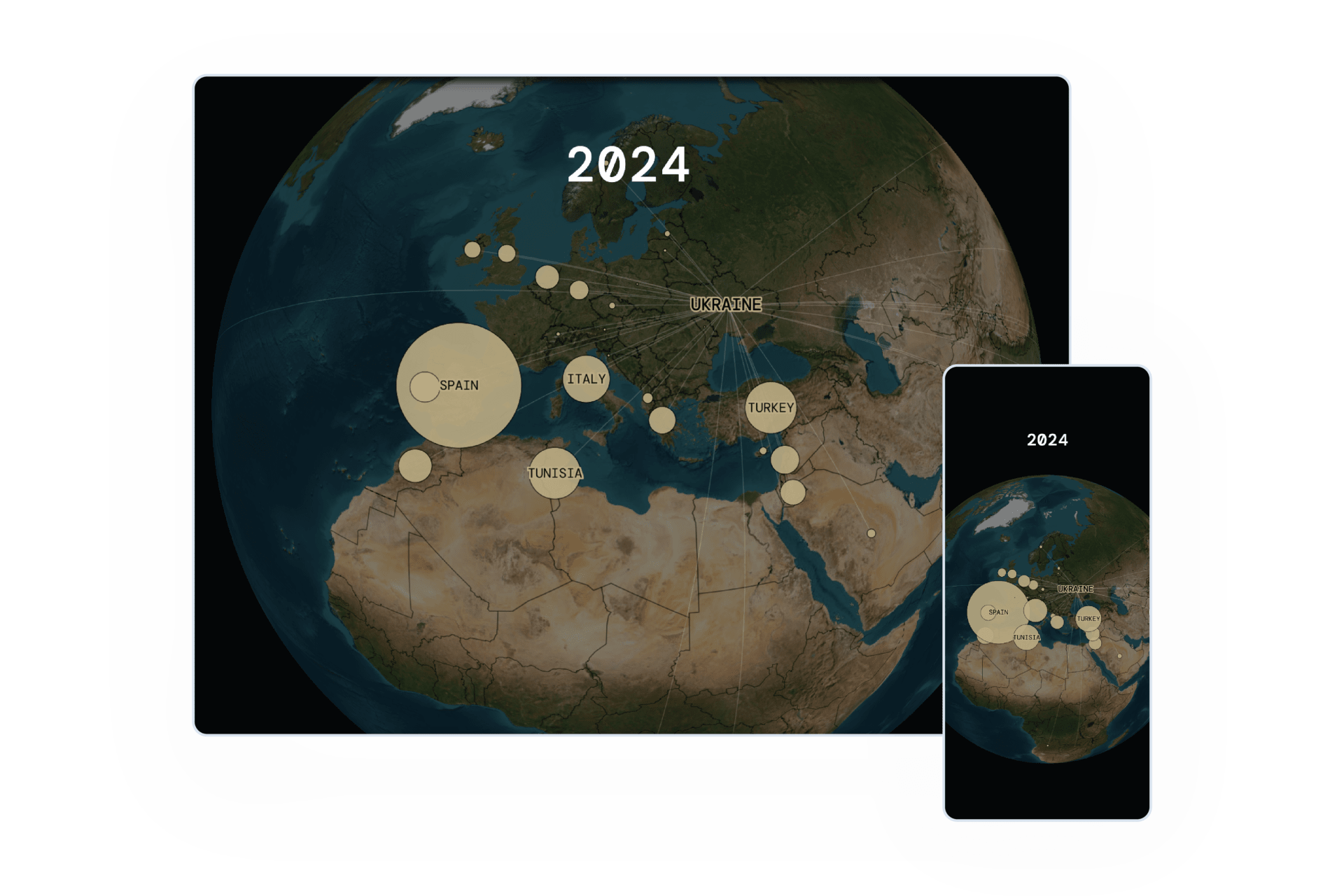
CFR Digital spent the 2026 fiscal year turning a relentless news cycle into authoritative, accessible analysis and proving that the Council can compete for attention with the largest news organizations in the world. As the year closed with U.S.-Israeli strikes on Iran, CFR.org was ranked the twelfth-most prominent website covering the war’s opening week, having published nearly 125 pieces that included fellow commentary, explainers, maps, and roundups. That moment capped a year in which CFR out-positioned major news outlets on the questions the public was actually asking across coverage of immigration, the Israel-Hamas peace deal, U.S. action in Venezuela, and U.S. relations with Greenland. That achievement is the core of meeting the moment: when people search for what is at stake, they find the Council.
True to its content strategy, CFR Digital invested in deep, irreplaceable work alongside fast, news-responsive coverage. The team launched an immersive storytelling feature on the weaponization of food in the Gaza Strip, Sudan, Ukraine, and Yemen and mounted rapid expert roundups on pivotal policy shifts. One of those roundups was a seven-fellow analysis of the Trump administration’s new National Security Strategy, with engagement time double the site-wide average. CFR Digital continued supporting the next generation of foreign policy leaders through the new interview series How I Got My Career in Foreign Policy, featuring CFR fellows such as Gina M. Raimondo, Farah Pandith, and Roger W. Ferguson Jr.
CFR Digital’s dedication to building direct, durable audience relationships paid off across every channel. CFR’s total newsletter audience increased 11 percent year over year, and the most telling signal of loyalty climbed sharply: committed readers visiting CFR.org on five or more days in a rolling thirty-day window grew 16 percent in the spring alone. Social engagement and impressions each rose 38 percent year over year in the spring, on top of a 143 percent engagement surge the prior period, keeping the Council among the most-followed think tanks on Instagram and LinkedIn. CFR Digital launched its first video-first show, The Spillover, where CFR Senior Fellows Rebecca Patterson and Sebastian Mallaby examine the ripple effects of global events across policy, geopolitics, economics, finance, and technology. Why It Matters also released a Russia-Ukraine war miniseries.
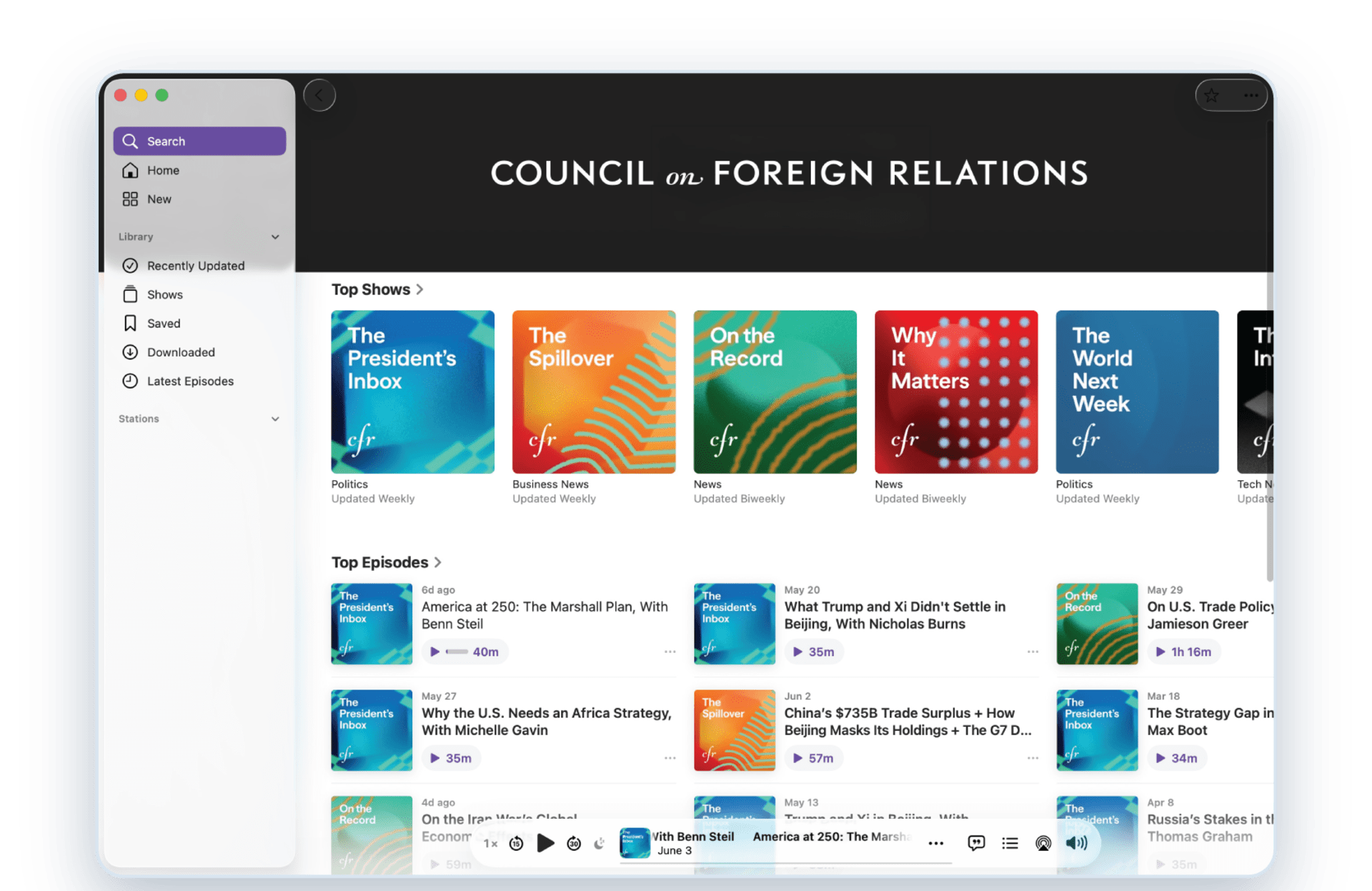
CFR Digital completed CFR’s most significant technology modernization in nearly a decade. The team redesigned CFR.org and migrated it—along with the Global Conflict Tracker, Think Global Health, and the China Open Source Observatory—to a modern tech stack, fully decommissioning the legacy infrastructure. That redesign included unifying the design language and brand across digital and print properties, relaunching the Member Services Portal and the CFR Store, and beginning the CFR Education replatforming process. The result is a faster, more secure, more flexible foundation that improves the experience for CFR members and shortens the path from idea to publication.
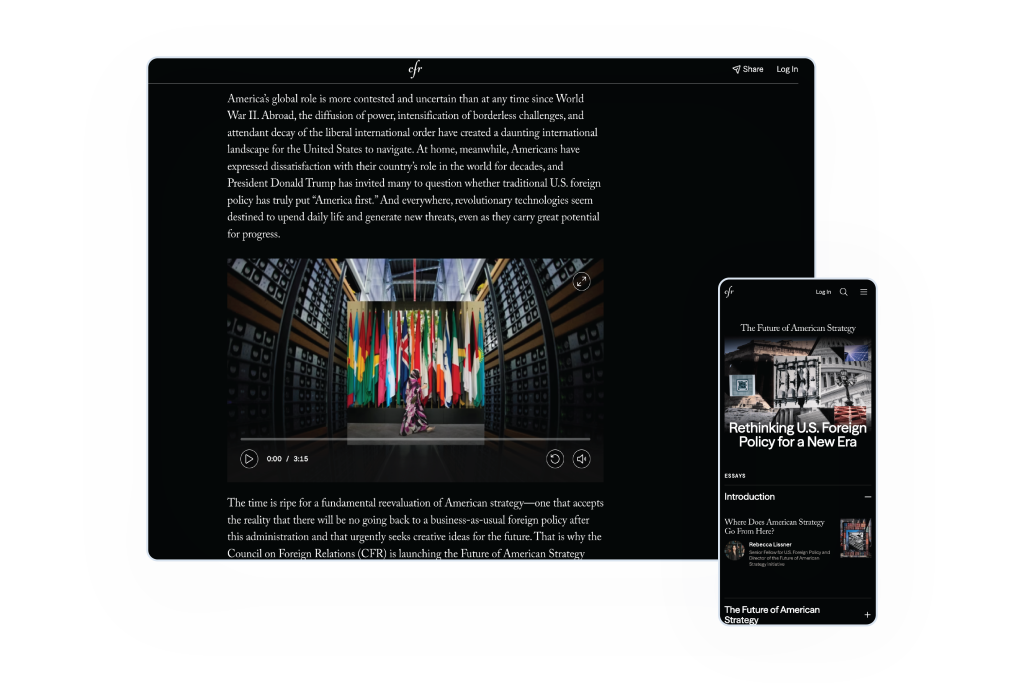
Finally, CFR Digital established AI and innovation as a competitive advantage—reflected in the Council being named one of Fast Company’s 2026 Most Innovative Companies for its work on the China Open Source Observatory. The team built an automated pipeline that translates and structures thousands of Chinese government documents for the observatory and adopted tools like Claude Code that are measurably compressing the time from prototype to launch in engineering, with agentic workflows now letting the team query data conversationally. Critically, as the open web shifts, CFR’s value as a citable, authoritative source for AI systems is becoming a strategic asset in its own right: AI-assistant referrals, while still a small share of traffic, are now the fastest-growing acquisition source.
Global Communications
Throughout the 2026 fiscal year, the Global Communications team advanced CFR’s mission by elevating the voices of CFR fellows and CFR President Michael Froman and spotlighting the range of products and initiatives generated by the Studies Program and Foreign Affairs magazine. The team also explored new ways to engage journalists and audiences across local, national, and international outlets and platforms.
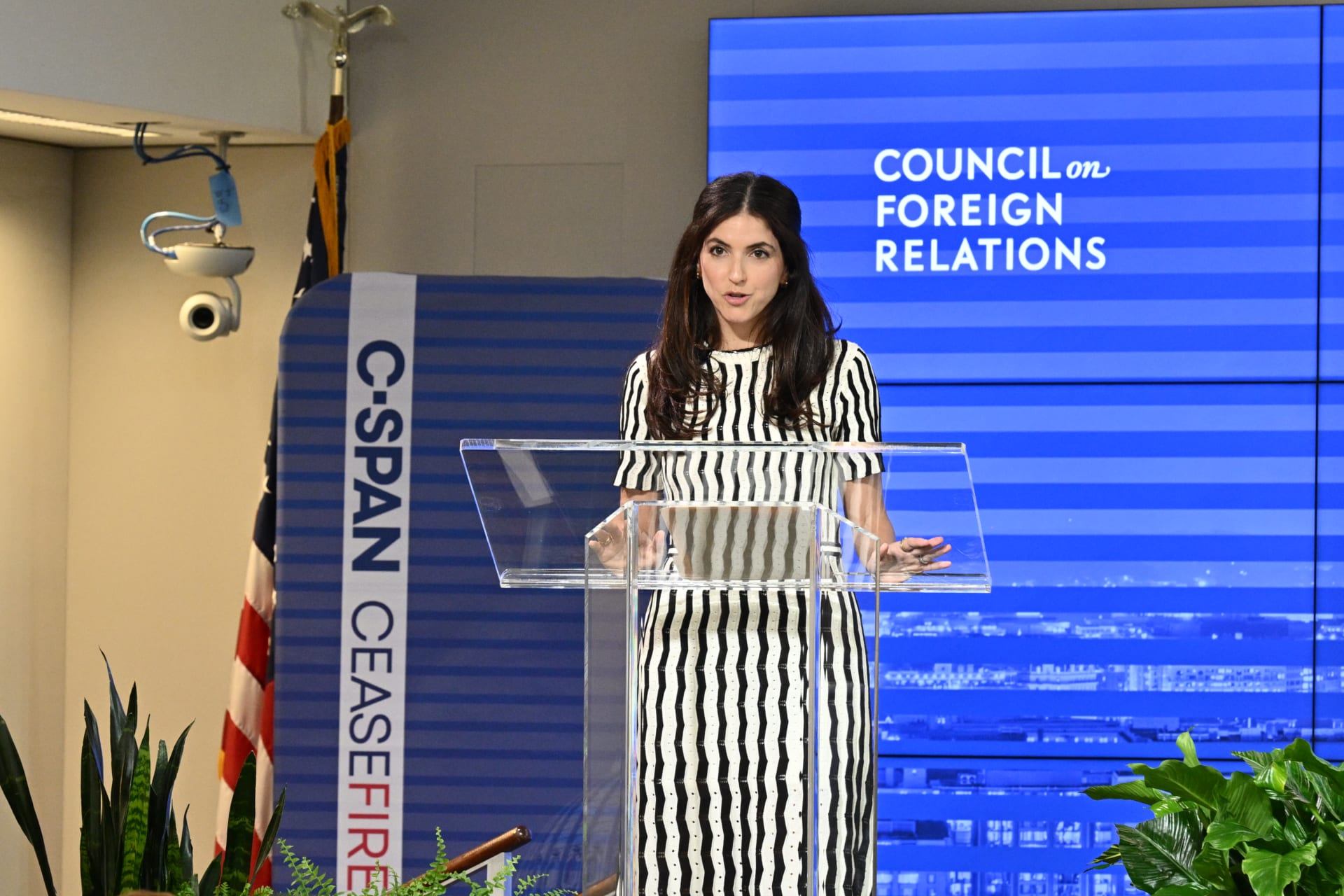
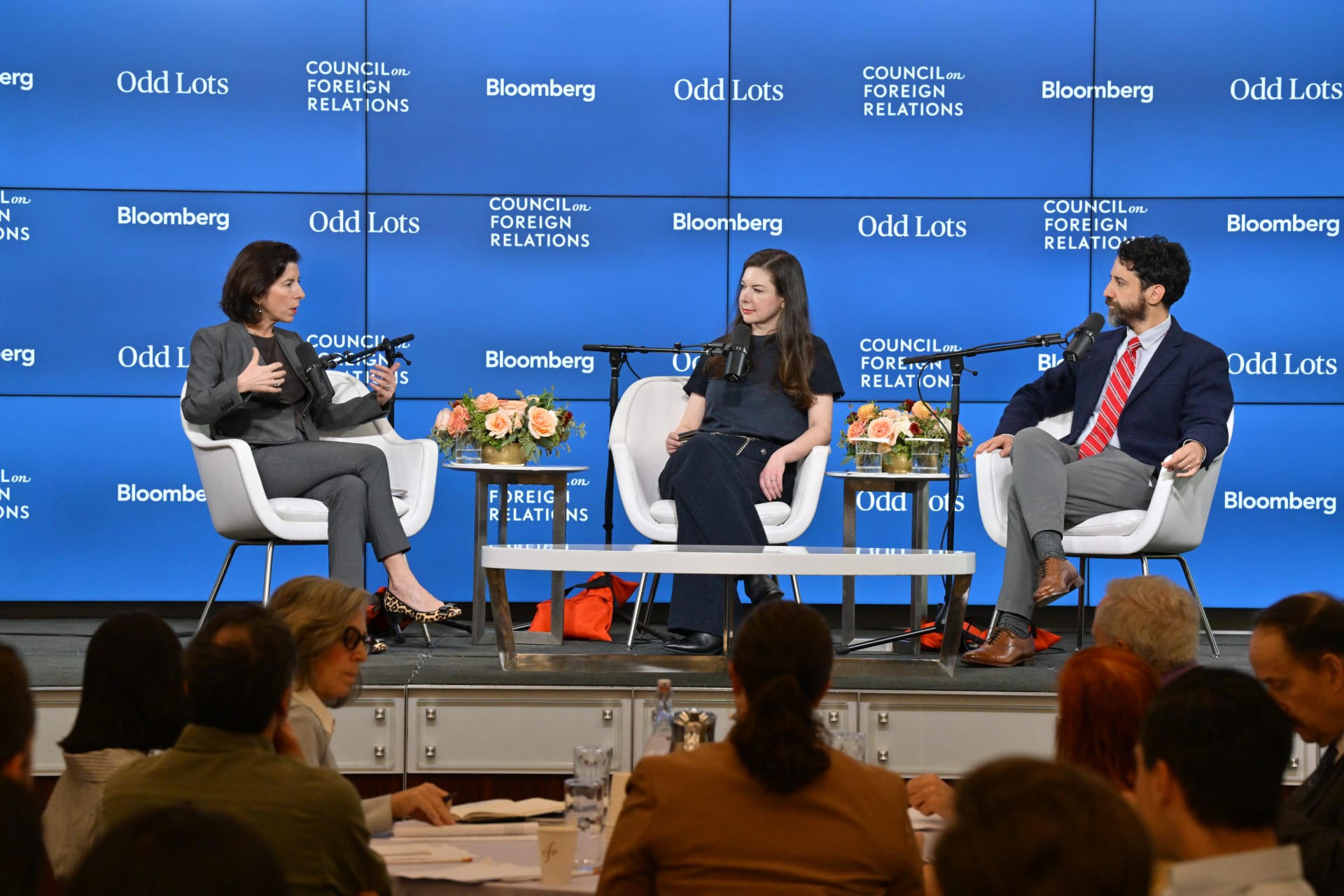
Global Communications organized innovative, co-branded media partnerships throughout the year. During the UN General Assembly, the Council partnered with CNN for a live taping of a Fareed Zakaria GPS episode with Syrian Minister of Foreign Affairs and Expatriates Asaad Hassan al-Shaibani. In October 2025, the Council hosted a conversation between Tom Keene, Bloomberg Surveillance host, and Christopher J. Waller, member of the Board of Governors of the Federal Reserve System, that was broadcast on Bloomberg TV and CFR’s channels. In April 2026, the Council collaborated with the team behind Bloomberg’s Odd Lots podcast for a live taping of an episode that featured Gina M. Raimondo. In May 2026, as part of the launch for the Future of American Strategy Initiative, CFR collaborated with C-SPAN for a live taping of an episode of the program Ceasefire, with host and Politico White House Bureau Chief Dasha Burns and Senators Elissa Slotkin and Tim Sheehy.
[Video: https://youtu.be/-CGM6aSontQ?si=e4gfSqN9372ty_d9]

The event with Syrian Minister of Foreign Affairs and Expatriates Asaad Hassan Al-Shaibani.
Global Communications took a proactive approach to media engagement—standing up ten quick-turn media briefings and creating easily digestible media resource guides to respond to the news cycle and capitalize on traditional and emerging media platforms. The briefings analyzed breaking news, such as President Donald Trump’s speech to the UN General Assembly; the Supreme Court’s ruling on Trump’s tariffs; the U.S.-Israeli strikes on Iran; and major international events, including the 2026 Munich Security Conference, the Group of Seven Summit, and the summit between Trump and Chinese President Xi Jinping.
Global Communications secured media coverage for several CFR publications. In November 2025, coinciding with the release of the Task Force on U.S. Economic Security’s report, the team landed an exclusive curtain-raiser piece in Axios about the report; organized a post-launch media roundtable with cochairs Justin G. Muzinich, Gina M. Raimondo, and James D. Taiclet and project director Jonathan E. Hillman; and arranged launch-day interviews with Raimondo and Muzinich on CNBC’s Squawk Box, MSNBC Reports, and Bloomberg: The Close. In December 2025 and January 2026, the team secured an exclusive preview of the Center for Preventive Action’s annual Preventive Priorities Survey in Politico’s National Security Daily newsletter. Due to the team’s efforts, media outlets also covered the release of CFR Books from Michelle D. Gavin, Sebastian Mallaby, and Linda Robinson, as well as Council Special Reports from Robert D. Blackwill, CFR Henry A. Kissinger senior fellow for U.S. foreign policy, and Heidi E. Crebo-Rediker, CFR senior fellow.
[Video: https://youtu.be/2_O22ViBDuM?si=NPRGUoZXm_mSfZFe]

At a media briefing, CFR experts discuss the May 2026 summit between U.S. President Donald Trump and Chinese President Xi Jinping.
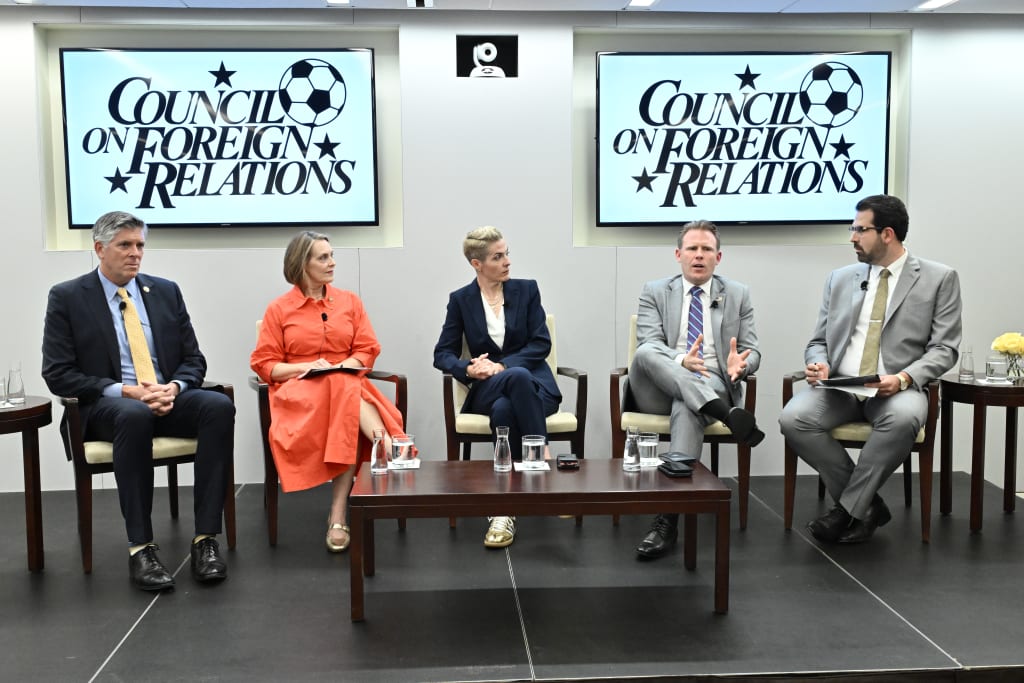
Global Communications led media efforts for the second annual Endless Frontiers retreat in Austin, Texas, in April 2026. Cohosted by CFR, Baylor University, Rice University, Texas A&M University, and the University of Texas at Austin, this year’s convening was titled “The Return of American Moonshots.” The gathering drew journalists from the Wall Street Journal, Axios, the New York Times, and the Financial Times and was featured in a curtain-raiser piece in Axios Austin. Additionally, the team partnered with the Meetings Program to organize a curtain-raiser event for the 2025 World Cup, featuring Representatives Kathy Castor (D-FL) and Darin LaHood (R-IL), cochairs of the Congressional Soccer Caucus; Andrew Giuliani, executive director of the White House Task Force on the World Cup; and Haley Carter, director of soccer operations for the Washington Spirit. Javier Vega, national correspondent for Telemundo, the Spanish-language broadcast partner for the World Cup, served as moderator.
Global Communications continued to support Foreign Affairs, helping maintain the magazine’s role in shaping global discourse by securing coverage from print, digital, and broadcast outlets and, this year, expanding its reach into the international market and podcast space. The magazine had several notable earned-media moments throughout the year. “Europe’s Next Hegemon,” by Liana Fix, CFR senior fellow for Europe, received robust coverage in German and European media, leading to a meeting between her and German Chancellor Friedrich Merz. “Why Iran Will Escalate,” by Nate Swanson, former director for Iran at the National Security Council, drove broad discussions across national media and within policy communities after Iran escalated the conflict with the United States and Israel, cementing the essay as a defining predictive text.
To strengthen the Council’s institutional profile and project its expertise, Global Communications elevated Froman’s public presence. He was featured in more than seventy media stories and interviews across outlets, including the Atlantic, the Financial Times, Politico, the New York Times, the Wall Street Journal, the Washington Post, Bloomberg, CNBC, CNN, Fox News, MS Now, NBC, and NPR. He covered topics ranging from trade and tariffs to NATO and U.S. relations with and actions in China, Greenland, Iran, Ukraine, and Venezuela. He appeared on several podcasts, including The Rest is Politics, Sinocism, News Not Noise with Jessica Yellin, and Pod Save the World. The team landed the placement of Froman’s guest essays in the New York Times, which set the scene for the 2026 World Economic Forum and Munich Security Conference.
Foreign Affairs
Foreign Affairs is the preeminent publication on U.S. foreign policy and international affairs, with its print, online, and podcast content remaining singularly prestigious and influential. During the 2026 fiscal year, it has published authoritative, debate-defining essays on issues dominating the news—from the wars in Iran and Ukraine, to tensions over Greenland, to U.S.-China competition—and on the deeper forces shaping global order.
Coverage of the Middle East since the beginning of the U.S. war with Iran has featured a variety of prominent figures, including former Israeli Defense Intelligence head Amos Yadlin, former Iranian Foreign Minister Mohammad Javad Zarif, and former Vice President of the European Commission Federica Mogherini, as well as analysts, scholars, and former policymakers such as Karim Sadjadpour, Suzanne Maloney, Jason Bordoff, Dana Stroul, Vali Nasr, and Lawrence D. Freedman. Nate Swanson, who worked on Iran policy in both the Biden and Trump administrations, has written several essays, one of which presciently warned about the threat of Iranian escalation if the United States chose to attack the Islamic Republic. Former CIA Director William J. Burns made his first public comments on the war in a discussion on The Foreign Affairs Interview, the magazine’s weekly podcast.
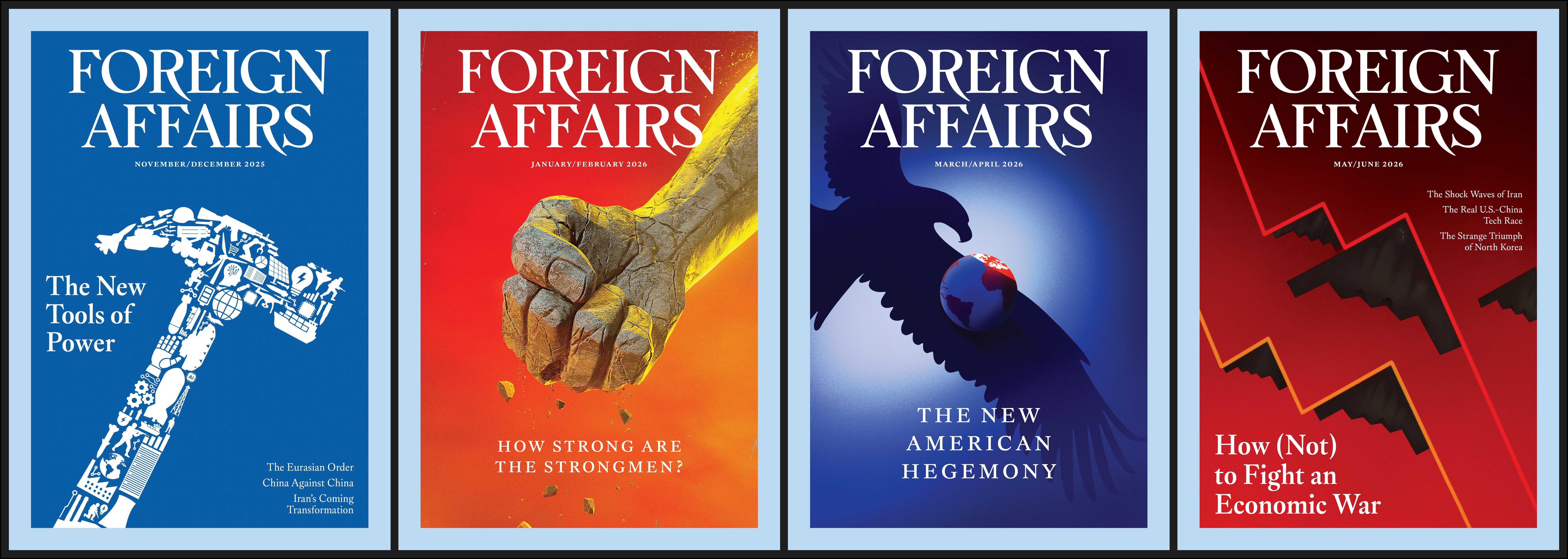
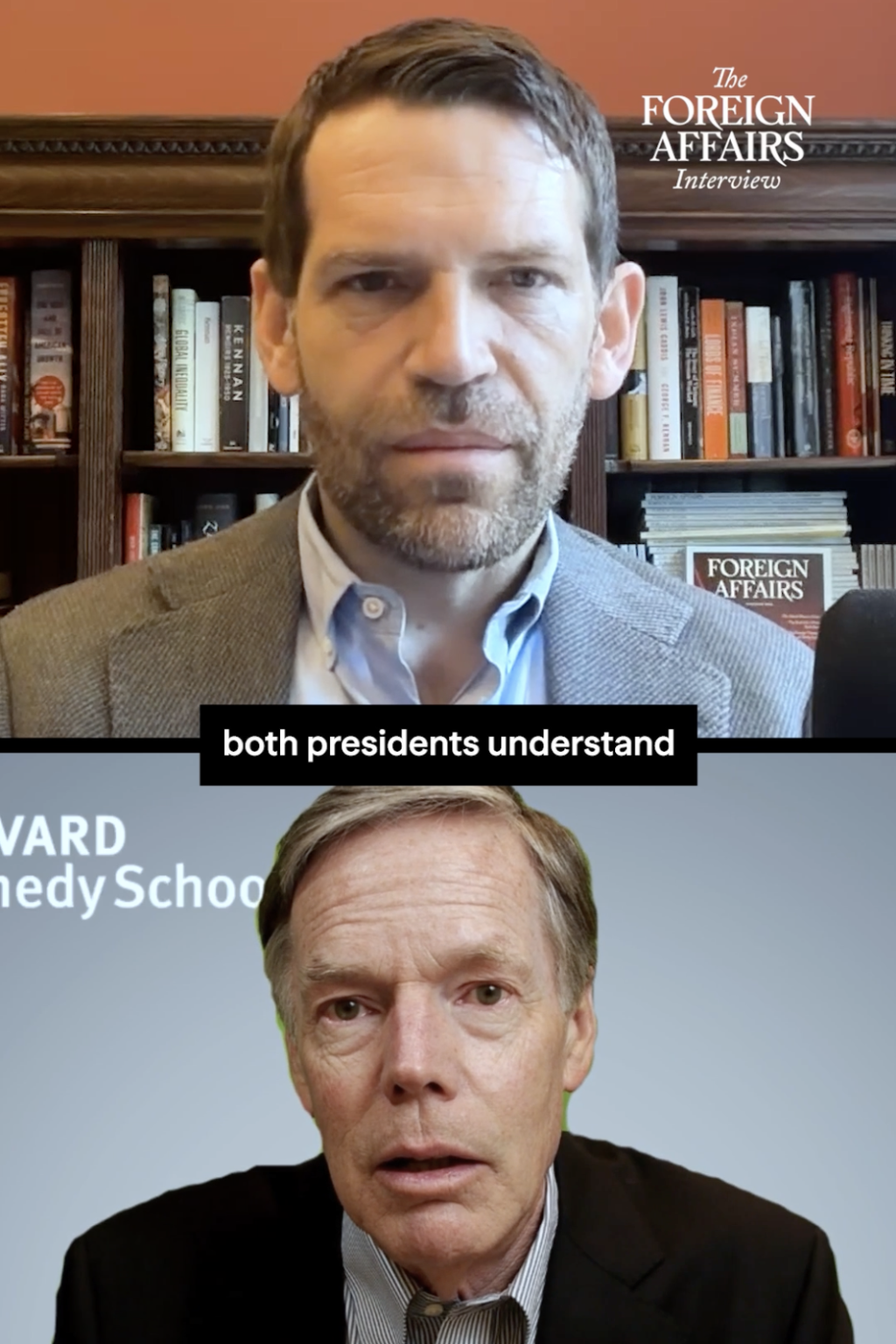
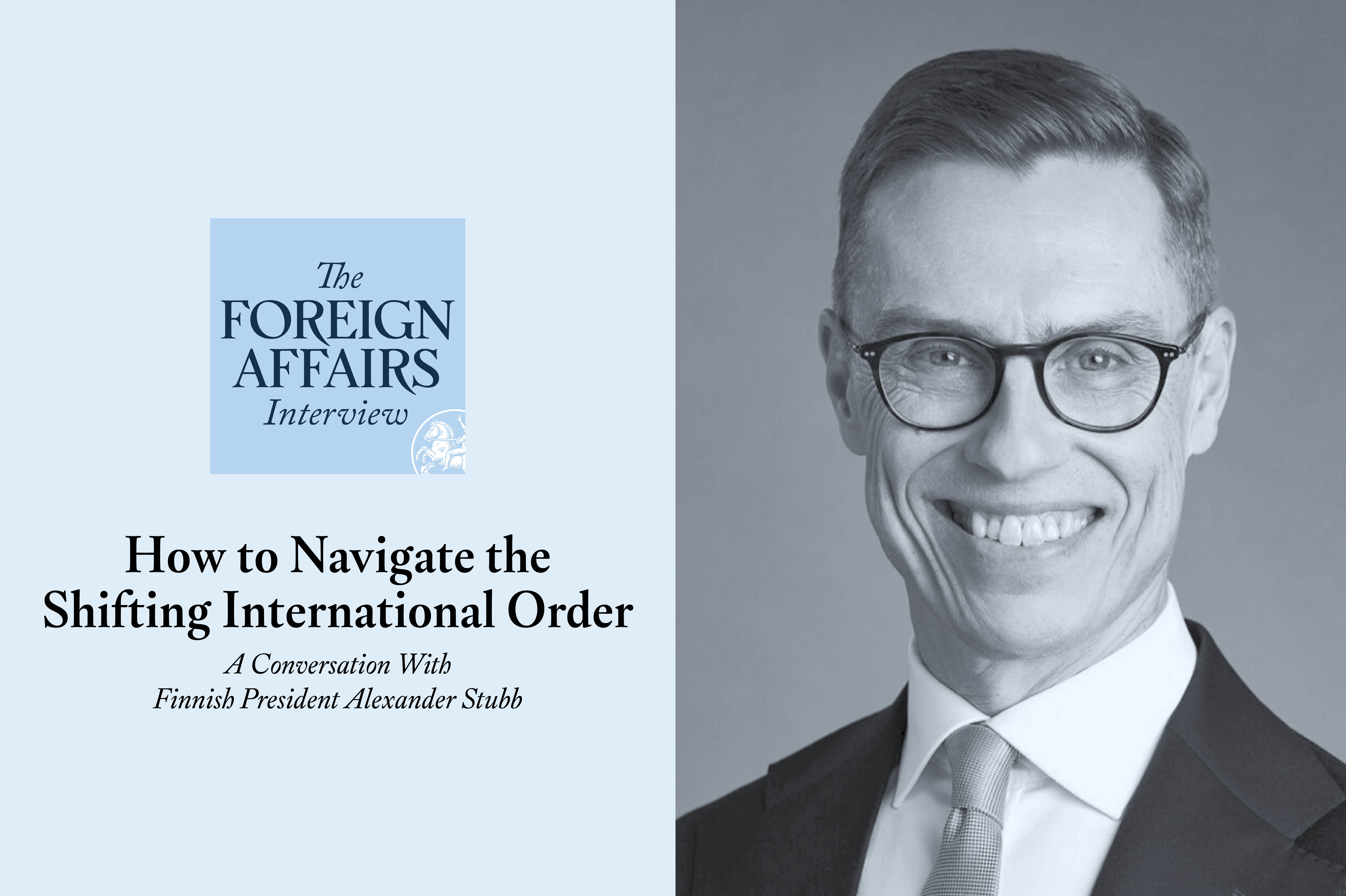
Other authors this past year have included current and former senior policymakers such as Finnish President Alexander Stubb; German Chancellor Friedrich Merz; Taiwanese Foreign Minister Lin Chia-lung; Chair of the Chinese Nationalist Party (KMT) Cheng Li-wun; former National Security Advisors Stephen Hadley, Thomas E. Donilon, and Jake Sullivan; former Secretaries of State Hillary Rodham Clinton and Antony J. Blinken; and first-term Trump administration officials Robert E. Lighthizer and Nadia Schadlow. Notable scholars have also contributed, including historian Stephen P. Kotkin and political scientists Stacie E. Goddard, Elizabeth N. Saunders, and Henry Farrell. The Foreign Affairs Interview’s total listenership more than doubled in the past fiscal year; in addition to William J. Burns, guests have included Daron Acemoglu, Fiona Hill, and Nicholas Burns.
This past year, Foreign Affairs achieved record revenue levels for the sixth consecutive year, with total revenue topping $12.4 million. Circulation increased to 222,000 as demand for the magazine’s content remained strong despite a fractured media landscape. Single copy sales on newsstands continued to outpace other media brands, with 55 percent of sales coming from outside the United States. Group subscription sales were up more than 10 percent for the third consecutive year, as that small but growing part of the magazine’s subscription business finds new audiences across academic and government institutions.
CFR Education
Throughout the 2026 fiscal year, fundamental assumptions about global affairs remained in a state of near-daily flux, reshaping how educators think about diplomacy, power, and national interests. CFR Education helped meet this moment by equipping educators with content and programming to strengthen students’ global affairs literacy, civil discourse, and critical thinking skills.
CFR Education spent several months working with Girl Scouts of the USA to create a Global Affairs Literacy patch and prepared to host the Girl Scout Global Citizen Summit at CFR’s Washington office in July 2026. Additionally, CFR Education published Global Affairs Explained, a three-course specialization, on Coursera in December 2025. Learners who complete the specialization earn a certificate in global affairs literacy from CFR.
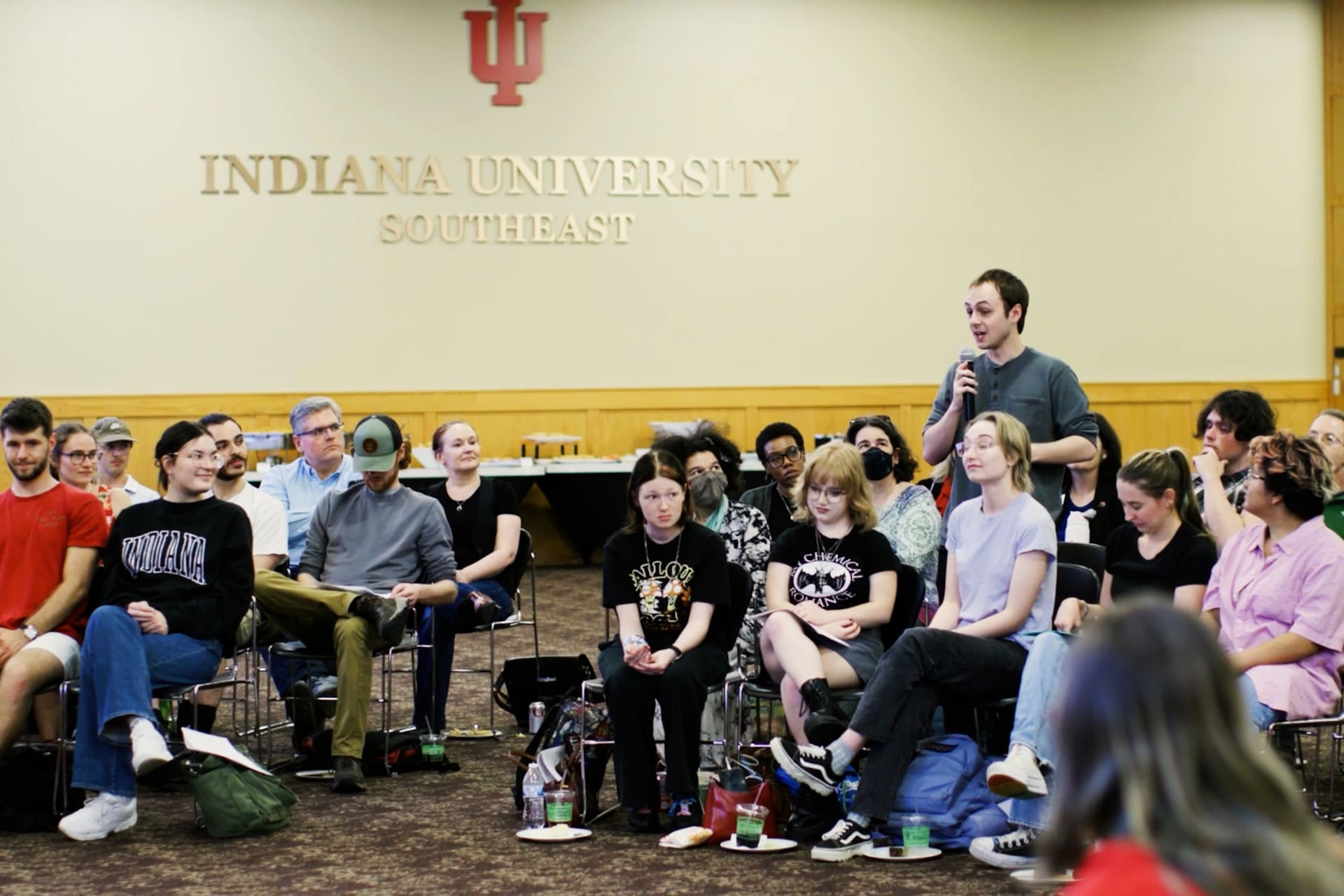
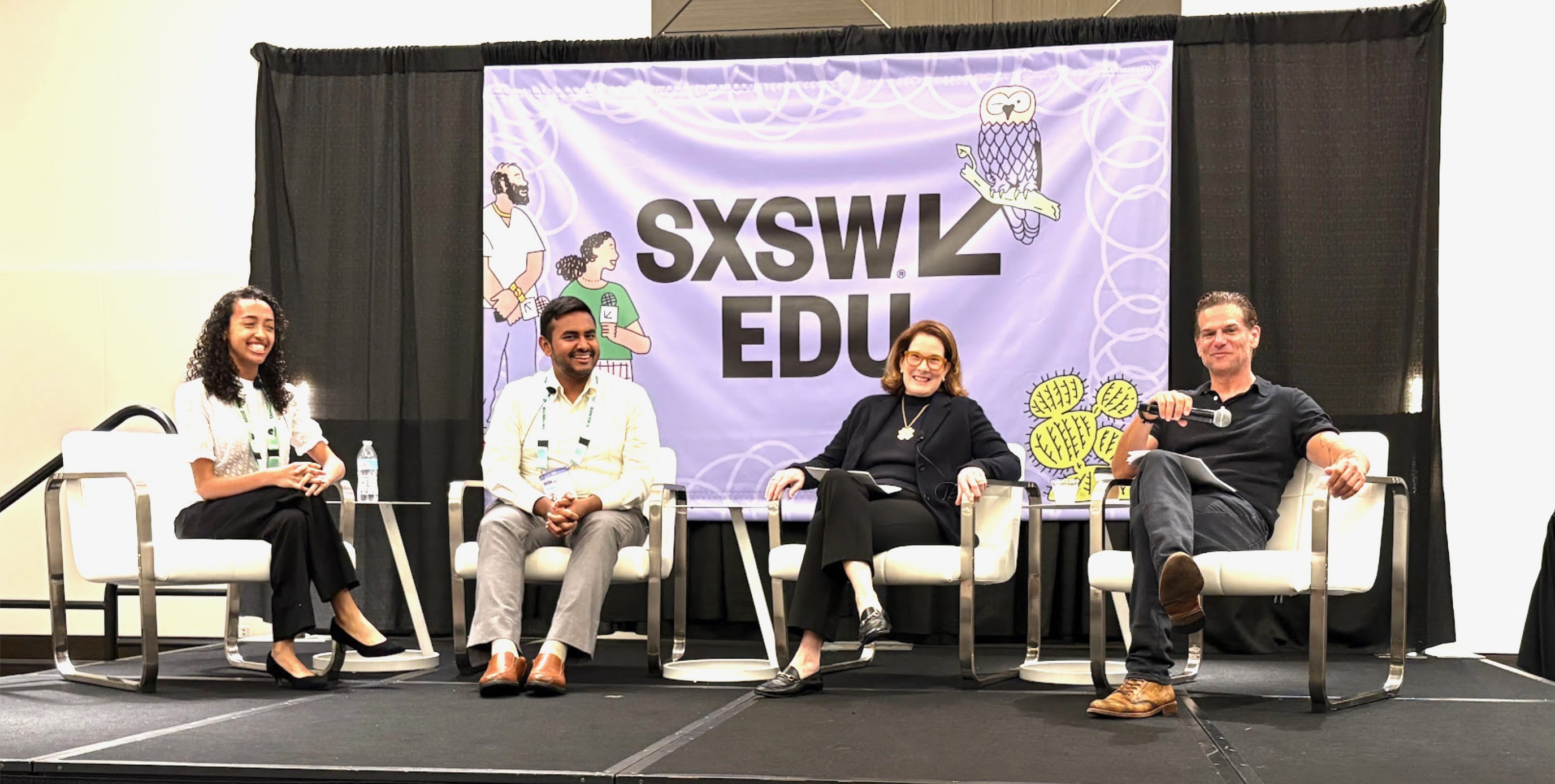
Notable among new civil discourse initiatives was a pilot with the College Debates and Discourse Alliance. It included a multistate civil discourse and global affairs event at Indiana University Southeast at which students, community leaders, and educators from Indiana, Kentucky, and Ohio participated in a campus-wide dialogue about AI regulation. CFR Education also cohosted a panel at SXSW EDU 2026 with A Starting Point (ASP) on the importance of constructive dialogue. The panel featured ASP cofounder Mark Kassen, CFR Vice President of Education Caroline Netchvolodoff, and two students from the University of Texas at Austin.
CFR Education strengthened its educator network and expanded awareness of its content and programming through two new initiatives. The CFR Education Ambassador Conference Speaker Program trained high school and higher education ambassadors to speak about the Council at conferences nationwide, extending the Council’s reach and relevance. CFR Education also increased its pedagogical engagement with educators in states and districts where the Council previously had little presence. That effort resulted in virtual and in-person professional development sessions in high-impact districts such as the School District of Philadelphia in Pennsylvania, Brevard Public Schools in Florida, and Loudoun County Public Schools in Virginia.
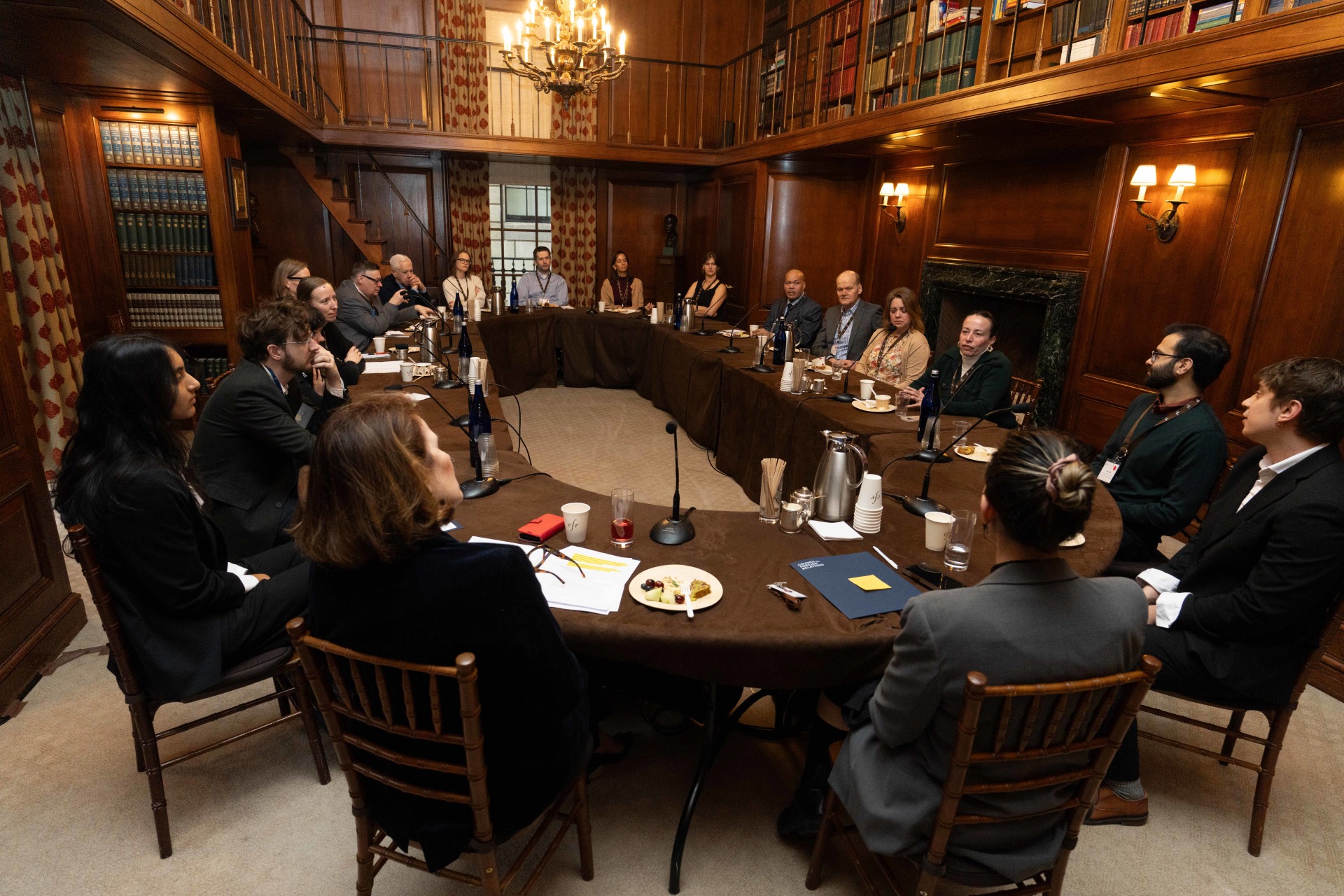
CFR Education bolstered its presence at national and regional conferences. The highlight was the 2025 National Council for the Social Studies Annual Conference, where the team engaged more than four hundred participants in conversation, and CFR-led sessions provided educators with thought leadership on global affairs literacy and civil discourse. Additionally, CFR Education codeveloped programming for the College and University Educators Workshop, engaging one hundred faculty members from schools across the country in activities and discussions about advancing global affairs literacy.
CFR Education produced new content designed to equip educators with timely, high-quality resources. Expanding its global footprint, it formed a partnership with the International Baccalaureate (IB) to provide custom content for IB Exchange, a new professional development platform that reaches more than two hundred thousand educators worldwide. CFR Education also leaned into the production and promotion of its award-winning simulations, publishing new instructor guidelines and releasing a video tutorial—“How to Run a CFR Education Simulation Role-Play”—just in time for the new school year. New simulations with enhanced visual presentations placed students in the roles of members of the National Security Council, the UN Security Council, and other decision-making bodies to tackle real-world uncertainties including nuclear proliferation, tensions between India and Pakistan, U.S.-Taliban relations, women’s representation in politics, and the future of NATO. Finally, CFR Education published a new blog, Global Matters, as a hub for thought leadership and educator collaboration.
In honor of the United States’ two-hundred-fiftieth anniversary, CFR Education launched a new collection of resources tracing the history of U.S. foreign policy, anchored by a commemorative timeline and five pivotal moments in American foreign policy—each featuring accessible overviews, primary-source documents, and classroom discussion activities.
Membership
Since its founding in 1921, the Council on Foreign Relations has grown a membership of more than five thousand prominent leaders in the foreign policy arena, including top government officials, scholars, business executives, journalists, lawyers, and nonprofit professionals. The membership is composed of those residing in the greater New York and Washington, DC, areas and a plurality based around the United States and abroad.
CFR members enjoy unparalleled access to a nonpartisan forum in which they engage with and gain insight from experts in international affairs. Members have in-person access to world leaders, senior government officials, members of Congress, and prominent thinkers and practitioners in academia, policy, and business, many of whom are members themselves. Convening nearly one thousand events annually, CFR is dedicated to facilitating an intellectual exchange of ideas through expert panel discussions, symposia, town halls, livestreams, and CEO forums exclusively for members. Through exposure to CFR’s think tank, publications, briefing materials, and special content on CFR.org and ForeignAffairs.com, members benefit from an expansive collection of unmatched intellectual capital and resources.
The Council seeks quality, diversity, and balance in its membership. Criteria for membership include intellectual achievement and expertise; degree of experience, interest, and current involvement in international affairs; promise of future achievement and service in foreign relations; potential contributions to CFR’s work; desire and ability to participate in CFR activities; and standing among peers. New members are elected twice a year by the Board of Directors.
Applying for Membership
Eligibility Requirements
- Membership is restricted to U.S. citizens (native-born or naturalized) and permanent residents who have applied to become citizens.
- CFR visiting fellows are prohibited from applying for membership until they have completed their fellowship tenure.
- CFR members are required to fulfill annual dues requirements.
Candidates must submit an online application, complete with a nominating letter from a current CFR member and seconding letters from three to four other individuals.
To apply for membership, visit cfr.org/membership/individual-membership.
Membership Deadlines and Candidate Notification
The two annual membership application deadlines are March 1 and November 1. All membership candidates and their letter writers will receive notification of the election decisions in late June for the March 1 deadline, and in early March for the November 1 deadline.
For More Information
To learn more about the membership application process or for information on nominating a candidate, please visit cfr.org/membership/individual-membership or contact Membership at 212.434.9456 or [email protected].
Stephen M. Kellen Term Member Program
The Stephen M. Kellen Term Member Program, established in 1970 to cultivate the next generation of foreign policy leaders, encourages professionals from diverse backgrounds to engage in a sustained conversation on international affairs and U.S. foreign policy. Each year, a new class of term members between the ages of thirty and thirty-six is elected to serve a fixed five-year term. Term members enjoy a full range of activities, including events with high-profile speakers; an annual Term Member Conference; roundtables; trips to various sites, including military bases, international organizations, and U.S. governmental agencies; and one weeklong study trip abroad every couple of years.
For more information on the Term Member Program, please visit cfr.org/membership/term-member-program.
Applying for Term Membership
Eligibility Requirements
- Term membership is restricted to U.S. citizens (native-born or naturalized) and permanent residents who have applied to become citizens.
- Candidates for term membership must be between the ages of thirty and thirty-six on January 1 of the year in which they apply.
- CFR visiting fellows are prohibited from applying for term membership until they have completed their fellowship tenure.
- Graduate students should generally wait until after the completion of their degree to apply for term membership.
- CFR term members are required to fulfill annual dues requirements.
Term membership candidates must submit an online application, complete with a nominating letter from a current CFR member and seconding letters from two to three other individuals.
To apply for term membership, visit cfr.org/membership/individual-membership.
Term Membership Deadline and Candidate Notification
The annual application deadline for term membership is January 10. All term membership candidates and their letter writers will receive notification of the election decisions in late June.
Profile of the Membership
Between July 2025 and June 2026, CFR membership increased by 3 percent, from 5,397 to 5,519 members. Member records are maintained by CFR at 58 East 68th Street, New York, NY 10065.
Explore the Report
The Council continues to fulfill the mission that has guided it for over a century: informing and shaping the U.S. role in the world through the strength of its research and publications, its membership and community, and its convening power.