A Guide to Trump’s Second-Term Military Strikes and Actions
Since returning to office, Trump has steadily expanded his use of military force abroad. Many of his actions mirror those of previous administrations, but diverge from the president’s past opposition to foreign military commitments.
By experts and staff
- Published
- Global Conflict Analyst
- Program Coordinator, Center for Preventive Action
- Assistant Director, Wachenheim Center for Peace and Security
Though he was critical of other presidents’ foreign entanglements on the campaign trail, President Donald Trump has demonstrated a willingness to use U.S. military force in his second term.
After returning to office in 2025, Trump approved the expansion of counterterrorism operations that included bombing targets in Iraq, Nigeria, and Somalia. He also ordered the U.S. military to strike Iran’s nuclear facilities, responded to attacks against U.S. service members in Syria, and targeted Houthi militants in Yemen. In early 2026, after months of military buildup in the Caribbean and U.S. attacks on alleged drug boats, the United States bombed Venezuela and captured the country’s leader, Nicolás Maduro. In late February 2026, the United States and Israel launched coordinated strikes on Iran after Trump declared nuclear negotiations a failure.
Trump has also threatened to launch a military operation in Colombia and suggested the United States could acquire Greenland by force.
The Trump administration’s 2025 National Security Strategy asserts that prior administrations defined U.S. national interests too broadly, leading to overcommitment and overextension of the U.S. global footprint. It goes on to declare that “the affairs of other countries are our concern only if their activities directly threaten our interests.” While deepening military involvement appears to defy this promise of a United States focused on issues close to home, the president’s use of the military could dovetail with his administration’s expanding view of presidential power.
Below, CFR takes a look at the Trump administration’s military interventions so far.
U.S.-Israel War Against Iran
The United States and Israel launched strikes across Iran on February 28, targeting senior leadership and military sites. A strike on a Tehran compound housing the offices of the ayatollah, the Iranian presidency, and the national security apparatus killed Supreme Leader Ali Khamenei. Iran quickly retaliated, firing missiles at Israel and U.S. military facilities across the Middle East, including a strike in Kuwait that killed four U.S. service members. Iran’s strikes on global tourist hubs in nearby Gulf states, such as the Fairmont hotel in Dubai and Kuwait International Airport, mark an unprecedented widening of the war.
Trump has indicated that the military operation could continue for weeks and more U.S. service members are likely to be killed in action. Trump said the United States’ military objectives were to obliterate Iran’s missile capabilities, eliminate its naval capacity, prevent it from obtaining a nuclear weapon, and disarm its regional proxy network. Trump administration officials have offered conflicting statements on whether the United States is open to engaging with new Iranian leadership—like it has in Venezuela—or if it seeks a complete toppling of the theocratic regime.
Tensions between Iran and its two principal adversaries, the United States and Israel, flared in early January 2026, as the Iranian regime conducted a brutal crackdown against widespread protests. Trump had initially threatened to intervene to prevent the regime from killing protesters, but later walked back those warnings. The United States engaged in multiple rounds of mostly indirect negotiations with Iranian officials in Geneva, Switzerland, and Muscat, Oman, but Trump repeatedly threatened to strike Iran if they did not commit to fully dismantling their nuclear program—though the president’s demands appeared to shift at various points during the negotiating process. Trump eventually set a ten-day deadline to decide whether to proceed with military intervention.
Omani mediators lauded the February 26 discussions as a diplomatic breakthrough that would halt Iran’s uranium enrichment. Two days later, however, the United States and Israel launched coordinated strikes on Iran; Trump claimed Iran posed a direct threat to “core [U.S.] national security interests.”
Venezuela: The Capture of Maduro
Trump escalated his monthslong campaign against Venezuela on January 3, 2026, launching a dramatic military operation that extracted Maduro and his wife from the country’s capital, Caracas. Dubbed Operation Absolute Resolve, a team of U.S. special forces and law enforcement officials breached Maduro’s compound, killing about seventy-five Cuban and Venezuelan guards, before transporting the couple to New York where he faces narcoterrorism charges. The future of the U.S. military presence in Venezuela remains uncertain, with Secretary of State Marco Rubio recently outlining a three-phase plan to pressure remaining regime officials, including interim President Delcy Rodríguez, to meet U.S. demands. The Trump administration has called for reforms to Venezuela’s oil industry, the removal of official advisors from China, Cuba, Iran, and Russia, and the release of political prisoners. The United States is also continuing its blockade against tankers evading sanctions on Venezuelan oil.
The Trump administration has offered varying rationales for its maximum pressure campaign against Venezuela, initially characterizing it as a counternarcotics initiative. In September 2025, the Trump administration began striking alleged drug trafficking boats in the Caribbean, later expanding those strikes to the Pacific Ocean. Many experts found the campaign legally dubious. Throughout the military buildup, Trump officials publicly denied they were seeking regime change, while also suggesting that the status quo was “intolerable” and authorizing covert CIA action in the country. At a January 3 press conference announcing Maduro’s capture, Trump shifted his justification for the mission, framing it around a desire to profit from Venezuela’s oil industry.
Iran: Air Strikes on Nuclear Facilities
Mounting tensions between Iran and Israel reached an unprecedented point last summer, eventually triggering direct U.S. involvement. On June 12, 2025, the International Atomic Energy Agency declared Iran was violating its nonproliferation commitments and was two weeks away from achieving weapons-grade uranium enrichment. The next day, Israeli Prime Minister Benjamin Netanyahu launched a wide-ranging military operation against Tehran, targeting nuclear facilities and top military and intelligence leaders. Despite recent U.S.-Iran negotiations on halting Tehran’s nuclear program, Trump changed course as Israel’s campaign progressed, trading diplomacy for military might.
On June 22, U.S. B-2 stealth bombers deployed “bunker-buster bombs” to strike Iran’s subterranean nuclear facilities at Fordow and Natanz, while a submarine launched cruise missiles at Isfahan. In the wake of the strikes, Trump claimed Operation Midnight Hammer had “completely and totally obliterated” Iran’s nuclear enrichment facilities. However, a later assessment from the U.S. intelligence community suggested the sites were not entirely destroyed, and the program was only set back by a matter of months.
Syria: Responding to Attacks on U.S. Forces
On December 19, 2025, CENTCOM launched Operation Hawkeye Strike against ISIS in Syria. U.S. forces, coordinating with the Jordanian Armed Forces, struck more than seventy targets, including known ISIS infrastructure and weapons sites, across central Syria. The operation was a direct response to a December 13 attack on the city of Palmyra that killed two U.S. soldiers and a civilian U.S. interpreter, as well as wounded three additional U.S. military personnel and two members of the Syrian security forces. In the immediate aftermath, Trump blamed ISIS for the attack and vowed “serious retaliation,” though Syrian officials soon identified the gunman as a member of their security forces who was facing dismissal for his extremist views.
Following the announcement of Operation Hawkeye, Defense Secretary Pete Hegseth called it “a declaration of vengeance,” vowing the Trump administration would continue to “hunt” and “kill” its enemies. U.S. forces had already conducted almost eighty operations against ISIS in Syria in the six months prior, killing fourteen militants, including senior leaders. On January 10, 2026, U.S. forces expanded the operation, striking thirty-five ISIS targets, including weapons caches and supply routes. The new Syrian leadership has pledged continued cooperation with the United States and its allies to combat ISIS in the country.
Nigeria: Bombing of ISIS Targets
For more than two decades, Nigeria has struggled to counter violent Islamist insurgent groups in its northern regions, including Boko Haram and ISIS affiliates. Despite ongoing military operations, terrorist attacks on civilians and deadly clashes between armed groups continued in 2025.
Nigeria began to draw renewed U.S. attention in the fall of 2025, with Trump and Republican lawmakers expressing concern over the targeted killing of Christians by jihadist groups. In October, Trump redesignated Nigeria as a Country of Particular Concern under the International Religious Freedom Act. Nigeria’s government has disputed this characterization, arguing that terrorist groups in the country’s north have a history of indiscriminate killing.
On December 25, Trump announced the United States had bombed several ISIS targets in northwestern Sokoto state in coordination with the Nigerian government. U.S. Africa Command struck a total of sixteen terrorist targets with guided missiles. While Washington and Abuja disagreed about the role of religion in their decision to attack, both left the door open to potential further counterinsurgency operations.
Somalia: Counterterrorism Operations
Beginning in February 2025, the Trump administration expanded its counterterrorism efforts in Somalia. These operations targeted al-Shabaab, an al-Qaeda affiliate active since 2006 that controls large swaths of the country’s south-central regions, and ISIS-Somalia, a smaller affiliate of the self-proclaimed Islamic State operating in the country’s northeast. The administration launched 126 operations in Somalia in 2025, killing nearly two hundred militants, according to New America, a Washington-based think tank.
The operations continue a decades-long U.S. counterterrorism campaign that began under President George W. Bush as part of the war on terrorism. Yet the Trump administration has notably scaled up operations compared to previous administrations. In 2025 alone, it conducted more operations than the Bush, Obama, and Biden administrations combined. The objective, as stated by Trump and other senior administration officials, is to eliminate the ability of terrorist organizations in the region to threaten or attack the United States and its allies.
The full extent to which the Trump administration’s expanded campaign has diminished terrorist capabilities in Somalia remains unknown. Both al-Shabaab and ISIS-Somalia remain intact and active, with al-Shabaab in particular gaining ground against Somali forces and pushing ever closer to the capital, Mogadishu. The United States has already conducted two known operations against both groups in 2026.
Iraq: Precision Strikes on Terrorists
The Trump administration conducted several counterterrorism operations targeting ISIS in Iraq. On March 13, 2025, U.S. Central Command (CENTCOM) carried out a precision air strike in the Al Anbar province of Iraq, killing Abdallah “Abu Khadijah” Makki Muslih al-Rifai, second-in-command of ISIS, and another operative. Abu Khadijah was widely considered one of the world’s most dangerous terrorists, responsible for ISIS’s global operations and financing. Senior Trump administration officials lauded the operation, conducted alongside Iraqi intelligence and security forces, as a critical success.
General Michael Kurilla, then-commander of CENTCOM, underscored the operation’s significance as part of continued efforts to “dismantle” organizations that “threaten our homeland and U.S., allied, and partner personnel in the region and beyond.” Trump praised the operation in a Truth Social post the next day, calling it another example of his “peace through strength” approach to foreign policy. Additional operations were carried out against terrorist targets following an attack on U.S. military personnel in neighboring Syria in December. The U.S. campaign targeting ISIS in Iraq, dubbed Operation Inherent Resolve, began under President Obama in 2014 in response to the organization’s rapid seizure of Iraqi territory, including major cities like Mosul.
Yemen: Targeting Houthi Militants
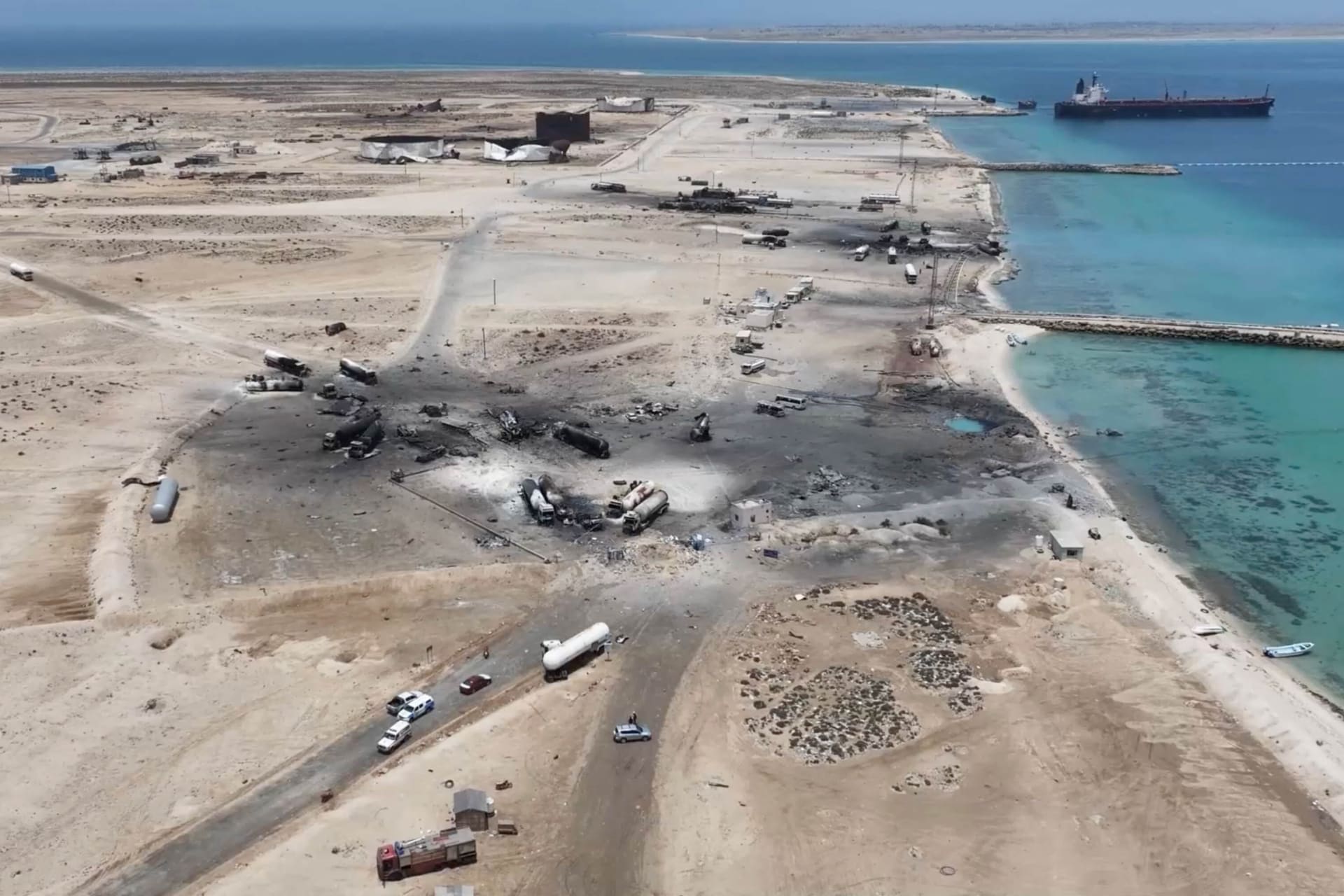
In response to Israel’s war in Gaza, Yemen’s Iran-backed Houthi rebels began attacking commercial ships and U.S. naval vessels in the Red Sea, as well as Israeli cities, in November 2023. For more than a year, the United States and its allies, including the United Kingdom, conducted targeted retaliatory strikes against the Houthis in an attempt to restore free navigation and protect civilians and military assets in the region. The United States also designated the Houthis as a foreign terrorist organization in early 2024. Yet the U.S. approach escalated following Trump’s return to office, with CENTCOM launching Operation Rough Rider, a series of intensified air strikes against Houthi bases in Yemen, in March 2025.
Trump’s intensified campaign yielded mixed results, degrading the Houthis’ drone and missile capabilities, but not fully halting their attacks on Israel or shipping vessels in the region. The operation—which deployed two naval carrier groups and significant airpower—was also costly. Houthi return fire destroyed expensive U.S. equipment, including Reaper drones, and two advanced U.S. fighter aircraft were lost at sea as their carrier maneuvered regional waters. Congressional officials estimate the cost of the operation, which the White House abruptly ended in May 2025, to be over $1 billion. Following the announcement of a Gaza ceasefire in October 2025, the Houthis halted their strikes.