Iran’s War With Israel and the United States


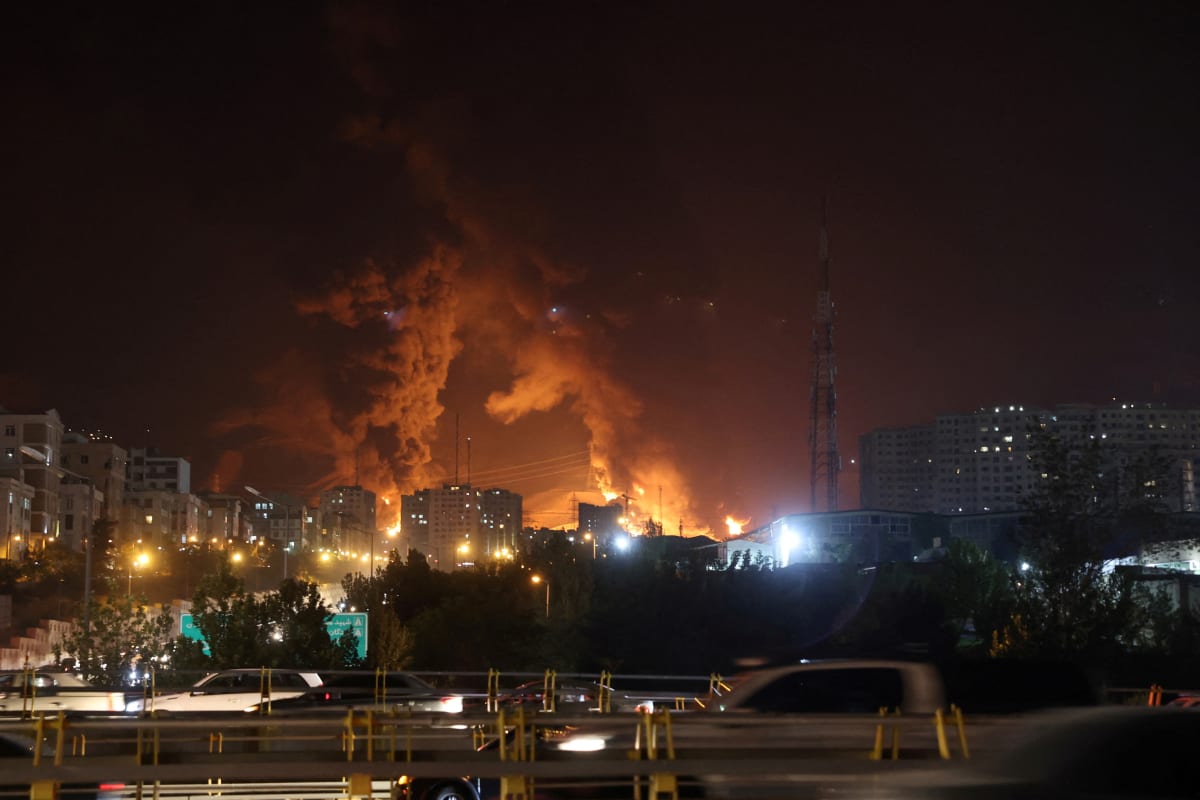


Although the United States and Iran reached a memorandum of understanding to end the war in the Middle East, the ceasefire appears on the verge of collapse, as both sides trade strikes over alleged violations. While attending the NATO summit on July 8, President Trump said he believed the interim truce had ended, threatened further attacks, and suggested the U.S. Navy could reinstate its blockade of Iranian ports.

History of Iran’s Nuclear Program
Iran has pursued a nuclear program since at least 1957, with periods of significant interruption. Spurred by security concerns from its war with Iraq, Iran is believed to have decided to pursue nuclear weapons as early as the mid-1980s. Throughout the 1990s, Iran pursued agreements with China and Russia to advance the program. In the summer of 2002, the National Council of Resistance of Iran, an umbrella organization made up of Iranian dissident groups, exposed the existence of two Iranian nuclear sites that were hidden from the International Atomic Energy Agency (IAEA).
By 203, diplomats launched an intensive effort to halt Iran’s nuclear program. Iran agreed, insisting only on keeping its centrifuges for nuclear energy. However, it did not follow through on its commitment to transparent reporting and continued covert activities, leading to a June 2004 rebuke and a September 2005 finding of non-compliance by the IAEA, paving the way for a future referral to the UN Security Council (UNSC). In 2006, the UNSC adopted Resolution 1696, the first legally binding call for Iran to suspend its uranium enrichment program. Over the next few years, the UNSC adopted a series of resolutions imposing crippling economic sanctions on Iran for its failure to suspend its enrichment-related activities.
Between 2011 and 2015, the compounding effects of international sanctions led Iran’s economy to contract by 20 percent and unemployment to rise to 20 percent. In 2013, Hassan Rouhani, a noted pragmatist, won Iran’s presidential election, campaigning on a promise to lift sanctions and restore the economy. Over the next two years, the United States convened several rounds of bilateral talks and led the other P5+1 coalition members—China, France, Germany, Russia, and the United Kingdom—in negotiations with Iran’s new leadership. These efforts culminated in the adoption of the Joint Comprehensive Plan of Action (JCPOA) in 2015. Once key parties signed the agreement, the UNSC approved UN Resolution 2231, paving the way for sanctions relief.
The JCPOA required Iran to reduce its stockpile of enriched uranium by 98 percent for fifteen years, cut the number of operating centrifuges by two-thirds for ten years, and provide inspectors access to enrichment facilities within twenty-four days if the IAEA suspects violations. Moreover, if the IAEA confirmed violations, the JCPOA allowed for the immediate reinstatement of sanctions. After the JCPOA entered into force on January 16, 2016, Iran received sanctions relief totaling nearly $100 billion. However, Iran continued to develop ballistic missiles, which, according to the United States, violated UN Resolution 2231.
Iran’s Regional Proxies
Although the JCPOA limited Iran’s nuclear ambitions, its regional ambitions continued to grow. Iran persisted in arming and training Shiite militants through its Quds Force—the international arm of the Islamic Revolutionary Guard Corps (IRGC)—which has exacerbated sectarian divisions in the Middle East. Iran has provided years of military aid and training to the Palestinian militant group Hamas, which enabled its October 7, 2023, attack on Israel. The Quds Force has also provided advanced armed drones to Hezbollah in Lebanon, trained and funded more than one hundred thousand Shiite fighters in Syria, supplied ballistic missiles and drones to Yemen’s Houthis, and helped Shiite militias in Iraq build missile capabilities.
The U.S. government considers Iran to be the foremost state sponsor of terrorism, spending hundreds of millions of dollars on terrorist financing annually across Iraq, Lebanon, the Palestinian territories, Syria, and Yemen.
Trump’s First-Term Clash With Iran
Because the JCPOA only addressed Iran’s nuclear program, and not its revisionism or ballistic missile programs, the first Trump administration withdrew the United States from the agreement in 2018 and reimposed sanctions, pledging to seek a more comprehensive deal. The sanctions triggered the worst economic crisis Iran had faced in forty years, cutting oil exports by more than half.
As the Trump administration pursued a maximum pressure strategy to bring Iran back to the negotiating table, Iran began contravening the JCPOA’s nuclear restrictions. Tensions escalated through mid-2019: the United States designated the IRGC a terrorist organization, deployed additional forces to the region, and blamed Iran for attacks on six oil tankers near the Strait of Hormuz. In June, Iran downed a U.S. Global Hawk drone, prompting a U.S. cyberattack and new sanctions.
Tensions peaked in early 2020 when the United States killed Quds Force commander Qasem Soleimani in a Baghdad air strike. Iran responded by abandoning its remaining JCPOA commitments and, while on high alert, accidentally shot down a Ukrainian passenger plane. Throughout the end of 2020, Trump continued imposing sanctions, while Iran further boosted uranium enrichment to levels after the assassination of a top nuclear scientist.

U.S.-Israeli Conflict With Iran
The October 2023 Hamas attack on Israel and subsequent war in Gaza triggered a regionwide escalation. In the months that followed, Iran-backed forces launched more than 170 attacks on U.S. and coalition forces in Iraq and Syria, prompting U.S. air strikes on two Iran-backed facilities in October 2023 and eighty-five more Iran-affiliated targets in February 2024. The Houthis in Yemen and Hezbollah in Lebanon—both part of Iran’s axis of resistance—simultaneously launched attacks from the Red Sea and Israel’s northern border with Lebanon, raising the prospect of a broader regional war.
In 2024, the Israel-Iran confrontation shifted from proxy-based hostilities to direct exchanges of fire. In April, an Israeli air strike on an Iranian consulate annex in Damascus killed two Iranian generals, prompting Iran to launch over three hundred drones and missiles at Israel—its first direct strike on Israeli territory. Following Israel’s killing of Hamas leader Yahya Sinwar and Hezbollah leader Hassan Nasrallah, Iran launched 180 ballistic missiles against Israel in October 2024. Israel responded with its largest-ever direct attack on Iran, targeting air defenses and missile production facilities. Coupled with the downfall of the Assad regime in Syria, the losses significantly degraded Iran’s axis of resistance.
Upon returning to office in 2025, U.S. President Donald Trump restored his maximum pressure campaign against Tehran while initiating the first direct U.S.-Iran nuclear talks since the collapse of the JCPOA. Israel, wholly opposed to the negotiations, launched a unilateral military strike against Iran on June 13—one day after the IAEA declared Iran in violation of its non-proliferation obligations for the first time in twenty years—targeting nuclear facilities, missile factories, senior military officials, and nuclear scientists. Iran declared the attack an act of war and retaliated by launching waves of drones and dozens of ballistic missiles. Despite having recently resumed nuclear negotiations, Trump voiced increasing support for Israel’s objectives and signaled openness to regime change in Tehran.
After a week of Israeli-Iranian exchanges, the United States directly intervened on June 21, striking Iranian nuclear sites in Fordow, Isfahan, and Natanz—making Trump the first U.S. president to attack another country’s nuclear program and the first to explicitly join Israel in an attack on an adversary. Although the Trump administration claimed the strikes significantly hindered Iran’s capacity to achieve weapons-grade uranium, the IAEA assessed that the program had been delayed by only a matter of months. Iran retaliated against U.S. forces stationed at the Al Udeid Air Base in Qatar on June 23; Trump announced a ceasefire later that day.
Meanwhile, widespread economic hardship and the collapse of Iran’s rial currency sparked massive anti-government protests in late December 2025. As unrest spread, the regime imposed a nationwide internet blackout, obscuring extreme violence against protestors. Estimates suggest the government’s crackdown killed over six thousand protesters, with more than seventeen thousand additional death reports under investigation.
Trump initially threatened military intervention if Iranian protesters were killed, but later backed away from immediate strike plans. Even as the United States conducted the largest military buildup in the Middle East since the 2003 invasion of Iraq, it continued nuclear talks with Iran.
When Tehran would not accede to U.S. demands to end all nuclear enrichment activity, the United States and Israel attacked Iran on February 28, 2026. Trump stated the war goals were to destroy Iran’s ballistic missile capabilities, eliminate its navy, prevent Iran from ever acquiring a nuclear weapon, and sever its support for proxy forces. Trump also called for regime change, encouraging Iranians to seize control of their government. Large-scale strikes targeted Iranian military assets and the Islamic Republic’s top leadership, killing Supreme Leader Ayatollah Ali Khamenei. Tehran’s Assembly of Experts appointed Ali Khamenei’s son, Mojtaba Khamenei, to succeed him.
Iran retaliated by launching missile and drone strikes against U.S. military facilities in Bahrain, Jordan, Kuwait, Qatar, and the United Arab Emirates, as well as against Israel and Gulf states’ energy and civilian infrastructure, including airports and oil facilities. Israel, in turn, launched a military offensive into southern Lebanon, displacing hundreds of thousands of people, after Hezbollah fired rockets at Israeli territory for the first time in over a year.
The attack quickly escalated into a regional war with widespread ramifications for critical supply chains and humanitarian aid. Iran’s effective closure of the Strait of Hormuz—one of the world’s most significant oil and natural gas chokepoints—has caused a global energy shock. The United States responded by imposing a naval blockade of Iranian ports.
Although complete casualty figures do not exist, the Human Rights Activists News Agency (HRANA) has documented 1,701 civilian deaths in Iran. A U.S. strike on an Iranian elementary school killed at least 175 people, and up to 3.2 million have been displaced. Thirteen U.S. service members have been killed.
The United States and Iran reached a two-week ceasefire on April 7, but continued to intermittently trade strikes. On June 14, the United States and Iran agreed to an interim deal mediated by Pakistan that included reopening the Strait of Hormuz, an end to fighting between Hezbollah and Israel in Lebanon, and a cessation of hostilities for sixty days. Both sides have accused each other of violating the agreement’s terms, and the prospect of a comprehensive settlement remains uncertain. Iran has continued to attack merchant ships in the Strait of Hormuz, and the United States accuses it of delaying follow-on discussions regarding the future of its nuclear program, whereas Iran blames the United States for failing to ensure a ceasefire and Israeli withdrawal in Lebanon.


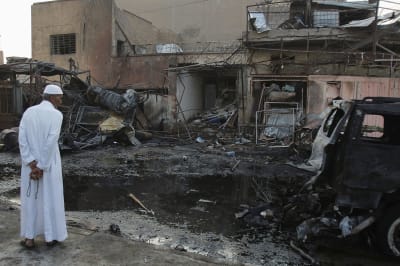


U.S. Bombing of Iran Expands After Third Service Member Confirmed Dead
The United States conducted a new round of airstrikes targeting Iran after confirming the death of another American service member; Iran responded by launching an attack targeting Bahrain and Kuwait (AP).
Two U.S. Service Members Killed in Iranian Strike
Two U.S. servicemembers were killed, and another is missing in action after an Iranian strike targeted a U.S. military base in Al-Azraq, Jordan; the attack marks the first U.S. military fatalities since March (CNN).
Iran Warns U.S. Interference in Strait of Hormuz Is a “Red Line”
Iran’s military spokesperson warned that the United States’ interference in the Strait of Hormuz is “Iran’s invincible red line,” as both sides continue to trade strikes across the region (AP). Meanwhile, India ordered shipowners, ship managers, and recruitment companies not to deploy the country’s seafarers on vessels transiting through the Strait of Hormuz after an Indian seafarer who went missing a few days prior was confirmed dead (Reuters).
U.S. Strikes Against Iran Continue, Killing At Least Thirty
U.S. Central Command announced three waves of strikes against Iran and its enforcement of the naval blockade by disabling an oil tanker attempting to sail toward an Iranian port in the Arabian Gulf and redirecting two other commercial vessels (CENTCOM). Iranian government spokesperson Fatemeh Mohajerani said in a social media post that more than 30 people have been killed in recent attacks on Iran’s southern regions while Iranian Health Ministry spokesperson Hossein Kermanpour said separately that more than 260 people have been wounded; the Islamic Revolutionary Guard Corps also claimed to have targeted U.S. military bases and assets in Bahrain, Jordan, and Kuwait in response to recent U.S. attacks (ABC). Separately, Iran released a dual Iranian-American citizen who was charged with espionage and barred from leaving the country for over a year pending a trial; President Donald Trump announced the news in a social media post, praising the act of “goodwill” by Iran (NYT).
United States Enforces Naval Blockade Against Iranian Ports
U.S. Central Command announced two additional rounds of strikes against Iran to “continue degrading Iranian capabilities” used to attack commercial shipping in the Strait of Hormuz; they also began enforcing a naval blockade against Iranian ports and coastal areas, with more than twenty U.S. warships and hundreds of military aircraft deployed across the Middle East (CENTCOM). President Donald Trump said that the military will continue to hit Iran “very hard” until it returns to the negotiating table, blaming Tehran for breaking its end of the deal (Fox News). One day after proposing a fee for ships transiting the Strait of Hormuz, Trump said the United States would instead guarantee safe passage to vessels from Persian Gulf states that agree to invest in the country (NYT). Iran’s Revolutionary Guards said it launched simultaneous missile and drone attacks in Bahrain and Kuwait; Kuwait’s military said four members of its naval forces were injured in the attacks (Reuters).
Trump Announces Naval Blockade on Strait of Hormuz After U.S. and Iran Trade Strikes
Iran’s Revolutionary Guards said they had targeted U.S. military facilities across the Gulf in response to U.S. strikes; Bahrain, Jordan, Kuwait, Oman, Qatar, and the United Arab Emirates reported being targeted by the Iranian strikes (Reuters). In response, President Donald Trump announced that the United States would reinstate a naval blockade of the Strait of Hormuz and charge a 20 percent toll on eligible cargo (AP). Separately, two Iranian officials issued calls for revenge against the United States and Israel for killing the former supreme leader, Ayatollah Ali Khamenei; Ali Bagheri Kani, deputy secretary of the Supreme National Security Council, said revenge was “the right of the Iranian nation” (NYT). DP World—an Emirati logistics company based in Dubai—shared its plans to build a new port and container terminal on the United Arab Emirates’ east coast to bypass the Strait of Hormuz (FT).
Traffic in Strait of Hormuz Reaches Lowest Level in a Month
Traffic in the Strait of Hormuz decreased significantly after Iran’s attack on a Cypriot-flagged container ship and the United States’ ensuing strikes; according to Kpler, a maritime data firm, only fourteen ships passed through the Strait on Sunday, the lowest level in a month (NYT). U.S. Central Command reported completing an additional wave of strikes against Iran to “degrade” Iran’s ability to continue attacking international shipping flowing through the Strait of Hormuz, using one-way attack sea drones for the “first time” (CENTCOM).
United States Strikes Iran in Response to Iranian Attack on Ship
U.S. Central Command carried out a third round of strikes against Iran in recent days after Islamic Revolutionary Guard Corps forces attacked a Cyprus-flagged container ship transiting the Strait of Hormuz, causing a fire and one civilian crew member to go missing (CENTCOM).
Iran Retaliates in Response to Renewed Strikes
Iran fired missiles and drones across the Persian Gulf overnight in retaliation for the latest wave of American attacks, targeting U.S. military installations in Bahrain and Kuwait (NYT). In response, President Donald Trump warned that the United States would hit Iran “hard” tonight and said that he thinks the truce—signed on June 17—is “over” (AP). Hours later, U.S. Central Command carried out an additional round of strikes to “further degrade” Iran’s ability to attack the Strait of Hormuz (CENTCOM).
U.S. Strikes Iran in Response to Iranian Attacks on Ships
U.S. Central Command carried out a round of strikes against Iran in response to Iran’s latest attacks on three commercial vessels that were transiting the Strait of Hormuz (CENTCOM). Before the strikes, the United States revoked a license that had allowed Iran to conduct oil sales openly in U.S. dollars for the first time in years (AP).
Hundreds of Thousands Gather to Commemorate Ayatollah Ali Khamenei in Tehran
The weekend-long funeral of Iran’s late supreme leader, Ayatollah Ali Khamenei—who was killed by U.S.-Israeli strikes on February 28—drew hundreds of thousands of mourners from across the region (NYT).
Iran Issues Warning Over Strait of Hormuz
Iran’s joint military command warned Thursday that all oil tankers moving through the Strait of Hormuz must use its approved routes or will face a “forceful response;” the warning came after the U.S. military’s Central Command put out a statement that said Middle East leaders “underscored their shared commitment to the free flow of commerce through” the strait (AP).
United States, Iran Hold Separate Meetings in Qatar
U.S. and Iranian negotiators met separately on Wednesday with Qatari and Pakistani mediators after Iran said it would not meet directly with U.S. envoys; Qatar said “positive progress” was made and that discussions would continue after the funeral of Iran’s previous supreme leader, Ayatollah Ali Khamenei (AP).
United States and Iran to Hold Talks in Qatar
President Trump said in a social media post that U.S. and Iranian officials would hold further talks on Tuesday in Qatar (NYT). Oil prices rose by more than 1 percent following the exchange of strikes between the United States and Iran over the weekend, which slowed energy shipments through the Strait of Hormuz (Reuters).
Trump Issues Stark Warning to Iran Amid Escalating Tensions
President Trump threatened that Iran would “no longer exist” if it did not honor the agreement to end the war (Reuters). Shortly thereafter, Iran launched drone and missile attacks targeting U.S. military sites in Bahrain and Kuwait, threatening a “complete halt” in negotiations to end the war if the United States continued its attacks (AP). Later, a U.S. official said both parties agreed to halt attacks and allow vessels to move freely through the Strait of Hormuz (NYT).
United States and Iran Trade Strikes
Iran’s Islamic Revolutionary Guard Corps said that in response to U.S. strikes a day prior, its navy struck the locations where the “terrorist U.S. military” is stationed in the region and warned that any further U.S. attacks would be met with a broader response, according to a statement carried on state media (Reuters). U.S. Central Command forces launched additional strikes in response to “continued Iranian aggression,” targeting Iranian military surveillance infrastructure and communication systems (CENTCOM).
U.S. Strikes Iran in Response to Iranian Attack on Ship
Iranian Drone Strikes Ship in Strait of Hormuz
Iran’s Islamic Revolutionary Guard Corps struck a Singapore-flagged commercial vessel in the Strait of Hormuz, a U.S. official said (CBS). The attack forced the International Maritime Organization to halt its evacuation of the eleven thousand seafarers who had been stranded in the Persian Gulf during the war (CNN).
U.S.-Iran Negotiations Make “Encouraging Progress”
High-level negotiations between the United States and Iran seeking a permanent end to the Iran war concluded; Vice President JD Vance, who led the talks in Switzerland, called them a “good foundation for a successful final deal” (AP). Mediators from Pakistan and Qatar also said that Vance and his Iranian counterparts made “encouraging progress” after agreeing on a mechanism to end fighting between Israel and Hezbollah in Lebanon and opening a “communication line” to help ensure safe passage for commercial ships through the Strait of Hormuz (Reuters). However, some critical issues, including Iran’s nuclear ambitions, remain unresolved (NYT). Technical negotiations will continue in Switzerland through the week (AP).
Iran Closes Strait of Hormuz, Alleging Israeli Ceasefire Violation
Following an exchange of fire between Israel and Hezbollah in southern Lebanon on Saturday morning, Iran’s Revolutionary Guard Corps (IRGC) announced it would once again close the Strait of Hormuz to shipping vessels; the IRGC is warning ships not to approach the Strait for their safety in what it is calling the “first step” in its response to the violation of the U.S.-Iran Islamabad Memorandum of Understanding (MOU), which called for a cessation of hostilities on all fronts, including in Lebanon (NBC). Israeli airstrikes, which the IDF claims were a response to threatening projectile launches by Hezbollah, killed approximately sixteen people in Lebanon on Saturday morning; Hezbollah and Israel also engaged in a deadly exchange of fire on Friday after Hezbollah accused Israeli troops of advancing in Lebanese territory and killing four IDF soldiers by striking a tank (Guardian). The status of the Strait of Hormuz and the other terms of the MOU were left uncertain after U.S. Central Command denied the IRGC’s claims and insisted traffic was still flowing freely through the waterway (NYT).
U.S. Lifts Naval Blockade of Iran
U.S. forces lifted the blockade on all maritime traffic entering and exiting Iranian ports and coastal areas, in accordance with the U.S.-Iran interim deal signed the day prior (CENTCOM). The deal, which does not curb Iran’s missile program nor establish a clear path to dismantling its nuclear facilities, has drawn concern from Israeli analysts and officials (Reuters). Vice President JD Vance responded by warning Israel that Trump is the country’s “only remaining powerful ally” in the world (NYT).
United States and Iran Sign Interim Deal
President Trump and Iranian President Pezeshkian signed an interim deal to end the war in Iran (Reuters). The framework agreement extends the ceasefire by sixty days and includes a $300 billion private fund designed to stimulate investment in Iran, with more than half of that amount already committed, according to a source with direct knowledge of the deal (Reuters).
U.S.-Iran Framework Agreement Faces Questions Over Implementation
Questions surrounded the U.S.-Iran interim deal to end the war in the Middle East as shippers said it could take weeks for confidence to return after any reopening of the Strait of Hormuz, and fundamental questions about the agreement’s terms remained unanswered (FT). Reuters reported that the U.S. military had overseen scores of secretive ship-to-ship oil transfers to keep Gulf energy exports flowing since early May, using drones and helicopters to guide tanker convoys near the Strait of Hormuz—employing a shuttling technique long used by Iran to circumvent sanctions (Reuters).
Challenges to U.S.-Iran Agreement Persist
Vice President JD Vance described the preliminary agreement with Iran as a major step towards peace; however, he acknowledged that the United States still had “very important details to figure out,” including how to “destroy and dispose” of Iran’s stockpile of highly enriched uranium (CNBC). Iran’s Foreign Minister Abbas Araghchi said the terms for dealing with Iran’s nuclear program would be finalized in the sixty days following the initial signing (Al Jazeera). Israel’s national security minister, Itamar Ben-Gvir, wrote on social media that Israel is not bound by the U.S.-Iran agreement, as Israel will not “compromise on anything less than the dismantling of Hezbollah” (X). Although President Trump previously announced that the Strait of Hormuz would be “permanently toll-free,” Iran’s Foreign Ministry spokesman, Esmail Baghaei, said in a news briefing that Iran could still charge fees “in exchange for the services that are provided” (NYT). Additionally, shippers in Asia and Europe remain wary, saying that navigation will only restart once a deal to reopen the waterway is passed on Friday, June 19 (Reuters). Global oil prices fell about 5 percent, hitting their lowest levels in more than three months, in response to the deal (CNN).
Pakistan: U.S.-Iran Agreement Reached
Pakistani Prime Minister Shehbaz Sharif announced that the United States and Iran reached a peace agreement that covers Lebanon; Sharif said a signing ceremony would take place on Friday, June 19, in Switzerland (NYT). President Trump confirmed the announcement on social media, saying that the U.S. naval blockade on the Strait of Hormuz would end (BBC). The preliminary agreement—the text of which has not been published—also includes a cessation of hostilities for sixty days (NYT).
U.S., Iran Reportedly on the Verge of Interim Deal
Pakistan announced that the United States and Iran were close to an agreement; the text covers the reopening of the Strait of Hormuz, phased lifting of sanctions on Iran, and the release of frozen Iranian assets (AP). However, Foreign Minister Abbas Araghchi told Iranian media that the Strait of Hormuz would not return to its pre-conflict status quo and that Iran and Oman would maintain sovereignty over the strait (Guardian). Regional officials also told news outlets that Iran would reiterate its commitment not to develop a nuclear weapon, but that comprehensive talks on the fate of Iran’s nuclear program would be postponed to future negotiations (NYT).
Iran Closes Strait of Hormuz
Iran’s foreign ministry said that the latest round of U.S. strikes on Iran has effectively rendered the April 8 ceasefire “meaningless,” warning of “highly dangerous consequences” that may arise from further escalation; Iran also announced that the Strait of Hormuz was closed to all maritime traffic in response to the recent military strikes (NYT). President Trump threatened to attack Iran “very hard” tonight, warning via social media that he could take Kharg Island, the heart of Iran’s oil economy (NYT). Hours later, Trump announced that he had “canceled the scheduled strikes and bombings against Iran” that he had previously threatened, given progress on a peace deal (NYT). Separately, U.S. Central Command announced that U.S. forces disabled another vessel attempting to transport Iranian oil in the Gulf of Oman (CENTCOM).
U.S. and Iran Trade Strikes After Trump’s Warnings
President Trump announced in a social media post that Iran has “taken too long to negotiate a deal” and that they will “pay the price;” shortly thereafter, Trump told reporters that the United States would resume attacking Iran (NYT). Trump also announced that he had directed the U.S. military to “execute a secret mission” to support oil tankers and commercial ships through the Strait of Hormuz last month; he claimed that over 200 U.S. commercial ships have carried more than 100 million barrels of oil through the Strait since then (CNN). U.S. Central Command later announced that it carried out a “precision” strike on a vessel in the Gulf of Oman attempting to transport oil from Iran in violation of the U.S. blockade, killing three Indian sailors (Reuters). The U.S. military later continued strikes on Iran, which the U.S. Central Command once again characterized as “self-defense” in response to Iran’s “unwarranted and continued aggression” (CENTCOM). Iran responded with a round of strikes targeting U.S. military assets in Bahrain, Kuwait, and Jordan (BBC). Separately, Iranian President Masoud Pezeshkian denounced U.S. air strikes that have damaged drinking water facilities in southern Iran (NYT).
U.S. Strikes Iran After Downing of U.S. Helicopter
President Trump announced that the United States was compelled to respond after Iran shot down a U.S. Apache helicopter over the Strait of Hormuz on Monday (FT). U.S. Central Command characterized the response as “self-defense strikes” (CNN). Iran then launched a series of retaliatory strikes on U.S. bases in Bahrain, Kuwait, and Jordan (CNN). Nearly all were intercepted, according to initial U.S. assessments (NYT).
Iran, Israel Announce End to Strikes
Iran and Israel said they would both end military operations after President Trump called on both countries to “stop shooting” (Reuters).
Iran and Israel Trade Strikes
For the first time since President Trump announced a ceasefire on April 8, Iran launched ballistic missiles toward northern Israel in retaliation for IDF airstrikes across southern Lebanon, including a strike that killed three Lebanese army soldiers (NYT). Trump told reporters on Sunday that he would caution Israeli Prime Minister Benjamin Netanyahu against responding (Reuters). However, Israel later retaliated by launching strikes on military sites in central and western Iran (Axios).
Top Iranian Official Says Peace Deal Hinges on U.S. Releasing Frozen Iranian Assets
Mohsen Rezaei, military adviser to Supreme Leader Ayatollah Mojtaba Khamenei, said that negotiations to end the war are “at a deadlock” and that a potential peace deal between the United States and Iran hinges on the Trump administration agreeing to release $24 billion in frozen Iranian assets (CNN).
Iran Says It Fired Warning Shots at U.S. Warships in Gulf of Oman
Iranian state media reported that the country’s navy had directed missiles and drones at U.S. warships in the Gulf of Oman as a warning, charging that U.S. forces were interfering with shipping and confiscating tankers and cargo ships—claims that followed the U.S. military’s announcement that it had stopped a sanctioned, stateless tanker in the Indian Ocean the night before (Reuters).
U.S. House Passes War Powers Resolution
The United States House of Representatives passed the War Powers Resolution, which aims to prevent further escalation in the war against Iran until hostilities are authorized by Congress (Al Jazeera). Although the measure must pass through the Senate and is likely to be vetoed by President Trump, the move reflects growing congressional concern over the conflict (NPR). Separately, Iran attacked U.S. ally Kuwait’s international airport, killing one and injuring dozens (Reuters).
Iran Suspends Talks Over Expanding Israeli Offensive in Lebanon
Iranian news agency Tasnim said that Israel’s expanding offensive in Lebanon constituted a breach of the ceasefire, prompting it to suspend talks with the United States (FT). Oil prices spiked in response to the news, as Iran also announced it would seek “complete closure” of the Strait of Hormuz (NYT). President Trump faulted Democrats and Republicans in Congress for hindering his ability to negotiate in a social media post (Truth Social).
U.S. Official: Iran, U.S. Agree in Principle on Deal to Reopen Strait of Hormuz
A senior U.S. official told reporters that the United States and Iran had agreed in principle to a deal that would reopen the Strait of Hormuz and compel Iran to dispose of its highly enriched uranium; Iranian officials have not commented on the recent announcement (NYT). Earlier in the day, President Trump had said he instructed his negotiators not to rush into a deal, contradicting his statement from yesterday that a deal was close to being signed (AP).
Trump: Deal With Iran “Largely Negotiated”
President Trump announced in a social media post that a peace deal to end the war with Iran and reopen the Strait of Hormuz is mostly negotiated and would be announced shortly; however, an Iranian state news agency disputed Trump’s claims on the Strait of Hormuz, insisting they would remain under Iranian management (CNBC).
Iran, Oman Discussing Service Fee for Strait of Hormuz
Iran and Oman, a U.S. ally, are reportedly in discussions to create a fee system to charge vessels for services while transiting the Strait of Hormuz; the proposal contradicts President Trump’s assertions that the waterway should remain free (NYT).
Iran Consolidating Control of Strait of Hormuz
A Reuters investigation found that Iran has consolidated control over the Strait of Hormuz through a tiered system that privileges ships linked to allies Russia and China, followed by countries with close ties like India and Pakistan; ships not covered by a government agreement are paying upwards of $150,000 to securely transit the waterway (Reuters).
Trump Comments on Iran During Visit to China
Trump said that both he and Chinese President Xi Jinping feel “very similar” about how the war should end (WaPo). He told Fox that Xi agreed not to provide military equipment to Iran (Fox News). A BRICS foreign ministers meeting in New Delhi ended without a joint statement after members voiced differing positions over the situation in the Middle East, host India said (AP). Iranian Foreign Minister Abbas Araghchi called for fellow BRICS member the United Arab Emirates (UAE) to reconsider its policy toward Tehran after accusing Abu Dhabi of facilitating military operations against it, according to Iranian state media (Reuters).
Trump-Xi Meeting Addresses Iran War
On Iran, the White House said China opposed charging tolls in the Strait of Hormuz, expressed interest in buying more U.S. oil, and agreed that Iran can never have a nuclear weapon (White House). China’s readout merely said that the two sides discussed the Middle East (Chinese MoFA). Meanwhile, Iranian news outlets reported that Tehran had allowed some Chinese vessels to pass through the Strait of Hormuz following contacts from Beijing (NYT). The talks come as the Washington Post reported that a U.S. intelligence report assesses that the Iran war is weakening Washington’s strategic edge against Beijing; a Pentagon spokesperson said that any such claims were “fundamentally false” (WaPo). Separately, Saudi Arabia has floated the idea of a regional nonaggression pact that includes Iran to its neighbors once the war is over, unnamed diplomats told the Financial Times; it could be based on the Helsinki process that managed tensions during the Cold War, two unnamed Western diplomats said (FT).
Israel-UAE Clash on Report of Visit
The UAE rejected an assertion by Israeli Prime Minister Benjamin Netanyahu’s office that Netanyahu had made a covert visit to the UAE during the Iran war; underscoring the topic’s sensitivity, Iranian Foreign Minister Abbas Araghchi suggested on social media that Tehran’s security services already knew of Netanyahu’s visit and called collusion with Israel against Iran “unforgivable” (NYT). Separately, a motion to limit Trump’s war powers failed in the U.S. Senate for the seventh time since the start of the Iran war; the measure failed by only one vote, after Sen. Lisa Murkowski (R-AK) joined Democrats and two other Republican senators for the first time to support limiting Trump’s powers (NYT).
Iran’s Missile Capabilities
Unnamed sources with knowledge of U.S. intelligence assessments told the New York Times that Iran still has around 70 percent of its prewar missile stockpile and has restored access to thirty of its thirty-three missile sites along the Strait of Hormuz, where Iranian missiles could threaten U.S. ships; asked for comment, a White House spokesperson repeated Trump’s divergent claim that Iran’s military had been “crushed” in the conflict and the acting Pentagon press secretary said Operation Epic Fury was a “historic accomplishment” (NYT). Meanwhile, Reuters reported that Saudi Arabia carried out multiple strikes on Iran in retaliation for Iranian attacks during the war; an unnamed Western official said the attacks occurred in late March (Reuters).
Trump: Ceasefire on Life Support
Trump declared the ceasefire with Iran was on “life support”—suggesting a potential return to fighting—while his administration announced plans to address the war’s costs for U.S households (White House). The costs of the war are also taking a toll inside Iran, with layoffs across the private sector from tech to manufacturing, the New York Times reported (NYT). Both Trump and Iranian Parliament Speaker Mohammad Bagher Ghalibaf suggested that economic pain would lead the other side to make concessions (Iranian Parliament). Iran’s foreign ministry spokesperson Esmaeil Baghaei said that it seeks a regional end to the war, including an end to the fighting in Lebanon; Iran’s latest proposal also focused on halting maritime attacks against Iranian vessels and unfreezing Iranian assets (Tasnim News Agency). Amid the diplomatic impasse, new reporting emerged about additional countries’ roles on the battlefield: the United Arab Emirates (UAE) struck Iran in early April, unnamed sources told the Wall Street Journal, while unnamed U.S. officials told CBS News that Pakistan allowed Iranian planes to park on its airfield in a move that could shield them from attacks (WSJ; CBS).
Trump Rejects Iranian Proposal
Trump rejected Iran’s latest peace proposal as “TOTALLY UNACCEPTABLE,” though he neither specified what aspects he objected to nor immediately announced a return to hostilities (Truth Social; Times of Israel). U.S. Ambassador to the United Nations Mike Waltz said that Trump was “giving diplomacy every chance” before resuming military action (ABC). In an interview with CBS News, Israeli Prime Minister Benjamin Netanyahu said the war is “not over,” and there was still “work to be done” on dismantling Iranian enrichment sites and ballistic missiles; he suggested Iran’s enriched uranium could be removed from the country through a deal or military means (CBS). Kuwait, Qatar, and the United Arab Emirates (UAE) all reported drone attacks over the weekend, with the UAE openly blaming Tehran for the strikes; drones attacked a ship in Qatari waters and entered Kuwaiti and Emirati airspace (Al Jazeera).
UAE Comes Under Renewed Iranian Attack
The Emirati defense ministry said it had intercepted missiles and drones fired at its territory by Iran; there were no immediate reports of damage (WSJ). Iranian Foreign Minister Abbas Araghchi criticized Washington today for its push for a “military adventure” when diplomatic solutions were available, adding “Iranians never bow to pressure” (Iran FM).
United States and Iran Exchange Fire
Iran targeted three U.S. warships transiting the Strait of Hormuz, according to Trump, and U.S. Central Command said it responded by striking the Iranian military facilities from which the attacks were launched (CENTCOM). Each side claimed the other had violated their month-old truce, though U.S. President Donald Trump told reporters that the ceasefire remained intact (NYT). Trump reiterated that talks with Iran were progressing “very well,” calling U.S. strikes on Iran a “love tap” while suggesting heavy bombing would follow if no deal was reached (FT; White House). While Trump administration officials insist their economic pressure campaign is pushing Tehran toward a deal, four unnamed sources told the Washington Post that a CIA assessment found Iran can survive the U.S. blockade for at least three to four months before experiencing more severe economic pain (WaPo). Pakistan, which is mediating, said that “we expect an agreement sooner rather than later,” but declined to provide a timeline (Dawn). Meanwhile, diplomacy extended to the Vatican, where U.S. Secretary of State Marco Rubio and Pope Leo discussed ending the conflict; Rubio and Leo discussed achieving a “durable peace” in the region, which appeared to smooth relations between Washington and the Vatican following Trump’s repeated criticism of Leo (AP).
U.S.-Iran Talks Cautiously Proceeding
U.S. President Donald Trump said that the two countries had carried out “very good talks” and that Iran had agreed not to obtain a nuclear weapon (AP). Iran’s mission to the United Nations wrote on social media that the only “viable solution” to the shipping quagmire in the Strait of Hormuz was a permanent end to the war and to the U.S. blockade of Iran’s coastline (Iran UN Mission). Pakistani Prime Minister Shehbaz Sharif, whose country has acted as a key mediator, wrote on social media today that Pakistan, Saudi Arabia, and others had requested that Trump pause the U.S. shipping mission after it triggered hostilities in the strait on Monday (Pakistan PM). Chinese Foreign Minister Wang Yi called for a ceasefire after meeting with Iranian Foreign Minister Abbas Araghchi, who said Tehran would only accept a “fair and comprehensive agreement” with the United States (Al Jazeera). The Washington Post reported that at least 228 structures or pieces of equipment at U.S. military sites across the Middle East have been damaged since the start of the Iran war, based on a review of satellite images; a U.S. military spokesperson told the Post that damage assessments could be misleading (WaPo). Most U.S. personnel moved out of regional bases at the start of the war, making cooperation with U.S. partner countries in the Gulf more important for Washington’s military strategy; for example, Saudi Arabia’s denial of base and overflight access to the United States contributed to Trump quickly ending a mission in the Strait of Hormuz earlier this week, NBC News reported, citing unnamed U.S. officials (NBC).
Trump Pauses “Project Freedom”
President Donald Trump announced that the United States had paused efforts to guide ships through the Strait of Hormuz while negotiations with Iran move forward; pausing the mission announced just this week would allow space for a deal with Iran to be finalized, he wrote on social media, claiming “Great Progress” had been made (Truth Social). Trump announced the U.S. blockade on Iran’s coastline would remain in place despite the suspension of the shipping mission (Guardian). Four unnamed sources told Axios that the two sides are currently considering a memorandum of understanding to end the war and kickstart a thirty-day period of negotiations to open the strait, limit Iranian nuclear activities, and relax U.S. sanctions (Axios). Defense Secretary Pete Hegseth told reporters earlier in the day that the ceasefire with Iran had not ended, but Iranian Parliament Speaker Mohammad Ghalibaf wrote on social media that U.S. actions had violated the truce and that a “new equation” was emerging in the vital waterway (Sky News; Iranian Parliament). Joint Chiefs of Staff Chairman Dan Caine told reporters that Iran also attacked Oman yesterday (Reuters). Regardless of the successful transit of two U.S.-flagged ships earlier this week, the strait remains mostly closed; a French ship was attacked in the strait on Tuesday and its crew injured, its owner said (Reuters). As restrictions on energy flow in the Persian Gulf continue, the U.S. national average price of gasoline breached $4.50 per gallon for the first time since Russia’s 2022 invasion of Ukraine (Reuters).
Strait of Hormuz Clashes Test Ceasefire
Clashes in and around the Strait of Hormuz tested the U.S.-Iran ceasefire and threatened to derail a U.S. bid to restart global shipping (NYT). Brad Cooper, head of U.S. Central Command, said that Iran launched missile, drone, and small boat attacks at commercial ships that Washington was helping guide through the strait; the United States sank multiple Iranian boats while successfully helping two U.S.-flagged merchant ships transit the strait, he added (CENTCOM). Trump told Fox News that Iran would be “blown off the face of the earth” if it attacks U.S. ships in the vicinity of the strait, while Ghalibaf wrote on social media that Tehran had “not even begun” potential escalatory actions (Fox News; Iranian Parliament). The flare-up has apparently affected states not party to the conflict; Seoul reported an explosion on a South Korea-flagged vessel, though it did not immediately announce the cause (CNA). The UAE said Iranian attacks had set fire to an oil refinery and injured three Indian nationals; Iran did not immediately comment (Al Jazeera). Gulf countries, Pakistan, and the European Union (EU) condemned the attacks on the UAE, while Abu Dhabi said it reserved the “full and legitimate right to respond” to them (Al Jazeera; Arab News).
U.S. Mission for Hormuz Shipping
U.S. President Trump announced an effort to guide commercial ships through the Strait of Hormuz while indirect diplomacy between the United States and Iran continues (TIME). Trump wrote on social media that the U.S. mission would support ships from countries not involved in the war, while U.S. Central Command (CENTCOM) said more than one hundred aircraft would take part (Truth Social; CENTCOM). Rather than U.S. naval escorts for commercial ships, the mission will provide diplomatic and insurance assistance to coordinate passage, unnamed senior U.S. officials told the Wall Street Journal (WSJ). While Trump said it was being carried out “for the good of” Iran and others, the head of Iran’s parliamentary national security commission wrote on social media that U.S. interference in the strait would be considered a ceasefire violation (Iranian Parliament). The announcement came as Iran’s foreign ministry said it was reviewing Trump’s response to its latest peace proposal (WaPo). Trump told Israeli public broadcaster Kan that Iran’s proposal was “not acceptable” (Times of Israel).
Deadline for Congress to Authorize War
The war in Iran hits a threshold today that typically requires a U.S. president to seek congressional authorization under the War Powers Act; the Vietnam War-era law requires winding down the conflict after sixty days unless Congress declares war or authorizes the fighting (Reuters). An unnamed senior administration official told the Washington Post today that for the purposes of the War Powers Act, “the hostilities that began on Saturday, February 28 have terminated” (WaPo).
Iranian Supreme Leader Vows to Protect Nuclear Capabilities
Iranian President Masoud Pezeshkian said that the U.S. blockade is “doomed to fail” and breaks international law (DW). A statement attributed to Iranian Supreme Leader Mojtaba Khamenei said that Tehran would protect its nuclear capabilities and the only place that Americans belonged in the Persian Gulf was “at the bottom of its waters” (AP). When asked about the impending war powers deadline at a Senate hearing, Defense Secretary Pete Hegseth said he believed it was extended due to the current ceasefire; a handful of Republican senators broke from their party to endorse the withdrawal of U.S. troops from Iran in a resolution vote, but it failed to pass (FT). The heads of U.S. Central Command and the Joint Chiefs of Staff briefed President Donald Trump about options for renewed U.S. strikes on Iran, underscoring the possibility of a return to large-scale fighting (Axios). An unnamed senior official in Iran’s Islamic Revolutionary Guard Corps said that new U.S. attacks would be met with “long and painful strikes” on U.S. assets in the region (Reuters). Amid the prospect of a longer war, the price of Brent crude oil rose today to a temporary high of $126 a barrel, the highest level since 2022 (NBC).
Trump Vows to Continue Blockade
Iran had proposed reaching a deal to reopen the Strait of Hormuz and end the war, postponing discussions of its nuclear program—but Trump told Axios that he would maintain the blockade in order to pressure Tehran toward a nuclear agreement; unnamed sources also told the outlet that the U.S. military is prepared to carry out a “short and powerful” wave of strikes on Iran (Axios). The United States has spent an estimated $25 billion fighting the war so far, the acting Pentagon comptroller told lawmakers (NBC). The $25 billion estimate of U.S. war costs is a conservative one that does not include repairs to U.S. bases that were attacked, three unnamed sources familiar with the issue told CNN; adding the repair costs could mean billions more (CNN). In a congressional hearing, Defense Secretary Pete Hegseth declined to answer questions about whether the estimate accounted for damage to U.S. bases and about how much longer the United States would need to keep fighting to meet its goals (AP).
UAE Exit From OPEC
Abu Dhabi’s exit, set for this Friday, adds to the unpredictability in global oil markets as the war in Iran shows no signs of resolution (WaPo). OPEC countries supplied more than a quarter of global oil prior to the Iran war (NYT). Meanwhile, the Treasury Department announced it was stepping up its economic pressure campaign against Iran by sanctioning thirty-five people and entities accused of aiding Iran’s war efforts and of working to evade other sanctions (Treasury). Separately, it warned that banks working with Chinese refineries that process Iranian oil could also face sanctions (CNBC).
New Iranian Proposal to End the War
After a round of U.S.-Iran talks earlier this month stalled due to differences over Iran freezing its nuclear enrichment, Tehran has proposed a phased agreement that would first end the war and reopen the Strait of Hormuz to shipping—and only afterward discuss nuclear matters, multiple news outlets reported (Reuters). Tehran’s proposal includes guarantees that the war would not start up again, according to the Wall Street Journal, though its details were not immediately made public (WSJ). Under the reported plan, Iran would continue to charge fees on shipping through the strait, which it began charging after seizing control of the waterway in the early days of the war (NYT). An unnamed source told Axios that Iran’s proposal to delay nuclear talks, in part, stemmed from a lack of consensus among Iranian officials on nuclear matters (Axios). U.S. President Donald Trump discussed the peace plan with aides and is reportedly unhappy with the proposal (Times of Israel). A White House spokesperson said that Washington “will not negotiate through the press,” while U.S. Secretary of State Marco Rubio said that the United States will not allow Iran to control the Strait of Hormuz (NYT).
Trump Calls Off U.S. Negotiators’ Trip to Islamabad
Trump wrote on social media that time was being wasted and there was “infighting and confusion” on the Iranian side (Truth Social). Meanwhile, Iranian Foreign Minister Abbas Araghchi visited Islamabad on Saturday and held talks with Pakistan’s prime minister (Pakistan PM). Araghchi then traveled to Oman to discuss efforts to end the Iran war, Iran’s foreign ministry said (The National).
IEA: Strait of Hormuz “Double Blockade” Causing Global Energy Crisis
As U.S. and Iranian restrictions on shipping in the Strait of Hormuz—a chokepoint for the world’s energy supply—continue, the director of the International Energy Agency (IEA) Fatih Birol warned that the world is “facing the biggest energy security threat in history;” he added that the prolongation of the “double blockade” on the Strait of Hormuz might soon cause a jet fuel shortage in Europe (CNBC). Trump declined to give a timeline to reporters on an end to the U.S.-Iran conflict; while he reiterated a threat of using additional military force if Washington was unsatisfied with diplomacy, Trump also ruled out the possibility of using nuclear weapons (C-SPAN).