By experts and staff
- Published
The conflict in Iran has affected markets and supply chains in ways that are still being understood, but one can already glean clear lessons on diversification and resilience from the economic disruption. Even with a tenuous ceasefire in place, the market shocks of the Strait of Hormuz’s closure and the dispute over control of that pivotal waterway have governments rethinking their energy strategy.
Three Council of Councils experts in Germany, Saudi Arabia, and Singapore discuss the geoeconomic impacts of the Iran was and how states can adapt to this changing landscape.

“Gulf War III” and the Return of Geoeconomic Constraints
The current Iran crisis underscores a familiar lesson of economic history: great powers rarely enter wars constrained by resources, but they almost always become constrained by them in the end.
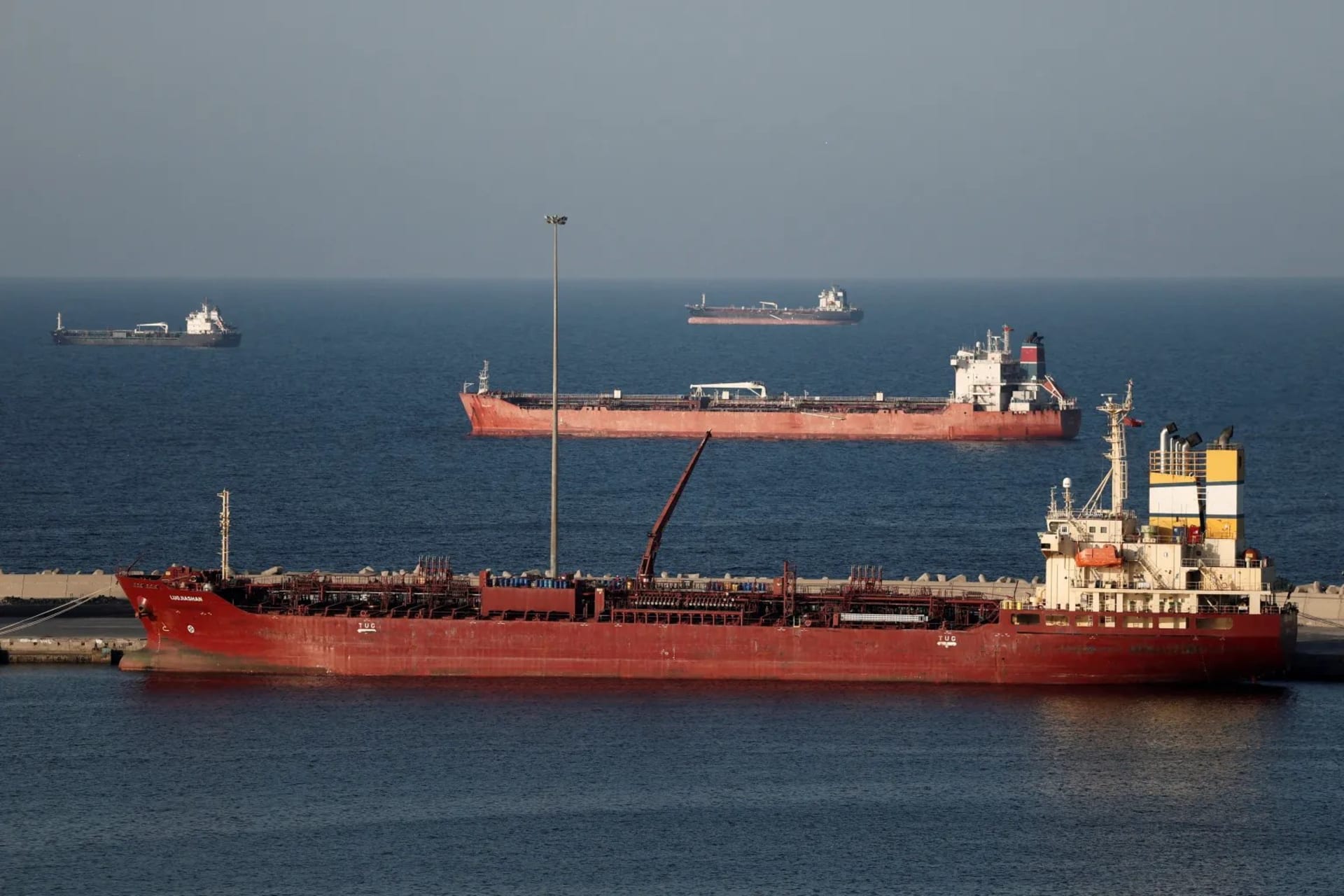
Although the economic effects of the conflict are already visible, their significance lies less in the immediate shock than in what they reveal. Oil prices have risen by roughly 20 to 30 percent, bringing renewed inflationary pressure to import-dependent economies, particularly in Europe. The Strait of Hormuz—through which around a fifth of global oil supply transits—has once again become a point of systemic fragility.
More consequentially, sustained energy price shocks risk feeding into broader macroeconomic weakness. With growth already fragile across several advanced economies, the combination of higher input costs and tighter financial conditions raises the probability of a synchronised slowdown, if not a broader global recession.
There are clear echoes of the 1973 oil embargo, when a politically driven supply shock exposed Western dependence on Middle Eastern energy and triggered a profound economic adjustment. But the global system is no longer as symmetric. Europe remains structurally exposed, with energy import dependence still above 50 percent, while other actors have spent the past decade reducing their vulnerability. China, for instance, has accumulated large strategic petroleum reserves and diversified its energy base. Crucially, it continues to benefit from access to discounted Russian and Iranian crude, partially insulating its economy from global price spikes.
The more binding constraint, however, is not energy alone but strategic bandwidth. The United States is now engaged—directly or indirectly—across multiple theaters: Venezuela, Ukraine, East Asia, and the Gulf. Economic and political capital are not infinitely elastic. With federal debt exceeding 120 percent of GDP and defense spending approaching $900 billion annually, the marginal cost of sustaining multi-theater engagement is rising, both fiscally and politically.
At the same time, the war is producing clear redistributive effects. Elevated energy prices are strengthening Russia’s fiscal position, while China benefits not only from discounted imports but also from the strategic distraction of Western powers. As Henry Kissinger once observed, “no country can act wisely simultaneously in every part of the globe at every moment of time.” That constraint—of attention as much as resources—is now binding.
What this episode brings into focus is not simply exposure to shocks, but the capacity to absorb them. Vulnerability today is less about dependence in the narrow sense than about resilience across interconnected systems—energy, finance, logistics, and political cohesion. In that regard, this so-called Gulf War III is not so much a regional conflict as it is a stress test of how the international system functions under pressure.
The broader lesson is not new. Wars that appear geographically contained rarely remain economically so. And when strategic ambition runs ahead of economic capacity, adjustment—sooner or later—becomes unavoidable. The real risk is not that this war will be lost on the battlefield, but that its economic consequences will quietly redefine the limits of Western power.

Economic Concerns Become Secondary as Conflicts Persist
The war in the Persian Gulf seems to hammer another nail in the coffin of the brief era of geoeconomics. Once again, the use of military force is dominating world affairs, rendering economic considerations secondary.
However, viewing economics as an inferior concern is short-sighted. What the world is witnessing is the combination of geoeconomics and geopolitics. The war against Iran is not just about preventing it from developing nuclear weapons or regime change, but also about oil and gas—at least in the case of the United States.
President Donald Trump has never concealed the fact that one of his main objectives in this war is access to Iran’s fossil fuel resources; the kidnapping of President Nicolás Maduro served a similar purpose in Venezuela. The United States desires Iran and Venezuela’s oil and gas resources to significantly lower prices in U.S. and international markets.
Conversely, Iran is combining military and economic force in this conflict. Closing the Strait of Hormuz is a far more effective way of pressuring the United States and Israel to end the war than using rockets and drones. The closure also has indirect geoeconomic effects on the other major ongoing war: the rise in oil prices due to the blockade increases Russia’s revenue from its exports and thus enables it to spend more on its war against Ukraine.
Europe can learn two major lessons from this situation. First, an actor’s ability to combine economic and military power will determine the likelihood of its success in a conflict. That capacity requires the necessary capabilities and the willingness to use them. Second, investments in both economic and military resilience are now an essential requirement of statecraft.
For Europe, investment in economic resilience means reducing its dependence on fossil energy, which it has to import in large quantities. The expansion of renewable energy and e-mobility is not only necessary to mitigate climate change but also to achieve strategic sovereignty.
Military resilience requires more than investment in capabilities—an area in which European countries will make significant progress in the forthcoming years if they meet new NATO spending targets. But increased national capabilities of European countries will not be sufficient to deter an aggressor individually. Deterrence requires joint efforts. So far NATO has been the operational framework for this cooperation. Trump’s repeated threats to leave NATO force Europe to at least consider fall back options, like a Europeanized NATO or the revival of the idea of a European Defense Union.

The Iran War Raises Questions of Resilience Strategies
For years, foreign policy experts argued that complex interdependence would make wars less likely because of the extensive financial damage they would inflict on economically linked states. The theory claimed that global supply chains are too delicate to risk large-scale warfare, especially near critical choke points in the global system.
However, that theory failed to consider leaders who take decidedly narrower views of their interests, decline to consult others, and embark on risky actions they are convinced will be quickly resolved. Liberal internationalists are correct, at least, in estimating the severe costs of such conflicts. Yet the fallout is that economic dependencies have transformed—almost overnight—from insurance to potential liability, changing the fundamental logic of foreign policy-making.
Since the COVID-19 pandemic, countries have been shifting from a “just in time” to a “just in case” calculus, with the latter encompassing more severe and previously unthinkable crises. To that end, two contrasting strategies for state resilience are being attempted: either reshoring and friendshoring key industrial sectors among bigger states with large, complex economies, or doubling down on rules-based multilateralism with smaller, trusted groups.
Although the first strategy of economic independence seems attractive initially, there are numerous complexities of ensuring an economy has a full range of critical industries, especially where free market principles have limited the involvement of the state. Production is also more expensive, and energy independence has proven elusive because prices are linked by markets regardless of energy supply, as the United States has discovered.
The Iran conflict may also impugn the second strategy of strengthening multilateral partnerships, as it does not address the weakness inherent in the economically dependent nature of smaller economies. Therefore, finding trusted partners is crucial for those states.
In that regard, adherence to UN Charter principles in the conduct of international relations should be the paramount consideration when deciding whether a state is a trusted partner. States have to decide whether a potential ally has a strong rule of law, thus limiting the adventurism of its leaders, and whether its government is likely to regard a broad spectrum of considerations as its national interests, or see them in narrow terms.
The global order is in a difficult transition period, and few states have found a comfortable balance on managing issues of economic interdependence. Prolonged conflict in the Gulf will accelerate the reconfiguration of international relations.