Conflict-Driven Chokepoint Disruptions
Crisis Response Playbook no. 4
Overview
When armed conflict disrupts one of the world’s most critical maritime trade routes, the United States needs to decide how to respond to protect its security and global economic interests. Whether Washington elects to monitor, contain, or escalate the situation, employing economic and military coercive action, policymakers have a range of resources and options available to them.
- Jason LadnierCofounder, Farafield Strategies LLC; Strategy and Business Planning Consultant, Spirit of America
Executive Summary
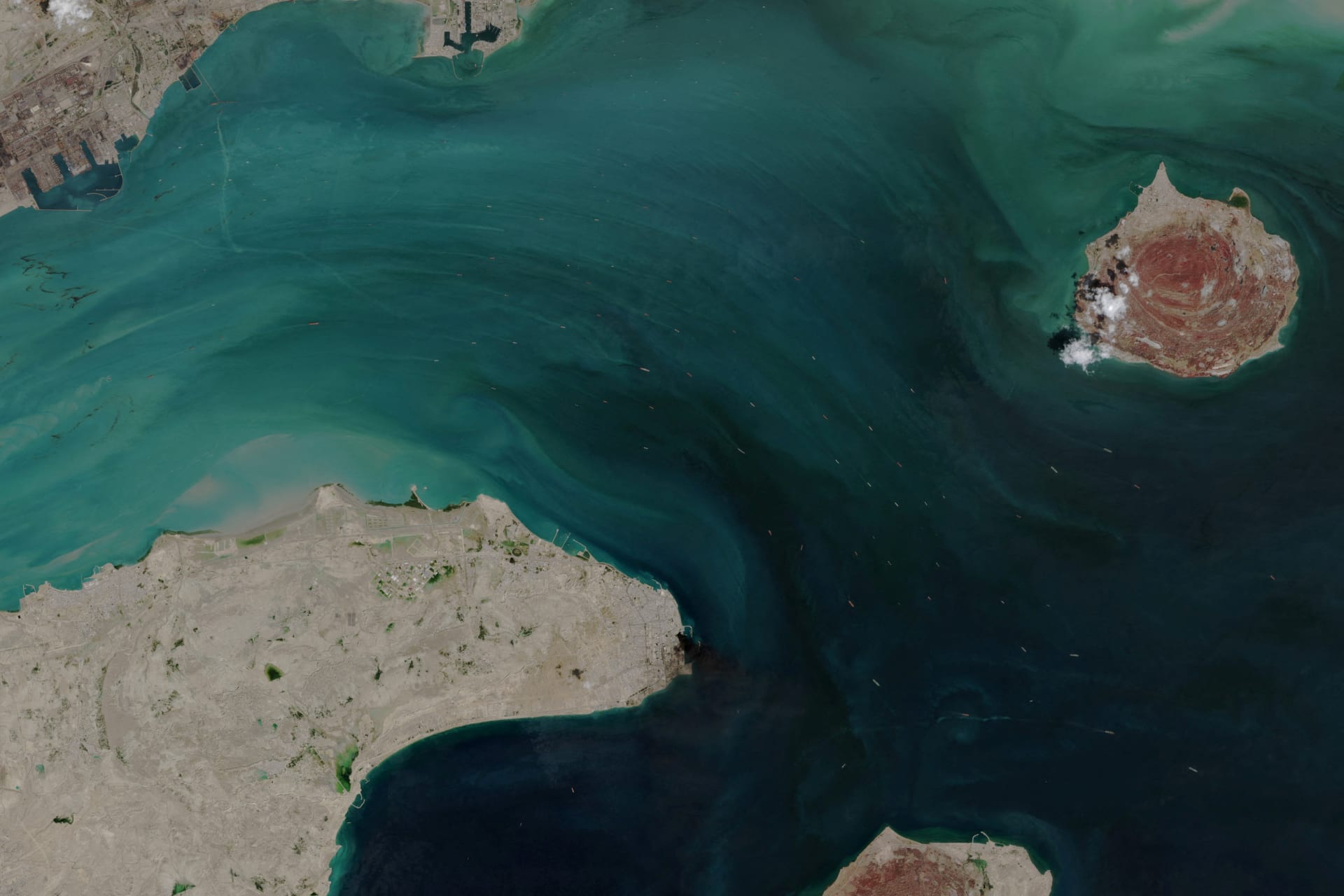
Conflict-driven disruptions of critical supply chain chokepoints have become a recurring feature of the world today—from Russia’s 2022 blockade of Ukraine’s grain exports via the Black Sea, to the Houthis’ attacks on boats in the Red Sea that began in 2023, to Iran’s closure of the Strait of Hormuz following U.S.–Israeli strikes on Iran in 2026. That ongoing closure has increased concern about other vulnerable waterways, such as the Strait of Malacca.
Much of the global flow of goods runs through a small number of maritime straits and international canals. The same market efficiency that creates those concentrations means the supply chains routed through them commonly lack alternatives to mitigate the impact of disruption. It will only become easier to interfere with or even close off chokepoints as cheap drones, unmanned surface vessels, and anti-ship missiles proliferate among state and nonstate actors alike. In such crises, beyond immediate decisions to secure the safety of U.S. citizens, vessels, and military assets, policymakers need to consider what interests are at stake and orient the U.S. response accordingly. Based on lessons from the United States’ and other countries’ responses to chokepoint crises over recent decades, four lessons stand out:
- Foresight and preparation are decisive. Operation Earnest Will (1987–88), in which U.S. forces protected Kuwaiti tankers from Iranian attack, succeeded in part because of seven months of preparation that established naval doctrine, legal authorities, and rules of engagement before the first convoy.
- Economic tools cannot substitute for physical access. The United States cycled through every available economic response tool within weeks of the Hormuz closure without addressing the fundamental constraint: no viable export route existed while the strait was essentially closed for transit.
- Nonstate proxy threats require simultaneous naval and onshore pressure. The ineffectual 2023–25 Operation Prosperity Guardian (OPG) campaign, formed to stop the Houthis’ disruption of the Bab al-Mandeb, shows the limits of naval pressure alone: two years of U.S. and UK airstrikes did not stop Houthi operations. Suppressing nonstate proxy maritime threats requires reducing onshore capacity and pressuring the nonstate party’s patrons—naval operations alone are insufficient.
- Decisive military action requires a structured adversary off-ramp. Operation Praying Mantis (April 1988), in which the United States struck Iranian ships in retaliation for the mining of the USS Samuel B. Roberts, succeeded because it was proportionate, targeted, and left Iran an implicit exit from continued confrontation.
This playbook outlines four different strategies the U.S. government can adopt toward such crises:
- Monitor: Exercise deliberate restraint while enhancing collection and preserving options. Economic tools can apply political pressure within tolerable limits while treating the disruption as a bounded event.
- Contain: Limit the systemic spread of economic disruption without reversing the proximate cause—through using naval assets, activation of standing coalitions, convoy escort operations, targeted sanctions, and back-channel off-ramps.
- Compel: Impose costs sufficient to change the blockading party’s behavior, combining full carrier deployment, comprehensive pre-positioned sanctions, dollar-network leverage, patron-state pressure campaigns, and graduated airstrikes against maritime and missile infrastructure.
- Restore: Physically eliminate or suppress the disruption mechanism through full-scale naval operations, mine countermeasures (MCM), seizure of key chokepoint assets, comprehensive sanctions, and potentially ground forces for coastline security.
1.0 Situational Assessment
1.1 What Is the Source of Concern?
This playbook addresses the disruption of globally critical supply chains through geographic chokepoints by a belligerent actor—state, proxy, or armed nonstate group—physically threatening or closing a maritime strait or canal that conducts a disproportionate share of global trade. Attacks on overland routes, though temporarily costly, are far easier to adapt to and have not historically threatened U.S. interests to the same extent.
Global value chains are organized as hub-and-spoke networks in which flows of goods (spokes) concentrate at a small number of geographic nodes (hubs). A credible threat to a single hub can cascade through the entire network with costs that vastly exceed the directly affected supply chain. These chokepoints are economically efficient but typically lack resilience against conflict or coercion.
The chokepoints in question cover maritime straits, such as Hormuz, the Bab al-Mandeb, Malacca, and Taiwan; and international canals and their approach corridors, such as Suez, Panama, and the Turkish Straits (Bosphorus). They also cover critical infrastructure nodes—the hubs—where disruption affects production, processing, and distribution facilities. Examples of infrastructure nodes include Ras Laffan Industrial City in Qatar, which produces 20–22 percent of global liquefied natural gas (LNG) supply and approximately 20 percent of global helium; Kharg Island in Iran, which houses approximately 90 percent of Iranian crude export capacity; and the Abqaiq-Khurais complex in Saudi Arabia, which processes approximately 7 percent of global crude production. Threats to straits and canals demand drastically different responses than threats to production and processing hubs. Transit disruptions can be resolved by restoring physical access—through military pressure, diplomatic negotiation, or convoy escort. Production and processing disruptions, however, involve destruction or impairment that cannot simply be reopened: they must be rebuilt. The Houthi/Iranian 2019 Abqaiq-Khurais strikes removed approximately 5.7 million barrels per day (bpd) overnight; recovery depended entirely on Saudi Aramco’s pre-built redundancy, not on any U.S. response. Without equivalent redundancy—as at Ras Laffan—disruption causes sustained supply reductions that no standard crisis tool can correct.
Types of Threats
There are four categories of possible threats, each of which demands different responses from U.S. policymakers:
- State Actor: A state deploys military force to close or threaten a chokepoint as a coercive instrument or act of war—for example, Iran’s restrictions and closure of the Strait of Hormuz. Response requires signaling deterrence (public or back channel), moving military assets to the region, and engaging in senior-level diplomatic talks.
- State-Sponsored Proxy: A nonstate armed group, assisted by a state patron, attacks commercial shipping at or near a chokepoint—for example, Houthi forces, assisted by Iran, attacking Red Sea shipping in 2023. Response requires simultaneous military operations against proxy forces and sustained pressure on the sponsoring state.
- Collateral Conflict Disruption: A conflict not specifically targeting the chokepoint disrupts flows through proximity, risk perception, or collateral damage—for example, the Russia-Ukraine war disrupting Black Sea grain exports. Response should focus on supply chain substitution, market stabilization, and diplomatic restoration of commercial access.
- Infrastructure Attack: A state or nonstate actor conducts strikes targeting energy production, processing, or distribution infrastructure rather than transit routes. Examples include the 2019 Houthi/Iranian strikes on Abqaiq-Khurais and the 2026 Iranian retaliatory strikes on Gulf energy infrastructure following Israel’s bombing of the South Pars gas field. Unlike transit disruption, primary response levers are damage limitation (allied energy sharing, strategic reserve releases), deterrence of further strikes, and investments in resilience before crisis.
1.2 Anticipating and Preparing for Potential Crises
Across different cases, the consistent failure afflicting policymakers is not a lack of intelligence; it is a lack of preparation. Credible commercial and intelligence analysis warned of Iran’s likely closure of the Strait of Hormuz weeks before disruption. The same pattern appeared in 2023: Houthi anti-ship capabilities were assessed before October 7, but no commercial shipping contingency was in place when attacks began in November. Prior to Russia’s 2022 invasion, analysts assessed Russian capacity to disrupt Ukrainian Black Sea grain exports; no mechanism to release stockpiled food equivalent to the International Energy Agency (IEA) oil reserve existed. The following information will be essential for pre-crisis contingency planning:
Essential Information for Pre-Crisis Planning
| Threatening party’s identity and military posture | Planners should assess the threatening party’s mine-laying capacity, fast-attack-boat fleet, shore-based anti-ship missile inventory, and drone stockpile. They should also determine whether a patron state is providing the threatening party with active targeting intelligence. |
| Patron-state political dynamics | Planners should map the relationships between the disrupting actor and its outside backers and rivals. This includes identifying available back-channel communications and assessing how the patron state weighs the costs and benefits of restraining its proxy. |
| Chokepoint geographic profile and alternatives | Planners should calculate the share of global oil, LNG, grain, semiconductor, or fertilizer flows that transit the chokepoint each day. They should also identify what alternative routes exist and at what cost premium and time premium. For critical infrastructure nodes rather than transit points, the question is different: whether redundant production or processing capacity exists somewhere else in the world, and how long it would take to bring online. Policymakers should determine the likely collateral impacts of a disruption on the global economy. |
| Commercial shipping behavioral signals | Planners should track three commercial signals that often appear before any official threshold is crossed: shipping carriers rerouting away from the chokepoint, war-risk insurance premiums rising, and flag states or maritime classification societies issuing their own advisories. |
| Strategic reserve posture | Planners should be aware of the current U.S. Strategic Petroleum Reserve (SPR) and IEA member stock levels and the estimated coverage period for a coordinated emergency release at the anticipated disruption scale. |
| Key decision timelines | Planners should identify when each key response action needs to be initiated to remain effective. Examples include SPR drawdown authorization, IEA consultation, aircraft carrier group deployment, and coalition escort activation. (See the Decision Timeline section below.) |
| Illustrative interagency tasking | Planners should consider tasking/requesting the following interagency actions: Intelligence Community (IC) collection on threatening party’s naval movements and patron-state direction; Department of Energy (DOE)/Energy Information Administration (EIA) assessment of IEA member stock levels; Treasury/Office of Foreign Assets Control (OFAC) pre-positioning of target lists; Maritime Administration (MARAD)/Office of Naval Intelligence (ONI) prepare to issue commercial shipping advisories; and embassy reporting on adjacent-state security posture. |
1.3 Assessing Crisis Situations
Crisis assessment compresses the pre-crisis framework: actions that normally take days have to be initiated within hours. There are additional crisis-specific information requirements:
Crisis-Specific Information Requirements
| Extent of disruption and trajectory | What percentage of normal transit volume has been disrupted; whether disruption is partial, based on avoiding threats, or physical, in which ships are interdicted or face minefields; and the likely timeline for commercial normalization under each policy orientation being considered. |
| Bypass infrastructure status | What infrastructure (e.g., Yanbu/Petroline pipeline) and alternative transit routes (e.g., Cape of Good Hope) exist, and at what cost implications. |
| Allied and partner government response posture | Who is activating independent response measures, what tensions exist within the coalition, and which allied governments require advance consultation before public U.S. escalation or de-escalation signals. |
| Back-channel communication opportunities | Which third-party governments—Oman, Pakistan, and Qatar for Iran scenarios; Turkey and the United Arab Emirates for other Gulf contingencies; Malaysia, China, etc.—are willing to host or transmit messages to the disrupting actor or patron state. |
| Cascading supply chain exposures | Which U.S. industries have the least reserved inventory for chokepoint-transiting inputs; what the lead time is for emergency substitute sourcing; and whether agricultural or food security cascades are already developing in food-import-dependent partner states. |
2.0 Assessment of U.S. Interests
2.1 Proximate U.S. Concerns
The following immediate concerns are relevant to virtually any conflict-driven chokepoint crisis:
- Safety and security: The protection of U.S.-flagged and U.S.-operated vessels, U.S. military assets, and U.S. civilians in the affected region is the threshold concern triggering immediate interagency response.
- Global oil and commodity price stability: Chokepoint disruptions are the single largest acute driver of global commodity price shocks, with cascading effects on U.S. inflation, allies’ fiscal positions, and political stability in energy-import-dependent partner states.
- LNG supply to European and Asian allies: Unlike oil, LNG has no strategic reserve mechanism and cannot be rerouted when transit routes are physically blocked, making LNG-dependent allies acutely vulnerable to sustained Hormuz-scale closures.
- Fertilizer and food security cascade: The Hormuz crisis negatively impacted global fertilizer trade and food prices worldwide within weeks of the closure. Shock waves will continue to hit as each growing season window occurs, disproportionately affecting low-income countries that depend on food imports, especially those that are important U.S. partners.
- The Bab al-Mandeb Strait, Suez Canal, and Red Sea commercial corridor: More than $1 trillion in annual trade transits the Suez Canal; the Houthi campaign added $1 million or more per voyage in rerouting costs and drove war-risk insurance up approximately 900 percent at its peak.
- Taiwan Strait: A disruption of the Taiwan Strait is the highest-consequence chokepoint risk in the global economy: 44 percent of the global container fleet and a large proportion of the world’s most advanced semiconductors transit this corridor; no viable near-term alternative exists for Taiwanese semiconductor output. Recent simulations found that if China were to act before 2027, it would likely implement a maritime and aerial quarantine due to the low mobilization cost and high disruptive yield. U.S. planners can use that assessment to anchor their preparations. (Note: The conflict in the Taiwan Strait would likely risk direct U.S.-China military confrontation, which would lead to a crisis of historic significance. Economic considerations would be a component but not the primary policy priority.)
- Panama Canal: Few waterways are more critical to the U.S. economy; 40 percent of U.S. container trade from the east coast to Asia and the majority of U.S. LNG exports to Asia transit the canal. The 2023–24 drought established that climate-driven shocks are a structural long-term risk distinct from the geopolitical risk posed by the Chinese-connected port operators at Balboa and Cristóbal (before Panama’s Supreme Court, under direct U.S. pressure, voided Chinese contracts).
- Strait of Malacca: Forty percent of global seaborne trade transits this corridor annually, including sixteen to seventeen million barrels of oil every day. Although no standing U.S. coalition framework exists equivalent to Combined Maritime Forces in the Middle East, the United States does have defense arrangements with Indonesia, the Philippines, Singapore, and Thailand.
2.2 Strategic Interests at Risk
Beyond the proximate concerns above, chokepoint disruptions could implicate broader strategic U.S. interests in the following areas:
- U.S. credibility as guarantor of open sea lanes and freedom of navigation: The precedent set by successful coercion at one chokepoint directly affects the calculations of U.S. adversaries in the Strait of Malacca, the Taiwan Strait, and the Black Sea. U.S. alliances are partly underwritten by confidence in U.S. deterrence, which erodes when disruption succeeds.
- Allied energy security and alliance cohesion: Europe, Japan, and South Korea depend on transit through Hormuz and Malacca, making them particularly vulnerable to chokepoint disruptions. U.S. failure to protect those straits strains the arrangements that provide for overseas U.S. military bases and the allied cooperation that underpins U.S. global military posture.
- Dollar reserve currency status: The dollar’s reserve role is partly underwritten by the United States’ ability to enforce international trade norms; if it is unable to do so, U.S. adversaries will likely accelerate de-dollarization efforts via alternative financial infrastructure.
- Great power competition externalities: Chokepoint disruptions benefit U.S. strategic competitors—China and Russia, primarily—by undermining the U.S.-led trading order, demonstrating that adversaries can impose costs below the threshold of a decisive U.S. response.
- Technology supply chain integrity: Qatar supplies approximately 20 percent of global helium, which is essential for semiconductor fabrication, and the Gulf accounts for roughly half of global sulfur exports required for silicon wafer processing. A sustained Hormuz closure threatens semiconductor production even as the Taiwan Strait remains open.
- Gulf Arab partner stability: Gulf sovereign wealth funds are major investors in the U.S. technology sector; sustained conflict in the Gulf would redirect that capital to domestic reconstruction, with compounding effects on U.S. innovation.
4.0 Implementation and Operational Considerations
2.3 Decision Timeline: Essential Tasks
The following decision timeline identifies when specific response actions need to be authorized to be effective—not when they will be complete. Actions initiated after these windows would remain available but at degraded effectiveness.
- 0 to 24 Hours: Within the first twenty-four hours, the president should direct a drawdown from the Strategic Petroleum Reserve. The Department of Energy should begin emergency consultations with the International Energy Agency and stand up its Emergency Operations Center, which is the department’s 24/7 command center for monitoring and responding to major energy supply shocks. The Maritime Administration should issue a security advisory to U.S.-flagged commercial vessels. U.S. Central Command (CENTCOM) and any other affected geographic Combatant Command (COCOM) should place forces in their area of responsibility on alert. The National Security Council (NSC) Principals or Deputies Committee should also convene to set the strategic orientation for the U.S. response.
- 24 to 72 Hours: Within the next twenty-four to seventy-two hours, the IEA Governing Board should decide whether to authorize a coordinated stock release. The Treasury Office of Foreign Assets Control (OFAC) should issue an initial sanctions package targeting the threatening party’s maritime network; this process takes days when target lists are pre-positioned but weeks when they are not. The State Department should begin consultations with coalition partners, and the Group of Seven (G7) finance and energy ministers should issue coordinated market-stabilization messaging. The White House should also notify the congressional Gang of Eight.
- 3 to 7 Days: Within three to seven days, the Department of Defense should surge an aircraft carrier strike group to the affected theater and activate naval-coalition escort operations. The Department of Energy should coordinate with U.S. LNG exporters to reroute cargoes to the most affected allied markets. The State Department should deliver initial diplomatic demarches to the threatening party’s patron state. The Maritime Administration should also coordinate with Lloyd’s of London and the Protection and Indemnity (P&I) insurance clubs on war-risk insurance arrangements.
- 7 to 30 Days: Within seven to thirty days, U.S. and allied mine-countermeasure (MCM) vessels should begin clearing operations if mining has occurred. This is feasible only if MCM assets have been pre-positioned in or near theater. The State Department should negotiate access to bypass infrastructure such as the Saudi Petroline pipeline and the Fujairah port outside the Strait of Hormuz. OFAC should expand its sanctions designations to include maritime insurers, vessel owners, and flag registries that support the threatening party. The White House should also confirm that the congressional War Powers notification was filed within forty-eight hours of the first U.S. combat deployment.
- 30+ Days: Beyond thirty days, the U.S. International Development Finance Corporation (DFC) should begin scoping a political-risk insurance facility for commercial tanker operators. Designing and capitalizing this facility takes weeks to months. The Department of Energy should arrange emergency LNG procurement agreements with allied buyers. The State Department should pursue diplomatic agreement from countries to establish alternative corridors (e.g., the Trans-Caspian route and the Solidarity Lanes through Eastern Europe). The White House should also pursue diplomatic negotiations to reopen the chokepoint through a structured off-ramp for the adversary.
3.0 Policy Formulation
3.1 Relevant Policy, Operational, and Legal Guidance
The following legal authorities and standing frameworks govern U.S. responses. Policy is rarely formulated in a vacuum: the existence and limits of these authorities shape what tools and options are available, at what speed, and under what political constraints.
- Energy Policy and Conservation Act (EPCA), 42 U.S.C. § 6241: Authorizes SPR drawdown once the president determines a “severe energy supply interruption” is taking place. Drawdown begins within hours of direction; the U.S. SPR held approximately 395 million barrels as of early 2026.
- International Emergency Economic Powers Act (IEEPA), 50 U.S.C. § 1701: Provides broad authority to block transactions and freeze assets upon a presidential declaration of a national emergency. This is the primary legal basis for financial sanctions on the Houthis, Iran, and Russia. Targets can be designated within hours when target packages are pre-positioned.
- IEA Agreement, Article 13: Authorizes coordinated emergency stock releases among forty member states when global supply is disrupted by 7 percent or more; the IEA governing board can convene within twenty-four hours. The March 2026 coordinated release of 400 million barrels was the largest in IEA history.
- War Powers Resolution, 50 U.S.C. § 1541: Requires forty-eight-hour congressional reporting when U.S. forces are introduced into hostilities and imposes a sixty-day limit on unauthorized combat operations. Applies to naval convoy escort with self-defense rules of engagement—a precedent established by Operation Earnest Will.
- UN Convention on the Law of the Sea (UNCLOS), Articles 17–45: Establishes the right of innocent passage through territorial seas and transit passage through international straits. This is the legal basis for freedom of navigation operations (FONOPs) and convoy operations; the United States operates under customary international law equivalent as a non-signatory.
- Jones Act Waiver, 46 U.S.C. § 55102: The Jones Act normally requires that cargo, including oil and LNG, moved between two U.S. ports travel on vessels that are U.S.-built, U.S.-flagged, and U.S.-crewed. This provision authorizes the secretary of homeland security to waive that requirement during a supply emergency, allowing foreign-flagged tankers to carry domestic energy cargoes. The waiver accelerates emergency rerouting but is politically costly: U.S. shipyards, mariners, and operators depend on the protected business activities.
- MARAD Maritime Advisory Authority, 49 U.S.C. § 109: Congress has authorized the Maritime Administration (MARAD), within the Department of Transportation, to issue Maritime Security Communications with Industry (MSCI) advisories. The alerts provide U.S.-flagged vessel operators with information about specific maritime threats. The advisories trigger war-risk insurance market responses and are often the most immediately available action.
- Section 333, 10 U.S.C. § 333: Authorizes the Department of Defense (DOD) to build partner maritime capacity to enhance Gulf Arab, Philippine, and Djiboutian maritime self-defense capabilities in support of chokepoint security.
3.2 Policy Framework and Parameters
With a chokepoint crisis emerging, the most immediate U.S. policy questions are:
- Will the disruption directly threaten the safety of U.S. vessels, military assets, or citizens in the region (which will always necessitate a response regardless of broader geostrategic considerations)?
- Is the disruption transit-based, resolvable by restoring physical access to a route or hub, or infrastructure-based, requiring reconstruction?
- Does U.S. leverage (financial, military, diplomatic) exceed the threatening party’s ability to resist, and is that leverage sustainable without exhausting alliance solidarity?
- Does the United States have prepared assets and authorities—nearby naval forces, mine countermeasure assets, target lists for sanctions, SPR drawdown authority—sufficient to execute each policy option being considered?
- Does a viable diplomatic off-ramp exist that the threatening party can use without unacceptable loss of face, and has the United States communicated it through a credible back channel before applying coercion?
- Will successful disruption of the chokepoint benefit U.S. strategic competitors—China, Iran, and Russia—in ways that argue for sustained resistance regardless of the direct economic cost to the United States and its partners?
- Should the United States seek coordinated action through multilateral frameworks—the IEA, the UN Security Council, or the International Maritime Organization—and can the necessary coalition be built quickly enough to be effective?
3.3 Broad Strategic Options
U.S. policymakers can choose from a spectrum of strategic orientations and approaches when responding to emerging or escalating chokepoint crises. Before choosing how to respond, policy staff need to determine a strategic orientation—a posture that defines what the United States is trying to accomplish and its theory of change. The four orientations below integrate sets of actions before and during the crisis in a single strategic logic. The four orientations are not linear escalation ladders; they are distinct policy postures, each with their own assumptions, tools, risks, and trade-offs.
Policy Options: Strategic Orientations
| Monitor | Applies when: Disruption is not yet imminent; acting prematurely forecloses better options or risks triggering escalatory dynamics; the situation may resolve through third-party dynamics without direct U.S. involvement. Key actions (pre-crisis): MARAD advisory issuance; enhanced intelligence collection; quiet bilateral consultations with adjacent states; DOE SPR readiness assessment; OFAC preliminary target development. Key actions (crisis): SPR emergency release; war-risk insurance coordination; G7 commodity market stabilization messaging; LNG rerouting coordination with U.S. exporters; emergency Global South food security assistance; Jones Act waiver. Theory of change: Deliberate restraint combined with enhanced collection preserves U.S. options; quiet bilateral engagement may defuse the situation before disruption occurs. In crisis, economic symptom management holds political pressure within tolerable limits while treating the disruption as a bounded event expected to resolve through negotiation or conflict termination. Key trade-off: Economic tools cannot substitute for physical access. The 2026 IEA 400-million-barrel emergency release—the largest in history—failed to keep oil prices below $100/barrel because the physical supply gap was too large. The Black Sea Grain Initiative (2022–23) illustrates the upper limit of the Monitor-phase diplomacy: UN-brokered access functioned only while Russia found it useful, and was terminated unilaterally in July 2023, confirming that commercial access cannot be guaranteed without a coercive backstop. |
| Contain | Applies when: The disruption is real but bounded; the United States can prevent systemic spread without reversing the proximate cause; the threatening party can be deterred from escalation even if not compelled to stand down; and managing economic and political fallout is achievable at acceptable cost. Key actions (pre-crisis): Surge naval assets toward theater; activate enhanced maritime force posture; conduct preliminary consultations with IEA; issue a direct diplomatic demarche to the threatening party or its patron state; coordinate G7 messaging; pre-position OFAC sanctions package. Key actions (crisis): Initiate naval convoy escort operations; release oil stockpiles in coordination with the IEA; designate OFAC sanctions targets; engage patron state in diplomacy and explorations of back-channel off-ramps. Theory of change: Naval deployments and economic interventions reduce the threatening party’s incentive to escalate while preventing further market upheaval; early diplomatic engagement prevents allied defection. Operation Prosperity Guardian (OPG) in the Red Sea (2023–25) exemplifies this model: a twenty-plus nation coalition maintained naval presence and conducted limited strikes, which partially degraded Houthi capability. Major oil carriers continued to avoid the Red Sea, confirming that a Contain strategy prevents escalation without restoring full commercial normalcy. Key trade-off: A Containment strategy accepts ongoing disruption and could be read by markets as tacit U.S. acceptance of the status quo. It could invite incremental escalation if the threatening party views U.S. restraint as license to expand operations. |
| Compel | Applies when: The threatening party is responsive to U.S. military, financial, and diplomatic pressure, and the United States can sustain such pressure to change the threatening behavior; an allied coalition can be built and sustained; and the threatening party’s patron state can be influenced. Key actions (pre-crisis): Deploy full aircraft carrier group; issue a public statement of deterrence; threaten to blockade the chokepoint; prepare a comprehensive sanctions package; form relevant coalition; publicly commit to defend the commercial shipping passage; guarantee the security of partner states. Key actions (crisis): Initiate military action on the threatening party, such as blockading the chokepoint and/or conducting airstrikes on maritime and missile infrastructure; pressure the patron state; implement comprehensive OFAC sanctions. Block the country (or specific banks) from using the global financial system via the Society for Worldwide Interbank Financial Telecommunication (SWIFT). Theory of change: Communicating a clear “next step” at each stage that raises costs for the threatening party will produce desired behavior change, while staying short of full military conflict. CTF-151 (Somalia) is the strongest documented success case: piracy attacks fell approximately 90 percent when naval interdiction was combined with financial network disruption and onshore capacity reduction. Key trade-off: Assumes that the threatening party will respond rationally to escalating costs. The Houthi campaign demonstrated that a proxy with high-cost tolerance and active patron-state backing can sustain operations despite two years of sustained U.S./UK airstrikes. Coalition discipline erodes under sustained pressure. If a Compel strategy fails, the United States faces a binary choice: accept failure (revert to Contain) or escalate to direct military action (Restore). |
| Restore | Applies when: The disruption poses severe risks to U.S. strategic interests; Monitor, Contain, and Compel options have been exhausted or proven insufficient; a viable military option exists with a credible theory of success at acceptable cost; and post-conflict security and chokepoint access are achievable and politically viable. Key actions (pre-crisis): Develop a framework for congressional authorization; pre-position mine countermeasure assets and allied MCM basing rights; determine maritime and missile infrastructure targets; threaten blockade; form basing and operational agreements with U.S. partners; position aircraft carrier strike group direct action. Key actions (crisis): Authorize full-scale naval operations; begin MCM operations to clear mined approaches; conduct airstrikes on the threatening party’s naval and missile infrastructure; blockade the chokepoint; seize key components of chokepoint infrastructure (e.g., watchtowers, locks, gates, storage terminals); implement comprehensive sanctions; and potentially deploy ground forces to the chokepoint’s coastline. Theory of change: Decisive military action physically eliminates or suppresses the disruption mechanism, and commercial shipping resumes once the physical threat is neutralized. Operation Earnest Will (1987–88) is the historical template: the United States reflagged eleven Kuwaiti tankers, ran the largest naval convoy operation since World War II, and conducted Operation Praying Mantis (April 1988), destroying approximately half of Iran’s operational naval force. Iran backed down only after absorbing direct military losses, confirming that the Restore strategy requires military action and a structured off-ramp, not simply posturing. Key trade-off: Escalation to conflict is at least partly irreversible. U.S. anti-mine capacity has atrophied since numerous mine countermeasure vessels were decommissioned in 2026. The adversary could widen the conflict by attacking energy infrastructure or activating additional fronts. Physically reopening a chokepoint requires a long-term presence with no guaranteed exit. The 2026 Hormuz crisis demonstrates the ability of asymmetric tools (fast boats, inexpensive drones, etc.) to gain strategic advantage. |
Key Concept: Lessons From the Strait of Hormuz Crisis
Though it is too early to fully understand the lessons of the 2026 Strait of Hormuz crisis, two additional observations should inform future planning:
- Drones and missiles have replaced mines as the preferred weapons for asymmetric threats to a chokepoint because they let the aggressor selectively target some ships and not others. Drones allowed Iran to continue shipping its oil until the U.S. blockaded the strait. U.S. policymakers should consider blockades as an early tool to prevent perverse incentives benefiting the opponent.
- Although oil prices did rise, many analysts predicted significantly higher energy costs and subsequent global economic disaster that did not materialize as the crisis continued (as of late May 2026). Analysts credit China’s reduction in imports and the U.S. surge in exports with preventing the worst-case scenarios. The situation could still worsen, but the uncoordinated market actions of global powers may be more impacted than existing U.S. economic tools.
3.4 Tools and Resources
Which policy option appears feasible will depend on the availability of specific tools and resources. The following tools are organized by category.
Diplomatic
- Back-channel crisis communication: The U.S. government should establish protocols to guide direct or indirect communication channels before crises occur, as they are more difficult to create during crises. The Oman back channel for Iran is the critical precedent; no equivalent existed for the Houthi/Red Sea scenario, requiring improvised Qatar-mediated channels that took weeks to activate.
- Diplomatic engagement with transit states: Saudi Arabia, Oman, and the United Arab Emirates for Hormuz; Djibouti, Egypt, and Saudi Arabia for the Red Sea. This is the second key diplomatic tool alongside back-channel communications.
- Patron state pressure campaign: This is the highest-leverage tool in proxy scenarios; for example, Houthi capability is enabled by Iran, and any strategy that does not change Iran’s cost-benefit calculation is a maintenance strategy, not a solution.
- Multilateral engagement: Acting through International Maritime Organization emergency procedures, Security Council resolutions, and UNCLOS dispute settlement mechanisms builds legitimacy and constrains the threatening party diplomatically even when binding outcomes are blocked.
Military and Intelligence
- Naval convoy escort: The International Maritime Security Construct (IMSC), used in the Strait of Hormuz and Gulf of Oman, and Operation Prosperity Guardian, used in the Red Sea and Bab al-Mandeb, provide coalition frameworks for naval escorts. Such convoys can be activated within days and are most effective when the threatening party fears direct U.S. military engagement.
- Freedom of navigation operations: These operations are regular transits that challenge excessive maritime claims (for example, in the South China Sea). They signal U.S. resolve and contest legal precedents that could be used to restrict shipping.
- Naval blockade: Blockading the threatened chokepoint effectively calls the threatening party’s bluff. Iran’s ability to selectively target ships transiting the Strait of Hormuz created a perverse incentive for them to continue the crisis; incentives to pursue negotiations only changed when the United States blockaded the strait and prevented Iran’s own exports.
- Mine countermeasures: Anti-mine capabilities are critical for Hormuz and Black Sea scenarios. Allied MCM assets are essential given the United States’ atrophied capabilities. MCM requires pre-positioning agreements and joint exercises.
- Aircraft carrier group surge deployment: Mobilizing the U.S. Navy is a primary deterrence signal and provides options for direct action if authorized. The speed of naval deployment depends on the current position of U.S. ships.
- Airstrikes on threatening party’s maritime capabilities: Airstrikes can degrade the threatening party’s capability in the near term, but rarely eliminate it permanently: the year-long U.S./UK air campaign against the Houthis reduced, but did not stop, attacks.
- Intelligence sharing: Sharing maritime domain awareness (MDA) with coalition partners via Five Eyes (the United States, Australia, Canada, New Zealand, and the United Kingdom) and NATO intelligence frameworks is critical for identifying threats and protecting commercial vessels.
Economics
- Strategic Petroleum Reserve (SPR) release: Under the EPCA, the president is authorized to release oil from the reserve in the case of severe supply interruption. As of 2026, approximately 395 million barrels were available. This is most effective for short-duration shocks; SPR releases proved insufficient for Iran’s sustained closure of Hormuz. To prepare for crises, Congress should increase SPR levels or, at minimum, ensure that reserve levels are full.
- IEA coordinated stock release: Working with the IEA is more effective than unilaterally releasing the SPR, as it signals allied commitment. The IEA governing board should be convened within twenty-four hours to reach consensus. In March 2026, a coordinated 400-million-barrel drawdown addressed approximately 25 percent of the supply gap during the Hormuz crisis. The United States accounted for 43 percent of the total. Note: physical oil takes sixty to ninety days to reach refineries. Releases should be sequenced over time rather than in one action to maintain the ability to contain market fears throughout the duration of the crisis.
- LNG emergency rerouting: The DOE coordinates with U.S. LNG exporters to redirect cargoes to the most-affected allied markets. This requires short-notice contract flexibility.
- Commodity market messaging (G7/G20): Coordinated public statements from finance and energy ministers reduce the effect of speculation on commodity price spikes. This is most effective when combined with a supply-side response, such as SPR and IEA releases.
- DFC political risk insurance: Emergency insurance for tanker operators can incentivize shipping in high-risk chokepoints. The exact terms need to be carefully calibrated; the DFC’s 2026 insurance effort had limited effect because it covered only the Strait of Hormuz itself, not adjacent contested waters, and excluded loss of life and environmental damage.
- Food security emergency coordination: No institutional analogue to the IEA oil reserve currently exists for grain or fertilizer, but a coordinating body for food security emergencies should be created. The 2022–23 Black Sea Grain Initiative demonstrated that diplomatic-access mechanisms collapse when the threatening party withdraws consent. Several investment options are under active discussion to prepare for future crises, including WFP-led coordinated releases of buffer grain reserves [PDF], UN Food and Agriculture Organization– or G7-brokered commercial-corridor insurance modeled on Lloyd’s war risk practice, and agreements by major grain exporters to coordinate during crises.
Economics
- OFAC sanctions designations: OFAC sanctions can target the threatening party’s maritime networks: vessel owners, insurers, flag registries, and financial institutions. Sanctions can be activated within days if prepared correctly and are most effective against commercially integrated actors with dollar-denominated financial exposure.
- Dollar network leverage (SWIFT, correspondent banking, clearing): Blocking an adversary’s banks from using the SWIFT network effectively removes them from the global financial system. This leverage is most potent against states and entities with significant dollar-denominated trade flows; it is blunted against Iran and Russia, which have spent years building dollar-alternative payment infrastructure specifically to reduce this vulnerability.
- Maritime sanctions enforcement: Targeting ghost fleets and shadow tankers evading sanctions increases the pressure on threatening parties, and should be coordinated with allied enforcement agencies and flag state authorities.
- IEEPA emergency authorities: This statute gives broad presidential authority to block transactions and freeze assets in a declared national emergency, and was the primary basis for comprehensive sanctions against Iran and Russia.
3.5 Stakeholders and Partners
U.S. Stakeholders and Partners
| Agency/Actor | Role and Equities in Chokepoint Crisis Response |
|---|---|
| NSC—Economic, Energy & Climate Directorate | Coordinates between agencies for economic impact, SPR decisions, energy supply stabilization, commodity market response, and IEA coordination. Cochairs Economic Interagency Policy Committee (IPC) with relevant NSC regional directorate. |
| NSC—Regional Directorates | Leads policy formulation for specific countries and regions (a crisis may impact countries across multiple regional directorates); consults with embassies; and provides political context for military and economic decisions. |
| State—Bureau of Economic and Business Affairs (EB) | Determines trade and shipping policy; maritime sanctions implementation; investment climate assessments; and leads discussions on land-based chokepoint alternatives. |
| State—Regional Bureaus | Facilitates communications with host governments; builds coalitions with chokepoint-adjacent states; executes diplomatic demarches; and manages alliance tensions created by the U.S. response. |
| DOD—OSD Policy / CENTCOM / Regional Commands | Manages military posture and operations, including naval convoy escorts, maritime security coalitions, mine-clearing operations, freedom of navigation operations, and direct-action authorities. |
| Department of Energy | Makes SPR management and release decisions; assesses LNG rerouting options; monitors energy markets; activates the DOE Emergency Operations Center for major energy supply shocks; and coordinates with allied energy agencies. |
| Treasury—Office of Foreign Assets Control (OFAC) | Develops and enacts sanctions targeting the threatening actors and their maritime networks; processes emergency designations; enforces maritime sanctions; and develops the targets for sanctions packages. |
| Treasury—Office of International Affairs | Stabilizes commodity markets; coordinates G7/G20 financial operations; engages with international financial institutions; applies sovereign debt leverage on chokepoint-adjacent states; and monitors financial market spillovers. |
| MARAD (Maritime Administration, DOT) | Issues commercial shipping advisories and maritime security communications with industry members; assesses maritime threats; liaises with shipping industry and vessel operators; and coordinates on war-risk insurance with Lloyd’s Joint War Committee. |
| Commerce—Bureau of Industry and Security (BIS) | Enforces export controls and dual-use technology restrictions; and maps supply chain vulnerabilities for chokepoint-affected commodity sectors. |
| Intelligence Community (CIA, DIA, NSA, NGA, ONI) | Assesses threatening parties and their attribution; provides signals intelligence on the adversary’s maritime communications; monitors ship locations; provides commercial satellite imagery of chokepoint areas; and assesses the damage to attacked infrastructure. |
| DFC / EXIM Bank | Provides emergency political risk insurance for affected commercial interests, emergency financing for alternative supply and route infrastructure, and analytical support for investment-based resilience options. |
| U.S. Trade Representative (USTR) | Manages trade agreement enforcement mechanisms; initiates World Trade Organization dispute settlement mechanisms for discriminatory treatment of U.S.-linked vessels; and coordinates shipping-related trade policy. |
| Congress (Authorizing/Oversight Committees and Gang of Eight) | Senate Armed Services Committee (SASC) and House Armed Services Committee (HASC): Hold jurisdiction over military posture, operations, and War Powers authorities. Members should be consulted on any deployment of forces into potential hostilities. Senate Foreign Relations Committee (SFRC) and House Foreign Affairs Committee (HFAC): Hold jurisdiction over diplomatic and sanctions strategies, coalition management, and the international legal framework for the U.S. response. Senate Select Committee on Intelligence (SSCI) and House Permanent Select Committee on Intelligence (HPSCI): Receive briefings on the threatening party’s capabilities, attribution, and intelligence collection, and provide oversight of intelligence-based response elements. Senate Energy and Natural Resources Committee and House Energy and Commerce Committee: Oversee SPR use authorities, Jones Act waivers, and domestic energy supply policy during disruption. Senate Banking, Housing, and Urban Affairs Committee and House Financial Services Committee: Oversee OFAC sanctions implementation and Treasury emergency authorities. Gang of Eight notifications (the SSCI and HPSCI chairs and ranking members, the Senate majority and minority leaders, and the speaker and minority leader of the House) should occur within twenty-four hours of any military operation conducted under War Powers authorities. |
Non-U.S. Stakeholders and Partners
Foreign partners—beyond the national and local governments in the affected countries—can play critical roles in crisis response. Key multilateral frameworks include the following:
- International Maritime Security Construct (IMSC): Established in 2019, IMSC is a standing naval escort and maritime domain awareness framework operating in the Hormuz/Gulf of Oman region with more than forty participating nations.
- Operation Prosperity Guardian (OPG): OPG is a Red Sea/Bab al-Mandeb coalition of more than twenty nations that was activated in 2023 and remains available for reactivation or an expanded mandate.
- Combined Task Force 151 (CTF-151): Established in 2009, CTF-151 is a counter-piracy coalition that remains available for reactivation in nonstate proxy maritime scenarios.
- International Energy Agency (IEA): The IEA coordinates emergency stock releases among its forty member states, with a 7 percent supply disruption trigger and the authority to convene its governing board within twenty-four hours.
- Regional Cooperation Agreement on Combating Piracy and Armed Robbery against Ships in Asia (ReCAAP): ReCAAP is a Southeast Asian anti-piracy framework that is applicable to contingencies in the Strait of Malacca.
- Five Eyes / NATO: Five Eyes and NATO provide intelligence-sharing frameworks that deliver a level of maritime domain awareness no single nation could sustain independently.
- G7: The G7 provides a platform for coordinated market stabilization messaging and an allied financial response.
- Commercial Shipping and Insurance Industry: Lloyd’s of London and the broader insurance market’s Joint War Committee’s area designations have immediate market consequences (insurance premium spikes that trigger voluntary rerouting). Industry consultation is essential to understand commercial fleet behavior and to design effective insurance-based incentive mechanisms.
4.1 Operational Design
Effective policy implementation requires attentiveness to the operational structures through which it will occur.
Key Design Questions
| Key Operational Question | Option/Example |
|---|---|
| Who leads and integrates interagency implementation—in Washington and at the embassy level? | Operation Earnest Will (1987–88) used a clear NSC-led structure with CENTCOM as operational lead and the State Department as diplomatic coordinator, established during a seven-month preparation period. |
| What steps are required with Congress (War Powers notification, supplemental budget requests, and authorization for extended operations)? | War Powers Resolution notification is required within forty-eight hours of the first combat deployment, as applied in Earnest Will and OPG. Supplemental appropriations for extended naval operations and emergency SPR drawdown programs require advance congressional engagement to avoid authorization gaps under sustained crisis conditions. |
| If the crisis spans multiple theaters or commodity classes, what coordination mechanism integrates responses across NSC directorates? | The 2026 Hormuz closure simultaneously disrupted oil, LNG, and fertilizer supply chains, requiring coordination across NSC economic/energy, regional, and food security equities. A designated crisis coordinator or cross-directorate task force could prevent fragmented response. |
4.2 Coalitions and Partners
U.S. engagement with allies and partners—whether through existing collective action mechanisms or ad hoc coalitions—multiplies resources and increases pressure on key actors. Several findings apply across documented cases:
- The United States bears a disproportionate share of operational and financial costs in every documented chokepoint coalition. This is not a contingency to be managed but a structural feature of U.S. alliance leadership and global economic reach that needs to be budgeted for and politically managed from the outset.
- European allies have repeatedly declined full participation; allied engagement needs to be structured with clear expectations, defined burden-sharing, and reciprocal obligations established before the coalition is activated, rather than improvised during the crisis.
- Rapid coalition formation is possible when the threat is clear, the mandate is narrow, and participation costs are modest—CTF-151 assembled more than thirty nations in weeks under UN Security Council authorization. Coalitions with broader mandates, higher political stakes, or significant operational risk requirements will assemble more slowly and require more sustained diplomatic investment.
- Regional organizations—the International Maritime Organization, Association of Southeast Asian Nations, Gulf Cooperation Council, African Union—provide legitimacy, local knowledge, and host-nation access that bilateral frameworks cannot replicate; integrating them requires early engagement and explicit roles, not token consultation after decisions are made.
4.3 Strategic Communications
The following principles of public messaging should be applied:
- Early, credible, coordinated messaging reduces excessive market speculation: The 2026 Hormuz crisis demonstrated that commodity prices spike disproportionately when markets perceive policy disarray. Coordinated statements from G7 energy ministers, combined with credible supply-side response actions (such as IEA releases), dampen speculative price movements. Messaging needs to be backed by visible action, or it will create further instability.
- Red lines require credibility: Public commitments to protect commercial shipping passage, defend partner states, or impose consequences are only stabilizing if backed by a demonstrated willingness to follow through.
- Separate energy market messaging from conflict messaging: Mixed signals on whether the United States is managing energy prices vs. prosecuting a military campaign create strategic incoherence that both adversaries and markets exploit. Distinct communication lines for economic stabilization (DOE, Treasury) and military and diplomatic operations (NSC, State, DOD) should be maintained.
The following principles of information management and escalation management should also apply:
- Counter adversary narratives proactively: China, Iran, and Russia each have incentives to be active information warfare participants in chokepoint crises. Russia benefits from higher prices and reduced sanctions scrutiny. China benefits from supply disruptions that pressure U.S. and allied economies while insulating itself with pre-built reserves. Iran benefits from forcing the United States to publicly acknowledge the limits of its economic toolkit. Pre-positioned counter-narratives should be prepared.
- Manage escalation ladder transparency: In-theater military commanders and civilian policymakers need to share a common framework for what actions are authorized and what threshold changes require presidential decisions. Ambiguity about authorization creates both the risk of further escalation (through unauthorized actions) and deterrence failure (practicing excessive caution and creating exploitable gaps).
- Tempo of communications: In a fast-moving chokepoint crisis, communications cycles need to match operational tempo. A daily interagency communications coordination call should be established within twenty-four hours of the crisis. The White House press secretary, NSC spokesman, State Department spokesman, and DOE communications lead should operate from a common message framework.
Appendixes
Appendix A: Illustrative Historical and Active Cases of Chokepoint Crises
Illustrative case studies
| Strait of Hormuz (2026—ACTIVE) (information as of May 2026) | Joint U.S.-Israeli strikes on Iran triggered the closure of the Strait of Hormuz on February 28, 2026. Tanker traffic declined by 70 percent; Brent crude peaked above $138; IEA coordinated a 400-million-barrel emergency release. Qatar’s Ras Laffan complex was damaged by missile strike, rendering 17 percent of global LNG capacity potentially offline for three to four years. |
| Bab al-Mandeb / Red Sea (2023–present) | Houthi proxy forces began attacking international shipping following October 7, 2023. Over fifty nations’ ships were targeted; major carriers rerouted via the Cape of Good Hope, adding ten to fourteen days and $1 million+ per voyage. The U.S./UK air campaign degraded but did not eliminate the Houthis’ capability. |
| Black Sea / Turkish Straits (2022–present) | Russia’s naval blockade of Ukrainian Black Sea ports in 2022 disrupted global grain and fertilizer exports; before the war, Russia and Ukraine together accounted for 30 percent of the global wheat trade. The UN-brokered Black Sea Grain Initiative provided partial relief before Russia withdrew in 2023, reimposing restrictions. |
| Persian Gulf Tanker War: Operation Earnest Will and Operation Praying Mantis (1987–1988) | Iran-Iraq War attacks on neutral tankers cut Gulf transit volume by 25 percent and drove war-risk insurance to record levels. In response, the United States reflagged eleven Kuwaiti tankers under American colors and ran the largest naval convoy operation since World War II. In retaliation for Iranian attacks on one of Earnest Will’s escort ships, Operation Praying Mantis destroyed approximately half of Iran’s operational navy. This demonstrated that military convoy escorts work but create escalation risk; Iran backed down only after absorbing direct military losses. |
| Somali Piracy / CTF-151 (2008–2012) | At their peak in 2011, Somali pirates conducted 237 attacks and 28 hijackings per year in the Gulf of Aden, driving war risk insurance up 900 percent and forcing major rerouting around the Cape. U.S.-led Combined Task Force 151 ultimately reduced attacks by 90 percent, but only when naval patrols were combined with armed guards on commercial vessels and onshore disruption of piracy networks, including supporting regional prosecution and incarceration efforts, dismantling of financial networks, and training local maritime forces. This demonstrated that maritime interdiction alone is insufficient when the threat has a land-based source. |
| Houthi strikes on Abqaiq-Khurais processing complex (2019) | Coordinated drone and missile strikes hit Saudi Aramco oil facilities at Abqaiq and Khurais, causing massive fires and temporarily halting 5.7 million barrels per day of oil production—roughly 5 percent of global daily output. |
| Panama Canal Drought / Transit Collapse (2023–2024) | Record drought conditions reduced daily transits from thirty-six to twenty-two, creating three-to-four-week queue times and re-routing (around the Cape of Good Hope and overland) of approximately $270 billion per year in trade. The U.S. government response was largely ineffective—MARAD issued advisories and DOT coordinated with shippers, but no policy lever could restore canal capacity. This demonstrated that the standard conflict-response toolkit (SPR, sanctions, military) does not work when the disruption is caused by climate change; this scenario requires a different response. |
Appendix B: Major Lessons from the Case Studies
The following summarizes key cross-cutting lessons from efforts to manage chokepoint crises over recent decades.
- Foresight and planning ahead are decisive. Legal authorities, rules of engagement, sanctions target lists, MCM assets, and back-channel communications are less effective and less timely when improvised during crises. Operation Earnest Will succeeded in part because of a seven-month preparation period that established naval doctrine, legal authorities, and rules of engagement before the first convoy. By contrast, the 2026 Hormuz crisis required improvised legal groundwork for Jones Act waivers, DFC insurance efforts, and naval escort authorities. The Houthi/Red Sea campaign demonstrated the same failure: Houthi anti-ship capabilities were assessed before October 7, 2023, but no commercial shipping contingency was in place when attacks began in November.
- Decisive military action requires a structured adversary off-ramp. Operation Praying Mantis succeeded because it was proportionate, targeted, and left Iran an implicit exit from continued confrontation—Iran backed down only after absorbing direct military losses, not after diplomatic messaging or economic pressure alone. Escalate-to-de-escalate strategies carry high failure risk when the adversary lacks a face-saving exit; the 2026 strikes intended to compel Iranian restraint triggered Iranian retaliation against Gulf energy infrastructure precisely because no credible off-ramp had been communicated in advance.
- Nonstate proxy threats require simultaneous naval and onshore pressure. Three years of expanding naval patrols suppressed but did not eliminate Somali piracy; the decisive shift came from near-universal adoption of armed guards on commercial vessels combined with onshore disruption of piracy financial networks. The Houthi/OPG campaign confirmed the same principle: two years of U.S./UK airstrikes degraded but did not stop Houthi operations, and commercial transit has only partially recovered and remains subject to ongoing threats. Sustained suppression of nonstate proxy maritime threats requires simultaneous patron-state political pressure and onshore capacity reduction; naval operations alone are insufficient.
- Diplomatic access arrangements without a coercive backstop are structurally fragile. The Black Sea Grain Initiative functioned only while Russia found it useful. There is no food security reserve equivalent to the IEA oil reserve—a critical institutional gap that needs to be addressed before the next conflict-driven agricultural disruption. Alternative routing has hard physical limits that pre-crisis infrastructure investment can expand but not eliminate.
- Hub disruption recovery depends on pre-attack redundancy, not crisis management. Recovery was possible after the September 2019 strikes on the Abqaiq-Khurais complex because Saudi Aramco had invested in redundant processing infrastructure—no U.S. policy response was required. The inverse also applies where redundancy does not exist; comparable strikes would produce a sustained supply reduction that no existing policy tool can correct. The February 2026 Iranian missile and drone strike on Ras Laffan removed approximately 30 percent of the global helium supply, and recovery is being measured in years. Investing in resilience before a crisis is the best policy tool for this threat category.
- Economic tools cannot substitute for physical access restoration. The 2026 IEA 400-million-barrel coordinated release failed to keep oil prices below $100 per barrel because the physical supply gap was simply too large to offset. No economic response tool proved effective without addressing that fundamental constraint. Economic tools manage symptoms of physical access denial; they do not resolve it.
- Coalition burden-sharing is chronically uneven and needs to be negotiated up-front. The United States bears a disproportionate share of operational and financial costs in every documented chokepoint coalition—CTF-151, IMSC, and OPG alike. European participation in OPG was limited despite European shipping bearing a disproportionate share of rerouting costs. Explicit burden-sharing agreements, defined contribution expectations, and reciprocal obligation frameworks need to be negotiated before coalition activation, not after.
- Climate-driven disruptions require a categorically different policy framework. The Panama Canal drought established that the standard response toolkit has no application when the constraint is physical infrastructure capacity rather than conflict. This scenario currently has no U.S. policy equivalent and no international coordination mechanism analogous to the IEA for energy. The Panama Canal episode is likely a preview of future climate-related constraints.
Appendix C: Studies and Sources of Relevant Open-Source Information
The following open-source literature provides the analytical, historical, and empirical foundation for this playbook, organized by category.
Chokepoint Theory and Geoeconomics:
- Robert D. Blackwill and Jennifer M. Harris, War by Other Means: Geoeconomics and Statecraft, (Harvard University Press, 2016).
- Helima Croft, “The Iran War Energy Crisis Is Here,” The Long Game, episode 16, Vox / Stay Tuned with Jake Sullivan and Jon Finer, March 19, 2026.
- Edward Fishman, Chokepoints: American Power in the Age of Economic Warfare, (Portfolio/Penguin, 2024).
- Gary Clyde Hufbauer et al., Economic Sanctions Reconsidered (Peterson Institute for International Economics, 2009)
U.S. Government Reference Sources:
- U.S. Energy Information Administration (USEIA), “World Oil Transit Chokepoints,” updated periodically.
- U.S. Department of Energy, “History of SPR Releases.”
- Office of Naval Intelligence, Worldwide Threat to Shipping (WTS) reports, January 2024–February 2025.
- U.S. Energy Information Administration, “Hormuz Closure and Related Production Outages Are Key Drivers in EIA’s Latest Forecast,” Press Release No. 586, April 7, 2026.
Multilateral Sources:
- International Energy Agency, “Oil Market Report, March 2026 and April 2026.”
- International Energy Agency, “Emergency Response Mechanism Activation: Coordinated Release of 400 Million Barrels,” March 2026.
- UN Food and Agriculture Organization / World Food Program, “Global Wheat Export Statistics, 2021 baseline.”
Historical Cases—Persian Gulf / Operation Earnest Will:
- Naval War College Review, “Operation Earnest Will,” 73, no. 2 (Spring 2020).
- Andrew R. Marvin “Operation Earnest Will—The U.S. Foreign Policy behind U.S. Naval Operations in the Persian Gulf 1987–89; A Curious Case,” Naval War College Review: Vol. 73: No. 2, Article 8 (2020).”
- U.S. Navy History and Heritage Command, “Operation Praying Mantis.”
- James Stavridis, Sea Power: The History and Geopolitics of the World’s Oceans (Penguin, 2017).
Historical Cases—Somali Piracy / CTF-151:
- Roger Middleton, Piracy in Somalia: Threatening Global Trade, Feeding Local Wars, Chatham House, October 2008.
- Fact Sheet, U.S. Department of State Bureau of Political Military Affairs, “United States Actions to Counter Piracy Off the Horn of Africa,” 2009.
- Hady Amr and Noor, Areej, “Force Alone Won’t Defeat Somali Piracy,” Brookings Institution, April 2009
Historical Cases—Black Sea Grain Initiative:
- United Nations Joint Coordination Centre (Istanbul), “Black Sea Grain Initiative: Shipment Data and Corridor Records, 2022–2023.”
Historical Cases—Panama Canal:
- A. Muñoz et al., “Drying of the Panama Canal in a Warming Climate,” Geophysical Research Letters, 2025.
- Ryan Burg et al., “Chinese Ports in Panama Come Under New Management,” Center for Strategic and International Studies (CSIS), 2025.
Potential Cases – Taiwan Strait:
- Mark F. Cancian et al., “Lights Out? Wargaming a Chinese Blockade of Taiwan,” Center for Strategic and International Studies, July 2025.
- Jude Blanchett et al., “Scared Strait: Understanding the Economic and Financial Impacts of a Taiwan Crisis,” CSIS, 2025.
This report was made possible by the generous support of the Andrew Carnegie Foundation.
 Report
 Report
 Report
 Report
 Report
 Report