Munich Security Conference Marked by Rocky Transatlantic Relations  
Global Memo by CIGI, CFR, and IAI
Feb 23, 2026

Global Memos are briefs by the Council of Councils that gather opinions from global experts on major international developments.

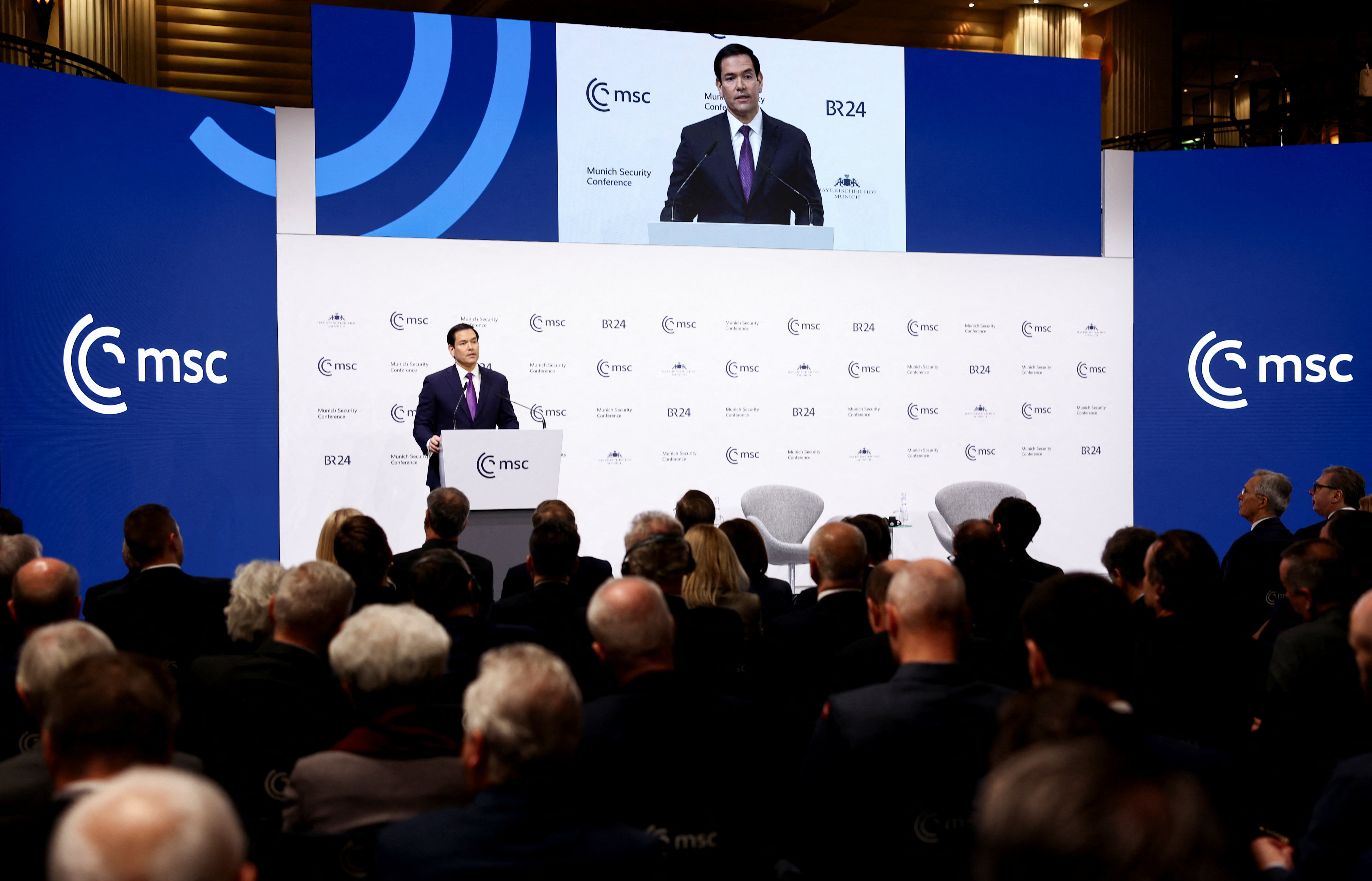
U.S. Secretary of State Marco Rubio speaks during the Munich Security Conference (MSC) in Munich, Germany, February 14, 2026. REUTERS/Liesa Johannssen

Tensions in the transatlantic partnership were apparent at this year’s Munich Security Conference (MSC). While more amenable in tone than the U.S. vice president’s speech at the forum last year, U.S. Secretary of State Marco Rubio’s remarks were still tough on Europe for its continued defense dependence on the United States. European leaders floated plans and reforms to increase their strategic autonomy, but those goals face significant hurtles. The issues of Greenland and Ukraine were on everyone’s minds.  

Three Council of Councils experts in Canada, the United States, and Italy consider the events and proclamations of this year’s MSC and what it means for collaboration between transatlantic allies in the near term.  

MSC Highlights Tensions Between Allies


For Canada, this year’s Munich Security Conference (MSC) highlighted ongoing tensions over the maintenance of traditional security ties with the United States and the geopolitical fissures resulting from a U.S. leadership posture rooted in policies and values at odds with those of Europe and other Western allies.  

Keynote speeches delivered by German Chancellor Friedrich Merz and French President Emmanuel Macron emphasized a strong and independent Europe, as well as a NATO alliance that should be seen as a strategic asset for the United States. Those speeches also noted important differences in approach between the Europeans and the United States, particularly regarding the value of free trade, rejection of protectionism, safeguarding of democratic principles, and support for major international institutions and agreements, including those addressing climate change.   

The speech by Secretary of State Marco Rubio was met with some relief, as it underscored the close historic and cultural ties between the United States and Europe. Yet leaders gathered at Munich were left in no doubt that a “rebuilt and restored” international system could only be accomplished on U.S. terms, in fidelity with Trumpian policies. 

Canada, under its current government, gravitates toward a European perspective when it comes to achieving greater strategic strength and autonomy, supporting core democratic principles and international institutions, and seeing the NATO alliance as a lynchpin to collective security.  

The Canadian prime minister, Mark Carney, was unable to attend the conference as planned because of a tragic mass casualty shooting at a school in British Columbia. His speech would likely have been an elaboration on his address at the World Economic Forum at Davos in January, where he spoke about a “rupture” in the international system, decried predatory and coercive practices by the great powers, and advocated for the importance of middle powers, noting that those states should step up to form new economic and security partnerships to help restore stability. The prime minister, representing a member of the “coalition of the willing,” would have underscored the importance of continuing support for Ukraine—an issue notably lacking in Rubio’s address.  

At the Munich Security Conference, President Macron called for a policy of respectful relations between the United States and its traditional allies. That position reflects some of the same hopes that Canadian officials have as the year 2026 unfolds and critical trade talks on the future of the United States-Mexico-Canada Agreement (USMCA), or CUSMA, as it is called in Canada, get underway. 

An Independent Europe Remains Unrealized 


The baseline for cooperation has shifted in the transatlantic relationship. After the election of Donald Trump in 2024, many European leaders assumed that U.S.-European relations would become more transactional and interest-based. But few expected that the relationship itself could turn outright hostile. The repercussions of the transatlantic crisis over Greenland, as well as what is perceived as “culture war rhetoric” from the United States, cannot be overstated for Europeans.  

The loss of trust between these historical allies could have deep and far-reaching effects in areas such as NATO, security policy and China policy, where Europeans are already wary of cooperating with the United States. Despite the somewhat conciliatory rhetoric from Secretary of State Marco Rubio and Undersecretary of Defense for Policy Elbridge Colby in Brussels and Munich, Europeans are not falling for the charm offensive this time. They fear that several issues, including Greenland, pharmaceutical negotiations, and EU digital services regulation, could lead to renewed confrontation.   

Interestingly, a division of labor is emerging: The EU is increasingly the institution tasked with developing deterrence mechanisms against the United States, such as the Anti-Coercion Instrument on trade policy. NATO, on the other hand, is acting as the good cop by engaging and flattering the U.S. president. This is a useful approach, but it can also leave the EU, already the subject of Trump’s ire, further embattled. And in the end, NATO and EU leaders are largely the same.  

Ultimately, the move toward greater European independence from the United States still poses several questions: Should Europe increase its defense capabilities inside or outside of the NATO alliance? In what other areas, such as energy independence, will Europe need to advance on its own interests? There are many ideas being floated, but it is difficult for Europeans to coalesce around one internal point of leadership. 

In the end, the 2026 Munich Security Conference will be remembered for what it was not—it was not the start of an independent Europe. Rather, it showed a Europe still searching for answers.

Trump’s Board of Peace Raises Questions   


Consultation and dialogue are valuable tools in international relations, but they need to be used in the right context. On January 22, 2026, President Donald Trump launched the Board of Peace, a new international organization created to oversee the reconstruction of Gaza and resolve global conflicts. However, many experts argue that the operating rules are completely irregular and vague. As a result, the criticism, reservations, and hesitations expressed about the proposed Board of Peace at the recent Munich Security Conference should come as no surprise. should come as no surprise.  

The structure of the board is unprecedented. It is centered on Donald Trump the man—not the office of the president of the United States. Even after the end of his current administration, Trump will remain the president of the Board of Peace for life. Within the organization, he wields various powers over the functioning of the body and the participation of member states. States wishing to secure lasting participation in the board’s work are also required to make a $1 billion contribution, an unusual provision to say the least. Who would manage those funds and how is unclear; transparency is not a priority for those who conceived the project.  

The functions and purpose of the board are equally vague. Initially, it was said to be for the stabilization and reconstruction of the Gaza Strip. Yet there are no Palestinian representatives and no real path for negotiating Palestinians’ rights and status in a reconstructed Gaza. Conversely, the extension of the board’s scope from Gaza to the world indicates a lack of attention to the dramatic emergency in the Gaza Strip and ignores the volatile situation in the West Bank, heightened by the Israeli government’s annexation plans.    

The board’s agenda appears to be dictated by business considerations rather than political priorities. Unfortunately, a private council will not be able to garner the support of many countries interested in genuine change in the Middle East. Above all, the idea of the board undermines the existing multilateral system.  

For decades, U.S. presidents, including Woodrow Wilson and Franklin Delano Roosevelt, have championed multilateralism as a core feature of U.S. foreign policy. Today, the United States is deeply suspicious of multilateral institutions, starting with the United Nations. U.S. policymakers are focusing entirely on bilateral and power relations.  But in today’s fragmented and interdependent world, global challenges will require a multilateral, shared, and inclusive approach—even for the United States.