World Leaders at CFR: Highlights From UNGA 2026
During the annual UN General Assembly, government and business leaders spoke at CFR about strengthening alliances and partnerships, reforming the global financial system, and managing security pressures—from the African Sahel to the South China Sea.
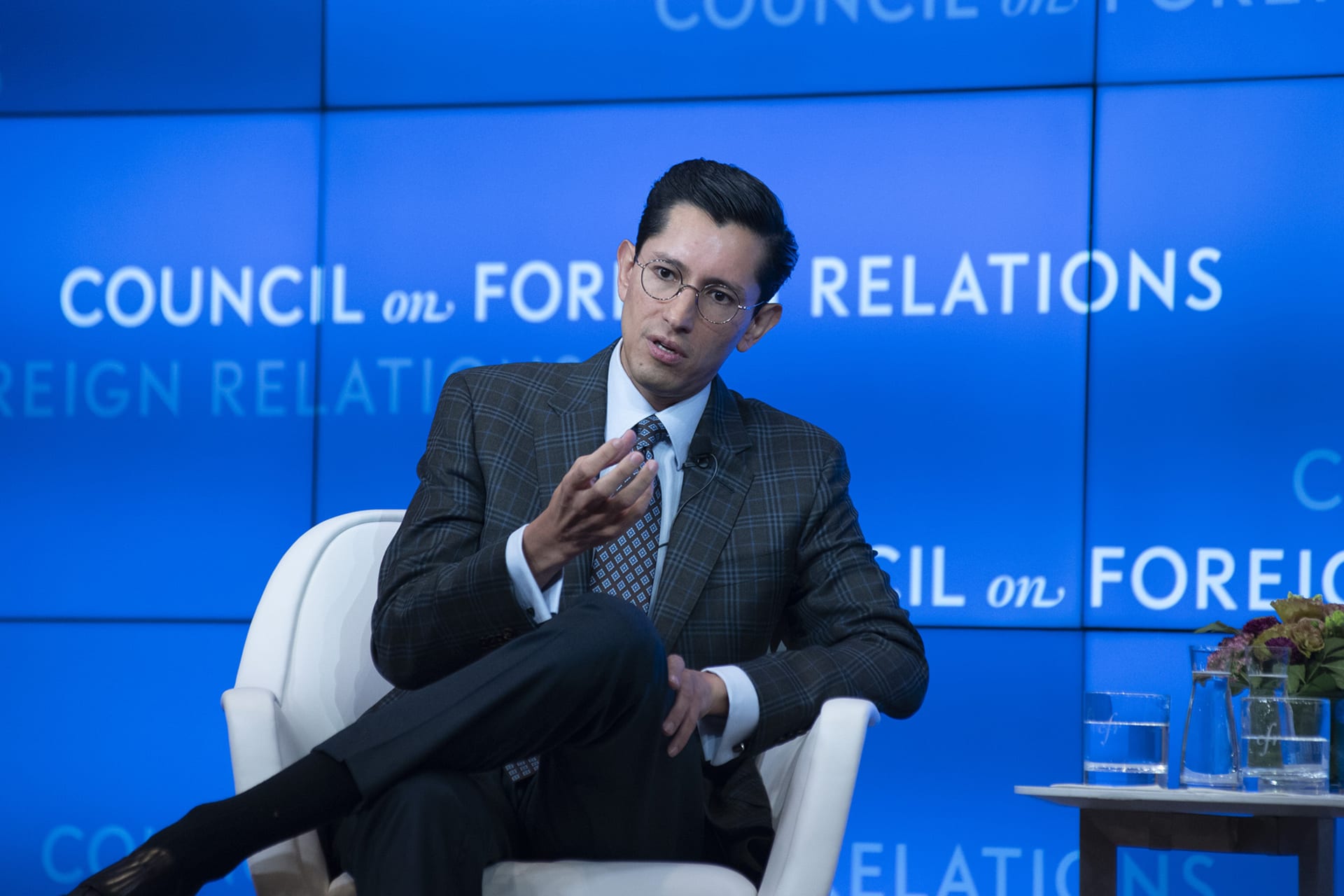
The 2026 UN General Assembly was held under a telling theme: restoring trust and managing transformation. As UN Secretary-General António Guterres warned of widening global fault lines, world leaders who spoke at the Council on Foreign Relations (CFR) last week focused on the practical stakes for their own countries and regions, including how to attract investment, the need for reform at the United Nations, and ways to handle increased conflict.
Here is what they told CFR audiences.
Mexican Foreign Secretary Roberto Velasco Outlines Investment Priorities, Regional Relations
Mexico is seeing a “strong recovery” in private, national, and foreign investment, said Velasco, emphasizing the government’s efforts to create “longer-term certainty” for investors. At the same time, Mexico wants to be “less dependent on imports from other regions,” he said, while strengthening supply chains domestically. On the security front, Mexico has seen “a dramatic decrease in violent crimes” over the last two years, Velasco said, adding that the country has exchanged intelligence with the United States. As for the rest of the Western Hemisphere, Mexico has an “excellent” relationship with Canada, and is trying to “keep a positive dialogue” when it comes to cooperating with Latin American countries that “don’t think like us,” he said.
Watch the full conversation with Foreign Secretary Roberto Velasco.
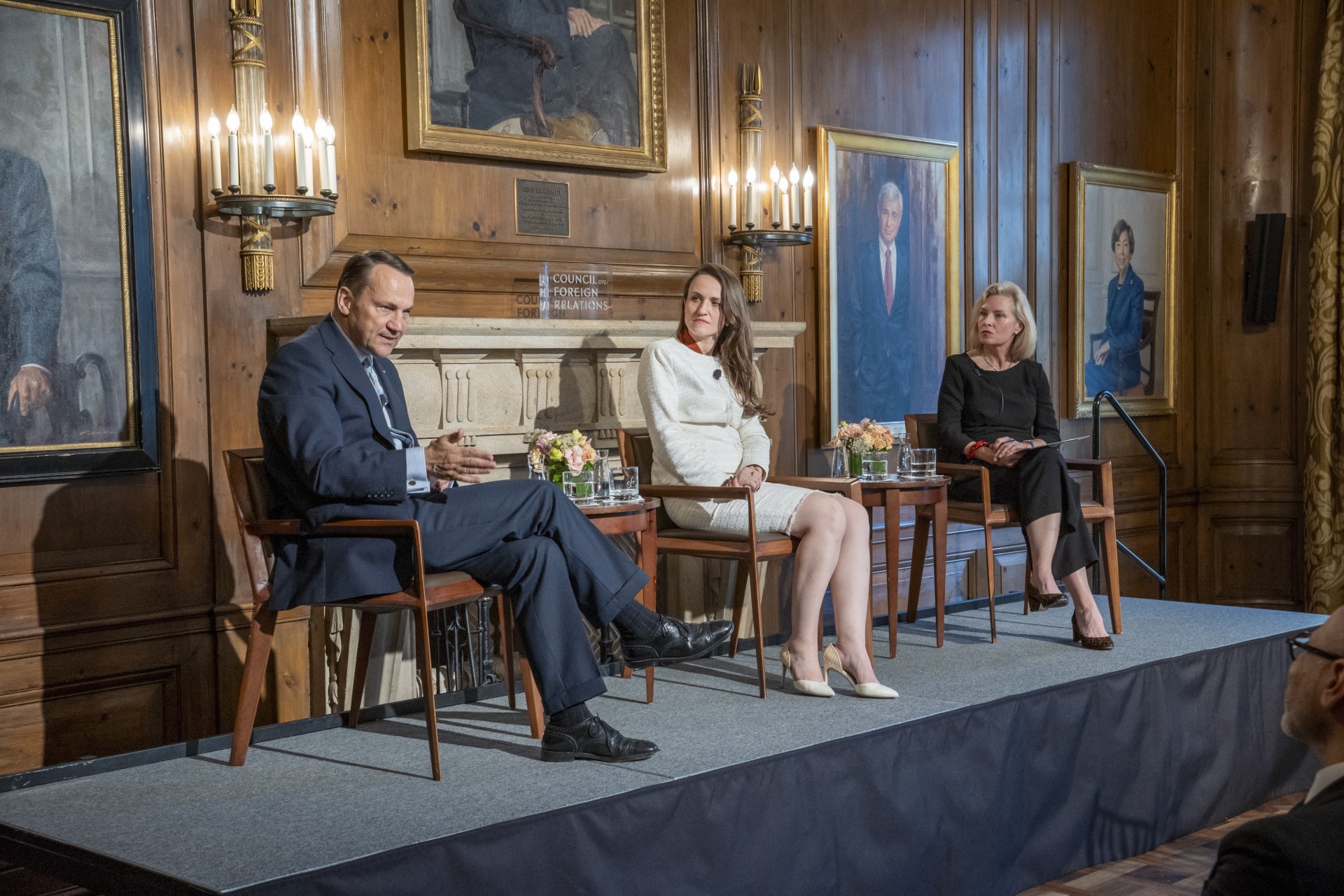
Polish Foreign Minister Radosław Sikorski and Romanian Foreign Minister Oana-Silvia Țoiu Talk Russia, Transatlantic Ties
Asked about increasing concerns over Russian drone incursions along NATO’s eastern border, Țoiu said Russian President Vladimir Putin had “no chance of winning” if he were to attack NATO. She maintained that Article 5—the mutual defense clause—would hold in that situation. Sikorski agreed, noting that Putin continued to “try to drive a wedge between allies, particularly Europeans and Americans.” Both Sikorski and Țoiu emphasized the importance of Europe’s long-standing relationship with the United States. Sikorski described it as “a great economic relationship,” and Țoiu reiterated that the transatlantic partnership “remains strong,” particularly when it comes to defense cooperation. Still, the relationship “is significantly transforming,” she said. The United States and Europe have the same strategy regarding “diversifying trade agreements,” for example, but “very different tactics” on how to achieve that, Țoiu added.
Watch the full conversation with Foreign Minister Sikorski and Foreign Minister Țoiu.
Philippines Secretary of Foreign Affairs Ma. Theresa Lazaro Discusses Foreign Policy Priorities
The U.S.-Philippines military relationship is “ironclad,” said Lazaro, adding that there has been “a good number of collaborations” between the two countries’ defense establishments, particularly on maritime cooperation. On China, Lazaro said trade relations are “robust,” though “on the security side, obviously [maritime] encounters continue.” Regionally, she noted that the Association of Southeast Asian Nations (ASEAN) is “endeavoring to finish a code of conduct” for the South China Sea, though there are still “milestone issues” that need to be discussed, such as definitions of self-restraint. Energy security is also a regional priority, including efforts to diversify suppliers and establish an ASEAN Power Grid, Lazaro said.
Watch the full conversation with Secretary of Foreign Affairs Ma. Theresa Lazaro.
South Africa Foreign Minister Ronald Lamola Analyzes U.S. Relations, Calls for Greater African Representation
South Africa considers the United States an important strategic partner, with U.S. companies playing a significant role in the country’s economy and bringing “new, modern technology” into the market, Lamola said. However, he noted that disagreements over mining and the Trump administration’s resettlement program, which primarily applies to Afrikaners, have created new tension points with the United States. He said the country has “worked very hard” to preserve its “unity in diversity,” and rejected allegations of genocide against Afrikaners as “fake news.” When it comes to multilateral institutions, Lamola described the BRICS group as “an important voice” for the Global South and called for greater African representation on the world stage. He further contended that maybe the UN Security Council was “irrelevant” because “the African continent is not [represented] there.”
Watch the full conversation with Foreign Minister Ronald Lamola.
Hungarian Foreign Minister Anita Orbán Describes Reform Efforts, Regional Ties
There is “a big desire for rapid change” in Hungary after former Prime Minister Viktor Orbán’s party was defeated in April 2026 elections, Anita Orbán, who is not related to the former prime minister, said. She noted that one of the biggest challenges facing Prime Minister Péter Magyar’s new government is how to “kickstart the economy” and “recreate” checks and balances following years of corruption. When it comes to regional relations, Hungary’s “most important alliance is NATO,” she said. However, the government is also pursuing a “pragmatic relationship” with Russia focused on interests such as energy needs and is “absolutely interested” in bilateral and regional cooperation with Ukraine, Anita Orbán added. She also highlighted the neighboring Western Balkans, saying Hungary supports the region’s integration into the European Union.
Watch the full conversation with Foreign Minister Anita Orbán.
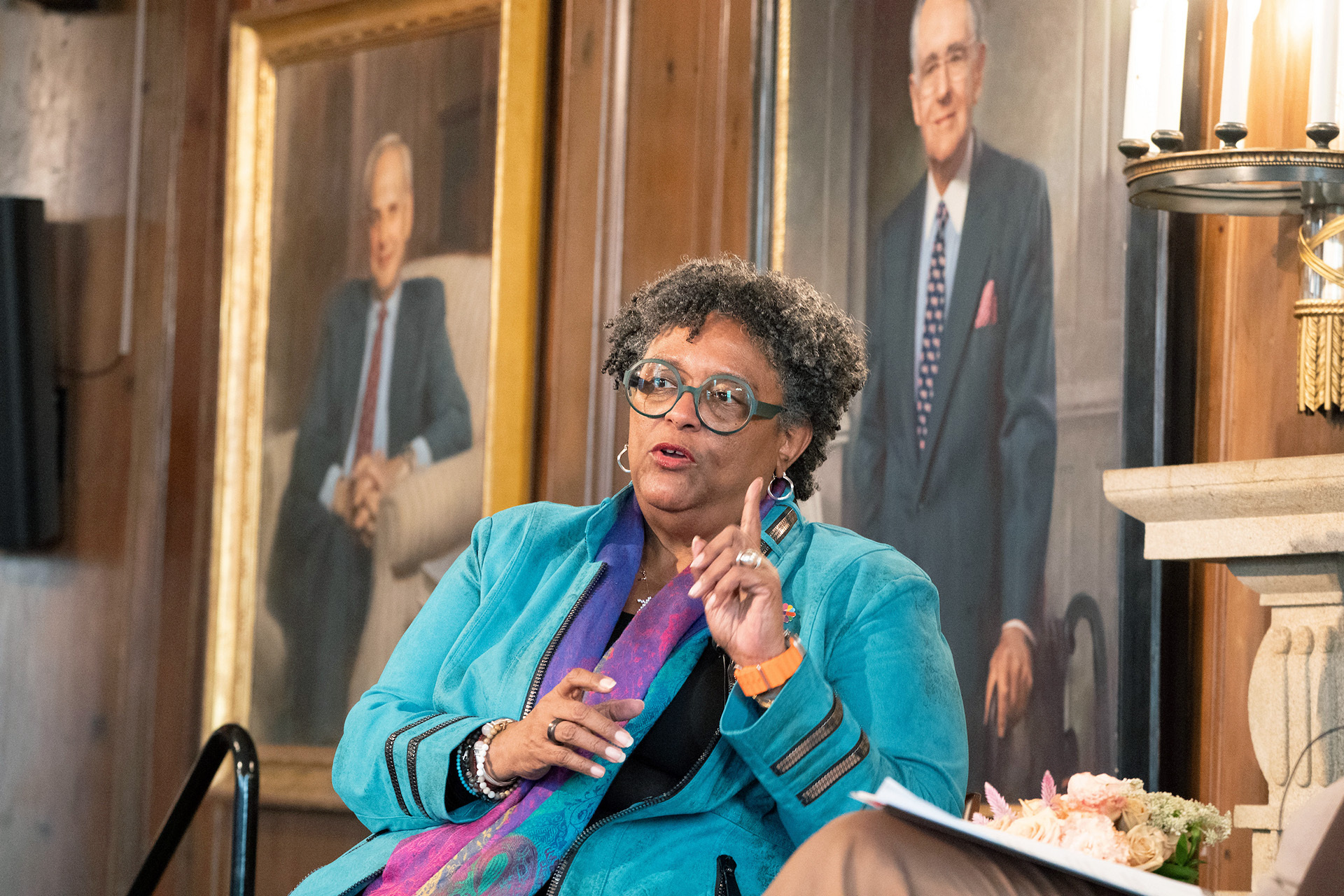
Barbados Prime Minister Mia Mottley Addresses Global Climate Inequality, UN Reform
Mottley said that one of the major challenges for climate-vulnerable countries like Barbados remains “the absence of access [to] credible financing.” She added that her country continues to contend with issues driven by climate change, arguing that the resulting “inequality that the world is seeing keeps those who are most vulnerable on the frontline.” Mottley also said that while there is “absolutely” a need for UN reform, the organization “is essential for small states to be able to survive,” noting that “those who have much larger capacity very often seek to bully those who can least protect themselves.”
Watch the full conversation with Prime Minister Mia Mottley.
Ghana’s President John Dramani Mahama Talks African Integration, Debt Restructuring
Mahama said that the spread of violent extremism across the Sahel is a growing concern for Ghana. “We need to take action to make sure that we protect ourselves,” he said, noting how he has had to “ramp up” defense spending. He also emphasized Ghana’s cooperation with its neighbors and its role in the region. Ghana assumes the African Union (AU) chairmanship in 2027, a position Mahama wants to make “impactful.” He said he believes that the AU is only important “insofar as it continues to promote greater integration” across the continent. He pointed to the Accra Reset, a global initiative aimed at expanding medicine and vaccine production in Africa, saying “health is an important factor in African development.” On debt, Mahama explained that “Africa borrows eight times more than the rest of the world,” and reform of the global financial architecture should make it so Africa can “borrow cheaper.”
Watch the full conversation with President John Dramani Mahama.
Colombia’s Vice President José Manuel Restrepo Shares Views on Security, Prosperity
“Colombia is now in a new moment,” Manuel Restrepo said, “a moment of hope.” He explained that the Abelardo de la Espriella government, which took office in early August, is focused on the country’s democracy and growth; this includes tackling issues of insecurity and corruption. “Security has to be the base for prosperity,” Manuel Restrepo said, adding that the government is working to respond to social needs, including health, education, and access to public services. On the economy, he emphasized fiscal responsibility, modernization of the state, and higher productivity, noting that “we need to grow more” while renewing activity in sectors such as mining and construction. He also called on Colombians and international partners to believe in the new government and work together to build a “miracle nation.”
Watch the full conversation with Vice President José Manuel Restrepo.
Somaliland President Abdirahman Mohamed Abdullahi Calls for International Recognition
Abdullahi asserted that Somaliland’s lack of international recognition has created barriers to development and access to international banking, noting that the region could be “a useful member” of world trade. In the thirty-five years since declaring independence from Somalia, “Somaliland has governed itself,” and it meets the criteria for statehood, he said. Abdullahi described Somaliland as a “very rich country,” particularly in natural resources such as minerals. Although other countries “may be waiting for the signal of the United States” to recognize the region as a state, Somaliland is “very satisfied” with its engagement with the United States, he said.
Watch the full conversation with President Abdullahi.
Namibian President Netumbo Nandi-Ndaitwah Invites International Investment
Namibia is at an “important stage of its development,” Nandi-Ndaitwah said, and the country is “mobilizing international capital” with the goal of using it to enrich the population through technology transfer and skill development. Given Namibia’s high unemployment rate, particularly among youth, there is a “responsibility to invest in our human capital,” she said, identifying youth empowerment as one of her government’s many priority areas. Nandi-Ndaitwah also highlighted the sectors that can help advance these priorities, including mining, oil and gas, and agriculture. “You are welcome to invest in Namibia,” she said.
Watch the full conversation with President Netumbo Nandi-Ndaitwah.
This work represents the views solely of the author(s). The Council on Foreign Relations is an independent, nonpartisan membership organization, think tank, and publisher, and takes no institutional positions on matters of policy.