Asia

India

Experts in this Region

Alyssa Ayres
Alyssa Ayres

Adjunct Senior Fellow for India, Pakistan, and South Asia

Kenneth I. Juster

Distinguished Fellow

Manjari Chatterjee Miller

Senior Fellow for India, Pakistan, and South Asia

  • Human Rights
    The New Country Reports on Human Rights Practices
    This year’s Country Reports on Human Rights Practices are a creditable effort, but Trump administration uninterest in human rights policy (and in the reports) is undermining the cause of human rights.
  • India
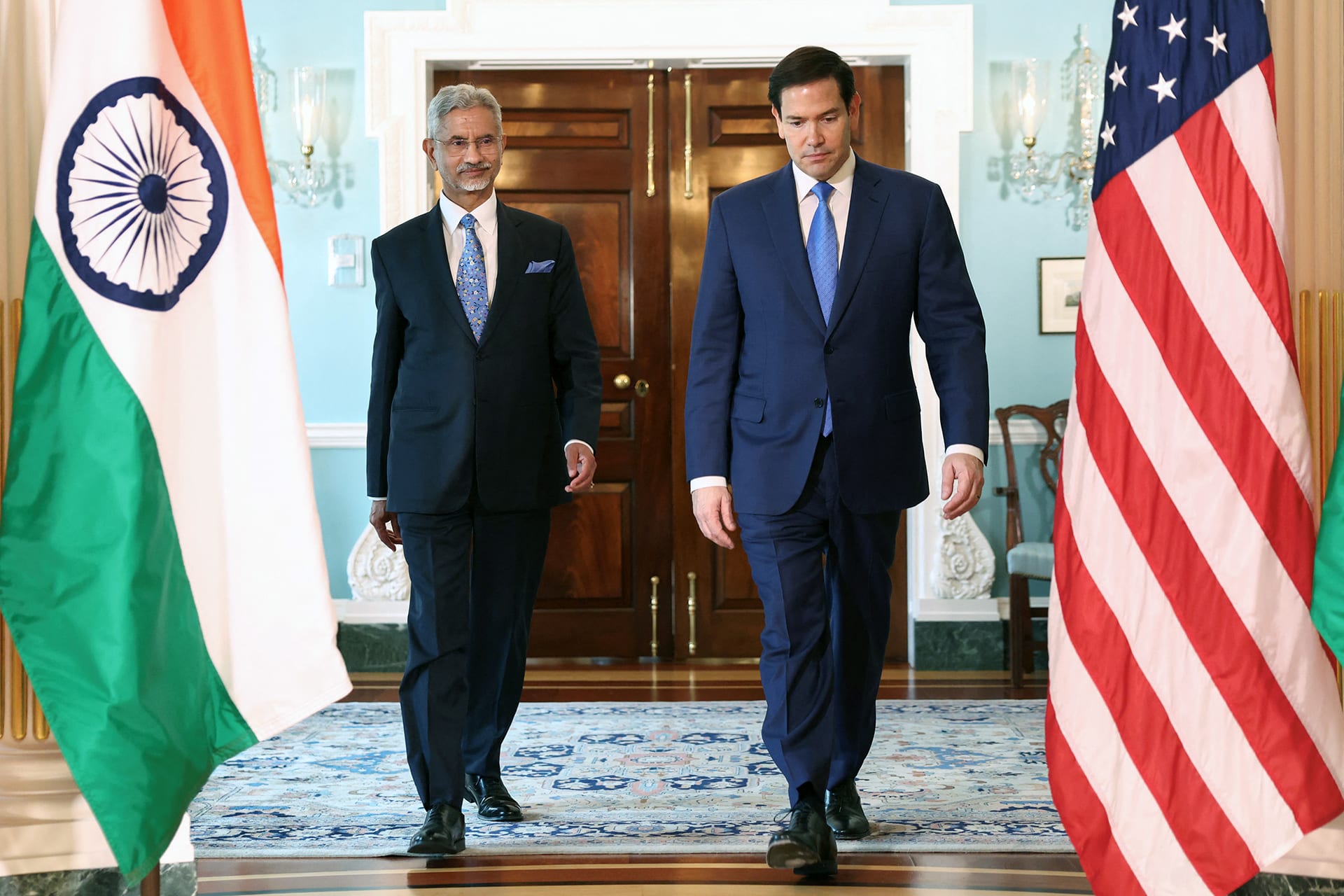
    U.S.-India Relations
    Since India’s independence, ties with the United States have weathered Cold War–era distrust and estrangement over India’s nuclear program. Relations have warmed in recent years and cooperation has strengthened across a range of economic and political areas.
  • Brazil
    What Is the BRICS Group and Why Is It Expanding?
    As BRICS grows in both membership and global sway, its expansion comes with divisions among its members old and new on how to set the stage for a revised world order.
  • China Strategy Initiative
    Divergence Despite Convergence: The United States-India Strategic Partnership and Defense Norms
    At the Shangri-La dialogue in Singapore last week, U.S. Secretary of Defense Pete Hegseth said that the United States would be expanding its defense partnership with India. His statement was in line with U.S. policy over the last two decades, which, irrespective of the party in power, has sought to cultivate India as a serious defense partner. The U.S.-India defense partnership has come a long way. Beginning in 2001, the United States and India moved from little defense cooperation or coordination to significant gestures that would lay the foundation of the robust defense partnership that exists today—such as India offering access to its facilities after 9/11 to help the United States launch operations in Afghanistan or the 123 Agreement in 2005 that paved the way for civil nuclear cooperation between the two countries. In the United States, there is bipartisan agreement that a strong defense partnership with India is vital for its Indo-Pacific strategy and containing China. In India, too, there is broad political support for its strategic partnership with the United States given its immense wariness about its fractious border relationship with China. Consequently, the U.S.-India bilateral relationship has heavily emphasized security, with even trade tilting toward defense goods. Despite the massive changes to the relationship in the last few years, and both countries’ desire to develop ever-closer defense ties, differences between the United States and India remain. A significant part of this has to do with the differing norms that underpin the defense interests of each country. The following Council on Foreign Relations (CFR) memos by defense experts in three countries are part of a larger CFR project assessing India’s approach to the international order in different areas, and illustrate India’s positions on important defense issues—military operationalization, cooperation in space, and export controls—and how they differ with respect to the United States and its allies. Sameer Lalwani (Washington, DC) argues that the two countries differ in their thinking about deterrence, and that this is evident in three categories crucial to defense: capability, geography, and interoperability. When it comes to increasing material capabilities, for example, India prioritizes domestic economic development, including developing indigenous capabilities (i.e., its domestic defense-industrial sector). With regard to geography, for example, the United States and its Western allies think of crises, such as Ukraine, in terms of global domino effects; India, in contrast, thinks regionally, and confines itself to the effects on its neighborhood and borders (and, as the recent crisis with Pakistan shows, India continues to face threats on its border, widening the geographic divergence with the United States). And India’s commitment to strategic autonomy means the two countries remain far apart on the kind of interoperability required by modern military operations. Yet there is also reason for optimism about the relationship as those differences are largely surmountable. Dimitrios Stroikos (London) argues that India’s space policy has shifted from prioritizing socioeconomic development to pursuing both national security and prestige. While it is party to all five UN space treaties that govern outer space and converges with the United States on many issues in the civil, commercial, and military domains of space, India is careful with regard to some norms. It favors, for example, bilateral initiatives over multilateral, and the inclusion of Global South countries in institutions that it believes to be dominated by the West. Konark Bhandari (New Delhi) argues that India’s stance on export controls is evolving. It has signed three of the four major international export control regimes, but it has to consistently contend with the cost of complying, particularly as the United States is increasingly and unilaterally imposing export control measures both inside and outside of those regimes. When it comes to export controls, India prefers trade agreements with select nations, prizes its strategic autonomy (which includes relations with Russia and China through institutions such as the Shanghai Cooperation Organization and the BRICS), and prioritizes its domestic development. Furthermore, given President Donald Trump’s focus on bilateral trade, the two countries’ differences will need to be worked out if future tech cooperation is to be realized.
  • India
    India’s Space Policy: Between Strategic Autonomy and Alignment With the United States
    India’s space policy, once driven primarily by domestic development goals, is increasingly aligning with that of the United States. How it approaches the norms of space governance, however, could provide a path for other Global South nations.
  • India
    Export Controls: Balancing the Tensions Between U.S. and Indian Priorities
    India has historically struck a balance between joining multilateral export-control regimes and maintaining strategic independence through bilateral trade deals and domestic investment. That could be complicated by India’s growing defense exports and increasing U.S. unilateralism.
  • India
    U.S.-India Divergence and Convergence on Defense Operationalization Concepts
    The United States and India have developed a strong defense partnership in recent years, especially in relation to China. However, they have major differences to bridge: how much to spend on defense, the role of civilian governance, and the independence of their defense-industrial bases.
  • India
    A Conversation With Dr. Shashi Tharoor
    Play
    Shashi Tharoor discusses the Pahalgam attack, the launch and objectives of Operation Sindoor, and the subsequent political and security developments arising from these events. Please note there is no virtual component to the meeting. Please note the audio, video, and transcript of this meeting will be posted on the CFR website.
  • Asia Program
    India is Losing South Asia to China
    China is gaining strategic influence over India in South Asia.