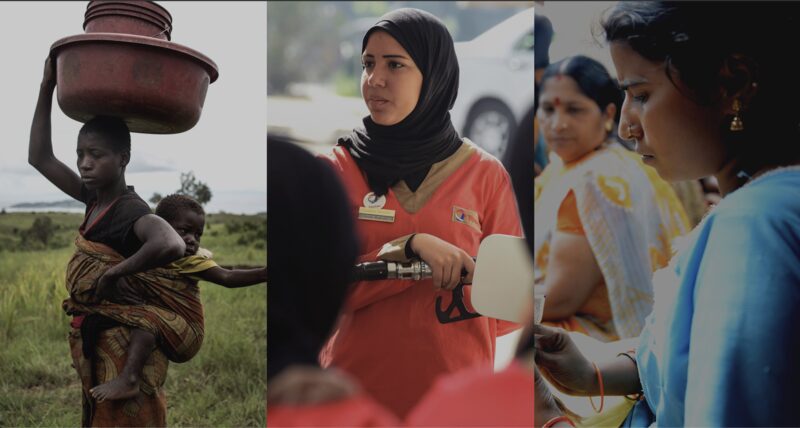
This qualitative analysis documents how women participate in peace processes—whether in official negotiating roles or through grassroots efforts—and why their inclusion advances security.
The seemingly intractable Israeli-Palestinian conflict is
rooted
in a dispute over the land that makes up present-day Israel, the West Bank, and the Gaza Strip.
Following the 2011 uprising against Muammar al-Qaddafi and military intervention by the North Atlantic Treaty Organization (NATO), interim governments struggled for legitimacy as armed militias vied for power.
Since Myanmar gained independence in 1948, various armed ethnic groups seeking greater autonomy from the government have fought the world’s
longest-running civil war. Tens of thousands have been killed and hundreds of thousands
displaced
by ongoing
sectarian violence
between the Buddhist community and the persecuted Rohingya Muslim minority.
Sudan has been plagued by intermittent civil wars. To the west, conflict in Darfur since 2003 has caused widespread death and displacement. To the south, a 2005 peace agreement prefaced South Sudan’s 2011 secession, but conflict continues between the government and armed groups in the South Kordofan and Blue Nile regions (the “Two Areas”). In 2019, Sudan began transitioning to democratic civilian rule after a military coup d’état.
In 2011, protests against Syrian President Bashar al-Assad’s regime quickly escalated into a full-scale armed conflict between anti-government rebel groups and the Syrian government. Outside parties have significantly intervened, particularly as the self-proclaimed Islamic State expanded from Iraq into Syria.
In response to the Ukrainian revolution, Russian troops—in violation of international law—annexed
Ukraine’s Crimean Peninsula in March 2014. This invasion incited pro-Russian separatists in two eastern Ukrainian territories to declare independence from Ukraine and prompted an ongoing conflict between Russia-backed separatist forces and the Ukrainian military that has resulted in over fourteen thousand deaths and over 1.5 million internally displaced persons,
59 percent
of whom are women.
Yemen continues to be devastated by fighting between government loyalists and Houthi rebels sparked by the 2011 uprising that transferred
power
from former President Ali Abdullah Saleh to Abd Rabbuh Mansour Hadi. Ethnic Houthi rebels from northern Yemen exploited the central government’s weak influence and seized Sanaa in 2014. South Yemen’s separatist militias continue their violent push for secession.