President John F. Kennedy Fakes a Fever—The Cuban Missile Crisis, Day Five
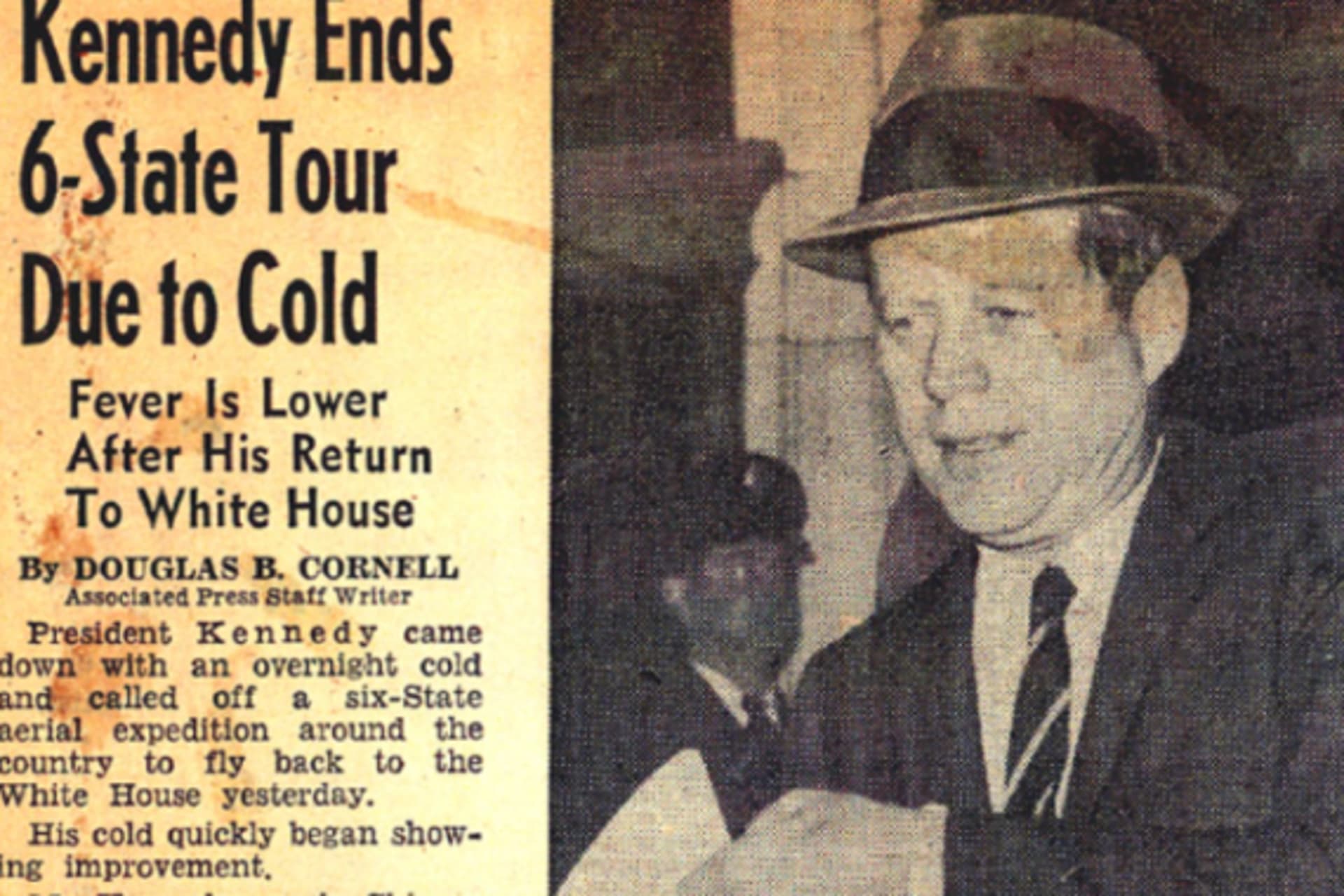
JFK pleaded illness to cancel a Midwest campaign trip and return to Washington to decide how to respond to the Cuban Missile Crisis.
By experts and staff
- Published
 James M. LindsayCFR ExpertMary and David Boies Distinguished Senior Fellow in U.S. Foreign Policy
Have you ever faked an illness to get out of a meeting or to avoid an obligation? President John F. Kennedy can do your story one better. He faked a fever on Saturday, October 20, the fifth day of the Cuban missile crisis, so he could cancel a campaign tour through the Midwest and return to the White House to meet with his advisors about how to respond to the discovery of Soviet missiles in Cuba.
The Return to Washington
Kennedy woke up on October 20 in the Sheraton Blackstone Hotel in Chicago, where he had given a speech at a Democratic Party fundraiser the night before. At 10 a.m., his brother, Attorney General Robert Kennedy, called to say that the ExCommwas ready to discuss response options to the Cuban crisis with him. Half an hour later, Kennedy’s staff began informing the press and the hosts for the day’s scheduled campaign events that he was running a fever and was returning to Washington on his doctor’s orders.
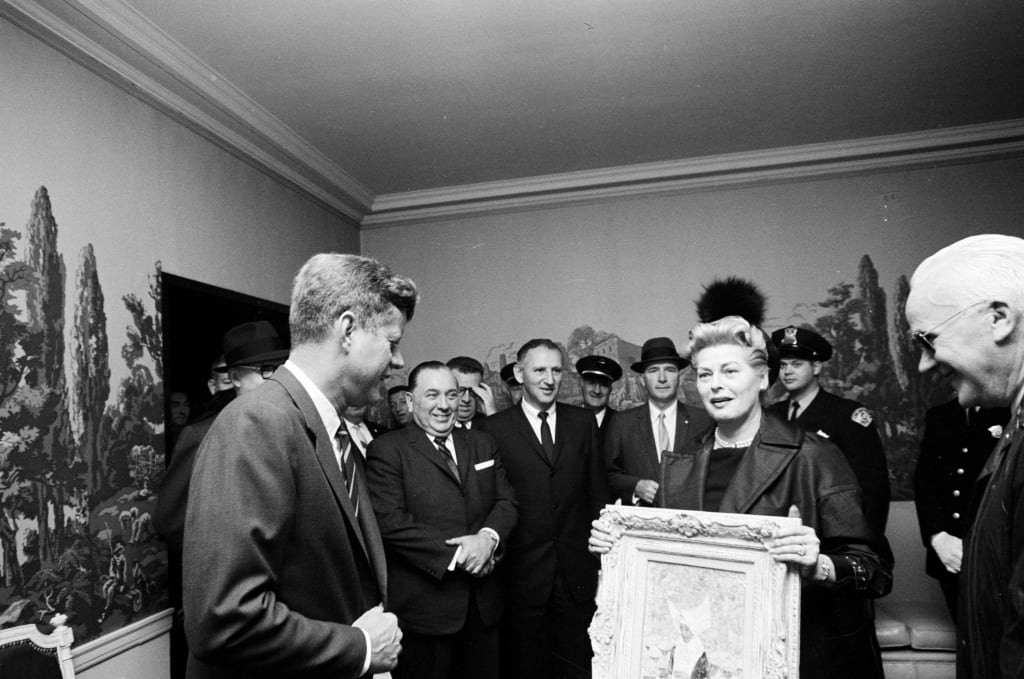
Kennedy arrived back at the White House a little after 1:30 p.m. He immediately went for a swim. Robert Kennedy sat poolside. The two men chatted when the president took breaks from his laps.
The Case for a Naval Blockade
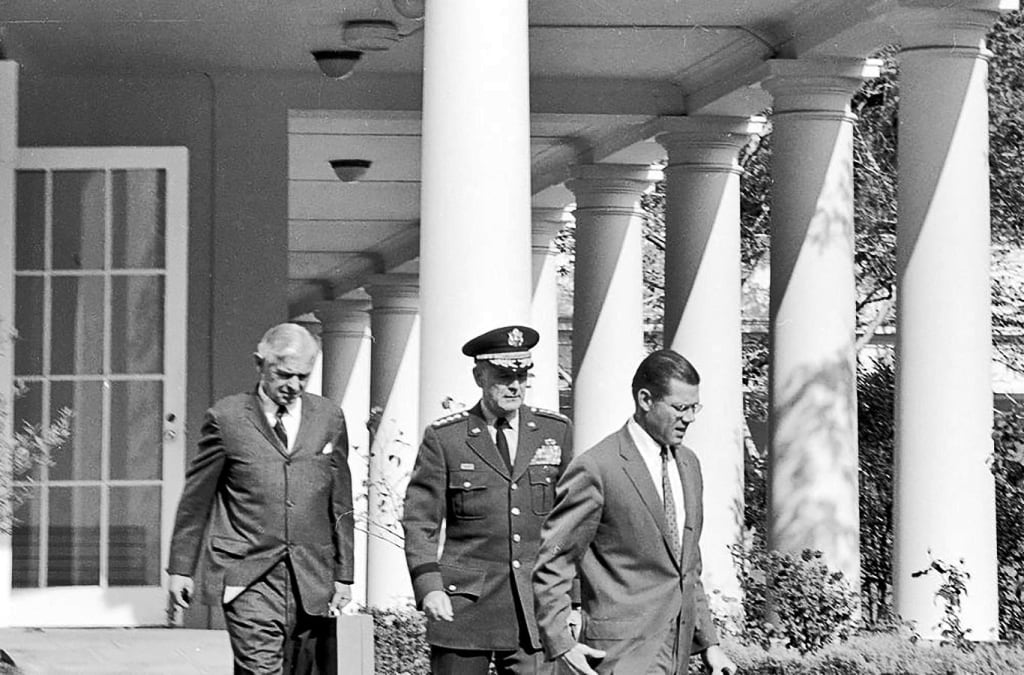
The ExComm meeting began at 2:30 p.m. and ran for more than two-and-a-half hours. Secretary of Defense Robert McNamara made the case for imposing a naval blockade on Cuba rather than launching a preemptive air strike that would be “contrary to our tradition.” He argued that a blockade would also cause the United States “the least trouble” with its allies, be compatible with America’s “position as a leader of the free world,” and be less likely to “provoke a response from the USSR which could result in actions leading to general war.”
McNamara acknowledged that the blockade was not a perfect solution. It might take a long time to compel the Soviets to withdraw the missiles from Cuba, “it would result in serious political trouble in the United States,” and “the world position of the United States might appear to be weakening.” Kennedy pointed to another disadvantage of a blockade: it would allow the Soviets to continue installing missiles with whatever materials were already in Cuba, thereby increasing the threat to the United States.
The Case for an Air Strike
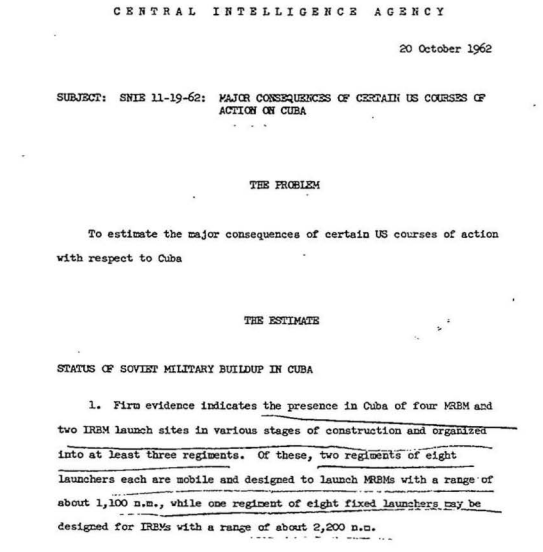
Chairman of the Joint Chiefs of Staff General Maxwell Taylor and National Security Advisor McGeorge Bundy pressed the case for an air strike, which was nicknamed the Bundy plan. Taylor’s principal argument was that time favored the Soviet Union. More missiles would become operational with each passing day, and the Soviets would have time to camouflage launch sites, making a preemptive strike be less effective. The Soviets could fire the surviving missiles at the United States.
McNamara countered that an immediate air strike would inevitably miss some missile sites, leaving the United States vulnerable to a counterattack no matter what. Moreover, the Bundy plan would target far more than just missile launch pads; it would kill thousands of Soviet soldiers. Moscow would likely retaliate, not necessarily by attacking from Cuba but by attacking U.S. forces and allies in Europe and Asia. The United States could not assume that it could control events after that.
Known Unknowns and Carrots
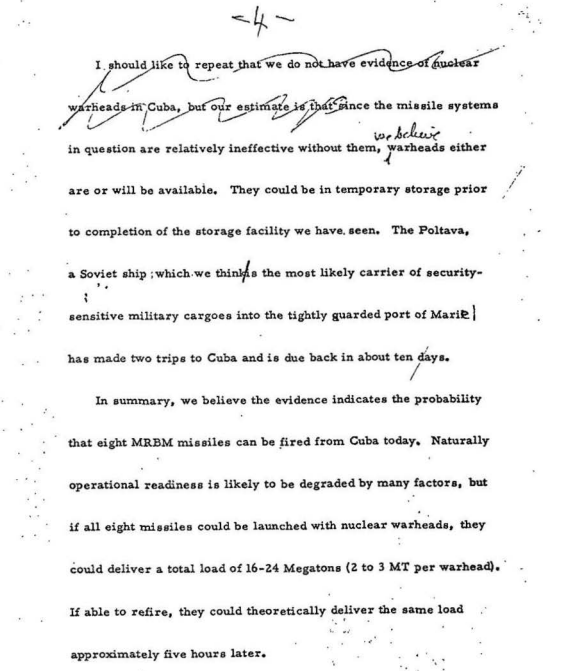
As the meeting continued, Kennedy and his advisors discussed variations on the two main proposals, including a hybrid version that Robert Kennedy floated in which the United States would impose a naval blockade as a first step, to be followed by air strikes if necessary. CIA Director John McCone pointed out a significant known unknown: U.S. intelligence had yet to determine whether the nuclear warheads that would eventually be placed on the Soviet missiles had already arrived in Cuba. All that was certain was that work had begun on the storage sheds for the warheads.
Kennedy and his advisers also discussed whether the United States should offer carrots to entice Moscow to withdraw the missiles. In 1961, the United States had installed its own nuclear-armed missiles in Turkey, far closer to Soviet territory than previous sites in Western Europe. Both McNamara and UN Ambassador Adlai Stevenson raised the possibility of offering to withdraw the missiles from Turkey and either leaving or limiting the use of the U.S. naval base at Cuba’s Guantánamo Bay. Kennedy dismissed the idea of retreating on Guantánamo; it would signal U.S. weakness and embolden the Soviets. He left the door open, however, to withdrawing U.S. missiles from Turkey.
A Hedged Bet
After hearing from his advisors, Kennedy hedged his bet. He ordered the Pentagon to prepare to impose a blockade. But he also directed that all steps be taken to give him the option of ordering an air strike against Soviet missile installations in Cuba within forty-eight to seventy-two hours.
With the Pentagon gearing up for a confrontation with the Soviet Union, Kennedy knew that the crisis would not remain secret much longer. Determined to shape the public narrative at home and abroad, he directed his chief speechwriter, Ted Sorensen, to draft a speech he would give to the nation on Monday night.
The speech would be Kennedy’s his first public statement on the crisis. With it, the world would learn that he had fibbed about running a fever. The reason for his sudden departure from Chicago was far graver than the common cold.
Oscar Berry and Jack Patton assisted in the preparation of this article.
The United States celebrates its 250th anniversary in 2026. To mark that milestone, I am resurfacing essays I have written over the years about major events in U.S. foreign policy. A version of this essay was published on October 20, 2012.
Other Posts in This Series:
- “Andrei Gromyko Tells a Lie at the United Nations,” September 21, 1962
- “Major Richard S. Heyser’s U-2 Mission Discovers Soviet Missiles in Cuba,” October 14, 1962
- “The United States Discovers Soviet Missiles in Cuba,” October 15, 1962
- “JFK Learns That Soviet Missiles Are in Cuba—The Cuban Missile Crisis, Day One,” October 16, 1962
- “John F. Kennedy Solicits Dwight D. Eisenhower’s Advice—The Cuban Missile Crisis, Day Two,” October 17, 1962
- “Soviet Foreign Minister Andrei Gromyko Lies to President John F. Kennedy—The Cuban Missile Crisis, Day Three,” October 18, 1962
- “John F. Kennedy Campaigns While the ExComm Debates—The Cuban Missile Crisis, Day Four,” October 19, 1962
This work represents the views solely of the author(s). The Council on Foreign Relations is an independent, nonpartisan membership organization, think tank, and publisher, and takes no institutional positions on matters of policy.