John F. Kennedy Campaigns While the ExComm Debates—The Cuban Missile Crisis, Day Four
JFK’s speeches on the campaign trail in Illinois and Ohio gave no hint of the crisis that the United States faced.
By experts and staff
- Published
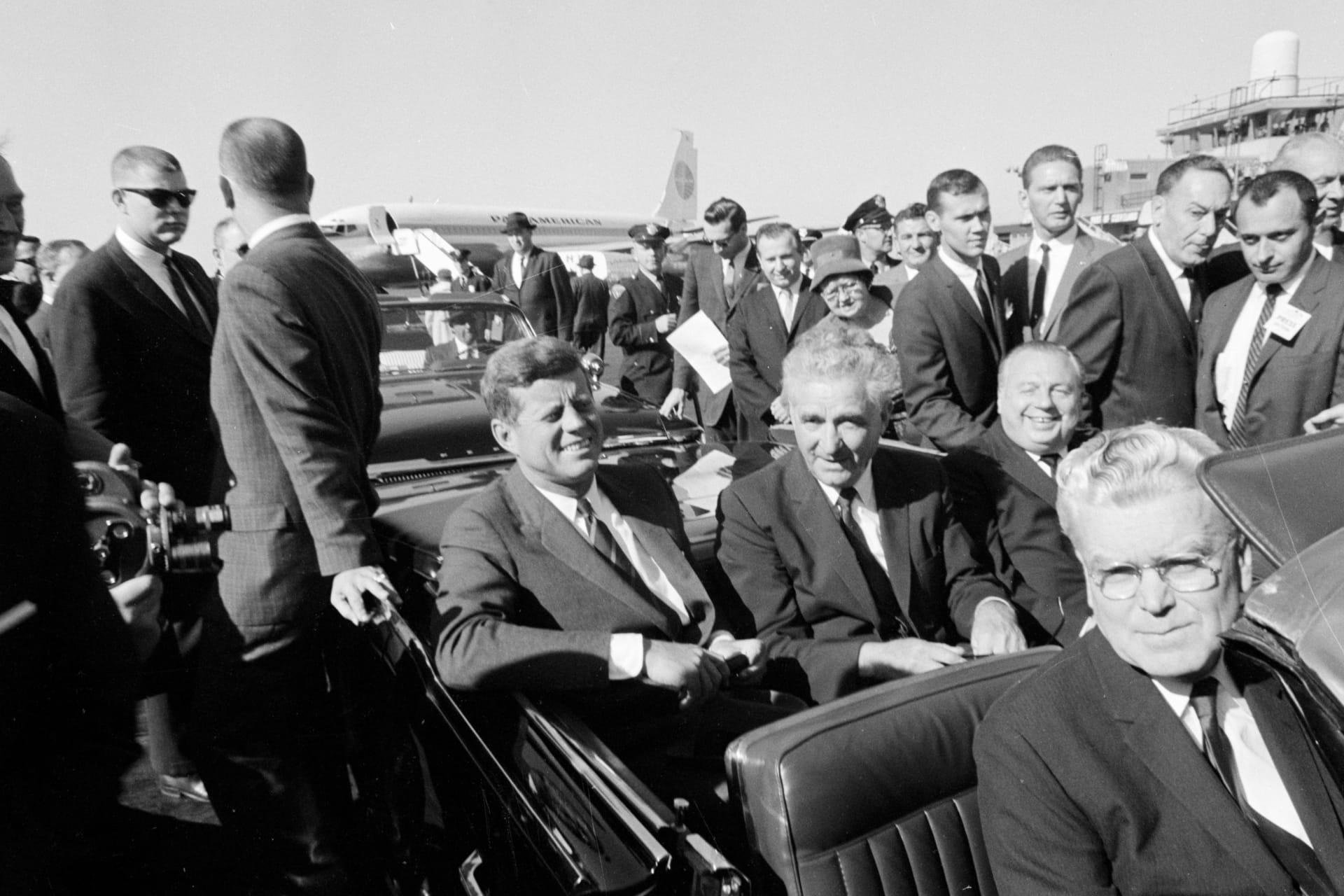
Presidents are not just government leaders; they are also leaders of a political party. As they juggle the responsibilities of their office, they also juggle their partisan duties. So they frequently travel the country in the weeks before midterm elections to campaign for fellow party members. That is precisely what President John F. Kennedy did on Friday, October 19, 1962, the fourth day of the Cuban missile crisis.
A Midwest Campaign Swing
Democrats enjoyed comfortable majorities in both houses of Congress when Kennedy took office in January 1961. As the 1962 midterms approached, he intended to do what he could to sustain that advantage into the second half of his term. That meant hitting the campaign trail, even if he might have preferred to remain in Washington, DC, attending to official business.
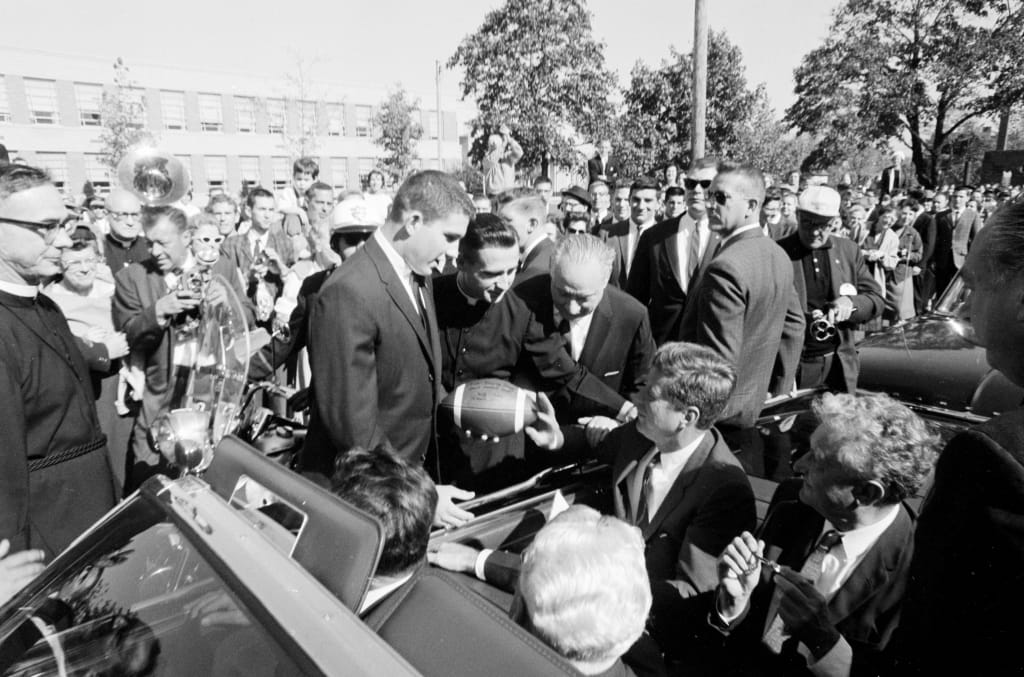
Then the Cuban Missile crisis broke. JFK was scheduled to take a campaign trip through the Midwest. Still looking to preserve the air of business as usual so his advisors could work through his options on Cuba, he stuck to his schedule. His first stop was Cleveland. He visited a local Catholic high school and gave a speech in Cleveland’s Public Square. He then flew to Springfield, Illinois, where he spoke at the State Fairgrounds and placed flowers on the grave of Abraham Lincoln.
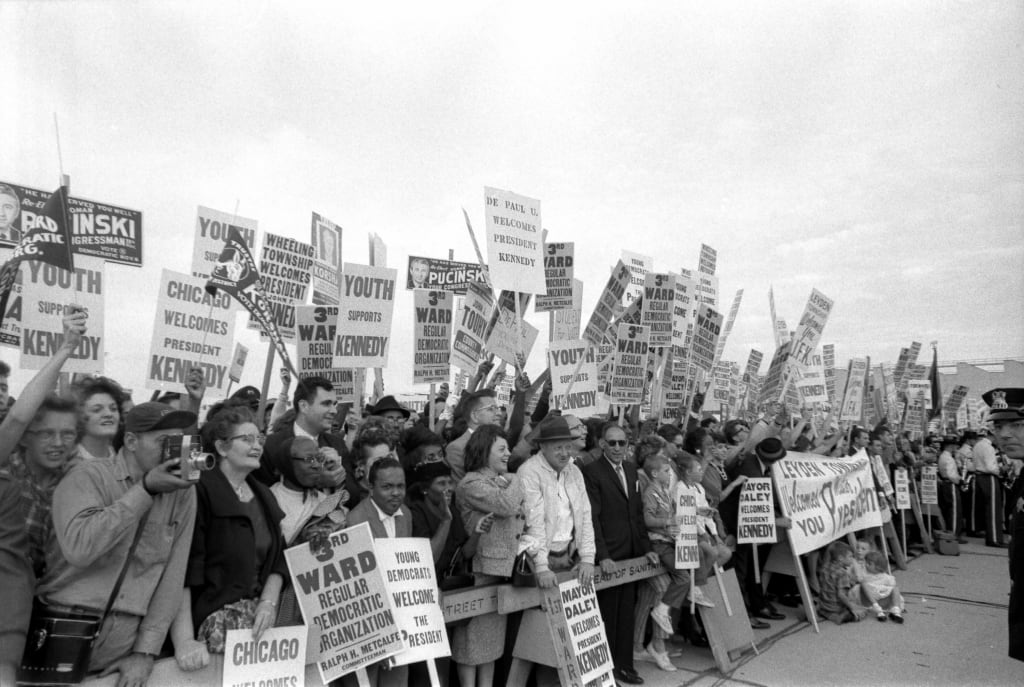
Kennedy ended his day in Chicago. An estimated half million people stood along the side of the road late in the afternoon as his motorcade drove from O’Hare International Airport to a $100-a-seat fundraiser at McCormick Place downtown. After watching fireworks over Lake Michigan, Kennedy retired to the Blackstone Hotel for the evening. He would decide the next morning whether to continue with the second day of his campaign swing or return to the White House.
The ExComm Deliberates
As Kennedy hop-scotched across the Midwest, back in Washington, the ExComm continued to deliberate on how to respond to the discovery that the Soviet Union was installing nuclear-armed missiles in Cuba. The president and his advisers had already agreed that the missiles had to be removed. The question was how to make that happen.
Senior administration officials focused their discussions on two responses: a blockade or an air strike. Secretary of Defense Robert McNamara was the leading proponent of the blockade. National Security Advisor McGeorge Bundy and Chairman of the Joint Chiefs of Staff Maxwell Taylor argued for an air strike.
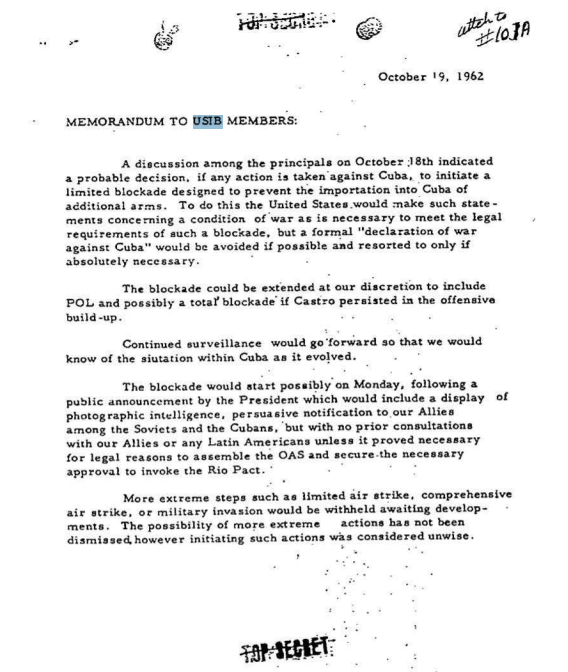
Attorney General Robert Kennedy criticized the air-strike proposal because it would mean that the United States would fire first. He believed that would give Cuba and the Soviet Union the moral high ground of defending against a preemptive attack. The president’s brother noted:
for 175 years this has not been the kind of country which launches Pearl Harbor attacks on Sunday morning. The first American president to do anything like this would not be forgiven by history, by his own people, or by the world.
Secretary of State Dean Rusk missed most of the deliberations, as happened frequently during the crisis, because his job required him to meet so many visiting foreign dignitaries.
A Decision Nears
Meanwhile, talk continued to build in media circles that something was up. In response to a press inquiry, the Department of Defense issued a statement reporters could use if they wrote a story: “A Pentagon spokesman denied tonight that any alert has been ordered or that any emergency measures have been set in motion against Communist ruled Cuba. Further, the spokesman said the Pentagon has no information indicating the presence of offensive weapons in Cuba.”
Kennedy recognized that he needed to decide soon how the United States would respond to the Soviet provocation. If he waited too long, he could find himself chasing events rather than shaping them.
Oscar Berry and Jack Patton assisted in the preparation of this article.
The United States celebrates its 250th anniversary in 2026. To mark that milestone, I am resurfacing essays I have written over the years about major events in U.S. foreign policy. A version of this essay was published on October 19, 2012.
Other Posts in This Series:
- “Andrei Gromyko Tells a Lie at the United Nations,” September 21, 1962
- “Major Richard S. Heyser’s U-2 Mission Discovers Soviet Missiles in Cuba,” October 14, 1962
- “The United States Discovers Soviet Missiles in Cuba,” October 15, 1962
- “President John F. Kennedy Learns That Soviet Missiles Are in Cuba—The Cuban Missile Crisis, Day One,” October 16, 1962
- “John F. Kennedy Solicits Dwight D. Eisenhower’s Advice—The Cuban Missile Crisis, Day Two,” October 17, 1962
- “Soviet Foreign Minister Andrei Gromyko Lies to President John F. Kennedy—The Cuban Missile Crisis, Day Three,” October 18, 1962
This work represents the views solely of the author(s). The Council on Foreign Relations is an independent, nonpartisan membership organization, think tank, and publisher, and takes no institutional positions on matters of policy.