Council of Councils
 Think Global Health
Blogs
Middle East Matters
Latest Post
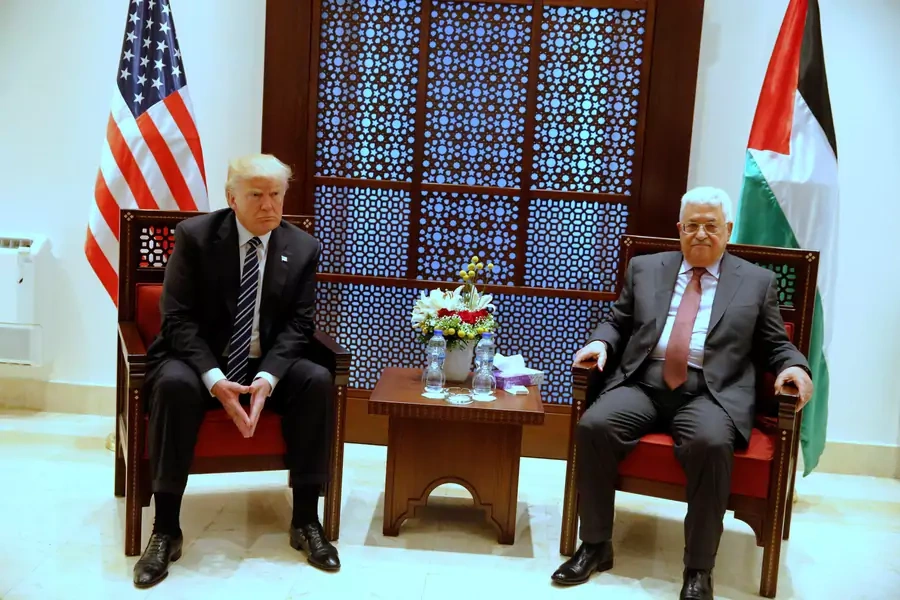
Reading The Trump Administration in Ramallah
Does the United States seek relations with Hamas in Gaza and to undermine the Palestine Liberation Organization (PLO) leadership in the West Bank? Palestinians officials and insiders asked me this question repeatedly during a recent visit to Ramallah. At first, the question seems strange. How could well-informed insiders come to wonder if the United States prefers to deal with an Islamist terrorist organization to a leadership that avows non-violence and actively pursues security cooperation with Israel on a daily basis?
Middle East Matters This Week: Retaliatory Talk Against Syria, Egypt’s Crackdown Intensifies
Significant Developments
Syria. White House officials plan to brief members of Congress this evening on the situation in Syria after more than one hundred U.S. representatives signed a letter yesterday calling for President Obama to put the use of force against Syrian President Bashar al-Assad’s government to a vote. Meanwhile, Britain and France called for a delay today in taking military action against the Syrian government until the UN inspectors currently on the ground finish their report. UN secretary general Ban Ki-moon said today that the team of chemical weapons inspectors in Syria will conclude their investigations tomorrow and leave the country on Saturday, one day ahead of schedule.
In an interview with PBS’ Newshour yesterday, President Obama said that, “We have not yet made a decision...but we do have to make sure that when countries break international norms on chemical weapons that could threaten us, that they are held accountable.” A meeting of the five permanent members of the UN Security Council ended yesterday without taking action on a British resolution authorizing the use of force, due to Russian and Chinese opposition. The Arab League condemned Assad’s government on Tuesday for using chemical weapons but refused to back military action in retaliation.
Egypt. Mohammed el-Beltagy, senior Muslim Brotherhood leader and head of the Freedom and Justice Party, was arrested today as supporters of deposed Egyptian president Mohammed Morsi called for renewed protests Friday. More than sixty people connected to the Muslim Brotherhood were detained yesterday by Egyptian security forces in an increasingly widening crackdown on the group. Mohammed Ali Bishr, a senior Muslim Brotherhood figure, reportedly met with representatives of Al Nour party on Wednesday to draft an initiative to the military with solutions to ending the current political crisis. Interim prime minister Hazem al-Beblawi said in a state media interview Tuesday that Egypt should not ban or exclude the Muslim Brotherhood from politics, seemingly backtracking on his proposal two weeks ago to dissolve the group. Meanwhile, a military court in Suez began the trial on Monday of sixty-four members of the Muslim Brotherhood, Jama’a Islamiya, and other supporters of Morsi. They were charged with inciting attacks against churches and security forces.
U.S. Foreign Policy
Jordan-Syria. Joint Chiefs of Staff chairman General Martin Dempsey co-hosted a two-day meeting of senior army officials from ten countries with Jordan’s chief of staff Meshaal Mohamed al-Zaban in Amman on Monday and Tuesday. The meeting was focused on the regional impact of the war in Syria. Top generals from Saudi Arabia, Qatar, Turkey, the United Kingdom, France, Germany, Italy, and Canada were in attendance.
Egypt. U.S. ambassador Anne Patterson will leave Egypt tomorrow, ending her roughly two-year term in Cairo. Yesterday, Patterson wrote a public letter to Abdel Nasser Salama, the editor in chief of state-owned Al Ahram newspaper, denouncing as “absurd and dangerous” an article in the newspaper that alleged that she was involved in a conspiracy to destabilize Egypt. Patterson further wrote that the U.S. embassy will bring the allegations against her to the “highest levels of the government to protest its publication and the irresponsible behavior that led to it.” David Satterfield will reportedly serve as temporary charge d’affaires until the next ambassador can be confirmed. Patterson was nominated to be the next Assistant Secretary of State for Near East affairs last month.
Iran. The State Department released a statement yesterday “respectfully” asking new Iranian president Hassan Rouhani to help release three U.S. citizens who have been held in Tehran for at least one year.
While We Were Looking Elsewhere
Tunisia. Interior Minister Lotfi Ben Jeddou told a press conference yesterday that Tunisia’s extremist group Ansar al-Shariah is linked to al Qaeda. Tunisian prime minister Ali Larayedh labeled Ansar al-Sharia a terrorist organization on Tuesday, blaming the group for the assassination of two opposition figures and multiple attacks on Tunisian security forces this year.
Jordan. Jordan held nation-wide municipal elections Tuesday producing very low turnouts. While the elections were considered free and fair, only 37.3 percent of registered voters participated. The rate was particularly low in Amman, where only 10.5 percent of eligible voters participated.
Israel. The Israeli military mobilized a small number of reservists on Wednesday in preparation for the possibility of retaliation against Israel for a potential Western strike on Syria. While Israelis rushed to collect gas masks, Prime Minister Benjamin Netanyahu released a statement urging calm but also stating that, “we are prepared for any scenario.”
Libya. Seif al-Islam, the son of former dictator Muammar Qaddafi, and former intelligence chief Abdullah al-Senoussi were charged in a Tripoli court on Tuesday with murder during Libya’s civil war in 2011. Twenty-six former members of Qaddafi’s government were also charged. The trial is set to begin on September 19.
Iran. Marzeih Afkham was announced as the first ever female spokesperson for Iran’s foreign ministry today. Previously, Afkham had served as director of the Foreign Ministry’s media and public diplomacy department. Iranian president Rouhani reportedly asked officials to appoint women to high posts in the government. Meanwhile, a new IAEA report released yesterday stated that Iran is slowing its accumulation of uranium refined to 20 percent, while simultaneously expanding its installation of new refining equipment. The report revealed that Iran is set to hold a new round of talks with nuclear inspectors in September.
Iraq. More than a dozen coordinated bombs exploded within an hour-long period yesterday in Baghdad. The wave of bombings mostly hit Shiite neighborhoods and killed at least sixty-five people and wounded many more. Meanwhile, Iraq’s Supreme Federal Court overturned a law passed in January that set a two-term limit for the offices of the prime minister, president, and Parliament speaker.
Lebanon. President Michael Sleiman appealed to all political forces yesterday to avoid regional conflicts and “reconsider the disassociation policy based on the Baabda Declaration,” after calling for a new government and renewed national dialogue over the weekend. A suspect in the devastating car bombing that struck Tripoli last Friday and killed at least forty-seven reportedly told Lebanese security forces on Tuesday that Syrian intelligence directly planned the attack.
West Bank. Protesters and Palestinian security forces clashed on Wednesday in Ramallah as police broke up a small demonstration against the resumption of peace talks with Israel. Ma’an reported on Tuesday that Israeli and Palestinian negotiators met in Jericho on Monday, despite an announcement by Palestinian officials that a planned round of talks had been cancelled after Israeli security personnel killed three Palestinians earlier in the day. The two negotiating teams reportedly met at the home of Saeb Erekat, the chief Palestinian negotiator.
Middle East Matters This Week: Alleged Syrian Chemical Weapons Use, Mubarak Leaves Prison in Egypt
Significant Developments
Syria. French foreign minister Laurent Fabius called today for a forceful international response to reports that the Syrian regime used chemical weapons outside Damascus yesterday. However, Fabius added that “there is no question of sending troops on the ground.” The UN Security Council held an emergency session yesterday and issued a statement calling for a prompt investigation into the alleged use of chemical weapons; however the UN team of chemical weapons inspectors that is currently in Damascus does not have permission from the Syrian government to investigate the site of yesterday’s attack. Syria’s opposition claims the government is responsible for the chemical weapons attack, but the Assad regime denies any involvement. Hundreds, and possibly thousands, of men, women, and children were killed in Wednesday’s attack.
Meanwhile, clashes between Kurdish militias and al Qaeda-linked rebel groups in the northern provinces of Syria have escalated in the past week in what threatens to become a new war. Elsewhere, regime troops retook large swathes of President Bashar al-Assad’s home province of Latakia on Monday.
Egypt. Former Egyptian president Hosni Mubarak was released from prison today and transported by helicopter to Maadi Military hospital. The move followed an appeals court ruling yesterday that Mubarak had been held the maximum number of days pre-verdict. Interim prime minister Hazem al-Beblawi ordered Mubarak to be held under house arrest following his release. Mubarak still faces charges of corruption and the deaths of protesters during the 2011 revolution. Mahmoud Ezzat was named interim leader of the Muslim Brotherhood on Tuesday, after Egyptian security forces arrested Mohamed Badie, the supreme guide of the Muslim Brotherhood, earlier in the day.
Tunisia. The ruling Nahda party agreed in principle today to a plan proposed by the UGTT trade union federation for the transition to new elections. The plan calls for the current government to step down and for a neutral interim cabinet to steer the country to new elections. The Nahda party previously rejected calls for a nonpartisan government, but now appears willing to shift its position. Tunisia has been experiencing a fresh wave of protests following the assassination of Mohamed Brahmi, the second opposition figure to be killed in the past six months.
U.S. Foreign Policy
Egypt. President Barack Obama met with his national security team on Tuesday to discuss responses to the Egyptian military’s crackdown. White House spokesman Josh Earnest denied on Tuesday that U.S. aid to Egypt had been cutoff or suspended as had been suggested by Senator Patrick Leahy’s office earlier in the day. “A decision to cut off aid would be announced, if it were to be announced, after that review had been completed,” Earnest told reporters, referring to the still ongoing review of aid that Obama ordered in July.
Syria. General Martin Dempsey, the chairman of the joint chiefs of staff, wrote in a letter to Representative Eliot Engel on Monday that, “Syria today is not about choosing between two sides but rather about choosing one among many sides.” He acknowledged the United States could take out the Syrian air force, but that such action might “further commit the United States to the conflict.” Dempsey was responding to a letter from Engel that inquired about the potential for punishing President Bashar al-Assad’s government. Dempsey’s response pre-dates reports that the Syrian regime used chemical weapons on Wednesday.
Lebanon. Maura Connelly, U.S. ambassador to Lebanon, left the country on Tuesday, completing three years as the top U.S. official in the country. David Hale, former U.S. special envoy for Middle East peace, is expected to take over the post in the next few weeks.
While We Were Looking Elsewhere
Iran. Ali Asghar Soltanieh, Iran’s longtime ambassador to the International Nuclear Energy Agency, told Reuters yesterday that he will leave his post on September 1. Soltanieh will be the third senior nuclear official replaced since President Hassan Rouhani assumed office on August 3. A spokesman for the Iranian foreign ministry told reporters on Tuesday that newly confirmed Foreign Minister Mohammad Javad Zarif may handle nuclear negotiations.
Iraq. Over thirty thousand refugees have streamed into Iraq from Syria over the past week. Aid agencies reported on Tuesday that the Kurdistan regional government has put in place a quota limiting the number of refugees to three thousand per day. Meanwhile three separate car bombings in southern cities on Tuesday killed at least ten people.
Lebanon. Hezbollah member of parliament Ali Miqdad defended his group’s stepped-up security measures in Beirut today in response to a car bombing that killed twenty-seven people last week. Members of the Future parliamentary bloc criticized Hezbollah’s checkpoints in the capital’s southern suburbs on Tuesday for being “militia-like.” Last week’s car bombing was the deadliest in Lebanon in decades.
This Week in History
This week marks the twentieth anniversary of the initialing of the "Declaration of Principles on Interim Self-Government Arrangements," also known as the Oslo Accords. On August 20, 1993, Israeli officials Uri Savir and Joel Singer joined senior Palestinian Liberation Organization officials Ahmed Qurei (Abu Alaa) and Hassan Asfour to initial the Declaration of Principles. Also attending was Israeli foreign minister Shimon Peres. The agreement to negotiate further interim measures had been secretly negotiated between Israeli and Palestinian negotiators in Norway. Soon after the initialing of the agreement, Israeli prime minister Yitzhak Rabin and PLO chairman Yasser Arafat traveled to Washington where they signed the agreements on the White House lawn on September 13, 1993.
Middle East Matters This Week: Egypt’s Brutal Crackdown, Syrian-Related Diplomacy, and Israelis and Palestinians Negotiate
Significant Developments
Egypt. President Barack Obama today strongly condemned the Egyptian military’s use of force and announced the cancellation of next month’s joint U.S.-Egyptian "Bright Star" military exercise. Obama was reacting to Egypt’s crackdown on supporters of deposed president Mohammad Morsi last night that left over five hundred people dead and thousands injured. The assault on the protest encampments prompted retaliatory attacks against government buildings. Interim vice president Mohammad ElBaradei resigned last night over the continuing violence. Secretary of State John Kerry last night called the events “deplorable” and “counter to Egyptian aspirations for peace, inclusion, and genuine democracy.” The Morsi supporters had been camped out since the Egyptian military removed President Morsi from power on July 3.
Syria. UN Secretary General Ban Ki-moon announced today that a team of UN chemical weapons experts will depart for Syria imminently. The team is set to inspect three sites of possible chemical weapons use. Meanwhile, Syrian president Bashar al-Assad exempted thousands of army reservists yesterday from paying debt installments and late fees in a move meant to boost morale. Russian deputy foreign minister Gennady Gatilov said on Tuesday that a Syria peace conference will not be held before October. The New York Times reported on Monday that Sudan is providing the weapons that Qatar is shipping to the Syrian rebels.
Israel-Palestine. Israeli and Palestinian negotiators met in Jerusalem yesterday as direct negotiations resumed. The Israeli team is led by Justice Minister Tzipi Livni and Prime Minister Netanyahu’s special advisor Isaac Molcho. Saeb Erekat and Mohammad Shtayyeh lead the Palestinian team. Israel released twenty-six Palestinian prisoners yesterday as part of the deal to resume negotiations, but also announced it would be building over one thousand new apartments in East Jerusalem and the West Bank.
U.S. Foreign Policy
Jordan. General Martin Dempsey, chairman of the Joint Chiefs of Staff, told a group of American troops on the outskirts of Amman today that the U.S. presence in Jordan would likely last several years. Dempsey then clarified: “We haven’t actually put an end-date on it for that very reason - because it will depend how the situation evolves in Syria.” He met with Jordanian king Abdullah yesterday and agreed to bring back a request to Washington for manned U.S. surveillance aircraft to monitor the border with Syria.
Israel. General Dempsey was in Israel from Monday until Wednesday, where he met Israeli leaders, including Prime Minister Benjamin Netanyahu, Defense Minister Moshe Ya’alon and IDF Chief of Staff Lt. Gen. Benny Gantz. At a photo op with Dempsey, Netanyahu said that the threat from Iran dwarfs all other threats in the region. Regarding Iran, Dempsey said, “We have better military options than we did a year ago.”
Reopening of Embassies. Eighteen of nineteen closed U.S. embassies reopened on Sunday after being closed for a week. The embassy in Yemen remains closed after the United States intercepted a message from al-Qaeda chief Ayman al-Zawahiri to Nasir al-Wuhayshi, the leader of Al Qaeda in the Arabian Peninsula.
While We Were Looking Elsewhere
Turkey-Lebanon. Turkish foreign minister Ahmet Davutoglu called the recent kidnapping of two Turkish pilots in Beirut “a clear act of terror” today. Inan Ozyildiz, Turkish ambassador to Lebanon reportedly met with representatives from Hezbollah yesterday to discuss the release of the pilots. A group called “Zuwar Al Rida” claimed responsibility for the kidnappings which occurred last Friday on the road between Beirut and the airport. Zuwar Al Rida demanded that Turkey pressure the Syrian opposition to release nine Lebanese pilgrims who were kidnapped in May 2012.
Bahrain. Pro-democracy protestors clashed with Bahraini riot police yesterday, exchanging tear gas and firebombs. The main opposition group, Al Wefaq claimed that sixty demonstrations occurred around Bahrain.
Kuwait. Information Minister Salman al-Homood announced the cancellation of prominent Sunni cleric Shafi al-Ajmi’s new television show on Tuesday. Al-Ajmi’s show, “Follow the Path of the Prophet,” had premiered on Monday and only aired one episode before its cancellation. Al-Ajmi writes anti-Shiite rhetoric in online forums and actively fundraises for Syrian rebels, including al-Qaeda-linked Jubhat al-Nusra. “The ministry of information does not approve of airing episodes for any individuals who instigates hatred and promotes such rhetoric,” said al-Homood.
Tunisia. Tunisia’s opposition threatened to step up its pressure on the government after Rachid Ghannouchi, the chairman of Tunisia’s ruling Ennahda party, dismissed demands for a technocratic government today. Ghannouchi said that he could accept a national unity government, but felt that technocrats could not “manage the delicate situation in the country.”
This Week in History
Today marks the sixtieth anniversary of the beginning of the U.S.-backed coup that removed Iranian prime minister Mohammad Mosaddeq. On August 15, 1953, Colonel Nematollah Nassiri attempted to arrest Mosaddeq, bearing royal decrees signed by Shah Mohammad Reza Pahlavi. Word was leaked to Mosaddeq about the plot and he was able to arrest Colonel Nassiri instead. The coup was believed to be a failure, and the shah fled to Baghdad. However, the coup succeeded on August 19 and General Fazlollah Zahedi replaced Iran’s first democratically elected prime minister.
Middle East Matters This Week: Damascene Violence, Israeli Settlements, Egyptian protests, and Iranian Talks About Talks
Significant Developments
Syria. Syrian officials denied rebel claims that they hit part of President Bashar al-Assad’s motorcade with artillery shells near his home in Damascus today. The president appeared on national television later in the day. If confirmed, today’s attack would be one of the most direct against Assad in two years of fighting. At least 4,420 people, most of them fighters, were killed during the month of Ramadan, Syrian Observatory for Human Rights director Rami Abdel Rahman reported today. The Syrian army killed more than sixty insurgents near Damascus yesterday while rebels reportedly gained control of a government air base on Tuesday and captured four villages in Latakia on Monday. Meanwhile, Assad banned on Sunday the use of foreign currencies for business transactions in an effort to strengthen the Syrian pound. Violators could be fined or sentenced to up to six months in jail.
Israel-Palestine. Israel’s military-run Civil Administration announced that initial plans were approved yesterday for eight hundred new homes in the West Bank that the government has yet to okay. The Israeli cabinet on Sunday added several Israeli West Bank settlements to a “national priority list,” making those settlements eligible for extra subsidies and infrastructure projects. These moves could complicate the ongoing Israeli-Palestine peace negotiations. Tzipi Livni, the Israeli minister leading the negotiations, abstained on the vote approving the national priority list. Meanwhile, Palestinian president Mahmoud Abbas canceled a meeting with Fatah and PLO leaders and instead traveled to Saudi Arabia on Tuesday where he met with Saudi king Abdullah Bin Abdulaziz. Israeli-Palestinian peace negotiations are set to begin next week in Jerusalem.
Egypt. Naglaa Mahmoud, the wife of former president Mohammad Morsi, addressed thousands of supporters today in her first public appearance since the July 3 coup. She spoke at a protest camp in Cairo and vowed that Morsi would return to office. Interim president Adly Mansour yesterday declared international efforts to resolve the political crisis a failure. Mansour said that he “holds the Muslim Brotherhood completely responsible for the failure of these efforts, and for consequent events and developments relating to violations of the law and endangering public safety.” Prime Minister Al-Beblawi also said that the military would begin clearing pro-Morsi sit-ins, and he warned against resistance to those efforts. A Cairo court ruled on Sunday that three top Muslim Brotherhood officials will go to trial on August 25 over charges of inciting Brotherhood members to kill rioters. The Brotherhood’s supreme guide, Mohamed Badie; his deputy, Khairat el-Shater; and another official, Mohamed Bayoumi, stand accused of incitement to murder.
Meanwhile, an unknown gunman shot and killed Abdel Hamid al-Salami, a former parliamentarian, in El Arish, North Sinai yesterday. The Sinai Peninsula has seen an uptick in violence over the last month, and the Egyptian military yesterday announced that it had killed sixty Sinai militants since Morsi’s ouster on July 3.
Iran. Recently inaugurated president Hassan Rouhani declared on Tuesday that he was “seriously determined” to resolve the ongoing nuclear dispute and was prepared to enter “serious and substantive” negotiations. The last high-level round of international negotiations was held in April and failed to break the deadlock. Meanwhile, Ayatollah Ali Khamenei on Monday appointed former president Mahmoud Ahmadinejad to the Expediency Council, Iran’s top supervisory body. Iranian authorities have arrested a man on charges of spying for Israel, the Mehr news agency reported on Monday. The man will face trial, and espionage is punishable by death under Iranian law.
U.S. Foreign Policy
Egypt. Senators John McCain and Lindsey Graham traveled to Cairo this week at President Barack Obama’s request. In Egypt, they warned on Tuesday that the U.S. government would cut off aid if the interim government failed to transition toward democracy. “We are hoping and begging and pleading with the people of Egypt that they will look forward and not backward; that means releasing people so that they can negotiate,” Graham said. “It is impossible to talk to somebody who’s in jail.” Their visit came after deputy secretary of state Bill Burns, European Union envoy Bernardino Leon, and an official from the African Union visited Muslim Brotherhood leader Khairat al-Shater in prison on Sunday. Secretary of State John Kerry on Sunday recommended Robert Ford, the current ambassador to Syria, to become the next U.S. ambassador to Egypt. Ford must still be approved by the White House and confirmed by the Senate, although no major opposition is expected. Ford was recalled from Syria in February 2012 and now serves as the chief American envoy to the Syrian opposition.
Closing of Embassies. Reports from Yemen of a potential al-Qaeda terrorist attack prompted the closure of nineteen U.S. embassies and consulates in sixteen countries across the Middle East and Africa. Britain and France extended the closure of their Yemeni embassies after the State Department announced on Sunday that U.S. diplomatic outposts will remain closed until Saturday.
Syria. The United States will provide Syria with an additional $195 million in food and humanitarian aid, President Barack Obama announced yesterday. This aid brings the total U.S. humanitarian contribution to more than $1 billion since the Syrian crisis began.
While We Were Looking Elsewhere
Yemen. Security officials in Sana claimed yesterday that they had foiled an al-Qaeda plot to seize an important port and kill or kidnap foreigners working there, though the claims could not be confirmed. It was unclear whether the alleged plot was disrupted by recent U.S. drone attacks. Drone strikes have killed at least fourteen people in Yemen the last three days.
Tunisia. The leading Islamist party yesterday agreed to suspend the National Constitution Assembly and urged talks to form a national unity party. Tens of thousands of people demonstrated against the Ennahda government in Tunis on Tuesday after weeks of unrest sparked by the July 25 killing of an opposition member.
Turkey. Prime Minister Tayyip Erdogan said today that Turkey’s parliament may reconvene early from summer recess to pass laws that would expand Kurdish rights. Kurds are calling for legislative reforms to address long-standing grievances, such as Kurdish language education and expansion of local governance.
More than seventy-five people, including Turkey’s former military chief, were convicted Monday of plotting to overthrow Erdogan’s government in 2002. Some 250 people are facing verdicts in this landmark five-year-trial, and defendants are expected to appeal Monday’s sentences.
Iraq. A two-pronged attack on a policeman’s home killed the policeman and twelve others in central Iraq, police officials said today. Bombings killed six people yesterday and at least fifty-one people on Tuesday, part of a surge of violence in recent months.
Saudi Arabia. Saudi officials have reportedly offered Russia a range of economic incentives, including a major arms deal, in exchange for scaled back Russian support for Syrian president Bashar al-Assad, news sources reported yesterday. The deal was supposedly proposed by Saudi intelligence chief Prince Bandar bin Sultan at a meeting with Russian president Vladimir Putin in Moscow last week.
This Week in History
This Saturday marks the ninety-third anniversary of the signing of the Treaty of Sèvres, the post-World War I agreement that partitioned the defeated Ottoman Empire. On August 10, 1920, the victorious Allied powers, led by Great Britain and France, forced representatives of the Ottoman sultan Mehmed VI to sign the treaty. The terms left Turkey with a small state in Anatolia while dismembering the rest of the former empire. The treaty placed Mesopotamia and Palestine under British mandatory rule, while Syria was placed under a French mandate, the Kingdom of Hejaz was granted independence in the Arabian Peninsula, an autonomous Kurdish zone was created, and Armenia was granted independence.
However, a rival nationalist government in Turkey that came to power under Mustafa Kemal Ataturk rejected the treaty that was signed by the sultan. Ataturk’s triumph in the Greco-Turkish war and the formation of the modern state of Turkey led to the negotiation of the Treaty of Lausanne in 1923 which superseded the never implemented Treaty of Sèvres. The new treaty defined the boundaries of the Turkish Republic, and notably did not include either Kurdish autonomy or Armenian independence.
Three Major Challenges for Israeli-Palestinian Negotiations
Israeli and Palestinian peace talks are poised to resume after a prolonged hiatus. Six Middle East trips, and tireless efforts by Secretary of State John Kerry made this resumption possible. The talks face three major challenges as a new chapter begins in the twenty year-long saga of Israeli-Palestinian negotiations.
Diplomatic Ambiguity. One fundamental challenge will be turning the very ambiguity that is enabling talks to resume, into the clarity and transparency necessary for a durable agreement. Vague diplomatic formulas were used to bridge seemingly irreconcilable differences. This allowed both Israeli Prime Minister Netanyahu and Palestinian President Abbas to claim that they did not back down to get talks started. But the goal of negotiations is to put pen to paper. There, transparency will be needed to produce an agreement that resolves core differences, such delineating the Israel-Palestine border.
Domestic Constraints. Secondly, both Israelis and Palestinians will face formidable domestic challenges to making diplomatic progress. Both sides will be negotiating, not only with each other across a table, but also with their own people back home. Resuming talks with Israel are very unpopular amongst Palestinians, even within Fatah and the Palestine Liberation Organization, which President Abbas heads. Abbas’ main political opposition, Hamas, has denounced the talks. Palestinians fear that Israel wants open ended negotiations, and that their political standing will fall without rapid and tangible results from talks. This both constrains Abbas’ ability to be flexible while pressuring him to obtain quick results from Israel.
Meanwhile, Prime Minister Netanyahu’s domestic situation is also difficult. Some of his main coalition partners oppose the creation of a Palestinian state, as do many of his own Likud party lieutenants. To make negotiating concessions to the Palestinians, Netanyahu may need to realign his political base, and even leave his party to make progress with the Palestinians, as did three earlier Likud leaders-- Arik Sharon, Ehud Olmert, and Tzipi Livni.
U.S. Opportunity Costs. The third major challenge concerns the United States. This latest effort to launch talks required sustained, high level engagement by Secretary of State Kerry. Indeed, it has taken up more of his time in office, so far, than any other single issue. Yet the U.S. faces many other pressing problems of vital national concern in the Middle East and in the rest of the world. At some point soon, Secretary Kerry and President Obama will have to decide if Israeli-Palestinian talks merit the sustained investment of precious time and effort by America’s lead diplomat, or if the Secretary’s energies would better be utilized trying to end the regionally destabilizing war in Syria, manage the delicate road ahead with Egypt, or lead a coalition to prevent Iran from developing nuclear weapons. Pursuing all of these objectives, while producing an Israeli-Palestinian agreement, will be a major challenge, to say the least.