All Eyes Turn to Trump’s Fragile Israel-Iran Ceasefire
By experts and staff
- Published
- CFR Editors
Welcome to the Daily News Brief, CFR’s flagship morning newsletter summarizing the top global news and analysis of the day.
Subscribe to the Daily News Brief to receive it every weekday morning.
Top of the Agenda
Hours after U.S. President Donald Trump announced an Israel-Iran ceasefire last night, he accused both sides of violating it. Both Israel and Iran acknowledged the truce, which Trump said he would work to shore up as he departed for a NATO summit today. After Iran launched missiles toward a major U.S. air base in Qatar yesterday, Trump wrote on social media that Iran gave the United States “early notice” and no Americans had been harmed.
A fragile agreement.
- Trump wrote last night on social media that both Iran and Israel would cease their attacks on each other in the next twelve hours.
- Israeli Prime Minister Benjamin Netanyahu said soon afterward that Israel had achieved its war goals and agreed to the ceasefire in coordination with Trump, while Iranian state television today framed news of the truce as an Iranian military victory.
- Shortly after the ceasefire was due to take effect last night, Israel’s defense minister accused Iran of launching missile attacks and ordered Israel to respond militarily. A post on the Telegram channel of Iran’s state television denied ordering the launch.
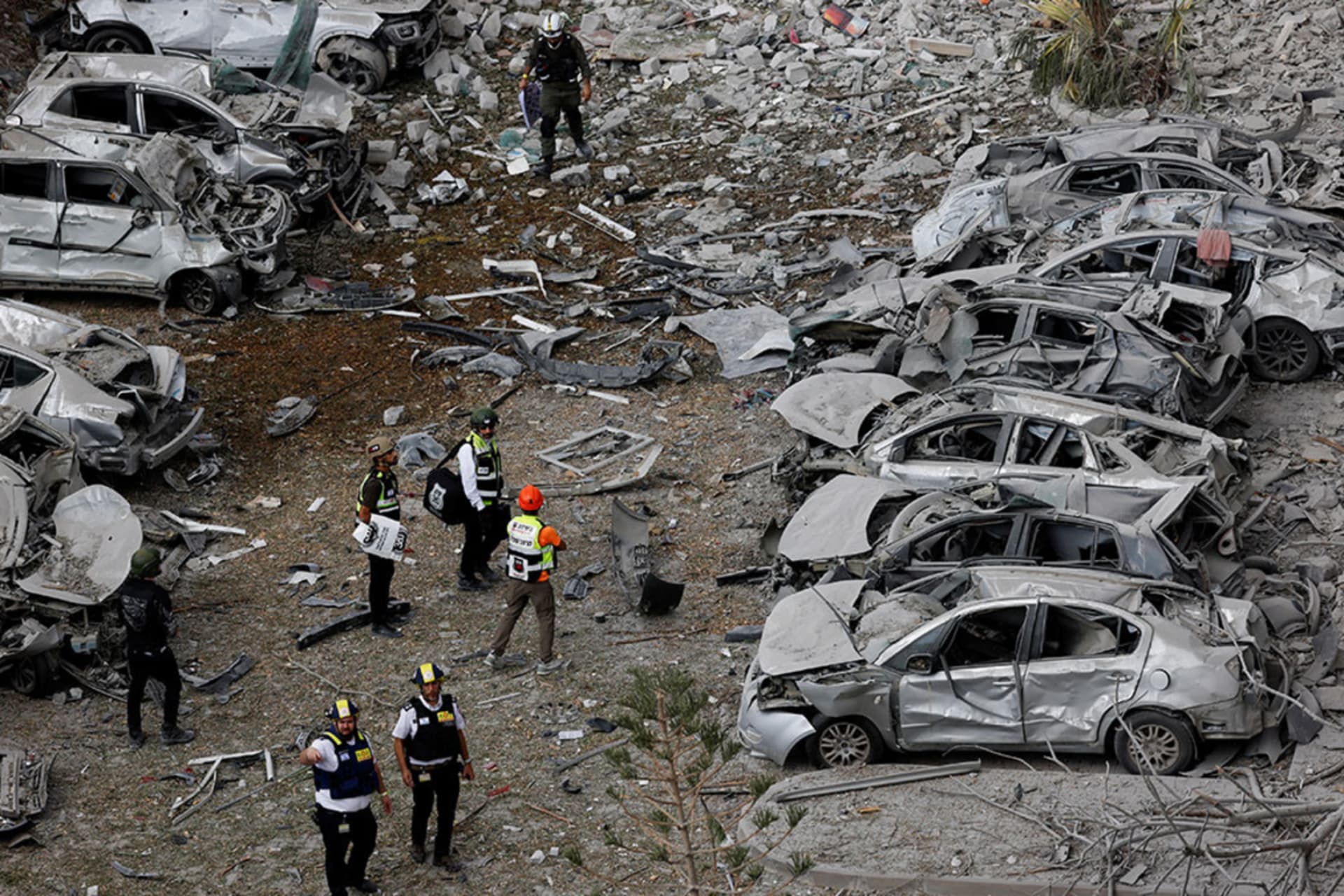
- Heavy attacks had preceded the truce announcement. Iran reported at least one death in an Israeli strike on a prison yesterday, while Israel reported four deaths after an Iranian strike on a residential building.
- Also yesterday, a drone attack hit an Iraqi military base that formerly housed U.S. troops. No casualties were reported and no group immediately claimed responsibility for the attack. The base had been the site of repeated attacks on U.S. troops by Iran-backed militias prior to U.S. withdrawal from the site.
Open questions. While world leaders and the UN nuclear chief welcomed the truce announcement, some also expressed caution. French President Emmanuel Macron warned “the situation remains volatile and unstable.” Iranian Foreign Minister Abbas Araghchi wrote yesterday on social media that Iran’s “final decision” on ending the conflict would come at a later date.
“[Iranian] Supreme Leader Ali Khamenei will seek revenge. The attacks in Qatar and Iraq are a reminder to the Americans that the regime still has resolve. It can still strike back, hoping to rehabilitate its battered red-lines. Mr. Khamenei seeks again to blend caution with aggression. Striking back strong enough to impress his sullen constituents and impetuous Americans, but not hard enough to provoke a massive U.S. retaliation. It is a tricky balance and a discombobulated Khamenei, who has become more aggressive with age, may not get it right.”
—CFR Senior Fellow Ray Takeyh and the Foundation for Defense of Democracies’ Reuel Marc Gerecht in the Wall Street Journal
Across the Globe
NATO summit kicks off. European NATO members are expected to showcase new plans to boost defense spending at the summit beginning today. Unnamed German officials told news outlets yesterday that Berlin will boost its core defense spending to 3.5 percent of GDP by 2029—six years ahead of a planned NATO deadline to do the same. The leaders of Australia, Japan, and South Korea, who have attended NATO summits in the past, will not participate this year.
Canada-EU defense pact. Canada moved toward joining an over $170 billion joint weapons procurement fund with the European Union (EU) in a new security pact signed yesterday. It follows a similar agreement signed by the EU and the United Kingdom last month. Canadian Prime Minister Mark Carney has said that in the past Canada was “too reliant on the United States.”
Mali-Russia energy deal. Russia committed to expanding trade cooperation with Mali after signing new agreements that include nuclear energy, the Kremlin said yesterday without giving further details. The pledges came as Mali junta leader Colonel Assimi Goita held talks with Russian President Vladimir Putin in Moscow. The new agreements bolster existing ties between Russia and Mali: after Mali expelled French and United Nations forces, Russian private military groups stepped in to support Goita’s government.
Portugal’s migration rules. Portugal plans to increase the amount of time that foreign nationals must reside in the country before becoming eligible for citizenship. For nationals of most countries, the requirement will double from five to ten years. The government sent a proposal for the measure to the legislature. A record roughly 15 percent of residents in Portugal were born outside the country, a figure that has almost tripled since 2019.
Cambodia-Thailand border tensions. Thailand has closed its border crossings into Cambodia to almost all travelers, following border clashes last month that left one soldier dead. While the violence has not continued, Cambodia suspended Thai fuel and gas imports. A leaked phone conversation about the dispute also prompted a Thai political party to exit the ruling coalition and seek a no-confidence vote against the prime minister and her cabinet.
Deportation ruling. In a 6–3 ruling Monday, the Supreme Court reversed a federal judge’s requirement that the Trump administration give migrants at least ten days’ notice to challenge their potential deportations to non-origin countries. The Supreme Court’s decision will allow the administration to continue its deportation policy while the challenge continues to be litigated in lower courts. The court did not offer a written explanation of its ruling.
Frontiers in space detection. A U.S. National Science Foundation and Department of Energy-funded telescope that holds the world’s largest digital camera released its first images yesterday. The Vera C. Rubin Observatory is located in Chile’s Atacama Desert. In a ten-hour period, it detected over two thousand new asteroids. None were on a collision course with Earth, the observatory said. Its researchers aim to detect any potential collisions and conduct research on topics including dark matter.
Ecuador prison break. The Ecuadorian government announced a $1 million reward for information on suspected drug boss Rolando Federico Gomez, a high-profile prisoner who escaped from prison Friday. President Daniel Noboa has made cracking down on organized crime one of his flagship policies and last year ratified a military cooperation agreement with the United States to counter drug trafficking.
What’s Next
- Today, the Asian Infrastructure Investment Bank begins a meeting in Beijing to pick its next president.
- Today, the United Nations Security Council holds a session on Libya.
- Tomorrow, the annual assembly of the Organization of American States begins in Antigua and Barbuda.