How I Got My Career in Foreign Policy: Linda Robinson
Linda Robinson’s career as a foreign correspondent and researcher has taken her through Latin America and the Middle East. She chatted with CFR about being an immersion journalist and the importance of women in democracy movements.
By experts and staff
- Published
- Editor
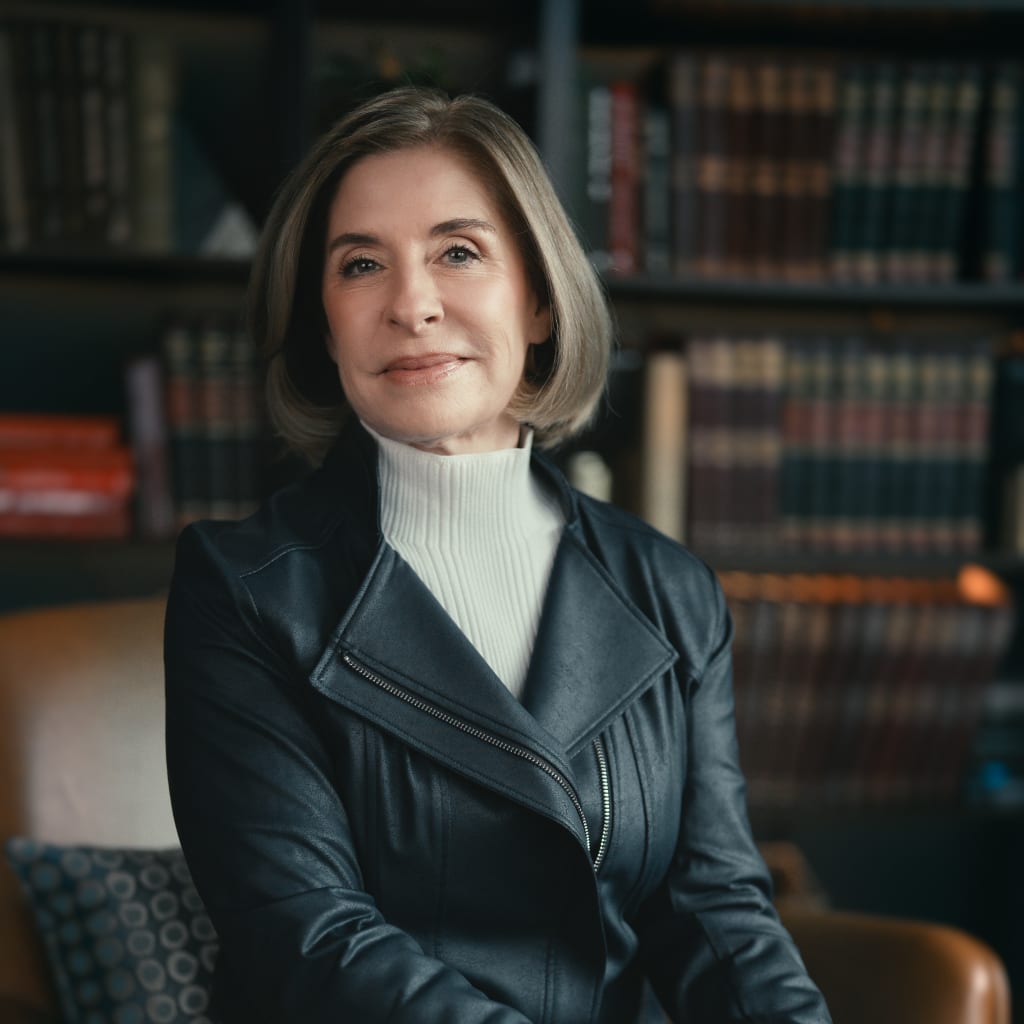 Linda RobinsonCFR ExpertSenior Fellow for Women and Foreign Policy
Linda Robinson’s life has been filled with adventures—from interviewing guerrillas in Colombia to embedding with U.S. special forces in Afghanistan. After starting her career at Foreign Affairs magazine, she became a foreign correspondent for U.S. News & World Report before serving as a senior policy researcher and director of the Center for Middle East Public Policy at the RAND Corporation. She is currently a senior fellow for women and foreign policy at the Council on Foreign Relations and is writing a book on women political leaders. Below, she discusses the importance of immersive experiences abroad and the benefits of being an “outsider-insider” when observing the military.
Here’s how Linda Robinson got her career in foreign policy.
What did you want to be when you were little?
I always wanted to be a writer, and I was always interested in international affairs, so I haven’t deviated really.
What sparked your interest in international affairs?
Well, we went to Germany when I was young. My father was a physicist and had a joint appointment at the Max Planck Institute and Göttingen University. The whole family went there, and I just loved—at five, six years old—the total immersion experience. Then at home, we had Rotary International exchange students come and stay with us. I did a program called the Dwight D. Eisenhower High School Student Ambassadors one summer in Europe. So I was always oriented toward international affairs. And my mother and teachers fed that interest in what was going on in the world. So it was just always there, and writing was always the way to communicate, in my view.
Oh, fascinating. So you started off your career as a foreign correspondent for U.S. News & World Report. What drew you to journalism?
Well, I’ll back up. I worked briefly here in Washington, DC, at the Wilson Quarterly, where I interned when I was in college, and so that was my first brief stint. But then I wanted to move to New York, and the editor at the Wilson Quarterly wrote to Foreign Affairs magazine. And lo and behold, I was hired at Foreign Affairs.
That was sort of my mentorship experience—the editor, Bill Hyland, at the magazine. Before he became the editor, he was the top Sovietologist at the CIA and Gerald Ford’s deputy national security advisor. I got not only an education from him, but he sponsored me for CFR term membership. He published two of my articles in Foreign Affairs in my twenties, and then I got involved in CFR’s study groups—one on South Africa’s transition from apartheid, one on Central America. I had been traveling in Central America and writing about the wars and the peace process. So my first book was a Council on Foreign Relations book, and this was all happening in my twenties. And then I was invited to apply for the U.S. News & World Report job of Latin American correspondent.
I got the job and I started ten days before our largest military operation since the Vietnam War, the invasion of Panama. So it was off with a bang, but I’d already been down there. I’d published an article in Foreign Affairs on it. So even though it wasn’t like covering a full-blown military operation, at least I knew more than most of the journalists that were around scrambling trying to figure out what the heck was going on.
Where were you based as a foreign correspondent?
The job for U.S. News was initially Miami-based, because it covered all of Latin America and the Caribbean. So I was on the move all the time, and it really was non-stop. Panama was the beginning of it, but we were coming out of the Central American wars. There were migrant crises of great impact in Haiti and in Cuba, the drug cartels in Mexico, and then [Mexico’s] transition to democracy. So the big story of the region, in my view, really were these historic transitions from dictatorship to democracy and these early democracy years for countries all over the region. I was just on the move.
It was an exciting and wonderful time. It was never a dull moment. I was really immersed in the Central American wars, but then Colombia took hold of me because we had been very focused on it as a drug story. I traveled all over the country, met with the guerrilla leaders, met with the presidents. Just like when I went to Cuba, I spent fifty hours with [Fidel] Castro over the years and traveled all over the country. Basically, I was an immersion journalist. I really got to know the places.
So that was the first decade, and then I took a fellowship—the Nieman Fellowship at Harvard—thinking I would come back to a broader foreign policy beat in Washington. But I got to Washington four days before 9/11. So then I pivoted to South Asia, then the Middle East. It really became twenty years, more or less, of the long wars.
How do you think your time as a foreign correspondent shaped your understanding of U.S. foreign policy that maybe you wouldn’t have gotten working stateside?
I believed early on that you could not understand, not only a country, but an issue, without going to talk to the people who were most affected by it. The other half of the story—you can sit and say policy is set in Washington, but if it’s about a given country or region, you have to hear from the people at all levels. So all of my work has been on-the-ground, empirical, journalistic, driven research.
Well, as you alluded, during this time you moved from journalism to RAND and its Center for Middle East Public Policy. What motivated the transition from journalism to think tanks?
I suppose there came a time when I knew enough from asking questions and doing the field research that I had answers as well. So that was why I started writing books. The books were integral because that was the beginning of that higher-level synthesis.
And then I realized that the questions that kept occurring were the questions I went to RAND to really help provide distilled knowledge—the lessons of the Iraq and Afghanistan wars. How do you conduct security force assistance? We’re spending all this time training and advising militaries. What works, what doesn’t? That’s really what RAND specializes in. And other questions at the higher level: How do you integrate defense, diplomacy, and development?
We have this particular form of warfare—we’d like it to be simple and just military-on-military, but it never is. It’s called irregular warfare, hybrid warfare, political warfare is the Cold War term. It was really military, political, economic, cyber, informational—all of this together are the elements of national power. So it’s really taking my on-the-ground experience of warfare and people and what drives countries to land in conflict, and trying to provide practitioner and policy-level advice, knowledge, and recommendations.
Fascinating. Well, as you mentioned, you’ve written three books on the U.S. military forces—Masters of Chaos, Tell Me How This Ends, and One Hundred Victories. Where did the fascination with the military come from?
I’ll go back to Latin America, because when I graduated from college, the Central American wars were happening. We’d been into Grenada, we wound up going into Panama—the whole Central America theater—and there were women journalists covering it in force. I think it’s the in extremis condition of humans to be at war. What’s making this happen, and how do you cover it and figure it out? So I guess that fascination was really there, it was happening.
Then of course after 9/11, it was happening on a whole other scale. We were in countries for years. We were trying to do things that—the hubris of that time is important to know—societies only change at the pace they change at, generationally. And I think we were trying to make things happen that were not possible, through whatever suite of tools we were using. I guess as a journalist, you confront what’s happening in the world and try to make sense of it. So I didn’t choose war—it chose us, right?
Yeah, that’s a good analogy. One of your other opportunities was that you became chair of the U.S. Army War College Board of Advisors. That’s a mouthful. How did that come about, as a civilian who’s not from the military?
Yes, and you’re right to emphasize—I had no military background of my own. I grew up in a Quaker college town. I went to a Quaker college. But through this experience, and especially the immersion experience with the Special Forces and the long stints I spent out in Iraq and Afghanistan with a variety of forces—there was a three-star Special Forces general who said, “Linda, you know us better than we know ourselves.” So they came to recognize me, and I never shied away from saying what I thought. There were some appalling things that I observed, and I said what I thought. So I guess I became kind of trusted—I’ve also been called a sort of outsider-insider. I had enough access that I came to understand military operations quite well at all levels.
So I was invited—it’s a government-appointed position, to be on these advisory boards. First the Army War College Board. The president’s office signs off on it. But I was on the Army War College Board and then became the chair, and I was also on the National Defense University Board.
You’re really looking at the educational inputs, because you’re training the next class of general officers, but also foreign military leaders, rising leaders, and civilians—because we have no such civilian schools. So State Department and [U.S. Agency for International Development] personnel attend as well. It’s a very interesting environment for them to do both academic work and think about these strategic questions. It was really something I enjoyed doing.
I also did some advisory work for a general in Kandahar for U.S. Central Command (CENTCOM), putting together a cultural expert team to understand the countries we were trying to operate in. So that was something I was comfortable doing, because I didn’t lose my autonomy. I had several opportunities to go into government, but the advisory role seemed to me to be the comfortable spot where I could continue to do objective research, analysis, and writing, but also provide my set of thoughts about what might be a better way to do things.
So you were a senior advisor for the State Department and for CENTCOM. You mentioned you were sort of autonomous, but was there anything about being in-house in the government world that surprised you?
The interesting thing about war coverage over those twenty years is that often generals like General [David H.] Petraeus—you’d be sitting in his morning meetings with all the assorted people with their banks of screens. Every outpost in Iraq or Afghanistan, you could see operations transmitted via video feed and things like that. There wasn’t really a way to let you in the door and not let you in the door. Now, for classified research, there’s a door and there’s a closed door and there’s a lock on it. But a lot of it is simply being present for the debates that they were having, hearing the warning reports, and wrestling with the myriad things.
I think it became unsurprising, because I became so familiar with the enduring challenges that they were wrestling with—which is really the unreliability of partner forces in many cases. Yet you have to understand, we’re dealing with a country like Afghanistan, where, frankly, in the rural areas where I was doing my book, the livestock were more valuable than the women, literally. So you just have to understand you are on Mars—you’re in a totally different environment. And the same things I encountered as a journalist, they were wrestling with as policymakers and military leaders.
Well, speaking of women, great transition. You spent all these years working on military and security issues, but you’re now at CFR, where you’re a senior fellow for women and foreign policy. What made you shift focus and how does your previous work still inform your current work?
This is the beauty of really being trained and living life as a journalist—you don’t feel like you have to plow the same subject matter for your entire career. In the Middle East, it was fascinating to see how women were seeking empowerment through economic advancement, because the political opportunities in many countries are very limited.
But it got to the point where I felt I had done what I could and said what I could about the conduct of war and the understanding of warfare. I think those lessons still have to be learned, because we’re now at a juncture where we’re trying to narrow it down again to just some kinetic operation, and that’s not war—ever.
But think about it: half of the population is women. And many people don’t know that we have stalled in women’s global political representation. We’re used to seeing that inch-like progress forward, but the data shows it’s stalled. It’s actually turning down in some respects. It’s not well announced, which is unfortunate.
So I noticed this position at CFR was unfilled and I was ready for a transition from RAND. I felt that this was something I wanted to devote myself to.
By the World Economic Forum’s Gender Gap Report, only 23 percent of the gap to [political representation] parity with men has been closed—a far bigger gap than in education, health, or economics, which are 60 percent to 90 percent closed. So why so slow with regard to political leadership? I decided I have to investigate why this has happened after decades of steady but slow progress.
I think that bringing my national security background into this helps me understand the irregular warfare aspect, because it’s the information environment. What digital space has done to women in politics is horrific. [Former U.S. Secretary of State] Madeleine Albright was one of the first at the high levels of government to recognize this, and she started a program calling attention to violence against women in politics. And this is a global, universal problem, because we’re all living with social media and you can’t conduct politics without it. Women are just disproportionately targeted through that medium. And now with [artificial intelligence], deepfake porn—every national woman politician has one made of her or more. Giorgia Meloni, the Italian prime minister—she’s been on the warpath about this because she’s targeted. It doesn’t matter if you’re conservative or liberal, they’re all getting it.
The other big factor besides technology is democracies in crisis. The vast majority of authoritarian rulers are male. That doesn’t mean there haven’t been women authoritarian leaders—Sheikh Hasina in Bangladesh, and many more—but this environment is really as harsh as it’s ever been since the 1970s. We’ve now had twenty years of declining democracy. As countries become less and less democratic, the space for women leaders closes.
So it’s the crisis of women and the crisis of democracy, and the fact that they are linked.
A slight pivot, but I’m curious if you have any advice for young people starting out in the foreign policy field?
As you might imagine, I am very much in favor, not only of academic study, but of people engaging firsthand in experiential learning opportunities. Whether it’s travel abroad, school abroad, finding ways to encounter other perspectives. I think it’s just imperative that we understand the experience of other countries.
It’s shocking to me that there is a sense that we don’t need to know what’s going on in the world or understand those perspectives. We’re so interconnected—we can ignore it, but it doesn’t mean it’s not affecting us. I worry a little bit that there may be less inclination in some quarters to do that hard work of understanding the other perspective.
Just to take one of the big issues out there: if you don’t travel in Asia, you don’t understand that those countries live in the shadow of China. They’re not looking to fight a war. They have to get along. They want the degree of independence they can gain. They’re looking to us to help, but they’re not going to be able to take on China alone. There’s a chapter in my forthcoming book on Taiwan and the first woman president there, Tsai Ing-wen, who is really quite extraordinary. We need to understand their perspective and not just issue edicts or cut them off, because, frankly, they are the perimeter. They’re the primary targets for China, and if we’re not bound in some kind of cooperative endeavor with them, it won’t be good for us and it won’t be good for them.
We always end on the same question. Over the years, I’m sure you’ve had fascinating work trips and meals. Is there a most memorable work trip or meal that you could share with us?
I spent a lot of time in Afghanistan, and meals would often be outside with a carpet or blanket at sunset. You would gather, and they would go away to do their prayers, and then they would come back, and I would often be the only woman in the group. But I remember one evening in Kandahar—as the sun was setting, we were in this courtyard that was really just a patch of land, but there was a ring of basil plants, like bushes, and the fragrance was so incredible. It was just a chance to appreciate the beauty of Afghanistan amid so much poverty and war and suffering.
But I’ll offer you a second one. I went to Colombia in the late 1990s to interview the guerrilla leadership. I made many trips to Colombia, but I went down at a time when there was a ceasefire, and I had to put myself in their hands to go and do the interview. So there was an agreed meeting spot, and they picked me up. I recognized the leadership, but I knew that I was putting myself in their hands. And they dropped me off at a campesino’s house to spend the night.
The campesino family brought out these corn arepas—they were black corn pancakes, full of cheese, and they’re delicious. I was just wondering what would happen the next day when they came to do the interview with me. At that point, they weren’t kidnapping journalists or holding them hostage. It was at a relatively quiet time.
But the problem was, the next day, after my interviews were over, they launched like a fifty-town offensive. So I had to get out of the area with this taxi driver while bombers were flying overhead. What I thought was an optimal moment to get down there and do the interview turned out to be probably as dangerous a moment as anything I ever had in Iraq or Afghanistan or Syria.
This interview has been edited for length and clarity. It represents the views and opinions solely of the interviewee. The Council on Foreign Relations is an independent, nonpartisan membership organization, think tank, and publisher, and takes no institutional positions on matters of policy.