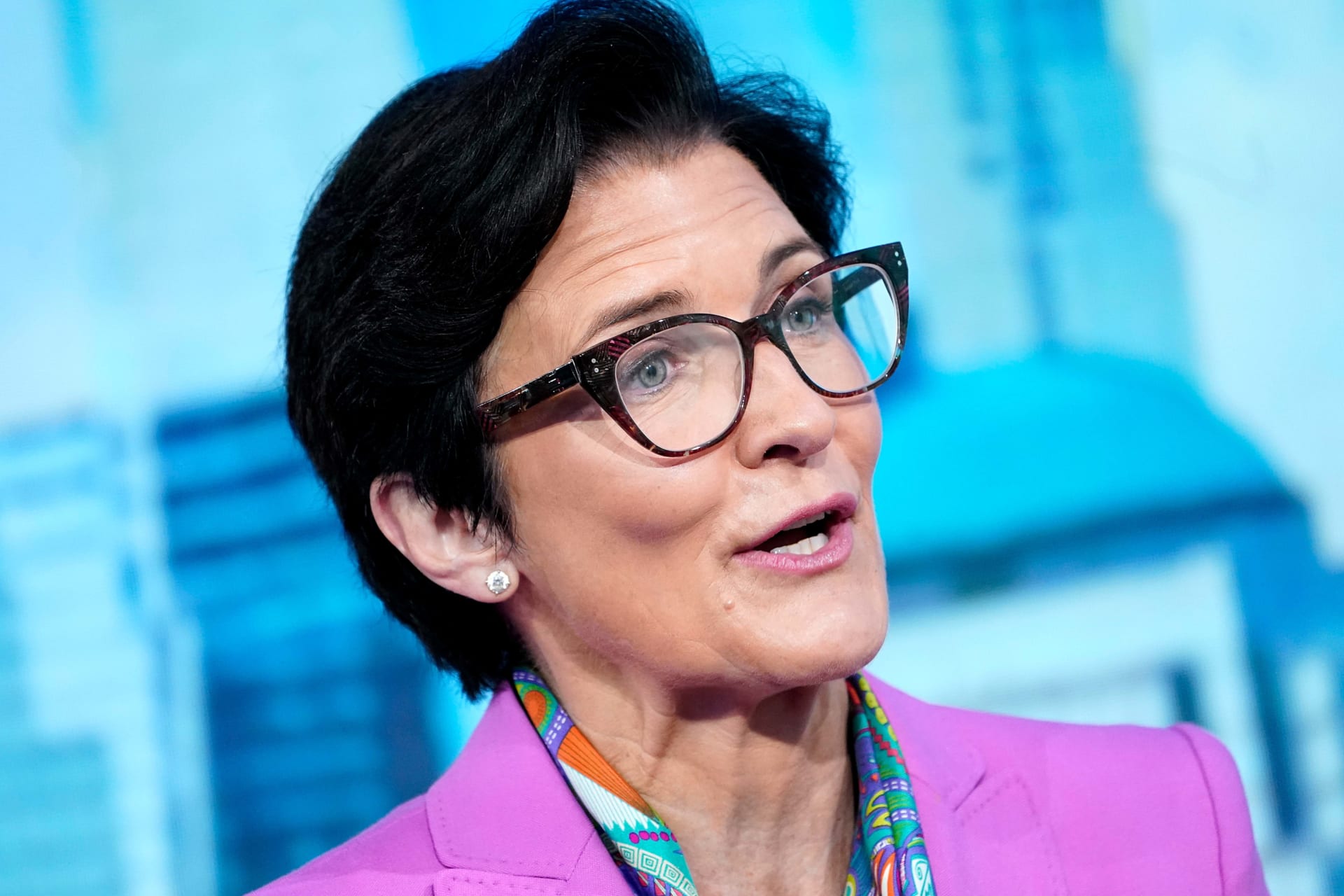
Jane Fraser
Chair of the Board and Chief Executive Officer, Citi

Jane Fraser, DBE, is the Chair of the Board and Chief Executive Officer of Citi, the world’s most global bank, which serves clients in more than 180 countries and jurisdictions.
Since becoming CEO in March 2021, Jane has launched a multi-year strategy to transform, simplify and modernize the bank for the digital age. Jane is committed to making Citi the preeminent banking partner for institutions with cross-border needs, a global leader in wealth management and a valued personal bank in its home market of the U.S. She was named Chair of the Board in October 2025.
During her over 20-year career at Citi, Jane has held leadership roles across Citi’s consumer and institutional businesses. Before becoming CEO, she was President of Citi and CEO of the Global Consumer Bank. She also served as Global Head of Strategy and M&A, CEO of Citi’s Private Bank and CEO of Citigroup Latin America. Before joining Citi in 2004, Jane was a Partner at McKinsey & Company.
Jane is Chair of the Financial Services Forum and Co-Chair of the U.S.–Saudi Business Council. She serves on the Board of Directors of the Business Roundtable, the Council on Foreign Relations and the Partnership for New York City. She is also a member of the Group of Thirty, Monetary Authority of Singapore’s International Advisory Panel, Harvard Business School’s Board of Dean’s Advisors, the Stanford Global Advisory Board and the Economic Club of New York. Jane was awarded a damehood by King Charles III for her services to the financial sector. She has an M.B.A. from Harvard Business School and an M.A. in economics from Cambridge University. She is married with two children.