Fair Elections Are in the U.S. Interest
Under Trump and Rubio, the U.S. State Department will no longer comment on the integrity of elections. This will prove to be a mistake.
By experts and staff
- Published
 Michelle GavinCFR ExpertRalph Bunche Senior Fellow for Africa Policy Studies
News that Secretary of State Marco Rubio has directed U.S. diplomats to refrain from commenting on the integrity of elections abroad sheds a bit more light on the Trump administration’s understanding of what it means to act in America’s interests. Coming just ahead of important elections in Côte d’Ivoire, Cameroon, Malawi, and Tanzania this year, as well as in Zambia and Uganda next year, this new approach will immediately change the character of U.S. engagement in Africa. While many Africans will welcome the end of American lectures about democratic practices that rarely lead to any kind of change, the United States will not be well-served by this decision.
Secretary Rubio has stated that he wants to do away with any diplomatic practices that do not make America safer, stronger, or more prosperous. The administration has emphasized its intention to focus on commercial diplomacy, and to prioritize deal-making rather than development assistance or, apparently, democracy. But no senior official can wish away the reality that governance in far-off places continues to matter to the United States, both in terms of security and economic opportunity.
Governments that are unaccountable to their citizens tend to focus only on regime security, devoting little in the way of attention or resources to burgeoning violent extremism that doesn’t threaten the capital. That’s why juntas in the Sahel are making so little progress in fighting the terrorist organizations they claim are their main focus, and why some are so comfortable with Russian mercenaries abusing the civilians they say they want to protect. Americans are not safer when terrorist organizations are gaining territory and resources, or when geopolitical competitors are gaining new footholds. Additionally, leaders willing to bend the electoral rules to stay in power are willing to bend other laws too, poisoning the business climate and creating hazardous uncertainty for investors. It’s hard to see that as a recipe for American prosperity.
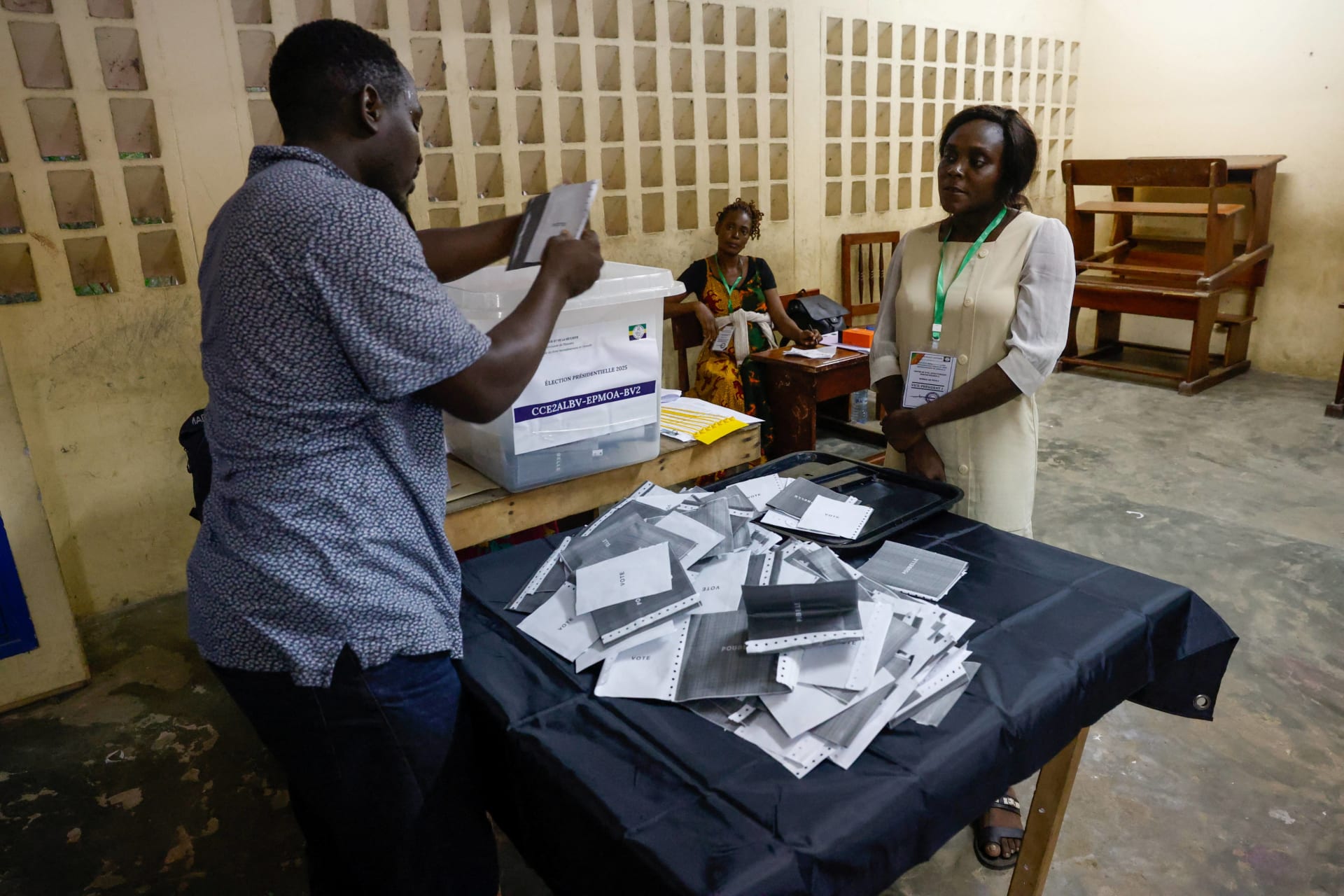
But perhaps more importantly for U.S.-Africa relations going forward, Africans themselves believe that governance matters. Evidence suggests that frustration with sham elections, constitutional manipulation, and outright electoral fraud are fueling powerful grievances that will animate political developments for years into the future. They are infuriated by corruption and frustrated by ineffectual mechanisms for holding elites accountable. The problem with U.S. policy has not been a willingness to speak honestly about flawed elections (although Washington has not always been consistent about doing so). The problem is that sham elections were often extremely predictable, and those statements have often been toothless, giving the impression that the United States only wants to be seen to care. We need a new playbook—one that doesn’t just emerge at election time. But we do not need silence.
Those who doubt that discreetly looking the other way as political elites lie, cheat, and steal to retain power might have costs should consider the fortunes of France in Africa over the past few years. Its forces have been expelled from multiple countries, and its businesses have become frequent targets for popular rage. It has lost both influence and access. It’s not just the legacy of colonialism that has caused so many problems for Paris; it’s the more recent history of doing deals with unsavory leaders who serve themselves and not their populations. Those practices have given an impression of disdain for African citizens, their aspirations, and their demands—and thus have made giving France and French businesses the cold shoulder a political imperative. It’s not an example the United States should hurry to follow.
Hunger for deals may keep American officials pretending that very naked emperors are wearing fine suits. But African populations are demanding political change, and competing for influence in Africa will require taking citizens seriously, not looking the other way when their voices and votes are ignored. In the end, it’s not just corrupt elites—it’s also the U.S.—that will be left exposed.