Summer Reading: Ikenberry’s Liberal Leviathan
By experts and staff
- Published
- Stewart M. PatrickJames H. Binger Senior Fellow in Global Governance and Director of the International Institutions and Global Governance Program
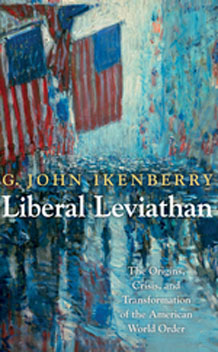
Given the pervasive hand-wringing about U.S. decline, it’s refreshing to read that the West’s best days may lie ahead.
You can find that argument in John Ikenberry’s Liberal Leviathan: The Origins, Crisis, and Transformation of the American World Order. It picks up where Ikenberry’s last “big” book left off (After Victory: Institutions, Strategic Restraint, and the Rebuilding of Order After Major Wars), which argued that hegemonic powers were most successful when they exercised restraint towards lesser powers, rather than throwing their weight around. By sacrificing policy autonomy, providing public goods within multilateral institutions, and offering “voice opportunities” to junior partners, a hegemon could transform its “might” into “right”—turn power into legitimate authority.
Ikenberry insisted this would help “lock in” broad support for the hegemon’s leadership and that rising powers would therefore be less likely to challenge the global order. For example, Franklin D. Roosevelt and Harry Truman transformed the United States into a “Liberal Leviathan” in the 1940s by establishing multilateral institutions and patterns of strategic restraint. (A topic on which I have also written.) As a benevolent hegemon, it enjoyed widespread authority and loyalty so that countries didn’t try to ally against it, which carried the West to triumph in the Cold War.
It’s a safe bet that neither George W. Bush nor Dick Cheney read After Victory. Even before 9/11, the Bush administration disdained international institutions, multilateral diplomacy, and international legitimacy. The “global war on terrorism” accentuated these instincts, producing a unilateral and coercive turn in U.S. foreign policy that culminated in the decision to invade Iraq. Ikenberry writes in Liberal Leviathan that the Bush administration “offered the world…a system in which America rules the world but does not abide by the rules.”
Thanks to the Bush revolution in U.S. foreign policy, Ikenberry claims, the liberal international order now confronts a “crisis of authority,” with the world’s major countries increasingly butting heads “over the distribution of roles, rights, and authority.” Widespread skepticism about U.S. leadership, along with the emergence of new powers, globalization, and the rise of non-traditional threats, have all made it harder to manage world order.
But here, Ikenberry parts company with prophets of U.S. decline. There is simply no credible alternative to an open, rule-based international order, he contends. The twenty-first century requires more liberal order, not less. The current order simply needs to be reformed. The contemporary crisis is only an argument about the allocation of responsibilities and power within liberal institutions, but they aren’t going to be thrown out. Ikenberry identifies four important aspects of the current system that will preserve it. First, liberal democracies still hold the majority of power around the world, and have a vested interest in liberal order. Second, the liberal order itself is both “easy to join and hard to overturn.” Its “sprawling landscape of rules, institutions, and networks” is more than capable of accommodating rising powers. Third, rising powers are unlikely to align into a cohesive bloc, given their distinct histories, identities, and interests. Finally, he argues, all of today’s great powers, whether rising or established, have a status quo outlook.
Ultimately, Ikenberry suggests that the fate of liberal order is in American hands. Will the United States be willing to re-commit itself to an open, rules-based order, and share leadership with other centers of power? “If America is smart and plays its foreign policy ‘cards’ right, twenty years from now, it can still be at the center of a one-world system.”
This is an optimistic vision. But is it warranted? In fact, Ikenberry’s argument rests on several debatable propositions.
In the end, I’m inclined to agree with Ikenberry’s suggestion that the United States will need to share leadership, but I sense that rules will need to be re-negotiated more than he predicts. The result may well be an international order that is much shallower—in terms of commitment to common norms—than the solidarity that linked the United States and its transatlantic allies during the Cold War.