A Conversation With Reza Pahlavi
Event date
Speaker
- Advocate, Secular Democratic Iran
Presider
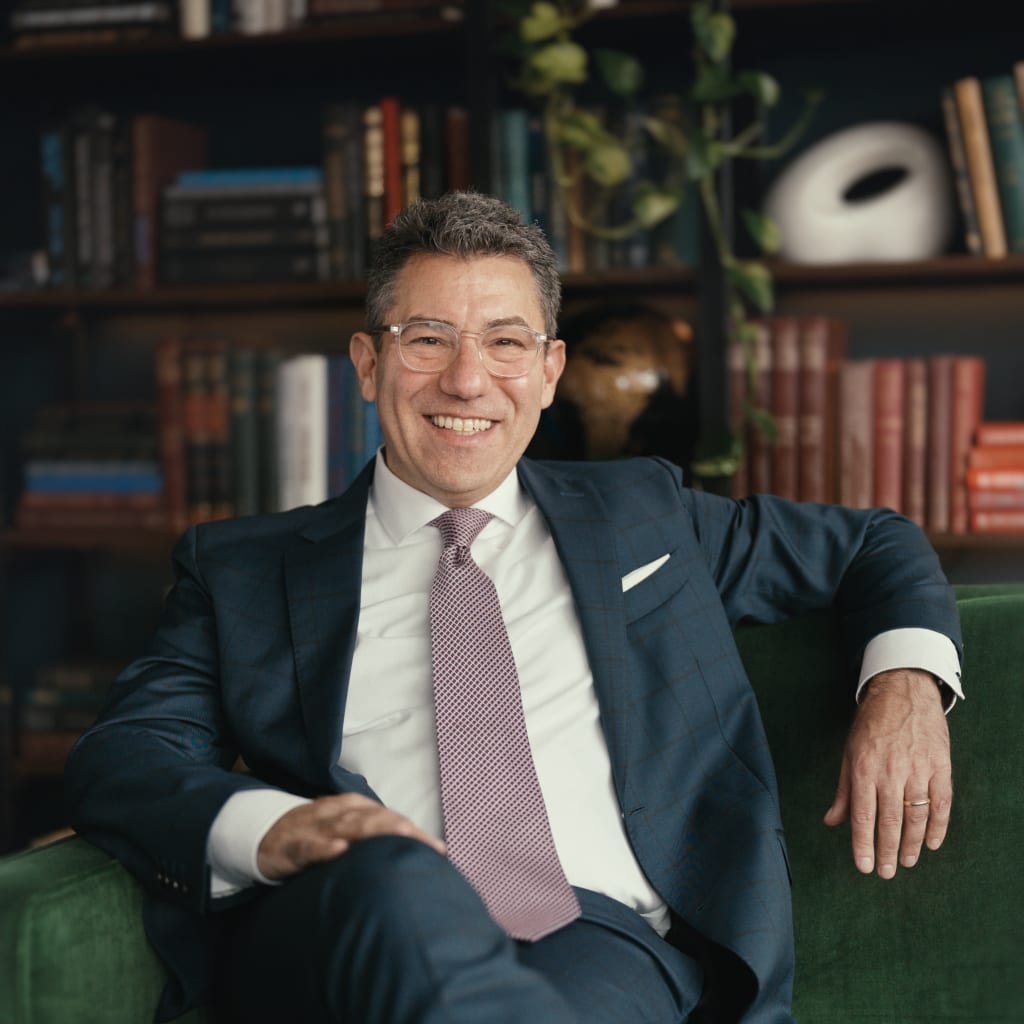 Steven A. CookCFR ExpertEni Enrico Mattei Senior Fellow for Middle East and Africa Studies, Council on Foreign Relations
From Middle East Program.
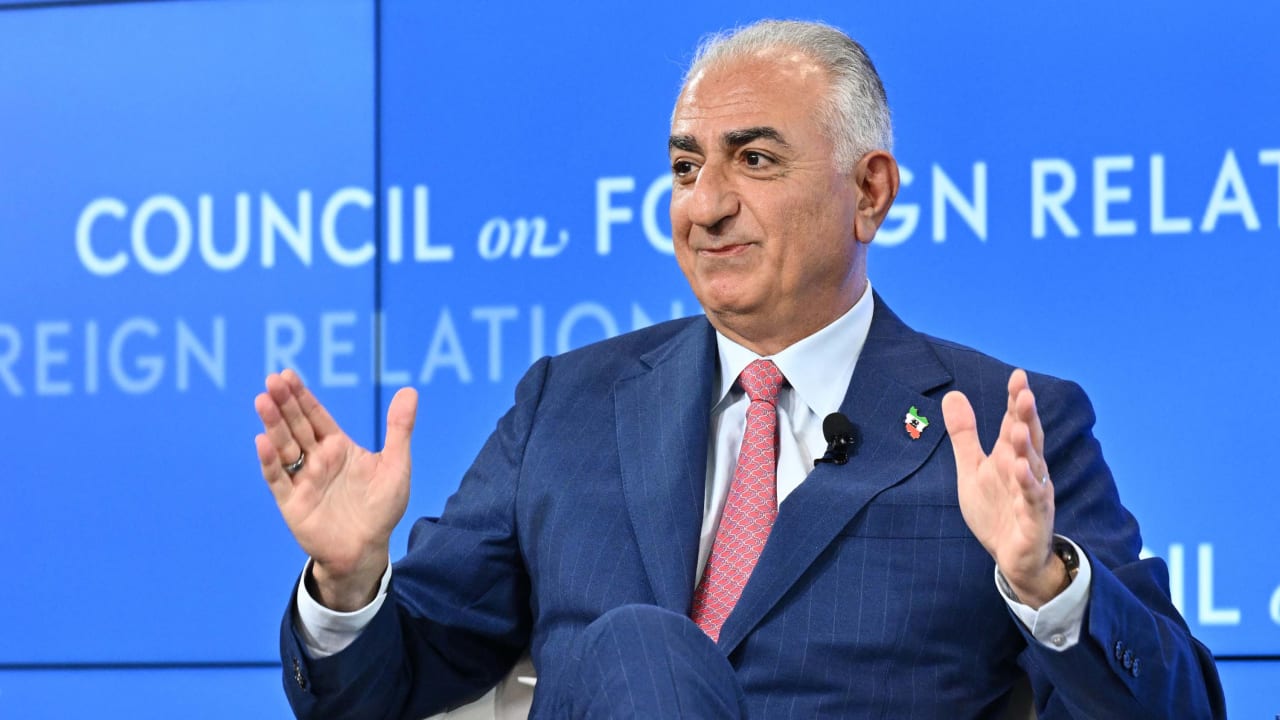
Exiled Crown Prince of Iran Reza Pahlavi discusses his perspective on the durability of the Islamic Republic regime, his framework for democratic transition, and the role of the international community in shaping Iran’s future.
COOK: Well, good afternoon, everyone. It’s a pleasure to see you all here on a lovely Friday in Washington, finally. It gives me great pleasure to welcome to the Council on Foreign Relations Reza Pahlavi.
This meeting is on the record. So the usual Council rules actually don’t apply. Reza Pahlavi and I will engage in a conversation between the two of us for about a half an hour, and then we’ll open it up to Q&A.
And I just want to say that when I was a sixth grader writing an essay about the Iranian hostage crisis, I never imagined I would be sitting here with a fellow resident of Potomac, Maryland, talking about—talking about Iranian politics. Welcome to the Council, once again.
PAHLAVI: Thank you.
COOK: Let’s start out. In the late 1970s Iranians rose up and overthrew the regime that your father led. Why would they now choose to restore the monarchy? And what is your vision for Iran?
PAHLAVI: OK. Hello, everyone. I’m very happy to be here in this prestigious gathering. I know the Council on Foreign Relations and their work over the years. I think I’ve had two or three occasions prior to participate in some meetings in the early ’80s, and then later on. So I’m glad to be one more time amidst this group.
Look, I don’t think this is about restoration or about a particular outcome. It’s about democracy and self-determination. And I think whatever Iranians thought back then, if you listen to what the Gen Z of Iran says today about that generation is, what the hell were you thinking? And you put us in this mess. So how are we going to liberate ourselves now from what has been the net result? So I think today, the viewpoint and the vision of Iranians—who, by the way, have become more than ever aspiring to something that is, in fact, a very unifying theme, which is a sense of national identity against a regime that, from the very beginning, tried to crush every aspect of Iranian culture, history, from celebrating Nowruz all the way to other things.
In other words, an Iranian renaissance against the most anti-Iranian regime we’ve ever seen, not to mention the fact that it’s been extremely repressive. And I don’t think there’s anybody in this room which would deny the fact that perhaps this is the most sinister regime we have encountered in modern history, that encompasses the worst of all the evil regimes we have witnessed. Totalitarian in one way, like the Soviet Union was. Fascist in a way, like the Third Reich and the Hitler regime was. Racist in the sense that the Apartheid regime in South Africa was. And yet, it’s still sitting there imprisoning the Iranian people on the one hand, and threatening the stability of the world—including being a threat to this country’s interest and national security.
So, long story, what is the perspective in Iran now? And why am I here? And what it is my role? My role is not to run for office. I’m not. My role, however, is to maximize the chance for my fellow compatriots to be able to liberate themselves and decide, ultimately via the ballot box, and ultimately via referendum, what it is that they ultimately would like to have as a secular democratic government to replace this religious dictatorship. This is all our campaign. And this has been our struggle all these years. And we hope to be able to know that in this campaign we’re not alone, and we would have the support and the solidarity of democracies that are of the same viewpoints and values that we cherish, unlike a regime that stands totally against them. And that’s what the fight is all about—values of liberty, equality, human rights, versus a regime that has—you know, has trampled on it from the very beginning. And that’s the cause that we are all fighting today.
COOK: Let me follow up on that for a second, because I think you made a little bit of news in that—in that statement. If the Iranian regime were to fall, however it does, you would not necessarily put yourself forward to lead the new regime? As a democracy, you would be among candidates, or you wouldn’t be a candidate at all?
PAHLAVI: Again, it’s not being a candidate for the job of ruling. I’ve offered the role of leading this campaign of transition. Why? Because this is the ask of the majority of my fellow compatriots who have a trust in me to be able to play that role for them. So my job is to unify as much as possible the democratic opposition. My job is to bring as much support as possible to the people themselves. My job is also to mobilize as much as possible the diaspora. And this is based on a five-point plan that I have initiated, at least in the last couple of years. Which includes maximum pressure on the regime, which is something that the world is doing. Snapback is being reimplemented. That’s one aspect of what external pressure could be.
Maximum support to the people, meaning that parallel to the campaign of maximum pressure there has to be an element of maximum support, assuming we want to go beyond appeasement and this time seriously consider that an end of this regime is ultimately the solution, but it’s done at the hand of the Iranian people not by means of foreign intervention or anything like that. So you need to be able to actually have an element of more direct support to the people. Be able to also, as a consequence, encourage maximum defections from regime elements to the people, to minimize the cost of change to the Iranian people and have a better chance of a smoother transition post-regime collapse than any other scenarios. And ultimately, in parallel to all of this, a plan of Iran prosperity and reconstruction, which is an IPP project that I’ve also launched about two years ago.
So the combination of all of these is part of the components of what we have done over the last at least two years. And I guess the question that everybody might have is, OK, we’ve seen several uprisings in Iran, at least in the last five years, the last one being the Mahsa Amini murder that triggered the Woman Life Freedom Movement. And why is it that until now we haven’t really seen the ultimate uprising of people? And the simple answer is, well, this is an extremely repressive regime. And instead of restricting the regime in its abilities, it has, in fact been emboldened by means of the wrong policies or approach, especially in the Western world—again, appeasement, again, the release of funds that they should not have had access to, that did not serve in the sense of helping the starving in Iran, but fortifying the proxies, arming them, equipping them. I would say that October 7 was not a coincidence.
But all of this ties into what we can do to equal the playing field for the Iranian people so this time they have an actual chance should they commit to an ultimate campaign of uprising, not to be crushed yet again by a very repressive regime. And this is why we need to be able to work with the free world, those countries that understand the dynamics of change via civil disobedience and domestic uprising, as opposed to by means of war or foreign intervention or occupation. Because that’s not the direction we want to go at all. And that’s why I say the change of regime in Iran is a very different scenario that what we’ve experienced in recent years, since 9/11, what happened in Afghanistan, or Iraq, or anything else.
COOK: How do—you’ve invoked the Iranian people—and the Iranian diaspora. I want to get to that in a minute—but you’ve invoked the Iranian people any number of times. How do you, as a leader of this movement—and put yourself forward to lead a transition if not the country—how do you gage the strength of the opposition to Iran? Especially after the so-called twelve-day war? It’s hard for me to call it a twelve-day war. It just seems weird. But after that there’s been this wave of repression in Iran. So how do you know, sitting here, how strong the opposition is? And how do you know that they can be successful? I guess what I’m asking is, if you think it’s strong, how do you think this is going to actually happen?
PAHLAVI: Well, information certainly gets to us. I mean, there are ways of circumventing the regime’s attempt to curtail the ability of people to communicate. Social media has a big role to play in this, but also other channels that are more safe for certain elements that will be in a position of giving us critical intel on what’s happening on the ground inside Iran, both on the domestic side—I mean, the civilian side, as well as the military and paramilitary forces. As a matter of fact, when I announced in a press conference in Paris—I don’t exactly know how many months ago it was, but it was within this calendar year—that’s where I announced a campaign where we will announce a QR code that people from inside who wish to cooperate or to defect from the regime can connect with us and share with us their information. And in the first few weeks, we had over 60,000 people who applied. I don’t know what the number is now. It’s probably greater than that.
Information, of course, then needs to be vetted and analyzed to make sure that these are actually legitimate people, that we are not being infiltrated or penetrated by double agents. But that’s very telling, because these are people who would be in the military, in the paramilitary, in the civilian bureaucracy. And the reason it’s important is because the whole point of my strategy in this campaign of putting an end to this regime cannot not have a factor of—a maximum inclusion of elements that can survive regime change. And my default position has been, anyone whose hand is not soiled with the blood of the Iranian people should have a possibility of seeing a place for themselves post-regime collapse. We don’t want de-Baathification. We don’t want that mess.
And of course, the Iranian people have the right to seek justice. And they will have their day in court. And those responsible will have to account for their crime. But majority of these people who are not part of this top echelon of the regime that benefits from these arrangements—it’s a mafia that’s just sucking the blood out of the Iran, and its resources. Once they’re out, those are the people who stand to face the music. Would they rather stand with the sinking ship or do they think that this is the moment now to join with the resistance and the movement of liberation? And we are providing them an option so they are not in no-man’s land.
That also depends on how the world responds to this phenomenon, because you cannot, on the one hand, ask people to defect and for people to rise if the world is still trying to negotiate yet another deal with this regime, or push back or postpone this opportunity. And this window is open right in front of us right now. But it won’t last forever. So we have to start calculating whether there needs to be a policy reset from a four decades long collective policy of the Western world, America and its European allies included, that has been mostly containment and appeasement, or we need to move to the next level now. Because I think this regime has been given far more chances to come clean, and they haven’t. And how long do we want to kick the can down the road and say, not under my watch? This is really what we’re facing right now.
COOK: I’m kind of digging the way history is rhyming here. We’ve gone from cassette tapes in the ’70s to QR codes in the first quarter of the twenty-first century. I was going to ask you about the Iranian diaspora, but you mentioned something a couple of times about Western appeasement. So it’s fair to say that, you know, you are opposed to a new nuclear agreement, should one materialize or should there be negotiations for a new nuclear agreement?
PAHLAVI: Well, first, I don’t see one coming. And I think we are past that point because the regime right now is so brittle and so vulnerable that, as a last resort, I don’t think they will cave in. In fact, they might double-down. And they have done that in the past. What leads us to believe that this time they say, mea culpa, now we’re going to be good guys? They had ample opportunities to do that. They were offered far better deals than the last offer they had received. We can rewind the tape all the way back to the days of Khatami, and they still didn’t take it. But the question should be, why didn’t take it? It’s because the DNA and nature of this regime is such that they cannot coexist in the same sphere of rationality of the world as we know it. Their entire existence depends on exporting this ideology. That was the entire purpose from day one.
Khomeini, who then was championed as the person who would liberate Iran by those who led that campaign against the previous regime, could not have imagined what the consequences would be. But if you only had listened to a simple answer that he gave in an interview to journalists as he was flying back in that 747 Air France Boeing to Tehran. And he was asked, after fifteen years in exile, what is your feeling returning to Iran? You know what he answered? Nothing. That set the tone of what Khomeini or this Islamic revolution was all about.
It was not even about Islam, because if you ask Iranian clerics today who are not part of the regime, never in our history has that particular faith been so damaged and people turning out from the faith. Right now in Iran, the largest, fastest-growing religion is Christianity. We have over 1,500 underground churches in Iran. You all remember, talking about your article, that back then the first exodus of Iranians that were forced to exile were people who were immediately persecuted by the regime because they were Jewish, or they were Baháʼís, or what have you. And yet, they came to this country. Many of them run this country. But they’re dreaming of an opportunity to be able to help Iran again.
And how good that would be for Iranians, and how good it would be for this country. What stands between that future is this regime that continues to take hostages, that continues to fund whenever they can elements to bring more instability in the region. Bottom line, they are the ultimate problem. The Iranian people know that. Many people in the world are beginning to recognize that. The question is, is there the political will to do something about it? And that’s the part that, I’m afraid to say, I have seen so far missing. I’m not saying it’s going to remain like this all the time, but there needs to be a clearer process of making decisions.
And I always remember two eras in history that marked and defined the world as we know it. One was during the Second World War when you had Roosevelt and you had Churchill. And that combination ultimately put an end to the Third Reich. The second time around was Ronald Reagan and Margaret Thatcher. They were able to bring an end to the Soviet Union. And of course, Gorbachev had a role to play in that, agreed. Today, the question is, we are faced with a situation where this very same Iranian regime that the British government tried to appease is stealing drone technology by sending students in British universities to transfer it back to Iran to serve the Russians in their campaign against the Ukraine, just on that front.
What will be the prospect of a world where the whole region might be yet again dominated by another kind of superpower, that does it in a different way? And I’m talking about China, obviously. Or, for that matter, what happens right now in the symbiosis between the Iranian regime and Moscow when it comes to the Ukraine conflict? All of that being a situation where no Western leader has yet to identify the problem and the head of the state. So we are trying to appease the biggest culprit that is the reason for all of this instability. And I don’t understand, at the end of the day, what’s the rationale behind that formulation of foreign policy.
I asked David Cameron when I was in London two months ago, why is it that you’re not subscribing the IRGC as a terrorist organization? And his answer was, well, our basic thinking, in the Foreign Office, is we don’t want to lose our channel of diplomacy, which is our embassy in Tehran. Really? Didn’t you use Switzerland as an interim, or the Qataris for another reason? Do you really are telling me that you’re afraid of subscribing the IRGC just because you don’t want to lose a diplomatic channel with the Tehran regime? Come on. But that’s one of the problems, among others. Anyway, I don’t want to go to long.
COOK: I started out the question about nuclear negotiations. Would a post-Islamic Republic pursue nuclear technology? Recognizing that much of the infrastructure is not workable at the moment, but there is—there are still Iranian nuclear scientists. There is know-how. There are—I’m sure there are sites that the United States and Israel did not find. Would it pursue—
PAHLAVI: You know, from the very beginning it just didn’t make any sense for me to consider Iran as a country that would be in a situation to actually have nuclear reactors, for a number of reasons.
COOK: But didn’t your father start the program?
PAHLAVI: Well, I will explain. But let me—OK, we will go back. Yes, in the ’60s, when we were starting to look at other sources to provide electricity and not use fuel only as a source for generation of electricity, you know, thinking more of the byproducts in petrochemicals and what have you, at the time we started looking at different options. There were gas turbines who were not efficient enough at the time, and rather expensive. Solar energy, which was really in its infancy. Nothing to do what it could be today. And of course, nuclear. And we came to nuclear because ultimately it was more cost effective, which is why Iran signed the NPT. We had shares in Framatome, which was, I think, the entity that would have provided the nuclear rods for the two first reactors that were supposed to come online in Bushehr in 1982. And of course, in the middle of all this, the revolution happened. That was a calculation back then.
But when I look at Iran, on a seismic plain, very little water and access to water in low-population area, it just doesn’t lend itself to it. And I think today there are so many technologies in renewable energy, solar being one of them, that Iran is a perfect candidate for, that we can certainly bypass that nuclear aspect in 2025, as opposed to 1971 or ’72. Anyway, that’s my personal viewpoint. I leave it to the experts to assess that. I’m just sorry to see that billions and billions of dollars have been wasted on this program that has yet to generate, in any practical way, electricity. But something that is even worse is that, as far as the nuclear ambition program of this regime, it has cost our country over a trillion dollars’ worth of loss or damage.
So the whole narrative is shifting towards, let’s be sane in mind. Let’s be concerned about environmental issues. And I’ve been spending a lot of time with Iranian entrepreneurs and American entrepreneurs, many of them in the fields of how can we best tackle this thing, and Iran’s energy needs, and requirement? And more often than not, the nuclear issue doesn’t even pop up, number one. Number two, I think that as far as the possibilities of having more impact in terms of Iran’s economy, I think these other industries will provide much more immediate jobs for the country than any nuclear program would. But again, this is my personal opinion.
So the future of Iran has to be on par with making sure that we are using the safest technologies, the ones that are most beneficial, and steer away from anything that could be subject to a question. And we will operate in full transparency, as we did before, unlike the regime that has never been transparent on the subject. And if you ask Grossi and the IAEA what’s their take on the Iranian ambitions, they still won’t be able to give you a clear answer. Reason more, when you ask me about the nuclear negotiations, that’s one of the issues. Can you actually trust them and what they tell you or what they commit to?
COOK: Let’s go back to domestic politics in Iran. Your critics—my apologies—your critics, not me, they contend that, one, the Iranian opposition is terribly divided and that the diaspora community is terribly divided. And that you’ve been unable to unite the diaspora community. So they question whether you’d be able to unite Iranians around a transition after the collapse of the Islamic Republic. How do you answer that question? What is the state of your movement? And how do you plan to unite Iranians, who have very, very different views about a post-Islamic Republic Iran?
PAHLAVI: Well, for anybody who is interested in the facts rather than the narratives, I will point them to the facts. And the best fact that I can point them to, when it comes to your question, is last month when I was in Germany we had the Munich conference, which was a conference that was the vastest and more diverse ever within the Iranian opposition in forty-six years. Including people from different walks of life, ideologies. Former Marxists and leftists were there. Republicans were there. Representatives of Iranian ethnic groups were there. A representative of the latest wave of Iranian victims to the regime’s repression during the Mahsa revolution, kids that were shot in the eye, their grieving mothers, they were all there. And it’s on record for everybody to see. And the video is out there. You can go and study that.
Yesterday, a new website was launched, which is the Iran Rising website. It was launched about 9:00 a.m. yesterday. As of 10:30 this morning I asked one of my assistants, what was the response? We had over one and a half million views already in twenty-four hours. And people from inside Iran are putting their names out there to join this campaign and participate. If that’s not an indication of unity and solidarity, I don’t know what else I can put on the table as a proof to you people. So if you go and check that out, these are the facts. These are the measurables. And it’s on that basis that I would say Iranians are becoming far more united. The opposition is getting more and more organized in working together on a common agenda. And the response from inside has been, of course, the strongest ever.
And the interesting thing is that I announced this platform on the day of a national celebration of one of our cultural days, which is Mehregan. Mehregan, which is the celebration of light. And we have never had this particular celebration as vivid as others, like Nowruz, for instance, or Yalda, which are other national celebrated cultural holidays. And for the first time in forty-six years, Mehregan was at the widest possible scale celebrated in Iran. And that was also part of my call, let’s do it on this day. I think that shows the connect. That shows the way people conglomerate, and how they respond to me and my appeal to them, and these are all the measurables.
Now, of course, some people hate my guts and don’t like my face. I can’t do anything about that. But I think that if you were to take an opinion poll in Iran, and in fact there’s a lot of data about that, surely a lot of people know that I’m, among anybody else, the most popular and the most trusted element, which is why they would like to respond to me to be able to lead this movement for them,
COOK: Part of your narrative is that the Islamic Republic will come to an end. Now forever is a long time, but it has demonstrated resilience that I think people did not expect. It’s been under sanction for a very, very long time. This past summer, it took twelve days of pounding by the Israelis and then the United States. And the targets that the Israelis hit were not just nuclear infrastructure, ballistic missile production. But, as we discussed, instruments of the regime’s repression. Yet the regime remains—seems to be stable and durable. Why should we expect anything other?
PAHLAVI: Well, first of all, you have a society that leaves 60 percent of them under the poverty line. Let’s not forget that in 1979, the rial was exchanged at seventy-six rials to the dollar. As of yesterday, it’s 1,000,180 rials to the dollar, for the same nation with the same amount of oil and gas in its reserves. And this is before snapback kicks in. I don’t see in what way that could be tenable for a starving nation, on the one hand, and for the regime not to have access to this kind of revenue, and how the hell they’re going to survive and maintain their war machine going on. It’s just a matter of time. In that sense, it is vulnerable. I’m as curious as you are to see the effects of snapback and what would that bring into the issue.
And I think it’s also the further isolation of Iran, because if you look at what may happen as a result of whether or not Hamas will accept the deal or not, then I think that this will be a time to see to what extent internationally, the regime is also more than ever isolated and curtailed. These are the actual dynamics in front of us. One is domestic, one is on the international scene. And I think we can, on that basis, say that if whatever until now has helped the regime somehow manage to survive, but at the end it will fall. It’s not a question of if; it’s a question of when.
And the real issue is—and I remember the end of the Cold War. Not many nations, particularly in the West, were prepared for the aftermath of the collapse of the Soviet Union. The mindset was the Berlin Wall might be around in our lifetime. That’s what I thought, by the way. And yet it fell. But were we prepared for the aftermath? This is one of those cases that I urge a lot of you to say, regardless of the status quo, you have to factor in that there could be a change. And if that change were to occur, are we prepared for it? Not to fall in the same problems in the post-Soviet Union collapse that was not necessarily anticipated. This time we can anticipate.
And in fact, this is the answer to a lot of people who keep saying, we don’t know what’s going to be happening after the regime collapse. Is it going to be more chaos? Is it going to be more instability? Blah, blah, blah, blah, blah, blah. And I think that we have enough data and actual measurable resources, both at home and abroad, to prove to you that Iran is not a country where you will face a vacuum or civilian strife. Iran is not Afghanistan. Iran is not Iraq. It has its own dynamics, its own polity, its own civil society, although heavily repressed, but certainly alive and well. And I think it is that element that can provide you that what you’re investing this time on is not a change of behavior by a regime that you cannot trust at the end of the day, but liberate a nation that see eye to eye on the same visions and principles and can be an actual partner over there.
America, by itself, cannot and will not be able to maintain global stability without having some partner in that—in that case. Yes, the Abraham Accord was a good start. Clearly, it was sabotaged by this regime, for obvious reasons. And I’ve been saying this. And I said this when I was in Tel Aviv two years ago in a press conference. That if we elevate the Abraham Accords to the Cyrus Accords, meaning that a different Iran that is committed to regional peace and cordial relationship with our neighbors, will be the element that will seal the deal and allow for that process to take place so we don’t have to worry about the relationship between Tehran and Jerusalem and Riyadh and all the other countries in the region.
On the contrary, we create an environment that is conducive to maintaining even more stability, and encourage economic development, everything that our country needs. And it cannot happen so long as this regime is there. And the regime knows that. It’s just trying to buy time. Its ultimate tactic has always been buy time, hoping that there won’t be a Trump in the White House, or there won’t be somebody that will be more aggressive as opposed to appeasing. That’s what they’ve been doing as a tactic. And I think the Iranian people see through it. And I hope people outside the world begin to see through it as well.
COOK: Thank you. Well, we have exhausted my questions that I planned to ask, so it’s now your opportunity here.
Let’s start way in the back, was the first hand I saw, and then we’ll work our way forward in the room. Please identify yourself. Thank you.
Q: Welby Leaman with Walmart.
You describe an Iran that would be secular and pluralist. One of the areas of pluralism is, of course, a plural set of opinions about secularism versus Islamic Republic versus maybe other options. Are there hybrid options or other ways of maximizing respect for that sort of pluralism?
PAHLAVI: Look, separation of church and state, in my book, is a prerequisite to actual democracy. And we have the proof of it in numerous different Western democracies. The degree of laïcité, as the French would say, may vary a little bit. In France, you cannot even wear an actual symbol that defines your faith, whether it’s the Star of David, or Allah, or the cross, whatever it is. In America, you can. There may be some differences. But the important element here is a clear separation of church from state. That’s definitely a foregone conclusion in Iran. In fact, it will be in an advantage of the Shiite faith as well. And most of our faith will recognize that. That the minute you start giving a privileged treatment of one ideology, whether religious or otherwise, it’s the beginning of discrimination, from the dead start.
So the only guarantee, in that sense, is equality under the law, liberty of opinion, of expression, of faith, of ideology. And as long as the Constitution as the law of the land ensures that, that’s where individual liberties and equality of citizens under the law can be achieved. And that’s exactly what Iranians are pursuing. So that’s very important to understand, that we are not going to be in any form or shape questioning the fact, because in Iran we don’t have the problem that some people in the West may have. The minute you question radical Islam you are treated as someone who is perhaps Islamophobic. That has nothing to do with Islamophobia. It has to be the understanding that there are many Muslims around the world that are moderate, that are not radical. But there are some who are. And there are the problem behind the mess we see today. And we recognize that our country is the first victim of it because they try to impose it on us and take us hostage in the first place.
So whether or not a French citizen or a British citizen or an American citizen ultimately gets it, the Iranian people now have gotten it all the way. Today’s Gen Z is totally aware of these dynamics. They don’t have a problem with the fact that a secular Iran doesn’t mean that we are anti a faith or another. It simply means we respect and would like to have freedom of religion in our country. That should be the first guarantee. And that will explain why, because of this regime, many Iranians of other faiths had to flee the country because of immediate persecution. But in tomorrow’s free Iran and secular Iran, those rights and guarantees—the same liberties of Iranians that had to seek asylum in countries that offer them that liberty—would like to be able to have the same liberties back home. And that’s exactly what we’re trying to do. The very same liberties that we enjoy here we should be able to enjoy there, back in Iran itself.
COOK: I know I said I was going to work from the back to the front, but I feel compelled to call on the gentleman right here in the front. (Laughter.) So compelled on a variety of levels.
Q: Mike Froman, president of the Council. Thank you for being here.
When you envisage a possible uprising, how do you assess the relative importance of factors like economic deprivation, desire for democracy, desire for more just day-to-day social freedom, and something you mentioned in passing, ethnic tensions—the non-Persian elements of Iran, the Turkic, the Azeri, the other populations, the other minorities that may feel aggrieved. How do you see the various drivers of a potential uprising being assessed?
PAHLAVI: Well, again, a lot of what we have seen in recent years, gathering of Iranians around Cyrus the Great’s tomb in Pasargadae, all the way to the Mahsa Amini uprising, and basically the slogans that have been used or chanted in Iran as early as last week—I mean, as late as last week, and throughout these years, is all pointing to a collective national, if you will, slogan. And they keep saying, you know, from Zahedan to, I don’t know, the other side of the country, our life is dedicated to this cause of liberation. We get our country back. The country getting back is for all of them, whether you are from Baluchistan, or from Kurdistan, or from Azerbaijan. It transcends anything that would be otherwise considered.
Now, is this really sectarian or is it really national? You know, Iranians as a whole have always felt as part of that country, for centuries. We never had this issues, that this regime has created, before the revolution. Nobody would walk the street and say, oh, this guy is Muslim, this guy is Jewish, this guy is Baha’i, or so on or so forth. Our national team was comprised of representative of various faiths and religions. It was our national team. Everybody was Iranian—Iranian Kurd, Iranian Azeri, Iranian Jew, Iranian Zoroastrian, and so on and so forth. And I think the same spirit of our national identity binds us all together. So I’m very comfortable and very confident that the minute all those who were disenfranchised—and, yes, the regime was the cause for discrimination, whether it was ethnic discrimination, sexual discrimination, religious discrimination, or any other type of discrimination—that they will find again in that future the fact that nobody will ever feel unequal next to somebody else.
And that’s the whole spirit that gels them together. And they understand that they have to pitch in and contribute. They cannot just sit back and expect it to be handed to them on a silver platter. Kennedy once said, ask not what your country can do for you, but what you could do for your country. And what you can do for your country right now is the basis of incentive that brings the people together. They find each other. They respond to one another. They chant together. The slogans are coordinated. And it’s very representative and very diverse. So that’s one thing. And I think ultimately the course is—you know, I always—and that’s the reason for IPP, Iran Prosperity Project. What is the roadmap to recovery? What are the immediate issues that we need to tackle to make sure that, first of all, the transition is stable, that the economy will be stable, that will have elements that considers all these factors—short term, mid-term, and ultimately long term.
That’s what really is the tangible elements for people to understand in what way they can benefit from this change. Because liberty, human rights, and democracies, as we would say here, motherhood and apple pie, but does it actually put food on the table? And if we explain how, and the country can get restarted, and what are the preconditions, then I think the average person, particularly those who are most affected in areas that has been the most impoverished—Baluchistan is one, Kurdistan is one—will understand how they will benefit as a result. So rather than being in a sense of resisting change, they know that they cannot get any worse than what it is right now. And there’s light at the end of the tunnel. But it requires collective participation.
The call for a national uprising simply doesn’t mean that somebody is going to come and, you know, bring it on a silver platter. It’s a call to a sense of responsibility and contribution and collective action. So everybody has stake in it. It’s their campaign. It’s not my campaign. It’s their campaign. It’s a national campaign—a national campaign that transcends any type of grouping, whether it is on ideological basis, or ethnic reasons, or what have you. It transcends all of that. And that’s our collective cause. And that’s why I think the Munich conference was successful, because at the end of the day we call for very simple fundamental principles for all of us to agree on to be able to work together. Iran’s national and territorial integrity is critical. Again, individual liberties and equality under the law is one of the core principles. Separation of Church from state, or religion from government, is a very important prerequisite. And of course, and last but not least, the right for the Iranian people to be able to freely determine their own future by means of free elections, which is why the constitutional process is part of the dynamics of political change in what will come in the future.
That has been the basis of this platform that has bring all these diverse elements together. And we saw that in the success of that conference in Munich, and it’s on that basis that we are regularly now progressing. I’m sure we’ll get much more data through the website we just launched not even two days ago. It’s in initial phase. And the response has been tremendous. It’s not a one-way conversation. People are sending already, ideas, plans, suggestions, progress. And all of this will be something to be monitored. The English version of the site should be up fairly soon. And all of these articles will be translated so you will be able to see how people are responding and are contributing to this.
That all really the measurables that will be able to let you understand and actually feel the dynamics of this process and how people are responding to it, and how they’re working together. And I think that’s a very big element to satisfy those who still doubt whether or not the Iranian people are ready and able to do whatever it is that is asked from them to do at this time.
COOK: Right here in the middle.
Q: Hi. I’m Lesley Warner.
My question is, usually in social movements—what’s so interesting about social movements is that—ones that are successful, is that a lot of times they’re leaderless, which makes them more difficult to combat on the part of the regime in power. And what you’ve described is a very, very diverse array of people, which I think is a huge strength. And it appears that they’re mobilized by opposition to the current regime. My question is, when the regime falls, what actions do you think need to be taken to maintain the cohesiveness of that group? Because what we’ve seen in other cases of regime transition and general political transitions is that there’s a lot of cohesion against the regime, and then there’s a bit of a vacuum sometimes that can be filled by often nefarious actors while the civilians get their act together and try and figure out how they’re going to move forward. So once the element of the regime that you are all opposed to is gone, how do you maintain cohesion among a diverse array of actors?
COOK: Thank you.
PAHLAVI: That’s a great question. Actually, again, one of the first elements and projects that IPP has been focusing on is the first 100 days. The regime has collapsed, what do we do the first hundred days? How is the composition of that interim governance be composed of and by whom, and with whom? To what extent there is a leading team that offers that transition, the advisory team preparing the stage for the election of people’s representative at the constitutional assembly, which should be ultimately the methodology of determining, ultimately, what future secular system people want, so that they can start drafting the text of that constitution that will be offered to the nation by means of referendum to ratify or not. All of these elements in detail are being, as we speak, discussed. Not just behind closed doors.
In fact, IPP has given a forty-five day period for people to respond to that, chime in, critique it, tweak it, so everybody agrees on the mechanics of that change and who has what role in it, whether you are representative of a political organization, or you are an activist, or you are an economic expert, or a legal expert, so on and so forth. What I think is very important is that I don’t think we have too much of an issue in the sense of people questioning whether or not this should be the course. The issue is more making sure that we are not missing an element that could be a challenge. For instance, when you look at truth and reconciliation, what happened in South Africa, when we are thinking about transitional justice what do we do with the remnant of elements that are in the regime and have to face justice?
What needs to be done in terms of incorporating the majority of the civil bureaucracy and the people who, of course, are taking sides with the movement and are now moving away from the regime. These are the actual mechanics and details that are, I think, important for us to be able to ensure a smoother transition. And I think the majority of the groups I’ve talked to, whether they’re monarchists or Republicans or in the center or the right or the left, are not right now campaigning as a political party to win an election to form a government. They’re here understanding that we need to make sure that we have a common platform to make sure that that phase is managed successfully, and prepare themselves so the day when we’ll need to conduct elections to form the next government. Our political parties are ready to step in and, like in any other democracy, have their own campaigns. And ultimately a winner is decided that forms the future government, whether it’s a president or prime minister.
So I think on that course of action, the priority lines are defined. What we do in this phase between now until the regime collapses, but particularly what needs to happen immediately after that. So I think that this process means that it is acknowledged and accepted by the majority of the participants. So it’s not like in the blind. It’s not like, OK, we are discovering something new. And the reason we’re trying to be as transparent and as clear as possible is because, unlike what happened in 1978, when the majority had no clue of what will be the outcome of this regime, this time we’re not saying let’s just get rid of this regime, then we’ll see what happens. Which is what they were saying at the time. Let’s get rid of the shah, then we’ll see what happens. But this time we say, what do we need instead? How it’s going to be done? And here’s the mechanics of it. So everybody understands from day one every step of the way in a very transparent way. And I think that’s an element that, in fact, solidifies the unity, rather than people being doubtful and, you know, take exception. At least, that’s the method we have implemented. And it has paid off.
COOK: Right here. Barbara Slavin.
Q: Thank you very much. Hi, Barbara Slavin from the Stimson Center.
Two questions. You have expressed a lot of support for sanctions, yet we see that Iran, which had a large middle class until about 2010-2012, has seen its economy collapse since the imposition of so-called maximum pressure. This means people are poorer. It’s harder for them to come out in the streets. What makes you think more maximum pressure is going to achieve the desired results?
And the second—
COOK: One question, Barbara.
Q: I have to ask about your identification with Israel and whether you think that is appropriate.
COOK: You get one question. Barbara, one question, please.
Q: OK.
COOK: There’s lots of people who want to ask questions. Go ahead.
PAHLAVI: Well, look, the Iranian people don’t blame the West for their poverty. They blame the regime and everything it has done to bring them to the stage at which they are right now. I think it’s only the apologists and the contrarians for the regime narrative that tow this line that, oh, sanctioning the country is bad, and this is going to impoverish the people. Look, we are in a war against this regime, as Iranians. And we are willing to tighten the belt to survive. Our problem is not assuming the sanctions. Our problem is every time we had a chance, they’ve been thrown under the bus. They’ve been thrown under the bus under the Obama administration and the Green Movement. They were thrown under the bus by the Biden administration, after the Mahsa movement. Are we going to be thrown under the bus yet again?
Because as long as this regime is there, the economic situation is going to continue. But once this regime is gone, there comes the opportunity to come out of this misery. What has delayed our liberalizing ourselves from the misery is because of the wrong policy of your governments, because the chief culprit is Khamenei and his regime. And you’re not doing anything to help us get rid of him. Not because you care about us. Just think of your own interests. Have you achieved anything? Have they given you everything that will be justifiable in terms of realpolitik, if there’s any of it, or diplomacy as a means to suggest that, OK, we are willing to negotiate? But nobody takes responsibility of it, and you kick the can down the road yet again, which means other Iranians, on a daily basis, are being killed.
Look, in the last month alone we had 100 executions. In this calendar year, over a thousand. This is an ongoing thing. Much more important than whether or not they can afford to put food on the table. Their kids are being murdered every single day. That needs to change.
COOK: OK.
PAHLAVI: Well, I’ve said what I need to have from the world, solidarity. The same solidarity that dissidents in the Soviet Union were expecting from the Western free world. The same solidarity that South Africans wanted to put an end to Apartheid. The same solidarity that helped Lech Wałęsa and his friends overcome Jaruzelski. What else is different in Iran? The same solidarity. And we don’t see it in the case of Iranians. We’ve seen always the same approach of appeasement and negotiations, endless buying time by the regime, and nothing was achieved as a result. Until this attitude and viewpoint is not reset, the Iranian people will continue to be starving. Not because you are imposing sanctions. That makes it more difficult for the regime to fuel its oil machine. But it will keep them still longer in power. And that will not change the game.
The gamechanger is for the regime to be gone. And when we say regime change it’s because we understand that it is because of the regime that we are in this misery, not because of external factors. This regime is directly responsible to put Iran in the mess it is. That’s why what we want, as Iranians, this regime to no longer be there. And we question whether the world see eye to eye with us that this is ultimately the solution, as opposed to think that you can still manage them, contain them, humor them, appease them, pay hostage bribes to them, and encourage their behavior as they have continued to have. Because you haven’t changed their behavior. In fact, you have encouraged their behavior as means of this appeasement.
COOK: Sir.
Q: Hi. My name is Josh Mogil. I’m from a Jewish diaspora community in Great Neck, New York, where you are very popular. We love you.
My question for you is, the supreme leader—there might be an election soon. And how would you respond—
PAHLAVI: Say again?
Q: If the supreme leader were to pass away and there would be an election soon, would you consider announcing a transitional government and seeking formal government support from other governments? Thank you.
PAHLAVI: Look, our campaign is not based on whether or not Khamenei is in power or not. That’s irrelevant. Because whatever the regime attempts to manufacture post-Khamenei, to the level we see already fraction and division within the system—and there will certainly be more after his demise—then I think that, in fact, makes it even more likely for a quicker resolve of that transition. Because while he’s still holding the fort, he’s still maintains some degree of command, he still has some eminence over the whole structure. But the minute he’s gone, the system will implode from within. Obviously, our behavior and attitude, vis a vis how do you contend with all of that is not to confront the regime directly in terms of, let’s say, armed struggle or things of that nature.
I still believe in the school of thought that civil disobedience and noncooperation and nonviolence is a better way, A, to consider the fact that people will have less of a cost in achieving that end. Two, I don’t see many scenarios of political change that are brought by means of violence that ends up with a democratic outcome. And three, in fact, I think that if we achieve that by telling the people who are still sitting there deciding on when to join the people rather than see themselves threatened, they see themselves as part of the solution. Again, encouraging maximum defection. And that momentum can help us bring it to the level that the biggest element, in my view, that will be the final nail in the coffin of the regime, in the sense of paralyzing it from within by Iranian action, not by means of foreign sanctions, are nationwide labor strikes.
That’s why I keep saying that there has to be a dual approach to the problem. Relying on external sanction alone is not a solution. And by the way, let’s not forget, all these sanctions was always with the premise of thinking that, as a result, the regime will change its behavior. Whereas it’s not behavior change that you should seek. The solution is still regime change. But it’s important to have the outside component. But the outside component, by means of maximum pressure, is not sufficient. You have to have a domestic element. Which is why I’ve been calling for maximum support for the Iranian people. And I think the combination of these two will also lead to maximum defections, because now there’s a dynamic in play. It’s not just on paper, as a concept. It’s an actual, measurable thing.
COOK: We’re starting to run out of time so I want to take the last two questions and then have Reza Pahlavi answer. Sir, right here, and then right here, ma’am.
Q: Hi. I’m Kevin Sheehan from Multiplier Capital.
Assuming that the regime were to collapse, what would happen on day one in terms of the provision of security? Would you expect the military and the police to transfer their loyalty to some new transition government? Or would you expect help from the GCC and other friendly neighbors and allies? Thanks.
COOK: Great. Yes, right here. Yes, please.
Q: Thank you very much. Shireen Hunter, Georgetown University.
I have to, first of all, say that I do share your highness’ vision for Iran, a secular Iran, a nationalist Iran, where the focus and the order of priority is Iran and not Islam, or some other kind of transnational aspiration.
COOK: With respect, Shireen, if you could get to the question.
Q: I will get to the question. I’m sorry, Steve, but you know, there are some preliminaries have to be said. The other—the more—my more important, however, problem with the way you are approaching is because you were very young when the 1979 revolution happened. But I was a diplomat of my country. And I felt the whole weight of the tragedy of that. Everybody there was also gathering together—the communists, the mujahideen, the Mossadeghis, and so on. And they were hoping that, you know, they’re going to have a democratic government, and so on. We saw what happened when your late father left. Immediately after that, of course, the regrets began. However, all these opposition groups began to fight among themselves like cats and dogs.
Now, why are you so optimistic that the same kind of thing is not going to happen? Because, let’s face it, there is an element that you forget. And that is element of power. The power is—
COOK: That’s the question? Why are you so optimistic?
Q: One last word, please, Steve. The other thing is that Iran’s condition actually now is much more fragile. Iran has predatory neighbors, including Turkey, which wants the dismemberment of Iran. And also state of Israel would like Iran to be divided up. So why do you think that everybody is just going to sit on their hands and allow the Iranians to get rid of this regime? We have never tried to change regime behavior through real engagement. And so why don’t you give that a chance?
COOK: Thank you. Thank you.
PAHLAVI: I’m not sure ultimately what the specific question is—(laughter)—because that’s almost like one course in (economics ?) that we can write several papers about. (Laughs.)
COOK: I think—you know, my first job in Washington was a research associate at CSIS. And Shireen Hunter, she was a force of nature then, and she’s still a force of nature now. I think the—
Q: (Off mic.)
COOK: I think the—
PAHLAVI: And I totally forgot what the first question was.
COOK: The first question, why—
PAHLAVI: Maybe you can remind me? Yeah, and then we’ll finish with that.
COOK: Yeah. And the other question about in the immediate aftermath security. And if we could do it in about thirty-five seconds. (Laughter.)
PAHLAVI: OK.
COOK: Why are you optimistic that—
PAHLAVI: Was the first question—
COOK: That was—Shireen’s first question was why are you—
PAHLAVI: Right.
COOK: Given the history of the revolution, and there was lots of hope for real progressive change, why are you optimistic that this time, if such—if the regime were to collapse that you would have a different outcome, you would have a more democratic, open society in Iran? That it wouldn’t revert to some sort of authoritarian—
PAHLAVI: I think the biggest element that gives me confidence is not what the elite says but what the grassroots says. Today, Iran’s grassroots, the people on the streets, by the millions across the country, are chanting “death to the dictator.” In 1978, what drove the agenda was not the masses on the streets. It was certain intellectual circles, mostly the Marxists and the Islamists, who found some interests in common against the previous establishment, that drove the narrative. Some remnant of those still exist but they are irrelevant now, because the grassroots have passed way beyond that point. The millions of Iranian youth today, the Gen Z of Iran today, is very clear on what it wants and what it doesn’t want. And at the end of the day they are the ones who will define the future. Not some think tank in Washington. Not some reporter in such a newspaper here or in Europe. But the people on the streets.
And those within the Iranian intelligentsia, academic centers, activists, civil society, advocates, lawyers, doctors, scientists, who catch up to that ask and that demand, and are here to serve what these people at the end of the day want for themselves, are going to be the factor that would determine it. If it was—if everything we said right now was sort of crafted or engineered or designed in some office, in some building, writing a script for a country, I would have said, sure, maybe we don’t know what the hell we’re doing. All I’m doing is facilitating and maximizing the chance for that grassroots to succeed. So the real question is, can we actually help that grassroot fulfill their dream and aspirations to freedom? That’s what it’s all about. And that’s what my campaign is there, to reinforce and maximize their chance to succeed.
And that needs to be understood. And I hope I can convey that to all of you, that this is what it’s all about. Remember what is the ask of the millions of Iranians who are fed up with this regime. And do they deserve better than what they have?
COOK: We are unfortunately out of time. My apologies to Kevin back there. Thank you very, very much for spending some time with us this afternoon. It’s been a fascinating discussion. I’m looking forward to running into you with the Giant in Potomac Village. And thank you all for your time. (Applause.)
(END)
This is an uncorrected transcript.