International Students Are Critical for U.S. Innovation. Why Are They at Risk?
International students contribute tens of billions of dollars to the U.S. economy and have helped make the United States a top research destination. But the Trump administration has taken steps to exert greater influence over colleges and universities to align them with the president’s political agenda.
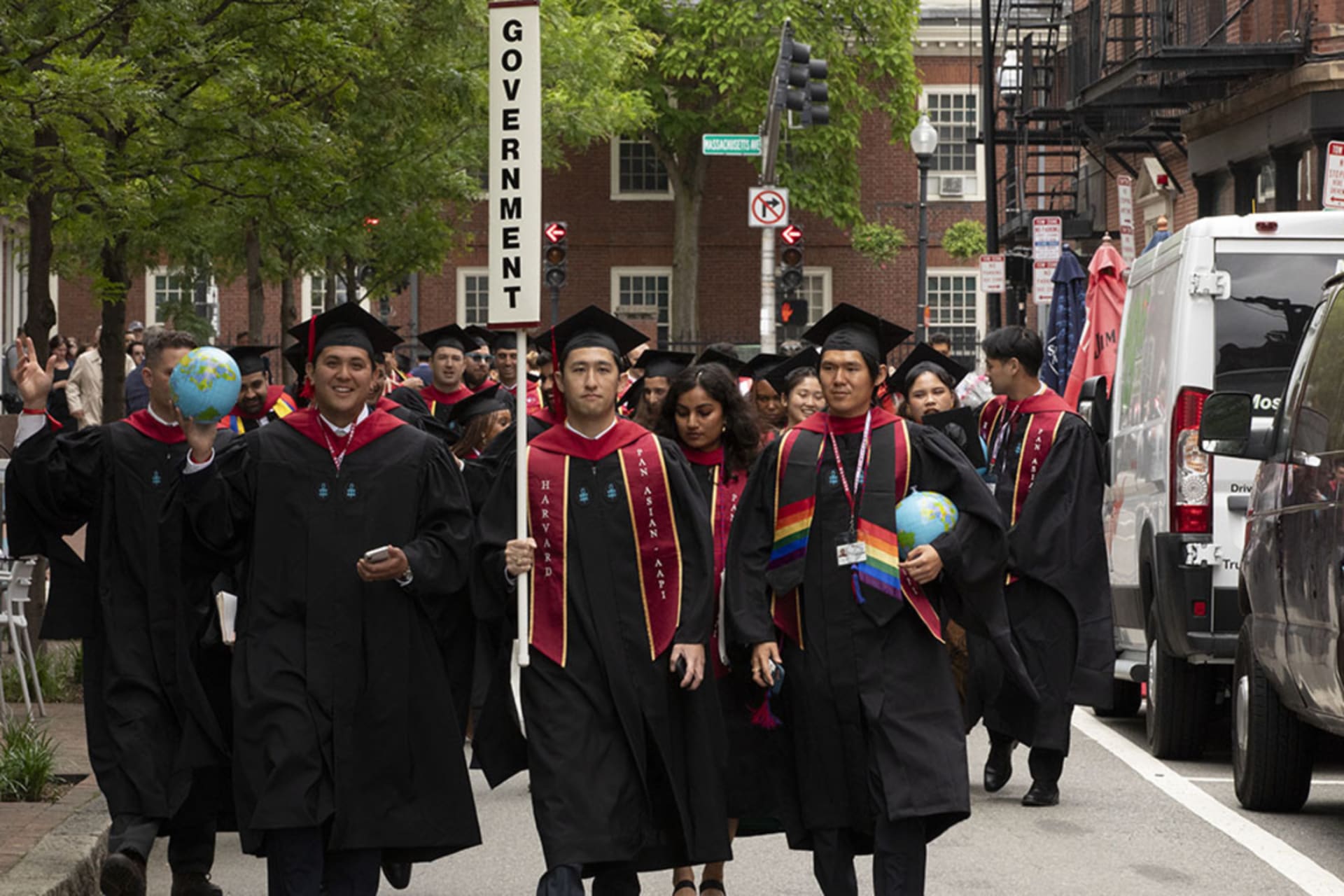
International students play a vital role in the U.S. higher education system, with a record more than 1.1 million enrolled during the 2023–24 academic year. They contribute tens of billions of dollars to the economy each year, support job creation, and advance cutting-edge research and innovation efforts.
But in his second term, President Donald Trump has intensified scrutiny of international students and visitors studying in the United States, as well as the academic institutions that host them. The administration’s targeting of several major schools, notably Harvard University, is part of a larger strategy to clamp down on political activism and dissent—with implications for academic freedom, the U.S. economy, and the United States’ standing as a global leader in education.
What’s happening?
The Trump administration’s actions feed into a broader campaign to reshape U.S. higher education, including by asserting greater federal influence over university admissions and operations. The administration’s crackdown on international students is also an extension of its efforts to curb immigration more broadly.
Harvard has been a central target. In April, the administration froze more than $2 billion in federal research grants to the university, prompting Harvard to file a lawsuit [PDF] arguing that the freeze was “unconstitutional.” Then in May, the Department of Homeland Security (DHS) rescinded Harvard’s ability to enroll international students, accusing the school of “fostering violence, antisemitism, and coordinating with the Chinese Communist Party on its campus.” The move left thousands of existing international students facing the prospect of either transferring to another institution or relinquishing their visa status and facing potential deportation.
Trump signed a proclamation a few weeks later restricting the entry of international students seeking to study at Harvard or participate in an exchange program there, claiming that this would jeopardize U.S. national security. To do so, Trump invoked a section of the Immigration and Nationality Act that gives the president authority to block foreigners whose entry “would be detrimental to the interests of the United States.”
In September, a federal judge ruled in Harvard’s favor in its lawsuit against the government, blocking the administration’s research grant freeze and declaring it unlawful. Despite the ruling, Harvard and the administration were reportedly still negotiating a settlement as of late November.
The White House issued a proposed “Compact for Academic Excellence in Higher Education” [PDF] to nine universities a month later, offering them preferential access to federal funding in exchange for their compliance with the administration’s demands. The compact required universities to address issues including tuition freezes, standardized testing for admissions, and to prohibit certain types of speech on campus. Seven of the nine universities have rejected it.
What’s going on with Chinese students?
Shortly after DHS revoked Harvard’s ability to enroll foreign students in May, Secretary of State Marco Rubio announced that the Trump administration would “aggressively revoke” visas for Chinese students, including those studying in “critical fields,” although he did not specify which ones. The move reflected the administration’s concerns that Chinese students could use their schooling in the United States to help Beijing gain a competitive advantage over Washington.
In August, however, the administration announced that it would allow 600,000 Chinese students to attend U.S. universities, which Trump said was a “business” move.
Why does this matter for U.S. higher education and research?
The ramifications of the administration’s crackdown on higher education could be significant, experts say. More than 1.1 million foreign students—a record high—were enrolled at U.S. colleges and universities during the 2023–24 academic year, roughly a 7 percent increase from the previous year, according to the Institute of International Education’s 2024 Open Doors Report. China and India account for 54 percent of all international students, while other major sources included Bangladesh, Canada, South Korea, and Taiwan.
Many of these foreign students remain in the country after graduating via the H-1B visa program, which allows U.S. employers to hire nonimmigrant foreign workers with specialized skills who are difficult to find in the domestic workforce.
Experts warn that the recent policies affecting international students could pose a significant setback to U.S. higher education and the economy, including by depriving critical industries of a pool of highly skilled laborers. During the 2023–24 academic year, international students contributed nearly $44 billion to the U.S. economy and their economic activity helped sustain more than 378,000 jobs, according to NAFSA: Association of International Educators, a Washington, DC-based nonprofit. At many higher education institutions, international students tend to pay full tuition, thereby subsidizing the cost of attendance for U.S. citizens receiving financial aid.
The administration’s policies have already had some effects. A fall 2025 snapshot by the Institute of International Education found that first-time enrollments by international students at U.S. universities fell 17 percent for the 2025–26 academic year, while the overall number of international students fell by 1 percent. According to NAFSA, this equates to more than $1.1 billion in lost economic activity and nearly 23,000 fewer jobs. Universities reporting declines in enrollments cited several causes, including visa application concerns and travel restrictions.
Why is the Trump administration targeting academic institutions?
The administration’s actions mark an escalation of Trump’s crackdown on political dissent, extending his campaign promises on immigration into broader scrutiny of academic institutions. Trump had indicated on the campaign trail that political views could be grounds for immigration enforcement, vowing to bar individuals who hold certain viewpoints—including anti-Israel, Marxist, and fascist ideologies—and has since framed current efforts to curb enrollments of international students with allegedly hostile views as a response to what he has described as liberal bias in higher education. His administration has taken steps to penalize international students involved in political activism on university campuses. Earlier this year, he issued an executive order mandating that universities monitor and report on certain foreign policy-related activities of international students and faculty.
Meanwhile, many students who have not had their visas revoked are being warned against traveling outside of the country for fear of being barred from reentry. In May, the administration ordered U.S. embassies worldwide to temporarily stop scheduling visa interviews for foreign students, though the directive was lifted the following month.
What has been the domestic and international response?
The Trump administration’s new policies have evoked praise from some Republican lawmakers, while Democratic congressional groups have largely condemned them. “The wholesale revocation of student visas based on national origin—and without an investigation—is xenophobic and wrong,” the nonpartisan Congressional Asian Pacific American Caucus said in May.
The targeting of foreign students threatens to damage U.S. bilateral relations and undermine the United States’ role as a leader in global education. China’s Foreign Affairs Ministry criticized Trump’s new visa policy for Chinese students as a “politically discriminatory move [that] exposes the hypocrisy of America’s long-proclaimed values of freedom and openness.” More restrictive visa policies could encourage students to pursue their academic endeavors elsewhere, with several Asian universities already reportedly offering themselves as alternatives for current Harvard students.
Will Merrow created the map for this article.