Iran Protests Escalate
By experts and staff
- Published
- CFR Editors
Welcome to the Daily News Brief, CFR’s flagship morning newsletter summarizing the top global news and analysis of the day.
Subscribe to the Daily News Brief to receive it every weekday morning
Top of the Agenda
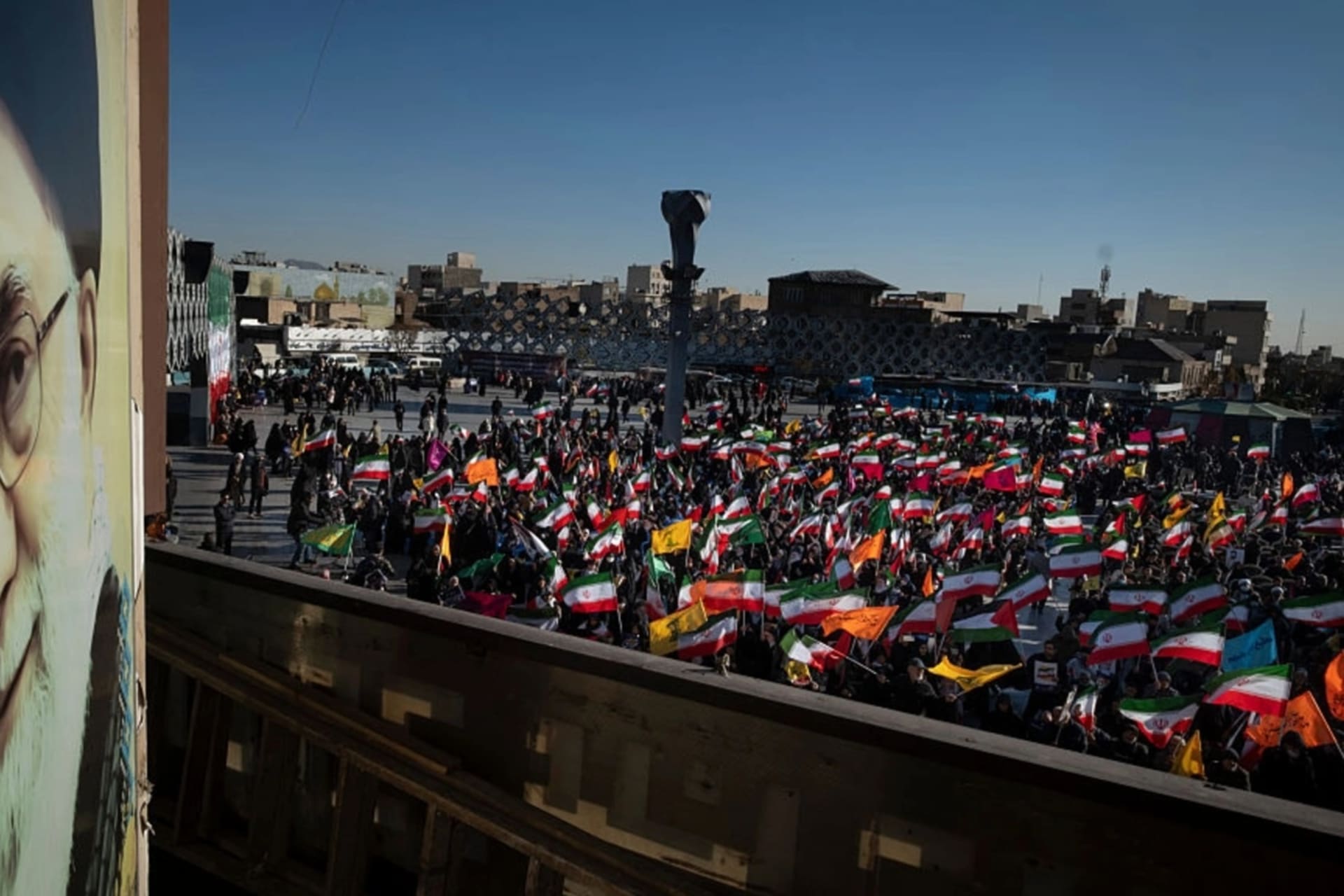
Iranian authorities cut internet access nationwide last night as they struggled to contain antigovernment protests that swelled across the country. Security forces have typically met protests of this size with violence, though Trump yesterday warned of U.S. consequences should Iranian authorities kill demonstrators. Still, Iran’s Supreme Leader Ali Khamenei said today that authorities would “not back down” in the face of protests. U.S.-based Human Rights Activists News Agency said yesterday that more than forty-two people have died and more than two thousand have been detained since demonstrations began on December 28.
The context. Protesters are denouncing both economic hardship—the country’s currency collapsed late last month—and political repression, with many openly calling for regime change. Reformist President Masoud Pezeshkian’s administration has sought to engage with protesters and introduce economic stipends and other concessions, but Iranians have stayed on the streets. Iranian opposition figure Reza Pahlavi, son of the shah ousted in the 1979 Islamic Revolution, called for nationwide demonstrations last night and tonight.
The U.S. stance. Trump told the “Hugh Hewitt Show” yesterday that Washington was watching the demonstrations “very closely.” He said Iranian authorities have “been told very strongly” that they will “pay hell” if they kill demonstrators, though he characterized the deaths so far as consequences of crowd control problems. Khamenei has accused demonstrators of acting on behalf of Trump. In a separate interview that aired on Fox News yesterday, Trump alleged that Khamenei could be looking to leave Iran.
“Unfortunately for the 86-year-old ayatollah, the devastating war in June called his judgment into question. His 35-year project of bringing Iran to the threshold of the bomb, seeding the region with lethal proxies, and defining revolutionary success by the humiliation of Americans and Israelis lies in ruins. The Iranian regime now appears to be negotiating with itself: Mr. Khamenei’s harsh views are still likely to carry the day (the men in power are mostly his men), but such dithering may let the protests grow into massive, regime-threatening demonstrations.”
—CFR expert Ray Takeyh and the Foundation for Defense of Democracies’ Reuel Marc Gerecht, Wall Street Journal
Across the Globe
Trump on international law… Trump rejected the notion of being fully bound by international law in a New York Times interview published yesterday, laying out an expansive view of U.S. power in the world. Whether that law applied to him “depends what your definition of international law is,” he said, adding that he was bound by his “own morality.”
…and international conflict. Trump declined to directly answer whether obtaining Greenland or preserving NATO was more important. The United States needed to acquire Greenland, he said, “because that’s what I feel is psychologically needed for success.” He also said it was “up to” Chinese President Xi Jinping whether China invaded Taiwan, but that he’d told Xi he would be “very unhappy” about an invasion and believed China would not act during his presidency.
Venezuela prisoner releases. Authorities released a number of imprisoned activists and journalists yesterday in what the head of Venezuela’s legislature called a “peace” gesture. Trump praised the release in a social media post today, adding that he had canceled a “second Wave of attacks” on the country due to authorities’ cooperation. Meanwhile, the U.S. Senate yesterday agreed to debate a resolution on limiting the use of military force in Venezuela without congressional approval.
Clashes in Aleppo. Syria’s military declared a ceasefire today in three neighborhoods of Aleppo, after fighting with Kurdish forces displaced an estimated 140,000 people in recent days, per Syrian authorities. The clashes broke out despite efforts over the past year to integrate the Kurdish-led, U.S.-backed Syrian Democratic Forces into the country’s military. The Trump administration is “working extensively” to extend the truce, its special envoy for Syria wrote on social media.
The resilience of cooperation. While trade barriers and unilateral moves made headlines in 2025, a report released yesterday by the World Economic Forum and McKinsey argues that global cooperation across several areas—including health, data sharing, and green technologies—continued to move forward. Though multilateralism is under strain, “cooperation among smaller groups of countries has persisted,” it said.
EU-Mercosur moves. European Union (EU) member states voted to provisionally back a trade agreement with South American bloc Mercosur, unnamed European diplomats told multiple news outlets today. The two blocs had settled on the principles of the deal in December 2024, but some European countries resisted endorsing it due to concerns over risks to their agricultural sectors. They were outvoted today. If finalized, the deal would be the EU’s largest-ever free trade agreement.
Falling U.S. deficit. The U.S. trade deficit in goods and services in October reached its lowest level since 2009, Commerce Department data released yesterday showed. Trump has made reducing the U.S. deficit a goal of his “America First” trade policy. The reduced imports in October appear to be partly spurred by his tariff announcements, economists said, though others cautioned that the data was fluctuating too much to draw strong conclusions.
Lebanon’s security announcement. The country’s army has reasserted control of a southern region once dominated by Hezbollah, it said yesterday. The operations were pledged as part of a U.S.-brokered ceasefire between Israel and Lebanon in late 2024, which required Hezbollah’s disarmament. Israeli Prime Minister Benjamin Netanyahu’s office said Lebanon’s efforts were “an encouraging beginning,” but insufficient.
What’s Next
- Today, the U.S. Supreme Court is due to issue decisions in Washington, DC that could include a ruling on Trump’s emergency tariffs.
Today, a BRICS naval exercise begins in South Africa.
Today, oil executives attend a White House meeting on Venezuela in Washington, DC.
- Sunday, Myanmar holds the second phase of a general election.
- Sunday, Benin holds parliamentary and local elections.
- Sunday, the Golden Globe Awards occur in Los Angeles.