For Israel, After the Gaza War Comes Politics
An election will be held in 2026. Who should take responsibility for Israel’s failures on October 7, 2023, the conscription of ultra-Orthodox Jews, and unsettled “judicial reforms” will be core issues for voters.
Elliott Abrams is senior fellow for Middle Eastern studies at the Council on Foreign Relations.
As Israel enters its third year of war with the imminent possibility of a truce led by President Donald Trump, it faces a transformed regional landscape. The Bashar al-Assad regime in Syria has fallen, the United States joined Israel in destroying large parts of the Iranian nuclear program, Hezbollah is greatly weakened, and Hamas’s control of Gaza hangs by a thread.
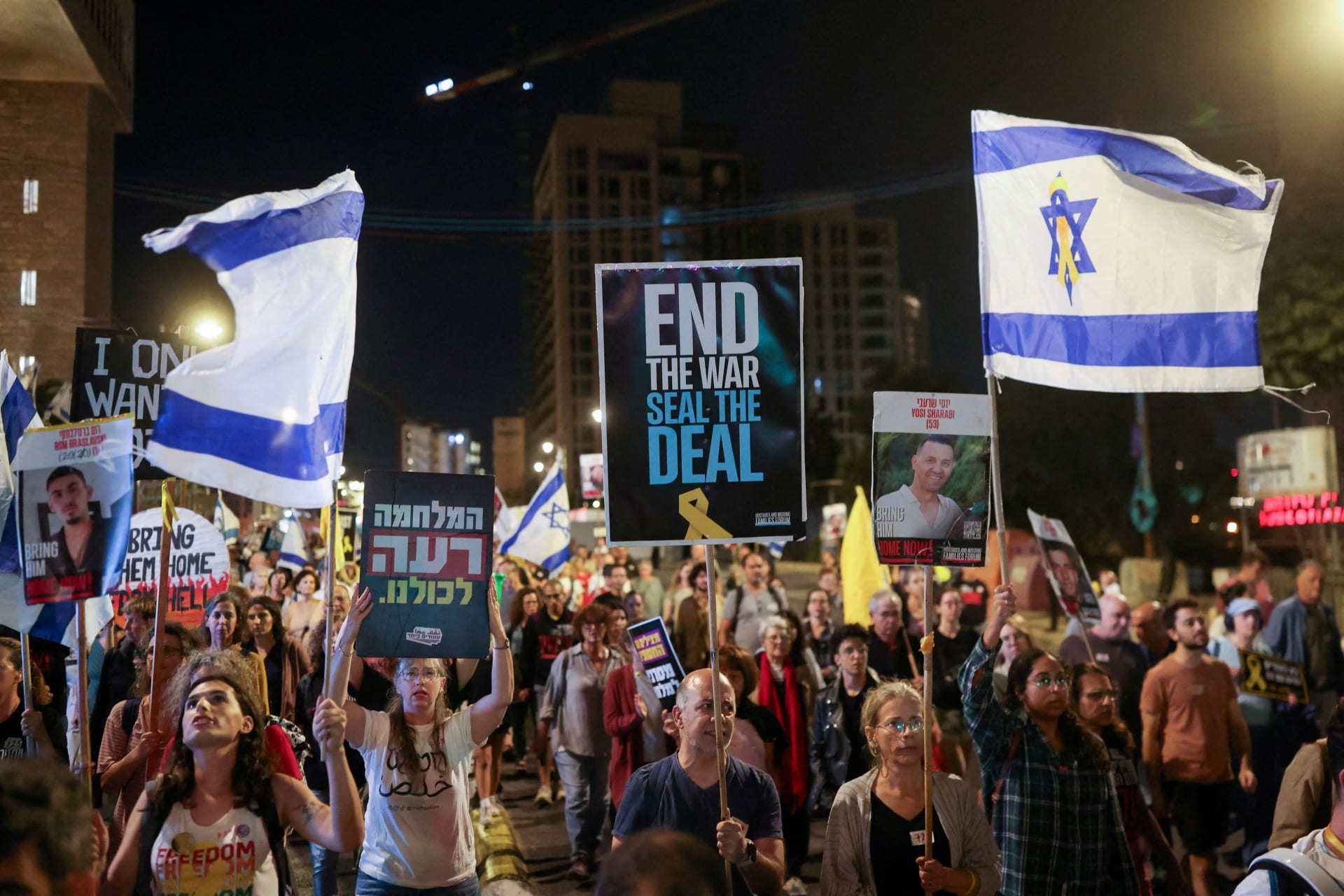
But the Israeli domestic political scene changed little in the past year. The coalition government led by Prime Minister Benjamin Netanyahu relies on a few far-right ministers to remain in office. The opposition remains divided, and massive protest demonstrations are regular occurrences. . Opinion polls suggest that Netanyahu’s popularity is falling and that his coalition could lose the next election. All of that was true twelve months ago and remains true today.
It will not remain true for another year, however. The latest date for the next election is October 2026—and it could come much sooner. The electoral timetable and the possibility of an end to the Gaza war mean the political stasis of the Jewish year 5785 (October 2024 to October 2025) will end. And that in turn will likely mean the return of the older battles that the Hamas attack of October 7, 2023, and the ensuing war pushed aside. “judicial reform,” meaning the role and power of the Israeli Supreme Court, and the struggle over drafting ultra-Orthodox Jews into the military. To these will be added the “blame game” over which leaders are to be held responsible for the security failures of October 7, 2023.
The Haredi Community and the Draft
The war has deepened divisions over that latter issue, and it will be central to the next election. Israel’s ultra-Orthodox groups have long been exempt from conscription under a deal made at Israel’s founding by the first prime minister, David Ben Gurion. At the time, the number of young men exempted, ostensibly so that they could continue to study Torah full-time, was derisory and militarily irrelevant: 400 students in 1948. Today, due to the enormous demographic growth of the ultra-Orthodox—known as the Haredi community—sixty-three thousand young men are exempted.
The strain of the Gaza war on Israel’s mostly reserve army has proved the need for a larger force, so the Israel Defense Forces (IDF) needs those recruits—or some of them. For most Israelis, who have watched their family members called into reserve duty again and again, those exemptions are unfair and should come to an end. Some studies suggest that about a quarter of the Haredi youth are, in fact, surreptitiously employed, not studying.
The resentment at their failure to serve has exploded in the last two years, and the Supreme Court has struck down several legislative compromises that maintained most of those exemptions. Meanwhile, divisions are developing in the Haredi camp, with growing support for some form of service. This is all part of the broader issue of the Haredi role in Israeli life as that community grows—now about 14 percent of the population and likely to hit 20 percent by 2065.
Netanyahu’s Future
This year is Benjamin Netanyahu’s fifteenth as prime minister, the longest term in Israel’s history. Few people would have believed on October 8, 2023, that he could escape blame for the damage Hamas inflicted and the inability in two years of war to free all the hostages, and yet he remains in office now. Netanyahu has proved again and again that he is both a survivor and a master of the game—outsmarting his opponents, defeating his critics, and pulling rabbits out of hats. His years of warnings about the Iranian nuclear program culminated in Israel’s startlingly successful attacks on Iran, and his ability to convince President Trump to attack the nuclear sites as well.
He will be seventy-six years old this month and now has a pacemaker, but nothing has appeared to slow him down as he continues to dominate Israeli politics. It is widely rumored that he wants one more election victory in 2026. This is to overcome any perceived stain on his legacy for being in charge in the years leading up to October 7 and failing to prevent that catastrophe. Perhaps he will win then step aside when the term of Israeli President Yitzhak Herzog ends in 2028, and Netanyahu could seek to replace him in what has often been a ceremonial role (but might not be if filled by Netanyahu).
This is pure speculation, but what is certain is that an election is coming in 2026. The issues related to the war, above all, as to who must take responsibility for Israel’s failures on October 7, 2023, and how to resolve the Haredi draft issue, will be critical, and the other divisive issue of judicial reform will return. All these are reminders of the splits in the Israeli electorate and society, between left and right, ultra-Orthodox and secular, Arab and Jew. During the war, necessity has produced unity in support of the IDF, and a younger generation of Israelis has met the test their parents and grandparents faced: of sacrificing home and family for months on end, and risking death, to protect their homeland. In the coming year, the war will end and the election will come—and peace may bring as great a test of national unity as war.
This work represents the views and opinions solely of the author. The Council on Foreign Relations is an independent, nonpartisan membership organization, think tank, and publisher, and takes no institutional positions on matters of policy.