Longer Summers, Hotter Classrooms, Poorer Kids
This is a limited excerpt from the Climate Realism Initiative Newsletter. Sign up to receive monthly insights from the initiative’s fellows and staff, including articles, videos, podcasts, events, and more.
Dog Days of Summer: Extended Edition
The United States marked the unofficial start of fall recently with—what else—the August 26 release of that inescapable autumn indicator: the Starbucks Pumpkin Spice Latte. Clocking in at as many as four hundred calories and fifty grams of sugar, that most basic of fall icons is an ideal beverage for a season of blankets and loose-fitting sweaters. But this year, far from arriving on the cusp of flannel weather, the PSL launched under a heat advisory. At Starbucks headquarters in Seattle, temperatures crept toward the nineties.
Though the summer of 2025 is not quite on pace to match the blistering temperature records of 2024, it is likely to be longer than those of the mid-aughts PSL debut. A recent analysis of American summers found that the season’s temperatures were spilling over their historical boundaries virtually everywhere in the continental United States.
New York and Washington, DC, today experience about a week’s more heat than they did thirty years ago. Chicago, Denver, and Atlanta sweat for about an extra two weeks. In Miami, summer lasts more than a month longer than it did in the mid-1990s, and summer-like temperatures now stretch over more than a third of the year.
For those who prefer baseball to football and beaches to bonfires, a few extra weeks of summer could sound like a welcome gift. But excess heat has consequences far beyond a seasonally discordant debut for America’s favorite novelty coffee beverage.
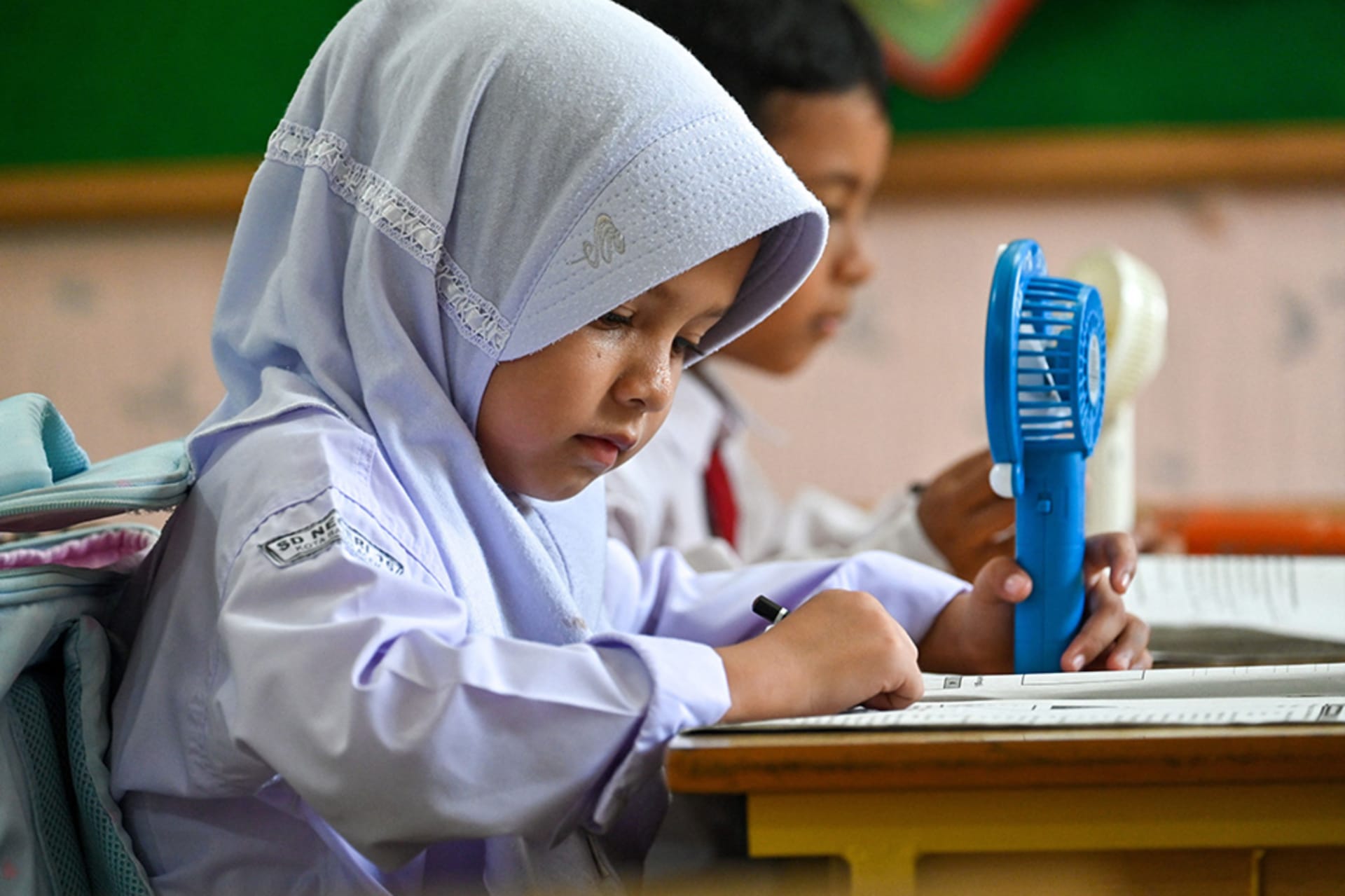
Prolonged summer temperatures mean that millions of children are starting school in sweltering classrooms. A recent meta-analysis of studies covering 14.5 million children in more than 60 countries found that heat exposure significantly degraded students’ academic performance, not just on individual school days but also cumulatively over the course of the year. Students’ test scores, according to one of the review’s authors, could be measurably affected by excessive heat in the previous academic year.
Hot days, in other words, add up.
Climate change is projected to exacerbate that dynamic. One of the studies included in the review found that, at 1.5°C (2.7°F) of warming above pre-industrial levels—a benchmark scientists expect to reach before 2050—cognitive performance in elementary school students could fall by nearly 10 percent. As those deficits compound through middle and high school, the picture is ominous for the economic, social, and intellectual lives of those students and for the United States more broadly.
American schools are not alone in those challenges, of course. In Europe, where temperatures are rising faster than almost anywhere else on earth, officials have been forced to restrict access to playgrounds, delay major exams, and even temporarily close schools to protect children from spiking temperatures. During a record-breaking heat wave in Asia last year, tens of millions of students faced shuttered classrooms or shortened schooldays.
Air conditioning can significantly reduce the academic interruptions from excess heat and improve student outcomes. During President Joe Biden’s administration, Congress allocated more than $500 million to help schools improve energy efficiency and install renewable energy systems. Though that amount was far less than school districts needed, those steps made air conditioning more affordable to at least some poorer schools.
Across two funding rounds, schools across the country bid for grants for new windows, heat pumps, lighting, and cooling systems—upgrades one school called, “a game-changer.” The remaining funding, however, has been frozen by the Trump administration, leaving it in legal limbo right as students are returning to classrooms.
Even where it is available, however, air conditioning is not a panacea. Its high cost and significant energy demand have led policymakers around the world to experiment with alternatives.
Paris is in the midst of a multi year project to convert all of its school playgrounds into shaded green spaces, which have been shown to reduce temperatures and improve student achievement. In Spain, the regional government of Andalusia is installing water-based cooling systems that can dramatically reduce temperatures inside schools using just 10 percent of the energy of traditional air conditioning. On a variety of public buildings, including schools, India is installing passive cooling systems such as reflective rooftops, building insulation, and improved ventilation, all of which can help lower temperatures inside.
Those and other approaches could provide a valuable roadmap for future U.S. policymakers. As of 2020, more than 40 percent of school districts were in need of heating, ventilation, and air conditioning improvements. As climate change drives temperatures ever higher, political pressure could well build to provide those students with some relief.
In the meantime, the Pumpkin Spice Latte is available iced.