President John F. Kennedy and Soviet Premier Nikita Khrushchev Make a Deal—Cuban Missile Crisis, Day Thirteen
The United States and the Soviet Union pulled back from the nuclear brink, chastened by their brush with nuclear Armageddon.
By experts and staff
- Published
 James M. LindsayCFR ExpertMary and David Boies Distinguished Senior Fellow in U.S. Foreign Policy
Sunday, October 28, 1962, was a beautiful autumn day in Washington, DC. After a cold start, the mercury hit 71 degrees, six degrees higher than normal. The sun shone brightly, and the breeze was mild. The weather was in many ways a metaphor for the mood in the White House. After twelve stress-filled days, the thirteenth day of the Cuban Missile Crisis brought a deal between President John F. Kennedy and Soviet Premier Nikita Khrushchev. The world’s two superpowers had pulled back from the brink of nuclear war.
Good News Comes Early
At 9:00 a.m. Washington time, Radio Moscow broadcast a message from Khrushchev to Kennedy: the Soviet Government “has given a new order to dismantle the arms which you described as offensive, and to crate and return them to the Soviet Union.” The Soviets had accepted the proposals Kennedy had made the night before for ending the crisis.
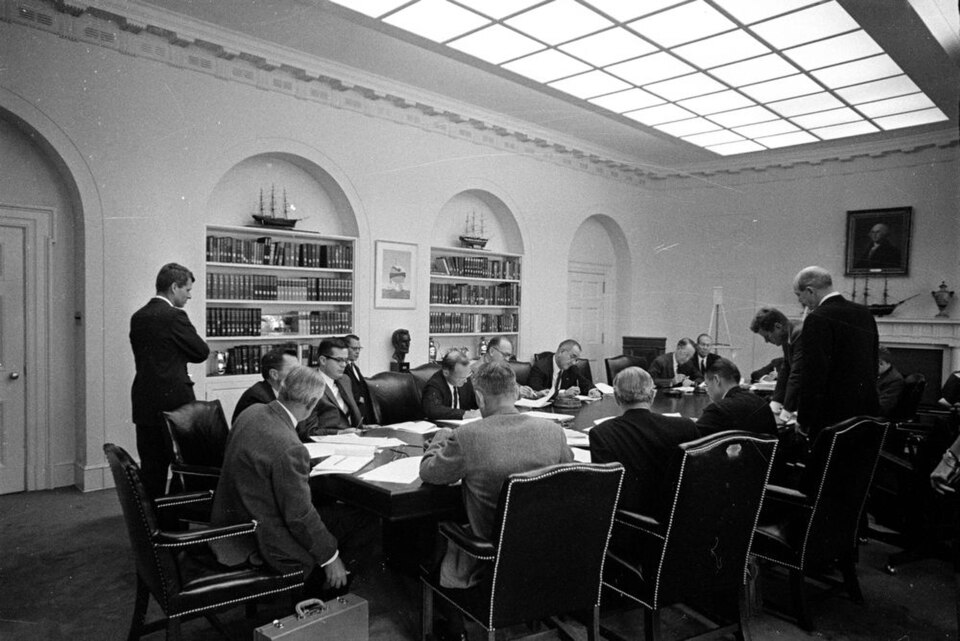
Kennedy immediately took yes for an answer. The morning ExComm meeting quickly approved a statement the White House would release on the president’s behalf applauding Khrushchev’s announcement:
I welcome Chairman Khrushchev’s statesmanlike decision to stop building bases, dismantling offensive weapons and returning them to the Soviet Union under United Nations verification. This is an important and constructive contribution to peace.
Kennedy also directed the ExComm to prepare a separate, formal response to Khrushchev. Besides reiterating his acceptance of the Soviet leader’s offer, Kennedy expressed “regret” that, the day before, a U.S. pilot had “made a serious navigational error which carried him over Soviet territory.” JFK was not going to let a wayward U-2 derail a resolution of the crisis. And to make sure that no other unexpected event upset the deal now in place, he ordered that all U.S. aerial surveillance missions be stood down for the day and that no actions be taken to enforce the naval quarantine around Cuba.
Kennedy concluded his formal response by offering Khrushchev an olive branch of his own.
I agree with you that we must devote urgent attention to the problem of disarmament, as it relates to the whole world and also to critical areas. Perhaps now, as we step back from danger, we can together make real progress in this vital field. I think that we should give priority to questions relating to the proliferation of nuclear weapons, on earth and in outer space, and to the great effort for a nuclear test ban. But we should also work hard to see if wider measures of disarmament can be agreed and put into operation at an early date. The United States government will be prepared to discuss these questions urgently, and in a constructive spirit, at Geneva or elsewhere.
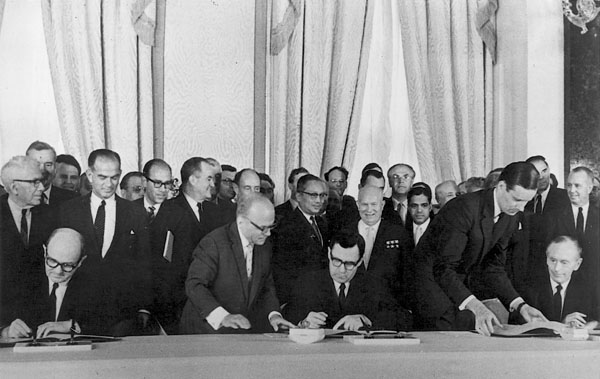
Chastened by their experience at the nuclear brink, the two countries, along with the United Kingdom, would nine months later sign the Limited Nuclear Test Ban Treaty.
Savoring Success, But Keeping Secrets
Confident that the crisis was headed to a peaceful and satisfactory conclusion, Kennedy called former presidents Herbert Hoover, Harry Truman, and Dwight Eisenhower to brief them on the Soviet decision to remove their missiles from Cuba. He told them only what was already in the news. He did not tell them about the secret promise he had made to Khrushchev to remove U.S. Jupiter missiles from Turkey. The former presidents unsurprisingly applauded Kennedy’s skill in forcing Khrushchev to capitulate.
In the decades to come, hints and rumors would leak that Kennedy had struck a secret deal with Khrushchev. The few senior Kennedy administration officials who knew the full story kept Kennedy’s secret. It was only in 1989 that the details of his pledge to remove the Jupiter missiles were confirmed.
“I Should Go to the Theater”
Not everyone one was pleased that the crisis had been resolved peacefully and that the Soviet missiles were returning home. Fidel Castro raged over having lost what he saw as his most powerful deterrent against a U.S. invasion or subversion. Castro would later lead his fellow Cubans in chants of “Nikita, mariquita, lo que se da no se quita!” (“Nikita, you little homosexual, what is given should not be taken back!”)
None of that concerned JFK for the moment. After speaking with Truman and Eisenhower, he turned to his brother, Attorney General Robert Kennedy, and invoked the memory of Abraham Lincoln at the end of the Civil War. “This is the night I should go to the theater,” said the president. RFK replied, “If you go, I want to go with you.”
Oscar Berry and Jack Patton assisted in the preparation of this article.
The United States celebrates its 250th anniversary in 2026. To mark that milestone, I am resurfacing essays I have written over the years about major events in U.S. foreign policy. A version of this essay was published on October 28, 2012.
Other Posts in This Series:
- “Andrei Gromyko Tells a Lie at the United Nations,” September 21, 1962
- “Major Richard S. Heyser’s U-2 Mission Discovers Soviet Missiles in Cuba,” October 14, 1962
- “The United States Discovers Soviet Missiles in Cuba,” October 15, 1962
- “JFK Learns That Soviet Missiles Are in Cuba—The Cuban Missile Crisis, Day One,” October 16, 1962
- “John F. Kennedy Solicits Dwight D. Eisenhower’s Advice—The Cuban Missile Crisis, Day Two,” October 17, 1962
- “Soviet Foreign Minister Andrei Gromyko Lies to President John F. Kennedy—The Cuban Missile Crisis, Day Three,” October 18, 1962
- “John F. Kennedy Campaigns While the ExComm Debates—The Cuban Missile Crisis, Day Four,” October 19, 1962
- “President John F. Kennedy Fakes a Fever—The Cuban Missile Crisis, Day Five,” October 20, 1962
- “President John F. Kennedy Prepares to Tell the Nation About Soviet Missiles in Cuba—Cuban Missile Crisis, Day Six,” October 21, 1962
- “President John F. Kennedy Tells the World That Soviet Missiles Are in Cuba—Cuban Missile Crisis, Day Seven,” October 22, 1962
- “Soviet Premier Nikita Khrushchev Warns President John F. Kennedy of “Catastrophic Consequences”—Cuban Missile Crisis, Day Eight,” October 23, 1962
- “‘Eyeball to Eyeball’—Cuban Missile Crisis, Day Nine,” October 24, 1962
- “Adlai Stevenson Dresses Down the Soviet Ambassador to the UN—Cuban Missile Crisis, Day Ten,” October 25, 1962
- “John Scali Has Lunch With a Soviet Spy—Cuban Missile Crisis, Day Eleven,” October 26, 1962
- “Black Saturday” Threatens a Calamity as President John F. Kennedy Makes Two Offers—Cuban Missile Crisis, Day Twelve,” October 27, 1962
This work represents the views solely of the author(s). The Council on Foreign Relations is an independent, nonpartisan membership organization, think tank, and publisher, and takes no institutional positions on matters of policy.