Asia

Kashmir

  • India
    Pakistan: Defeat Is an Orphan
    What ails Pakistan? A new book from former Reuters correspondent Myra MacDonald shows how the country’s chronic struggle to somehow best India has instead led to deleterious results on all fronts. I had the chance to interview her by email on her compelling book, and our exchange appears below. 1. You have structured this as an account of multiple defeats in what you term “the Great South Asian War.” Some of these defeats are tactical, such as with the India-Pakistan peace talks, or the Kargil War, but it becomes clear by the end of your book that you mean this as a larger metaphor for a “Great War” that only exists in the minds of Islamabad and Rawalpindi. Pakistan is “blinded,” as you say, to how the world has changed around it. How did you come to see so many episodes—of terrorism, of failed peace talks, the military standoff in 200102—as moments in this larger story of a profound defeat? There were two questions here that needed to be untangled. The first is about how well the Pakistani state serves its citizens relative to India. The second is about the domestic power struggle within Pakistan. Since the military has successfully retained its political and economic preeminence within Pakistan, how much does it matter that Pakistan’s external position relative to India has declined? I tried to find yardsticks to assess both: historically, what assumptions were made about how well the Pakistani state would serve its citizens, and what expectations did the Pakistan Army have of the policies it followed? On the first question about the Pakistani state, you have to go back to Partition to set benchmarks about how it was expected to perform relative to India. Implicit in the creation of Pakistan was an assumption Muslims would be safer in a separate country. There was also an expectation that a country run along Islamic principles of social justice would be fairer than one dominated by the Hindu caste system. Those assumptions took a serious hit in 1971 with East Pakistan breaking away to form Bangladesh. But even after 1971, Pakistan was able to retain a sense of superiority over India – its economy continued to perform much better than the Indian state-planned economy. It is only very recently that India began to emerge as a rising economic power. In terms of Indian GDP per capita, this rose above that of Pakistan only in 2009. Such is India’s current trajectory that we can now argue its success relative to Pakistan is irreversible. Thus by the standards Pakistan set itself at Partitionthat its citizens would be better off in a separate country, or at least as well off as those in Indiathe Pakistani state has failed. Not only is it unable to offer its citizens the same promise of economic development, it can’t even offer them security. On the second question about the fortunes of the Pakistan Army within Pakistan’s domestic power struggle, it’s certainly true that the military has come out on top both politically and economically. But I’d argue that the Pakistan Army has fallen well short of its own expectations. This is particularly striking if you look at the period since the nuclear tests in 1998. Among the army’s assumptions at the time were that it would continue to be able to influence events in Kashmir and Afghanistan while managing Islamist militants well enough to keep them from turning on Pakistan. In 1998, Pakistan could still appeal to those Kashmiris who wanted to break away from India, while it dominated Afghanistan through the Taliban. Nowadays, Pakistan is too near to becoming a failing state to act as a magnet to Kashmiris and it is hated in Afghanistan for its role in supporting the Taliban. It has lost control of a sizeable number of jihadis who have turned on the Pakistani state. As such, I don’t subscribe to the argument that the Pakistan Army is a rational actor that has manipulated rivalry with India in order to maintain its own domestic dominance. In numerous episodes, from Kargil to Mumbai, it has suffered from such overreach and miscalculation that it has failed to meet the strategic aims it set for itself. 2. You situate Pakistan, with its sights set on India, as a supporter of jihadists that ultimately grow out of the Inter-Services Intelligence’s immediate control, and whose jihad itself globalizes to open up new fronts. (I had not known of al Qaeda in Iraq founder Abu Musab al-Zarqawi’s time as a jihadi in Afghanistan, for example, or the links between North African terrorists and the assassination of Northern Alliance’s Ahmed Shah Massoud.) Why has it been so hard for Pakistan to change direction on this policy of supporting violent jihad? The question of how far Pakistan controls jihadis is subject to an intense debate that will run and run. I disagree with those who imagine the existence of an “on-off switch” that the Pakistani state just needs to flick in order to end the problem of jihadi violence. The different jihadi groups operate along a continuum with some supported by the Pakistani state, some potentially subject to its influence, and others well beyond its purview. Too much thinking is still stuck in the era of the anti-Soviet jihad in Afghanistan, leading to an assumption that anywhere Islamist militants are active, they must have deliberate state support. But the global jihadi movement has been out of control for years, at least since the 1990s when it flourished in the cracks opened up by the end of the Cold War. Pakistan’s inability to change direction on jihadis stems from several factors. The first is its unwillingness to give up Islamist militants that can be used to counter India, whether in Kashmir or Afghanistan, The second comes from the factor mentioned above – that jihadis are impossible to control fully. The Pakistan Army says it fears that if it turns against all Islamist militant groups at once, they might join forces in a coalition that will threaten the Pakistani state. This fear is partly legitimate, though it also acts as a cover for ongoing support for anti-India groups. It is quite hard to tell where the line lies in Pakistan between unwillingness to disarm militants and inability to tackle them all. I fear that the army itself doesn’t know for sure. This brings me to my third point, which I find the most worrying. The multiple players who make up the Deep State in Pakistan have constructed an ideological environment in which jihadis flourish. The Pakistan Army can manipulate some of these players or deploy them for its own purposes. But I am not convinced it knows how to drain the ideological swamp since that would require a complete rethink of how it defines Pakistan as a state. In other words, even if the willingness to disarm all militants were there, the Pakistan Army doesn’t have the imaginative capacity to know how to get underneath the problem. 3. In a particularly poignant chapter looking at Pakistan’s relations with the Federally Administered Tribal Areas, you observe that Pakistan had “overstated an external threat while underplaying its self-created domestic problems,” leading to the alienation of so many ethnic groups within the country itself. Is it possible, in your view, for Pakistan to rebuild itself domestically if it does not abandon its external focus? It’s going to be extremely difficult for Pakistan to rebuild itself domestically. Rather like the frog in water that is boiled slowly so that it doesn’t jump out, Pakistan has deteriorated relatively gradually on multiple measures from economics to development to security to international standing. The likeliest outlook is that the situation in Pakistan never becomes so bad that it is forced into a paradigm shift, even as it continues to offer less and less to its citizens. On the domestic front, the status quo still benefits enough people, both in the armed forces and among the elite, for them to resist changes that would threaten their own privileges. In an ideal scenario, the democratic process will be allowed to mature to the point that ordinary citizens begin to demand more from the state. But I don’t see that happening for a long time and the country probably needs new political leaders to help it along. We’ll also have to see what happens now that China’s influence is growing in Pakistan with its investment in the China-Pakistan Economic Corridor. In the past, China has been impatient with Pakistani adventurism against India and it has no ideological sympathy for jihadis. But nor does it have much interest in nurturing democracy. Former Reuters journalist Myra MacDonald’s new book, Defeat is an Orphan, bluntly assesses Pakistan’s myriad woes as a conundrum of its own making. (Photo courtesy of Myra E. MacDonald) 4. Near the end of the book, you make the case that Pakistan’s attempts to “wrest control of the Kashmir Valley had come to nothing….it had sacrificed the interests of its citizens while propping up an overly powerful army and spawning a dangerous collection of jihadis on home soil. The nuclear weapons it had believed would prevent the Valley slipping out of its grasp had instead encouraged a recklessness that drove a Kashmir settlement permanently out of reach.” What, if anything, could lead Pakistan to stop this recklessness and focus on the domestic needs of its own citizens, usually the most important obligation for a state? I’d love to see more critical thinking from the Pakistani elite that focuses on the needs of the country’s citizens. As long as Pakistan styles itself as a champion of the global ummah, you’ll still end up seeing more outrage about, for example, Israel’s behavior towards Palestinians or India’s treatment of Kashmiris, than about human rights abuses and poverty within Pakistan itself. The country also desperately needs to rewrite its school textbooks which currently stress a hyper-nationalist and anti-Hindu view of history. In an ideal world, the media should also be contributing towards a more nuanced understanding of the origins of the Kashmir dispute. I’ve argued in my book that Jammu and Kashmir has been badly served by both India and Pakistan. But given the importance accorded to Kashmir in Pakistan, it’s disappointing that the media continues to parrot a simplistic Pakistani state line that dates back to 1947. As I have argued in the book, no solution on Kashmir is possible, if ever, until Pakistani society is prepared for the possibility of compromise. 5. Washington comes in for some tough criticism in your book—as a “damaging foreign entanglement” for Pakistan during the Cold War, and also as a naïve power willing to believe that General Pervez Musharraf was a bulwark against Islamists all while he undermined secular politics. What would you recommend to Washington policymakers as an alternative approach? There’s no magic bullet. If the carrots and sticks of the past 16 years or so failed to convince Pakistan to change course, nothing will. Nor is there any obvious punitive action that can bring Pakistan to its senses. Don’t forget this is a country that was cut in two in 1971 and responded by becoming more nationalist and developing nuclear weapons. In the recent period, it has been willing to countenance the deaths of thousands of its own citizens in pursuit of its “good Taliban/bad Taliban” policies. India needs to learn this lesson too – if the United States with all its economic and military muscle couldn’t force Pakistan to change, nothing Delhi does will make much difference either. The best the United States can do is to stop expecting Pakistan to change and be realistic. It should not imagine that if it makes itself vulnerable to Pakistani influence, for example by sending more troops to Afghanistan who need to be supplied through Pakistan, that it can expect a different outcome from the one it has seen since 2001. I’m not in favour of cutting aid to Pakistan altogether. Washington needs to maintain just enough aid to retain some influence in the country. It is also going to have to work with China on Pakistan, regardless of tensions between Beijing and Washington elsewhere. Finally, the United States could be less mealy-mouthed about calling out Pakistani support for Islamist militants. The diplomatic cover Washington has given Pakistan since 2001rarely saying in public what it says in private about Pakistani support for jihadishas only alienated allies in Afghanistan and India and fed confusion among the Pakistani public. Follow me on Twitter: @AyresAlyssa. Or like me on Facebook (fb.me/ayresalyssa) or Instagram (instagr.am/ayresalyssa).
  • India
    Pakistan, Terrorist Groups, and Credible Responses
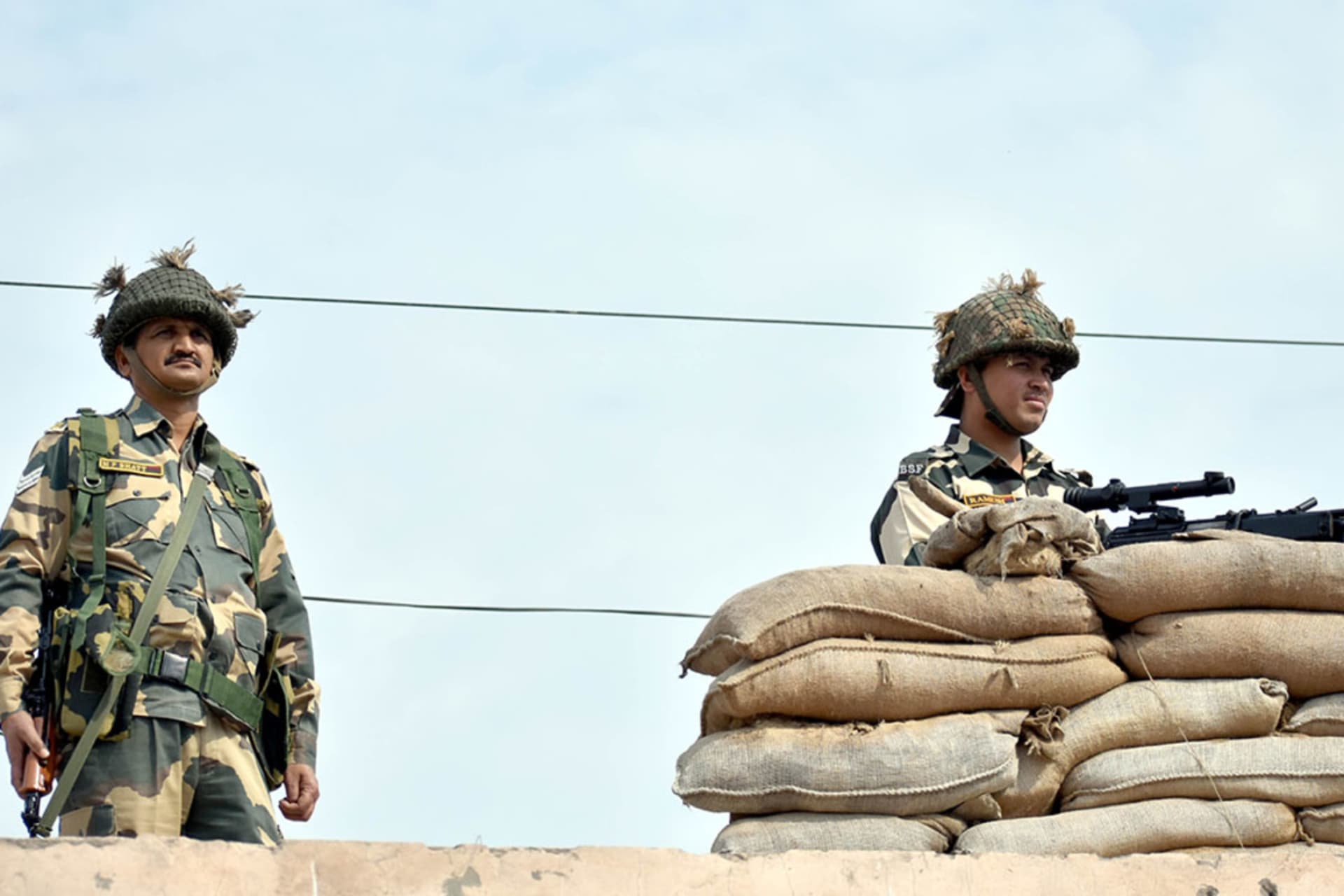
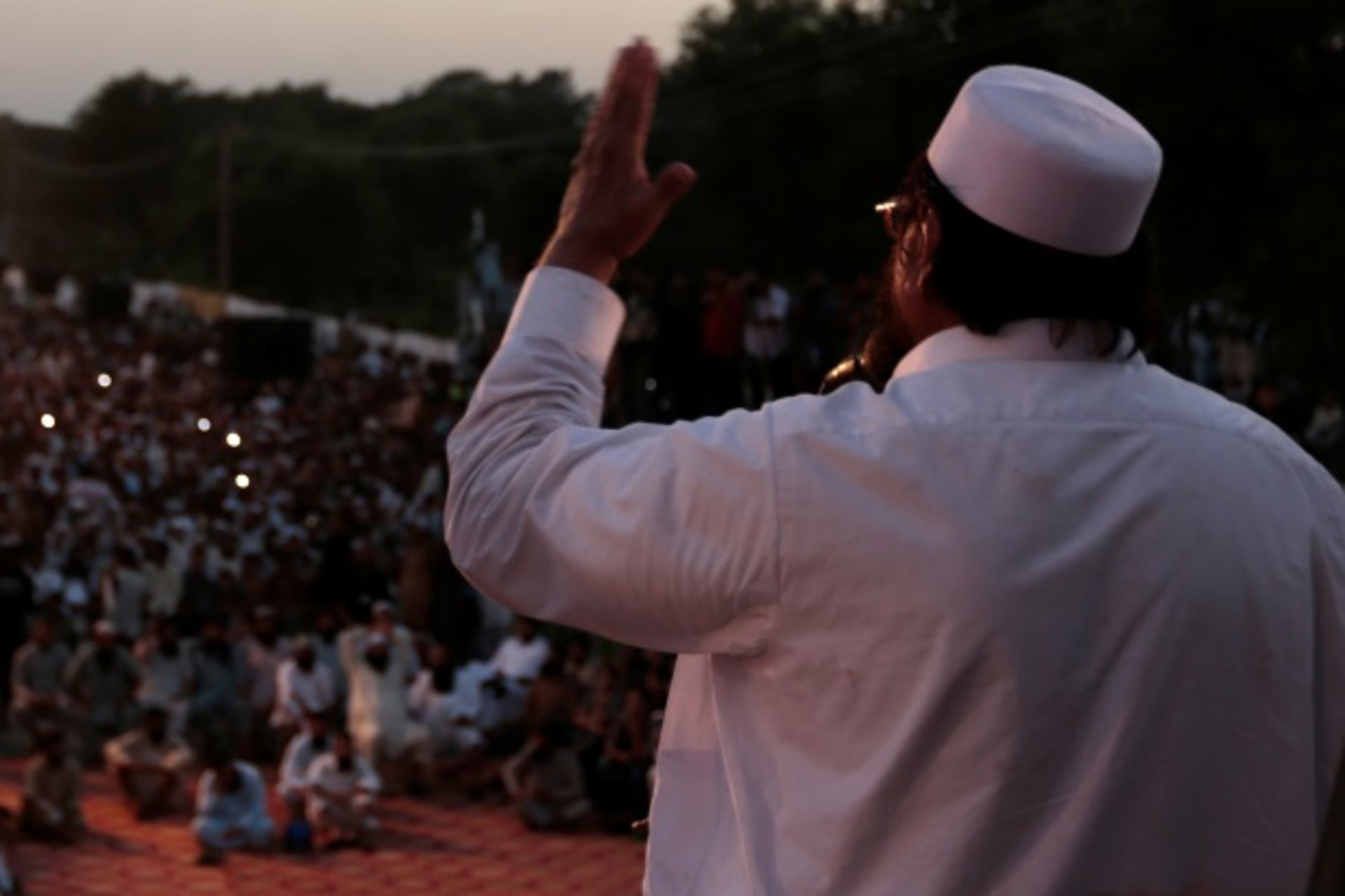
    More than a week after the terrorist attack on an Indian army base in Uri, close to the Line of Control (LoC), the de facto border between Pakistani and Indian-administered parts of Kashmir, on the Indian side, a familiar pattern has returned. Which is to say: a group of terrorists crossed the Line of Control, attacked and killed Indian soldiers, Indian officials cite specific evidence they believe links the terrorists to a group domiciled in Pakistan, and the Pakistani government then bristles that such an allegation would be made without a complete investigation. In this latest instance, within hours of the Uri attack, the Indian director general of military operations offered that he suspected the Pakistan-based terrorist group Jaish-e-Muhammad (JeM) to be responsible. JeM was the group held responsible for a remarkably similar attack on the Indian army base in Pathankot, Punjab, on January 2, 2016. Later in the week, presumably based on further evidence, unnamed Indian security officials pinned the blame for Uri on Pakistan-based terrorist group Lashkar-e-Tayyaba (LeT). Pakistan has categorically rejected any blame for the attack. The Pakistani foreign office spokesperson, Nafees Zakaria, offered that “Pakistan has nothing to gain” and that it was India’s “habit” to accuse Pakistan of involvement after terrorist attacks. Such disavowals have no credibility at this point. While it is certainly true that Pakistani citizens have suffered enormously from terrorism, that does not excuse the fact that there is a long history of attacks in India that can be traced back to groups operating from Pakistan. What’s more, internationally proscribed terrorist leaders and organizations not only have safe haven on Pakistani soil, but in some cases are allowed to hold political rallies advocating violence in Kashmir, and openly with thousands of attendees. No reasonable observer could conclude this represents a fulsome effort to stem the terrorist tide within Pakistan, nor indeed meet Pakistan’s obligations under the UN Security Council Resolutions designating these Pakistani terrorist groups. Take just one example. The LeT and its leader, Hafiz Saeed, have been proscribed for years under both UN and U.S. terrorism designations. In 2012, the United States issued a $10 million Rewards for Justice request for information that could lead to Saeed’s arrest for his role in the Mumbai attacks, in which 166 people were murdered, including six Americans. Yet he has been given free rein in Pakistan. There’s almost nothing new to say about the outrage of his continued activities because it has been going on so brazenly for so long. In recent days, he led Eid prayers in Lahore in a huge public stadium, with a sermon focused on the sacrifices of Kashmiris. (Here’s the YouTube video this terrorist organization helpfully posted online.) He has no problem drawing crowds to his public jamborees, such as the “Kashmir Caravan” he organized in late July of this year that proceeded from Lahore to the country’s capital, Islamabad. Saeed was joined in his caravan by Sami ul-Haq, head of the Darul Uloom Haqqania in Khyber Pakhtunkhwa province of Pakistan, which has been called the “University of Jihad.” According to Pakistani press reports of the caravan, some 30,000 people joined. Saeed reportedly affirmed his group’s support for jihad in Kashmir, and threatened to “violate the LoC.” One can only conclude that Pakistani authorities do not seem to mind a major terrorist organization holding rallies to urge jihad in Kashmir. It certainly does not portray the country as one interested in preventing terrorism. It is also well known that the trial of the LeT terrorists accused of carrying out the Mumbai attack in 2008 has been slow-rolled to death. An arrest of an accused financier in August pointed to some progress (the first in years), but press reports suggest that the arrest has put the process “back to 2009” in terms of timeline. Once again, this does not portray a country acting decisively to bring to justice the perpetrators of one of the worst mass terrorist attacks of the past decade. And of course it is very well known that the Haqqani network remains in fighting form, attacking Afghan, U.S., and even Indian interests across the other border in Afghanistan. Last week General John W. Nicholson, commander of the U.S. force presence in Afghanistan, said in a press conference that there was “not adequate pressure” on the Haqqanis. This August the U.S. Department of Defense declined to certify that Pakistan was “taking adequate action” against the Haqqanis, which resulted in the withholding of $300 million in coalition support funds under U.S. law. * * * Let’s try to imagine a different outcome, one that would more credibly indicate an effort to end the terrorism that continually keeps this troubled region in the “tinderbox” category of concern. Here is an imagined scenario that illustrates how a very different response could be conceivable, and could catapult India-Pakistan ties into a better place: Scenario: A terrorist attack in India bears all the signs of LeT or JeM. Pakistani authorities, weary of the poor reputation their country has acquired around the world, act with dispatch. “We are alarmed by this attack” said the foreign office spokesperson, “It sets back our already-limited dialogue with India, and makes our country look like a supporter of terrorism.” Within days, a new counterterrorism task force identifies the planners of the attack, and arrests them based on copious evidence. Trials begin within six months. Pakistani officials continue to raise their concerns diplomatically about Kashmir, but adopt a zero-tolerance policy for terrorist organizations mobilizing on their soil. Pakistan’s zero-tolerance policy on terrorism allows a breakthrough in talks with India to take place; while neither side reaches agreement in the near-term, at least dialogue has reopened. Similarly, Pakistan’s ties with Afghanistan improve, as does the Afghan security situation, with Pakistan’s increased attention to counterterror efforts against all groups. I realize this scenario might appear far-fetched, but it is not completely impossible—and it indicates what a more credible response to the ongoing terrorism problem might resemble. The pattern of denial while designated terrorists openly exhort followers to jihad is simply not credible. Follow me on Twitter: @AyresAlyssa Or like me on Facebook (fb.me/ayresalyssa) or Instagram (instagr.am/ayresalyssa
  • India
    This is the New India
    Narendra Modi has laid down the gauntlet. Sari-and-shawl exchanges, then birthday diplomacy, failed to produce breakthroughs with Pakistan. Cross-border terrorist attacks continued. This week, New Delhi signaled the end of its patience by expanding its diplomatic coercive strategies as well as military actions to deal with terrorism and Pakistan. On September 18, four terrorists crossed the Line of Control in Kashmir and mounted an attack on an Indian army base in Uri, resulting in the deaths of 19 Indian soldiers. India pointed to two Pakistan-based terrorist groups, the Jaish-e-Muhammad (JeM) and the Lashkar-e-Tayyaba (LeT) as perpetrators. Pakistan first rejected blame, calling it India’s “habit” to blame Pakistan for terrorist attacks. Then, Pakistan’s defense minister proclaimed in a looking-glass theory that Indian authorities had mounted the terrorist attack themselves, as an “inside job.” As if that weren’t irresponsible enough, on September 28 Pakistan’s defense minister gave a television interview in which he threatened the use of nuclear weapons against India. I wrote earlier this week that Pakistan’s denials of responsibility for terrorist attacks have no credibility because internationally-designated terrorist groups continue to operate openly in Pakistan. This month alone, individually-designated terrorist Hafiz Saeed, the head of the UN- and U.S.-designated LeT, led public Eid prayers in a major Lahore stadium. Over the summer he led a 30,000 person rally focused on jihad in Kashmir. If internationally-proscribed terrorist groups have permission to hold huge jihad rallies in Pakistan’s national capital, Pakistani authorities can hardly cry foul if people look to those same terrorists when attacks in India occur. This week we have seen India unfurl a new, more coercive diplomatic strategy. The Indian government has coordinated with neighboring countries Afghanistan, Bangladesh, and Bhutan to jointly boycott the upcoming South Asian Association for Regional Cooperation (SAARC) summit planned for Islamabad. Modi has convened meetings with his ministers and senior advisors to examine India’s use of water resources under the Indus Waters Treaty with Pakistan. Modi has also scheduled an internal meeting to review the possibility of withdrawing the “most favored nation” designation granted to Pakistan in 1996 under the World Trade Organization, which Pakistan has never reciprocated. Each of these steps marked new arenas where the Indian government signaled a willingness to look for new diplomatic sticks, since the carrots haven’t worked. With the public announcement on September 29 that Indian forces had carried out “surgical strikes” on terrorist “launchpads” across the Line of Control (LoC) separating Indian- from Pakistani-controlled Kashmir, the Narendra Modi government has now indicated a willingness to escalate militarily, though with limited actions. It is not entirely clear what took place; the Indian director general of military operations described operations to “pre-empt terrorist infiltrations,” with no “plans for further continuation.” Pakistan has responded by saying that no strikes took place, and that there was cross-border shelling. Regardless, the Indian government has broken with past practice by announcing strikes across the LoC. As Siddharth Varadarajan has examined, the Indian government’s account of the strikes focused on pre-emption of a readying terrorist attack “set against the background of Pakistan’s refusal to act against these groups,” a defensive act. As tensions increase, the world will be looking to Pakistan to meet its obligations as a state to prevent terrorism and de-escalate tensions with India. Indeed, U.S. National Security Adviser Susan Rice has condemned the Uri attack and called upon Pakistan to “combat” terrorism emanating from its territory. The U.S. Senate India Caucus has written a letter to Modi expressing their concern about terrorism from Pakistan. No one wants to see escalation to a nuclear conflict in South Asia, and the recent events are alarming. In the new India, dialogue is the preferred option and first resort, but terrorist attacks from Pakistan will now be met with a wider array of responses. Follow me on Twitter: @AyresAlyssa. Or like me on Facebook (fb.me/ayresalyssa) or Instagram (instagr.am/ayresalyssa).
  • Conflict Prevention
    Guest Post: What’s in Store for Kashmir Under Modi?
    Anna Feuer is a research associate in the Center for Preventive Action at the Council on Foreign Relations. Indian-administered Jammu and Kashmir, India’s only Muslim-majority state and a historical flashpoint for separatist violence, terrorism, and border tensions, has enjoyed relative peace since 2010. However, recent incidents—including a violation of the Indo-Pakistani ceasefire that holds on the Line of Control (LoC) and a controversy surrounding Kashmir’s special constitutional status— point to the many stresses that could spark renewed unrest in the contested territory. External threats from Lashkar-e-Taiba, a Pakistan-based, anti-Indian militant group committed to jihad in Kashmir, and the ongoing risk of military conflict with Pakistan compound Kashmir’s insecurity. India’s new prime minister, Narendra Modi, should seek to reduce Kashmir’s vulnerability to these pressures by addressing Kashmiris’ longstanding domestic grievances, including militarization of the region, economic stagnation, and the preservation of Kashmir’s legislative autonomy. Modi should start by altering the Armed Forces Special Powers Act (AFSPA) in Jammu and Kashmir so that it applies only to the LoC. According to Human Rights Watch, AFSPA, which grants special powers to Indian armed forces in “disturbed areas,” protects soldiers from prosecution for abuses and violates international human rights law. The previous prime minister, Manmohan Singh, pledged to repeal the law but failed to overcome the army’s opposition. Recently, however, the Ministry of Defense may have signaled a change in attitude, indicating that the time has come for “a strategic shift from merely invoking control mechanisms to addressing conflicts at various levels.” (Defense Minister Arun Jaitley was more evasive during a trip to Srinagar last weekend.) Repeal, or at least reform, of the law would do much to  reassure Kashmiris concerned with human rights and militarization. As elsewhere in India, Kashmiris are deeply worried about unemployment and economic stagnation. Recognizing that some Kashmiris may understand socioeconomic issues, like they do security issues, in the context of their troubled relationship with New Delhi, the Modi administration should keep economic development at the center of its approach to Kashmir, and avoid communally-driven policies that could divert attention from economic goals. Kashmiri traders are hopeful that the new government will revitalize trade across the LoC , though the Pakistan army’s opposition may make this impossible. Finally, Modi should downplay his party’s commitment to eliminating Article 370, the constitutional provision that grants Kashmir significant autonomy. While the BJP and its ideological affiliate, the Hindu nationalist Rashtriya Swayamsevak Sangh, maintain that Article 370 stokes separatistism and hinders Kashmir’s full integration into India, many Kashmiri Muslims perceive Article 370 as a lifeline that preserves their political voice in a Hindu-majority nation. (Whether the provision provides for substantive autonomy is another issue; presidential orders since 1950 have ensured that most Union laws apply to Kashmir.) Some have suggested that the BJP may attempt to consolidate its support in Hindu-dominated Jammu by hastening the repeal of Article 370. However, as analyst Jonah Blank points out, Modi’s sweeping election victory gives him “the political space to reach out to Indian Muslims” and potentially soften the BJP’s hardline stance on Kashmir’s special status. Modi should not attempt to quietly dilute Kashmir’s special status without officially removing the provision; past efforts to weaken the state’s autonomy have not gone unnoticed by separatist leaders. The Modi administration has already committed itself to the return of Kashmiri Pandits, Hindu Brahmins displaced during the Kashmiri insurgency of the late 1980s and 1990s. But the time is ripe to address the many other enduring issues that could exacerbate communal tensions and secessionist violence in Kashmir; as reporter Myra MacDonald has pointed out, Pakistan’s deteriorating security situation makes it less and less desirable for Kashmiris who are seeking peace, stability, and economic opportunity. By taking steps to reform AFSPA, encourage economic development, and “douse the sparks” produced by the Article 370 controversy, Modi can demonstrate his concern for Kashmiris’ longstanding grievances. However, if Modi pursues the Hindu nationalist positions that characterized his tenure as chief minister in Gujarat and colored his campaign speeches, he risks a return to the insecurity that has plagued Kashmir for much of its recent history.
  • Kashmir
    Solving the Kashmir Conundrum
    As violence surges in Indian-administered Kashmir, four experts say confidence-building measures between India and Pakistan are the only way to begin solving the territorial dispute.
  • Race and Ethnicity
    How the Kashmir Dispute Affects Security in South Asia
    Five South Asia experts assess the importance of solving the Kashmir dispute in relation to U.S. security interests in the region and what policies the Obama administration should pursue.
  • Terrorism and Counterterrorism
    Kashmir Militant Extremists
    A profile of militant extremist groups in the disputed Himalayan region of Kashmir.
  • Religion
    U.S. Should Pay Greater Attention to Pakistani-Indian Rift Over Kashmir
    Howard B. Schaffer, a former top State Department official on South Asia, says Washington should seek to prevent tensions in Kashmir from complicating U.S. security interests in Pakistan and Afghanistan.
  • Kashmir
    India-Pakistan: Peace After the Earthquake?
    This publication is now archived. Could the October 8 earthquake help bring peace between India and Pakistan?India and Pakistan have clashed over the disputed region of Kashmir since 1947, when the two countries were partitioned into separate states following the end of British colonial rule. The devastating earthquake—which measured 7.6 on the Richter scale and struck the Pakistan-controlled region of Kashmir—killed tens of thousands of people and left millions homeless. It has also triggered international attention on the region’s peace process, which experts say could be accelerated in the wake of the Kashmir quake. There are some precedents: The 1999 earthquake in the Marmara region of Turkey prompted Greek expressions of sympathy that improved relations between the traditional rivals, and the Indonesian government and Aceh separatists agreed to a peace deal after the December 2004 tsunami ravaged the region. “As a general rule, these kinds of large-scale natural disasters do tend to have an impact, directly or indirectly,” says Stephen Cohen, senior fellow in foreign policy studies and a South Asia expert at the Brookings Institution. Has India offered Pakistan aid since the earthquake?Yes. Pakistan has accepted twenty-five tons of food, medicine, tents, blankets, and plastic sheets from India, but rejected India’s offer of helicopters to assist with relief efforts. Islamabad has also been cool to the possibility of conducting joint military-rescue operations. Experts say Pakistan has long been suspicious of its neighbor and will not allow Indian military helicopters to fly over its territory.  “It’s very telling which one Pakistan accepted,” says Mahnaz Ispahani, adjunct senior fellow for South Asia at the Council on Foreign Relations. What is the basic conflict over Kashmir? Each side claims the mountainous province, home to about 10 million people, as its own. At the time of partition, Kashmir’s maharaja chose to join India, a primarily Hindu state, though the majority of the prince’s subjects were Muslim. India claims this decision, as well as elections held since then in Kashmir, make the province an integral part of India. Islamabad argues that the people of the province would choose to join Pakistan if given the choice; in 1948, UN Security Council Resolution 47 called for a plebiscite to let Kashmiri citizens decide which country to join. This vote never took place, man experts say because India rejected the resolution’s plan for a truce. Islamic militants have led an insurgency in the Indian-controlled section of Kashmir since 1989. India accuses Pakistan’s government of supporting the militants; Pakistan denies the charge. The two countries fought wars over Kashmir in 1947, 1965, and 1971. In 2002, escalating tensions—caused, at least partly, by an attack against India’s parliament building by Islamic militants—led each country to amass hundreds of thousands of troops along Kashmir’s de facto border, the Line of Control, which brought the nuclear-armed nations to the brink of war. Has any progress been made in negotiations?Not much, experts say. Since relations began warming between India and Pakistan in the spring of 2003, the steps forward have been small and slow. Negotiations on issues from trade to transportation links have yielded some symbolic successes—like the April 7, 2005, opening of a bus line that crosses the Line of Control—but few concrete gains have been made on the most important areas of conflict. “The Indians don’t want to make concessions and don’t think they have to; the Pakistanis feel that after investing fifty-five years trying to get a change in Kashmir, they should get some concessions,” Cohen says. Pakistan has suggested India withdraw some of the 350,000 troops it has stationed in Kashmir; India refuses. “The criteria for an agreement is that both sides can declare victory,” Cohen says; experts say the two sides are far from reaching such a point, but remain hopeful some sort of reconciliation can be reached. Despite the October 29th bombings in New Delhi, which India blames on Pakistani militants who are against Indian rule in Kashmir, the two countries have made concerted and uncharacteristic efforts to maintain good relations. Just hours after the attack, which killed at least fifty-nine people, the two governments agreed to open five points along the Kashmiri Line of Control to help reunite families and transfer relief supplies to the devastated region. Pakistani President Pervez Musharraf, who denies his country’s involvement in the attacks, was quick to condemn the terrorist act and promised "unequivocal support for the investigation." How did the earthquake impact Islamic militant groups in Kashmir?The leader of the militant group Hezb-ul-Mujahadeen called for a ceasefire October 11 in the Indian-controlled areas of Kashmir affected by the earthquake. While ceasefires are “always relevant,” Ispahani says, she and other experts question if this one will have a lasting impact. It could be a political ploy, they say, because most of the militant bases are on the Pakistani side of the Line of Control and likely have been destroyed by the earthquake. While Pakistan has repeatedly denied Indian accusations that it supports and arms Kashmiri militants, experts say it could do more to stop them. “If Musharraf wanted to crack down on the militants, he should do it now,” Cohen says. “But [he won’t], because people in his government would then say, ‘What leverage do we have over India?’” Is there political will on both sides to reach an agreement?Experts agree that, in order to reach an agreement on such a longstanding and intractable problem as the status of Kashmir, both Indians and Pakistanis must have a change of heart about their neighbors. This hasn’t quite happened, experts say. Ispahani says Pakistani news announcers still denounce the “Indian occupiers” in Kashmir, and India seems equally unwilling to compromise. “It’s an important time for those concerned with pushing [negotiations forward] to think about how to make that a priority,” Ispahani says. “[The earthquake] should have an impact. Whether it will or not depends on the political will on both sides.” Is there precedent for natural disasters affecting politics in Pakistan?The 1970 Bhola cyclone, which killed more than half a million people in East Pakistan (now Bangladesh), and the 1974 earthquake that hit the northeastern Pakistani town of Patan, killing 5,000, hurt the credibility of the country’s leadership, under General Agha Mohammed Yahya Khan and General Mohammed Zia ul-Haq, respectively. In the current disaster, experts say the slow pace of relief efforts—which are increasingly being criticized by the earthquake’s victims—could hurt Musharraf. His critics and political rivals, including former Prime Minister Benazir Bhutto, could say, “It’s a military dictatorship, but where are the results?” Cohen says. That pressure, in turn, “might weaken Musharraf and make him less able to negotiate” with India, he says.
  • Kashmir
    Interview with William Milam on Kashmir’s prospects for peace after Pakistan’s earthquake
    India and Pakistan have disputed the mountainous territory of Kashmir since the end of British colonialism led to independence and the partition of the two states in 1947. India controls about 55,000 square miles of the territory, Pakistan about 32,000 square miles. The province is divided by an unofficial border known as the Line of Control. The majority of Kashmir’s 10 million residents are Muslim. Clashes over Kashmir have caused two of the three wars between the two countries in the last half-century; fighting in the region has killed at least 65,000 people since 1989. William Milam, former U.S. ambassador to Pakistan (1998-2001) and Bangladesh (1990-93) and currently a senior policy scholar on South Asia at the Woodrow Wilson International Center for Scholars talks to cfr.org’s Esther Pan about the impact of the recent earthquake on India-Pakistan relations. Please give an assessment of the October 8 earthquake’s potential impact on relations between India and Pakistan. It could go either way. India rushed to offer aid and Pakistan accepted, which will make things a little easier. But I’m not certain it will have much impact at all [in the long run]. I hope it does, but it’s not clear to me that it will help move things along. The difficulties are deep, and there are still hesitations on both sides. Was it unprecedented for Pakistan to accept relief aid and food from India? I don’t know if it’s ever happened before. It hadn’t happened in my time. Why was Pakistan willing to accept relief supplies but not helicopters or helicopter flights from India? Was that a military issue? Pakistan has always been very suspicious of letting Indians fly over their territory. There was a period when airplanes weren’t allowed to fly out of Delhi or even Islamabad; foreign airlines weren’t allowed to fly over some parts of Pakistan. I remember the flights had to go further north to get to Western Europe. One of the leaders of an Islamic Kashmiri resistance group, the Hezb-ul-Mujahadeen, which is based on the Pakistani side of the Line of Control, called a ceasefire October 11 in areas of Indian-controlled Kashmir affected by the earthquake. What impact will that decision have? It’s a nice move. One of the major issues for the Indians is the continuance of cross-border terrorism [across the Line of Control]. They keep bringing it up in the meetings with the Pakistanis. Has there ever been this kind of ceasefire called? I’m not certain the Hezb-ul-Mujahadeen has ever called a ceasefire. There have been ceasefires along the Line of Control between the two armies, and still are, but in terms of the insurgencies, I haven’t heard of it. Do you think this earthquake could play the same role as the recent tsunami in Indonesia—that is, bring the two sides closer together and potentially lead to an agreement? Both sides have to really change their mindset about the other side and about the situation in Kashmir. But it seems as if the cooperation and goodwill on both sides during this crisis will help move that mindset forward. On both sides, I might add. What about the timing? India and Pakistan have been making quite a few friendly steps lately and the rhetoric over the last six months or so seemed much more welcoming than at other points in the past. On the Pakistani side there’s a definite will to move beyond where they were two years ago, and I think there’s been a good deal of forward movement. I don’t like to say anything that kills so many people is opportune in any way, but the peace process was progressing anyway, slowly. Whether [the earthquake] will speed it up or not is unclear to me. The tragedy itself is so devastating, that’s where the focus will lie for the next few weeks. You mentioned political will on the Pakistani side. Do you think the same political will exists on the Indian side? I’m not an expert on Indian affairs. I can only tell you I’ve heard a lot of my Pakistani sources and friends keep wishing there was quicker movement on the Indian side to acknowledge there needs to be some mutually-agreed solution in the future. And what about steps like starting the bus service across the Line of Control? Those are all helpful, but I think many of the Pakistanis are concerned—and I don’t speak for them, of course—that while India is very willing to being forthcoming on things like bus and train and communication links, it seems not to have moved in an intellectual way on the core issue, which is [the fate of] Kashmir. Is a major issue allowing Kashmiris to vote for which country they would like to join, as called for by the 1948 UN Resolution 47? Not at all. Pakistan has already moved beyond the position of the UN referendum. I don’t want to put too much meat on those bones, but many thinking Pakistanis worry the Indians are not moving quickly enough with regard to the mindset they need to be in to have a final resolution of this Kashmir problem. It will take many years, anyway. It’s a long, drawn-out process. But you feel like the willingness is there on the Pakistani side? Willingness to move into a process, yes. I’m not sure the Pakistanis have yet understood—and may not for a long time—that there will have to be some trades on both sides.
  • India
    Former N.Y. Times Correspondent in South Asia Says Indian Prime Minister Hoping to Resolve Kashmir Dispute Before Term Ends
    Celia W. Dugger, a former co-bureau chief for The New York Times in South Asia, says that Indian Prime Minister Atal Bihari Vajpayee’s surprise move to ease tensions with Pakistan— like India, a nuclear power— suggests that he is trying to resolve the Kashmir crisis before stepping down next year. Dugger, the Edward R. Murrow Press Fellow at the Council on Foreign Relations, says that Vajpayee is likely to be replaced as prime minister by a much more hawkish successor, and so “I think the only window of opportunity here— and my guess is this is part of India’s calculation— is that the Pakistanis have to know that Vajpayee will be gone in a little over a year.” But she adds that she is not optimistic that an agreement can be reached. She was interviewed by Bernard Gwertzman, consulting editor for cfr.org, on May 5 and 6, 2003.   Other Interviews   Prime Minister Vajpayee surprised everyone last week by restoring both full diplomatic relations and air travel between India and Pakistan after months of tension. Why did this happen now? It’s hard to say with India and Pakistan what their motivations are. Sometimes they’re rather cryptic. But I think there are several possible reasons. One is that the Indian prime minister is now 78 years old. He’s nearing the end of what will be his final term. There’ll be national elections next year. He’s always wanted to leave a legacy of better relations with Pakistan, and has been foiled in two efforts in which he regarded General Pervez Musharraf, the military dictator of Pakistan, as the betrayer. So he now has somebody in Pakistan he can deal with— the new Pakistan prime minister, Zafarullah Khan Jamali. Does Jamali have the authority to make a deal? No. In Pakistan, when it comes to the central foreign policy question, which is Pakistan’s relations with India and the [disputed territory of] Kashmir, the military regime’s views are decisive. What do you think will come of Vajpayee’s initiative? Four years in the region disabused me of any facile hopes for peace. There are no real signs that either side had changed its fundamental position on Kashmir. The one slightly hopeful note is that in a statement on Tuesday by Jamali, which must have been approved by General Musharraf, Pakistan has indicated it is willing to discuss nuclear confidence measures with India, but it is still not clear that Pakistan will not continue to hold talks on the nuclear issue hostage to the Kashmir issue. Why is that important? Because the world’s greatest fear about India and Pakistan is that there might be a nuclear war between them, and at a minimum, they must take steps to ensure that this does not happen by accident or miscalculation. I gather that Jamali invited Vajpayee to a meeting in Pakistan after Vajpayee made his announcement, but he politely refused. Right. He’s not going to make the mistake he made in Agra [at a 2001 India-Pakistan meeting], which is to go without a deal already clinched. I think he’ll only go to Pakistan if they can agree to something substantive. Deputy Secretary of State Richard Armitage is making a trip to the region. Will he try to mediate? Inevitably, the United States ends up playing a role of message-carrier [between the two sides] and, of course, pressuring each to try to be more reasonable. Is there a short-term solution in sight? No, and I think the only window of opportunity here— and my guess is this is part of India’s calculation— is that the Pakistanis know that Vajpayee will be gone in a little over a year. They’re likely to end up with somebody more hawkish, meaning Lal Krishna Advani. He is the home minister— who is also the deputy prime minister— and he’s believed to be much more hawkish on Pakistan. So the Vajpayee camp’s hope is probably that Pakistan will seize this opportunity and make some compromises that it wouldn’t otherwise make. Why does Vajpayee consider Musharraf a betrayer? There were two betrayals. The first happened in February 1999, when Vajpayee took a very unusual step— he took a [ceremonial] bus [ride] to Lahore, Pakistan, [at the invitation of then Prime Minister Nawaz Sharif to restart bus service between the two countries]. This was the first visit of an Indian leader to Pakistan in a decade, and it followed the May 1998 nuclear tests both countries conducted and the heightened tensions those tests provoked. There were very public talks with Nawaz Sharif, and they agreed to this elaborate set of things they were going to do to try to bring peace between the two countries. Well, it turned out that, even as they were speaking, General Musharraf [then the army chief of staff] was planning the [May] Kargil invasion of Indian territory in Kashmir, which torpedoed [the peace initiative]. And then there was the October 1999 coup, when the general took over. Then, in the summer of 2001, there were talks in Agra, where the prime minister of India took a risk again. Musharraf came to India, and the talks were a disaster. The general outtalked Vajpayee; he made a public presentation to a bunch of editors in which he destroyed any chances of there being an agreement with India. So, for the second time, Vajpayee felt he had been personally betrayed by Musharraf. Now there’s newly elected Prime Minister Jamali, so at least there’s somebody else Vajpayee can deal with. There’s another factor motivating Vajpayee. I think the military strategy had reached the point of diminishing returns— it was getting nowhere. The current crisis began with the shootings outside the parliament in New Delhi? Right, that was in December of 2001, and then India began this massive military build-up, and last spring there were 1 million troops along the border. You were stationed in Delhi then. Did you think there’d be a war there? I thought it was certainly a very strong possibility. We were all bracing for another spectacular terrorist attack, which, given that the two sides were nose-to-nose, could have led to some kind of military action by India and then, Lord knows what would have happened. But fortunately that didn’t happen, and Armitage came through and got a pledge from General Musharraf to rein in the Kashmiri militant groups that had been tormenting India and Kashmir and which India considered terrorists. That sort of calmed things down for a while. But the terrorism, or as Musharraf would call it, freedom fighting, in Kashmir has not ceased. The real conditions on the ground haven’t fundamentally changed. Is Kashmir a popular issue with Pakistanis in general? It is a popular issue, and it’s an issue that gives Pakistanis a sense of national identity— it’s one of the few national issues. Is Kashmir an issue where India is at fault? No, it’s a tangled historical conflict, not unlike a custody battle or a bitter divorce, where people are dividing the property and there’s this crown jewel that they can’t figure out what to do with, and that’s Kashmir. This has festered for many years. The assumption by many is that the natural solution would be to turn the so-called Line of Control [that currently separates the two sides], after some minor changes, into the international border. But Pakistan has never felt that was acceptable. Pakistan wants the whole province of Jammu and Kashmir? What they really want is the valley, the Kashmir Valley, which is the majority-Muslim part of the state. But India has vowed, and there are certainly no signs of compromise on this, that they will never give up the Kashmir Valley. What is so important about the Kashmir Valley? It’s the most beautiful part of Kashmir, and it’s the overwhelmingly Muslim part of the state of Jammu and Kashmir. Pakistan was founded on the idea that it was a homeland for the Muslims of the subcontinent, that it was an Islamic nation, and so Pakistanis feel that by rights this area of Kashmir that’s contiguous to them should be part of Pakistan. Did the Iraq war play into Vajpayee’s actions? His initiative came soon after hostilities ended. My guess is that it didn’t play a very big role. But I think it will undoubtedly play a role in how India presents this situation to the United States— the foreign minister of India [Yashwant Sinha] even made this case himself, suggesting that India had a better case for invading Pakistan than the Americans did for invading Iraq. Indians have long felt that the United States had a double standard on terrorism. The way they saw it, the Pakistanis were sending terrorists to attack them every week, and the Indians had been tremendously restrained. The Indians have demanded that the United States use its influence over General Musharraf to rein in the militants based in Pakistan and not be bought off by the fact that Musharraf is helping with al-Qaeda and so look the other way at the terrorism they believe he directs against India. So they’ll use Iraq as yet another example of what they see as American hypocrisy. How did India react when, after 9/11, Pakistan became friendlier with the United States? It was upset. Because India had a pretty good relationship with Bill Clinton? The relations were really on the up and up. Pakistan was on the outs. When President Clinton visited India [in March 2000], he stopped for a few hours in Pakistan and devoted most of the speech he delivered to scolding the general. And he spent almost a week traveling all over India effusively praising the country. All of that changed with 9/11, and that was a shock to the Indians. But they tried to use it to their advantage, because suddenly the Americans had a lot of influence with Pakistan whereas they hadn’t before, and they were able to wrest from Pakistan a commitment to crack down on some terrorist groups and reduce militancy. It’s happened some, but it’s crept back.