The Humanitarian Crisis in Gaza
Event date
Speaker
- Associate Professor, Sciences Po Paris; Former United Nations Undersecretary-General, Humanitarian Assistance and Reconstruction Gaza, and Middle East Peace Process; Former Deputy Prime Minister, Netherlands
Presider
- Foreign Correspondent, Wall Street Journal; CFR Term Member
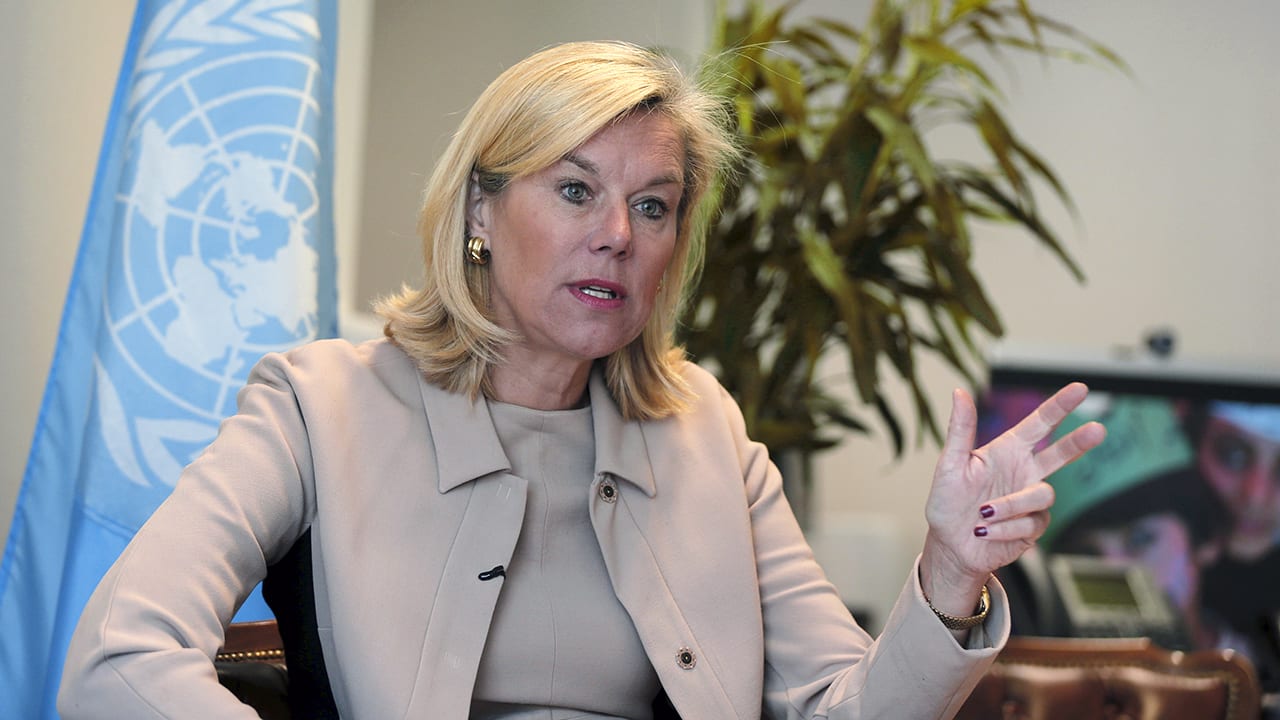
Former UN Undersecretary-General Sigrid Kaag discusses the state of humanitarian assistance in Gaza and the role of the international community in supporting relief efforts.
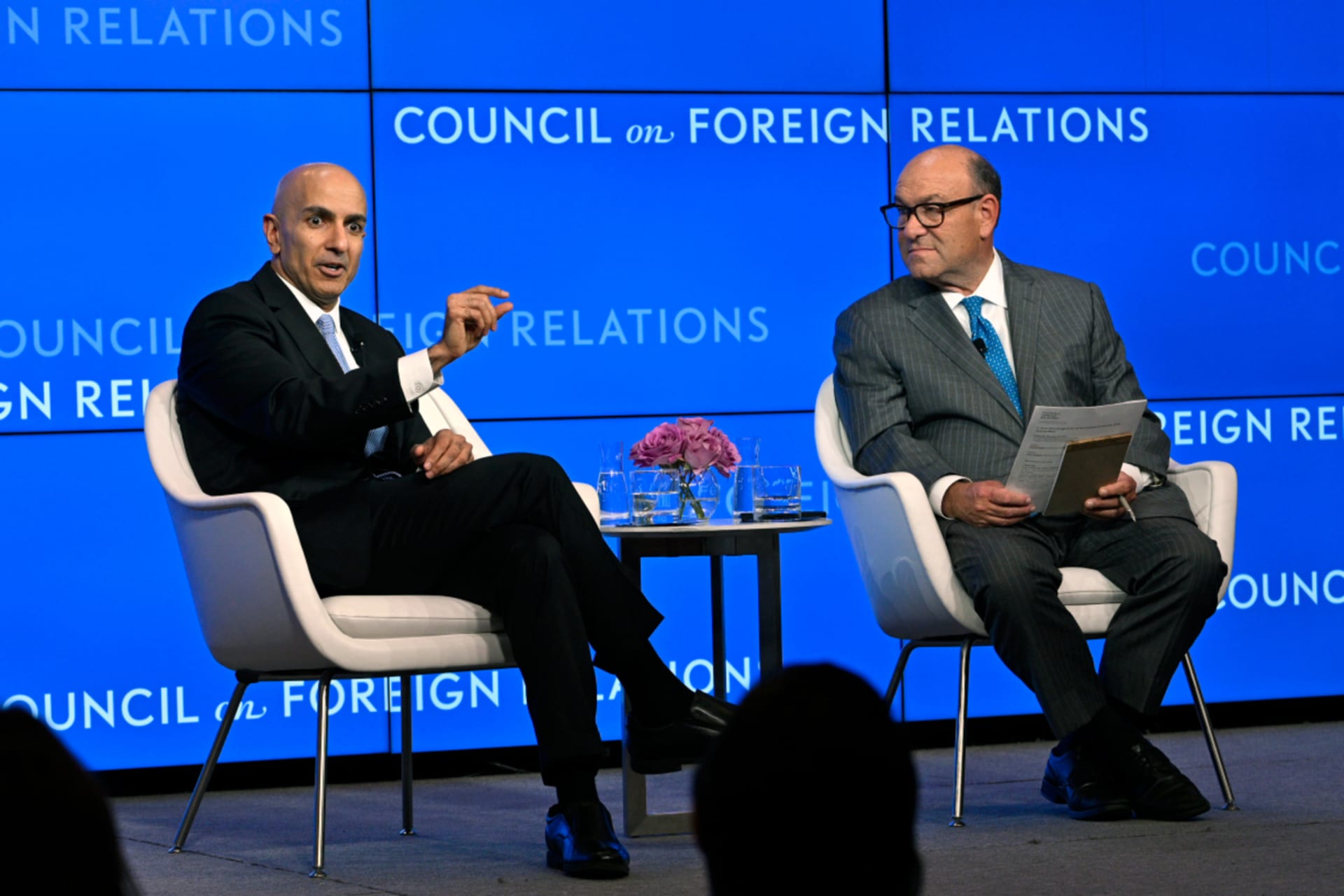
KALIN: Welcome, everybody, to today’s Council on Foreign Relations’ meeting titled “The Humanitarian Crisis in Gaza.” I’m Stephen Kalin. I’m a foreign correspondent for the Wall Street Journal covering the Middle East, and I will be presiding over today’s discussion.
Our guest today is Sigrid Kaag, who is a veteran European politician and U.N. official. In her native Netherlands she has served terms as deputy prime minister, minister of trade and development cooperation, and minister of foreign affairs. She also has a long and rich career at the United Nations, serving most recently as undersecretary general for humanitarian assistance and reconstruction in Gaza, a position that was only created a few months after the October 7 attacks and the war in Gaza. She’s also served as special coordinator for the Middle East peace process. She left those roles just a few months ago and is now an associate professor at Sciences Po in Paris.
We’re fortunate to have Ms. Kaag with us to speak about the situation in Gaza, which is a place that she knows well. She first visited the territory in 1988 and then repeatedly over the years in various roles, most recently in June before she left the U.N. Ms. Kaag, welcome.
KAAG: Thank you. Thank you, Stephen.
KALIN: I’d like to start our conversation today by asking you to set the scene for us in terms of what’s happening on the ground now in Gaza where we’re twenty-three months after the October 7 attacks and a war that has lasted almost for completely that time with just a few small pauses.
Dozens of hostages taken from Israel, largely, by Hamas are still being held there. More than 64,000 Palestinians have reportedly been killed up to this point. The Israeli army has launched a fresh campaign in Gaza City and last month the IPC, which is an expert group that includes some U.N. agencies, declared famine in parts of Gaza for the first time. So maybe that’s a good place to start.
In response to that IPC declaration the Israeli prime minister said there was no famine in Gaza and Israeli officials have accused journalists inside of Gaza, I should note more than 200 of whom have been killed in the war, accusing them of fabricating the extent of the crisis. So there’s really a war of information that’s going on as in most conflicts.
So you’ve been on the ground recently. You’ve kept contact with your colleagues on the ground. What did you see and hear in your recent visits and what reports are you still getting on the ground that can give us a picture of what’s happening?
KAAG: Yeah. Maybe if I may, I started my role in January 2024. I concluded the different roles end of June ’25 and in that entire period I think it’s fair to say that all of the negotiators in the international community and the U.N. never expected the conflict would last this long, that the hostages were still held in atrocious captivity under horrific circumstances or conditions, as we understand, and, of course, that the civilian population in Gaza is subjected to the type of warfare that is being waged on them and at their expense.
I mean, that has been the picture. But it’s been, I think, a horror show unfolding and each time we thought there may be a reprieve when working in Gaza or trying to get aid to Gaza it could always get worse.
Now, I know for some of the expert listeners in this group they will not be surprised. With this particular conflict, sadly, each time one thinks it cannot get worse it actually has. But Gaza has been destroyed to the point of visually seeing a moon landscape over time, systematically, consistently.
So civilian infrastructure, as you know from all the reports, has been destroyed and life has been made unlivable to the extent you suddenly hear proposals such as, well, we can turn Gaza into the Riviera and people should so-called voluntarily migrate.
The fundamentals, however, of the crisis in Gaza is one of a political and a security nature—the legitimate security concerns for Israel, the immediate unconditional return of the hostages and the remains of those who, sadly, died in captivity and the necessity for safety and security for the civilians.
But the solution, at the end of the day, of any cycle in this horrific conflict is a political one. So we focus, rightly so, on the humanitarian side but we will be going around in circles if we do not go back to the heart of the matter.
Now, humanitarian conditions, last but not least. The IPC I met, as you know, as the most senior U.N. official. I was the only one who would basically speak and meet with Israeli government officials, including Prime Minister Netanyahu. The denial of hunger or malnutrition was a constant one.
Now, it has always been, let’s say, a war on data and a war on facts, also because there’s a link to the ICC and the ICJ. But when you visit the field hospitals, when you look at the statistics, and when you just look at the minimalistic or zero supplies entering Gaza you don’t have to be an expert to know what this does to the human body in a process of twenty-two months of denial of basic livelihoods from the 2nd of March, zero entry of food, fuel, or water, or minimalistic, to a population of 2 million that’s exhausted, on the move, severely traumatized, and deprived of basically everything that amounts to human dignity. And that is a picture and this, I think, will haunt all of us. It’s a stain on our collective conscience, to my mind.
KALIN: What, in your experience in the Gaza humanitarian role, was—or the biggest obstacles to getting needed supplies in, not just food but medicine, fuel, and also to getting a ceasefire? I mean, we had a ceasefire for about a week, I think, that lasted in November of 2023 and then another slightly longer one, right, at the beginning of this year.
But these negotiations just seem to drag on continually. There’s shuttle diplomacy whether by the American envoys or the Qataris and the Egyptians, and it just seems like an endless cycle of talks and a bit shocking that this conflict, as you said, dragged on much longer than anybody was expecting when the position that you held was created.
So what do you attribute those—what were the biggest hurdles?
KAAG: Well, I think, frankly speaking, the starting point was a wrong one, that aid became negotiable. Under international humanitarian law humanitarian assistance is always the responsibility of the—in this case, the international community but also to comply with international humanitarian law is the duty of the warring parties.
So the moment we started to negotiate about the number of trucks—what, how many, when—in a way you’ve lost the starting point and you’ve undermined almost voluntarily—not we, the U.N., because in this case we relied heavily on the U.S.—but you have undermined the basic premise of international humanitarian law and that has just sort of spiraled, to my mind, out of control.
You also remember that there were certain groups and also Israeli ministers that heavily demonstrated against or blocked the arrival of aid. So everything became, like, a minor achievement. To have ten trucks in, let’s say, on day X was like a hurrah moment, which is actually totally flawed and wrong.
At the same time you have to choose between getting the aid in, trying to reach people. But there have been a number of building blocks, I would say, that have been consistent. One of them legitimate security concerns, i.e., for the operations itself or military operations were ongoing.
But the bigger picture was administrative delays, screening that was never ending that would maybe result in having a number of, let’s say, 400 trucks at the gates but you’d only get fifty through. I am not speaking now from a specific day but the delays, the checking procedures, the hours giving, the denial of permits, the checking of drivers, the retraction of permits.
So, at the end of the day, between aid available at the gates, at the borders, and aid delivered there’s a huge gap at the best of times and what it demonstrates when there was political will—I exemplify always the polio campaign, which was conducted in the midst of fighting.
Humanitarian zones were agreed. Polio campaigns were undertaken in the midst of fighting in certain pockets within Gaza and everybody had agreed this was a necessity. Polio, as we know, is a highly communicable disease.
So there was an interest by everybody to prevent this. Political will is everything. The rest is technicalities. It can be arranged. The international community, U.N., NGOs, are risking their lives. They’re trying to reach people.
The second phase, of course, was, again, an instrumentalization and weaponization of aid through the establishment of the Gaza Humanitarian Foundation from flawed war objectives, seeking to deny Hamas having an instrument on the basis of a premise that aid was falling in the wrong hands, in this case Hamas.
That was the premise, not proven correctly, not when it comes to U.N. or NGO channeled aid. And then a lot of time was lost and, as we know, a lot of lives were lost as aid was given on the wrong reasons, organized in the wrong manner and it was literally weaponized, and then you just basically lose the plot.
There’s a huge gap between statements and the reality. But to my mind, the convening factor is political will and willingness of the parties and of those that can exercise serious influence, and if that doesn’t happen the humanitarian workers are just left by themselves and having to surrender, basically, to looting because the population has given up all hope and now a lot of the aid even if it gets in is looted.
And you can’t even blame people when the euphemistic term is self-distribution. But it’s also very much looting by young guys that may make a profit or are desperate because, you know what, you never know when the next truck comes around.
KALIN: I want to come back to the point of political will and ask you about what foreign governments should be doing more of. But you mentioned the Gaza Humanitarian Foundation, and for folks in our audience who aren’t familiar that was an organization set up by—backed by Israel and the U.S., largely, private military contractors looking to replace the U.N. and other distributors of aid that was stood up pretty much at the beginning of this year after Israel blocked the U.N. from getting any aid, really, in for several months.
And the U.N. and other NGOs warned against using private contractors, saying that they didn’t respect humanitarian principles like neutrality; they worked too closely with the Israeli military, with a party to the conflict; and they raised concerns about whether this entity could safely deliver that aid. And then, sadly and tragically, in the weeks when they began distributing aid a number of Palestinians were shot and killed in addition to being trampled, right, at some of these distribution sites.
So I think one interesting question for somebody in your role is about this increasing privatization of aid distribution. I wonder, first, if you could give us your view on why Israel blocked the U.N. and other agencies that were distributing aid from doing so and felt the need to create this alternative pathway. Some of the stated needs were to keep aid out of the hands of Hamas but this setup didn’t really seem to be any better at doing that or more targeted.
So I’m wondering what you see as the true intention and then, you know, do we need to think about, as we talked about reform and think about reform at the U.N., is there actually a legitimate role for a new way of thinking about humanitarian aid, whether that’s private contractors or some other channel that isn’t the U.N. or doesn’t rely as heavily on the U.N. as the traditional partners?
KAAG: Mmm hmm. Yeah, I think that’s four questions. I’ll try to be very concise.
One of them is I’ve always said to my Israeli counterparts, well, if you want to do it instead of us be my guest. You’re accountable. You’re the occupation authority before the 7th of October. You have to do it. It’s on your budget.
I was a minister of finance so I also met with Minister Smotrich talking about budgetary constraints—let’s put it that way—and I said, yes, you have to do it but you have to do it well and you have to do it in full compliance with IHL.
And the Gaza Humanitarian Foundation is not that precisely because, to my mind and to our collective understanding, it was a product of war objectives, not only Hamas but potentially also to be instrumentalized in luring people through the provision and the very limited location of the provision of food only in the south of Gaza, luring people all to the south because ever since last year the notion of so-called humanitarian cities—I mean, you can forget the word city, you can also forget the word humanitarian—but locations with some tents where everybody is forced to be in order to receive some aid.
That was this. Otherwise, you don’t have a foundation that constricts itself to four locations with heavily armed guys.
And, yeah, the concept failed. I think that may have been a big lesson. But it also failed because precisely the international community member states said, this is not the way we see it. We neither agree and we will not finance it. We will not politically endorse it. So that was a big factor in this equation and the U.N., I think, and NGOs stood firm.
Now, when it comes—if you step out of the lens of Gaza, in general there’s always a need for reform for efficiency, optimization, and there are loads of private initiatives through foundations, private sector. There’s a lot of twinning and coalescing.
But it’s not the occupation authority or one of the warring parties that decides who will get aid and when and how much they will be fed or if they shall be fed. That is the fundamental flaw.
Now, the bigger reform discussion that is being waged in New York, also driven, of course, by funding cuts from a number of countries, not just the U.S., will, I think, be an incentive to look at it differently.
But we’ve been having this discussion for a long time. Kristalina Georgieva and I were respective co-chairs of what is called the Grand Bargain and that was all about providing humanitarian assistance differently, do it well, using local actors that are connected to their community. It’s cheaper. It builds more trust.
The ideas are all out there. But in Dutch we say—I don’t know if it’s an English expression—only the sun rises free of charge. You know, donors can’t get away with financing nothing. But I think there’s a plethora of opportunities but the conditions are very clear and the need to protect and stand up for humanitarian law—international humanitarian law is extremely important because through the lens of Gaza you will see that most people, first and foremost the Palestinians, are basically saying it is not worth anything because no one acts in the name of international humanitarian law—those with sovereignty.
KALIN: And so carrying on in the idea of reform at the U.N., the two positions that you held most recently at the U.N., the humanitarian role and the Middle East peace role, remain vacant now and I wonder if you could talk just a little bit about the role that the U.N. has had. They seem a little bit absent from the political—trying to solve the political crisis of which the war is, obviously, a major part.
And I’m curious, having been in those roles how do you see—do these roles need to be reconstructed or thought of differently?
KAAG: Mmm hmm. Yeah. The first role, humanitarian assistance—and it sounds very strange, perhaps, for the audience—the humanitarian assistance and reconstruction role I basically mainstreamed.
I got myself in the business of getting out of business. I believe that is much needed in many such roles. But the reconstruction data, the studies, the financing, everything is available except the ability to do so. But I mainstreamed that and I sort of handed it over to colleagues so you have one structure, moving forward.
The U.N. peace process role was one that I truly didn’t seek and the moment I was asked to undertake it I said I don’t want this role. I’ll do it temporarily because there’s a vacuum. But I really profoundly believe that the role of the U.N. particularly in this context has become one of a humanitarian plus agenda where the U.N. is not at the table. It’s more of a reporting role.
And I think that already was changed or the case twenty years ago because the parties either didn’t ask or certainly the Israelis do not see any role for the U.N. at the political level, the U.S. generally neither, and these are the two big actors of importance when it comes to changing facts on the ground. Not creating facts on the ground but creating different facts on the ground.
And, secondly, the U.N. or, rather, the member states are not great at concluding that, you know what, the situation has changed. Circumstances are so fundamentally different. Let’s look for form and function.
So my advice has very transparently been absolve or dissolve the role and look for what and where the U.N. can provide added value and if the parties are in need of facilitation or mediation there’s always the U.N.
The one bit that no one else has or possesses is legitimacy and that’s when it comes to peace and security. It’s only the U.N. as a platform through the Security Council that can provide that. But all players have to want that. Otherwise, you will become a master of statements and that may ring very, very hollow, and in the case of the lives of the hostages, the families of the hostages as well as the Palestinian civilians at this moment in time, it rings so hollow that it risks sounding complicit because it speaks from a position of inability or impotence.
Perhaps no one’s to blame but this is a fact. And so I said at the time, end of June, it’s really time to wrap up and, indeed, the post has not been filled. But you can see the discussions on recognition of statehood or the two-state solution. They’ve become—have remained very perfunctory without actually realizing statehood or looking at which safeguards and guarantees have to be in place in order to provide for a safe and secure Israel and a viable independent Palestinian state.
We’re going back into history. It’s almost as if we’re dusting off—as former Israeli foreign minister said—Shlomo Ben-Ami—we’re dusting off old texts, bringing them out of the attic. But it doesn’t absolve member states from their responsibility.
KALIN: Yeah. The U.N. has always only been as strong as the member states are willing to be, right?
KAAG: Yeah.
KALIN: So, I mean, what tools are at their disposal beyond these sort of empty statements that we’ve increasingly seen?
I mean, would you expect or would you like to see more member states taking more decisive types of actions whether that’s, you know, reducing diplomatic representation, some sort of sanctions, something to try to reinforce and reimpose some of the standards of international law that have been broken by both sides on this conflict?
KAAG: Well, I think in general member states have to be consistent and coherent with themselves. You cannot act differently or significantly differently in situation A or B because it lends itself to cheap, sometimes not relevant, comparisons, and as we know with the younger generation but certainly also representatives from the Global South they see what they consider Western hypocrisy—their words.
Secondly, many a foreign minister, and I was one myself, will find it very difficult because all politics, sadly, including foreign politics is often domestic, and if you look at the composition of many European political parties, let’s say, in Europe their inclination is not necessarily to sort of really seek to be the standard bearers of international law, let alone this conflict.
Many countries are deeply concerned about the tariff war or the tariff issue, let’s say, with the U.S. So they’ll have a priority of actions and it’s not being a front runner on this conflict, even though I think it represents a stain on our humanity.
Now, the measures you can count them. You can go from incentives to sanctions and within that you can look at trade measures, financing, visas, you name it. So far, I don’t think many a bold step has been taken and ultimately for any serious pressure on this particular Israeli government it’s either the U.S. or Israeli citizens themselves, and since 7th of October I would say the empathy button has been very much turned inward.
As long as the hostages are not returned it seems to be very difficult, next to impossible, for a long time to have a conversation about human suffering in Gaza or what’s happening in the West Bank including East Jerusalem. And if you look at the horrific terror attack today, again, that delays the very fundamental but much needed discussion as to how we get out of this situation.
But ultimately, the two-state solution, so—over Palestine is just fading away under our very eyes, if not it’s gone. So the reality will impose itself on people, as well, of a one-state outcome, of different varied statuses for the people that are on the land because Palestinians will not leave and the Israelis will not leave. They have their state despite the dreams of extremist voices that ethnic cleansing is a realistic option for Gaza or, potentially, West Bank.
So it is a harsh reality. But measures are always there. The point is I haven’t seen and heard many countries willing, from a viewpoint of the interest of both, to take these steps and symbolic conferences, to my mind, we’ve gone way past that point.
KALIN: Yeah, I wanted to get your view on this conference that seems to be scheduled still in New York on the sidelines of the General Assembly co-hosted by Saudi Arabia and France. France has said—President Macron has said that he plans to recognize a Palestinian state and they’re trying to get a few others to join in.
The Trump administration has responded, of course, by denying Palestinian officials visas to attend the conference. Marco Rubio has said that France should knock it off because this might embolden Israel to annex the West Bank and that decision seems to have at least been delayed partly by the UAE’s statement that that would be a red line and sort of talking up the dangers of annexation.
But to focus on this idea of this conference and this recognition, what purpose do you see that is serving? Is it anything more than—I mean, does it have any teeth to it and could it start us down a more positive road or does it risk actually provoking a new crisis, perhaps in the West Bank?
KAAG: Yeah. Well, I think that crisis is already happening. Whilst we talk about Gaza, West Bank, if you look at demolitions, the destruction of Jenin, the military incursions, as well as Palestinian police behavior, all that is already happening under our very eyes. We just don’t speak about it, I think, enough.
I understand the symbolic and the sort of political legal value of statehood recognition but I think we all have to be very clear it should neither be a punishment for the Israeli government or a reward for Hamas. It’s a right and it’s a long overdue right.
But the question is, as I just mentioned, is if these same member states that are incapable—unwilling or incapable to stop even the fighting in Gaza, to arrive at a ceasefire, to get aid in, get the hostages out, then I’m not quite sure how far they’re going to go with the declaration of statehood because the question is and then what and how.
And, you know, you have then Israeli politicians that say, well, you know, we’re already drawing the map, or, good luck with your piece of paper. It’s not actually far from the truth, I fear, because in the case of West Bank including East Jerusalem—we often tend to forget that—one doesn’t really have to go for formal annexation.
Most of the territory has already been defined either by settlement expansion, by the denial of permits, by the confiscation of land. I think this threat of final annexation is the final blow or is the death knell. But the facts on the ground that have been established by the state and with—and/or by the settler movement with support of the state apparatus is much more meaningful.
And I don’t think that many a Palestinian that lives in the West Bank including East Jerusalem is sort of going to give a party tonight if statehood were declared. The point is dignity, rights, quality of life, and perspectives. To be able to live one’s life the same way as anyone else.
And my last visit to Gaza I was very struck by a number of my Palestinian counterparts. They had two different messages and one of them was, please remind everyone we are more than food. We have our quest for human dignity. We’re the same as everyone else.
And the second bit, the politicians won’t deliver but please thank everyone that is out there speaking for us. In the midst of their tragedy and loss they’re still remembering and I think that is something we owe to others.
KALIN: I want to maybe squeeze in one more question before we open it up to the audience.
If we start thinking about the future of Gaza there have been a number of different plans. You mentioned some of them, quite disturbing, talk about, quote/unquote, “voluntary displacement.”
There have also been some plans floated by various Arab countries but they don’t always seem to align and I’m wondering whether that is also creating—that’s a potential challenge down the line or whether there can be some sort of coalition of the willing that want to be involved in helping to stabilize, you know, if there could be a political solution.
Are there the practical means to restabilize the security and then eventually the construction of Gaza?
KAAG: Yeah, I think so. I mean, it’s true. Ever since I started in January last year there was an ever flurry or a plethora of options and ideas. It was almost at one stage hard to keep track of who offered what to whom or who was in contact with whom.
But it boils down to needing clarity on the governance of Gaza. It’s also evolved into, of course, clarity. If we go by Hamas’s own statements, the demilitarization by Hamas, part of it, it seems. I mean, that’s always contradictory. But that they do not want to rule or run Gaza.
I also think they’re neither in a position nor will be allowed, not just by the international community, most likely not by their fellow Palestinians. More importantly, you need clarity on the governance structure that is legitimate—not imposed, not some construct between country A and the Israeli occupation authority to further settlement and to push the people out, for instance.
So that needs to be very clear and ultimately it always needs to be part of a timeline that keeps the connect between Gaza and West Bank with a view to future statehood. But that, of course, for most Israeli negotiators is almost a no-no.
We know that Prime Minister Netanyahu has always made thorough in saying no Hamas, no Abbas. So, you know, there you go as a political premise. Security can be done. I mean, there are proposals in terms of an international peacekeeping force, a multilateral force, or some construct whereby the Americans provide some supervision but not boots on the ground. Egypt, Jordan, maybe some other countries will be beefing up security. All that. And it is complicated, but it’s doable. But you have to know what you want. And that, I think, is coming back to the war objectives that has evolved and dragged and dragged. The political future of Prime Minister Netanyahu, the legal course—his own particular personal stakes in that regard, elections that will be held in Israel. All that will influence.
And I’m not saying this because I think it’s fair or right, but it’s just—sadly, it’s a fact in this entire complex negotiations, and ultimately in the direct it affects the hostages, their families, and it affects the Palestinians. And the future of Gaza is very bleak—extremely bleak, given the extent of destruction and the absence of a current governance framework. But it’s doable. And the studies are there. And the Palestinians are phenomenal when it comes to their resilience. And I think a future can be enabled. But we have to want it. And we have to support it. My message always to my European colleagues was, if you can’t stop the war you owe it at least to pay for the recovery and reconstruction. And if you can’t do that, please just don’t say anything.
KALIN: Great. Well, with that I think I’d like to open up to the audience and invite CFR members to join our conversation with any questions. And we’ve got until the top of the hour. And I’ll try to give Ms. Kaag a couple of minutes at the end for any maybe final thoughts. As a quick reminder this meeting is on the record.
OPERATOR: (Gives queuing instructions.)
We will take the first question from Trudy Rubin.
Q: Hi. Yes. Trudy Rubin. Worldview columnist for the Philadelphia Inquirer. And a long-time Middle East correspondent, some years ago.
You rightly cite facts on the ground as the key rather than hopeful statements. If Gaza City residents are pushed south and you have facts on the ground of this massive population in too little space with no food, do you see a plausibility that the far-right could achieve its objectives by making it inevitable that somehow that population gets pushed out, even if it doesn’t want to go?
KAAG: Can I speak now, Sophia?
KALIN: Yeah, you can go.
OPERATOR: Yes.
KAAG: OK. Sorry, Stephen.
Yeah, Trudy. And over the years also I think Dutch politics taught me—I’m very cautious in my—in speculating, and particularly in this context. But let’s put it this way, if you’re looking at two million people being forced in already unlivable conditions and even worse, with disease on the rise, no services, and certainly no future, it is not unlikely, let’s put it that way, that indeed they will either vote with their feet. Of course, there is the Egypt factor that has always been very clear and adamant that it will neither allow this, nor wants to be a de facto participant in what is, according to international law, my understanding, tantamount to ethnic cleansing.
But the risk, I think, is very real. If we go by Israeli military commentators and former IDF officials, the battle to deal with Hamas has long been fought in terms of a strategic military threat to Israel’s security. That has been dealt with. So the way the war continues now either serves different objectives or because to end the war tends to be harder if there’s no clear victory and you don’t have clarity yet on the conditions on which this war will be ended.
So we’ve all read, again, of course, that there is another Trump proposal. It seems to be one-time release of all hostages, perhaps some Palestinian prisoners. I didn’t see that in the publications. And then the start of negotiations about the end of the war. But I think all of us who’ve been in and out of the Middle East know this could take either forever, but it doesn’t necessarily lead to a very clear end result which is beneficial, and is legitimate, and really leads to peace and security. It will also further continue to risk destabilizing the region.
KALIN: Sophia, can we have the next question?
OPERATOR: We will take the next question from John. Jonathan Guyer.
Q: Hi. Jonathan Guyer with the Institute for Global Affairs. I’m a journalist. Thanks for this presentation. Thank you, Stephen.
The International Association for Genocide Scholars recently called the situation in Gaza a genocide. I wonder, what is the role of the courts in addressing the atrocities? Do the ICC or the ICJ—do those cases have a chance in preventing further atrocities, crimes against humanity, and so forth? Thank you.
KAAG: Thank you very much. That’s a tough question. Yeah, in the Netherlands—let’s be put it this way, in many countries this debate is now being waged. If countries are doing enough according to their own constitution and either membership of the ICC and ICJ in order to prevent a possible genocide, knowing that technically the courts have to confirm if and when this were to take place. I’m not quite sure. I think member states can take a case, again, to the ICC or the ICJ. Now we know that the ICC already is under huge pressure politically in its operations. The ICJ diligently keeps working. But member states have their own individual responsibility.
Now, I must say, in all the time that I went in and out of Gaza I’ve also lost staff members whilst they were on active duty—members of my team. I’ve always tried to not entirely preoccupy myself with the question if or under which condition one should speak of genocide, not wanting to dismiss the importance of it, because I personally felt that the extent of the potential and proven war crimes was such, and the extent of human suffering, it didn’t really matter anymore later on, when all has been said and done, whether we still confirm it. It is such an atrocious state of affairs, war crimes are being committed by the parties. It has to stop, and then we can take all the other steps. Or, rather, member states have to. But for me, working in the field, it wasn’t—let me put it this way, it wasn’t—it may sound very strange. It was very important, but it’s not what kept us awake at night, if that makes sense to you. We tried to save lives.
KALIN: Sophia, can we take the next question, please?
OPERATOR: We will take the next question from Allen Weiner.
Q: Hello. Allen Weiner from Stanford Law School.
(Speaks in Dutch.)
KAAG: (Laughs.) Very good Dutch!
Q: (Speaks in Dutch, then continues in English.) So maybe this is a question that I should answer since it’s an international question, but—
KAAG: I was going to say, yeah. (Laughs.)
Q: But on the facts I’d really appreciate help. So the obligation that you refer to with respect to humanitarian access is to allow humanitarian access and to facilitate humanitarian access. So that’s Israel’s obligation. Now what the Israelis tell me is—well, what the Israelis say is, we’re happy to do this. All the trucks are right there at the border. But it’s not our duty to then actually provide security and do the delivery. And I’m wondering, from your perspective—this has been a very difficult issue for me to get my hand around. So from the U.N.’s perspective, like, what is the scope of the Israeli obligation with respect to humanitarian access where there is this concern that if the U.N. tries to go in, right, the trucks will be looted, that the U.N. workers will be placed at risk? Thank you.
KAAG: Yeah. No, thank you very much. I’ve had many of these conversations during my tenure. And from our perspective, I think, there was always a more basic premise. Israel is the occupation authority. And it is irrelevant whether—because they left Gaza in 2005. Gaza has been, as Guterres called it in 2008, the world’s largest open-air prison. It was all under siege shortly thereafter. So everything that entered, left Gaza is determined by the IDF, or COGAT, the administrator for the authorities—for the Palestinian authorities. It is true that one can never ask to, and one wouldn’t, Israel to provide for active security. But at the same time, Israel, in the asymmetry of the warfare, the safety and security of many of the roads, whether we were allowed to use them yes or no, whether, you know, a number of our trucks were attacked. We all know, for instance, the very sad and tragic images, for instance, of the Palestinian Red Crescent or the Civil Defense Workers. Local staff that are being shot at. And these are daily occurrences or were daily occurrences.
So there is an element of safety and security that is not active protection, i.e., that nobody wants to be embedded with one of the warring parties or protected by them. But you also need to make sure you’re not attacked by them. And that was a big issue. Now, yes, there were always many trucks queuing up outside Kerem Shalom. But that is partly because the gates—or, rather, the processing facility was neither suited, or suitable, or organized in a manner that more could get in. So if you choose to do it that way, you know that very little aid gets in. Then if you tell humanitarian workers, oh, you can only come between 12:00 and 2:00, and if you’re not there at the gate—and I will delay you, actually, in making it on time till 12:00—then on record, yes, the U.N. is blamed for being too late, so to speak. But the IDF needs to ensure the enabling conditions are in place from roads, to access, to safety and security whilst transiting through Gaza, and, and, and.
So it is in the details of a highly complex logistical operation. There is a lot that should have happened and could have happened, if that helps. There’s a lot of U.N. reporting on this, but I appreciate you don’t want to get caught into a he said/she said. Neither do I. And I’ve never made it my business to work in that way.
KALIN: I guess, also, as a journalist, it was incredibly difficult to understand from afar all the different processes and who said what, and timing, and logistics, et cetera.
KAAG: Yeah. Well, basically it boils down to CAFCA (ph). Humanitarian operations in wartime depend on speed, on access—unhindered access, and the ability to distribute freely and indiscriminately. And the system that’s in place is at times, or often was a case of CAFCA (ph) being in charge. And then you try to figure out speed, reach, and being everywhere to save lives. It doesn’t go hand in hand, let’s put it that way.
KALIN: Also a very unusual situation, the humanitarian operation unfolding in the middle of a battlefield, right, where it’s usually happening on the side of it.
KAAG: Correct.
KALIN: Sophia, can we take the next question?
OPERATOR: We will take the next question from Arlene Getz.
Q: Hi. Good afternoon. I’m Arlene Getz. I’m a journalist. I’m affiliated with the Committee to Protect Journalists.
You mentioned earlier that the U.S. is one of the very few players that could actually make a difference in this at the moment. But I’m just wondering, we in the last—since this particular war started, we have seen enormous changes in the region. You know, the ouster of Assad in Syria, developments and the weakening of Hezbollah in Lebanon. Are there any regional players or any regional alternatives that you see? I mean, perhaps it’s Saudi Arabia or any of the other players. So I just wondered if you saw that as a potential steppingstone, or even a leadership role.
KAAG: Yeah. Maybe twofold. You’re absolutely right, in the sense that, obviously, not too—fairly soon after the horror of the terror attacks of 7th of October we saw a total shift in the military balance in the region. And we see an Israeli military hegemony, Hezbollah defeated, Assad fell. Well, we’ve seen the Iranian attacks and then counter attacks. So there’s a shift. So there is a military—confirmed military superiority. Secondly, however, when it comes to the heart of the matter, when it comes to the so-called Middle East conflict—because at the end of the day, it is a battle for land—Israel’s legitimate security concerns as well as Palestinian right to a state—viable state, then I think the players are different when it comes to influence. The UAE has always played an enabling role when it came to humanitarian assistance. It is clear on its red lines, following the signing of the Abraham Accords. Egypt, of course, is a big player, but is very much financially and politically beholden. Jordan, equally so.
The Saudis, of course, are the biggest player. They also carry the—sort of the leadership role and as the—you know, the custodian of the holy places, Mecca and Medina. But they’ve always been, and understandably so, cautious. Their public statements at time, also in the evolution of this round in the conflict, have been quite clear. The other side is, if you look at the current Israeli coalition, who really wants a deal that takes you to a Palestinian state, when part of your electorate is very happily settling on more settlements? When the two minority coalition holders threaten to topple the government at every step of the way? And what the Saudis would get, potentially, is a declaration of a process towards statehood, whilst the facts on the ground between settlement roads—settler roads, housing demolitions, it just goes on. So you have a parallel universe of a process versus the reality that is very, very different.
That’s not—that’s also why you see a number of movements, which I personally find interesting, between Israelis and Palestinians that speak about a land for all. You have other debates that sort of say, well, what are we looking at? We’re both not going to go away. We want to live in peace and security. How could we construct a different reality based on the now? Now, of course, it’s up to Israelis and Palestinians to determine that, ultimately. But I think the role of any player at the moment, unless it’s the U.S. that says, OK, here’s the deal and we’re going to impose it, is not likely to be happening very quickly and over time. Because what do the Israelis—this Israeli government, perhaps, really want from the Saudis? Markets, investments? You know, the EU is a much bigger investment in export markets than Saudi is at the moment. So it depends.
KALIN: Sophia, could we take the next question?
OPERATOR: We will take the next question from Nicholas Rostow.
Q: Thank you. Very refreshing.
I served at the chief lawyer at the U.S. mission to the U.N. from 2001 to 2005. And so I’ve followed these events for a long time. There’s a lot I would like to discuss with you, but I will confine myself to one or two linked questions. The first is, has the peacekeeping—the Office of Peacekeeping Operations at the U.N., have they done a study of exactly how many troops would take to secure the Gaza Strip and to secure delivery of humanitarian assistance? And has the Arab League in any way considered taking over the Gaza Strip?
KAAG: The second question, I don’t know. But I’m not quite sure if they really want to. And the Arab League itself, I think, can issue, perhaps a resolution. And then, of course, you’ll get what I would call the quintet—Egypt, Jordan, Saudi, UAE, and Qatar, if you look at the most recent—a few months ago, the recent statements they made, which was kind of interesting as well, that that group of five came together. Not all with significant peacekeeping potential in terms of military assets, perhaps, or people to deploy, but as a political construct, of course, it’s very interesting. I’m not aware that the Department of Peacekeeping has done a study but, as you know, the Gaza Strip is super tiny. It’s really tiny, tiny. It is not that complicated. We certainly do not need “different troops,” between inverted commas, to deliver aid. You need access. You need to let the agencies and NGOs do their business, and they do it well.
Most international organizations deliver aid under—in, I would say, different conditions, but much larger countries, from DRC to Sudan, wherever you know it. Gaza, you can see from the beginning of the strip to the end of the strip almost, and certainly now because all buildings are destroyed. But I’m not aware the Department of Peacekeeping would have done a study. I doubt it, for two reasons. One of them is it’s not their traditional sort of mandated role. And as you know, the U.N. sometimes only gets in—comes into action if it feels politically safe enough to do so. And I suspect the latter is the case.
And thirdly, even though the French have put in earlier draft resolutions notions of a U.N. peacekeeping role, you can happily have a regional construct and that is then protected under the cover of a U.N. resolution that welcomes, let’s say, a ceasefire, welcomes the presence of A, B, C. That’s not difficult. But we come back to the notion of political will. Will it be allowed? And what is the future of Gaza?
KALIN: Sophia, can we take the next question?
OPERATOR: We will take the next question from Sarah Leah Whitson.
KAAG: Hey, Sarah.
Q: Hey, Sigrid. Thank you so much for your presentation. It is refreshing, indeed, here at the Council on Foreign Relations to hear some direct reporting with people with direct knowledge of what’s happening on the ground.
I’m wondering whether you think there is a possibility for the U.N. General Assembly to take action in a uniting for peace resolution to appoint peacekeeping forces to protect the people of Gaza from the genocide and further war crimes that are underway, given America’s perpetual vetoes at the U.N. Security Council. And I just wonder what options you think the international community really has now, given Israel’s and the United States’ is complete defiance of the International Criminal Court and the International Court of Justice, in fact sanctioning the court, sanctioning human rights organizations. You know, where do we go from here, if the legal mechanisms are under attack?
KAAG: Yeah. No, I mean, if I can just make it slightly bleaker by one touch, where do we go from here as the international system is eroding, the very system that we’ve all crafted and that relied very much on U.S. leadership, but is withering away under our very eyes? Gaza is an extreme or acute example, but is, of course, not the only place. And the actions all—or, the inaction has consequences.
Yeah, I think the uniting for peace resolution is a very interesting one. I’d like to see, however, how many General Assembly members are really daring to go that far. And then you have a very practical point. Let me put it this way, a lot of NGOs and U.N. agencies, for instance, are already facing practical issues, such as visas for staff, permits to work or reach Gaza. This has been a never-ending story. We’ve often spoken about it, we’ve reported, we’ve complained, et cetera. So to decide on a peacekeeping structure, to have a resolution, I’m not quite sure in the end, how far that will go. It may be very healthy, even if you step away from the Gaza situation, but it being so acute and so very much in the public conscience, it may be very healthy also to push the Security Council and see a little bit the writing on the wall that forever vetoing and functioning in a fairly dysfunctional manner is neither helping what’s left of the credibility of the Council, nor the peace and security agenda that I think—I like to think we all still stand for.
And in very serious terms, it’s allowing human suffering to be perpetuated in the most untold and unprecedented forms. So I think it’s interesting, but I’m I think I’m a bit tainted, I must say. I don’t hold my breath for it, let’s put it that way. Again because tariffs, trade, the constant threat of action/reaction that then comes out of this whole—what normally would be a diplomatic engagement that doesn’t exist anymore, it will worry a lot of countries. They’re easily bullied, probably.
KALIN: Sophia, could we take probably the last question? And then I’ll ask Sigrid if she wants to make any closing remarks.
OPERATOR: We will take the next question from Aditi Sangal.
Q: Hi, Sigrid. Thank you so much for having a conversation with us.
I kind of just want to go back to some basics, because you talked about political will and the need for clarity in governance. From that lens, can you describe what security control in Gaza mean, and what it would look like, and what does the governance look like? We’ve discussed what it shouldn’t look like, but what would be the ideal?
KAAG: Well, I think, ideal? Let me caveat that. Ideal probably doesn’t exist in this life. But certainly, given the players and the conditions under which anyone would have to operate, ideal is not there. But a starting point. It’s actually a position that’s been long held and supported by most member states, and that is return the Palestinian Authority. Beef up the Palestinian Authority. Yes, it needs to be further reformed. No doubt about it. Build on the security provision. Reinforce that internationally. But let them run the strip. Do you want to have, let’s say, in the beginning a group of technocrats, people that are not so politically affiliated but connected to the Palestinian Authority, something, let’s say, we all helped create in the wake of Oslo that everybody still puts money into? Let them run it with a lot of guidance and support.
Technically then also you have the implementation of schemes to reestablish education, to reestablish health provision. I mean, because everything is gone. Employment for people. You know, you need to create the alternatives. And we can do so by investing and demonstrating a difference is doable and viable. And, yes, it needs significant funding. But in my team, and with the World Bank and the EU, we did studies onto the financing modalities, including a lot of innovative financial instruments. I think there is a lot of private investment that could also be levied. So all that is not an obstacle. But it’s not rocket science, dare I use the word. It truly isn’t. But it’s a matter of choice.
And if the Palestinian Authority has to be forever the student that is never destined to pass the exam, because it doesn’t suit in the asymmetry of relations, it doesn’t suit an Israeli government X because they don’t want a PA to be back in Gaza, because once they’re in Gaza you’re going to have to really talk statehood, then we’re in a negative spiral. We’ll never get out. And that one has to be broken, otherwise, through the risk lens, through the stability lens, there will not be a prospect of enduring stability. And that’s not just affecting Israel or the Palestinians. It will continue to be a factor in Egyptian politics, in the security landscape, certainly for Jordan, and beyond. We all watch the media. We all watch social media. This is the 21st century, after all. Despite fake news and despite propaganda.
KALIN: Sigrid, any last thoughts? We have about sixty seconds left. Where does the conflict head in the next few months?
KAAG: (Laughs.) Oh. (Laughter.) That’s for my next role. No, I don’t know. I’m quite somber. What I find is a moment of light is that your average citizen that normally is not busy with conflict A or B understands there’s more at stake. There’s more at stake. And not just in addressing it, but it says a lot about norms and values. And if we want to stand up for those, and if we want to stand up for a view of the world, now is the time to address this. But also stand up for rights. Stand up for a way of living and thinking that is extremely important. Lest we wither away. But it’s on our conscience. We can’t say we were not aware. We truly can’t.
KALIN: That’s a somber—a somber note to end on. Thank you so much for being here with us and sharing your insights. Thank you to everybody for joining. And please just note that the audio and transcript of today’s meeting will be posted on the CFR website after the meeting. Thank you.
KAAG: Thank you, Steven. Thank you.
(END)
This is an uncorrected transcript.