Strengthening Public Health Systems: From Global to Local
Event date
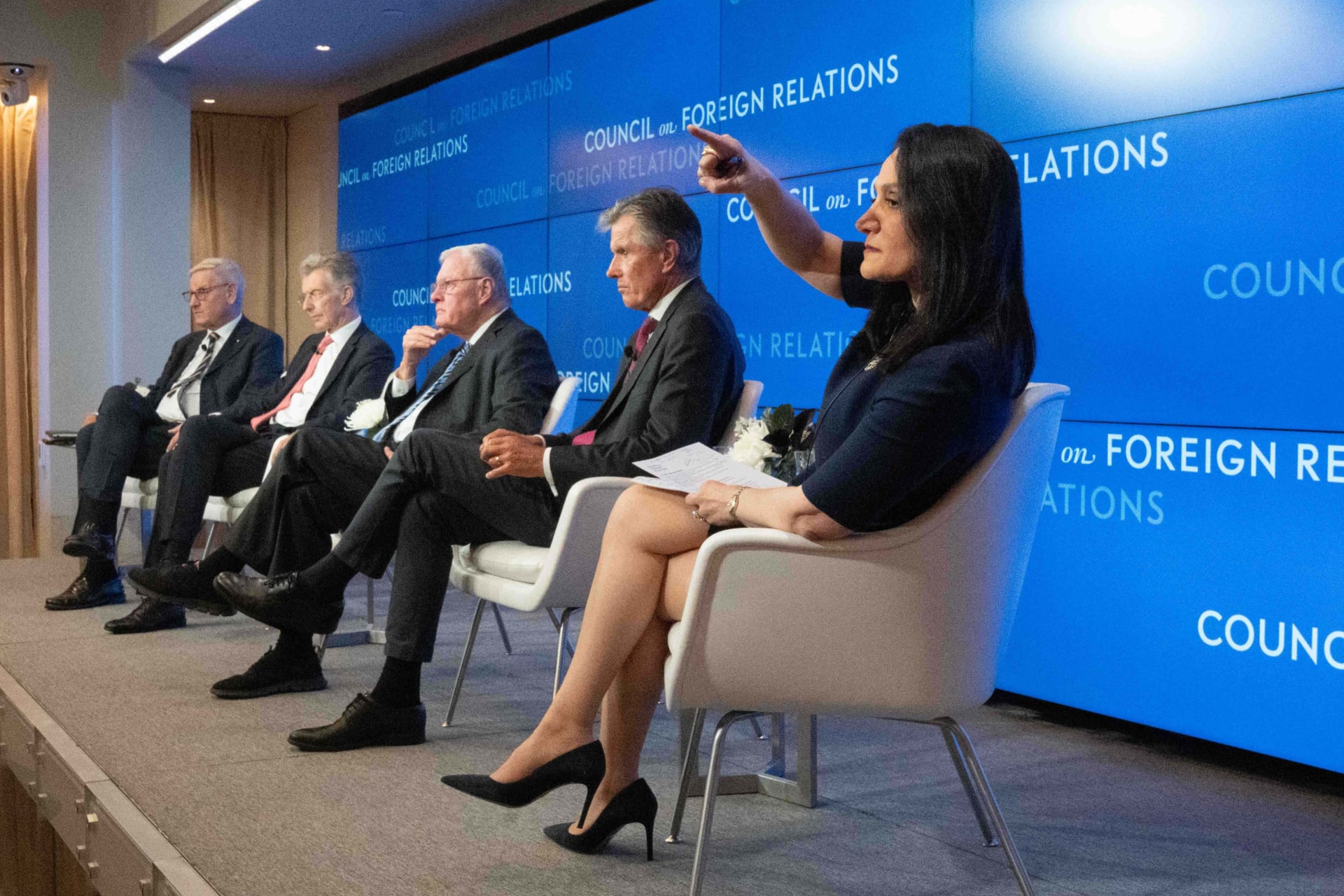
If the COVID-19 pandemic has taught the world anything about public health, it is humility: the United States has as much to learn about public health practices from its foreign counterparts as they have to learn from the United States. This symposium explores ways in which global public health systems can be strengthened, discusses lessons learned from public health officials, and provides a path forward for practitioners and the public during the pandemic and beyond. The full agenda is available here.
The Global Health Symposium is made possible through the generous support of Bloomberg Philanthropies.
Session I: Health System Strengthening and U.S. Pandemic Preparedness
Speakers
- Health Officer and Director, Public Health Department, County of Santa Clara, California
- Professor of Health Policy and Management, Milken Institute School of Public Health, George Washington University
- National Director, Network for Public Health Law
- Former Principal Deputy Director, Centers for Disease Control and Prevention (2015–2021); Rear Admiral (Retired), U.S. Public Health Service
Presider
- Interim Dean, School of Nursing and Health Studies, and Professor, Georgetown University; CFR Member
Introductory Remarks
- Thomas J. BollykyCFR ExpertSenior Fellow for Global Health, Economics, and Development, and Director of the Global Health Program, Council on Foreign Relations; @TomBollyky
Transcript
BOLLYKY: (In progress)—this program at the Council on Foreign Relations. And it’s my great pleasure to welcome you to our Third Annual Symposium on Health and International Economics, this year entitled Strengthening Public Health Systems—Global to Local. The COVID-19 pandemic exposed profound weaknesses and disorganization in public health systems in the United States and abroad. It exposed gaps in human and financial resources, and in our data infrastructure. It amplified profound underlying inequities in health status and in the drivers of health that could be negated by a better-functioning local and national public health systems.
Those failures have contributed to a decline in trust in public health institutions and, in the U.S. especially, has contributed to a rash of litigation against public health emergency powers and those who exercise them. That lack of trust and limited public health authorities will only exacerbate the risk of future health threats to the public. If COVID-19 pandemic has taught us anything on public health in the United States, it’s humility. And this symposium will explore the ways in which the global public health systems can be strengthened, discuss lessons from public health officials abroad as well as at home, and hopefully point towards...
Session II: Strengthening Health Systems on a Global Scale
Speakers
- Deputy Assistant Administrator, Bureau for Global Health, U.S. Agency for International Development
- Assistant Director General, Hub for Pandemic and Epidemic Intelligence, World Health Organization
- Adjunct Professor, Saw Swee Hock School of Public Health, National University of Singapore; Senior Director, Communicable Diseases, Singapore Ministry of Health
- Director, Health and Social Protection, Agence Francaise de Development
Presider
- President and Chief Executive Officer, America’s Physician Groups; CFR Member
Transcript
DENTZER: Thank you very much, and hello to everyone joining us for this session today on “Strengthening Health Systems on a Global Scale.” We’re going to be discussing lessons from national health agencies and international multilateral organizations working to alleviate health disparities and global challenges and how we get ready for the next series of public health emergencies that the world will undoubtedly face.
I have the pleasure now of introducing our distinguished panelists.
First with us is Agnès Soucat, who is the head of the Division of Health and Social Protection at the French Development Agency, the Agence Francaise de Development. Agnès was previously director for health systems governance and financing at the World Health Organization in Geneva, and before that held senior positions at the World Bank and the African Development Bank. So, Agnès, welcome to you.
We’re also joined by Chikwe Ihekweazu, who is assistant director general at the World Health Organization where he leads the WHO Hub for Pandemic and Epidemic Intelligence. He was previously the director general of the Nigeria Center for Disease Control and CDC. And welcome to you as well, Chikwe.
We’re also very happy to be joined by Vernon Lee, who’s deputy...