U.S. Trade and Manufacturing: A Conversation With Peter Navarro
Event date
Speaker
- Assistant to the President and Senior Counsel for Trade and Manufacturing
Presider
- Trade Reporter, New York Times
Introductory Remarks
- Michael FromanCFR ExpertPresident, Council on Foreign Relations
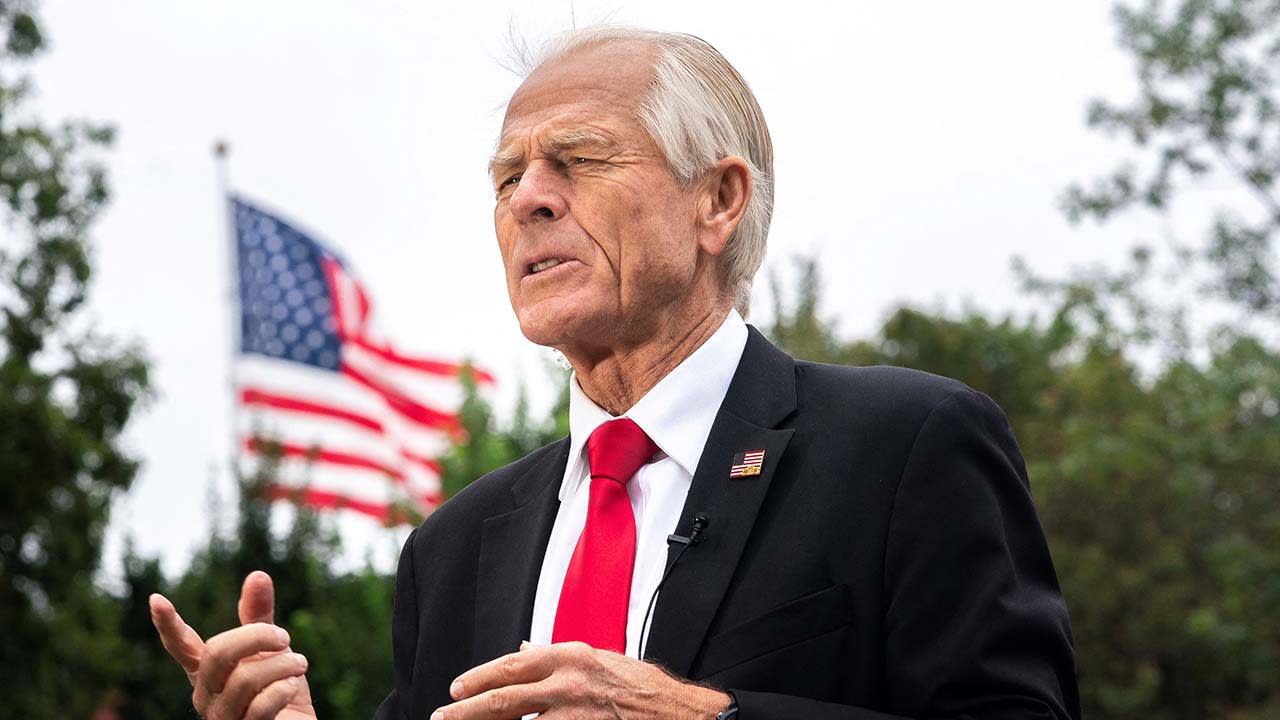
Senior Counsel for Trade and Manufacturing Peter Navarro discusses U.S. economic strategy under the Trump administration, including America First policy, tariffs, and manufacturing.
FROMAN: Good morning, everybody. Welcome. It’s great to see you all here. I remember for years when I was USTR we’d try and get people interested in trade, and their eyes would roll, and you know, thought it was very boring. And I—you know, I want to thank President Trump for making trade great again and—(laughter)—making it a front-burner issue, because in addition to the room here, we’ve got about 400 people—400 members or so online as well.
You know, one of the main functions of the Council is to give our members an opportunity to engage with and ask questions directly of some of the most influential policymakers and leaders in the world, and we seek to host speakers with a wide range of perspectives accordingly. This is one of the few places in the country where you can have a meeting with the Iranian foreign minister on Monday and the son of the shah of Iran on Friday, which is exactly what happened here a few—a few weeks ago. And in that regard, I’m very pleased that the Council is continuing its longstanding tradition of nonpartisanship by hosting administration officials from both parties for an open, candid, and respectful dialogue.
Needless to say, I can’t think of a more important time to hear directly from President Trump’s senior counselor for trade and manufacturing, Dr. Peter Navarro. I don’t think it’s an exaggeration to say that Peter is the chief architect of the Trump administration’s trade and tariff strategy. He serves (sic; served) as director of the Office of Trade and Manufacturing Policy during the first Trump administration. He’s a professor emeritus at UC Irvine, where he taught for over twenty years.
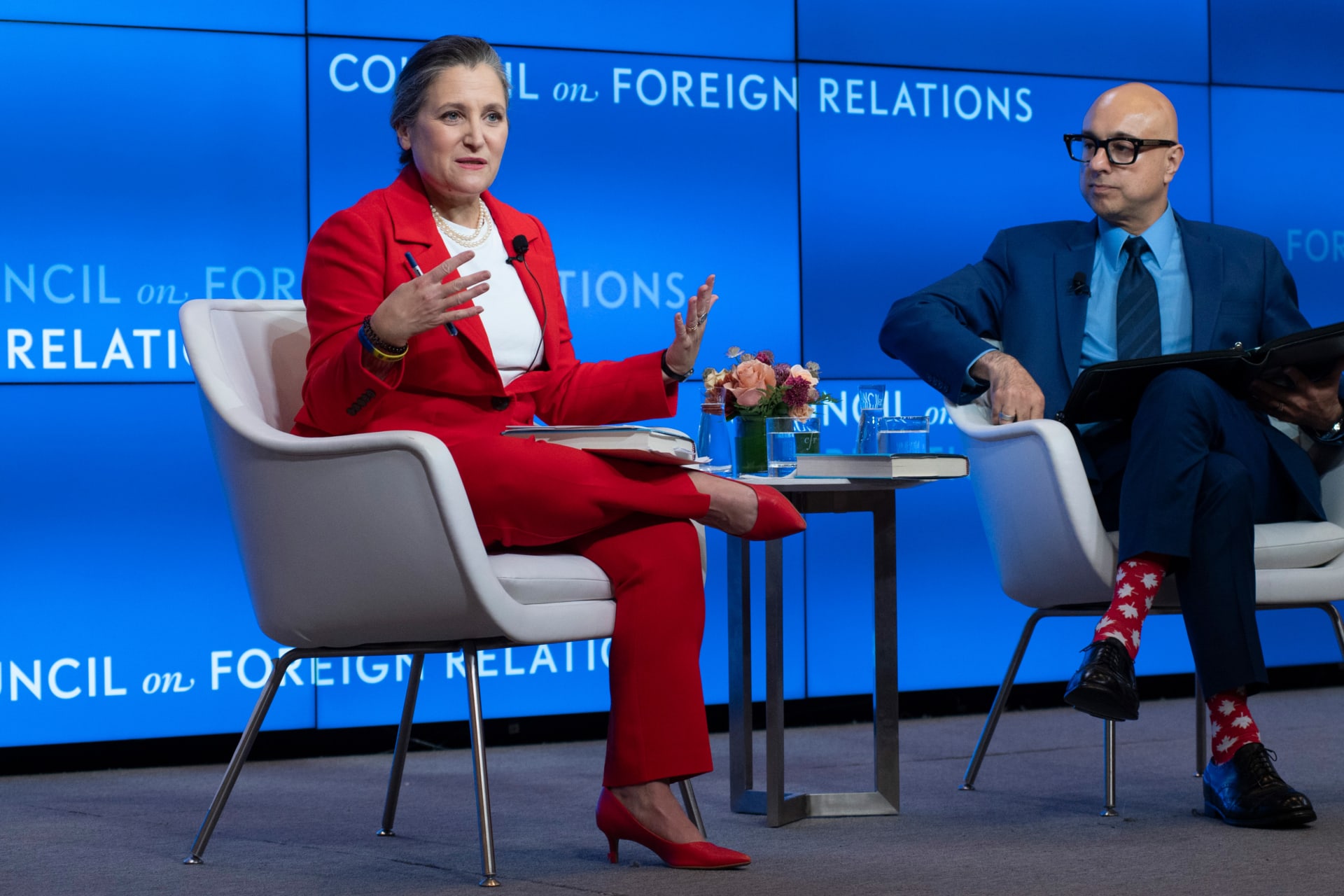
And our presider today is Ana Swanson, who covers trade and international economics for the New York Times. We’re first going to have Dr. Navarro come up and give some remarks, and then Ana will join him up here for a dialogue, and then we’ll open it up to questions from members in the room and some online as well.
Thank you for joining us, and let me welcome Dr. Peter Navarro. (Applause.)
NAVARRO: I’d like to thank the Council on Foreign Relations for this kind invitation. After all, it’s not every day I get to speak before an audience that has opposed nearly every policy I’ve ever helped advance—(laughter)—in the White House. But let’s be honest with each other: CFR has been uniformly anti-tariff and anti-Trump, and highly skeptical of an America first foreign policy that in truth is restoring our trade balance, rebuilding our industrial base, strengthening alliances like NATO, keeping—and as we just saw in the Middle East, negotiating—the broader peace, and reasserting American sovereignty on the world stage.
So let’s ask ourselves the obvious question: How did the gulf between the Council on Foreign Relations and Trump world grow so wide? If you ask an AI search engine—try this; I did—it will tell you that the Council on Foreign Relations embodies an establishment, technocratic, and globalist ideology, one comfortably wedded with Wall Street and the multinational corporations that love open borders, cheap offshore labor, and an endless stream of subsidized imported goods. By contrast, the Trump administration since 2017 has stood squarely with the people who make and grow things in this country—our farmers and ranchers, our manufacturers and workers. What many in this audience dismiss as populism or nationalism simply means doing what’s best for Americans first—protecting our jobs, communities, and the industrial base that anchors our national strength.
History is indeed a harsh mistress here. Exhibit A, Council on Foreign Relations members helped negotiate NAFTA, which hollowed out the U.S. manufacturing base and triggered one of the largest illegal mass migrations in modern history. CFR analysts championed China’s 2001 entry into the World Trade Organization, the single worst trade deal—the single worst trade deal—in American history.
Then came the Trans-Pacific Partnership. Forgive me here, Mike. CFR sold it as a geopolitical rampart against a rising China, yet the TPP would have surrendered much of America’s manufacturing base including our crucial auto and auto parts sectors to Japan, Vietnam, and ironically, ultimately, China itself. President Trump saw this very clearly and tore up the TPP on day one. I was standing right behind him on that beautiful day.
This is what the Council on Foreign Relations has never understood: Weakening our industrial base has never strengthened our strategic position; it has only invited aggression. That’s why in Trump world we do not trade off economic security for national security; we believe economic security is national security. Memo to CFR: You cannot project power if you surrender production. You cannot deter aggression when your supply chains run through your opponents’ ports. You can’t lead the free world if you can’t make what the free world needs.
Here’s the second big problem with the Council’s free-trade dogma, the belief that the World Trade Organization somehow delivers fair trade as well. By its own rules, it does not. The WTO’s most favored nation—MFN—rule says you must treat all partners the same, but what it doesn’t say is that everyone must charge the same tariffs. So what happens? Virtually every country in the world charges America far higher tariffs than we charge them. Germany, for example, charges us 10 percent on autos; we charge them 2 ½ (percent). The result? Bavaria sells us seven cars for every one Detroit sends to Germany. That’s the tilted playing field that the Council on Foreign Relations has defended and the one President Trump has begun to level with his policy of reciprocal tariffs.
Of course, the moment President Trump uses the T-word, CFR waves the bloody shirt of what? You know what I’m about to say: inflation and recession. But the record—the record tells a very different story. Under President Trump’s first term inflation stayed low, growth was strong, and the American manufacturing base saw its first real revival in decades. Far from tariff chaos, Trump world had price stability and the strongest job market in modern history.
Let’s be clear, the inflation we’re living with today did not come from tariffs. It came from Joe Biden’s reckless fiscal expansion, his neglect of our supply chains, and a hopelessly politicized Federal Reserve that accommodated the Biden bonfire. That’s why we in Trump world now hold the credibility high ground on tariffs.
Exhibit B, during the Trump first term—and you all remember this—CFR’s predictions of economic calamity widely missed the mark. The inflation and recession that you all forecast never came. The alliances you said would disintegrate have endured. And those wars you predicted? For four peaceful years during the Trump first term China, Iran, North Korea, and Russia kept their powder dry. Now, in his second term, President Donald John Trump is once again performing beautifully, and it’s long past time for the Council on Foreign Relations to catch up with the world it refuses to understand.
In closing—in closing, I come to you today not to quarrel, just to simply challenge respectfully the assumptions that still dominate this room. The world has changed. The American people have changed. The age of blind globalization is over. If the Council on Foreign Relations wants to be relevant, it must stop mistaking nationalism for isolationism, sovereignty for retreat, and strength for aggression. For, ultimately, MAGA and the America first movement isn’t about pulling back; it’s about standing tall. It’s about defending what we make, who we are, and the nation we love.
Thank you for your time. I look forward to your questions. And Ana Swanson of the conservative New York Times is going to grill me here. (Laughter, applause.)
SWANSON: All right, great. Well, that was quite an opening.
Welcome to today’s Council on Foreign Relations meeting on “U.S. Trade and Manufacturing” with Peter Navarro. My name is Ana Swanson. I’m the trade reporter at the New York Times, and I’m really delighted to have been invited to do this both by the Council on Foreign Relations and to have this opportunity to speak with you right now, Dr. Navarro, about—at a very pivotal moment for trade.
NAVARRO: And I should say here I’m glad that Ms. Swanson’s doing this. Despite the liberal direction of her paper, I think she’s done some of the finest reporting on the China trade issue, particularly on a topic which I’ll be seeing a lot more of soon, on this transshipping. But happy to be with you and see what you got.
SWANSON: Thank you. OK. Great, great, great. (Laughter.) Well, yeah, there is a lot to talk about, so let’s dive right in.
So I thought I would start with the world stage, which your remarks touched on. So, you know, you have said previously that with the exception of China no other country in the world actually ended up retaliating against the president’s tariffs and the president’s tariff threats have been remarkably successful in getting concessions from other countries on trade. But I’m wondering, is there any other downside to the administration taking this extremely aggressive posture toward other countries, including allies? So we hear that the Japanese, the Europeans, the Canadians are all taking measures to either be more self-sufficient or to, you know, trade more intensely with other partners. Does the United States stand to lose something in the longer run from taking this more aggressive posture toward the world?
NAVARRO: No. I think what we clearly will see is a significant strengthening of our alliances around the world. It is remarkable that there was no retaliation against the United States by almost all countries, but I think that it was the fruit of the first term. We have continued to make the argument, as I did today, that the World Trade Organization set of rules are fundamentally skewed against the United States, the MFN rules. And we have said for years now that we face higher tariffs significantly and higher non-tariff barriers, that we won’t tolerate that, and then if we are able to restructure that imbalance it will be good eventually for everybody. I think countries have acknowledged that, yes, it’s not been fair to the United States, and so we’ve been able to fundamentally restructure the entire international trade system through the leadership of President Trump in a way which this Council never envisioned, in a way I don’t think anybody in the press envisioned. But it’s happening. Literally, history’s being made every day before your eyes. And it’s because of the president basically saying the emperor had no clothes out there in free trade land; that we were getting cheated and he wasn’t going to tolerate it anymore. So we think our alliances are strengthening and candor among world leaders has been never higher.
SWANSON: It’s a very tense moment right now with relations with China in particular. We’ve seen this—
NAVARRO: I don’t see them any more tense than they’ve been. I mean, we went through—see, I have—I’m burdened by the institutional memory. I was one of only three people in the senior White House ranks in the first term who was there for the whole time and before that during the campaign. So, I mean, what’s going on now is very similar to the interplay we had in the first term. I mean, Bob Lighthizer and I took a year and a half negotiating with the Chinese, and there was, like, tariffs back and forth, and conversations with the presidents, and things like that. So, I mean, I don’t see this as anything out of the norm.
SWANSON: Well, tariffs back and forth, but right now there is a threat of an additional 100 percent tariff on China, right? China is, you know, looking at export controls on rare earth minerals—
NAVARRO: But we had—we had similar tariff interplay in the—in the first term, and it all sort of worked out. I mean, we got the 2020 what was called the skinny deal, and the only problem with that is we left office and the Chinese didn’t abide by it. But I—look, as the boss likes to say, let’s see what happens. The presidents are going to meet at the end of the month, and I think they understand the landscape well. We’ll see what happens.
SWANSON: What is the president hoping to get out of that meeting with Xi Jinping?
NAVARRO: You have to put the president in this seat if we ask that. I mean, what we want in this country—and I think what everybody in this audience should want unless you’ve got a lot of shares in a multinational company operating in China—is simply a situation where fair trade is the rule; where our workers and our manufacturers, our farmers and our ranchers can compete fairly in a way which preserves our manufacturing base and our agricultural strength.
What we’re learning, Ana—and the Chinese keep teaching this—us this lesson, and this is something I worked on very hard in the first term—is that there’s gaps in our supply chain because of decades of offshoring to China and other foreign lands that threaten our resilience. And we saw that—I mean, one of the things the pandemic taught us was that we don’t have resilient supply chains in terms of—in times of global crisis. So we’re going about the business of fixing that as—what I call in Trump time, which is to say as fast as possible without screwing it up. But this is something that we need to embrace as a nation, and it’s something that you don’t read about in the free trade books. Ricardo never talked about rare earth magnets.
SWANSON: I do want to act—ask more about that approach. But just quickly, do you—do you think that the additional 100 percent tariffs would go into effect on China, though? Wouldn’t that be pretty economically devastating for the U.S.?
NAVARRO: I’m going to leave—I’m going to leave that up to the boss and Scotty Bessent, with Jamieson Greer at his left shoulder, and back in the homeland Howard and I provide them all the analytical support we can. Let’s just see what happens. I mean, if you learned anything from the first term, it’s that these are difficult negotiations and you just got to trust in Trump.
SWANSON: Do you think the president would be open to an offer of Chinese investment in the United States, or?
NAVARRO: Again, again—I mean, there’s so much we can talk about here that’s not China that’s arguably of even greater import, because if you think about what we’ve done—and again, there’s—I would say I was pretty strong in my remarks with respect to the Council here, but let me just double down on that a little bit. I mean, did you ever envision in your wildest dreams, and was Mike ever sitting in his office and thinking that we could go to any given country and take seven verticals—tariffs, non-tariff barriers, digital, currency, national security issues—and sit down and say, hey, look, we’re doing this differently, and you’re going to do it in a way which is fair to us. And so we can go to Europe; we’ve done a deal with them. We can go to Japan; we’ve done a deal with them. We can go to Korea. And not only are they lowering the trade barriers—tariffs and non-tariff barriers—they’re sending us a boatload of money so we can invest in things that protect our economy and our national security, even as we help increase our ability to defend them.
So, I mean, they—nobody in this room, nobody out there in Zoom-land, ever thought that was possible. But if you think about it, that’s exactly what we should have been doing for the last thirty years.
SWANSON: You talked in your opening remarks about boosting production. But if you look at the data right now, the U.S. is losing manufacturing jobs, spending on factory construction is down significantly from last year, and manufacturing is still shrinking as a share of the economy. S&P Global also had an estimate recently that tariffs would cost businesses upwards of 1.2 trillion (dollars) in 2025. So, of course, you know, there are some businesses that tariffs really do help, but, you know, others say that tariffs are making it harder for them to manufacture in the United States because of the higher cost of inputs, of steel in particular. You know, tariffs may be helping some companies, but are they backfiring for others?
NAVARRO: Let’s—yeah. Let’s sort that into a couple of buckets here. What are the impacts of tariffs? So if you think about that, again, as I said in my opening remarks, we have the credibility high ground here, OK? We just do. I mean, one of the fun things—my trusty assistant there, Adam Molon, OK, sitting right at the table there, one of his first assignments I gave him. I said, go out and look at the remarks of every single TV anchor, every single print reporter, every single think tank person, and tell me what they said about tariffs with respect to inflation and recession. What was their predictions? And so whenever I have to go on TV or go into an audience like this I can quote exactly what they said and how so very wrong they were, OK?
I mean, Ana, just go back during the first term and look at all of those studies that you’re citing now. Like, what did they say the first term? They all predicted inflation. I had two—I’m quite honored by this, actually. The highest honor, to be named in the headline of the lead editorial twice by the Wall Street Journal, not the Main Street Journal, the Wall Street Journal, the Navarro recession, OK? None of it ever happened, because the economics were wrong, OK? Let’s just take the tariff thing. Let’s do the economics. We’re serious academicians here. It’s like, who can bear the burden of a tariff, as opposed to a tax? With a tax, it’s consumers or businesses. With a tariff, it’s consumers, domestic businesses, or the country that’s being tariffed, right?
Now, if the country that’s being tariffed has to be in our market or their economy is effectively going to collapse, what do you think they’re going to do? They’re going to eat the tariff. And that’s why, Ana, we didn’t observe all these alleged impacts. We didn’t see—steel and aluminum did great during the first term. We didn’t see any negative from that. So, I mean, I just—if this were the first term, I’d have a hard time answering that question. It’s easy now. It’s like they were all wrong then. They’re all wrong now.
SWANSON: Well, there was an estimate by Goldman Sachs, I think, earlier this week, or—
NAVARRO: Who? Who?
SWANSON: By Goldman Sachs, yes.
NAVARRO: Oh, come on. You’re killing me.
SWANSON: That passthrough to consumer prices—
NAVARRO: You’re killing me, Larry. You know that commercial? (Laughs.)
SWANSON: —has reached 55 percent already, and that U.S. consumers have essentially absorbed 55 percent.
NAVARRO: (Laughs.) These people—come on. They have no credibility. I’m sorry. These people have no credibility.
SWANSON: Well—
NAVARRO: Goldman Sachs, look, let’s look at the business model. What’s the business model? The business model is to get a bunch of investment that goes over to China. They’ve been doing that for forty years. If this is the first term, like, I could be sitting here with Gary Cohn, who I had to fight with every day in the friggin’ White House till he left with his tail between his legs, saying the same stuff. It’s just—it’s not true.
SWANSON: Well, setting that aside, so are you seeing the effects in manufacturing from tariffs that you want to see? Is that happening? Or is that lacking maybe?
NAVARRO: Now this is—this is the other—the other key thing you said. Because you said this was really important. So let’s go back to what—the question you asked. It was like—you noted that there was manufacturing jobs going down instead of up, this kind of thing.
SWANSON: Right.
NAVARRO: But let’s think about this. You can’t have the manufacturing jobs until, what? Until the plants get built. We got $19 trillion—let me say that one more time—$19 trillion of investment promised to come into this country. Now construction is going to boom in the short run, but we’re not going to see the manufacturing jobs until that capacity gets built. So it’ll be six months, nine months, twelve months, eighteen months. But what we’re doing is setting the stage for the construction of a beautiful addition to our manufacturing base.
And by the way, like, this is how smart—not me—but we are as an administration. It’s, like, when we’re cutting these trade deals, and Japan’s offering to invest here in America, that money—you know how we’re going to use that money? That money is specifically targeted at vulnerabilities in our supply chain. Think about that. That’s exactly what we need to be doing. So foreigners are going to be paying to fix the vulnerabilities in our domestic supply chain as part of a broader trade deal which levels the playing field for American workers and businesses. That’s a good deal.
SWANSON: Do tariffs raise the cost of manufacturing here, though, which could make it harder for businesses to export from the United States, right?
NAVARRO: We don’t see it, Ana. We just don’t see it.
SWANSON: That’s something I hear a lot from businesses.
NAVARRO: And let’s suppose—let’s suppose it did a little bit, OK? Do you know what the cost is when you don’t have a resilient supply chain? Do you know what the cost to our economy is when we can’t produce what we need to produce because our supply chains didn’t deliver what we needed to? In terms of sheer lives in the pandemic it was millions of people that we could potentially lose. But we fixed stuff. I mean, I’ll give you a story from the pandemic, which is relevant to the whole rare earths question. Because the question is, how quickly can we fix that vulnerability, OK? So if you go back during the pandemic—has anybody in this room had to go through a ventilator? Anybody, or had a family member got—yeah, here we go, OK. Save their life or?
Q: This was in Peru, and unfortunately not.
NAVARRO: Yeah. Yeah. Those things are—they’re risky and of themselves. But I remember early in the pandemic, the administration was very, very heavily criticized for not having enough ventilators, like we were somehow asleep at the wheel. And what we did was identify a small company that had a really, really good technology, but the inability to scale quickly. And what we did—and I was the point on this, I was the Defense Production Act policy coordinator—was demarche General Motors to bring its scale abilities, work with that company. And does anybody remember how many days it took us for GM to produce a ventilator? Anybody? So nobody read my first book on this. (Laughter.) Shame on you. Seventeen days. Seventeen days we were able to get ventilators.
And no American went without a ventilator. It was truly one of the miracles of the pandemic. And my point here, Ana, is that no one around the world should underestimate the ability for the Americans’ manufacturing and technology base to quickly mobilize. And this is the kind of thing that we’re going about our business doing because we have a number of vulnerabilities.
SWANSON: Mmm hmm. There’s been an interesting development too in the administration, taking stakes in companies, including the rare industry but also U.S. Steel, Intel, talking about taking more. How are you deciding which companies to take equity in and which not to? What are your next targets there?
NAVARRO: Well, that’s not my lane. I stay in my lane. The one thing I think that might be interesting for you folks to think about, because to the extent that you’re free market capitalists and might be offended by the government taking equity positions in companies, I can assure you that this would not be happening if not for the fact that the companies we were taking stakes in were showered with free taxpayer money, even though they were billions and billions of dollars, or trillion-dollar companies. We just gave them a bunch of money. And so the thought process here is simply that we should take some of that back and get effectively some skin in that game. And I just—I mean, for anybody to argue with that I think is silly. I mean, what you should have been is outraged that we were giving that money away as grants for free, rather than having some other kind of structure. But as far as the future on that, I’m going to let Howard and the boss handle that.
SWANSON: Do you have any thoughts, though, on, you know, what could the government do as a stakeholder that private companies could not, or how far do you think the government should go? Like, for example, is it worth this if it ends up being a net loss to the taxpayers? Should the government—
NAVARRO: It’s really, really not my lane. I mean, the one thing I’ll say, just from an economist point of view, again, channeling my pandemic experience, is, like, when you’re facing supply chain vulnerabilities that, in the event of a failure, can cost your economy trillions of dollars, you should be less worried about losing a few billion and more worried about fixing the problem, OK? Which is not to say that I’m in favor of throwing away billions of dollars. I’m just saying that the problem of supply chain vulnerabilities is they have very, very high costs. So we’ve got to be very careful about making sure we get that done.
SWANSON: Switching gears a little bit—
NAVARRO: By the way, the other thing I think is important to point out when you’re talking about money here is that we’ve essentially gone back to the future, pre-1913, to a world before the income tax, in which there is now—it’s well understood on Capitol Hill and elsewhere in this country that tariff revenues are a very effective way to raise revenues, particularly when the countries are eating the tariffs, not us. And that one of the beautiful upsides, externalities if you will, of the president’s trade policy has been to remarkably improve our fiscal outlook. Do we track on this? Do you understand what I’m saying? We’re having what looked to be, for example, with the debate over the tax bill, we were looking at, I don’t know, a $5 trillion fiscal cliff.
Which is very destructive in and of itself because the interest on the debt eats away at your ability to—roads, bridges, defense, education, whatever, right? And you got to service the debt, so interest rates go up, which bleed over into the mortgage market, consumer credit market, and all of that. And we’ve learned, based on the tariff revenue flows, that that has completely flipped. And you’re seeing—actually, you’re seeing the bond market across the yield curve actually respond very favorably to that. Yields are going down. And so tariffs are going to, I think, lead this country to a place where we haven’t seen since one year of the Clinton administration, which is a balanced budget and a reduction in our debt, in effective terms.
SWANSON: Just quickly, because we’ll go to audience questions in a few minutes, but I wanted to get your thoughts on who will replace Jay Powell as the Fed chair. (Laughter.)
NAVARRO: I think there’s—it’s like the Kentucky Derby now, isn’t it? It’s like you got seventeen horses in the thing racing. It’s up to the boss. And he’s going to have fun making that choice. But it’s—look, what I think we all want, and I’m not talking about inside the administration. I think what we all want in this country is a Federal Reserve chairperson who is able to accurately assess what’s a very complex chessboard. If you look at Jay Powell, OK, the first thing is he’s a lawyer, not an economist. That was a very bad mistake putting him in there without the credentials. Now, he made three major blunders so far, all related to his inability to understand the macro environment. And, as you know, Ana, this is kind of what I did before I came in the administration.
It’s, like, what Powell did in 2018 is he didn’t understand that in Trump world if you cut taxes, cut regulations, drill, baby, drill and lower energy prices, and reduce your trade deficit through fair trade, that you could grow a lot faster than the budget folks had been predicting, OK? We were in that time. I don’t know if you remember this, the new normal. You remember that phrase, the new normal? That was the idea that you could only grow 1 or 2 percent, not beyond that, without causing inflation. And Powell bit into that hook, line, and sinker. He failed to understand we could—we could go to 2 ½ or 3 (percent) without any inflation at all. He raised rates on us too fast. He didn’t see it.
And then on the other end here he’s doing the same damn thing. It’s like he finally said, well, tariffs may not cause inflation. And if they have any effect, it would be a one-time deal, right? So now he kind of backed off. But he kept rates too high. And then in the middle of that, the worst thing he did, my judgment, was, what? He didn’t raise him fast enough when any damn fool could see that the Yellen-Biden crew were feeding us a bunch of malarkey with this transitory stuff. They let inflation get out of control. And then they had to—Powell had to go too fast. So what do we want? All we want is a Fed chair that understands macro and is not going to be politicized. And that’s how the choice should be made. I can guarantee it won’t be Lisa Cook.
SWANSON: Does the administration value Fed independence?
NAVARRO: We value a Fed that understands the chessboard and will do the right thing, independent of political considerations. That hasn’t been the problem. I mean, it’s like—it’s kind of ironic. I mean, let me talk about my own personal situation. Most of you know I got arrested at Reagan Airport for a misdemeanor, put in handcuffs and leg irons, and went to prison for four months, right? And now we’re looking today at John Bolton, right? It’s like he gets to self-surrender, right? He just waltz into court and then go home on bail, and stuff like that. It’s, like, where’s the kind of justice?
And if you look at Lisa Cook, right, it’s, like, what’s going on with that? She’s on the Fed, but she’s seemingly guilty of exactly the same kind of thing a couple of guys who was in my prison dorm we’re guilty of who were sitting in there for ten years. So all we want is fairness, Ana, fairness in this world. And so far, we haven’t been getting it.
SWANSON: OK. Well, it is time to go to audience questions. So at this time I’d like to invite CFR members, both here in D.C. and online, to join the conversation. Reminder that this meeting is on the record. So let’s go with President Froman first. (Laughter.)
NAVARRO: Whoa. This is not—this is more of a republic here than a democracy. (Laughter.)
FROMAN: First of all, thank you, Peter, for being here. And I think it’s important for us to hear your perspective, whether we agree with it or not. I just wish you didn’t hold back.
NAVARRO: I think it’s fair to say you don’t, but—put that on the record.
FROMAN: Yeah, I just wish you—I’m not going to go through, you know, a point by point sort of debate. Happy to have a conversation with you some other time where we disagree, including over facts that you—that you used. I do want to say—
NAVARRO: You can fact check me later. I will do your job for you.
FROMAN: I do—I do want to say, the comments about the Council are a bit of a caricature. The Council doesn’t actually take positions. We don’t advocate positions. We have a wide range of views here. And I would be happy to educate you—
NAVARRO: I went through all of the—
FROMAN: Peter, let me—actually, let me ask a question, then you can answer.
NAVARRO: I went through your publication which comes out, what, four times a year. Went through all of that. I went through all of your speeches. I went through all the comments made on CNN, MSNBC. So fact check me, sir. Please, fact check me.
FROMAN: I’m happy to do that. I’m happy to provide you with a wide range of perspectives that we have here, including about—
NAVARRO: We don’t need you to do it. All I need is AI. (Laughter.)
FROMAN: Yeah, well, there’s also hallucinations. I don’t want you to be subject to hallucinations.
NAVARRO: The facts are the facts, Mike.
FROMAN: At any rate, let’s focus on your administration and your policies going forward. And just to build on one question that Ana raised about manufacturing and the experience of the first term, second term. In 2018, the Trump administration did impose tariffs on steel and aluminum, 25 percent tariffs. And we have data, right? Two years later, there were 1,000 more steel workers and 75,000 fewer manufacturing workers in the sectors that were dependent on steel. And that’s not a—
NAVARRO: I dispute those facts.
FROMAN: That’s not a Goldman Sachs study. That’s a Ball State University study that worked on it. And, you know, I’d be interested in what—let me just—if I could finish—
NAVARRO: So I’m not sure what you’re doing here, Mike, because you got, how many, 4,000 people watching this, and you got a lot of people in this room who want to ask questions. You and I disagree till the cows come home.
FROMAN: No, absolutely—
NAVARRO: I’d like to hear from everybody else, to be honest.
FROMAN: I would just love to give you an opportunity to talk about—
NAVARRO: You’re hogging the microphone.
FROMAN: About how you’re seeing tariffs and the current administration’s approach to tariffs—which sort of on/off, higher/lower—how you see it being successful in driving more manufacturing and manufacturing jobs to the United States, based on the experience of the first term and based on the experience of the last eight months?
NAVARRO: Sure. The serious part of that question is simply that if you look, for example, in the steel and aluminum industries, we’ve already seen significant investment commitments. If you look at that one number I spoke about earlier, $19 trillion, that’s going to diffuse across many parts of our manufacturing base at the smaller manufacturing level, which is a lot about the province of my office, helping small manufacturers. The letters we get go up to here in terms of thanks for finally being protected from the ravages of unfair competition. And if anybody in this room, or anybody watching on Zoom, thinks that our small manufacturers in this country aren’t, on a daily basis, being assaulted by foreign competition, which is subsidized, which often steals their intellectual property, which cheats in every way, then come spend a day with me in my office. Or, better yet, we’ll get on a plane and go out to Ohio and I’ll take you to a factory.
SWANSON: Great. Let’s take another question from the room. I know there’s a lot, maybe here in the middle table. Thank you.
Q: Great. Good morning and thank you, Dr. Navarro, for your insights. Elisa Basnight, former supply chain executive and CEO of WIN-NextGen.
You talked extensively about supply chain resilience, reducing our reliance on foreign manufacturing. Can you share what role you think public partner private—public-private partnerships could have, particularly with respect to nonprofits, educational institutions, and employers, in cultivating the necessary pipelines we need for supply chain—the next generation supply chain workers and talent?
NAVARRO: Well, look, the government can’t—(laughs)—do the building to fix the supply chain. The role of government, at least one of them, is to identify the vulnerabilities and figure out whether there’s a role for government to play in fixing it. We’ll go back, Ana. to the rare earth issue. One of the—I mean, the central feature of the rare earth magnet problem is that every time this country has tried to develop capacity, China has come in and dumped product into the market, put them out. Mountain Pass, which we have revived, I think, for the third time now. The last time it revived and was trying to produce rare earths, China just came down and crushed it—absolutely crushed it.
So, for example, as the Treasury Secretary Scott Bessent said, what we’re going to need to do, for example, is it provide some kind of tariff floor to defend our critical industries from strategic dumping. I mean, when China does that it’s not an accident. And it’s not simply a mercantilist thing to make money. If you go back and look at their five-year plans—and I wish that CFR had done a better job over the last twenty-five years doing what I did, which is to read those things—they tell you exactly what they’re going to do, right? They tell you that we’re going to go in and crush world competition. We’re going to get control of all the mines and minerals around the world. And then once we get that position, we’re going to use it not only for economic reasons, but for strategic reasons—effectively weaponizing it. They tell you this, right? And we don’t pay attention.
So that would be a case where the government has more of a role than simply just identifying the vulnerabilities; it is actually taking an action to defend and move forward. That’s a good question, ma’am. Thank you.
SWANSON: Let’s take a question from online.
OPERATOR: We’ll take the next question from Elise Labott.
Ms. Labott, please unmute yourself.
Q: Oh, sorry. I unmuted.
Dr. Navarro, thank you very much for your remarks. This is certainly the most lively meeting I’ve ever attended in person or virtually.
NAVARRO: (Laughs.)
Q: My name is Elise Labott. I write—I’m a foreign policy journalist and I write a Substack called Cosmopolitics.
I was wondering if you could expand maybe a little bit on your last answer. On the larger trade and tariff strategy how targeted are you on strengthening the manufacturing base to those supply chain vulnerabilities and building the base on critical industries and strategic sectors like tech and tying small business manufacturing and upskilling workers to the jobs of the future? Because I understand what you were talking about, but then when I look at the larger tariff strategy I think, are we looking to manufacture everything?
And if I could just throw in a quick one on a hundred percent tariff on things like the movies. Obviously, our movie industry is already the best in the world and I don’t understand the competitive issue there. Thank you.
NAVARRO: Well, let’s take the movie thing first. If you know Hollywood, and I used to live about sixty miles from there, it became almost impossible to produce a medium to low budget film in Hollywood and so it was often Czechoslovakia and Canada the industry went, and it was drawn by heavy government subsidies from countries around the world who wanted to cash in on the Hollywood cow.
So yeah, it’s a significant—that’s a significant issue. With respect to your other question, which is—which I think is much more textured and important, so 232, that number is really important. OK. That’s Section 232 of the Trade Act that allows the Department of Commerce to investigate cases where industries—steel, aluminum, pharmaceuticals, lumber, autos—may be harmed in a way which threatens national security, OK, and that’s the framework that we’re using to address a lot of our critical—industries which are critical to national defense.
So those are industry specific. It’s agnostic with respect to the size of the companies that are in the industries. So you have that bucket and then you have the 301 bucket. That’s what the United States Trade Representative used.
I think Mr. Froman’s successor Bob Lighthizer is the first one to actually use that and we used that for China. But, generally, that can be used for country-specific issues where you have countries which are engaged in particularly egregious practices. So you have that.
And then the third issue, which is the IEEPA one, which is the one that’s going to be so critical coming up before the Supreme Court, that’s when you have a national emergency situation and in the case of how that’s being applied now it’s being applied within the context in the fentanyl slaughtering what is more than a million Americans so far. That’s an emergency.
And then the trade deficit, which is over a trillion dollars a year now and we accumulate, send offshore about 19 trillion (dollars) of our wealth. So I guess to your question when you think about tariffs there’s a lot of different ways you use them with a lot of different goals.
So I’ll stop there and let you keep going.
SWANSON: Going back to someone in the room. Here in the front.
Q: Hello. Michael Wessel. I don’t need to stand.
Peter, I’m thrilled you’re here. I’m thrilled, Michael, that he was invited. While CFR has a patina, shall we say, it’s not monolithic. I am a CFR member and you and I go back probably twenty years on Death by China and many other things.
I want to ask you a question, though, about China’s actions last week on rare earths because I see it as a fundamental mistake in the sense that they have now awoken so many other countries as to the risk and the weaponization of the supply chains that they are willing to exert.
They started that, as you know, with Japan in the early 2010—I guess it was 2014. Now last week they have woken up the world that they are serious about domination and weaponizing supply chains.
What are your thoughts on that?
NAVARRO: One of my jobs at the White House, going back to the first term and to this day, is to identify vulnerabilities in our defense industrial base and in our supply chains for our economy. I remember back in the first term I did a report with the Pentagon on vulnerabilities in the defense industrial base that was the first one that had been done in, like, thirty years, right?
So my job literally every day is to worry about whether we have enough magnets or pharmaceuticals or ball bearings or whatever it is that we need, and it’s the famous thing, you know, for want of a nail the war was lost. You go through the horseshoe and this, that, and the other thing.
The one takeaway, Mr. Wessel, from what China is doing now is that my job is a lot easier because I don’t have to convince anybody anymore like I did in the first term, either inside the White House or in the press or in think tanks, that the problem of China potentially weaponizing their supply chain manufacturing base as well as their consumer demand is something that they have put on the table, and what’s extraordinary to me is that it’s not just—and this magnet issue it’s not just us.
It’s the whole world, and whether it’s Delhi or Tokyo or Ho Chi Minh City, people are going oh, oh, oh, and things are changing. So that’s kind of the state of play of that.
I mean, we’ll see what happens. We hope for peace. Hope is not a strategy but I can tell you that the world has fundamentally changed based on what we’ve observed and the world will not go back to sleep on this.
SWANSON: You mentioned several measures, and to respond to that is one possibility 232 tariffs on critical minerals? Would those be coming soon?
NAVARRO: There’s an investigation underway and so you’ll be working on a story at some point, OK. (Laughter.)
SWANSON: That’s a good—
NAVARRO: We are the full employment act for any trade reporter at the New York Times—
SWANSON: That is true.
NAVARRO: —or anywhere else.
SWANSON: I agree with you on that. (Laughter.) Great. All right. Thanks.
Right here.
Q: Thank you so much for the debate. Raul Gallegos from Morgan Stanley.
I was wondering if you could expand on the—
NAVARRO: I like you guys better than Goldman Sachs, as a rule.
Q: I’ll take that. Thank you very much. (Laughter.) Hopefully, everyone heard that one.
NAVARRO: And I really like the three-minute podcast you guys put out.
Q: My question to you is regarding USMCA and what the plans are, and the way I would like to frame the question is based on your comment earlier that, you know, Wall Street and some corporate interests are not exactly aligned with what the administration is doing.
My question to you is what in the plans you have for USMCA will those folks see as positives and as negatives, if you will, once, you know, the actions are taken.
NAVARRO: It’s not my lane. I’m going to let Jamieson Greer and the boss handle that one.
It’ll be, obviously, a very serious wide-ranging negotiation. One of the big concerns that I have and I expressed is the use of Mexico as a staging area for other countries to essentially evade tariffs and leverage the USMCA tariffs.
So that’s going to be at least one of many issues we’ve been talking about.
SWANSON: Does the administration want to keep USMCA in place?
NAVARRO: Yeah, I’m—not my lane.
See, Ana always wants me to make news and so my challenge is to never make news. I just, like, once the news is made then I can comment on it. Just so people understand my role. There’s sort of a reason I stuck around for four years. So—
SWANSON: Well, and longer than four years, right?
NAVARRO: Longer than four years now, yes.
SWANSON: Two administrations. Let’s take another question online, please. Thanks.
OPERATOR: We’ll take the next question from—looks like they dropped. So we’ll take the next question from Sarah Williamson.
Q: Hi, Dr. Navarro. Thank you very much. This is Sarah Williamson, the CEO of FCLT Global.
And I think we’d all probably agree that innovation has been the driver of economic growth in this country for many decades and the administration is now cutting and redirecting funding for scientific research, which has been the catalyst for this innovation and is also in some cases dissuading scientists from coming to the United States, and meanwhile China is investing heavily in innovation.
So how does this align with the goals of driving the U.S. economy forward?
NAVARRO: Look, I’ll be honest. When I hear that it just sounds like an op-ed from industry. I mean, I get it. But there’s much bigger issues involved in the way universities over the last decades have used and sometimes abused government funding, and that all needs to be sorted out.
As a former academic for twenty-five years at the University of California and now professor emeritus, I can tell you that our universities and college systems are in deep, deep trouble. They need the same kind of restructuring our trade system has undergone. They’ve essentially lost their way. They have no idea how to employ the people that they take tuition from.
And so I think that all needs to be thought through but, again, that’s not my lane, and it’s been a real great pleasure to be with you today. I hope you’ll take my opening remarks in particular to heart.
I would just ask you this question in my closing here. It’s, like, why did it take some obscure academic from Laguna Beach, California, beginning back in 2006 to write three books about China—two on the economy, one about their military buildup—that were widely panned as hyperbolic at the time but now read exactly, exactly like a Pentagon report?
OK. Why was it somebody out there doing that instead of somebody at the Council on Foreign Relations?
And I think that you all need to think about what we talked about today and maybe step back and assess. Rather than knee jerk defend what has been the status quo that President Trump is now turning on its end just kind of think through what’s going on here. If you’d just give me that I’d appreciate it. OK?
SWANSON: Thank you. Yeah, obviously, we’re out of time, Dr. Navarro. I have the hard stop, but—
NAVARRO: I’ve got to—I’ve got to scoot.
SWANSON: (Laughs.) Thank you so much for joining today’s meeting. Thank you to Dr. Navarro. (Applause.)
(END)
This is an uncorrected transcript.