How I Got My Career in Foreign Policy: Farah Pandith
Farah Pandith has spearheaded efforts to counter violent extremism in both Republican and Democratic administrations. CFR sat down with her to understand where such efforts stand today and what it’s like to pioneer new roles in the government.
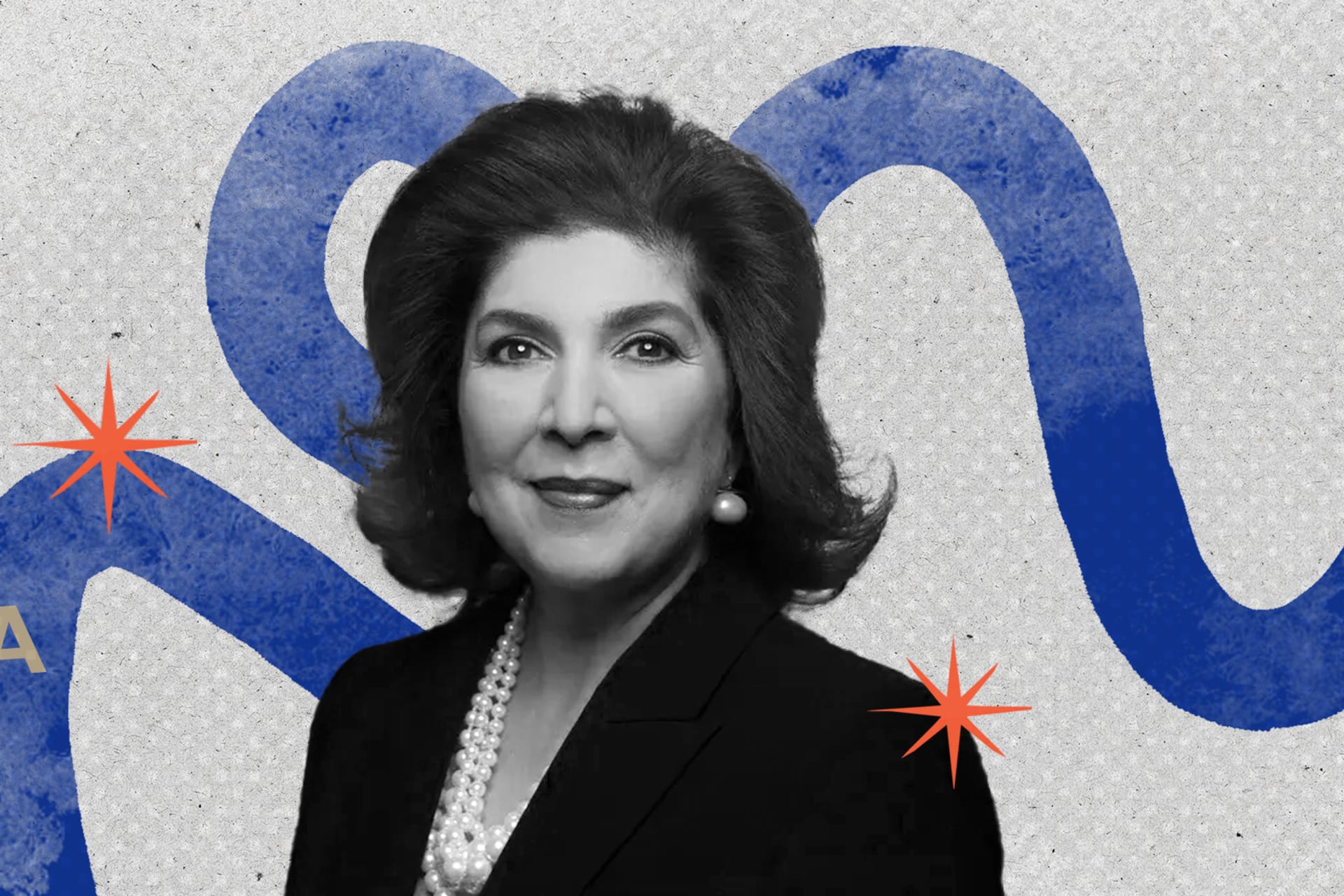
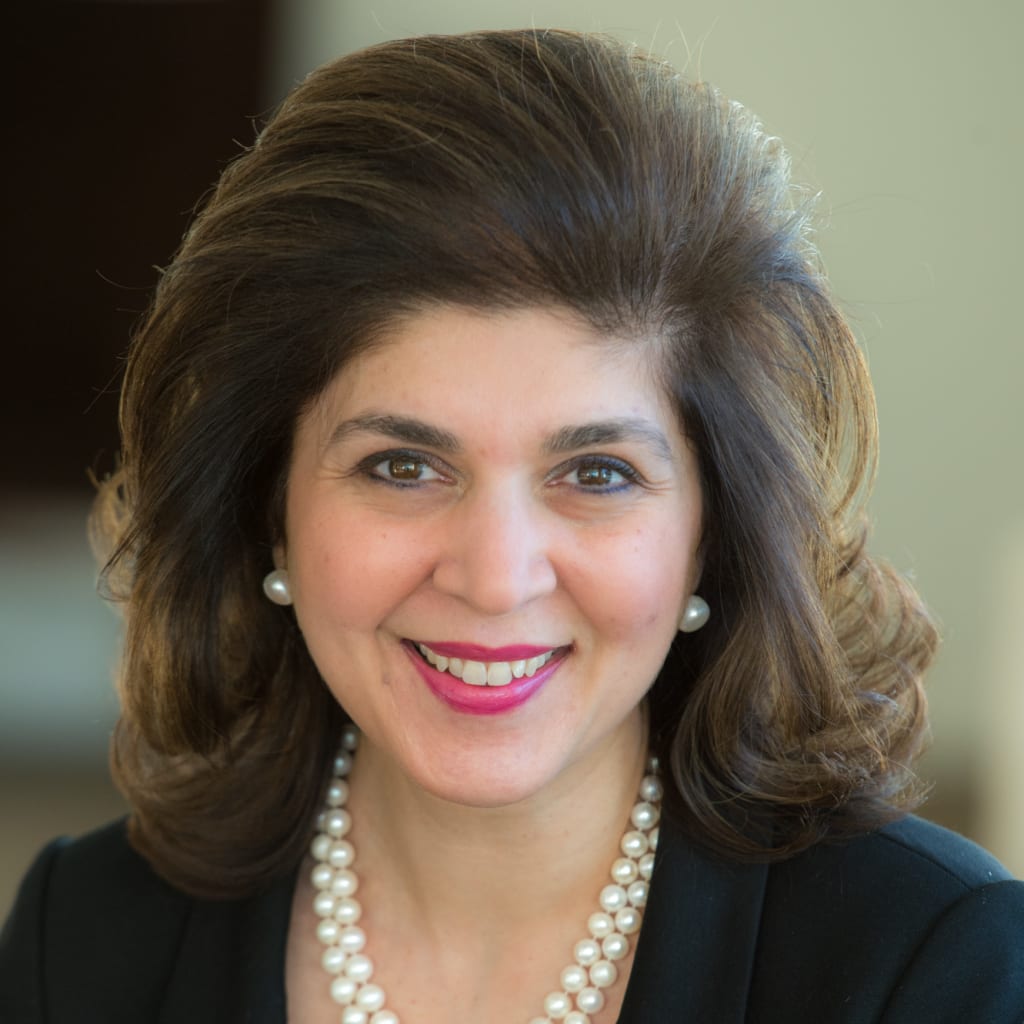
From a young age, Farah Pandith knew she wanted to help people. Her Kashmiri background had exposed her to the human toll of geopolitical conflict abroad, and her desire not to “squander” her time on earth—plus a surprise connection to former First Lady Barbara Bush—led her to the U.S. Agency for International Development (USAID). After the events of 9/ll, she began diving into the ideology of extremism and engaging with Muslims around the world to use soft power tools to counter extremism. Now, she is a senior fellow at the Council on Foreign Relations and the Muhammad Ali Global Peace Laureate. Read more about her work in the Bush and Obama administrations, and why—despite early successes—she feels current counterextremism efforts have failed “spectacularly.”
What did you want to be when you were little?
I have a lot of doctors in my family, and my mom is a physician. She’s a pulmonologist, and my uncle, whom I was very close to, was a thoracic surgeon. So growing up, I looked at medicine as a way to be a helpful global citizen. I would never have described it as a global citizen, but I would have described it as being good and being kind and trying to do good things, because I saw both of them healing people, as warm, caring individuals. They really showed me a side of medicine that I thought, “Okay, that’s what medicine is all about.” So for the most part, growing up—until I took a physics class in high school—I thought I was going to be a doctor, because I thought that’s what you do if you want to help people. So that was very much in my head. It wasn’t because of a passion for science, necessarily. It was more around the healing side for me—healing and making people feel better.
But that’s lovely, and I think you’ve done that sort of mission in your work, which is nice.
I can see the small Farah and the thread that has gone through, for sure. Actually, it’s quite comical at this point to think of myself as a doctor, because I’m not the science student that you need to be to do well in medicine.
Well, speaking of small Farah—you were born in Kashmir, and you grew up in Massachusetts. How did that influence your decision to pursue a foreign policy career, specifically one focused on outreach to Muslim communities?
It’s easy to look back when you’re in your mid-fifties and think that there is a straight path—but it is not a straight path. We evolve as humans; we think about ourselves differently. There are certain things that are character traits that usually don’t change: this idea of what I would now call a humanitarian component, a global perspective. Those are terms that I certainly would not have used in grammar school—certainly not in high school.
I was always interested in the world and history. I came to the United States when I was a baby—I was one-and-a-half years old—and I went to a private school outside of Boston called Milton Academy from K-12. Every summer, I would go to Kashmir to visit my grandfather, my aunties, uncles and cousins. And that was important, because it allowed me to see where I came from. It made me see the world in the greatest perspective.
The international piece was formed from the travel I did, where I came from, the reading that I did as a young person—the conversations around our dining room table were always about the world. But also my heritage was really important to me. And for those of us who are looking at the world today, the India-Pakistan relationship is still a challenge. It is still on the table as a global concern due to several factors, including their nuclear capabilities. When I was in school and was learning about Partition, I understood that something called the United Nations was supposed to have solved these differences and didn’t. That bothered me.
I think there are two things that I can look back at that were agitators for me to say there needs to be more that can be done. One was seeing places in the world that were suffering. I grew up in the 1980s—Live Aid, the starvation that was happening in Africa—that broadened my perspective. What was going on, and why were nation states not doing something about this famine? And I think anybody who went through the ‘80s saw that that was really the first time you saw the mobilization of others who were trying to do something to help internationally. I learned that action can happen if the will is there.
I also had a very active family experience through my uncle—to whom I referred, the thoracic surgeon—who was also president of the Islamic Center of New England. That was very important, because a lot of dignitaries would come through Massachusetts and meet with my uncle, and I was often invited to be part of those conversations. From a young age, I was meeting with foreign ministers and ambassadors. My uncle was very keen to do more to build bridges and he was a pioneer in this idea of bringing different kinds of people to the table through the Islamic lens. So we often had Jews and Christians and Hindus and others talking with us about how, as Americans, we needed to do more to understand each other. And so all of this was in my background.
I told you that there were two critical things. One was on the Muslim side—even though I was very proud of being Muslim, I didn’t carry that identity first and foremost externally, it was inside of me. I didn’t feel a need to define myself in any kind of way—I defined myself as growing up outside of Boston. But in the early ‘90s in Massachusetts, the Islamic Center of New England was fighting to build a mosque, and really ugly incidents began to happen around communities that didn’t want a mosque to be built. And that was the first time that I began to say, “Wait a minute, things aren’t as rosy as I thought they were. Why is this happening?”
Eventually land was sold to the Islamic Center of New England by a Jewish man in Sharon, Massachusetts. And that was revolutionary for me because a Jewish man came forward to offer the land when no one else would. When the ground was broken, it was a rabbi who put the first shovel in the ground. There were different religious leaders that were at this event to break ground. I saw the power of that—my uncle was able to bring these people together. So that’s one piece.
The second thing was very tragic. In 1993, two of my relatives were killed in Kashmir. One was a surgeon; he was taken by a terrorist organization and killed, and his body was left on the front of my cousin’s house. On that same day, my first cousin was attending the funeral of this other person who died, and shots were fired into the crowd. So on that day, we lost two family members.
I think that those two things, early in my career before graduate school, were really important for me for many reasons.
I’m so sorry to hear, what a tragic incident. No good transition from there, but we’re going to be speaking about your schooling. I was doing a bit of research, and I found a fascinating nugget, which is that you had a relationship with Barbara Bush, and that helped get you to USAID. How did that come about?
Yeah, you’ve been doing your homework. That was a pivotal and just a magical thing that happened. I have no explanation for why and how that happened to me.
When I was in college, I went to Smith [College] in the late 1980s, there was a lot of national conversation around financial aid—specifically because the premise was put out there that Black students were getting favorable opportunities that white students weren’t getting because of financial aid. This was not true, but that’s what was out there in the media. And so you’ll see, when you do your research, lots of stories in the New York Times about horrific racism on college campuses from the east to the west coast.
At Smith, there were ugly racial incidents taking place—spray painting on buildings, all kinds of things happening. It culminated in a really terrible incident in the spring of my junior year. There were racial notes left on the front door of four women of color that were just the ugliest, most disgusting things you could possibly read. The FBI was brought in. It was written about in the New York Times. It was really awful.
That happened in the spring of ‘89, two weeks after I was elected student body president. In the fall of ‘89, when I was starting my senior year, Smith had a tradition where the student government president opens the school year at convocation. For some reason—I still don’t know what that reason is—the first lady of the United States was invited, and that was Barbara Bush, to give comments at our opening convocation. This was really bizarre because we didn’t typically have external guests come to Smith to do this.
Well before I knew Barbara Bush was coming, I knew I had to address that ugly incident from the spring. I had to be vocal and turn the page and say, “We can do better, and we need to think differently about our community and diversity and respect for everybody.”
So there’s a really big opening convocation because she was the first lady. I gave my speech. The next day, the White House called Smith and said, “Mrs. Bush really liked what the student body president had to say. Can we have a copy of her speech? She’d like to use it.” I faxed my speech to the White House, and she started quoting me my entire senior year and beyond.
I wrote a letter of thanks to Barbara Bush after she came to campus, and she handwrote a letter back to me. Then I wrote her, and she wrote me, and my entire senior year we were corresponding.
Wow!
In the spring of my senior year, before graduating, I sent her a letter and said, “Mrs. Bush, what advice do you have for a graduating senior?” And she wrote back, handwritten, “Farah, I don’t know where the jobs are or how to get them, but why don’t you come to Washington and meet with me and my chief of staff.”
So in the spring of 1990, I went to the White House for the first time and met Barbara Bush and her chief of staff. Then I sat down with her chief of staff, Susan Porter Rose, and she said, “So what do you want to do?” And I said, “I want to do something that is international, and I want to be a person in this world that doesn’t squander my time on planet Earth. I want to do something important, that makes lives better.”
Ivana, she opens up a piece of paper and spreads it on her desk—it’s an [organizational] chart of the U.S. interagency. I didn’t know what the National Security Council (NSC) was, what USAID was—I knew nothing. She talked about various places in our government. She said, “Please send me a resume.”
I graduated without a job and went to India for the summer. When I came back, I got a call from a woman named Joan Wolfe at USAID. She said, “I’m looking at your resume. It’s on my desk. Are you still looking for a job?” I said yes—I hadn’t even looked for a job yet. She said, “You would be perfect for a role in the administrator’s office at USAID.” And that’s what happened. That’s how I got my first job in government.
Then you go to graduate school, and then you come back and you go to the NSC. How would you compare moving from this agency to the Executive Branch? Is that the sort of ivory tower that you’ve sort of warned against before?
I graduated from [Tufts University’s Fletcher School] with no plan to do extremism work. But 9/11 happened, and I was in the private sector in Boston. 9/11 ignited me in a very powerful way and made me want to go back into government to serve my nation. I wanted to debunk the nonsense that al-Qaeda was saying—that America was at war with Islam.
I went back to USAID in a much more senior role as chief of staff of the Asia Near East Bureau, working for Ambassador Wendy Chamberlain. She was covering places like Pakistan, Iraq, and Afghanistan, so I was seeing what we were doing post-9/11 through the lens of USAID.
Then the NSC began looking at the soft-power components of how to engage with Muslims differently. I had gone to Afghanistan in 2004 with USAID and lived there for several months in Kabul. Somebody put my name forward to the NSC—there’s this person, Farah Pandith, who’s been doing this work on the ground, did her master’s thesis on the insurgency in Kashmir, she’s an American Muslim with a foreign policy background.
I interviewed with Elliott Abrams, and we had a great conversation. Then I interviewed with Condoleezza Rice because she was national security advisor. The new role was director for Muslim Outreach, which didn’t exist before. I was catapulted into this moment where everybody had been talking about the hard-power component post-9/11, and suddenly we’re looking at the soft-power dimensions—the ideology behind what al-Qaeda was saying. Why is it appealing to Muslims? We know it’s a corrupted version that’s not representing Islam, so how and why are young people finding this appealing?
I was fortunate to be around incredibly smart people—Elliott Abrams, Dan Fried, Juan Zarate, and others who were working on something called the “war of ideas.” That’s how I began this work.
The NSC is a bit of an ivory tower because you’re not operationalizing anything—in part you’re developing policy options, helping with the strategy, and understanding what [the United States] can do. I was with a team that was building a strategy on the war of ideas: How do we prevent young people from joining groups like al-Qaeda?
So now you’re at the NSC. Looking back, the start of the war on terror is obviously known as a really hard time for American Muslims. What was it like working on Muslim outreach during that time?
There was a seriousness that I can’t describe. Two things were happening. One, things were happening domestically that were really bad and difficult to see. American Muslims were looked at differently. In addition, the Bush administration was very concerned about this ‘us versus them’ that was happening in the United States, but also globally.
From the NSC, I was looking outward at the country and the world from the national security point of view. We were trying to facilitate an understanding of what levers we could push to help keep things contained—so that the ideas extremists were pushing, that we, as American Muslims, couldn’t live in this country, wouldn’t take hold. Pluralism was very much a theme. You saw President Bush go into a mosque twice after 9/11 and the speeches he gave saying al-Qaeda does not represent Islam.
It’s hard for people to remember perhaps, twenty-four years after 9/11, that there was a very robust effort to talk about who we are as Americans—how we are a country that allows everyone to pray in it equally, where a synagogue and a mosque and a church and a temple can be on the same street.
I was one of a handful of people given the responsibility of working on the larger, global approach to how we engage. I talked to a wide variety of people to understand what we could be doing, to think creatively, to deploy everything in our soft power toolkit to push back against al-Qaeda’s ideology. My head was down, and I was working really hard. We had just been attacked, we hadn’t expected this kind of global security sea change. Every part of [the] government was working on this remit in some way. With [the] war of ideas, it was all hands on deck.
It felt serious, time sensitive, and really heavy. If we did not get this right, al-Qaeda would, and we needed to do everything we could to prevent the appeal of their ideology.
I look back at that time, and it’s so different from today. People have become very blasé about extremism and hate. They shrug their shoulders at the rise of antisemitism.
After 9/11—and it’s not that America was perfect before 9/11, but the aggressiveness about the “other”—you can see the patterns of change in American society post-9/11. You saw that during the COVID-19 pandemic with hate and violence towards Asian Americans. The extremist momentum that has been built since 9/11 is shocking. Bad guys have learned how to be successful in recruiting, raising money, and selling their narratives.
It’s almost quite quaint, if I can use that term, what we thought was the worst possible thing, because it’s so much worse today.
We’ll get to that. But I’m curious—so you had this sort of new role, and then you went to another new role, because you continued this work during the Obama administration under Hillary Clinton, as special representative to Muslim communities. I’m curious, what was it like to really pioneer something that hadn’t been done before for the government?
Every role I’ve ever had in government was made for me. No one ever had it before me. So it is humbling.
The NSC role led me to the State Department, still in the Bush administration, working for Ambassador Dan Fried. We were testing the countering violent extremism (CVE) strategy we had designed at the White House, because you can’t operationalize something from the White House. I was in the Europe Bureau, and we piloted this CVE approach—a grassroots-led approach and an opportunity for the U.S. government to be the convener, facilitator, and intellectual partner.
Because I was the first one to do this, I felt very responsible. I felt I had to get this right and overturn every rock—ask myself, “Are we doing everything we can? Are there parts of the government I haven’t looked at?” I was trying to bring as many people into the tent as possible to get their wisdom.
It was hard because Muslim civil society didn’t like George Bush, yet I had to build bridges with Muslims in Europe when they couldn’t digest what was happening in Afghanistan or Iraq. They were angry at our foreign policy, but they were curious about the idea that there was a senior person charged with engaging Muslims in Europe. They couldn’t quite understand what I was doing.
I said, “We are here to hear what you think can be built to fortify your communities from al-Qaeda coming in and preying upon your young people.” That was astonishing to them because their own governments weren’t doing that. Between 2007 and 2009, I went to fifty-five cities and nineteen countries to talk to Muslims in places our embassies didn’t normally go.
There was pushback from the interagency: “What is Farah doing and why? Why is the Europe Bureau pioneering something that should be led by the Middle East?” I really resented that. It was problematic that the U.S. government was looking at a quarter of the planet through the lens of only the Middle East. It was insulting and ridiculous from a strategy perspective.
I used creativity and soft power tools to help build trust—meeting new people and scaling their ideas, connecting people, building networks of like-minded thinkers, doing projects we had never done before. It was exciting! I saw changes happening on the ground with European Muslims who were inspired by each other and the initiatives we were building together. Eventually European governments were coming to us saying, “How are you doing this? And can we be part of this? And what are you learning about our own countries that we don’t even know about ourselves?” I had a really robust trusted network of European Muslims by the time I finished the Bush administration.
When Obama was elected, the transition teams were learning about what I was doing. Phil Gordon, who was going to head the Europe Bureau, said, “Just stay.” But I already had a job at a think tank—they had raised money for me to build out an entire CVE architecture.
Then one morning, Dan said the new secretary of state, Hillary Clinton, was asking for briefings from all regional bureaus. I thought, “She’s not going to want to hear about Muslims in Europe when our colleagues need to be talking about NATO and Russia.” But Dan pointed to me and said, “You’re coming too.”
I briefed her, and she was very interested. She really understood the grassroots and the power of civil society. When I started talking about what we were doing in Europe, she was engaged and asking the right questions about Muslims in Europe.
It’s actually very funny, because we’re going back and forth, and Dan was about to say, “When Farah leaves”—because everybody knew I was leaving—she put her hand on his arm and pulled him back, leaned forward, pointed to me, and said, “Where are you going?” I told her where I was going, and she just looked at me and said, “We will see about that.”
I thought there was no way Hillary Clinton was going to ask somebody who was a political appointee in two Bush administrations to stay on. But I got a call from Patrick Kennedy, who was basically the chief operating officer of the State Department. He asked me to come see him and said, “She wants to know what it will take to keep you here.”
He said, “She wants you to do what you did in Europe, but she wants you to do it around the world.” They created the position of special representative to Muslim communities based on what I had done in Europe. I had a direct report to the secretary, which is a very big deal—I wrote notes to the secretary that didn’t have to be cleared, and she gave me the runway.
When you ask what it felt like to be the first person—I didn’t know there were any limits on what was possible. I had no boxes. I had a clean runway with people who believed in me, who allowed me to be creative, who wanted to hear my ideas, who gave me the opportunity to think bigger than anybody else was thinking and to bring different kinds of people to the table. I also had an exceptional team of colleagues who made us successful.
I worked backward. I asked the secretary, “Where do you want to be in four years? What does it need to look like in four years?” And I reverse engineered it to be able to do that.
I’m going to ask you a similar question, but from the point of 2025—now it’s been about two decades since you started doing this work. When you look back now on doing this sort of outreach to Muslims and countering violent extremism, how far do you think the United States has come in that time? And what are the areas you think are still lacking?
It’s important to understand that in all my government roles, I’ve been working externally, outside the United States. While I met with American Muslims to learn what was happening domestically and to connect American Muslims with Muslims around the world, I wasn’t working on the growing rise of anti-Muslim sentiment in our country, nor was I working on extremists trying to recruit Americans.
But here’s what’s important—the lessons we learned about how to engage, build bridges, and build civil society. The Department of Homeland Security began applying what we understood about the grassroots approach—that it’s lots of touchpoints in society. You hear this terminology “whole of society.” It’s everybody. It’s not the government saying from above, “Please don’t be an extremist.” It’s everybody nudging you in a direction that says, “Don’t hate and don’t find what a neo-Nazi or an ISIS recruiter has to say to be appealing.”
I look at the moment we’re in with deep sadness. Years ago, we understood what we needed to do to fortify communities, online and offline, to stop young people from being preyed upon and lured into extremist networks. It took us time to learn that identity and belonging are central to this whole thing, what technology companies needed to do, how to approach it differently. We learned all these things in the years after 9/11 and got to a point where we had a robust understanding of the strategy that needed to happen.
Shame on all of us for looking the other way, for not putting the money into this effort, not growing it, not being inventive, not putting pressure on technology companies, not teaching parents what was taking place. Twenty-four years after 9/11, we’re in a far more dangerous world because we looked the other way.
Now I can also say to you, it’s not like other countries did better than we did. Some of them have taken components of this in a more serious way. But how does it feel right now? It feels horrible.
Today, it’s 2025, and people are still saying, “Oh, look at how many more militant groups are out there. Look at how much more the bleed is across ideologies and tactics. Look at, tragically, the hybridized threat now that neo-Nazis are learning from ISIS’s techniques.” I mean, are you kidding me?
From a national security point of view, we have failed spectacularly. I’m proud of the work many people did in the beginning to figure out what we could put into place—how to give grants to nonprofits that could do work the government couldn’t, how to get intel in new ways, what to say to tech companies to make them do more with their algorithms so kids wouldn’t get addicted to hate. But it’s all gone into a black hole, and nobody’s taking this seriously in government or with philanthropy and business.
When I was special representative, I was looking at millennials because they were the young ones then. ISIS made Gen Z relevant. Now we have millennials, Gen Z, and Gen Alpha—three generations that bad guys are going after. Groups like Atomwaffen are going after seven-year-old white boys in America.
There’s stuff we can do right now and we should. The aspects of being first to the fire—challenging myself to think differently, ask different questions, push on the infrastructure of the interagency—that opened the aperture in terms of the kinds of people I brought to the table. That’s one reason we were successful. Today, the work I’m doing focuses on building stronger societies, because I understand that stronger societies will prevent extremists from being able to lure in different kinds of people.
I’m curious now, as the sort of foreign policy landscape has changed very rapidly, for young people who want to do this sort of work on countering violent extremism or Muslim outreach, what is your advice to them?
My advice to them is: be broad. You shouldn’t just be fighting anti-Muslim hate. You should be fighting every kind of hate. I spent time working at the Anti-Defamation League, I’m on the advisory board of the Asian American Foundation. It’s not about which group is victimized the most. This is about the fact that today we have a very sophisticated architecture of extremist groups that know how to raise money, build momentum, and use the same tools you and I would use if we were trying to reach young people—memes, videos, all the things you’d normally use if you want to persuade or build emotional stickiness.
I would say this is really important work you can do, and it’s not feel-good work. It’s absolutely connected to national security. I would say to young people, if you’re interested in a career in foreign policy, that you want to understand some of the most critical components to soft power, you have to understand the healthiness of societies and what’s actually taking place within societies. This isn’t just about the social fabric of America. This is about the social fabric globally, and the “us versus them” that allows bad things to move forward.
Absolutely. We want to end on a fun note, so I’m sure your different roles have allowed you lots of different interesting work trips and meals. Do you have one—either a meal or a trip—that stands out as your favorite memory?
Oh, gosh, are you kidding? I can’t have a favorite!
Most memorable, maybe.
I’m not going to give you one that has to do with a principal saying something nice or doing something, because it’s extremely personal. But I’ll tell you this story that is funny.
I went to Zanzibar with two colleagues—I told you I did the CVE programming in Europe, and Secretary Rice had given us a little bit of money to try it in other parts of the world. So we went to Zanzibar, Tanzania. I had a colleague who was young—he was a white guy from New York—and he kept telling us that he spoke Swahili. We thought he was joking. We were like, “Sure, Jared. Sure you do.”
The work we came to do was stopped. My control officer had gone in a completely different direction and got mad and left us alone standing in front of our hotel. So we were stuck in Stone Town, and we needed to get to a mosque on the other side of the island because we wanted to talk to the imam there.
Stone Town is tiny and we now have no embassy staff there—it’s just us. We couldn’t find Jared. Suddenly we look over, and Jared is talking in Swahili to a cab driver about where we need to go! It was quite funny. We got in the cab to drive across the island to an ancient mosque that was made of seashells. This mosque was still standing because the U.S. government had invested in heritage projects and gave the people a reminder of their ancient history of Islam that was different from the radicalized version that was coming into their society.
That’s what I really want to tell you. I had a lot of experiences because I traveled to eighty countries as special representative. For me, experiences where I had the chance to see human heritage in a really profound way and to hear from communities who were celebrating that human history were really meaningful.
I’m going to give you one other one. A very special thing that happened was in Chinguetti, Mauritania. There was an ancient mosque built on red sand. I went there and there was a minaret attached to it, and no American—no woman—had ever gone into that minaret. The imam asked me if I would like to go to the top, and it was such a profound honor. He said they write these things down in an ancient library, who had gone up, etc. So he’s taking my name and I said, “You can take my name, but I’m doing this on behalf of the Obama administration, so please write down President Barack Hussein Obama, Hillary Rodham Clinton. I work for them and I’m doing this on their behalf.” That was really powerful, because it was a really ancient mosque and somewhere in the ancient library it is recorded.
That’s so lovely.
This interview has been edited for length and clarity. It represents the views and opinions solely of the interviewee. The Council on Foreign Relations is an independent, nonpartisan membership organization, think tank, and publisher, and takes no institutional positions on matters of policy.