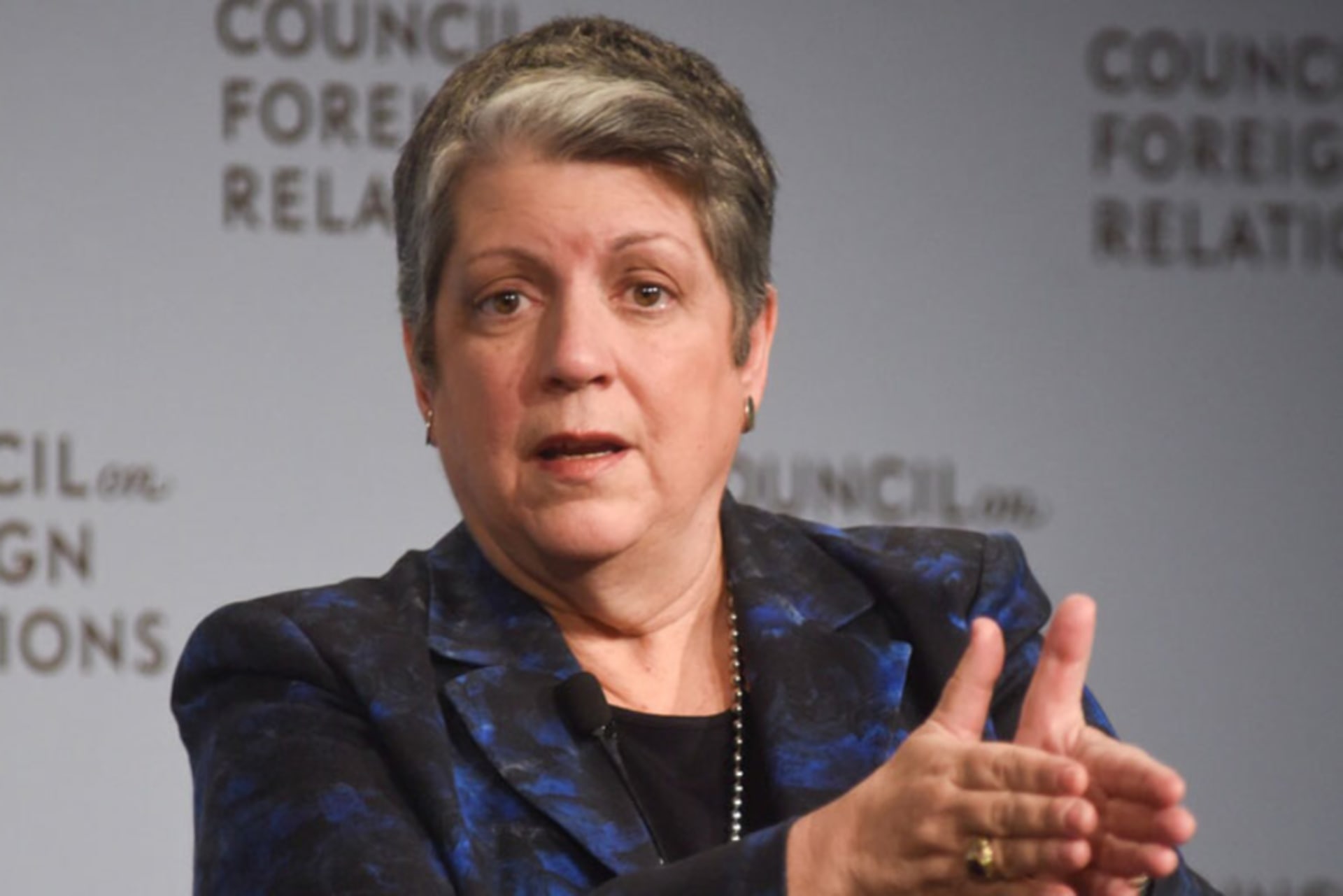
Janet Napolitano
Professor of Public Policy, Goldman School of Public Policy, University of California, Berkeley
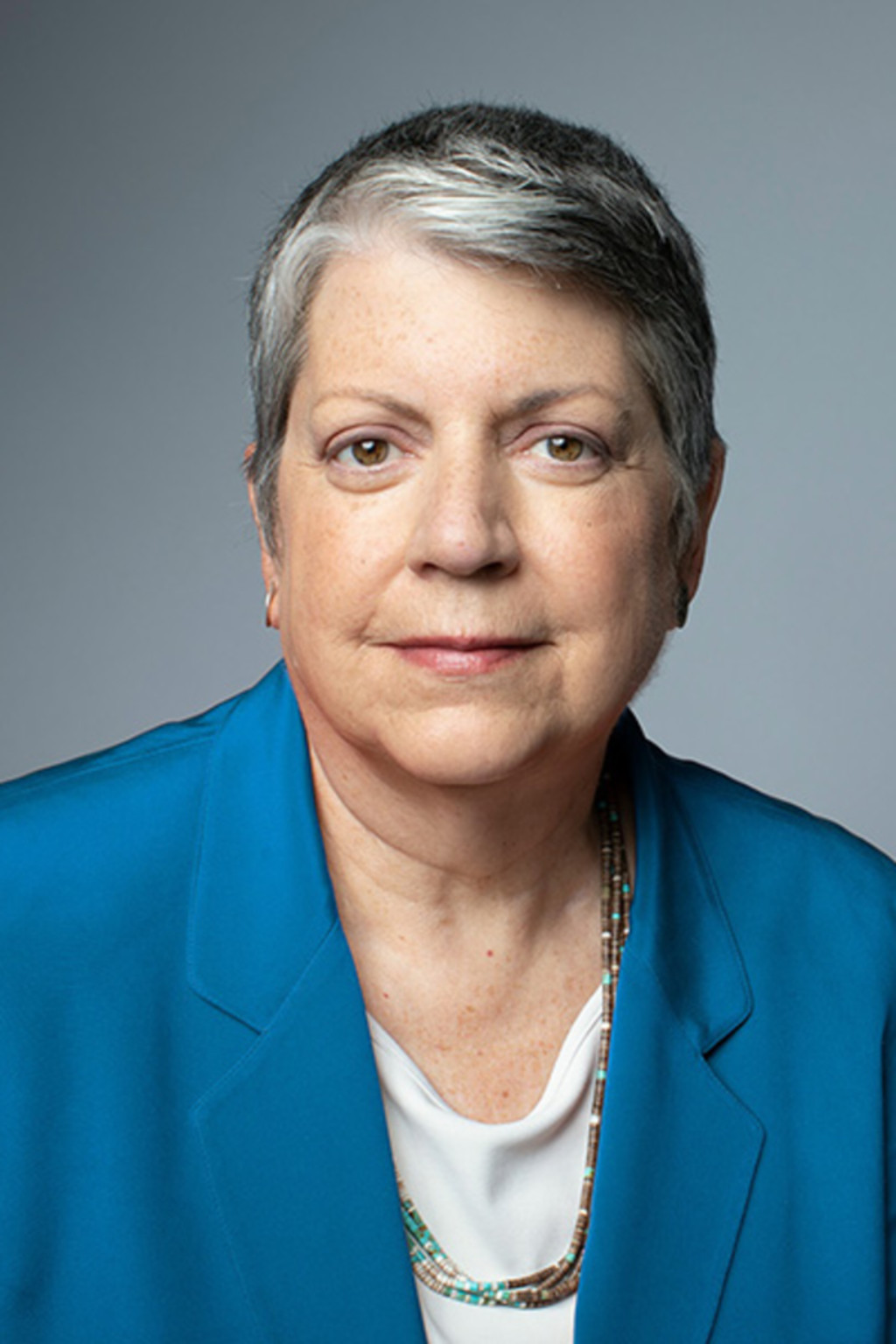
Janet Napolitano is currently the Founder and faculty director of the Center for Security in Politics at UC Berkeley. A distinguished public servant, Napolitano served as the president of the University of California from 2013 to 2020, as the U.S. Secretary of Homeland Security from 2009 to 2013, as Governor of Arizona from 2003 to 2009, as Attorney General of Arizona from 1998 to 2003, and as U.S. Attorney for the District of Arizona from 1993 to 1997. She earned her B.S. degree (summa cum laude) in 1979 from Santa Clara University, where she was a Truman Scholar and the university’s first female valedictorian. She received her law degree in 1983 from the University of Virginia School of Law. She began her law career as clerk to Judge Mary Schroeder of the Ninth Circuit.
As Secretary of Homeland Security, she led the nation’s efforts to prevent terrorist attacks, secure its borders, respond to natural disasters, and build domestic resiliency. She oversaw critical enhancements to aviation security, including initiatives like the creation of TSA Pre✓® The Department also significantly enhanced its readiness to meet and combat evolving cyber threats. During her time as Secretary, she spearheaded the creation of the Deferred Action for Childhood Arrivals (DACA) initiative, creating hope and relief for thousands of undocumented young people across the nation. Napolitano was the first woman and to date the longest-serving Secretary of Homeland Security. Under her leadership, the Department transformed its security capabilities, becoming a more efficient, cohesive, and effective organization.
As UC President, she was a steadfast advocate for California students, working to stabilize in-state tuition and to enroll historic numbers of California students. In 2017, under Napolitano’s leadership, the University of California was the first university in the country to file a lawsuit to stop the federal government’s rescission of the DACA program. The U.S. Supreme Court upheld the injunctions received by the University prohibiting the rescission of DACA. Napolitano continued the University’s legacy of leadership on global climate action, putting UC on a path to 100 percent reliance on clean electricity across all campuses and medical centers by 2025.
As Governor of Arizona, Napolitano balanced the state budget while also increasing the state’s rainy-day fund. She created universal all-day kindergarten for Arizona children, established the Science Foundation Arizona, and led the construction of a new medical school in Phoenix. In 2007 she was elected by her peers to serve as Chair of the National Governors Association.
Napolitano is the recipient of ten honorary degrees including the University of Virginia’s highest honor, the Jefferson Medal. In 2015, Napolitano was elected to the American Academy of Arts and Sciences, and in 2017 to the American Philosophical Society. In 2022, Napolitano was named the President of the Truman Scholarship Foundation, succeeding the Hon. Madeleine Albright. Napolitano serves as a board member for RAND Corporation, VIR Biotechnologies, Fortinet, the International Rescue Committee, and the Council on Foreign Relations. She also serves on the Council of the American Law Institute. In 2022, President Biden appointed Napolitano to the President’s Intelligence Advisory Board, and also appointed her to the Intelligence Oversight Board. She served until January 2025. In 2024, Napolitano served on the Independent Review Panel to investigate the attempted assassination of Donald Trump on July 13, 2024.
Napolitano currently serves as a professor of public policy at the Goldman School of Public Policy at UC Berkeley. In 2019, Napolitano published How Safe Are We: Homeland Security Since 9/11.