U.S. Agricultural Policy Outlook
Event date
Speaker
- Research Fellow Emeritus, International Food Policy Research Institute
Presider
 Vice President for National Program and Outreach, Council on Foreign Relations
From State And Local Webinars.
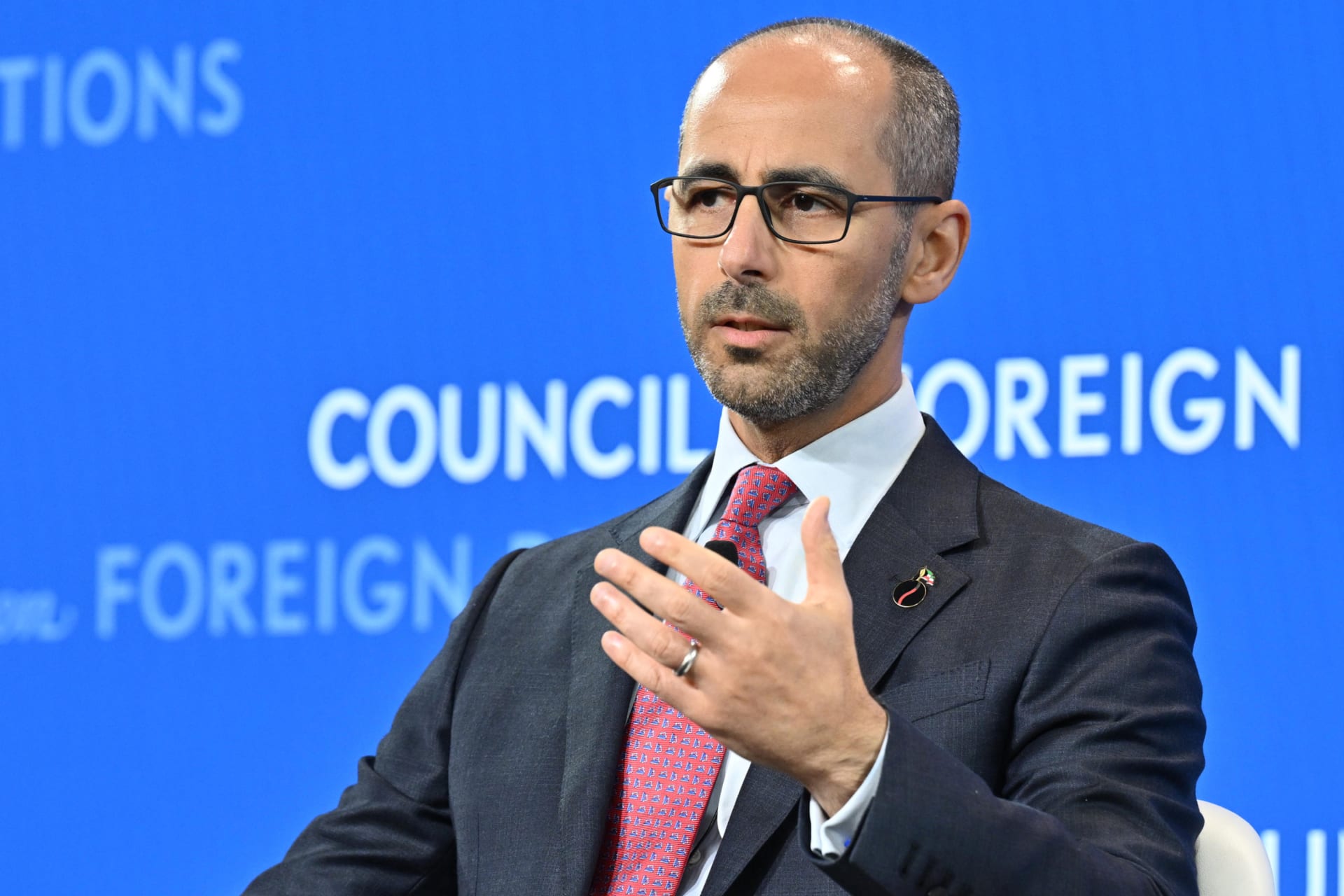
Joseph Glauber, research fellow emeritus at the International Food Policy Research Institute, will discuss the economic impacts of federal policies on U.S. agriculture and international commodity markets.
TRANSCRIPT
FASKIANOS: Welcome to the Council on Foreign Relations State and Local Officials Webinar Series. I’m Irina Faskianos, vice president for the National Program and Outreach here at CFR.
CFR is an independent, nonpartisan, national membership organization, think tank, educator, and publisher focused on U.S. foreign policy. CFR generates policy-relevant ideas and analysis, convenes experts and policymakers, and is also the publisher of Foreign Affairs magazine. As always, CFR takes no institutional positions on matters of policy.
Through our State and Local Officials Initiative, CFR serves as a resource on international issues affecting the priorities and agendas of state and local governments by providing background and analysis on a wide range of policy topics. Thank you all for taking the time to join us for today’s discussion. We’re delighted to have more than 550 participants from fifty-one U.S. states and territories registered for today’s conversation. We will post the video and transcript on our website after the fact and, of course, this webinar is on the record.
We are pleased to have Joe Glauber with us today to discuss U.S. agricultural policy and international commodity markets. We’ve shared his bio with you so I will just give you a few highlights.
Joe Glauber is a research fellow emeritus at the International Food Policy Research Institute. He’s also a nonresident senior fellow at the American Enterprise Institute where he focuses on general agricultural policy. He was previously at the U.S. Department of Agriculture for thirty years which includes serving as chief economist from 2008 to 2014, and he has served as the chairman of the board of directors of the Federal Crop Insurance Corporation.
So, Joe, thanks for being with us today. There’s, obviously, a lot of interest in this topic with given what’s going on. Perhaps you can give a high-level briefing and overview of the state of U.S. agricultural and how U.S. farmers are feeling the impact of changes to federal policy and what that means for access to international markets.
GLAUBER: Yeah. No, sure. Thanks, Irina, and thanks so much for the invitation.
Yeah, I was just going through the list of registrants and it’s a very diverse crowd, and I think that’s appropriate. Agriculture touches pretty much everyone in one way or another, obviously, through food and what we consume.
I’m going to talk a lot about ag policy in terms of how that affects the farm sector which is, you know, frankly, a small part of the overall U.S. economy and an increasingly smaller part of the overall economy.
But, again, on the consumption side it really is talking about everyone and I think that, certainly, the years I spent at the Department of Agriculture, you know, we dealt with a range of issues from, you know, supplemental nutrition programs and other sorts of things as well. So happy to take questions on those.
Yeah, a lot in the news recently, certainly, with the trade war that has been going on with China in particular, the tariffs, other sorts of things. Agriculture is generally perceived as actually suffering from a lot of collateral damage in these trade wars.
The other big focus has been the fact that just announced last week was up to $12 billion in supplemental assistance for U.S. farmers. Just a couple days ago, Glenn Thompson, who’s the chair of the House Ag Committee, echoing the Farm Bureau and others have said that bailout isn’t enough, that he argues that because of trade wars and other factors the farm sector is reeling right now and needs as much as an additional $10 billion.
Yet, if you look at a lot of the aggregate indicators published by USDA and others they suggest a slightly different picture, that the farm sector is in better shape than a lot of people think. One is if you look at projected farm income levels for 2025 they’re near nominal record highs. They’re down considerably from the last couple years but they are better than the previous years.
Land values continue to increase and credit conditions remain generally pretty good. Farm bankruptcies are up but the numbers are negligible. That’s, largely, because farmers don’t typically use Chapter Twelve and other sorts of things, and the percent of nonperforming agricultural loans remain low. Debt assets, so the percent of debt relative to what farmers have in terms of assets, they, too, are low relative to historical values.
So, you know, one of the questions I ask is why the big disconnect—who is right in this, and I think it’s really a tale in one sense of two sectors. So you do have—if you look at row crop agriculture and by row crop I mean, you know, corn, wheat, soybeans—the major crops that are produced by, you know, farmers, say, in the Midwest or other areas of the country—they have seen falling prices for the last several years and, really, since they saw record highs in 2022. But since then they’ve fallen well below levels from prior to 2022.
But on the other hand, if you look at things like input costs, things like energy or fertilizer prices, those two hit record levels in 2022 but they haven’t fallen nearly as much. As a result, cash margins, you know, the—what farmers pay out relative or pay out in terms of expenses relative to what they take in, those have really been squeezed a lot and I think so when you hear farmers talk about the, you know, problems that they’ve had on the cash side at least that certainly has been the case.
On the other hand, the livestock and dairy sectors, they’ve fared a lot better. Meat and dairy prices have been high over the last few years and feed costs because what do these animals eat? They eat corn and soybeans and other things where those prices have been very low. Their feed costs, which are a big part of their overall expenses, those have been pretty low.
So their margins actually have been quite high. In fact, if you look at livestock income over the last several years it’s been higher than crop income and it has been generally quite good. So to say that in general the farm income is doing—you know, is well really misses this point, that the disparity—that one side of the sector is doing pretty well, the other side is doing less so on the cash side.
And then in addition to that, the farm sector has benefited from a lot of government assistance over the last few years. Last year alone or this year, actually, 2025, it’s expected the government will pay up to about $35 billion. That doesn’t count the $12 billion which will typically be paid out or is expected to be paid out in 2026.
So when you add in those amounts of money then that farm income level starts looking high, like, what I said at the beginning. But I do think that that really obscures the diversity here, one, between the crop sector and the livestock sector and also between, frankly, the cash sector.
You know, that is what farmers are receiving for selling their products and relative to the costs they’re paying. Those profits have not been good and as opposed to years past where those profits were good or relatively good and government payments played a much smaller role in overall income.
And on top of that, then you add in this trade picture, which has been very murky and in fact as I mentioned at the beginning that agricultural exports have generally been collateral damage in these trade wars. If you look at the counter retaliatory tariffs imposed by China, they’ve hurt U.S. exports. There’s no question about that, particularly crops like soybeans and sorghum as well as many meats and specialty crops, cotton.
China for many years now has been one of our top markets—in fact, the top market for many years. They’re the largest importer in the world for agricultural goods and so when they put on counter retaliatory tariffs that cuts out a very big market for U.S. agriculture.
The short-term costs—this has meant that the loss of those markets has meant short term costs for many producers in the form of lower prices. So we saw a lot of prices for when these—when the tariffs were announced by China in counter retaliation for the tariffs that we put on back in the early spring those—you could see the prices for soybeans and other things really declined and that—but it’s not just the short-term costs.
I think the other thing to remember with these trade wars is there are also big long-term costs and we know that from the 2018-19 trade war with China where we look at some of our competitors like Brazil and other suppliers. They ramped up production during those trade wars to fill the gap.
The loss of the U.S. market into China was met by—largely, by Brazil but other South American producers as well. And it’s not just China with these trade wars. Trade frictions with Canada, for example, have had an adverse impact on U.S. wine, beer, and distilled beverage exports.
That’s been less a question of tariffs. That is, Canada didn’t put on tariffs on those but they did remove these things—but some of these were removed from shelves in Canada. Consumers have boycotted those products and we’ve seen markets like the Canadian market for U.S. wine, which is our largest market, that’s essentially disappeared this year and as a consequence our ag trade balance is on track for a negative trade balance of over $35 billion.
I think one of the biggest concerns I have is looking at the current trade war is the potential and, again, I want to be hesitant. I’m hesitant to say that this is actually—we’re seeing this really start to take place. But I’m worried about the potential of the trade war spreading.
That is, when one country puts on trade barriers, forcing exports to flow to third countries, oftentimes those third countries put on tariffs as well. We saw that during the 1930s and, to a degree, we’re beginning to see this in the steel and aluminum markets where other countries have put tariffs on goods coming from China. Countries then are looking at, well, where are these markets going to—what’s going to be the next market that’s affected. This is, hopefully, something that doesn’t emerge.
But let me turn briefly just to say a couple of words about the ag trade deficit and then we can get to questions. I think—this is the other thing. As I mentioned earlier, ag exports right now are expected to fall about $35 billion short of what ag imports will be this year.
You know, a negative ag trade deficit is a relatively new phenomenon over the course of most of my career, which I don’t know how well you can see my gray hair but it’s over forty years or so of agriculture. We, largely, had positive trade balances with the rest of the world. That’s changed over the last few years and we’ve seen a growing ag deficit.
Is that a cause for concern? I would argue no. Comparing what we import to what we export is quite literally comparing apples to oranges. We typically export a lot of bulk commodities, things like corn, wheat, soybeans, cotton.
We import a very different mix. We import a lot of consumer-ready products, things like fruits and vegetables, processed products, and I would also argue a lot of what we import is actually counter seasonal.
So we import a lot of things like fruits and vegetables that we don’t grow, you know, seasonally at the same time. So if you look at imports during the summertime—the U.S. summer—we’re not importing nearly as much as we are during the wintertime.
In the wintertime there is, certainly, competition, particularly for, say, Southeastern crop producers or Florida producers with goods coming in from Mexico and other Latin American countries during the wintertime.
But for the most part, these things are counter seasonal and I would argue that that actually has allowed us to import a lot of or to have in grocery stores fruits and vegetables and other things year round. Also, we import a lot of things that we just don’t produce here, things like coffee, cocoa, pineapples, bananas. There’s just a lot of crops that typically we don’t grow here and we import a lot of it.
In fact, if you look at some of the recent actions by the Trump administration towards countries like Brazil was to take a lot of those commodities off the tariff list. That is, recognizing that that actually was increasing the cost of those commodities and so they’ve now—they’ve changed the tariff levels on those, recognizing, again, that these crops are not competing directly with U.S. producers.
And I’d say the other thing is a lot of what we import is actually—goes into—is transformed here into value-added agricultural products. So we take feeder pigs from Canada, for example, or calves from Canada and Mexico, and we finish those and that is we put weight on them. Then they’re brought to slaughter in the U.S., oftentimes processed into further meat products within the U.S.
A lot of them consumed domestically. Some of those exported, some of those exported right back to the countries that we bought or where we imported the pigs and calves from. So it’s a very integrated system, I guess, is what—another way to put that.
And I think the interesting thing, at least back to this question of why the big deficit over the last couple of years, is that if you think about what we export global for a lot of these bulk commodities, these raw commodities like wheat, corn, soybeans, those prices have fallen a lot and they’re down considerably from what they were at the highs in 2022. As a consequence, our export numbers have really either flattened or they’ve fallen over the last three or four years.
On the flip side, consumer-ready products around the world—not just in the U.S. but around the world—have been hit hard by inflation. If you look at the—you know, think back two or three years ago when we had really high food inflation here in this country we were seeing that around the world. Europe had the same things and that in particular is hitting higher-value products.
The price of much of what we import was increasing at a far larger pace than those—the commodities that we were exporting. As a consequence, that gap, if you will, between exports and import values really change.
In fact, if you look at volumes in terms of what we were exporting, those actually in many cases were actually up over the last two or three years. They haven’t declined as much as the value of the exports would indicate. It’s, largely, a price effect.
And I did a quick analysis for a paper just a couple of months ago and I looked at what would have been the trade deficit if we had seen—excuse me, prices of the 2022 for current exports and imports, and if you apply those across the board for each of those products we would have had actually essentially a net zero deficit. Instead, it was a $35 billion deficit.
Again, these are price effects that would far—I think I would argue far go beyond individual politics of one party versus the other. These are more global phenomena that U.S. producers and consumers are having to deal with.
With that, I’m going to stop and I’ll get back to you guys for questions.
FASKIANOS: Wonderful. Thank you so much, Joe. That was a great overview and we can really get into and even more dig down on the specifics.
We’re going to turn to all of you for your questions and comments.
(Gives queuing instructions.)
OK. So the first raised hand is from Steve Holifield.
Q: Yes. I’m a farmer here in Indiana. I started farming during the 1980s, and it kind of baffles me when you talk about record prices in 2022. When the record prices actually started, ’96 we had a brief twenty-minute pause when corn hit $5 because of the first ethanol craze and then in 2012 we went to $8. Most of my career was spent below $2 so I have a hard time understanding how these kids today are complaining, and whining, and crying.
I also borrowed money back in the ’80s at 18 percent. So what’s your take on these kids whining and crying about a handout right now?
GLAUBER: Well, I tell you, Steve, it’s a great point and if you—I too was around the Department of Agriculture in the ’80s so I remember really well the—you know, the financial crisis at that time.
Yeah, I think that there’s no question this—they were, in my view, much, much tougher times. You think about the budgets in the ’80s and ’90s. There the pressures were all about how to cut money out of agricultural spending, right?
I mean, we were—we looked at several bills during the ’80s and ’90s that effectively said, OK, well, we’re going to make—we’re going to cut these programs back. We’re going to cut target prices. We’re going to cut loan rates.
It’s a very different environment that we’re seeing now. I mean, we spend, roughly, $20 billion annually for conservation payments and of price and income support payments through the Farm Service Agency, and another $10 billion or so, although admittedly some of that goes to insurance—the insurance industry, not to producers, through the federal crop insurance program. So a large existing safety net.
But on top of that, particularly starting in 2018, we’ve seen these large supplemental bills, market facilitation payments, which paid out around 23 billion (dollars) over 2018-2019, on top of the existing farm program payments to bail out farmers for the trade wars that hit back then.
You look at during COVID there was large amounts of money paid out, another 30 some odd billion (dollars), and as I mentioned, about 35 billion (dollars) this last year. And if Glenn Thompson is correct about getting another 10 billion (dollars), that would be another 22 billion (dollars) for next year.
So a lot of money has gone into the sector, no question, and that mostly accrues in—you know, in terms of higher land values and things like that. So I think that there are some flip sides of that that people don’t consider all the time. Certainly, it’s harder for younger farmers to get in and buy land and things like that.
Good question.
FASKIANOS: Thank you.
I’ll take the next question for—from Cashenna Cross, who is mayor of Glenarden, Maryland.
Q: Hello. I’m actually a city councilwoman at large now. Thank you so much for taking my call.
FASKIANOS: OK.
Q: Former mayor, yes, for four years.
My request or ask is relative to farmers and agri-tourism, which was a huge push about two and a half years ago through the Maryland Association of Counties—in MACo—and a lot of the farmers at that time were actually selling their lands for the purposes of agri-tourism, you know, event center, convention centers.
And one of the other big things, particularly in Prince George’s County where I’m currently residing in Glenarden—it’s a municipality within of twenty-seven municipalities—we’re seeing a lot of the farmers turning their lands over to residential housing and that’s big-scale residential housing like multifamily duplexes that are really annihilating the local market of the single family homes.
Can you speak to that and how that’s going to impact across the state of Maryland? Because we’re doing it so hard and heavy that a lot of people are leaving in mass droves. Thank you.
GLAUBER: Yeah. No, I think you raise a very interesting question in terms of land use for agricultural land, and that’s—it has been a trend. You know, we’ve seen a lot of cropland go out of production over the last several years or a lot of farmland go out of production over the last, say, forty years or so.
You know, cropland itself, if you look at the annual numbers for what is actually planted and harvested, those numbers actually haven’t declined much. But in particular things like pasture land or private forest land on farms have been converted, and as you mentioned, regionally or subregionally, if you’re looking at areas like Prince George’s County or, you know, bedroom counties around D.C. or other larger cities, we do see a lot of transformation there and I think that there’s a lot of concern from people who are promoting farmland preservation to make—you know, what can be done about providing easements to sort of guarantee that land will stay in, if not agricultural production, just at least in a conserving use.
But, again, awfully difficult issues to tell someone who’s, you know, been—owned some land for a long, long time to say that that they can’t sell their land for development purposes, and I think those are the sorts of things—those things. We have programs for that or states have programs for that or local areas have programs for that to sort of give the sort of benefits that you can get someone to willingly sort of give up land for that.
But I don’t think it’s having much impact, for example, on food production but I think it’s very, very important for all the reasons that you’ve mentioned in terms of quality of space and those sorts of issues.
FASKIANOS: Thank you.
I’m going to take the next question—a written question—from Gail Patterson-Gladney, who’s a commissioner in Van Buren County, Michigan: Will China’s and other countries like Canada markets be permanently affected? I’ve heard some farmers don’t see a good future for farming. How many American farmers have lost their farms due to the tariffs?
GLAUBER: Yeah, the latter—let me treat the latter question first. I don’t think many have. Look, there are numbers—you know, we look at—you know, we do—have published numbers on farm bankruptcies, farmers that use Chapter Twelve or other chapters to declare bankruptcy.
Those numbers are—the press reports about the percentage increase from year to year but we’re really talking about a handful. I mean, statewide, even ten, fifteen, moving to thirty. So that’s not to say that it’s not an issue. I think it is very much a concern.
But the broader issue, I think, on markets, I think, is a very important one and I might—I think China, you know, obviously, and certainly Canada and Mexico, you know, they’re our three top markets and we can’t afford to lose those markets.
I mean, there’s a lot of talk about, well, we need to diversify away from China. I think that that that’s all well and good, but when you realize that China is the number-one market in the world, they are a very important market for U.S. producers as well and will continue to be a very important market.
But I think the U.S. needs to be seen around the world as a reliable supplier. Otherwise, countries will—we’re not going to be the ones diversifying. They’re going to be the ones diversifying away from us and I think that’s a dangerous place to be, frankly.
And I think to a degree we’ve seen that with China. Before the 2018 trade war with China we had 45 percent of the China market for soybeans. Brazil had about, roughly, 50 or so percent and—or we had around 40 percent and Brazil had around 45 percent. Right now, Brazil has 70 percent. We have, roughly, 20 percent.
So we have really lost market share in that—in China and it’s a growing market. You know, this isn’t something that we’re fighting over the same pie. It’s a growing pie that we’re losing out on and I think that’s—those are really important.
I think, you know, over the long run, you know, the exports are going to continue to be important for U.S. agriculture. Just if you look at—yes, there are things like biofuel production, others, other things that create demand for products here in the U.S.
Those are all important for the ag economy but they’re not without controversy as well and I think that at, the end of the day, if you’re looking at where growth and demand is it’s outside of this country and I think that’s—you know, it’s almost the obvious point that most people make when they talk about trade.
But, yeah, a truism or whatever. But it is really important and I think that—one thing that I think the U.S. has not done a very good job, regardless of—at least over the last few administrations is pursue, you know, market agreements with countries to—for U.S. agricultural products.
FASKIANOS: Thank you.
I’m going to go next to Burt Thakur, if you can identify yourself.
Q: Good afternoon. Can you all hear me?
GLAUBER: Yeah.
FASKIANOS: We can.
Q: Oh, fantastic. My name is Burt Thakur. I’m Frisco City Council and a member of the Regional Transportation Council and—Frisco, Texas.
So, first of all, a fantastic presentation, Mr. Glauber, and, Dr. Faskianos, thanks again.
My question is, given the USMCA renegotiations going on and, one can argue, rising geopolitical fragmentation, climate volatility, all that, do you see U.S. agricultural policy shifting from a market efficiency model more towards, like, a resilience and supply chain security model? And if so, what are the tradeoffs that state and local governments should be preparing for?
GLAUBER: Yeah, that’s a great—really great question, I think, and you see a lot of things on the supply chain that have—you know, how does trade—you know, how do all these individual policies affect those things, and they can have dramatic effects.
I mean, we’ve been—had this debate over the last year, you know, quite apart from the tariffs have been on port fees and how they’re going to affect exports for ships coming in from China.
You know, China has over half the world’s carrier—ocean carriers for bulk goods and other things. You start putting on—big fees on those things that will have an impact on what’s shipped out of the U.S.
And that also—I mean, we have developed this big system of, you know, being able to transport internally goods from, you know, Texas to the Gulf, Texas to the West coast, you know, North Dakota to the Gulf or the West coast or to points within, and these are very fine, well-oiled machines that you can see when these trade disruptions have come, like, through tariffs or the potential of port fees or other sorts of—or even disruption of the Mississippi River like what we saw just a couple years ago with low water.
You know, those things have big impacts and you see the industry starting to try to react to that. There are costs of doing that and I think that’s the hard—the hardest thing right now, I think, is just the uncertainty of what picture we’re going to be looking at over the next few years and how does the industry and state and local governments adjust to that.
FASKIANOS: Thank you.
I’m going to take the written question from Michael Henderson, who is chief of police in Seal Beach, California: What are the ag deficit spillovers for big cities, specifically the cost of living, logistics, supply chains, both businesses and families?
GLAUBER: Yeah. No, I think one of the big things has been food prices, right? I mean, if we’re looking at overall food inflation it’s been high and, you know, most of my life, with some very big exceptions, I might add, you know, certainly the last twenty years, twenty-five years, food inflation has been, largely, below 2 percent.
You know, if you think back to the early ’70s and the late ’70s we had very, very high inflation rates then, and I think what we’ve seen over the last two or three years, particularly coming out of COVID, was this big increase in spending and that hasn’t just been at food at home. It’s also been food away from home.
So if you look at—I mean, any one of us know—anyone who’s been to a restaurant in the last two or three years know that you’re coming away with a check much, much larger than it was, you know, five or six years ago, and I think the problem is, is those things aren’t going to go down.
I mean, this is what—what will happen is I think we’ll adjust to that. Wages over time will adjust to it so that, you know, those sorts of costs, you know, won’t seem—they’ll seem more normal than they are right now. But they’re not going to go down.
You know, you’ll see individual food items fall and, you know, things like eggs can hit—you know, are quite volatile or we’ve seen the volatility in eggs, certainly, over the last few years with—you know, with them hitting record levels and now falling a lot.
But if you look generally at food inflation for the entire food basket, what we’re—you know, people talk about in—you know, certainly the last administration went on and on and on about how food inflation was down at 1 percent or 2 percent. Yeah, it’s true. One percent compared to the year before, but still quite high relative to three years before, and I think that’s certainly the case right now.
You’re seeing food inflation—the most recent numbers that just came out today around 2.3 percent, 2.4 percent. If you’re looking at food away from home around 3.7 percent. Those are still pretty high numbers when you’re talking about food prices and, again, the point is they haven’t gone down and I think that’s—you know, for affluent families then it—you know, going out to dinner, yeah, it’s a little bigger check, whatever.
For poor families that’s just—you know, it hits harder because as such food purchases are a much, much larger percent of overall spending. For, you know, an average family in the U.S. or if you look at the value of the agricultural—food in overall spending it’s around 25 percent of—the farm value of food consumed at home.
But if you—and if you look away from home it’s a much, much smaller percentage. Most of those costs of what you’re eating out at restaurants is coming from the rest of the economy. So it’s wage rates, it’s other things that are affecting those prices, and they’ve all been up, right, over the last four or five years.
And those things likely aren’t going to go down. Those will remain at levels—hopefully, the rate of increase slows so we don’t see much changes but it’s not—we’re not going to go back to 2023 levels, I don’t think, in terms of retail prices at least.
FASKIANOS: Thank you. And let me correct—my apologies—Michael Henderson’s affiliation. He is the associate chief of staff for the city of Philadelphia.
GLAUBER: OK. That makes—
FASKIANOS: So I wanted to correct the record there. That makes a little more sense.
GLAUBER: Well, I don’t know. Nothing wrong. (Laughs.) I think of—I’m glad to hear a police chief might be interested in that as well, but yeah.
FASKIANOS: Yeah. Great.
So let me go next to raised hand from Jon-Austen Linch.
Q: Hi. Thank you all for giving this. I’m Jon-Austen Linch. I’m the legislative director for Arkansas Lieutenant Governor Leslie Rutledge, who herself is a century farmer of timber. Husband owns and operates a large soybean farm.
And I guess my question is, given China’s investment in cargo routes over the Andes from Mato Grosso, Chinese deepwater port in Peru, the fact that they have two harvests per year versus our one harvest, they have lower regulatory burdens, what would you as a policy expert suggest that I advocate for to help us compete with all of those different factors?
GLAUBER: Well, you’re raising a great point, and one is that being in the southern hemisphere that means their crop is coming in, you know, six months after our crop for the most part, and if you look at the seasonal purchases by China prior to the trade war—a normal year—that China buys from us, you know, for four or five months. They buy, you know, almost exclusively from the U.S. during that period.
So we’re not really competing with—typically we’re not really competing with Brazil during the months of, roughly, September to January or so. After that we start seeing the South American harvest come in for Argentina and Brazil, and then they’ll dominate exports over the next five or six months.
So there’s a real seasonal component there. China takes advantage of that. Actually, for them it’s, roughly, a six-month crop year, right, because they’re looking at the northern hemisphere. Then they move to the southern hemisphere. When our price is lowest they’re lowest at harvest, so they’re able to take advantage of low prices in the northern hemisphere and then low prices in the southern hemisphere.
Brazil has really increased its dominance in global markets, largely, because of the fact that they have a lot of land that they can bring into production. They also have technologies that we see a little bit of in the U.S. So Arkansas sees a little bit of double cropping. Illinois—you see it more prominently in Illinois and Indiana where you may grow a crop of wheat, harvest wheat early, plant soybeans, and be able to harvest soybeans.
In Brazil you can plant soybeans and then on top of that put in a second or a corn crop, and what that’s allowed them to do is really convert a lot of corn area in the country to soybeans and then plant corn on top of it. You know, so, essentially, this double cropping really has allowed them to increase production a lot and I think that’s one reason why they have taken off.
You know, one of the things—and actually throughout a lot of my career we kept talking about, well, the U.S.—you know, we’re a little higher cost of production than Brazil but we have this enormous advantage in terms of transportation.
So we have access to the Panama Canal. We have access to the Pacific Northwest for northern—particularly as corn and soybean production shifted north a lot during the early 2000s as varieties became available and other things, all of a sudden, you know, shipping soybeans out of the Pacific Northwest was—you know, we just saw a lot of trade going out that way.
What you mentioned in terms of the infrastructure development with China I think, certainly, will mean that we’ll have more competition on the fringes of our season and I think that’s not a position that we necessarily want to be in.
But I think the main thing is don’t do things that shoot us in—that shoot ourselves in the foot by creating the perception that we’re a less reliable supplier because I think there certainly is a niche for the U.S., a big niche.
When we talk about niche I think people—you normally think of some small little place. This is actually a big chunk, like, five months of the market where this is really, you know, U.S., and certainly for things like cotton where cotton really is—you know, U.S. is one of the major exporters in the world in cotton. Brazil is also—has been a growing exporter, but we’re certainly competitive with Brazil for soybeans, for cotton, and other things.
FASKIANOS: Thank you.
I’m going next to Christina Witham.
Q: OK. Thank you. This is Christina Witham, Baker County, Oregon, commissioner. And I have with me a member of my NRAC team and a local producer, ranch owner Curtis Martin, who I really think that it’s going to come best from him if you don’t mind.
GLAUBER: Sure.
FASKIANOS: Perfect.
Q: Thank you.
FASKIANOS: Thank you.
Q: Yes, I’m Curtis Martin, lifelong eastern Oregon rancher, and really appreciate your discussion. Your depth of history is really impressive, Mr. Glauber. I really appreciate it.
So my thing that I’ve seen in my lifetime—and I’m seventy years old so I’ve been around for a little while—the thing that is most disturbing to me is the rise in price in land values of ranches, beef. Most of everything here in eastern Oregon is high desert beef production.
But the intrusion, and I guess maybe that’s maybe a hard term to use, but the absentee ownership that has come in to people that have no understanding of the community or the culture and really couldn’t care less what the land produces has just skyrocketed the land values to where my passion is first being a follower of Christ and then my second passion is trying to be able to leave to my kids and grandkids the ability to be a rancher if they so choose to do that.
But the escalation in this price of land values is just beyond—I mean, you don’t even hear the term of production value being able to service the loans anymore. I mean, that’s just outrageous.
I guess I’m really interested in what your perspective is of that and how best to—if that can be reversed somehow. I don’t know how that can be, but it’s really eliminating the possibility of generational ranches and farms to be passed on.
And then the other thing that’s really of concern—sorry to be palavering here so long, but these absentee landowners will then almost look for the conservation easements that will be—to me, it’s a false economy. It’s mitigation credits, carbon sequestration.
It’s really a false economy and there, again, it’s competing against the real producers and the real family farms and, I think, what is the sustainability of American agriculture to feed our population and to export it.
So it’s a big question. I know it’s kind of macroeconomics, but I’d like to hear your opinion of that. So really appreciate the chance to talk to you.
GLAUBER: Yeah. No, I think this is a really great question and I might add—I should say at the outset that I actually sat on a board for a while for a real estate investment trust that actually dealt in farmland so I’m very sensitive to this issue.
And I think actually the company that I worked for was very sensitive to this as well and, largely, buying lands that were already renting to farmers. They maintained the same tenants. They did all that, which I think, you know, at least helps in the community from that standpoint.
But I think there’s a broader issue in general just in terms of land values, how that has actually—you know, land values have increased so much over the last number of years that have really priced out, you know, buying land. If you want to expand it’s very difficult for a farmer, I think, other than leasing land.
And so, certainly, that’s been the case for a long while in areas like the Mississippi Delta region or the Midwest where if you were to go into Indiana, Illinois, or Iowa, leasing land is just a way of life. I mean, that’s what you’re doing.
If you’re increasing—when you’re talking about land values being 15,000 (dollars), you know, $20,000 in some cases but $15,000 an acre, I mean, that’s just so much capital to try to raise. So leasing land has been a—you know, a practice for a long while.
Who are the landowners? Well, oftentimes, you know, as families break up then it’s—you know, can be, you know, the heirs will be renting this and may have very little input into the actual farming operation.
And then in some cases, as you say, it’s investor-driven and I think that that—yeah, that’s certainly a concern and I think that, you know, having land available or how to make that available, particularly for new entrants, because, you know, if you’re a young couple or wanting to get into farming it’s very difficult. It’s almost impossible without having some base to begin with, certainly, a lot of money to go into because, you know, to have some—be able to purchase land is just very difficult.
And I think that that—frankly, I think, you know, the U.S. has—we’ve had this history of, you know, young farmers. You know, that’s changing a lot, I think, and I think it’s just very, very difficult to see how to do that without really penalizing, putting constraints on land ownership or putting constraints on land sales like, frankly, some states have done.
Some states do have prohibitions about selling to corporations or out-of-state corporations or, certainly, foreign ownership. That’s another whole area that—you know, that people are concerned about.
The flip side of that is, you know, those people are trying to sell the land and, you know, putting those things also to value, the—obviously, the potential profits that they can get.
I think it’s a very difficult issue, frankly. But I think the concern has been exactly what you’re saying, is what it’s doing to the cost of land and how does that make it easy for farmers to expand or to even remain in farming if the farm is passed down to heirs.
FASKIANOS: Thank you.
I’m going to take the next question from—sorry, just lost my—Bob Wipperfurth.
Q: Good afternoon. Thank you. I’m a village president in the village of Windsor in Wisconsin and we also have a large agricultural area. I’ve been a lifelong farmer.
My question, ironically, is similar to the previous person that just spoke and it was about the high cost of farmland, and oftentimes it’s from farmer to farmer that’s selling the land at a high price. But the second one—and Joe, you just touched on it real briefly, and that was the second part of my question—is foreign ownership of U.S. farmland, what impacts does that have long-term whether for farming and/or for national security, perhaps?
GLAUBER: Yeah. No, thanks, Bob. Just before you leave, what county are you from?
Q: Dane County.
GLAUBER: Oh, yeah. So, yeah. I don’t know if it was in my bio or not. I went to the University of Wisconsin, so I know Dane pretty well.
Q: OK.
GLAUBER: So foreign ownership, it’s—first of all, it’s a pretty small overall percent of land is actually foreign owned. In fact, the vast, vast majority of foreign-owned land is timberland, and it’s essentially, largely, by Canadian paper companies and others that—some European countries that have large holdings of private forest lands in—largely, in the northern parts of the country but some southern parts as well.
Yeah, the big focus over the last few years has been China. China is a very small part. There has been some very high-level or high-visibility cases. So there was land near military bases—a couple military bases that there was a lot of concern over. I get that. I mean, I think that’s a concern that anyone should have regardless.
If you’re buying land next to a military installation I think there’s probably some—there should be adequate—or due diligence done there in terms of guarding against that. I’m less concerned about foreign ownership right now just because the magnitude is so small and that, largely, you know, it’s—I think it’s important to monitor it and I think that that’s an important thing that USDA is at least required to do.
There’s been some criticism that they weren’t doing as adequate a job in terms of monitoring for it, but I think it’s clearly something to be concerned about. I think anything that should be concerned about, you know, anything highly sensitive in terms of buying land, but I’m not sure that I would necessarily be in favor of banning foreign owners, largely, because I just—I think it’s a small thing.
That’s just my opinion, obviously, and others, certainly, members of Congress—a lot of members feel very differently about that in particular in regards to China’s concern, but I think the—at least when I look at it from the statistics sense, you know, in terms of who is buying and the numbers, it’s a pretty small number.
I think a lot—we’re making a much, much bigger deal of this than the problem actually is but, again, there are others with different views. So—
FASKIANOS: I’ll take the next question written from Kalisha Dixon, who’s a council member in Bladensburg Town, Maryland: Given the divide between crop and livestock farmers, how should federal support be better targeted to those struggling with cash flow?
GLAUBER: Well, historically, farm support has gone to crop producers and dairy producers. You know, much less support has gone to—I mean, I think that’s something the general public doesn’t understand as well.
Farmers know this but I think that, you know, most people, when we talk about farm support you think, well, that’s going to all these farmers or whatever.
It’s actually going to a very small segment, in one sense, of the overall farm population. It, largely, goes to a handful of crops and to dairy—and to a lesser degree to dairy. Dairy policy used to be much more extensive in terms of price supports and other things. Now it’s essentially there’s a margin payment program for dairy.
But there’s a lot of segments of agriculture that get much less support, so if you look at hogs, if you look at beef, if you look at poultry, if you look at fruits and vegetable producers, for example, for the most part they’re eligible for subsidized crop insurance.
They are included occasionally in some of these bailout packages, but there aren’t standing price and income support programs for these producers.
Now, I forgot the question. (Laughs.) Oh, you were asking about how do you address these differences between these. I don’t—I think that, you know, this has been a historical context for why this has developed the way it has and I think a lot of times economists like myself might point to these other sectors and say, well, gee, these are not receiving support. Why—you know, why is there this big disconnect, you know, as opposed to, say, something like crop insurance, which is generally available for most crops and now in a limited degree for livestock.
I think just historically has been that way and, again, right now for the most part the livestock sector, just by coincidence in one sense, they have seen really high prices because supplies have been down here in the U.S. and so we’ve seen very high market prices for most meat products.
FASKIANOS: Great. Thank you.
I’m going to take the next written question from Kerr Wardlaw, who’s a county commissioner in Val Verde County, Texas: What do you think of the Union Pacific and Norfolk Southern railways merging? I’m not sure—
GLAUBER: You’re asking me—I probably used to pay attention to railroad issues a lot more than—transportation issues like that much more than I do now.
I mean, yeah, so the one side would be, well, gee, there’s probably some efficiencies for the railroads that way. The flip side of that, of course, is people point to a lack of—you know, a lack of competition or less competition on those factors.
I can’t tell you in this case about—you know, I think the transportation systems in general have evolved so much now in terms of these intermodal carriers, you know. So if you’re, you know, harvesting cotton you take a module. You stick it right on a train car. It goes out to a port. It gets loaded out, you know, and shipped off. All those have made for much lower transportation costs.
Some of that—and I say some, not all of it—benefits—you know, at least in theory benefits producers in terms of higher prices. I think a lot of people say, well, gee, I’m not seeing much in terms of higher prices. It’s mainly the railroad company or whatever that’s getting those profits.
But I think in general, if you’re looking at these, at least from when I was looking at this more as a course of what I was doing at USDA many years ago, you could see some advantages, at least some of that accruing to farmers in terms of higher costs.
Certainly, the opposite is true. When you see costs being put on this system either through a breakdown in the system or, you know, a blockage at a port or a blockage of a river or whatever, you see those prices plummet in inland areas a lot.
And so, you know, having an efficient transportation system, certainly, is important. The question is does market concentration actually offset that, and I can’t really tell you in this regard. I haven’t just looked at it closely enough, and I apologize.
FASKIANOS: Thank you.
I’m going to go next to Tom B. If you can identify yourself. Unmute yourself.
Q: OK. Tom Brown, McPherson, Kansas, and we’re a 14,000 town. I’ve been mayor for seventeen years.
I have two areas, and I’ve been on the governing body of the League of Kansas Municipalities, which we have a lot of rural issues because we’re not big towns. But we have a big flour mill here that we send two trains up to the Upper Midwest, 122 cars twice a week. So we’re pushing out flour and grain on that. And then just west of us we have big livestock, both in beef and dairy.
And I guess one thing is there’s a relocation. I’m on the good end of a relocation because on the coasts that you’ve had people talking about it’s expensive, and they can come to a place here and either reestablish or sell to somebody bigger that wants to reestablish. But my understanding is we’re a number-one producer of powdered milk to Africa, and now we have a tremendous cheese plant that is going to Africa and other markets that haven’t been mentioned yet today. So I’m just wondering, what’s the impact in the whole agricultural industry of relocation, and then by us maybe coming up with a more manufactured product versus raw resource in the future?
GLAUBER: Yeah, two good questions. The relocation thing is an interesting one, right, because particularly for things like dairy where we really have seen a lot of factors drive dairy relocation, environmental factors being a big one, the other—and then, obviously, just the market attraction and things like that.
We also have a pretty complicated dairy milk marketing order system which if we had another week we could probably have a great conversation on, but it’s highly complex. It drives a lot of the decisions, at least in certain areas of the country, that are part of the federal marketing order.
California as well has its own issues in terms of how much cheese is produced versus things like nonfat dry milk versus fluid milk and other things. And relocation, we’ve seen a lot of industries relocate there. We’ve seen a big growth in dairy production in states like, as you mentioned, your own.
We’ve seen growth in dairy in places like Idaho, New Mexico, Arizona, and the scale of some of those operations, you know, really—you can see where they’ve really taken advantage of the scale economies. They’re very large. They have, you know, several thousand head of dairy cattle. They’re able to produce at very low cost.
On the market side, yeah, I think there’s a lot of—the U.S. is actually—it’s interesting, when I began my career, dairy was always seen as sort of a protected industry—that is, in the sense of trade that we allowed very little dairy in. We didn’t really have much interest in export markets except to dispose of surplus commodities.
So we sold butter, cheese, and nonfat dry milk out in the world at subsidized prices for the most part to try to keep internal prices high. That changed a lot. The U.S. now is one of the—is very competitive in global dairy markets, particularly for protein concentrates or nonfat dry milk, those sorts of things.
I think states like yours have really, or industries have taken advantage of states like yours to really ramp up production to meet those demands. And you’re absolutely right, countries, if we’re—we see markets in Africa really develop—have really developed, largely, because those are areas that, one, if you look at per capita consumption of proteins in those countries they’re very low and per capita dairy consumption is low. Per capita meat consumption is very low.
There’s a huge market potential there to increase, particularly as we see a lot of urbanization go on in places like west Africa or other populous areas within Africa where we’ve seen some big markets develop.
So very interesting and I think this—you know, it’s one thing that I remind people a lot is that agriculture changes, you know, day to day and it really does react. I mean, we can talk about farm policies and yeah, they have some impact, but underlying market forces really can drive some big changes in the emergence of crops, the emergence of markets, and those sorts of things.
I think anyone that looks at something statically and says, well, this is the way it is and will be next year or whatever, is really running the risk of missing something because they do change and I think one has to keep an eye on those changes.
You’re on mute.
FASKIANOS: I was going to try to squeeze in one last question: Do you have any recommendations for finding additional export markets for farmers?
GLAUBER: Yeah. I think Asia is the place to start I think and, unfortunately, you know, for agriculture, at least, I understand there were plenty of concerns about the Trans-Pacific Partnership agreement that was signed at the tail end of the—I guess the Obama administration was—then pulled out of by—one of the first moves the Trump administration had.
You know, that allowed—those were all big markets. There were a lot of big markets in there, particularly Vietnam and other emerging markets within Asia, and I think those are the sort of things we should be concentrating on in terms of getting access.
And, frankly, the Trump administration, I think, recognized that as well in these recent discussions with countries with these supplemental tariffs. They were in Indonesia, they were in Vietnam, Cambodia, other areas, where I think that we could potentially have some real benefit there in opening up markets.
But we need markets that work. We need markets that have enforcement—we need agreements that have enforcement provisions and those sorts of things. I’m a little—I have more concerns about that right now with some of these agreements that have been signed.
But, hopefully, they will emerge and I think that is where we see a lot of income growth. That is where we see a lot of potential market development. In the longer term, I think Africa is a real key but thus far the growth has been—continues to be very, very slow.
FASKIANOS: Joe, thank you very much for being with us and really a great hour, and thanks to all of you for your questions and comments. We appreciate it, and we’ll continue to focus on this issue.
We will send out a link to the webinar recording and transcript so you can review it again, share it with colleagues.
As always, we encourage you to visit CFR.org, ForeignAffairs.com, and ThinkGlobalHealth.org for the latest analysis on international trends and how they are affecting the United States, and also do send us suggestions for future webinars. You can email us at [email protected].
Again, Joseph Glauber, thank you very much. Wishing you all a happy holiday season, and we look forward to reconvening in the new year 2026.
GLAUBER: Thanks, Irina.
(END)