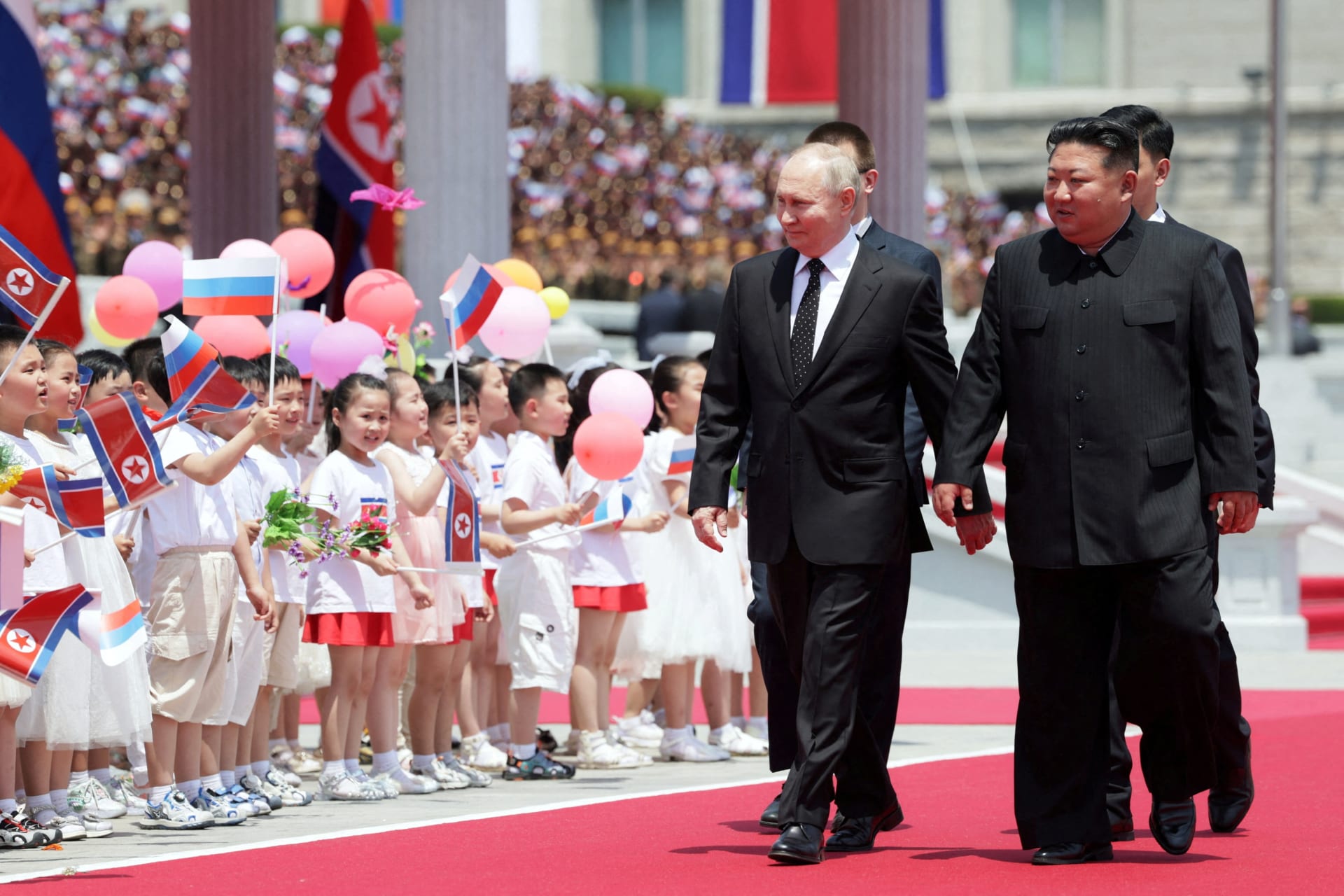
Expert TakeRussia Struck a Defense Pact With North Korea. What Does It Mean?June 19, 2024By Stephen Sestanovich and Sue Mi Terry
The North Korean and Chinese Threats Are Growing. But so Is the Trilateral Response.May 28, 2024By Sue Mi Terry
Assessing the Potential Tensions and Outcomes of the Asia-Pacific Economic Cooperation SummitOctober 27, 2023By Joshua Kurlantzick
North Korea’s Loyalty Test and the Demolition of Inter-Korean RelationsJune 18, 2020By Scott A. Snyder
Advancing South Korean Capabilities for the Future: Procurement or Research and Development?March 4, 2020By Guest Blogger for Asia Unbound
The Real Obstacles to the Return of Tourists to North Korea’s Mount KumgangFebruary 28, 2020By Scott A. Snyder
Burden-Sharing in the U.S.-South Korea Alliance: Finding BalanceFebruary 27, 2020By Guest Blogger for Asia Unbound
Is South Korea Pro-China and Anti-Japan? It’s Complicated.August 2, 2018By Guest Blogger for Asia Unbound
U.S. Alliance Remains South Korea’s Strongest Security Guarantee, Argues Scott Snyder in New BookJanuary 2, 2018
A Chinese View: The Risks of Changing Japan’s Peace ConstitutionMay 11, 2017By Guest Blogger for Asia Unbound
 Expert Take