What Climate Change Means for Central America, With Paul J. Angelo
In this special series of The President’s Inbox on climate change, Paul J. Angelo, the director of the William J. Perry Center for Hemispheric Defense Studies at the National Defense University, sits down with James M. Lindsay to discuss the impact of climate change in Central America. This series is made possible by a grant from the Carnegie Corporation of New York.

Published
Host
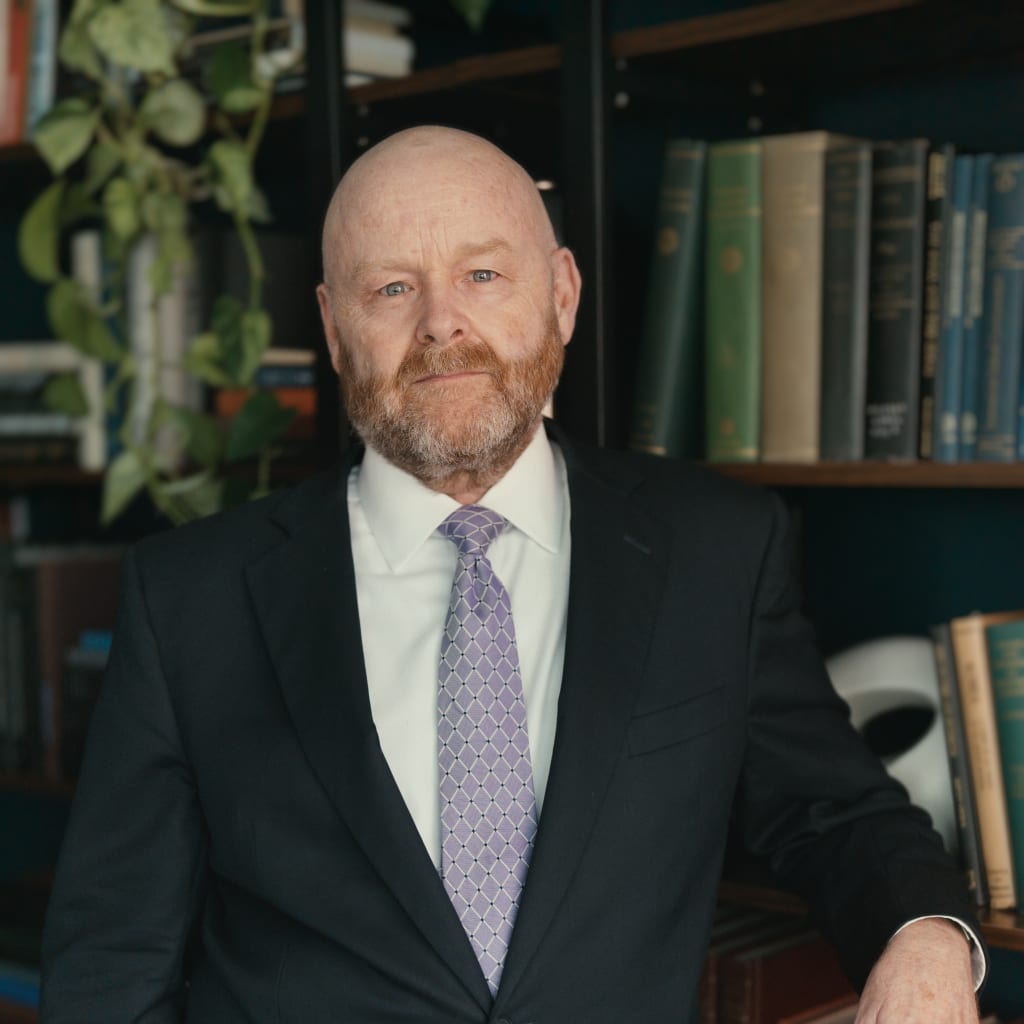 James M. LindsayCFR ExpertMary and David Boies Distinguished Senior Fellow in U.S. Foreign Policy
Guest
- Paul J. AngeloDirector of the William J. Perry Center for Hemispheric Defense Studies at the National Defense University
Show Notes
Mentioned on the Podcast
“Country Index,” Notre Dame Global Adaptation Initiative
“The 2014 Quadrennial Homeland Security Review [PDF],” The U.S. Department of Homeland Security
Transcript
LINDSAY:
Welcome to The President’s Inbox, a CFR podcast about the foreign policy challenges facing the United States. I’m Jim Lindsay, director of Studies at the Council on Foreign Relations. This week’s topic is what climate change means for Central America.
Today’s episode is the second in a series of episodes on The President’s Inbox that look at how climate change is affecting life, society, and conflict in different regions around the world. The Carnegie Corporation of New York has made this special series possible.
With me to discuss the impact that climate change is having on Central America is Paul Angelo. Paul is a director of the William J. Perry Center for Hemispheric Defense Studies at the National Defense University here in Washington, DC. Paul was previously a fellow in Latin America Studies at the Council, and he is a commander in the U.S. Naval Reserve. The Council Center for Preventive Action recently released its report, Climate Change and Regional Instability in Central America. Paul is speaking today in his personal capacity, and his views to not necessarily reflect those of the U.S. government generally or the Department of Defense specifically. Paul, thank you for coming back on The President’s Inbox.
ANGELO:
Thank you, Jim. It’s a pleasure to be back at the Council on Foreign Relations.
LINDSAY:
Paul, as you know, last month delegates from around the world descended upon Sharm el-Sheikh, Egypt to participate in the United Nations Climate Conference, so-called COP27. A lot of talk there about the generalities of climate change. What I’d like to do in our conversation today is to drill down into some of the specifics and talk about what climate change means for Central America, and so perhaps we could start out with the question, just so listeners, non-Americans, people from outside the Western Hemisphere, understand what group of countries we’re talking about. Give me a little primer on Central America.
ANGELO:
Thanks, Jim. Well, when we’re talking about Central America, we’re essentially looking at the countries that have historically been known as the Northern Triangle: Guatemala, El Salvador, and Honduras. But in this report, I’ve also expanded the geographic focus a bit to countries that traditionally haven’t been the biggest contributors of migration to the United States or the U.S.-Mexico border, and those countries include Panama, Costa Rica, and Nicaragua.
LINDSAY:
Okay. So when we look at Central America, my understanding is total population, roughly 50 million people.
ANGELO:
That’s correct, Jim.
LINDSAY:
And how vulnerable are the countries of Central America to climate change? I know there’ve been a number of studies looking at this issue.
ANGELO:
Right. Well, the countries of Central America tend to be among the most vulnerable countries in the world to climate change. These are countries that have relatively small land masses, but large coastlines, which make them vulnerable to rising sea levels. They’re also in tropical climates, which make them vulnerable to tropical storms and hurricanes. But broadly speaking, as the Notre Dame Adaptation Index indicates or classifies, it ranks countries across the world firstly in accordance with their vulnerability to the fallout of climate change, but secondarily with their ability to respond or to be resilient to the effects of climate change, and changing environmental conditions. And the countries of the Northern Triangle are among the most vulnerable in the Western Hemisphere to the climate fallout of today and the future fallout of climate change in the region.
LINDSAY:
My understanding is that the countries of Central America also rank very low when it comes to preparedness for addressing climate change.
ANGELO:
That’s absolutely correct, Jim. The reality is the countries of Central America have long under-invested in the collection of climate data. For instance, most of the Central American countries do not have sub-national climate data available, have not been collecting sub-national climate data on precipitation for but the last ten to fifteen years. And in order to actually attribute a phenomenon, a meteorological phenomenon, to climate change, you need centuries worth of data in these instances. And in that vein, it’s been very difficult to corral a public policy consensus in the countries of Central America that will contribute to investments in resilience and adaptation.
LINDSAY:
So this is an example of the old saying, you don’t know where you’re going if you don’t know where you’ve been.
ANGELO:
Absolutely.
LINDSAY:
Well, let’s talk a little bit about how climate change is playing out in Central America. Is climate change in Central America an issue for the future, or do we see it already beginning?
ANGELO:
Well, we embarked on this project, I was trading notes with my colleagues who wrote the other discussion papers about other regions of the world, and there was an instantaneous recognition that the environmental fallout in Central America was very consistent with what we were seeing in Sub-Saharan Africa or in Southeast Asia regardless of the changing geopolitical geographic political or cultural context. The main trends that we’re seeing for climate change in Central America include a significant uptick in extreme weather events, as evidenced by the 2020 back to back category five and category four hurricanes, Eta and Iota.
We’re seeing significantly irregular precipitation patterns. There’s something that known as the “canicula” in Central America, which is the summer heat wave. And typically, farmers will plant crops two times a year taking advantage of that canicula to plant their second crop for the second rainy season, which will then produce the second harvest. However, the canicula in the last decade has varied so dramatically in terms of the time of year that it arrives, and its duration that it’s actually creating a scenario in which most farmers in Central America, and especially subsistence farmers, are unable to plant two harvests.
LINDSAY:
So they don’t have certainty about when they can plant, so they may end up planting at the wrong time, too early, too late, and their crop is ruined.
ANGELO:
That’s exactly it. And so most Central American farmers, whereas they used to plant two crops a year, are now down to one crop a year. Certainly, climate change because of an uptick or a rise in temperatures throughout the region, we’re seeing increasing deforestation, increasing desertification. With rising sea levels, we’re seeing saline intrusion into freshwater aquifers in coastal areas. These conditions are obviously having an impact not just on farming communities, but also urban communities, especially in a region where infrastructure investment has been significantly lower than elsewhere in Latin American and the Caribbean.
LINDSAY:
I would imagine if you have lots of rain and you also have deforestation, you’re likely to see an increase in landslides and the erosion of soil, so the good soil for planting gets moved down to rivers and dumped in the ocean.
ANGELO:
That’s exactly it. And another trend that we’re seeing consistent with that is that as temperatures rise, the arable land to grow crops that have traditionally grown at sea level moves further and further up the mountain. And so there’s a reduction in the actual arable space where farmers are able to plant their crops and harvest them because of rising temperatures.
LINDSAY:
Okay. This is an important point, right, because when we look at Central America, particularly you look at the countries in the Northern Triangle, they’re not flat. They’re fairly mountainous, and hence that’s why as temperatures rise, farmers need to go up the mountain in order to maintain the same climatic conditions that enable crops to grow.
ANGELO:
That’s correct. And the further up the mountain the move, the further up the water source, they are able to, or they’re likely to, contaminate. And so that has knock-on effects for those who are farming at lower levels engaged in different types of crop cultivation.
LINDSAY:
Paul, have we seen changes in rainfall patterns across Central America in recent decades? Understanding that records in Central America are not as extensive as perhaps we might wish them to be?
ANGELO:
We most certainly have, and in fact, this year, 2022, represents the worst rainy season in decades, wiping out millions of acres of farmland where farmers cultivating staples like maize, yucca, beans, coffee, cardamom... In Guatemala alone, there are 6.1 million people who have been directly affected by this excessive rainy season, 4.6 million of whom are at risk of food insecurity this year.
LINDSAY:
So what about vegetation die off? I’ve seen a number of studies arguing that we’re seeing plants native to these regions because the climatic conditions have changed. The things that once grew plentifully no longer grow.
ANGELO:
Right. And I think that the best example of vegetation die off is what happened to coffee crops across the region about a decade ago. Between 2012 and 2015, we saw because of higher temperatures, the invasion of the region’s coffee crops by a pestilence known as La Roya, which is a fungus that grows on coffee and basically decimate the coffee crops, and it-
LINDSAY:
They call it coffee rust.
ANGELO:
Known as coffee rust. Correct. And in the 2000 to ‘12, 2014 coffee planting cycles, we saw hundreds of thousands of farmers lose their crops, which I think in many ways helps explain the uptick in migration that we started to see from the Northern Triangle countries of Central America around that same time period.
LINDSAY:
Because obviously coffee’s a major cash crop in Central America.
ANGELO:
That’s correct. In fact, most of the economies of Central America, at least for Nicaragua, Guatemala, El Salvador and Honduras, anywhere between 30 and 40 percent of the populations of these countries are actively engaged in agricultural activities as a primary source of income.
LINDSAY:
Now what about the warming of the oceans in other parts of the world? There’s talk that the warming of the ocean is changing where fisheries exist, maybe killing fisheries. And to the extent that a country depends upon fish as a source of protein, food, or relies on things like coral reefs to bring tourists in, to generate hard currency to be able to pay for other exports, are we seeing anything similar to that in Central America?
ANGELO:
In Central America, the warming of the oceans is actually having contradictory effects. On the one side in the Pacific coast, you’ve got the phenomenon of El Niño, which is when the warming waters of the Pacific Ocean affect wind patterns and raise temperatures. And that leads to dry spells, along what has historically been known as the dry corridors, a stretch of land that runs from southern Mexico all the way down to Costa Rica. On the other hand, in the Caribbean Sea, you have warming waters that tend to produce more rainfall, and a higher incidence of tropical storms and hurricanes, which of course leads to flooding and landslides. And in areas that are affected by both of these phenomena, what you tend to see are intense periods of rain followed by long periods of drought, and then intense periods of rain again. And after a drought, the soil has been so depleted of its nutrients, or its ability to absorb moisture, that another rainfall actually produces significant flooding and erosion leading to landslides.
LINDSAY:
So let’s talk about the consequences of these changes. My presumption is that the trends we’re witnessing are going to continue because we continue to pump heat trapping gases into the atmosphere. What have been the consequences of climate change you’ve seen thus far? You mentioned migration, moving northward. I imagine some people may also go southward looking for jobs, but walk us through the practical consequences of these changes you’ve discussed.
ANGELO:
So I think first and foremost what we’re seeing is that as land becomes less productive, it’s displacing people from the rural communities to urban communities. And that process in and of itself replicates the marginalization that people from the countryside are experiencing. Because somebody who has been trained or has grown up working on a farm is not going to have the educational formation or the experiential background that they’re going to need in order to compete in an urban economy. And so many times these people arrive to cities without the skills they need to compete. They end up moving to communities, in many cases, these are communities that are not formal communities, so to speak. They may not be zoned or planned by the cities in which they’re living. And they also tend to be the communities where there’s a significant presence of violent actors. And in Central America, the Maras, or the gangs, the MS13, the Mara Dieciocho, are gangs that prey on people, and particularly people that they don’t recognize.
And so when people come from the countryside and they show up in cities, they settle in an area that’s already vulnerable, where opportunities are not prevalent for them to compete in the local economy, and then they’re subjected to violence or extortion by local gangs. You’re creating a situation that’s wholly unsustainable, which I think in large part helps explain why people have immigrated en masse over the past decades from Central America to the United States. Secondarily, what you’re doing is you’re creating a competition for resources. Central America already has significant constraints when it comes to freshwater availability, and freshwater availability in Central America is expected to decline by more than 70 percent by 2100, forcing coastal communities in particular to relocate, as it goes back to the point that we made about the pollution of freshwater sources at higher altitudes.
Likewise, the region of Central America is heavily dependent on energy imports, as we saw with 2022 protests across Central American response to high gas prices and electricity costs, in the wake of the Russia invasion of Ukraine. And furthermore, for those communities in rural spaces that do indeed decide that they want to invest in adaptation, that adaptation requires significant capital. Capital that is often unavailable to small farming cooperatives, or individual farmers, or small business owners, leading to a consolidation of arable land in the hands of owners of large agribusiness companies. And so in the long run, I think they’ll contribute to a significant uptick in internal disorder, and a relocation of people not just within their borders, but across national borders, producing a demographic fallout for neighboring countries, and indeed the United States.
LINDSAY:
I want to get to this issue of migration in a moment, Paul, but one last question about what we’re seeing in terms of the practical consequences of climate change in Central America. My understanding that one of the issues as people get displaced is that food insecurity, that seems to be the term of art these days, used to be hunger, is becoming increasingly significant as a problem. You have people who are malnourished, and the consequences of being malnourished, particularly for children, it’s well known, stunting—in terms of growth, is one big issue. It makes it more challenging for people to develop their mental abilities and the rest. So tell me a little bit about the extent to which food insecurity is a problem in Central America as a result of climate change.
ANGELO:
Well, in addition to the challenges posed by the variable canicula, as I originally mentioned, the challenges the countries of Central America have confronted this year with supply chains as well have reduced the ability of people to engage in coping. And so a reduction in food stuffs imports earlier in the year, thanks to global grain shortages, made it very difficult for millions of people, in the dry corridor in particular of Central America, to be able to cope through the second harvest season in a year when we had record rainfall.
And so of course, as you mentioned, food insecurity exacerbates malnutrition, which affects health outcomes particularly among the region’s youngest inhabitants, not just in the moment but for decades to come. As you note, children are prone to stunting due to poor nutrition, and this is acute in Guatemala, and particularly in the western highlands of Guatemala. Upwards of 70 percent of children are vulnerable to the phenomenon of stunting. And as we also know, children who experience malnutrition early in their lives and are victims of stunting also have lower educational attainment, and a loss of productive capacity. A child born in Honduras today will be 48 percent as productive as had they benefited from full health and secondary education.
LINDSAY:
So one of the conjectures that has been around for a while, Paul, is that climate change is going to increase these societal stresses and that that’s going to lead to conflict among nations. I think a number of years ago the Quadrennial Defense Review, maybe back in 2014, talked about climate change as a threat multiplier. Do you see climate change playing out quite that way in Central America where it might lead to border skirmishes between El Salvador and Honduras, or Guatemala in its neighbors? Or is that an issue you don’t really see manifesting itself?
ANGELO:
I do suspect interstate tensions to increase in the years to come, thanks to increased competition for resources between nations. But I think it’s rather unlikely that that competition will result in conflict between the countries of Central America. There are some resources that are shared amongst countries, namely rivers and waterways, mangrove swamps, and the Gulf of Fonseca in the Pacific coast, which unites the countries of El Salvador, Honduras, and Nicaragua. And I think what we really have to figure out in the years to come is how to do a better job of managing common resources amongst countries, so that the management or the lack of management of these common resources does not spill over into conflict.
One area where I do think that there is some potential for smaller border skirmishes in the long run could be on the Belize-Guatemala border. Belize and Guatemala have been engaged in a border dispute for decades affecting everything from fishing rights, to wildlife poaching and conservation efforts, and that border dispute currently sits with the ICJ. And whether or not-
LINDSAY:
ICJ meaning the International Court of Justice?
ANGELO:
That’s correct. The International Court of Justice. And depending on the ruling of the International Court of Justice, which is expected in the coming years, I think we may see some community based tension between communities on either side of whatever is determined to be the Belize and Guatemalan border in the future.
LINDSAY:
Okay. So it sounds as if the bigger concern is internal disorder, conflict, disintegration, than it is cross border war as a result of climate change.
ANGELO:
That’s correct. However, that’s not to say that the internal disorder doesn’t have an international or a regional component to it. And here I would point to the xenophobia that we’ve already seen is on the rise in many of the countries of Central America, particularly the wealthier countries of southern Central America like Costa Rica and Panama, which have also seen an influx of migrants and refugees from the northern Central American countries to the south in the past several decades.
LINDSAY:
So let’s talk about this migration. Obviously we’re seeing record numbers of migrants and asylum seekers coming to the U.S. southern border. To what extent do you think that’s driven by these climate change effects that we’re speaking about, or to what extent is it driven by other issues?
ANGELO:
When I worked at the U.S. Embassy in Honduras back in 2015 as a Council on Foreign Relatioins International Affairs Fellow-
LINDSAY:
A shout out to our International Affairs Fellowship Program, Paul?
ANGELO:
It was an experience that changed my life, and so thank you. But my boss, the U.S. ambassador to Honduras, always told us that our mission was to help Hondurans envision their futures in Honduras and not in the United States. And a part of that, the main part of that, was addressing the root causes of migration. And at that juncture in American history, and that juncture and regional history, the narrative that had taken hold was that Central America is a violent region, and people are fleeing gang activity, or they’re fleeing forcible recruitment by gangs. And the United States devoted $750 million at the end of the Obama administration to helping address the root causes, mostly focused on urban communities. As a political officer at the U.S. Embassy in Tegucigalpa, during that same timeframe, I came to recognize that the narrative that we had latched onto wasn’t telling the full story. And, there were a whole host of other reasons why people were fleeing Central America.
And at that time, as I mentioned previously in this podcast, those years coincided with the first years following the major wave of coffee rust that had beset Central American coffee farmers, leading to a significant economic recession in the countryside. But USAID resources at that moment in foreign assistance history, some 85 percent of our resources destined for Central America were destined to urban communities, leaving only 15 percent of USAID’s budget for the rural communities that were contending with the economic recession, and a growing need to engage in costly adaptation measures to keep growing the crops that had traditionally been part of their subsistence and commercial activity. And when we talk about climate change, the root cause of migration from Central America, I think that it’s been a part of our calculation for a long time in terms of the diagnosis of the problem. But it’s gaining all the more attention in recent years, thanks to a number of historic climate events that have made climate change as a root cause an undeniable reality.
But there are other factors that are contributing to the latest wave of migration that we’re seeing. In fact, this year we saw the largest number ever recorded of encounters of undocumented migrants at the U.S. southwestern border, reaching 2.76 million encounters in the fiscal year of 2022, breaking the previous annual record the year before by more than 1 million. However, when you look at the demographic breakdown of that increase, it’s not necessarily reflective of a growing number of Central Americans, but rather a growing number of Venezuelans, Cubans and Nicaraguans, who for the first time ever represented more than the number of migrants and refugees from the Northern Triangle. And I think that points to a complexity of the migration narrative here in the United States. That root causes include things like corruption, dysfunctional governance, and the consolidation of autocracies in places like Venezuela, Cuba, and Nicaragua.
LINDSAY:
Obviously in those three countries, you’re talking about communist left-wing governments that have really run their countries into the ground, and also severely repressed people’s individual liberties and freedoms. So I take your point, Paul, that when we look at the issue of migration to the U.S. southern border, it can’t be reduced simply to these are people all fleeing from climate change or climate change induced instability in their home countries. Obviously a multitude of factors driving people to come to the United States, whether to seek asylum or to seek entry in other ways. But let me ask you this. When you chat with people who are skeptical about the general argument of addressing root causes, people who might say, “Well, people just shouldn’t come to the United States,” or they should come through legal means and not simply show up at the border, how do you respond?
ANGELO:
The reality is that in dealing with migration and especially with the instability that drives migration to the United States, we need a systemic mindset. One that addresses economic, social, political and environmental factors in Central America, but also one that reflects our own need for labor here in the United States. And so addressing the root causes is only one piece of the puzzle. And as I note in this discussion paper, some of the other pieces of the puzzle that will help us get a handle on broader influx of migrants to Mexico and the United States has to do with our own border asylum processing. We need to reform our own border asylum processing to ensure a fair but a swift adjudication of asylum cases at the U.S. border.
Likewise, reflecting our own need for agricultural labor here in the United States, I would recommend that we expand temporary legal employment pathways for Central American workers. We’re talking about H2A, H2B visas. Historically, Central Americans have not been the primary beneficiaries of these visa programs.
And in that vein, I would argue that we need to accept a desire amongst many central Americans for a circular kind of migration. I’ve spoken with any number of Central American migrants, be they on their way to the United States, or those who have been repatriated from the United States, after having made it here and worked here for several years. And what I think gets lost in the conversation that we have about migration here in the United States is that many of these people have transnational identities and they exist in two spaces at once. And many of them don’t have the intention of coming to the United States and staying here forever. But it’s our own closed door policies that encourage them to stay as long as they can instead of giving them-
LINDSAY:
Stay as long as you can, because it’s hard to get back in. So the argument-
ANGELO:
It’s hard to get back in, and it’s costly to get back in.
LINDSAY:
Yes, and so a policy that would allow people legally to come in and come out depending upon economic demand. I think actually historically, you find many people who migrated to the United States did so in search of work, and large numbers of them actually went back home at the end of the day. When thinking about waves of Italian immigrants, for example, my recollection is something on the order of maybe a third eventually went back to Italy because they came here largely because they wanted to make money to support their families, and wanted to return home. But obviously many people who come fall in love with the country and with people here in the United States, and don’t return back home.
Paul, I’m curious. If you were to be able to persuade somebody of your argument that the United States needs to address root causes in Central America, both in terms of the desire to create the push factor that has people coming up to the southern border, and also because of the humanity of it, because people are seeing their lives upended. What precisely is it that the United States should do to address these root or enabling causes?
ANGELO:
I think there are a number of things that the United States can and should do, and it would start frankly with retooling our interagency process for addressing the needs of the countries of Central America.
LINDSAY:
We have to tell people what an interagency process is.
ANGELO:
The interagency process is basically how the different agencies or departments of the executive branch of the U.S. government work together.
LINDSAY:
Or not.
ANGELO:
Or not, but hopefully and preferably work together, in order to move forward U.S. objectives and interests, either here in Washington or in this case in the countries of Central America. The objective of the U.S. government in addressing the root causes of migration should be to help improve governance outcomes in Central America. And I think a big part of it as it pertains to climate change is helping the countries of Central America improve their own analytical capacity to diagnose the climate and environmental problems that they confront. And a big part of this would be improving data collection of meteorological data to ensure that governments can communicate to their citizens about things like when to plant and harvest crops, or when to evade a flood zone. In fact, prior to Hurricane Eta in November of 2020, only 36 percent of Hondurans had access to early warning, which shows a huge deficiency in government capacity in the region.
Likewise, the U.S. government should invest in the humanitarian assistance disaster relief capabilities of partner militaries, or civilian agencies in the countries of Central America. Across the region, militaries are more often than not the first responders, or security forces are the first responders, to humanitarian assistance scenarios. And due to historical factors, and due to the insufficiency of their own resourcing, many of these security forces do not have positive relationships with the communities that they serve. And so I think a big part of it is for the United States to help create spaces where civil society, local communities, and security forces and political authorities in these countries can get together and strategize for how they will respond to disasters when they strike.
LINDSAY:
It sounds, Paul, as if you’re describing a need to help these countries develop the tools of resiliency, so that in essence, as climate changes, they can adapt more quickly to the changes that are being wrought by differing rainfall patterns, differing temperature patterns, and the like.
ANGELO:
Absolutely. And in that vein, the U.S. government could really deliver positive outcomes to Central America by plusing up our development assistance to rural areas of Central America, and helping finance adaptation. U.S. assistance of course is not sufficient. It’s going to move the dial in the right direction, but it’s not going to resolve all of the adaptation needs in the Central American countryside. And for that, there are other institutions, multilateral lending organizations for instance, or the development finance corporation of the U.S. government, that can help boost finances that will ensure that farmers have the resources, the financial resources they need, to either adapt or cope in times of economic downturn, due to the worsening of environmental conditions thanks to climate change.
LINDSAY:
Paul, is there a role here for the private sector, or for the nonprofit sector to help the countries in Central America become more resilient in the face of climate change? I ask because when I think of the problem that farmers face in Central America, they lack data, they face uncertainty. Many of them, as you point out, are subsistence farmers. So it matters to them that they get these decisions right, because if you’re a subsistence farmer and you lose your crop, you and your family are in deep trouble. But I could imagine you could build programs to help people get a better sense of temperature change. You could have programs designed to share different kinds of agricultural techniques and steps to adjust to a changing environment, and these are things that could be done by private actors or nonprofit groups. But is that simply too small a change to really matter, and you really do need very big government investments?
ANGELO:
During my field work, in the run-up to the publication of this discussion paper, I spent a lot of time actually speaking with private sector organizations and nonprofits that we’re doing exactly the work that you mentioned. However, these initiatives, many of them are local. More often than not, they’re not well integrated amongst each other. And thirdly, governments of the region frankly aren’t using the information or the data that is collected by these organizations in any meaningful way.
Again, I think this goes back to the point that where the United States can, it should create spaces or should elevate the work of these nonprofits or private sector actors, and create spaces where these individuals or these organizations can interact with their local governments. Give the example of an aquarium and a research center in Honduras, completely funded by private sector donations, but it’s doing some of the most significant work anywhere in the Caribbean on the issue of coral bleaching.
Likewise, I visited a food security research institute, which has an affiliation with the National Autonomous University of Honduras that is doing tremendous community-based work on adaptation that I think the lessons of which could be expanded at the national level. But really, it’s just a question of creating the spaces so that those lessons learned can be applied at the level of the national government. Beyond that, I think that the private sector has an important role to play in raising funds for adaptation. And one of the recommendations that I make in the discussion paper has to do with the establishment of national or regional trusts, using private sector contributions to subsidize coping adaptation amongst vulnerable communities.
The effect of tax rates of the Central American countries are significantly lower than global averages, leaving local governments in a very precarious spot. They need more resources to help fund adaptation, to help message better to communities, yet they suffer from a lack of resources to do so. All the while, private sector actors continue to resist higher taxes because of a lack of trust in government. Because again, these are countries that do face significantly higher rates of corruption than most of the other democracies of the Western Hemisphere.
LINDSAY:
Describing almost a catch 22.
ANGELO:
Absolutely. And so one of the ways that you can circumvent the need to transfer money from the private sector to the government directly is by setting up regional trusts, in which the money would be managed by a trusted agent, be it a multilateral lending organization, or a regional organization like the OAS, or the Central American Integration System. And the private sector contributors would then have a direct oversight role in how those funds are distributed. We saw a very similar model implemented at the sub-national level in places like Monterrey, Mexico, Ciudad Juárez, Mexico, for the issue of other public goods like the provision of crime, and violence prevention strategies to improve security outcomes in those communities. And I think this is a model that, if adapted in the right way for the climate challenges that Central America is confronting, could prove to be convincing enough for the regional private sector actors to buy into.
LINDSAY:
So let me just ask you, Paul, you spent a lot of time thinking about this issue, a lot of time in your region talking to people. Are you optimistic that we’re going to be able to develop a successful strategy, or are you pessimistic?
ANGELO:
When it comes to a successful strategy for dealing with climate fallout in Central America, I’m more optimistic than I was several years ago. I think that the Biden administration has been starting with a real deficit. The Trump administration froze assistance to the country’s of Central America in 2019. Then we had COVID-19, which represented a setback for resources and attention of the United States in Central America. Likewise, we saw a regional economic recession that contributed to displacement of people from the countryside and from the cities alike, and international migration northward to Mexico and the United States.
But now we’re in a place where I think the U.S. government is again appropriately focused on the issue. There’s been a recommitment to the Paris Accords, and we are reconfiguring our government architecture to recognize the permanence of climate crisis. And there’s no region of the world where climate crisis is going to have a more direct impact on the United States than in Central America and the Caribbean. And it’s something that I think because we can’t avoid it, inevitably we’re going to pay it the attention it deserves. Whether or not it’s too little, too late, that’s another question, but I am optimistic about the future of U.S. attention and investments in mitigating the climate crisis in Central America and the Caribbean.
LINDSAY:
On that positive note, I will close up The President’s Inbox for this week. My guest has been Paul Angelo, director of the William J. Perry Center for Hemispheric Defense Studies at the National Defense University. Again, Paul is speaking in his personal capacity. His views do not necessarily reflect those of the U.S. government generally or the U.S. Department defense specifically. Paul, thank you again for coming on The President’s Inbox.
ANGELO:
Thank you, Jim. It’s a pleasure.
LINDSAY:
Please subscribe to The President’s Inbox at Apple Podcast, Google Podcast, Spotify, or wherever you listen, and leave us your review. We’d love the feedback. You can find a link to Paul’s report as well as the other reports in this series from the Council’s Center for Preventive Action, along with a transcript of our conversation on the podcast page for The President’s Inbox on cfr.org. As always, opinions expressed in The President’s Inbox are solely those of the hosts or our guests, not of CFR, which takes no institutional positions on matters of policy.
Today’s episode was produced by Ester Fang with Senior Podcast Producer Gabrielle Sierra. Special thanks go out to Michelle Kurilla for her assistance. This is Jim Lindsay, thanks for listening.
Associate Podcast Producer
- Ester FangAssociate Podcast Producer
Editorial Director and Producer
- Director, Podcasting
 33:42Podcast
 36:05Podcast
 41:07Podcast
 39:26Podcast
 35:04Podcast
 31:46Podcast