Global Summits to Watch in 2026: Bracing for a New Global (Dis)order?
Major global forums are scheduled in 2026 that will cover diverse topics including climate change, trade, and security. But the Donald Trump administration, as it continues to overhaul U.S. foreign policy, could unsettle the way such gatherings are held.
By experts and staff
- Published
- Associate Director, Council of Councils
- Research Associate, Global Governance
The return of U.S. President Donald Trump for a second term has spurred significant changes to a post-Cold War international order that was already going through upheaval for myriad reasons, from climate change to great-power competition. He has renewed challenges to U.S. allies and adversaries alike, shaping the scope and ambitions of global summits and other important world gatherings in 2025—particularly in the areas of trade and migration.
This period of disruption is likely to continue in 2026. The following list, though not exhaustive, features a dozen major forums where the world’s decision-makers in government, business, and civil society will convene to address urgent issues of trade, security, technology, conflict, and more.
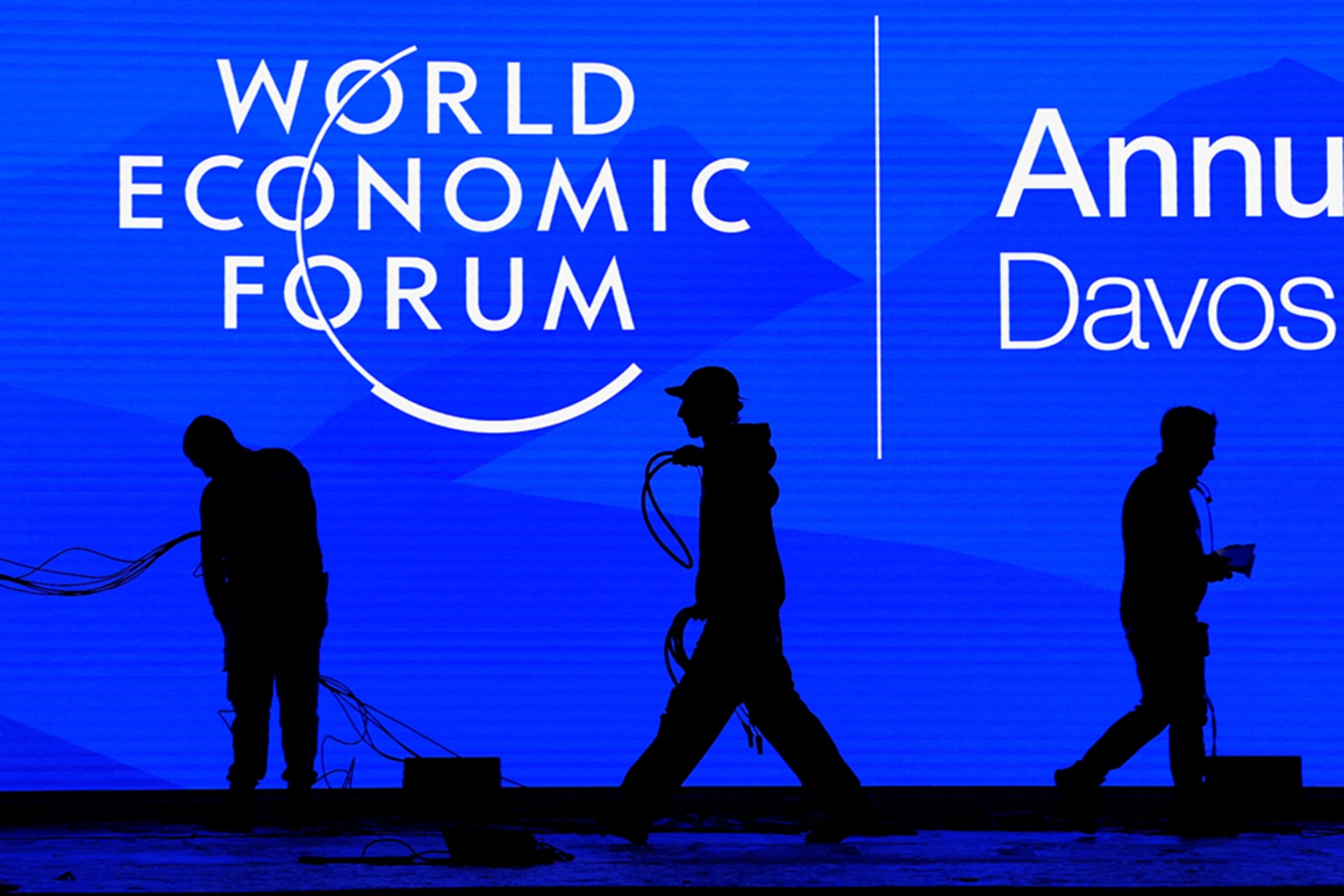
World Economic Forum Annual Meeting
Davos, Switzerland (January 19–23)
Trump will be among the headliners attending the January meeting in Davos that helps set the tone of the global economic agenda for the year. The president confirmed he would go after receiving assurances that so-called “woke” topics such as diversity, female empowerment, and the green energy transition would be dropped or scaled back.
The forum brings together a large cross-section of high-level government officials, civil society, thought leaders, and the business community to explore the five themes identified by the conference: cooperation in a more contested world, unlocking new sources of growth, investing in people, deploying innovation at scale and responsibly, and building prosperity within planetary boundaries. Technology—particularly artificial intelligence (AI), quantum computing, and next-generation biotech and energy systems—is once again expected to be a featured topic of conversation.
Space Summit
Singapore (February 2–3)
Space has become an increasingly dynamic sector, based on rising commercial, military, and even tourism investment. One of the early conferences to watch next year is Space Summit 2026, a new event to be held in Singapore in conjunction with the biannual Singapore Airshow. This summit will feature discussions on critical infrastructure, Earth observation for environmental sustainability, and the growth of the Asia-Pacific space sector.
The rise of Low Earth Orbit satellite congestion driven by mega-constellations in recent years has heightened concerns over space debris, orbital safety, and governance of the global commons. Additionally, conversations on preventing the weaponization of space have become more frequent. Space Summit 2026 could offer an early signal for how receptive governments are to collaborate on rules for governing space.
Munich Security Conference
Munich, Germany (February 13–15)
The Munich Security Conference (MSC), one of the world’s leading arenas for dialogue on international security policy, meets once again at the Hotel Bayerischer Hof. The Russia-Ukraine war, which is coming up on four years of fighting, will be at the forefront of discussions. Near the end of 2025, U.S.-European frictions raised new questions about the degree of continued joint support for Ukraine’s defense.
Major topics are expected to include European defense and security, transatlantic relations, technological advances, and the state of the global order. Several high-profile events linked to the Munich Conference already took place on the margins of the November Group of Twenty (G20) Summit in Pretoria, South Africa, and elsewhere. These include the final meeting of the MSC Food Security Task Force and the Munich Strategy Retreats.
Last year’s conference marked an early opportunity for the second Trump administration to express its worldview, with Vice President JD Vance giving a memorable speech upbraiding Europe for its posture on migration and free speech. Nearly a year later, the main elements of that message have been reinforced in the White House’s new National Security Strategy [PDF], which calls for the United States to intercede in European affairs by “correcting” its current political trajectory and cultivate nationalism.
Prepare for the 2026 conference by reviewing the 2025 Munich Security Report, or revisit CFR’s coverage of last year’s meeting.
WTO Ministerial Conference
Yaoundé, Cameroon (March 26–29)
The World Trade Organization (WTO) typically holds a ministerial conference every two years, during which trade ministers from around the world review the state of the multilateral trading system. This meeting of the WTO’s highest decision-making body will be the fourteenth since its establishment in 1995. It takes place as experts take stock of nearly one year of Trump administration tariff policies, which have caused widespread disruptions to the global trade order.
The WTO risks losing relevancy as the United States continues to favor bilateral trade agreements over multilateral systems. Critics say the WTO has long suffered from eroded credibility and an inability to swiftly adapt to emerging economic trends. In March 2025, the United States temporarily froze its funding obligations to the WTO, before quietly reversing the decision six months later. Despite being a frequent target of Trump, the WTO remains a critical venue for trade experts to observe how global trade discussions are evolving in an era of growing bilateral agreements.
G7 Summit
Évian-les-Bains, France (June 14–16)
The 2025 Group of Seven (G7) Summit in Canada took place amid a full-fledged tariff campaign by the United States against its longstanding G7 trade partners. It concluded without a formal declaration, highlighting divisions between the second Trump administration and its allies. Trump proposed readmitting Russia, expelled from the G8 in 2014 following its annexation of Crimea, but the other six members of the group rejected the idea. Nonetheless, consensus statements, including from the United States, were made on a range of topics such as diversifying critical mineral investments and resolving ongoing geopolitical crises. The 2025 meeting also ended with joint statements condemning Iran for its attacks on Israel and reaffirming Israel’s right to defend itself, with snapback sanctions on Iran imposed later in the year.
The 2026 G7 Summit will also be Emmanuel Macron’s last as French president. While the priorities for the summit will not be publicly announced until France formally assumes the G7 presidency at the start of 2026, the agenda is expected to be like that of the 2025 summit. These priorities are likely to include countering China and Russia, addressing U.S. tariff policies, and managing emerging technologies such as generative AI and quantum computing. Other perennial topics—combating climate change, promoting gender equality and human rights, and strengthening economic security—can be expected to appear again, along with hard disagreements between the United States and other G7 members. Critical minerals are set to remain a priority item for all G7 states, as has been the case since the 2023 G7 Summit in Japan.
NATO Summit
Ankara, Turkey (July 7–8)
Continued support for Ukraine will certainly be on the agenda for the 2026 NATO summit—but whether the conversation will about ongoing military action or rebuilding will depend on the Trump administration’s ability to forge a peace deal in the coming months. Also on the agenda will be the 5 percent GDP defense spending target that was adopted at the 2025 summit, marking a significant increase from the previous 2 percent benchmark, which not all member countries had been meeting. In the new agreement, allies will invest 5 percent of their GDP in defense- and security-related spending by 2035. The move was praised by Trump, who has long pushed for greater defense contributions by NATO member countries.
The 2026 summit may see new demands from the U.S. president. The new U.S. National Security Strategy calls on Europe to take the primary responsibility for its own security, and says NATO is not an ever-expanding alliance. The document also disparages the continent for its immigration policies and seeks to “support our allies in preserving the freedom and security of Europe, while restoring Europe’s civilizational self-confidence and Western identity.”
UN General Assembly
New York (September 8–22)
Calls for reform can be expected to return for the eighty-first UN General Assembly (UNGA), with proponents urging a revitalization of the UN system to effectively confront global challenges. In 2025, UN Secretary-General António Guterres launched the UN80 Initiative seeking to do just that. The reform plan includes budget cuts, workforce reduction, mandate reviews, and program realignments.
UNGA 81 will also provide an opportunity to check on the status of the Sustainable Development Goals (SDGs), which include areas like health, women’s rights, and poverty reduction. Ahead of the 2030 deadline, only 18 percent of the goals are being met. Additionally, next year will be Guterres’ last as head of the United Nations. The selection process for the next secretary-general seems likely to be an avid topic of discussion among global leaders assembling in New York, with an expected large push among member states for Guterres’ successor to be the first woman to hold the role.
Also likely to draw attention at UNGA 81 will be Trump, whose speech in 2025 contained strong criticism of migration and green energy policies embraced by many of the leaders in the chamber. Trump was also critical of U.S. funding to the United Nations, to which the United States was the largest individual donor in 2025, contributing 22 percent of the UN regular budget that year—a figure that Trump has moved to reduce. This rhetoric, as well as U.S. withdrawal announcements from the UN Educational, Scientific and Cultural Organization, the UN Human Rights Council, and the World Health Organization earlier this year, has raised alarm in a number of capitals on how the global system can be reshaped without strong U.S. leadership.
ASEAN Summits
Pasay City, Philippines (May and October)
Timor-Leste joined the Association of Southeast Asian Nations (ASEAN) in October 2025, making the 2026 summits the first to feature eleven members. Each year, the rotating country presidency hosts two summits, which for now are expected to be held in May and October. The latter is the larger event that attracts greater international attention. The Philippines will host both 2026 summits, filling in for Myanmar, whose turn to host has been disrupted by ongoing civil war.
The Philippines has framed ASEAN 2026 around three priorities: “Peace and Security Anchors,” “Prosperity Corridors,” and “People Empowerment.” The 47th Summit in 2025 saw more non-ASEAN world leaders attending than is typical, including Brazilian President Luiz Ignácio Lula da Silva and South African President Cyril Ramaphosa. Trump attended to oversee the signing of a peace accord between Cambodia and Thailand—already in jeopardy amid renewed fighting—and to announce individual trade agreements with four ASEAN members.
Separately, some members of the group have become concerned about increasing external interference. In response, Philippine President Ferdinand Marcos Jr. has stated that ASEAN and ASEAN-led mechanisms will remain central to the country’s presidency, though the guest list is still sure to contain high-profile names from outside the group.
G20 Summit
Miami, United States (December 14–15)
The G20, a gathering of many of the world’s largest economies, was held in Pretoria, South Africa, this year—the first time the event has been held on the African continent. The summit emphasized topics especially relevant to Africa, such as multilateralism, debt, and development finance. The United States boycotted the summit, with U.S. Secretary of State Marco Rubio calling the agenda “anti-American” and equating the summit’s theme of solidarity, equality, and sustainability to an endorsement of diversity, equity, and inclusion (DEI) and climate change policies. Trump, who has accused the South African government of mistreatment of minority white Afrikaners, said South Africa should no longer be part of the group.
The United States now holds the G20’s rotating presidency, and the Trump administration has formally declared that South Africa will not be invited to the 2026 summit. Instead, Poland will have a seat at the table. The U.S.-hosted summit will focus on removing regulatory burdens, unlocking affordable and secure energy supply chains, and pioneering new technologies and innovation. While some preliminary meetings will happen in Washington, the summit will be hosted in Miami at a Trump-owned property.
COP31, UN Water Conference, High Seas Treaty COP
Various locations (various dates)
The UN Water Conference—launched in 2023 as a spiritual successor to the 1977 UN Water Conference—will convene in the United Arab Emirates with cohost Senegal for its second edition from December 2–4. Its purpose is to achieve SDG 6 on Clean Water and Sanitation, with particular attention paid to the fact that the UN system is now in the final third of its fifteen-year 2030 Agenda timeline.
Meanwhile, the United States has put the annual Conference of the Parties (COP), the topmost decision-making body of the UN Framework Convention on Climate Change, in an unprecedented position by not sending representatives to the 2025 COP30 in Belém, Brazil. This marked the first time in COP history that the United States sent no top-level representatives (some local officials did attend) to the world’s largest multilateral gathering on climate change. It remains unclear whether the United States will participate at all in COP31, which will take place in Antalya, Turkey, from November 9–20, or whether it might play the role of antagonist in upcoming climate and environmental diplomacy.
Looking ahead, a new COP series focused on oceans is expected to launch in late 2026 once the High Seas Treaty enters into force in January. This new COP will ensure that the provisions of the High Seas Treaty are being met, which include ambitious goals like establishing marine biological diversity areas beyond national jurisdictions. Given how new these two conferences are, the lack of participation from a major global power like the United States could spell an early disaster for these institutions still developing a reputation and legitimacy, even if countries proceed independently.
BRICS Summit
India (2026)
The BRICS economic bloc has grown in membership in past years, and the eleven countries that now make up the group represent more than a quarter of the global economy and nearly half of the world’s population. The 2025 summit saw the adoption of a joint declaration pledging to strengthen the group’s strategic partnerships and cooperation on security, economy, and finance. However, as some experts have noted, a growing member list means competing agendas and points of view. Russian President Vladimir Putin and Chinese President Xi Jinping were noticeably absent from this year’s meeting.
India has now taken over the chairmanship. Prime Minister Narendra Modi hopes to build on India’s 2023 G20 Summit priorities and focus on the Global South, reshaping power in emerging markets and fostering cooperation on global health, AI and technology governance, and more. Additionally, the BRICS acronym will take on a new meaning during India’s presidency; instead of referring to the founding members of the bloc, it will stand for “Building Resilience and Innovation for Cooperation and Sustainability.”
Summit of the Americas
Dominican Republic (2026)
This summit has become the main forum for gatherings of all democratically elected heads of state in the Americas since the United States first convened it in 1994 in Miami. It was created to discuss trade, democracy, and other points of cooperation and contention in the Western Hemisphere. The tenth convening of this forum, originally set for December 2025 in the Dominican Republic, has been postponed until sometime in 2026.
In announcing the postponement, the Dominican Republic said there were “profound divisions that currently hinder productive dialogue in the Americas.” Resetting the date for this meeting may depend on what further actions the United States takes in its escalation of tensions toward Venezuela. It may also depend on how the Trump administration enacts its vision for the hemisphere as laid out in the National Security Strategy, where it enlists partner countries to halt the flow of migrants and drugs to the United States and reverse foreign influence in Latin America.