How I Got My Career in Foreign Policy: Esther Brimmer
Esther Brimmer got her start in the private sector before moving to government work, where she helped shape U.S. policy on international organizations. She sat down with CFR to chat about the power of networking for career transitions and the influence of her early travel experiences.
By experts and staff
- Published
- Editor
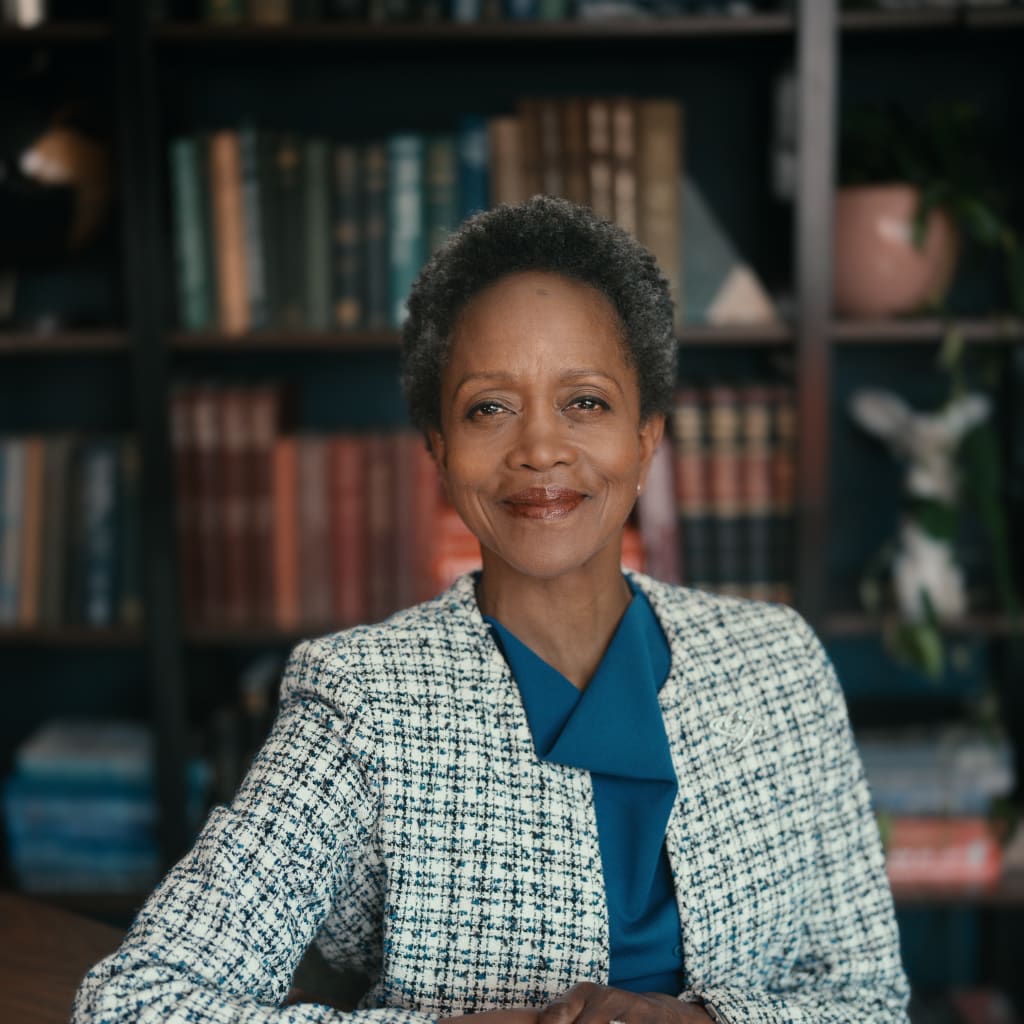 Esther BrimmerCFR ExpertJames H. Binger Senior Fellow in Global Governance
Esther Brimmer’s childhood trips abroad helped spark her interest in U.S. foreign policy. After starting her career at McKinsey & Company, she moved into government work at the House of Representatives and State Department. Following a stint in the private sector that also saw her volunteer for the Obama campaign, Brimmer joined the Obama administration as the assistant secretary of state for international organization affairs. After leaving government, she served as the CEO of NAFSA: Association of International Educators. She is currently a senior fellow in global governance at the Council on Foreign Relations. Read more about her work on global multilateral institutions, why making career choices that support “your whole self” matters, and how early visits to France and South Africa shaped her.
Here’s how Esther Brimmer got her career in foreign policy.
What did you want to be when you were little?
I wanted to be a constitutional lawyer. This is my hometown, Washington, DC. When I was really little, I probably wanted to do something really fun. But the first time I really started thinking about careers was—I can remember the Watergate hearings. Everybody was watching. My parents, everybody, was watching that. So you’d hear people talk about these issues, and that was kind of what was in the news. The idea that there were people who cared about law was interesting—a lot of my parents’ friends were lawyers as well. So the first time I thought about something professional, it was like, “Oh, I thought I’d probably go to law school.” That was the early ‘70s, and that was the first thing I was interested in doing.
So when did you know that you wanted to pursue foreign policy?
I think I’ve always been interested in the world beyond the United States. I should say that I was really lucky to be able to travel a lot with my parents. My parents were very interested in international affairs. My father had a whole career as an international economist, and both of them had been involved in some international issues early on. They had friends from other countries.
My father was actually in the first class of students in the Fulbright Program in India. He remembers the creation of the program. He’d started off in a small town in Louisiana and then went to the University of Washington. For [my parents], education was a huge change in their lives. But having been a Fulbright Scholar and being able to be outside the United States was transformative for him. So what they would talk about at home was international affairs.
And then my mother was in the first group of girls to graduate from Bronx High School of Science, in 1948. Then she went to Barnard College at sixteen, and then she went to Radcliffe College. And that’s where they met, when he was at Harvard and she was at Radcliffe. But her first job after they got married was in New York City, she worked for the Institute for International Education.
So international issues were kind of around. My parents had friends who were involved in international types of things, so I heard about things that were interesting. And as I said, I got a chance to travel with them at various points as well.
What’s the most influential trip you guys took?
Overall, the most important was probably to France. My parents had good friends who were French, and so we stayed in touch with their family and visited together. My father was traveling for the Federal Reserve, and so we went to France, Italy, and the United Kingdom.
But the first place they let me go on my own was to Paris, because they knew that the airlines took care of kids—boarded you first and everything. So by the time I was in my teens, France was a place my parents would let me go on my own. I could go to New York. I could go to London. I could go to Paris. They had friends in each of those places. And so that meant independence. Literally, when I did the security clearance for the State Department, I couldn’t remember how many times I’d been to France.
Then places that I remember—after my father left government, he was on the board of the Ford Foundation, and we went to go see the Ford Foundation program in Botswana. In those days, you couldn’t get to Botswana without going through South Africa. So we had this huge debate: was it important enough to go to Botswana, to spend twenty-four hours in apartheid South Africa? My parents went back and forth on this, and they decided, “yes.”
I remember we went through Soweto, seeing what that was like, and then having to discuss what it was like and why it was important to not let the fact that you had to go through apartheid South Africa stop you from going to Botswana. What that meant, and the issues it raised. So moments like that were interesting. There were various other points in travel where travel was great but it also meant things. There were issues it raised, either historical or current, that were interesting. So I realized I was very, very fortunate.
I know I took us off the beaten path, but back to your career. So you get a PhD in international relations, but then you go into the private sector, which I thought was interesting. You go to McKinsey. Why that route?
I think a couple different things. At that point, McKinsey was hiring people with what they called non-traditional backgrounds. They used to hire people with MBAs [Master of Business Administration], but at that time, they realized they needed people with a broader range of professional perspectives. We were all just out of school, we didn’t have a whole lot of experience, but we were coming from different disciplines. So they actually had a recruitment program that was nicknamed the “mini MBA,” where they consciously hired researchers with PhDs, medical doctors, lawyers, and so forth.
We were all sent off to Vevey, Switzerland. Not a bad place—gorgeous. The first thing they did was say, “Look at the view. Now we’ll close the curtain. You’re not going to see that because you’re studying the rest of the time inside.” It was a very intensive program to teach you the financial and management tools, but they wanted you to come in with that other perspective. They assumed that nine out of ten people would leave, that you’d probably spend a couple of years there. They got you because you were good at research and could provide good support, but they weren’t assuming you were going to stay.
I also think it’s important when you’re trying out careers to learn what you don’t like. And it was not the place for me. It’s a great place for other people, but you have to be able to say, “That’s not for me. I need to do something else.”
I should also note that the timing was interesting, because sometimes you think you’re on a path, and you realize the world is changing in a way that matters to you. I got my PhD in 1989. So the topics I was interested in—classical theories of international relations, larger international order questions—suddenly became really relevant with the end of the Cold War. I go off to McKinsey in ‘89, and I realized, “Oh no, I want to be working on those issues,” because you’re watching the world around you. In 1991, the Cold War has ended, Nelson Mandela has walked out of prison—I wanted to be part of that. And I realized sometimes you’re just in the wrong spot.
I was at work at McKinsey, trying to pay attention to whatever the issue was, and over in the corner, CNN was on. It’s October 3, 1990—the day of the unification of Germany. You can see fireworks and so forth. And I’m thinking, “This is important.” Nobody else in the room was looking at that. I thought, “I need to be in a place where people realize that the unification of Germany is a significant world historical moment which will affect everything else we’re doing”—the role of the United States in the world, the nature of international security, the security of Europe. That was the moment I thought, “I need to do something else.”
That’s perfect, because I was going to ask you what motivated your transition to the State Department.
What I did at that point was I dropped resumes with everybody possible. I was fortunate. We were in New York—I had gotten married—and we decided we wanted to come back to Washington.
My advice at this point is always talk to everyone you feel comfortable saying, “I’m looking for something new,” because you never know who might come up with a suggestion for you. I talked to lots of friends, and one friend said, “Oh, I think I know someone at the Democratic Study Group (DSG) in the House of Representatives. I think she’s leaving. Why don’t you go talk to them?” And sure enough, I ended up getting that job.
That was a really interesting job because it was a little unusual. At that point, the Democratic Study Group did analysis of legislation. It was actually part of the House—there was a Democratic Study Group and a Republican Study Group. The work the DSG did was divided into two parts. There was a part that was definitely partisan, but there was a part that was just straight analysis. My job was to figure out what’s in the bills. So the defense bill is one thousand pages—my job was to figure out what was in there. We put out regular analyses that were just for everybody, so Republicans and Democrats subscribed to the same information.
Think about that—the idea that there was a sense of basic facts that we could share and that contributed to good government by having informed legislators. That role was discontinued in 1994—that’s a whole other conversation. But a lot of that work was picked up by the Congressional Research Service. One of the reasons why I still really appreciate the opportunity to brief congressional staff is that I think one of the contributions we have in knowledge-based fields—whether we’re at universities or think tanks—is providing in-depth analysis for policymakers. They can then make choices, but hopefully with the best information available.
That was the job I took, and then I went into the State Department. And there’s a CFR link to that as well. When the election happened in 1992, I thought, “Ah, this is an opportunity to go into government in Washington.” I was working on Capitol Hill, and I thought, “I’ll talk to everybody I can possibly think of and say, ‘Are there any opportunities? Who might be going into the administration?’”
So one of the people I got my courage up and contacted was Peter Tarnoff, who at that time was president of the Council on Foreign Relations in New York. I was already a term member in New York. And I said, “May I come and could you spare me just a few minutes to give me advice?” He’d just been named to be under secretary for political affairs at the State Department, which was then the number three job. He said, “Yeah, why don’t you come in?” We chatted a bit. And the day I walked in the door, he said, “Esther, do you want to come work for me?” Yes!
So he invited me to be his special assistant, which was a great job. It was incredibly difficult. You’re dropped in the deep end, because the under secretary of political affairs—all the regional bureaus and the Bureau of International Organization Affairs (IO) report to Pete. But it was a great lesson, a great way to learn from him. I met all the other people who were fast-tracking and who would become leaders in the department. I learned so much about different issues and about the State Department itself. I worked really, really hard, but that job was key.
I think when people are considering jobs, sometimes the value is in what it helps you learn—whether about an institution or an issue. For me, it helped me learn about the State Department and I met people I worked with years later when I was assistant secretary—people I’d met when we were all junior.
Okay, so you were at the State Department for a few years. You then went to the Carnegie Commission on Preventing Deadly Conflict. Why leave government?
Well, one thing is that I was a special assistant. You don’t do that job forever—it’s usually a couple years. It’s also a Schedule C, a political appointment, so you figure you probably do it for two years and then figure out what else you want to do.
A colleague who had been at State knew Carnegie was looking for somebody and came to me and said, “Do you want to talk to them?” And I thought, “This is a really interesting opportunity.” This was a major effort by a major foundation that was really trying to move thinking on prevention and help it become a larger part of the international relations community’s approach to dealing with conflicts. To be part of that and to help develop preventive tools, I thought it was a great opportunity. It was also a chance to learn more about the multilateral system—having seen part of it from the State Department point of view, now to see it from a foundation’s point of view and from an international perspective.
After that you went and became the first deputy director and director of research at Johns Hopkins Center for Transatlantic Relations.
Yes. In addition to global multilaterals, I was also interested in transatlantic relations. Back to my earlier conversation about the opportunity to go to France and Europe—I was very interested in what would become the European Union.
One of my summer jobs was actually working in the European Union office here in Washington, before it was called the European Union. When I was at Pomona College, the head of what would become the European Communities office in Washington came out and gave a speech. As a student, I got to show him around campus, and of course I got his business card. I said, “I live in Washington. Can I call you for advice?” And I said, “Can I come for a summer job?” And I did.
Years later, a colleague said, “We have an opportunity to start a center within Johns Hopkins School of Advanced International Studies.” And I said, “I’d love to help you.” The idea was that the university was interested in the creation of this in-house body that combined scholarship and think tank work. And so I had a chance to actually help set that up.
Okay, now for the big one. In 2009, you joined the Obama administration as assistant secretary of state for international organization affairs. How did that opportunity come about?
The first thing was that I was very active in the Obama campaign. I’d first seen him in 2005 at a dinner with my parents. My father was on the board of the Joint Center for Political and Economic Studies, and I remember being at their annual dinner. There was Dorothy Height, who was a leading civil rights figure, Representative Ron Dellums (D-CA), and then the new senator from Illinois. And I was looking at the stage, seeing all three of them—each representing a different generation of civil rights and progress in the United States. It was striking.
So I volunteered for his campaign before he had even declared. Within the campaign, I had been involved with the foreign policy portion and ran the section on multilateral issues. I was fortunate enough to be identified for a position in the incoming administration and was honored to be confirmed by the Senate in a timely way.
What a throwback to when we could do that! I understand that role involved helping craft U.S. policy for international organizations. Is there a standout challenge or surprise from that, either being in the executive branch or dealing with these big organizations?
I’ll just describe the position first. It’s the bureau that manages the United States’ relationship with the United Nations system and other multilateral bodies, and it reports to the under secretary for political affairs. So I was already familiar with the structures from when I’d been on Pete’s staff earlier—the IO bureau had been part of my remit.
All instructions to all posts go through the IO bureau—whether we’re voting in New York at the General Assembly or at the Food and Agriculture Organization in Rome. IO, like the regional bureaus, has posts overseas and diplomats associated with it. You have responsibility for running these posts and the well-being of the diplomats.
Some of the interesting issues were the peacekeeping operations and how to strengthen mechanisms for managing conflict. This is where the work from the Carnegie Commission on Preventing Deadly Conflict was relevant. Being able to draw on these ideas and bring them into the administration was important.
Another big aspect was human rights. The Human Rights Council had been created, and one question was, should the United States run to be on it? It was one of the few positions for which we’d have to run in an election. So we ran a global campaign—theoretically a secret ballot in New York. We were elected, and I was honored to give the first U.S. speech in the Human Rights Council. Then four years later, when we were reelected, to go back and be able to compare what we said we’d do and what we did. Some things we did, some things we didn’t.
IO also worked on the relationship between the global body and regional bodies. That was partially because the IO Bureau pays all the bills—all U.S. assessed dues come through IO. But I thought it was important that we have a global policy, because we’d vote for one thing in the General Assembly, but similar issues would come up in regional bodies handled by regional bureaus. And they wouldn’t be uniform. In other countries, they have one multilateral affairs bureau that handles everything.
So I created a small office within IO that focused on regional and functional bureaus. I worked with all the regional bureaus and said, “This will help you as well as us.” That office existed for about a decade.
Skipping ahead a little bit, what drew you to becoming the CEO of NAFSA?
I was interested in additional leadership opportunities, and I hadn’t yet been a CEO. I was thinking about what institutions I might look at, and then I got a call from a headhunter saying, “Would you consider applying for this?” So I went through the interview process with the search committee.
At that point, NAFSA, which began as the National Association of Foreign Student Affairs and is now the Association of International Educators, was interested in how they would connect international education and the great work they were doing with students and administrators—on sending students abroad and bringing students to the United States. But they also wanted to have a greater connection with international affairs generally, and to say that international education is part of overall international relations. They work with the State Department all the time. So I think when they were looking for a CEO, they wanted someone who was connected to the diplomatic world as well.
You worked on all these different government sides of U.S. foreign policy, but you also did a stint as a professor at the College of Europe in Belgium. How did teaching foreign students about foreign policy change your perspective of maybe America’s role in the world or our foreign policy?
Very good question. I think one thing is it gives you a perspective on how students perceive other countries. It was interesting to get their perspective on what they thought U.S. foreign policy was, and to try to talk through it.
It was helpful—it helped them understand more about how the United States functioned and then for me, it was interesting to look at how Europe functioned. One of the interesting things that happened while I was there was that the College of Europe in Bruges opened up another campus in Poland, and then they started taking more students from Eastern Europe coming to Western Europe. For me, it was interesting in the classroom to see how students from different parts of Europe and different parts of the world interacted with each other as well. So it was always a great experience. And I still occasionally hear from students.
I’m curious what role mentorship played in your career?
I’ve been so fortunate to have people who were willing to advise and help me think about how to make different choices. I hope when I have an opportunity—whether with people who work for me or in my years as a professor—I’m able to give people advice. But you always have to be humble when you do that, because you recognize it’s ultimately the choice of the individual. And you have to make sure it works for all parts of you—not just your career choice, but what choices you want to make in your life, where you want to live, with whom, how this affects your family. There are many different pieces.
So I say to people that you’re trying to find a job that works for your whole self. Sometimes you’re saying, “Okay, I’ll do this. This will pay me more, and I can make a down payment for a house.” Or “My spouse is moving for their job, so we move as a family.” Or “We have young children.” There are lots of different choices. Your whole person is part of you. You bring your whole person to your career, and you need to be thinking about all of those aspects.
Few things in life can you do everything at once, but you want to have, over time, felt that you met all the different needs. I was very fortunate that after we moved back to Washington, for the past several decades, I’ve had all sorts of different jobs, but I’ve lived in the same house. My son grew up in that house. My husband and I said, “Okay, you’ll have this international career, but your home is in one place.” And so there were a couple times when things came up in other cities—great opportunities. But I had to think, “Do I move my son when he’s in high school?” Each person or each family makes different choices, but I think it’s important to try to make sure that you’re supporting your whole self as you advance your career.
Our last question is always the same fun question. For work, you’ve probably done a lot of different work trips and seen different things and had interesting meals. Do you have a most memorable work trip or meal you could share with us?
I think personally, my third trip to South Africa, which I went to for NAFSA at an international conference. We were in Cape Town, and I’d been to Cape Town before, but I had a little bit of time before I had to leave and I went to a reserve for cheetahs.
It was focused on the welfare of cheetahs and so forth. The cheetahs there were all cheetahs who had probably been raised around people. So you actually got to stroke them—if they wanted! There was a whole procedure and protocol about it. But that was amazing, as someone who loves cats. And they’re amazing because they’re the in-between—everything smaller than them purrs, everything bigger than them growls. And they chirp.
I support animal welfare, so I think they were well treated. This had been recommended as a responsible place to go where you can learn more about cheetahs. It was just really cool. It was a great trip, but that was really just a cool experience.
This interview has been edited for length and clarity. It represents the views and opinions solely of the interviewee. The Council on Foreign Relations is an independent, nonpartisan membership organization, think tank, and publisher, and takes no institutional positions on matters of policy.