The U.S. Interconnection Challenge: Why Renewables Are Stuck in Line
Rising electricity demand and climate goals have brought U.S. electrical grid efficiency to the forefront energy policy and infrastructure planning. But connecting new energy projects to the grid, known as interconnection, has become a major bottleneck, slowing the deployment of new renewable energy sources.
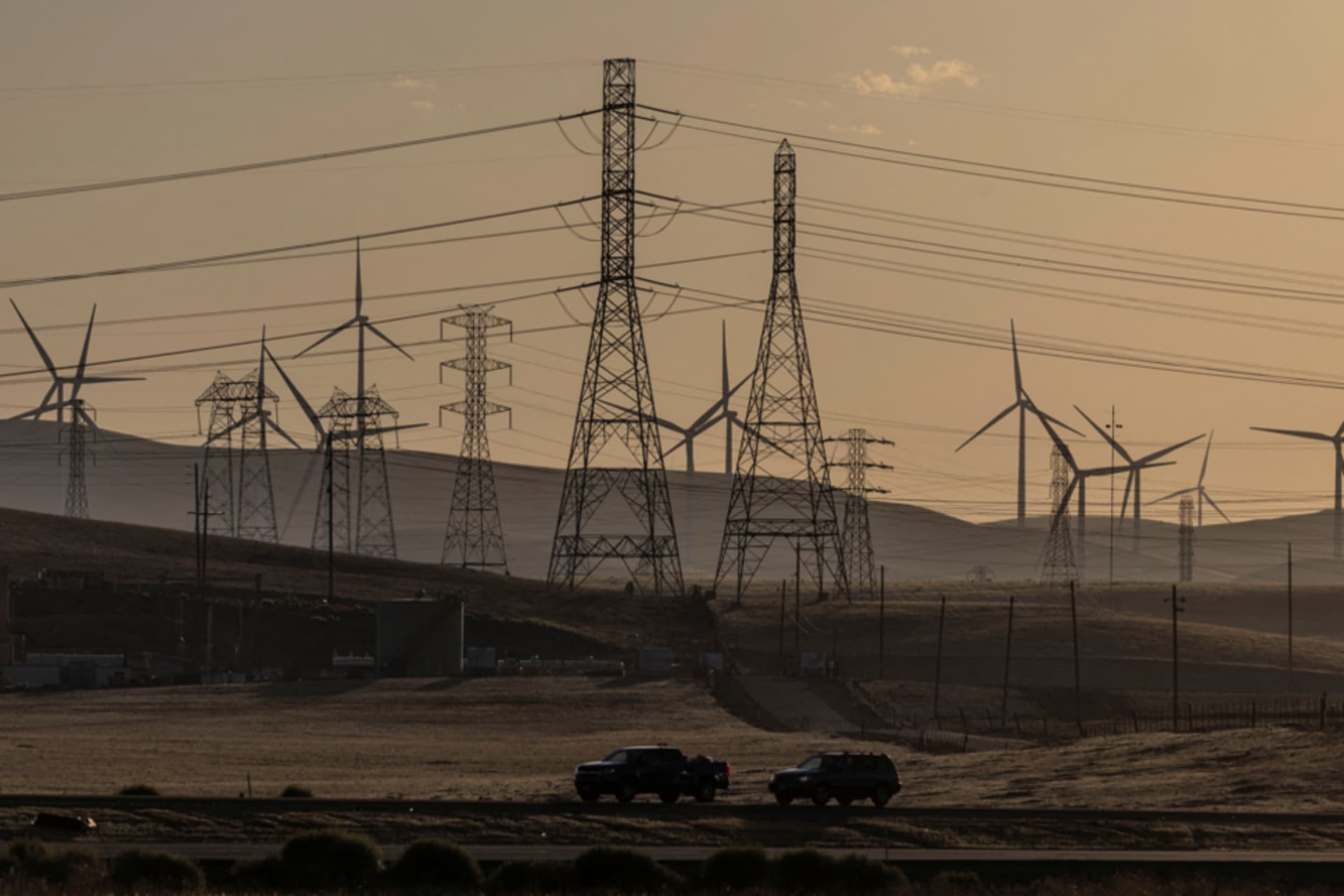
U.S. economic health, national security, and quality of life rely on an affordable and reliable supply of energy. After years of stable or even falling electricity demand in the United States, unprecedented demand from data centers is putting the grid under pressure and bringing into question the United States’ ability to meet growing energy demand, maintain affordable electricity prices, and still meet U.S. climate goals.
Even after the 2025 repeal of significant subsidies for wind and solar power in the United States, renewable energy remains the country’s most cost-effective source of new power. However, significant challenges delay the deployment of renewables in the United States. The most consequential is the long interconnection queue.
What is interconnection?
Grid interconnection is a fundamental requirement for any new energy generation project. It is the process of connecting a power system—such as wind or solar projects—to the electrical grid. The rules for connecting new projects to the electricity grid vary by region but typically require a comprehensive study that assesses the potential impacts of the project, such as increased costs for developers and consumers, reliability concerns, environmental risks, and effects on surrounding communities. Those studies can cost millions of dollars and take years to complete. In addition, there is a public comment process that includes the possibility of legal challenge, further extending project timelines. Finally, a project owner must submit an application to either the local electric utility, or to the regional grid operator, complete additional feasibility and impact studies, and, in some cases, fund upgrades to older grid infrastructure to be able to move forward with the project.
The interconnection queue refers to the list of projects awaiting review and approval. That review and approval process involves multiple federal, regional, and local entities. The Federal Energy Regulatory Commission (FERC) is a bipartisan and primarily technocratic independent agency that regulates wholesale power markets and electricity transmission. In many cases electricity transmission is handled through regional transmission organizations (RTOs), which cover and manage the transmission of electricity (including interconnection) across large geographic regions of the United States. Ten RTOs manage around 60 percent of the power supply across North America. In other areas, independent system operators (ISOs) manage transmission of electricity within individual states and smaller regions.
Issues with interconnection
In recent years, interconnection requests for projects in the United States have become a severe bottleneck for project development. A report from Energy Markets and Policy at Berkeley Lab showed nearly 2,600 gigawatts of energy and storage capacity, which is almost double the size of the current U.S. electrical grid, waiting in interconnection approval queues. A large majority of that backlog is from solar and battery projects. In 2023 alone, the backlog of project applications increased by 30 percent and renewable energy projects accounted for 95 percent of all queued capacity.
To bypass those long queues, some RTOs have sought special approval from FERC for their projects. On February 11, 2025, FERC approved PJM Interconnection’s Reliability Resource Initiative, a fast-track review process for shovel-ready generation projects. That one-time interconnection review covered fifty generating projects to address shortfalls in load growth, premature plant closures, and new generation delays. Though most of the projects waiting for approval in PJM were renewables, the majority of the projects put forward for fast-track treatment were natural gas power plants.
Inspired by PJM, the Midcontinent Independent System Operator (MISO) proposed a similar Expedited Resource Addition Study (ERAS) process in mid-March of 2025, also aimed at increasing energy availability and reliability. Currently, MISO’s queue has 1,603 active interconnection requests. FERC approved MISO’s ERAS proposal on July 22, 2025, highlighting the urgent need to bring more generation resources onto the grid.
Those special approvals grant PJM and MISO the ability to expedite specific projects through so-called queue jumping. Neither proposal furthers wider system transformations that could speed approval for all energy projects; instead, they are localized one-time approval processes that fast-track projects that meet specific qualifications. Like PJM, MISO’s eligibility requirements for jumping the interconnection queue favored larger incumbent utilities building primarily fossil fuel projects.
Because fossil fuel projects are larger and tend to be better resourced, they will benefit more from special-access processes like the PJM and MISO petitions, while smaller developers still have to wait in the interconnection queue without any assistance or line-cutting afforded. MISO released data in August showing 74 percent of the ERAS fast track applicants were natural gas facilities, while 15 percent were battery storage, 4 percent wind, 4 percent solar, and 3 percent nuclear. Notably, the Clean Grid Alliance, an advocacy group focused on adding more clean energy to the grid, opposed the ERAS proposal, arguing that it prioritizes certain states and energy sources, and complicates, rather than reforms, the system.
That recent history highlights a gap in the interconnection system and exemplifies its inefficiencies. Renewables face an uphill battle in interconnection due to legacy technological and market structures that were designed to integrate larger centralized projects into the grid.
To get more power to the grid faster, it would be better for FERC to implement regulatory changes to their interconnection review process instead of relying on special approvals.
FERC’s proposed reforms
FERC recognizes those inefficiencies and has attempted to overcome them through reforms. Order 1920 requires regional transmission planners to update planning in anticipation of long-term needs, including continued rising electricity demand and increasing grid instability due to weather. Order 2023 shifted the “first-come, first-served” system of studying interconnection applications to a more efficient “cluster study process,” where multiple proposed generating facilities are studied together in a group, rather than individually.
Those orders are intended to give FERC the regulatory tools it needs to incorporate mitigating uncertainty, such as generation or transmission outages over a wide area from extreme weather events, into its decision-making processes. Although the main focus of those orders is to address transmission planning and cost allocation for all projects, speeding the overall regulatory process will help accelerate the deployment of renewable projects to the grid.
Though those reforms are a good start, further policy changes will likely be needed. Research by the Center for Global Energy Policy found that two-thirds of American consumers are already served by regional electricity markets that have implemented policies like those in Order 2023—but these same consumers still have among the longest interconnection queues in the country. That suggests that much more significant reforms should be considered.
Potential reforms
The challenges of interconnection highlight the need for policy that addresses those inefficiencies. Orders 1920 and 2023 set up changes for the system, but more can be done. Reforms published by a renewable energy trade group advocated for a clearer and more predictable way to manage costs, speed and schedule certainty, and market entrance. In a concurrence to Order 2023, FERC Commissioner Clements commented on the fundamental nature of the needed reform and argued for enhanced site control, streamlined interconnection studies, proactive transmission planning, better insight into costs and budgets, and more efficiency in processes.
Securing approval and implementing those changes will require a level of bipartisan cooperation and federal and regional coordination that has proven challenging in recent years. However, on September 22, representatives and stakeholders from all thirteen PJM states, including Pennsylvania Governor Josh Shapiro, discussed novel ways to address this challenge at the Summit on the State of PJM Interconnection, highlighting an appetite to find solutions to this issue. Reforming the interconnection process is essential to ensuring grid reliability and affordable energy prices, especially as domestic electricity demand continues to grow. Changes could alleviate the pressure in the queue and allow for a rapid deployment of renewable energy sources further supporting domestic energy agendas.
Davis Recht was a climate and energy intern at CFR.