What’s New in the U.S.-India Strategic and Commercial Dialogue
By experts and staff
- Published
 Alyssa AyresCFR ExpertAdjunct Senior Fellow for India, Pakistan, and South Asia
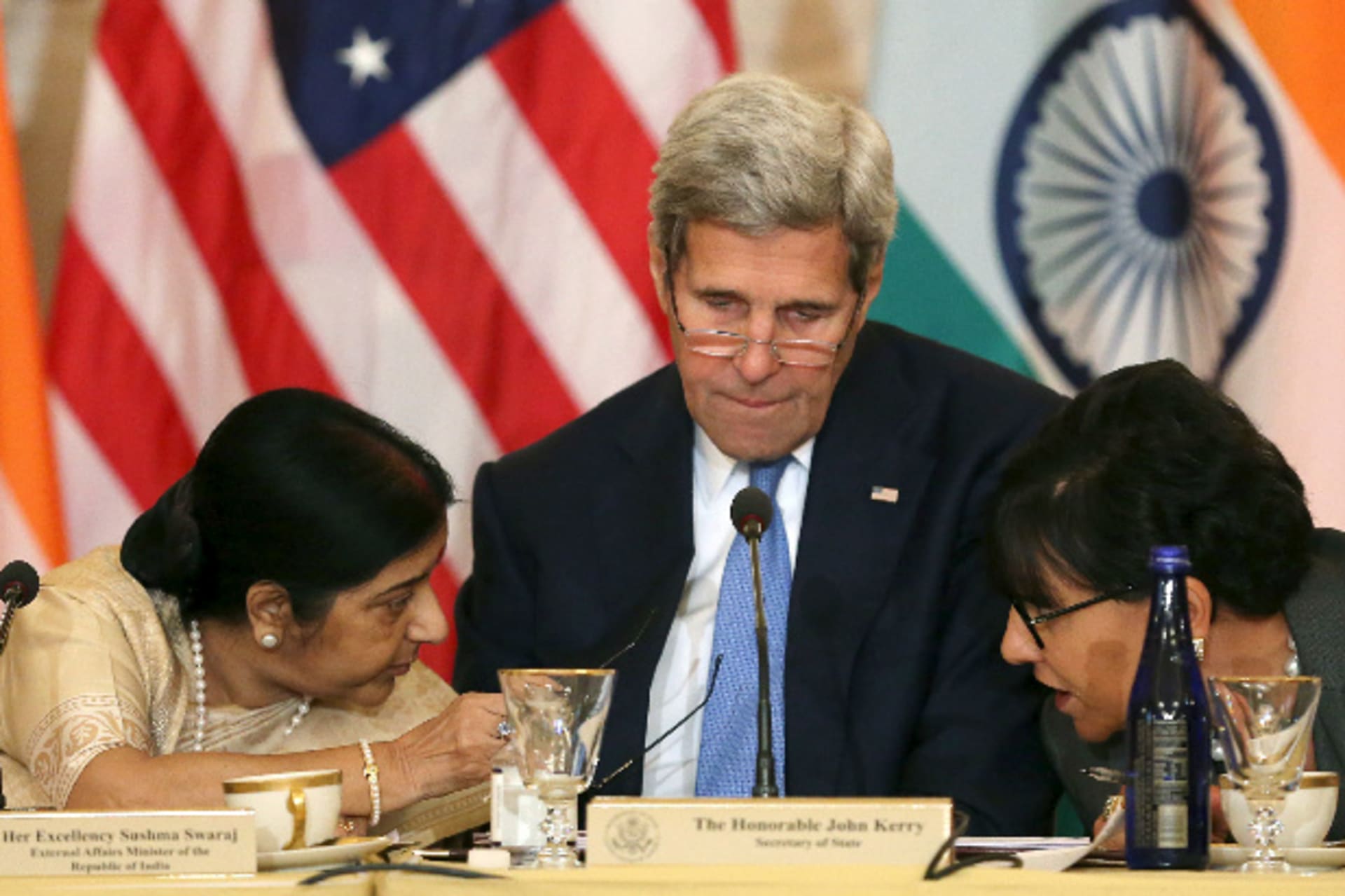
Yesterday U.S. Secretary of State John Kerry and U.S. Secretary of Commerce Penny Pritzker co-convened, with their Indian counterparts External Affairs Minister Sushma Swaraj and Commerce and Industry Minister of State Nirmala Sitharaman, the new U.S.-India Strategic and Commercial Dialogue (S&CD). India and the United States have been convening a strategic dialogue since 2010, so the change this year elevated discussion of economic and commercial issues to the cabinet level alongside the central matters of security and global diplomatic concerns.
Economic issues were always part of the previous strategic dialogues with India—I staffed three of them from 2011 to 2013 so can attest—but in raising this set of bilateral issues to the cabinet level, and by including the commercial agencies on both sides, the new structure signals a higher level of importance for economic and commercial matters. It also, notably, revises the structure of the dialogue to parallel the U.S.-China Strategic and Economic Dialogue. That change was lost on no one, and Minister Swaraj expressly invoked it during the press conference which followed the dialogue. The U.S.-India economic relationship may be one-sixth the size of U.S.-China, but the dialogues now look similar.
Based on the joint statement, joint press conference, and numerous fact sheets released following the dialogue, here’s a selective overview of what’s new—and what didn’t make it to the press releases—from the discussions.
What’s missing: Neither the joint statement nor the fact sheet on economic cooperation mentioned India’s interest in Asia-Pacific Economic Cooperation (APEC) forum membership, something included in the January “Joint Strategic Vision for the Asia-Pacific and Indian Ocean Region.” During the press conference, Minister Swaraj said that “Secretary Kerry and I agreed to work towards forming India’s membership of APEC” but similar statements appear nowhere else. On the long-pending bilateral investment treaty (BIT) process, the economic cooperation fact sheet merely references plans to “continue discussions to assess the prospects for a high standard BIT.” I am afraid this weak gruel provides little to suggest any near-term progress on this small but symbolic agreement.
Also missing was any announcement of defense sales like those appearing in the press about the Indian military’s likely procurement of Boeing Apache and Chinook helicopters. These sales will likely be formally announced when Prime Minister Narendra Modi and President Barack Obama meet next week.
Commercial civil nuclear cooperation does not appear in the joint statement, the commercial and trade cooperation fact sheet, or the energy, climate, environment, and science cooperation document, either.
Finally, though the joint declaration on counterterrorism includes reference to the “serious threat posed by ISIL/Da’esh,” I was struck by what transpired in the press conference. A journalist asked Secretary Kerry about developments in Syria and Russian military activity. Kerry’s answer, extending seven paragraphs on that section of the question, had no reference whatsoever to India—a reminder that despite deepening Indo-U.S. partnership in some parts of the world, that cooperation isn’t yet in some of the hottest hot spots for U.S. foreign policy.
Resources
Follow me on Twitter: @AyresAlyssa