CFR Religion and Foreign Policy Webinar: Gen Z and Democracy in Nepal
Event date
Speakers
- Founder and Chief Executive, Nepal Peacebuilding Initiative
- Country Representative, Nepal, The Asia Foundation
Presider
 Joshua KurlantzickCFR ExpertSenior Fellow for Southeast Asia and South Asia, Council on Foreign Relations
From RFP Calls and Asia Program.
FASKIANOS: Welcome to today’s Council on Foreign Relations Religion and Foreign Policy Webinar Series. I’m Irina Faskianos, vice president of the National Program and Outreach here at CFR.
Today’s webinar is on the record. The video and transcript will be available on CFR’s website, CFR.org. And, as always, CFR takes no institutional positions on matters of policy.
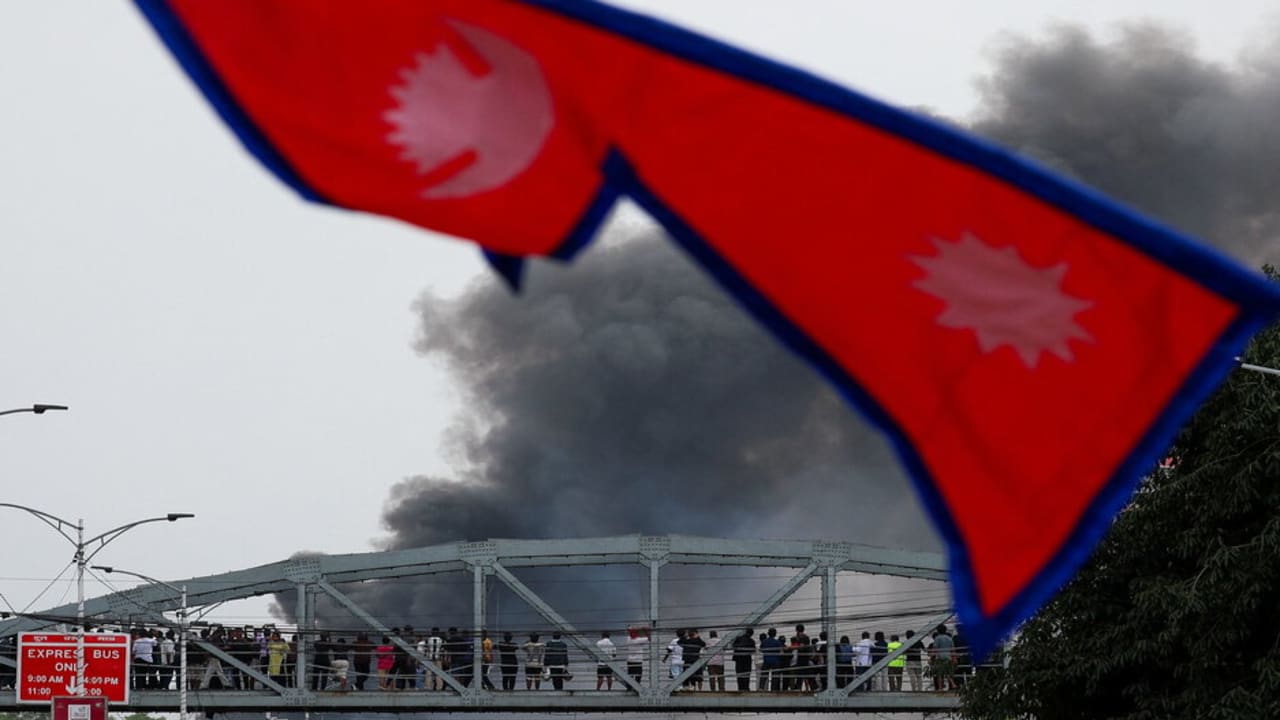
We are delighted to have Subindra Bogati and Meghan Nalbo here with us to discuss the implications of the recent Gen Z-led protests and the subsequent appointment of an interim prime minister for Nepal’s governance, democracy, and development.
The moderator of today’s discussion is Joshua Kurlantzick. Mr. Kurlantzick is senior fellow for Southeast Asia and South Asia at CFR. His work focuses on China’s approach to global diplomacy, as well as issues related to the rise of populism in Asia, return of coups, and the militarization of politics in countries around the world. He serves on the editorial board of current history. He is the winner of the Luce Foundation—Luce Scholarship for Journalism in Asia and was selected as a finalist for the Osborn Elliott Prize for Excellence in Journalism in Asia. The author of many books, and his most recent one is entitled Beijing’s Global Media Offensive.
So, with that, I’m going to turn it over to my colleague, Josh, to introduce our distinguished panel. He will engage them in conversation for a bit. And then we will turn to all of you for your questions and comments. So with that, Josh, over to you.
KURLANTZICK: Thank you very much, Irina. We have an excellent panel.
We have Subindra Bogati, who is founder and chief executive of the Nepal Peace Building Initiative, and has more than a decade’s worth of experience with promoting dialogue and peace building and humanitarian response programs in Nepal, and is working currently on issues related to conflict prevention, local mediation, reconciliation at the subnational level. Has produced a wide range of publications, longer publications on peace building in Nepal and shorter works on similar subjects for local outlets, like the Kathmandu Post and others.
Meghan Nalbo is Nepal country representative for the Asia Foundation, which I know pretty well. The Asia Foundation, a long time ago, still, is involved with the Luce program that sent me to Bangkok twenty-eight years ago—a long time ago. Like, 100 years ago. (Laughter.) And she’s been the representative there for seven years. And she was previously an FSO with USAID. And had been the director of the Democracy and Governance Office at USAID in Nepal. And had also served as Asia regional coordinator for the global regional policy team and the Center for Democracy, Human Rights, and Governance at USAID. And had been a program officer in Bangladesh.
So we’re here to talk about Nepal. And I’m also interested in possibly seeing if we can draw some lessons from Nepal for other states, or look at the protests in Nepal and compare them to some other states in Asia. That is actually what I’m writing about now, as there’s been a wave of Gen Z-led protests across South Asia and Southeast Asia, and in other parts of the world. And see what this movement has done in Nepal, whether it can translate into—its protest into lasting governmental reforms, and whether it can lead to creating leadership that institutionalizes some of the things that it has been asking for. Similar issues, I think, in most Gen Z reforms in the region and globally.
And there has actually been a lot of work studying since at least the Arab Spring, sort of not necessarily Gen Z protests but protests fueled in part by social media, nonviolent protests, in recent years, and comparing them to protests in, say, the ’80s and early ’90s. And at least some of the work has proved—has shown not such great outcomes for the current waves of protests, for a bunch of reasons. We could get into that. But I’m interested in the outcomes for Nepal. So why don’t we maybe start with talking about—since I’m not sure everyone attending here knows all the details—what—each of yours—what your thoughts on what were the primary drivers of the protests, and your views of whether they’re going to promote lasting reform on the issues that drove the protests.
NALBO: Sure. I’d be happy to maybe get us started, Josh, and then—is that OK? And then I’ll pass it over, Subindra, to—maybe I’ll just put a little bit of framing.
So a lot of the international news focused fairly heavily on the social media ban that had been in place for a few days just prior to the large student protests on September 8. And the focus on that would be a little bit of a complete, I think, misnomer. That was certainly the breaking point. That was the trigger point from which we saw not only the student protests, the shooting of a number of students on that first day, but then also the movement the next day and the mass violence and arson that took place across the country. I think what’s important to take note of, for those of us here in Nepal, is that there had been a growing dissonance, I would say, over the last three years since the last election in 2022.
This last month, Nepal marked a ten-year anniversary of a constitution that had followed an extensive peace process and two constituent assemblies and after a ten-year civil war. So this is a longer storyline for Nepal, one that dates back to the age of monarchy, where there is an era of much more of what would be called a benevolent guardian type governance both from the monarchy and then subsequent from that in the early—in the 1980s, which was a little bit more of a no party—party-less governing system, into the 1990s where we really saw marked change towards demands for greater inclusion in decision making and economic gains. And from there, demands for decentralization and participation, which is what eventually led to the constitution ten years ago in 2015.
Since that time, of course, we know the global pandemic and economic downturn within that time period. But we did see, under the constitution, a decade where there’s been administrative, legal, and fiscal decentralization that’s been deeply grounded locally. And so there have been pretty significant gains. The dissonance coming three years ago in the constitution—or, in the 2022 election really was the first indication that as many gains and decentralization had been taking place, political decentralization was really only in name. So the political parties, while they had created different structures within their system, had not dramatically decentralized decision making or were still in the process of looking at democratizing their own party system per their party constitution.
So in 2022, with the elections, we saw the greatest number of independents win seats. We saw peel-away candidates from traditional political parties. We also did see a slight drop in representation and inclusion of both candidates running for election, but also those who have won. And so this is where you start to see a dissonance of both federalism being in—both being an achievement of a very long storyline towards decentralization and increasingly democratic processes, but also that it wasn’t quick enough, it wasn’t inclusive enough. And so this is where, when I look at Nepal’s political and governing history, the marker in the sand for me from September was really a shift, not away from but a slight departure from the predominant demands for inclusion towards greater representation of youth at all levels within political parties, as well as efficiencies in the system, which would include digitization, anti-corruption, due process, integrity.
And so with that, let me pause. I think that tells, for me, an important piece of the story. It also says that now that we have an interim government, the elections have been announced for early March. It is still—I think we’re hopeful that political—traditional political parties will come on board, there’s indications that they will, and participate rather than protest against these called elections under the interim government. Let me, Josh, pass it back to you.
KURLANTZICK: Well, Subindra, are you able to comment on some of these issues? I’m interested in what you think as other drivers, like in a lot of other places, Gen Z protests also have been driven by poor economic opportunities. Do you see that in Nepal as well?
BOGATI: Yeah. Well, you know, we had fourteen governments since 2008. We had an election in 2008, then we have, so far now fourteen governments. So each government didn’t have five years term. So almost every year we had one government. Then this prime ministership was shared by three leaders of the three ruling parties, all about seventy years old. Simply, I think the young people were in frustrated because of that, because there’s a political freedom out there but there’s no economic prosperity. And if you look at it, the country is very much reliant upon imports and remittances. So we didn’t have any industrialization. The jobs were not there. And if you look at the data, like about 2,500 to 3,000 young Nepali people were living outside the country each day.
So these young people are so frustrated because they didn’t see the opportunity in Nepal. They are not optimistic about what is happening over here. But for them, social media was the only place where they could vent out their frustration. And if you look at it initially, what we saw is that they’re not that much particularly interested. But economic, and what they have seen outside the world from social media, is that what should the government be behaving like? What should be—(inaudible)? Because the work I do takes me around the country, and I also work with so many young people, and they know all over the world what is happening.
So they don’t see what is happening in the past, what happened with the government. They see the government is not delivering. But what they see is that the younger kids are, you know, children of political party leaders are enjoying life of the high elites of the Western countries. So I think that is—and when the government banned the social media, I think that became one of the triggering factor for this whole movement. So they are—of course, the economic factor was dangerous.
KURLANTZICK: What are your thoughts about where this protest movement potentially goes from here, and whether it can hold together in a way, and have the issues that were central to the movement be institutionalized in governance going forward? There’s already been some discord within the people who actually led the protests, some discord even with the interim prime minister. Subindra.
BOGATI: Yeah, OK. When this Gen Z moment started, as I said, their focus was for—because the government banned the social media and they wanted that ban to be removed. And they also wanted to have, you know, a corruption-free country—(inaudible)—country. So Nepal, I think, is the only country in the world where corruption is the (constant ?). And then when they went for this, like, with two or three sort of agenda—rule of law, delivery of these, you know, services, anti-corruption issue, not banning the social media—they didn’t have the idea—they didn’t think there would be—(inaudible). That means there will be so much federalism, they would be, you know, the prime minister would have to resign. They didn’t have thought about it. So they had no agenda how to move forward.
But now, luckily, they have the prime minister chosen by themselves, whose mandate is to, you know, have the election by March 5 of 2026. But at the moment, what is happening is that the political parties, mainly the three political parties, are exploring different options. And one of them is reviving the parliament. So if you look at—you know, the speaker himself is trying to figure out how we could move forward. And some of the lawyers have already filed a case in the Supreme Court to revive to—you know, to revive the parliament. If there’s a—if there is this court intervention, that might be constitutional, but it might not be acceptable to the street or the sacrifice made by the Gen Z movement.
But the problem for us at the moment is this government is only for six months. And it has got a very limited mandate. So the mandate is to hold the election. So but what we see is that one of the parties, that is called Nepali Congress, the younger generation leaders are advocating for what, you know, the Gen Z movement wanted. Similarly, other political parties are also talking about it. And media, civil society does—kind of, I think, support from all sectors of the people. So I think that the spirit’s there but, you know, we have a long way to go.
NALBO: Maybe I could, you know, just piggyback. Very much in alignment with Subindra. I think, you know, the possibilities for lasting reform are there. I think a little bit of what I’m hearing from Subindra and what I hear elsewhere is a bit of discomfort in moving that far, because it still feels—if anyone tells you they have any sense of what’s going to happen next, they’re probably lying because it’s still very unpredictable at this point. Is it possible elections will happen? I think it’s possible that they’ll happen on time. And I feel hopeful, because, as Subindra mentioned, the existing interim government, their number-one priority is to hold elections and to hand over power to the next elected government to move forward on institutionalizing the demanded reforms.
There’s still an awful lot of unknowns to get there. I think we’re also looking at the sheer administration of elections is usually the least of anyone’s concerns. I think, looking at whether—what it looks like for political parties to register and to move forward—there’s existing political parties. There’s an awful lot of talk about what happens with the Gen Z voice and representatives themselves. Will new parties come out? There’s a trust deficit right now with security forces across the country in very localized ways, which is an absolute precursor. I think another precursor for elections is basic services need to be up and running, which we’re already starting to see even in the midst of holiday seasons.
And I think the other piece that you also were referencing, Josh, is the economy. And I think that’s one where not only was it a trigger in relation to Nepal’s youth bulge, with upwards of 40-plus percent of the population below the age of forty, and 20-plus percent between fifteen and twenty-five. Coupled with something like 22 percent unemployment rate, historically, and 82 percent of those of working age working in the informal sector. So if you already had that, and then on top of that the passings—the events of the last month, growth has been projected at this point in time to decrease from 4.6 percent to downwards of the same level during as COVID, 2-point-something percent.
It’s all projections, but they’re looking at not only the damages, the decrease in tourism—which historically has been upwards of 7 percent of GDP. And so I think you’re—I think that is one of the key variables. You have a lot of these pieces that are volatile and need to stay in balance enough just to hold elections. And so is there a possibility for institutionalizing reform? I think if we get to that point, there absolutely is. Because even right now we’re starting to see just the sheer perspective change historically of an underestimation, I think, of youth, an underestimation of those outside of Kathmandu and their political acumen, and understanding of how sort of the both formal and informal financial transactions work. I think there’s been quite an underestimation of that level.
The events of the last month have shifted that. I think that’s been eye opening. And it’s not just Gen Z. I think it’s—you know, Subindra can speak to this better than I can—the Katmandu center and those that hold both formal and informal power traditionally underestimate what is the competencies, the capabilities outside of Kathmandu. And I think that has changed. And with that change is one of the linchpin issues that can actually look at some of the longstanding challenges, I would say, that are more behavioral and attitudinal, that have held up some of the reforms, policy reforms and institutional reforms, like civil service reform, procurement reform, education reform, that have not yet aligned with the constitution but that could be possible down the road.
KURLANTZICK: I think one of the reasons why people—analysts or the media or myself—are asking these questions about transition into governance or institutionalization, even though, you know, it’s very early days, is, as I said, there is been—there has been a fair amount of history since—at least for about the last fifteen years, where protests that have been quite successful in organizing and often led by young people and have upended many governments, haven’t been so successful at actually changing the fundamentals of many countries’ systems or economic inequalities. And not just the Arab Spring.
In this piece I was working on there’s this famous article in the Journal of Democracy by Erica Chenoweth, who’s at the Kennedy School, who shows that from, like, the ’60s to the early 2010s, nonviolent campaigns were much more—were successful between 40 and 60 percent of the time at not just toppling governments but having a longer term effect. And since 2010 or so, that number has gone down to around 34-33 percent, or less. And some of the reasons give given often are that protests that are organized, at least in large part, on social media wind up not being as cohesive or as successful at staying together as something like Solidarity in the past, the Polish union that became the pro-democracy movement, because social media is kind of an ephemeral way of organization. And the idea often of having many leaders or no leaders can also—while it’s effective in a demonstration, can also backfire when moving into some sort of governance.
And there also been recent examples in the region that I’d be interested in your brief thoughts about how Nepal compares in its readiness, where you actually have seen very similar situations and similar levels of success, or not. So for example, one, how—maybe, again, you don’t want to comment on Nepal’s readiness for institutionalizing these demands, but, I mean, you had a very entrenched political party and a very entrenched leader toppled in Bangladesh a year ago, a very, very well-respected interim leader, and even so there’s still a significant struggle to institutionalize the changes that the protesters want and the reforms that Muhammad Yunus wants. In Sri Lanka you had a very powerful dynasty sort of semi-toppled, but eventually you had those protests lead to pretty revolutionary change in the election of a president and prime minister, who they have a very significant majority. And still, you’ve seen challenges in pushing through constitutional reform, et cetera.
I wonder where you think Nepal—how do you think Nepal compares to those two places in terms of, at this stage, where it stands in its possible readiness. I know there wasn’t one dynasty overthrown, but readiness to make real change? For anyone.
NALBO: Subindra, do you want to say anything on this?
BOGATI: OK. You know, but if you look at the history of political movements in Nepal it is mostly created by young people. Look at 1990, or 2006, or even 2015, or even now. It is created by young people, mostly nonviolent. And what they do is that, after the movement takes place, they are not there. And then we know what are the root causes, but then we fail to have a system in place that, you know, makes changes—that makes the desired changes. So that has been a problem in Nepal for so long. And the case in Nepal is our time is now. You know, some sort of government comes in. And it always becomes interim. And then for the democratic principles, or something like that. And they’re there for six months or lesser than that period. And we cannot make institutional changes.
Like even now as well, we know what sort of changes that we need to make to enact the desired change in the country. But, again, there are different sort of sources. They have this, you know, power within themselves. And they have people in place. So the system that we want to change cannot be changed because they are there because of the older regime. So the difference between in other countries what we hear is that—we also hear that if you look at the past, you know, events, what has happened is that young people, they are in the movement. They change. And they just live it. So in the past as well, we had the—all the time some sort of minister, political parties who came in power.
And people also gave votes to the new parties all the time, thinking that they will be changed. And younger political—the younger people, they never form political parties in the past. Like, for example, in the past as well, we had a similar sort of movement. Young people got involved. That didn’t change. Even now, maybe there could be possibility right now, but, again, the Gen Z are also so diverse at the moment, and also kind of, you know, divided as well. So what I see at the moment is that, the way our politics work, and our—you know, the belief, or our habit of forgetting things very quickly, doesn’t help to make the desired change that we want to.
So by saying that, what I’m saying is that the younger people who were part of some—part of this moment, wanted to make change, might not be as active as they used to be month ago up to the elections. So and that means, again, what happens is that—so whatever we thought, whatever Gen Z thought might be done, you know, not relevant after a few months because young people mostly, as I said, they keep leaving the country, and so many of them, they are not interested in politics. The way our politics work is a bit difficult in terms of—because they are jobs, there is no economic benefit, or you are not, you know, supported by people, unless there is a self-interest of certain people. Then that doesn’t help to sustain you as a leader in the political system.
So—and then if you are not within the leadership, then you will not make change. So I think the case—and at the same time, you know, just to compare about Bangladesh, I think for us is that if we do not do—like, in Bangladesh the election hasn’t taken place for about eighteen months, I think. But in Nepal, like, you know, we will have—if this government doesn’t do election within six months, there will be two scenarios. One scenario will be the government again will be led by current mainstream political parties. So that will be the way. Or there will be further constitutional crisis. So that means, again, we’re having the same sort of winner trajectory. So I think that’s the reason we—I think our case is a bit different, I think. Thank you.
KURLANTZICK: Thanks.
Meghan, do you want to add to that?
NALBO: Yeah. And, while also respecting my own humility and not being an expert on these other countries. But just from what I can see, first of all, in Nepal I think the readiness—there is—there was already a momentum for significant change within the political parties, within the traditional political parties. And that was the rage—level of rage and frustration we saw on September 9 I think in part was an articulation of ventilation. There hasn’t been a pressure valve. There is no midterm elections in Nepal. There aren’t direct elections. There’s indirect elections to the upper house. And so I think there’s this—the reform has been building anyway.
The other is to not be in any way disillusioned by the fact that democratic governance is somehow swift and easy, because a few—you know, thousands of people across the country come together and there’s a call for protests. Which I think is something I’ve consistently heard from those much more tapped into the Gen Z movement, is it was a call for protest. It was a call out to the street. It was not—as Subindra was saying earlier—it wasn’t a massively organized political movement machinery. It evolved over time. And so in that way, I guess I also wouldn’t want to go the route of assuming unity. It’s totally heterogeneous and very localized. The violence across—and the protests on day one had Gen Z protesters at local levels giving their demands to local governments. And that is not—you know, it’s sort of aligned, it’s on the same day, but it’s not a cohesive agenda in any particular way, other than consistent taglines.
So in some ways—I mean, not—there’s the risk of feeling exceptional, which Nepal is—it’s part of—it’s part of the pride, I think—from our flag to the time zone to so many things. And one of—the flipside of the coin of precisely what Subindra was articulating, of just the rapid turnover, and how can you make reform if things are constantly changing, the other is sort of, for better or worse, that’s what also allows for some resiliency of the system—I mean, of the people, at least, that can weather these storms. I think it’s also worth noting that Nepal, even though there’s plenty of sort of armchair critics on Nepal’s navigating of its international partners, at the same time Nepal has very consistently maintained efforts and decision making, even if it’s less strategic and more tactical, to maintain relations with as many partners both in its neighborhood as well as the Global North.
And it does offer, for better and some may also say for worse, a certain amount of being able to weather the storm. And we saw that within, you know, a single work week. The government—there were protests, very sad deaths, a lot of trauma across the country, millions of dollars of damage, and also transition of government. Maybe that is exceptional. And the other piece, because Subindra is on here, Nepal also has muscle memory for navigating disagreements and conflict and reconciliation. And I think there’s a sensibility of, even though there’s an inclination to have sort of strong lines and positioning, there’s also an inclination in the recent past and muscle memory to come together and not hard line and figure out a way forward, because, you know, the conflict was not that long ago.
KURLANTZICK: OK. Thank you both. Why don’t we start to take questions?
OPERATOR: Thank you.
(Gives queuing instructions.)
We will take the first written question from Sarosh Koshy. You are welcome to unmute and ask your question. Sarosh, are you there? I can read the question out loud as well: A couple of days ago there was a New York Times article suggesting that the protests and related arson were not spontaneous but more organized. I would like to hear if there are/were other forces besides or behind the recent youth uprising.
KURLANTZICK: Who wants to take that?
BOGATI: I think that’s an interesting one, because it is going around in Nepal, this article by New York Times. What we have been suggesting is that New York Times also did find the answer as well, but the equation that they know, you know, it’s not related. But one thing what is happening in the past, for a few months, is that we haven’t seen some sort of protest in the past, which were a bit violent, comparing to what we used to see years ago. So in a way, even before we knew that our protest would become violent, because of different forces which were making protests violent time and again. And the way it happened, I think it’s still we don’t know. But we are also surprised the way it happened, because one of the assumptions that we had is that, because nineteen people were—you know, nineteen young people were killed by the government and—(inaudible)—so there are—second in mind was the answer by the people. But again, as I said, there was—there were some forces who wanted to take advantage of that.
So, but still, what—you know, we asked whether some sort of judicial inquiry committee. And the Nepal police, I think they are doing research or, you know, investigation about it. And we are also curious to hear—to find out, you know, whether there was a kind of—you know, this was organized or not, because the way we saw—because Gen Z were some sort of innocent who didn’t know how to be violent during the protest. But the way it was used—I mean, the way violence was used was a bit different than we thought—
KURLANTZICK: Subindra seems to have frozen.
Meghan, do you want to try to address that issue? I mean, it is striking—
NALBO: Sure. Yeah, I’d be happy to. I’m sorry he’s got cut off because he was right. (Laughs.) You know, consistent with what I have also heard. And this is one where I find that a little bit of headspace to know our own tendencies. It’s awfully satisfying to think—one of Nepal’s famous pastimes is conspiracy theories. It’s just, like, it’s in—it’s in the common sort of tea talks at the tea stalls. And sort of the foreign hand narrative is very strong at the moment. And in some ways, it’s an open question. I think the other side is, as Subindra was saying, is that we don’t—that the questions have been raised, but no one’s been able to answer them.
The other side is very satisfying, and it’s a very—there’s a pattern in Nepal of also finding a great deal of satisfaction in maybe coming to some sort of conclusion of the sort, that there is some sort of—you know, that the man behind the curtain has organized all of this, whether it’s foreign or internal. I find that there’s—when I go to actual examples of people at different localities who were out on the street, what I’ve heard consistently is, day one, are people from the locality that were protesting. Day two, there were people I don’t—they don’t live here that were coming.
And is it, you know, highly organized and more professional? Again, it’s a hard memory, but Nepal—not only during times of conflict, of more significant violent conflict, but even during elections—I mean, these are the goondas, the, like, gangster. There’s a network that can be organized. And I think, as Subindra said, like, they’re looking into it. They’re going to investigate and see if they can find anything out. Beyond that, going too far down the route of speculation doesn’t appear to be wildly helpful, but I think, you know, the public deserves to have that question both named, asked, and then—and then looked into.
KURLANTZICK: I’d say, one of the things that the New York Times article suggests is that people aren’t going to—maybe are not going to get any answer because there hasn’t been very thorough investigation by the police, and the part of the police that focuses on forensic science. And, yeah, I mean, I think that conspiracy theorizing is quite common in South Asia as well as Southeast Asia. You have actually, like, on Indian TV—I don’t know if you’ve looked at this, but there’s been a number of articles about this—Indian TV has covered the protests in a way that suggests all sorts of conspiracy theories, a lot of them relating to China because Nepal has built a closer relationship with China in recent years. But, I mean, some of the stuff in the New York Times article is pretty—is not—the people suggesting that there was some sort of arson that was organized are not even people from Nepal who have any stake in conspiracy theorizing. They’re just well-known arson investigators from pretty prominent, like, groups like that, or security experts. So I don’t—they have no real stake in stoking conspiracy theories inside of Nepal.
Do we have other questions?
OPERATOR: We have no other questions at this time.
KURLANTZICK: If people want to put their hand up, they can and I will take your questions. OK—
NALBO: Josh, just to—OK.
KURLANTZICK: Go ahead.
NALBO: Just one piece on the police not investigating yet. I understand that that is under—there’s an intention there, because there—and also, I think it’s worth reiterating that while life has kind of picked back up, and especially in Kathmandu, the level of trauma that many people have experienced—I mean, even just the visual of burning down of some of these most important sites, but also outside of Kathmandu you have not only local officials and private sector business people that were individually threatened, their homes were burnt down. You also have police officers that have also been threatened and are still in hiding. And so I think there’s—we have to, one, remember that rebuilding and reconstruction and moving forward is a tall task in many of these localities, as is rebuilding citizen trust and legitimacy to move forward. And so I think there is intention to be looking into these, as far as I understand, from the interim government.
OPERATOR: We have a raised hand from Tom Nordberg. Please accept the unmute prompt and state your name and affiliation.
Q: Hi. My name is Tom Nordberg. And I am associated with the Asian Affairs Center of the University of Missouri.
I just sent a message through the Q&A app. And here’s my question. Did I hear correctly that an election is scheduled for the near future? If so, what are the postures of the prominent political parties? Is there any polling that indicates which party will show an advantage? And are there other external factors or nations backing these parties?
NALBO: Subindra? Yeah.
BOGATI: Yeah, I’ll take that—I’ll take that question. Thank you.
I think at the moment do we have a number of questions about the elections. First is that we do not have the political consensus so far for the elections schedule for 5th of March of 2026. Second is, about 800-something police posts were attacked, and the morale of the police is pretty low. And they are the—they are on the frontlines to hold elections. And if their morale is low, so we may not be able to do that. And third is, we do not have budget and logistical preparation so far because, you know, it takes a lot of money. And then, given the destruction that we have in the country, and it takes so much money for—you know, to build it.
So, I mean, I think, so we haven’t done any political survey to see, you know, what’s the advantage if we do this election by 5th of March, 2026, so far. But political parties, as we can see, are kind of divided. The younger political party leaders want to do it, whereas the—you know, the older political parties do not want to do it. But what I see is that there’s so much pressure from media, civil society leaders, and other segment to hold the elections within time. So I think—and I think that—so, as I said, there would be—if we don’t do it, there might be a constitutional crisis. So, for us, the better option is to do it.
But internationally, I think so far we have got—just to let you know, some international community really wanted to do it, whereas some international community are trying to put some of the political parties together so that they will have better votes and they can win. So I think it’s on early states. And so many things have not taken place, or not clearly, because right after the Gen Z movement we had the biggest festival and from next week again we have another biggest festival. So the political movement that should have taken for the election haven’t started, because of the—because of the festivals.
But the question that you have raised is very valid, and we are also trying to figure out what will be this scenario. So I think it takes a bit of time for us figure out how the system looks like for the election. Thank you.
KURLANTZICK: Meghan, do you want to handle that? If not, I have a broader question of where you think—if Nepal does go in a direction with more sort of push from younger people, with more inclusion of people who led these protests, et cetera—what it means for Nepal’s external relations? Which have—in recent years, Nepal has significantly embraced its relationship with China. And that has, as a result, or as part of that, the relationship with India has not been great, although the former prime minister did visit India. But there has been a dramatic shift. And it’s had all sorts of ramifications in the region. And it’s had ramifications for all sorts of issues, including refugees, people fleeing Tibet, et cetera. Do either of you want to talk about whether you think a seismic shift in Nepal’s domestic landscape would have an impact on its external relations?
NALBO: I’d be happy to maybe say a couple words and then pass it over to Subindra.
My sense is, at this moment—I mean, the long term is a luxury that I think it’s hard for us to indulge in at the moment—(laughs)—but I would say Nepal’s foreign policy, in substance, won’t change. Its foreign posturing won’t change significantly. And it certainly won’t in the short term. There’ll be—Nepal is part of the nonaligned movement and has a foreign policy that’s maintained posturing of equidistance—efforts at equidistance. And Nepal has deep-rooted, long-standing economic ties particularly with India, but also with China. And that’s been increasing, as you’ve been you—as you made reference to. I think in the next several months primacy will absolutely come in the neighborhood of maintaining of—its neighborhood needs Nepal to be stable. And so in that way, there is an alignment of ambitions and efforts amongst its north and south neighbor. And then, of course, other partnerships are similarly oriented, in that a stable transition is a priority.
I think that will—what does that actually look like in name? I think it’ll be really a posturing of self-reliance for the next several months, until there’s a new government in place. Which means we’re already seeing we can fund our elections on our own is the key message. We can fund reconstruction on our own. It’s still very early on in terms of meeting with other diplomatic—the diplomatic corps. The government has met including with the finance minister, of course, starting with the prime minister. And I think, you know, in that way the next several months won’t be a terribly strong indicator. The only other thing that we’ve really seen in substance beyond speculation is around visa shifts. There’s about five countries that have either redacted or put a tightening on Nepalese securing visas. And these are all countries of labor destination, including UAE, Saudi, Malaysia, Qatar, and South Korea. Hopefully those will lighten up again in the near future.
In terms of posturing with Nepal, again, I think people—it’s looking at how to support a stable political transition, but also the economy. And you have many countries around the world where aid—development aid has been a critical platform of diplomacy that was already in fairly significant reflection and contractions over the course of this year, even if not immediately. Of course, the U.S. government, that being immediately impacted, but you have other governments that, looking at the next two to five years of pretty significant redaction in development aid and needing to explore new and different ways of working vis-à-vis more investment-based partnerships. And Nepal, as it has been positioned for graduating into least—into low- and middle-income status, the schedule was to graduate next December.
So in that way, I’m not seeing anything immediate. We’re really looking at a time period upon which it could—we need to get through this time period of more posturing on self-reliance and primacy in the region before we get a better sense of what sort of significant historical shifts we might see. Though, that would surprise me, if there was anything quite so significant away from an equidistance foreign policy approach.
OPERATOR: We will take the next written question from Mufti Nayeem with New York University: From an international political economy perspective, how can the shaping of the country’s governance and institutions empower Gen Z to be better interweaved with the global economy?
KURLANTZICK: Who wants to take that?
BOGATI: Yeah. I think, one of the areas that, you know, has come up so much for the interconnection within the international economy is IT sector. There has been a kind of IT boom in Nepal, where younger population who are doing better in IT sector are staying in Nepal. So I think that is the one way they could be connected—integrated in the international economy. Otherwise, the—you know, we—I really don’t know. I think that’s the only one thing I could.
But if you allow me, I would like to answer earlier question as well, just two points. One is, I completely agree with Meghan. China have been—I mean, I think the government will not be doing anything significant to change the way it has got equidistant foreign policy relation. China has had no interest in the parliament in 2008. But after 2008, China has been showing so much interest. And there, they become more confident when Communist Party are in power. At the same time, India doesn’t want Communist Party to come into power. So I think—and, as Meghan said, I think the government would not want to take any support from these governments to ensure that, you know, their election is not influenced by the countries that have their own interest. So I just wanted to add that one. Thank you.
NALBO: I’d be happy to just say a couple extra points on the IT side that Subindra mentioned. I think that’s one where we already see targeted individual—I mean, a specific group, though Nepal has very low digital literacy across the board, even though you have over 130 percent of the population that has mobile phones. Which means many people have multiple mobile phones. But in a recent study that BBC did there, it showed that actually, in fact, Nepal has amongst the lowest digital literacy in the world. That being said, there are portions of the population that have unique skill sets and there are companies out there, startups, and both serving domestic solution-finding civ-tech organizations, but also those international. And so that’s one in the—in the digital space.
I think the other is as we were looking at tourism being one key part of the GDP upwards, not quite ever reaching 10 percent of GDP but, I think, it’s amongst the higher parts of GDP in Nepal. But only of the predominantly SMEs that are engaged in the tourism industry. Seventy-four percent of those are unable to integrate into the digital system. So they’re not on Travelocity. They’re not on Tripadvisor. They’re not on any of these. And nor are they hooked into international financial transfers. And so even though that’s not about them moving anywhere else, it’s about the domestic economy, it’s also linking into more international economic modalities, digital ways of working.
And last but not least is around—Subindra had mentioned earlier that the remittances typically account for a fourth to one-third of GDP. And it varies. I think more recently probably about a fourth of GDP. So people who are working abroad and sending it back. And the majority of those are unskilled. And so if you’re able to actually advance skilling, particularly in in digital skilling, then those remittances could increase in yield. And so it’s not an obvious, necessarily, link with the global economy, but obviously could serve Nepal and those that are going abroad for increased income.
KURLANTZICK: Thank you. I think we need to wrap up. So I’m going to leave it to Irina Faskianos, our head of National Outreach Programs, to take it from here.
FASKIANOS: Wonderful. Thank you very much, everybody, for joining us. And a special thanks to Subindra Bogati, Meghan Nalbo, and Josh Kurlantzick for this very rich and informative hour. We really appreciate it.
And we hope you all will write to us with your suggestions for future programs. You can email us at [email protected]. We will share out the video and transcript so you can revisit this conversation. And with that, we thank you again. And thanks to all of you for your participation. We look forward to continuing the conversation.
NALBO: Thank you so much.
BOGATI: Thank you. Thank you so much.
(END)