China and Congress: Is There Still a Bipartisan Consensus?
Event date
Speakers
- U.S. Senator from Delaware (D)
- U.S. Senator from Nebraska (R)
Presider
- Rush DoshiCFR ExpertC.V. Starr Senior Fellow for Asia Studies and Director of the China Strategy Initiative, Council on Foreign Relations; Cochair, Washington China Forum
Introductory Remarks
- Michael FromanCFR ExpertPresident, Council on Foreign Relations
- Principal, Rice, Hadley, Gates & Manuel LLC; Cochair, Washington China Forum
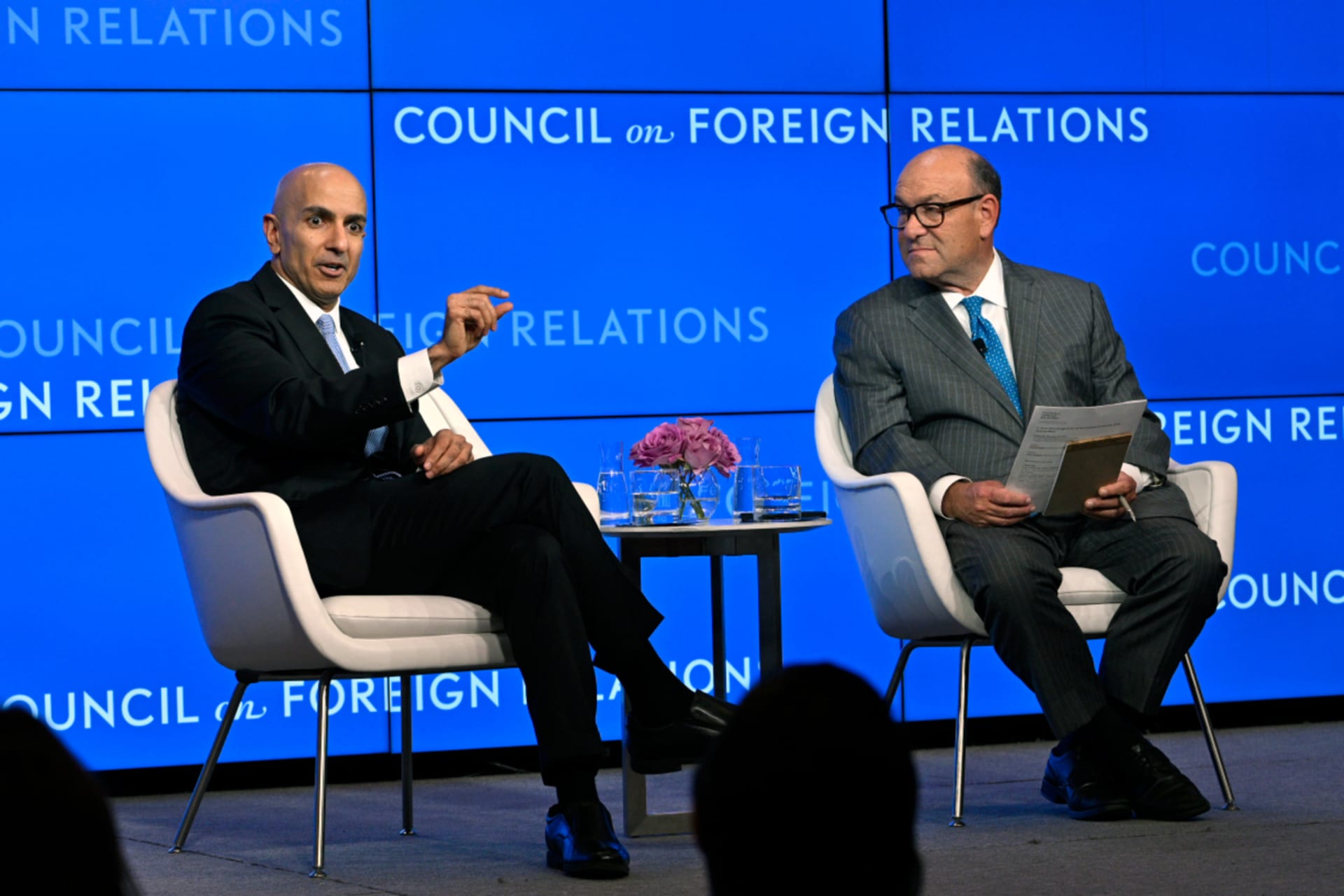
Bipartisan members of the Senate Committee on Foreign Relations, U.S. Senators Christopher Coons and Pete Ricketts discuss the role of Congress—relative to the executive branch—in formulating, resourcing, and creating the institutional basis for China policy.
This event is co-organized by the Council on Foreign Relations’ China Strategy Initiative and the 21st Century China Center at UC San Diego’s School of Global Policy and Strategy, as part of the annual Washington China Forum.
HADLEY: Good morning, everyone. I’m Steve Hadley, one of the cochairs of the Washington China Forum. On behalf of my fellow cochairs—Susan Shirk, Kurt Campbell, Charlene Barshefsky, and Rush Doshi—I want to thank you for braving the poor and difficult weather and showing up here today. We, I think, will have a good program for you today, and hopefully we’ll make it well worth your time.
This is our second annual Washington China Forum. The Forum is a collaborative effort between the Council on Foreign Relations China Strategy Initiative and the 21st Century China Center at UC San Diego, part of the School of Global Policy and Strategy. We designed this event to bring together key leaders in the China space across government, academia, and the private sector, to grapple with what is arguably the most consequential relationship in the world today.
For years, China policy has seemed to be the rare exception to the politicization of our politics, reflecting a broad consensus that has held firm across recent administrations of both parties. Our focus this morning is on the fundamental question, was this consensus real? If so, what was it? How deep did it go? Does it still exist? And is it still relevant? We have seen some evidence of that consensus in the remarkable bipartisan work of our guests today, who have partnered repeatedly on critical legislation related to China in the Senate Foreign Relations Committee. Senator Coons and Senator Ricketts, two of the leading voices in the Senate today, will help us navigate these questions this morning. And with that, let me turn the microphone over to CFR President Mike Froman, who will introduce our distinguished guests.
FROMAN: Well, thanks, Steve. And there’s very little I can add to that. First of all, let me just welcome you on behalf of the Council and just thank Steve Susan, Kurt Campbell, who had the nerve to get a double knee replacement recently and so can’t bear the ice to be here with us, but I understand he may be listening in online, who are the folks who are really behind, along with Rush Doshi, this joint initiative. We’re delighted to be part of it here at the Council and be a host for it in Washington. You know, as Steve said, the goal of this—of this conference was really to bring together the country’s leading China scholars and experts from a wide range of perspectives. And it seems like there’s no better time than now, when U.S.-China relations seem to be in flux and there’s a kind of uncertainty about what our approach is going forward. Most recently with the release of the National Defense Strategy, lots of questions about where does China lie in our prioritization going forward. It’s one of the issues we’ll be exploring over the course of the day.
We’re really delighted to have the speakers here this morning. As Steve said, China’s been one of those few areas of bipartisan consensus for some time. And nothing represents that more than having Senator Ricketts and Senator Coons here directly. They are the chair and the ranking member, respectively, of the East Asia, Pacific, and International Cybersecurity Subcommittee on the Senate Foreign Relations Committee. So they’re very much on the frontlines dealing with this issue. They’ve traveled together to the region, which I know they’ll talk about. And the fact that they are here together just underscores the bipartisanship that continues to be paramount in this relationship.
Senator Ricketts has been in the Senate since 2023, after eight years as governor of Nebraska. I won’t give his whole biography, but he did serve on the Advisory Committee for Trade Policy and Negotiations appointed by President Trump in the first term. Senator Coons has been in the Senate for more than a decade and also serves as the senior Democrat on the Senate Appropriations Subcommittee for the Department of Defense. So very much has been looking at this from that perspective as well. Has been very active in everything from development, to Africa, to trade. We’re delighted to have you both here. Thank you for making the long march here to the Council. This is, I guess, as close to a long march as any of us are going to be making with the snow. Please come on up, with Rush Doshi. (Applause.)
DOSHI: Senator Coons, Senator Ricketts, thank you very much for taking the time to join us and to brave the snow and the uncleared sidewalks to be here. We have about a hundred people in the room, a little more than that, and maybe close to thousand online watching. So grateful that you’ll have a chance to share with us your thoughts on China policy. And to build on the comments that Steve and Mike started us with, I wanted to ask you, you know, China policy has been an area of rare bipartisan consensus for a long time within Congress. And there is a question now, is that consensus under strain amid policy disagreements on AI chips, or on development finance, or on foreign aid, or other issues. So given that you two have worked together on so many pieces of legislation related to China, who better to ask than you, is there still a bipartisan consensus? It looks like it’s right here next to me on the stage, but we thought we’d start with you and find out. Maybe Senator Ricketts.
RICKETTS: Yeah. I think there’s still a bipartisan consensus that communist China is the leading threat to us internationally, and what we have to do. I don’t know that we always all agree on exactly what that policy or how we handle that is going to be, but I think that—certainly that there’s that recognition, which is one of the reasons why Chris and I have worked so closely on different aspects of how we deter communist China from doing something like taking Taiwan by force. But I think there’s still a broad consensus there.
COONS: I would agree. For decades there was a broad consensus on China that was largely wrong. (Laughter.) That by opening up to the West and to trade, China would inevitably become more like us and would follow the rules, would eventually become a middle- or high-income country, and contribute to global peace and stability. With the ascendancy of Xi Jinping, the Chinese Communist Party and the PRC has taken a sharp turn. And in recent years, has become clearly our principal adversary in terms of challenging the rules-based international order.
And Delawareans have certainly said—from all backgrounds—have said to me over and over that a country that was perceived principally as an IP theft risk, as a human rights offender, is now perceived as our principal trading partner, potential partner in addressing critical global issues, but adversary, and, hopefully not, but potential military opponent. And so there is an increased focus in my state, I believe in your state, and certainly in Congress, on making sure that we are prepared for the possibility of conflict, and that we are managing our competition in a responsible way.
RICKETTS: Yeah, I just want to build on one thing that Chris just said there, because I think it’s really important. A lot of what changed was Xi Jinping coming into power. And he is clearly exercising dictatorial powers in a way that—I mean, look, communist China always had dictators—but in a way that has—we have not seen since Mao. And you go look at the Central Committee—Military Committee, now it’s down to two people, right, out of seven. So he is clearly consolidating power and has taken this turn, as Chris described it.
And one of the important things about dictators is when they tell—they usually tell you what they are going to try to do, and you should believe them. And he has said he wants to replace us as the world power. We should believe that. He has said he is willing to take Taiwan by force and he wants his military to be ready by 2027. We should believe him. And I think that’s why there’s this heightened concern about—to Chris’s point—about what we thought about China versus what we have to do about it now.
COONS: Frankly, I still remember my first classified briefing on what China was doing, and the PLA. And, yes, there’s authoritarians around the world who say things, and then there’s those who do things. And what the PRC has been doing over the last decade reinforces what Xi Jinping has been saying. And I remember, as a relatively new senator fourteen, fifteen years ago, being told to expect this trajectory. Today, it’s here. And we got to see it together on our bipartisan trip to the Philippines and Taiwan.
DOSHI: Maybe we’ll turn to that congressional delegation. You both traveled extensively through the region. So you’re not just legislating together, you’re traveling together to do fact-finding and seeing what’s happening on the ground. I think Taiwan, the Philippines, Pacific islands, and so on. I’m curious, you know, when you were out there, what is the perspective you got from being on the ground that was different from what you might get in Washington? And how did that inform, to the degree that it did, some of the work you’ve done together?
COONS: Well, we weren’t just on the ground. We were in the air.
DOSHI: That’s right. (Laughter.)
COONS: And it was a Pete’s idea. And initially I was, like, are we really going to spend an entire day in a P-8 flying over the South China Sea? And I am so glad we did. That was really—there are moments in your life when you look at a situation and you say, I could not possibly have understood this without seeing it. And flying over the Second Thomas Shoal, the Scarborough Shoal, the whole area, and seeing the incredible concentration of Chinese, of PLA, ships, of the coast guard, of freighters, and trawlers, and then literally listening in as the crew was responding to challenges around overflight and areas of control.
Seeing the effort and the incredibly talented members of our armed forces, and the alliances that are required to support our presence, doing freedom of navigation operations on the seas, projecting presence and force into the northern end of Luzon, and then throughout the region. I’ve traveled to Korea, Japan, Taiwan, the Philippines, Papua New Guinea, Australia in the last few years, all on bipartisan trips. This one was the highlight. Pete’s an incredible leader of a trip, and really helped me see things from the air, on the ocean, in a way I hadn’t anticipated.
RICKETTS: Well, that’s really kind. And I do think it was really important to see firsthand how the PLA Navy, their maritime militia, their coast guard, is really infringing upon Philippine sovereign territory. I mean really pushing. I mean it’s almost invasive, if you look at the number of ships. But, Chris, I want you to share our trip to Taiwan, because, again, to Rush’s question about what can you share with the folks here that they may not know, right? Because you had a really interesting insight, because you had been in Taiwan just the year before our trip and you saw a big change between that trip and our trip.
COONS: Right. So I took a trip with Senator Sullivan and Senator Duckworth previously, one trip in the middle of the pandemic to deliver a C-17 full of vaccines, which I thought was an urgent demonstration of actual response to a call for assistance from Taiwan. And then a follow-on trip where I, frankly, left despondent thinking that Taiwan had the wrong doctrine, the wrong equipment, the wrong training, and the wrong attitude. And our trip, where we got briefed top to bottom at a level I didn’t have access to previously, left me significantly more encouraged about decisions and actions made under the previous administration and the current administration, significant investments in security, in cooperation, a change in doctrine and training, a change of mindset that makes me believe that we now have a partner that is committed to their own security in a measured and thoughtful and sustainable way.
RICKETTS: Yeah. And one of the things that I thought was very interesting that came out of that trip is one of the things we were told is that when they were doing wargaming, they were stopping the wargames when the Chinese hit the beach. And now they’re doing wargaming about, well, we’ve got to make sure that we are resilient. They’re doing resiliency exercises with the civilian population. They’re looking at creating reserve battalions. To Chris’s point, they’re saying, hey, give us things like rifles and flak vests and helmets, so that they can start equipping these reserve battalions to resist. Understanding that it’s going to take a while for us to mobile—us, the United States—to mobilize the world to be able to intervene should communist China try to invade Taiwan by force. So I think that that’s a really good change in perspective on the part of the Lai administration and the Taiwanese, to say we’re going to actually be thinking about how do we actually hold on after the Chinese hit the beaches, so that we can give the rest of the world time to respond, and get to us, and really help us out.
And one of the things that was also really good about that trip for me—that, again, unless you see it, it’s hard to really understand it; you can be told it, but when you see it, it actually brings it home a little bit harder—is, this is not an easy thing. Like, if you’re going to invade Taiwan, this is not an easy military target to be able to take. The island is very mountainous. There’s not very many beaches. We were on one of those beaches and looked at it. So, properly defended, this would be a very, very difficult military target to be able to achieve. And I think that that’s—again, getting back to giving the West, us, the chance to be able to respond—the Taiwanese, if they’re properly prepared, can have a defense in depth on that island that will make it so that we would have time to be able to respond and intervene.
DOSHI: Well, and that actually is a good transition, Senator, to work that you two have done together on Taiwan. You’ve sponsored legislation on the PORCUPINE Act, which would speed up the delivery of critical defensive weapons to Taiwan. You’ve also worked together on energy security to make sure that Taiwan would be able to have the energy it needs, should it be subject to a quarantine or blockade. Particularly LNG, which would be a pretty big problem if they didn’t have access to. If you could tell us a little bit more about those efforts and how they’ve been motivated by some of what you’ve learned. And also, you know, what the progress would look like in the period ahead on those issues if we were able to get our act together.
RICKETTS: Well, one of the things that Chris and I did, we pulled together a bipartisan group to do some wargaming around an energy quarantine in Taiwan. And that was very insightful to think about all the different issues that could go on with regard to that and what could we do to prepare. And that’s where Chris and I, for example, came up with a bipartisan piece of legislation to be able to help address that. It’s the Taiwan Energy Security and Anti-Embargo Act. And that would do a variety of things, but including one of the interesting things that, again, one of the insights from this wargame was you go back to the 1980s, what did Ronald Reagan do to be able to help make sure that tankers would continue to flow into the Middle East when we had the problems with Iran? Well, he guaranteed the insurance of those vessels.
So part of our legislation would give the United States the ability to secure the insurance, essentially, for foreign flagged vessels, which is not the case today. So that’s just gives you an example of one of the things that, when we go through and look at some of the stuff that we can do to be able to help make sure that we can continue those tankers going there. But it’s really important. You know, if that would—if the PLA Navy would try to isolate Taiwan, they’ve got, like, I think, forty days of coal and eleven days of natural gas. They’re shutting down their nuclear power plant. You know, they really need to be better prepared. And our act would help them get better prepared on that.
COONS: That act will be marked up this week on the Foreign Relations Committee. One of the things that Senator Ricketts and I share as an orientation is to not just introduce bills as talking pieces, but to move them through, and to get them to the president’s desk, and to get them into law, and then to support them as a matter of appropriations and ongoing policy. The Taiwanese are remarkably vulnerable to an energy quarantine, as the wargame that Senator Ricketts had the entire committee look at made clear. And given the incredible difficulty of an amphibious landing, something the PLA has never undertaken, but the United States has. We have an understanding of how difficult and how costly they are. I think it’s far more likely that there will be an attempt at an embargo or a quarantine.
So making sure that we are doing everything we can to encourage and support the restart of their nuclear power plants, availability of LNG supplies, also communications. There’s a limited number of cables connecting Taiwan to the international world. In recent events, we’ve seen how countries shut down access to the internet, access to e-commerce. And so, frankly, finding alternative routes of communication so that there is resiliency and duplication. And, as Pete—as Chairman Ricketts, of the subcommittee that he chairs and I’m ranking, on the East Asia and Pacific Subcommittee, made clear, understanding resiliency and understanding what it means to be able to resist in depth is something where the Taiwanese are taking lessons from Ukraine, and are recognizing that even in the face of overwhelming force it is possible for a country to resist, resist successfully, and resist for a long time.
DOSHI: Well, if you allow me to turn to technology for a minute, we’ve talked a lot about Taiwan. Of course, Taiwan produces the AI chips upon which the entire U.S. AI buildout is built. And there’s been a major set of questions, I think, in Washington, about what’s the right calibration of our export control policy vis-à-vis China on AI chips. And the two of you have worked together on legislation in this regard, the AI Safe Chips Act I believe is the name. And I was wondering if you might be able to tell us a little bit more about how you’re thinking about the export of AI chips to China, and what your AI Safe Chips Act would help the administration do.
COONS: So this is a bipartisan effort to say the race for dominance in AI is going to define this century. It has an incredible range of applications. Artificial intelligence is going to change a huge amount about domestic and commercial activity, from education, to logistics, to the development of new drugs and pharmaceuticals. In the defense space, it also has really compelling applications. And in AI there’s really three key inputs and components—energy, talent, and chips. And, bluntly, because of our own domestic challenges in permitting, we’re behind on energy. We’re behind on talent. And the only place where we have a sustained competitive advantage is in the design and manufacturing of the most advanced chips.
TSMC on Taiwan is manufacturing many of these chips. And to have control of TSMC in Taiwan shift from being open to the world to closed and controlled by the PRC would be a huge strategic shift, not just for the United States but for the rest of the free world. And so licensing or allowing the sale of the most advanced AI chips to China, when China has spent decades trying to develop their own indigenous chipmaking and chip design capability, would be, in my view, strategically reckless, incredibly self-destructive, an own goal of lasting proportions. And so finding a way that we draw a line and say chips greater than this capability should not be licensed for export is an important signal, and having it supported in the House and the Senate, I hope, will cause the administration to pause in what currently seems, at least on the part of some, a headlong rush into licensing and exporting advanced chips to China.
There is a competing view, which is that we will win the race for AI through diffusion. I profoundly disagree. Those of us who are old enough to remember Betamax versus VHS, the standards for recording, this isn’t like that because AI is a generative—it is accelerating its own development. And it has agency. And it has the capacity to transform this century. And the country that is in the lead on the development of not just the next models, but the next chips will maintain that lead globally. And I think Pete’s really clear-eyed on this matter as well.
RICKETTS: Well, and I want to just piggyback on what Chris was saying there with regard to the chips, because there are a couple of competing visions for how we compete with China on this. The one that NVIDIA is putting forward, right, is the one where diffusion. Now, they actually make money by selling chips so they’ve got a little bit of an agenda here, right? I agree with Chris.
COONS: Shocking.
RICKETTS: Shocking. Shocking that they might want to sell more chips. But I agree with Chris that if you look at what can communist China actually do today, we’ve got a huge advantage on how we can design and, to your point, the chips are actually produced in Taiwan. But we’ve got a huge advantage. And so limiting what they can do is in our interest because they will not be able to build upon that. And so what our Safe Chips Act does is limits the H200s that we’d be sending over there. Obviously, the president has talked about he wants to start sending some more of these higher-end chips there. Actually, I think our bill, which does not revoke any license that’s already been granted, should be passed later this year, would actually be complementary to that because it would just say, hey, you got these licenses but you’re not going to get any more. And it would also give the commerce secretary the ability to be able to revise that in thirty months or whatever down the road, as the technology changes.
So it also gives the administration some flexibility to be able to give more higher-end chips down the road as the NVIDIA continues to create Blackwells, and Rubins, and blah, blah, blah, blah, blah. So it gives some flexibility here. But I do think that—I’m with Chris, that limiting the number of AI chips that we give them is in our interest because they can’t produce this. And we need to take a step back and think about this too. This is probably the most complex supply chain the human race has ever created. You may need billions of people just to create the supply chain. And as big as communist China is, they’re still only a part of the world. It’s not clear to me that they can still do this. And as long as long as we take other steps, like limiting the kind of machines that we export to them, right, so that they can’t produce the chips themselves, that’s all in our interest as well. So it’s not just about making sure they don’t have the chips. It’s also the machines that would design and manufacture them. And there’s more that we have to do.
So this is one of the areas where we actually have some ability to influence what communist China does. Now, there’s areas like this, like this and oil, where we’ve got strengths. But there’s—we have to all be mindful there’s things where communist China’s got areas on us, like things they can hold over us, like rare earth elements and pharmaceuticals. So this is a delicate balance that we got to strike here with regard to how we’re going to manage this so that we can become less dependent on them, and then they will have less influence over us. If we can get off of, like, the rare earth elements and some of the pharmaceuticals, we’ll have even more ability to try and push our advantage on things like AI chips.
COONS: I do think there’s critical work to be done with our partners, the Dutch, the Japanese, the Koreans. In Europe last week I led a meeting with the Dutch prime minister—foreign minister. Obviously, they have companies that also have an incentive to try and sell more equipment. But if we, along with our valued and trusted Japanese partners, the Dutch, to some extent, the Koreans, have a shared sense that preventing the export and sale of the machinery and the capability required for the next generation of chips—if we can do that, along with the bill that Pete is leading to try and reduce the export and sale of chips—chip, and chip design, and chip manufacturing is essential to our strategic advantage. If we give that away, there’s no recovering it, in my view.
DOSHI: Well, just to build something—on something you said, Senator Coons. Allies and partners are critical to the agenda the two of you have laid out. If it’s Taiwan deterrence, you’re going to need allies to help with that, whether it’s access or economic deterrence. If it’s chip controls, again, it’s an allied supply chain. Senator Ricketts, as you mentioned, it’s the most complex supply chain on Earth, but it’s a truly allied supply chain. If we want to bring back manufacturing and pharmaceuticals or critical minerals, there’s probably an allied component. And the two of you have done something very interesting. Last month you sponsored a resolution, standing with Japan which is facing enormous economic coercion from China right now. And they’ve been asking for support, a sign of support a sign of support from the United States. Can you tell us more about, you know, the response to your resolution, any appreciation by the Japanese side, for example, as well as how this shapes how you think about standing with allies across the board in other sectors?
RICKETTS: Yeah, well, again, what the communist Chinese did is they attacked the Prime Minister of Japan Takaichi for saying something that was pretty basic, which is, hey, if you invade Taiwan that may provoke a response from us, just knowing the strategic situation, right? Taiwan is part of that first island chain. And of course, the communist Chinese threatened to cut off her head. It was terrible—it was terrible, terrible what they said. So we wanted to show that, no, no, we’re supporting our friends in Japan. And that’s what our resolution was about.
And, yes, the Japanese ambassador—who is here; thank you—was very kind to let me know that he really appreciated that. And so I do think it was an important thing to be able to send a message that, hey, yeah, it is going to be something where we are going to support our allies when you, the communist Chinese, step out of line. So we’re going to continue to support our friends because we understand that our interests lie in making sure that you don’t just overrun the region, because we actually have not only friends in the region but we also have interests in the region economically.
COONS: We have treaties. And we have partners and allies. China does not have a global network of partners and allies. They have nervous neighbors and client states. And as we retreat from our soft power engagement in the Pacific Islands and throughout the world, we are creating space for the PRC to advance. So in a moment when one of our longest, most trusted, most critical allies for security in the Indo Pacific is aggressively threatened, in the ways Pete just cited, it’s urgent for us to step forward and say, we respect you, we see you, we appreciate you. And without those reassurances and without those actions by Congress, we have a lot of anxious partners and allies around the world who are wondering whether the United States is reliable. The Senate has long had a critical role in foreign policy. And this is a moment where it’s more important than ever for us to stabilize and reassure a lot of our key allies.
RICKETTS: Yeah, let me just jump in on that again, too, because I think that’s a really important point to make. Because it’s part of the way our founders designed this system, that the Senate would be involved in foreign relations. We’re the oldest committee, right? One of the original committees that was formed. And if you think about it also, an administration is run by certain amount of people. And they’ve got limited bandwidth, right? And it’s a big, complex world out there. One of the things that our role is—at least I think Chris and I share this in seeing it—is we have the ability to be able to go out there and be additional ambassadors to the world, to be able to represent the Article One branch and say, hey, this is our perspective on it.
And in many ways, our perspective—and, again, this is kind of the bipartisan consensus we’ve had say, for example, on communist China—is going to outlast administrations. Administrations will have four or eight years. We will be here typically longer. Chris, you’ve been here ten years, right?
COONS: Fifteen.
RICKETTS: Fifteen years, right? So—
COONS: Three administrations. (Laughs.)
RICKETTS: Three administrations.
COONS: But who’s counting?
RICKETTS: But who’s counting? So the point is, though, we have that continuity that the executive branch doesn’t necessarily have. And we’ve got more bandwidth potentially, or at least can go places. Like, when we go out and go on CODELs different places, we’re representing the United States. And if we can go places where maybe we don’t even have ambassadors, that sends a message to those places that we care, that it’s important. Or what you did this weekend when you went to Europe and talked to our allies. I mean, we can reinforce messages to say, hey, you know, we’ve got a broad consensus within whatever branch. And this is what our policy is.
But the point is, it can be something that has more continuity than the executive branch, and also is a lot—is really kind of a force multiplier to go out and get out there in ways to represent our government that maybe the executive branch can’t always do right? I think that we have a lot of great people in the Foreign Service but, again, we have limited bandwidth on what the policies are going to be. We can be out there talking about those policies with our allies and partners.
DOSHI: Well, that’s great. We’re actually thirty minutes in and so far I don’t think I’ve heard any disagreement. So the bipartisan consensus—(laughter)—is alive on the—
RICKETTS: (Laughs.) We’re talking about the right stuff.
DOSHI: —is alive on stage. But we may—that may change. We’re going to turn to the audience. And we have sometimes a feisty audience. So I want to begin with questions from in the room. I want to also thank the ambassador for joining us as well. Ambassador, if you’d like to jump in with a question, you’re also welcome. But let me start here in the front, please.
Q: Jane Harman, former member of Congress, president emerita of the Wilson Center; and recent chair of the Commission on National Defense Strategy, which on a bipartisan, bicameral basis said that if we get in a war with China, China might win. So this is really serious stuff.
I wanted to ask a little more about Taiwan. You said, Senator Ricketts, that listen to autocrats, they do what they say. If Xi Jinping might have 2027 on his calendar, that’s next year. Do you think there’s a chance that he might accelerate that, given the disarray in our country, for a variety of reasons, especially on the foreign policy side but also the roundup of immigrants, et cetera, et cetera? And if he did that, are we really prepared to respond? I would venture to say that 50 percent of Americans have no idea where Taiwan is on a map. And even though you two are great ambassadors, and I would give you U.S. foreign policy tomorrow if I could, do you think that this administration is ready? And do you think the Congress could really offer some huge assist to some action to respond?
DOSHI: And we’ll perhaps take one more question, from CFR President Mike Froman, and then we’ll jump back to you, Senators.
FROMAN: Thank you. And, again, thanks for both being here.
Senator Ricketts, you’re from Nebraska. As I recall, there are farmers in Nebraska.
RICKETTS: Yes, there are. A lot of them.
FROMAN: Farmers often get caught in the crossfire of U.S.-China relations, whether it’s in response to tariffs and China cutting off purchases of soybeans and corn and other products. How do your constituents feel about U.S.-China relations? Do they feel like they’re paying an acceptable price for increase in tension between the two countries when that arises? And do they feel like the tradeoffs are being taken into account?
RICKETTS: I might also point out Chris has chicken too, so it’s not like—
FROMAN: He’s reminded me of that over the years.
COONS: Every time we’ve ever met I raise chicken. (Laughter.)
FROMAN: (Laughter.)
COONS: Chicken, chicken, chicken.
FROMAN: I got the message.
COONS: No competition with beef. There’s room in the world for both. But chicken is tastier, healthier, lower environmental impact. (Laughter.)
RICKETTS: Well, I’m going to totally disagree with you on that. There’s no more nutrient food that you can eat than beef.
DOSHI: So the consensus is broken. (Laughter.)
COONS: And the administration has now put steak at the top of America’s food pyramid.
RICKETTS: You found something different now, OK, but there you go. He’s a chicken guy. I’m a beef guy.
DOSHI: Ask RFK, Jr. Steak is the healthiest meat you can eat. (Laughter.)
RICKETTS: So—it’s part of a healthy diet. So, anyway, so getting back to Taiwan. I think it’s unlikely that Xi Jinping is going to try to accelerate his plans, just because it is very, very difficult. And he just sacked his top general. Now, we were talking about this ahead of time. He either got sacked because he wasn’t making enough progress toward the goal of getting the PLA ready to take Taiwan by 2027, or maybe it was more along the lines of questioning his loyalty. So there’s a couple different theories out there it could be, but I think it’s unlikely that he’s going to try to move that quickly to be able to do that.
Now, to your second part of the question, are we ready? And we need to do a lot more to get ready. And that’s, again, part of what Chris and I are doing. So things like the PORCUPINE Act would make Taiwan a NATO+ country for seven years. That would reduce things like congressional notification time, take the dollar threshold up of the weapons we can send them. The Trump administration just announced $11 billion going to Taiwan. So we need to—one of the things that we need to do, and we heard this when we were over there, is we got to clear up this backlog and what’s gumming up the system just to get the weapons to them. So they purchased a lot of—billions of dollars from us. We got to deliver it. We haven’t been doing that. We got to do that. So there’s absolutely a lot more that we have to do to be able to be able to deter communist China from doing this.
And here’s the one thing we also need to think about too, and why this is important. Xi Jinping wants Taiwan as part of his legacy, right? This is going back to—really getting back to the height of the Chinese empire back in the 1600s. This is what he sees as his legacy. So this is super important for him. He has pretty much made it clear he is going to be dictator there for life. So is he going to be here for the next ten years? Yeah. Fifteen? Maybe. Twenty years? Hmm, starting to get up there in age, You know, he’d be ninety-two, or whatever. So he’s got some time to think about this. But he really, really wants this, right? But here’s the other thing he knows, if he tries this and fails he will not get to keep his job, and maybe not his life, right? As a dictator, you don’t get to retire to the country, right? You get killed in office or you die in office.
So he’s got—that’s what he’s always going to be thinking about, is he’s got to be really pretty sure he’s going to be successful with this, because if he fails it’s going to be really, really bad for him, personally. So that’s part of why we do have, I think, some time to be able to do this. But we got to take all the right steps. And we do need to do much more to prepare.
COONS: I do think that we lack the sense of urgency that is required for this moment. The national security strategy seems to significantly downgrade the sense of focus and prioritization on the PRC and its regional projection of power. And we’ve seen just this year some of the most aggressive, most sustained deployments around Taiwan, crossing the center line. When I was in Australia this August they were briefing us on how a Chinese naval flotilla circumnavigated Australia and carried out drills targeting every major city of Australia. You know better than I. In the South China Sea and throughout the region China has become exceptionally assertive and aggressive.
As the senior Democrat on intelligence and defense appropriations, I worked well with Senator McConnell in making sure that we are prioritizing a whole range of issues, from submarine construction, to ship construction, to long-range fires, to a number of other important programs you’re aware of. But bluntly, we’re not moving fast enough. Our defense industrial base and our procurement process is sclerotic. It is not acquiring and deploying cutting-edge capabilities at the scale and speed we require. There are some encouraging developments. For example, the delegation I led over August got to visit the Ghost Shark project led by Anduril in Australia. There are some green shoots but not on the timeline that I think we need. And I do think some of the recent decisions in the American military, the abrupt sacking of CQ Brown and of Lisa Franchetti, the chairman of the Joint Chiefs and the chief of naval operations, also sends a signal about continuity of leadership and about professionalism in our military.
We need the same sort of seriousness across the Congress that Senator Ricketts has brought to this work. And we need the same sort of focus on a bipartisan and disciplined sustainment of this mission in order for us to succeed. And I agree with Senator Ricketts, with Pete, that this is the role of the Senate to say, regardless of, you know, today, Venezuela, tomorrow, Greenland, this is something that really matters to us and to our children. And I agree with your strategic analysis that, for Xi Jinping, this is the most important thing he can accomplish. We want to maintain the status quo. And we want to maintain the American role as a Pacific power and as a country that helps, through our network of alliances, to reinforce the importance of freedom in the Indo-Pacific.
Yes, Delawareans care a lot about exports to China. The most profitable part of the chicken are the feet, which we call chicken paws so that it’s a little less difficult. (Laughter.) And in a recent meeting with the Chinese ambassador it was the first issue I raised, was the complete cut off of export of paws to China. And frankly, the recent maneuvering around Argentine farmers and soybeans really woke up the soybean farms in southern Delaware as well. There are huge concerns on the part of American farmers. And that makes us vulnerable to gyrations in the U.S.-China trade relationship. But if we continue to invest in ways that we are resilient and we have alternatives, then we can negotiate more successfully.
RICKETTS: Yeah. And just getting back to how my Nebraska farmers feel about, if you go back to the first Trump administration when he negotiated the phase one trade agreement, our farmers were willing to cut him the slack to be able to do that, even though there was pain in that. And also, just so we’re kind of clear, communist China has always been a terrible trade partner. Like, they are capricious. Long before any of this stuff came up. We used to—like, we’re a beef state. So we sell lots of hides. We used to have a nice growth in selling hides in China. And then one year they just cut us off. No explanation. Just stopped buying them. And that’s the way they operate. They’re very transactional. We will send, you know, ships of corn there, and they will reject them capriciously or for political reasons. And there’s just very little you can do about it.
So it’s not—like, we want to trade with China, but they are not a great partner. And so basically, our farmers and ranchers know we need to diversify our markets. Not that we’re going to try and stop selling it all, but it’s just we need to make sure we’re developing the markets in places like Indonesia, Malaysia, and do more in Japan and Korea, you know, that sort of thing. So I think there’s an opportunity there for us to do more. It’s just it’s a difficult relationship though because it is such a big market. We do want to sell there. But we also know that they are not a great trade partner. And frankly, they don’t want to be dependent on us, right?
Again, getting back to it—they don’t want to have—they don’t want to give us a lever that we could use against them. Something is certainly as important as food. And so they are looking to develop their—diversify their supply chains. And one of the challenges we’re going to have, for example, is Brazil is doing a lot of double cropping because they can do that because they’ve got the Amazon rainforests they’re burning down and they got the weather to be able to do it. So we’ve got—we do have competitors out in the marketplace that are making it challenging for our farmers and ranchers.
DOSHI: Thank you. We’re going to take one final question from a CFR member online.
OPERATOR: We’ll take the next question from Rafael Reif.
Q: Yes. Rafael Reif from MIT.
It’s been a true pleasure to listen to both of you, Senators. I mean, I feel that if we can clone you and spread—(laughter)—
COONS: Maybe some more hair next time.
Q: (Inaudible.)
Look, thanks to the work you’re doing on the porcupine strategy for Taiwan. It seems to be almost clear that that an invasion is too costly for China to do in the near future. But I think the most likely scenario is a blockade. We practice that in Venezuela quite successfully. In fact, we’re teaching the Chinese how to do it. So a blockade is very likely. If chips don’t leave, then Taiwan is in trouble, and so are we. So what do you suggest is a strategy against a blockade?
COONS: Thank you, Rafael. I think it’s important to be prepared for one. And so part of Senator Ricketts leadership on our subcommittee was getting our entire committee to think about it, to look at it, to ask the questions, what comes next, what comes next? The Berlin airlift is an example that we’ve both looked at historically, where it should not have been possible given the historical circumstances and the alignment of forces for the United States to sustain Berlin over the long period that we did. Looking ahead and urging the leaders of Taiwan, the leaders of the United States, to look at what would happen and what the consequences would be, being prepared, providing for things like a backstop, for marine insurance, being prepared, providing opportunities for reinforcements in terms of energy and in terms of communications, having the population of Taiwan be prepared in terms of resiliency domestically makes it much more likely.
I remember the INDOPACOM commander saying to us in a briefing, our goal is to have Xi look in the mirror every morning and say, not today, not today. And if we make an embargo or a quarantine also difficult and expensive, and we make it clear there will be prompt and immediate consequences throughout the region, that also will deter taking this act, which is equivalent to an act of war and one that I think is much more likely to happen in the near term. And I agree with you, our actions in Venezuela, our actions with regards to Iran, are in some ways laying the groundwork for a Chinese comparable action. And we need to be clear about the differences and the international response, and how it will be different.
RICKETTS: Yeah. I agree with Chris. It’s about preparation. It’s about making sure that we’re doing the things that, at the end of the day, when the PLA is doing their math, they’re saying this is really difficult. So absolutely we want to continue to be out there supporting our allies and our partners, but we also have to make sure—for example, we’ve talked about it, we’ve got to get our foreign military sales streamlined so we can get the weapons to Taiwan that they need.
We need to work with them, again with our—the Taiwan Energy Security and Anti-Embargo Act, it would direct the United States to work with the Taiwanese on things like, hey, let’s look at your energy security. Let’s see how we can export more liquid natural gas from the United States, because we’ll be less subject to coercion than maybe countries someplace else. Let’s help you with this nuclear power plant. Maybe you don’t like the one you got. Maybe we can help you with something else. You know, there are ways for us to be able to help you get more resilient. And that’s what I think part of what we have to do, is take concrete steps. And I think one of the things that, again, I don’t think there’s any disagreement anywhere that I’ve seen, we’re not doing enough and we’re not doing it fast enough.
DOSHI: Well, I think we are roughly at time. I wanted to say thank you, Senator Ricketts, Senator Coons, for taking the time to join us this morning, despite the weather, appearing in person as well. On a personal note, I think I can speak on behalf of everybody here, it’s very heartening to hear so much bipartisan agreement at a time of bipartisan division on this issue of great consequence. It really does, I think, make everybody feel much better about the future. So thank you for taking the time to be with us.
We’re going to close the room down. If everybody could just take your belongings and then meet us for the reception outside. This room is going to be flipped for the closed-door China forum. So just a quick note to all of you. And, again, to both of you, our deepest appreciation for your time today. Thank you.
RICKETTS: Thanks, Rush.
COONS: Thank you, Rush.
DOSHI: Thank you very much. (Applause.)
(END)
This is an uncorrected transcript.