A Conversation With U.S. Secretary of Energy Chris Wright
Event date
Speaker
- U.S. Secretary of Energy
Presider
- Vice Chairman, S&P Global; CFR Member
Introductory Remarks
- Michael FromanCFR ExpertPresident, Council on Foreign Relations
Secretary Chris Wright discusses the administration’s priorities for U.S. energy security, innovation, and global competitiveness.
FROMAN: Well, thanks very much. Good afternoon, everybody, and welcome. I’m Mike Froman, president of the Council. I am terribly sorry that I couldn’t be there in person. This is the beginning of our high season of our—of our programming year, and it’s the cost of having literally two events going on simultaneously and in two different cities.
But I wanted to welcome all of you here today for this incredibly important conversation about U.S. energy policy. This is no question that how the U.S. competes in today’s shifting global energy landscape has sweeping implications. It’s not only just about keeping the lights on; it’s about national security, economic strength, our ability to confront the impact of climate change as well. Energy abundance is also absolutely critical to our capacity to fully develop and exploit the benefits of artificial intelligence and to build U.S. competitiveness more broadly.
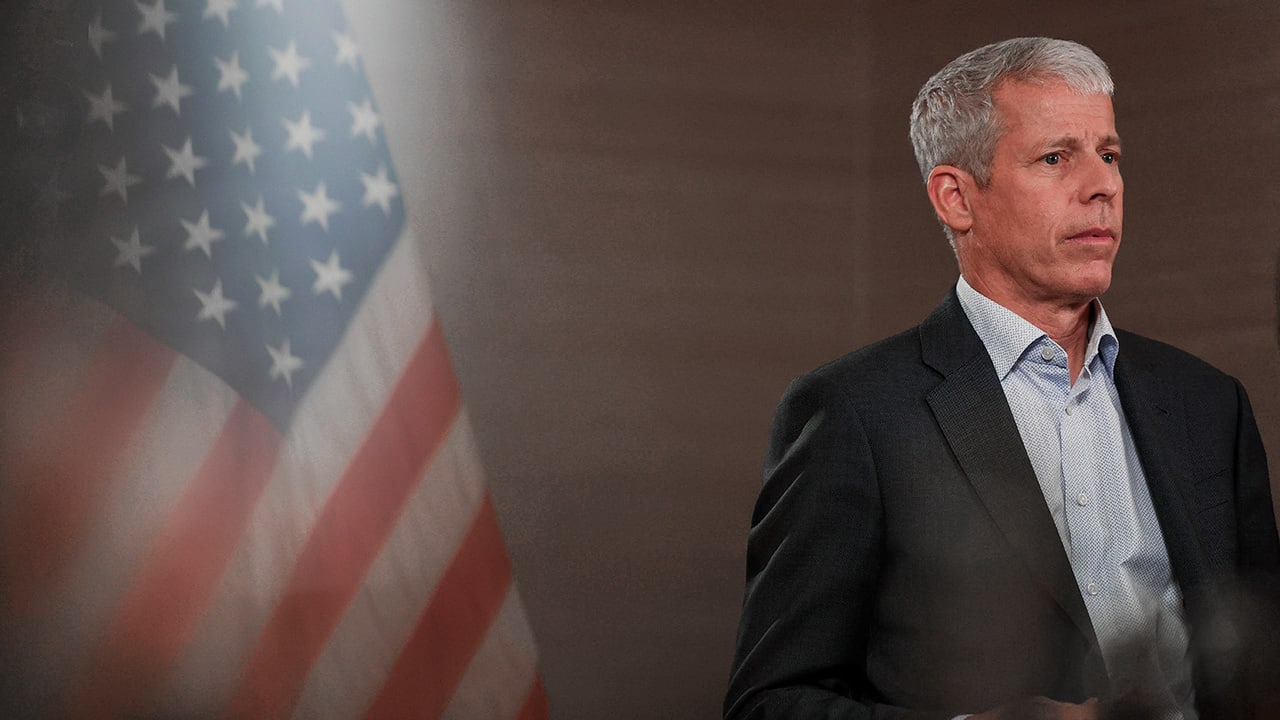
It’s in that spirit that it’s a real privilege to introduce this afternoon’s speaker, Secretary Chris Wright, the seventeenth secretary of the U.S. Department of Energy. Secretary Wright founded Pinnacle Technologies and served as its CEO from 1992 to 2006. Under his leadership, Pinnacle pioneered the hydraulic fracture mapping industry, and its innovations played a pivotal role in launching commercial shale gas production in the late 1990s. Most recently before joining the Trump administration, the secretary served as chairman and CEO of Liberty Energy.
Our presider today is none other than Daniel Yergin, the vice chairman of S&P Global. We’re lucky to have Dan as an active member of the Council and a longtime board member as well.
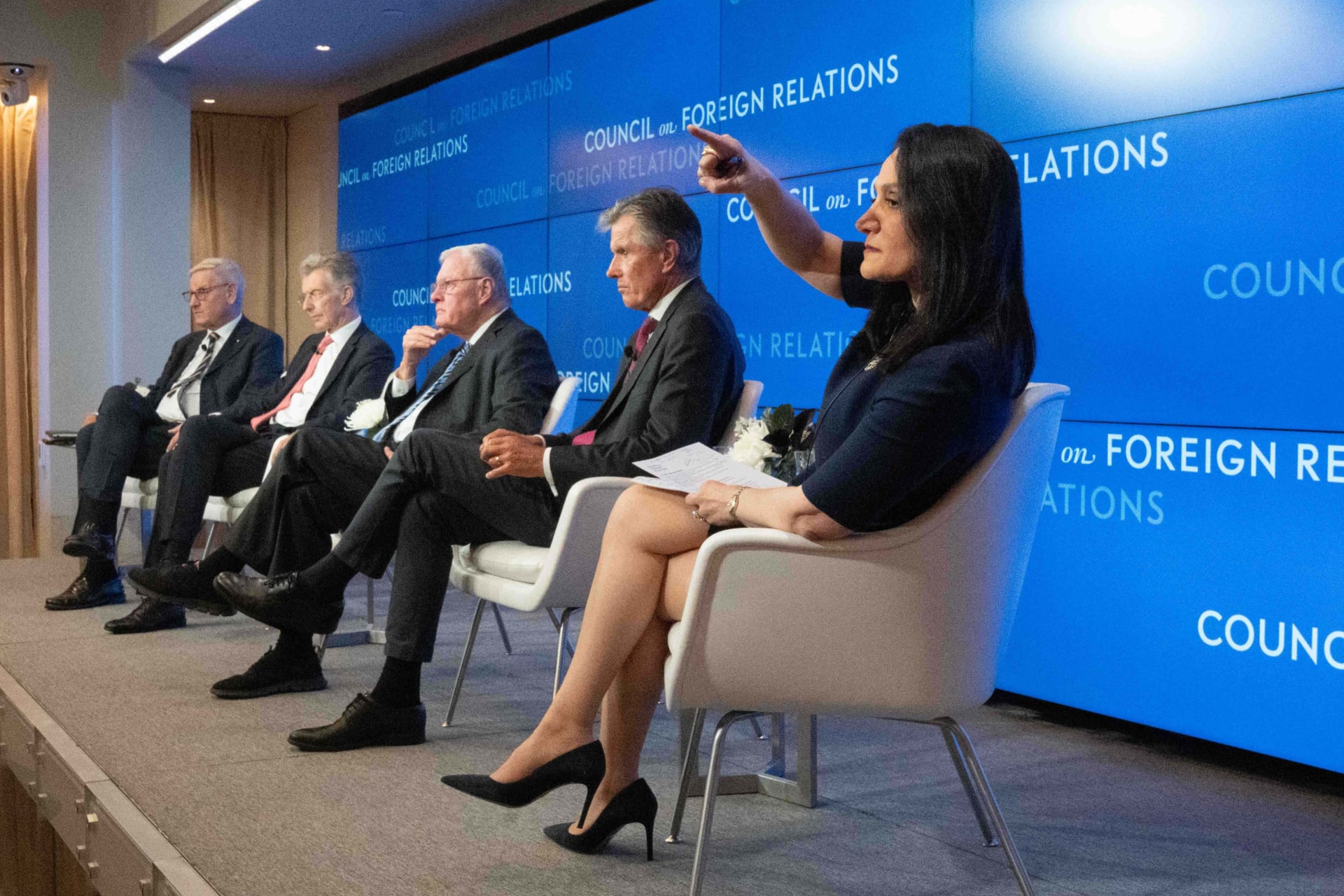
Today, Secretary Wright will come up to the podium and provide some brief remarks. Dan will then come up and moderate a discussion before taking questions from all of you. Just want to remind you that today’s discussion is on the record.
And with that, please join me in welcoming Secretary Wright to the podium. Thanks again for joining us this afternoon. And thank you, Secretary Wright, for being there as well. (Applause.)
WRIGHT: Thanks so much, Mike and all Council members. I’m honored to be here. Look forward to a very open and candid dialogue for as much time as we have.
Look, I’ve been an energy entrepreneur my whole life. I’ve been passionate about energy since I was about thirteen or fourteen years old. So I am all-in on energy. But I’ve also been all-in on being an entrepreneur. The last time I had a boss I was nineteen years old. (Laughter.) So I got a very new job in a very new situation, but it’s been exciting and I’m thrilled to be here because energy matters.
Energy is not A sector of the economy; it’s THE sector of the economy that enables everything else humans do. I would say from a material perspective it’s the most important commodity that decides how your lives are—how long they are, what your opportunities might be, what your living conditions are going to be. And remember, food is a subset of energy. Food is the energy that powers the human machine, right? And then the other energy we use is what enables, gives us greater powers, human beings, to get more done; that allows us to produce food more efficiently; and it just changes our condition.
Throughout all of—all of human history, life expectancy at birth was about thirty years. From before the invention of agriculture to 200 years ago, global life expectancy at birth was thirty years. Today, it’s seventy-three years. That transformation, two things. Bottom-up social organization, human liberty. We enfranchised women. We got rid of slavery. We empowered citizens to engage in commerce. The 1840s are gigantically important in this regard, but that’s a separate topic. But energy has transformed everything.
But today we have about a billion people that live lives remotely recognizable to any of us here. We get to wear fancy clothes made out of hydrocarbons, and turn light switches on, and ride motorized transport. That’s awesome. One billion people do that. Seven billion people want to do that. The only way from here to there is just massively more energy. That’s the trajectory the world has been on.
I would say we got off track in the last—starting in Europe, the last twenty years we’ve gotten off track in the understanding that more energy is just massively important and we need it. And we got off track because of, in my mind, a complete misinterpretation of climate change. I’ve been in the climate discussion, research, and debate for twenty years. It’s a real physical phenomenon. It’s actually incredibly fascinating. And of course, it’s a—it’s a problem humans will solve in a few generations, and it’ll be solved by technology not by government policy. Driving up the price of electricity massively and making the grid less reliable does nothing to help solve the climate change problem, but it does impoverish societies, and it does move manufacturing and jobs from high-expensive energy regions to low-expensive energy regions.
Europe is in the midst of almost completely deindustrializing, the birthplace of the Industrial Revolution. We don’t want to do that in the United States. Frankly, that’s why—that’s one of the main reasons Donald Trump was elected. For the—in the Obama administration, we started it. We doubled down in the Biden administration to go to this expensive, unreliable energy route. Americans got very frustrated by that, no growth in our electricity production but a 30 percent rise in prices, and they voted for change Donald Trump brought to bring common sense back; and in the energy realm, more energy production, lower-cost energy as much as possible in America for Americans to consume and to ship overseas to all our friends and allies.
I could go on for hours, but my friend and a truly fabulous energy scholar and historian, Dan Yergin, I think’s going to come up and talk to me. (Applause.)
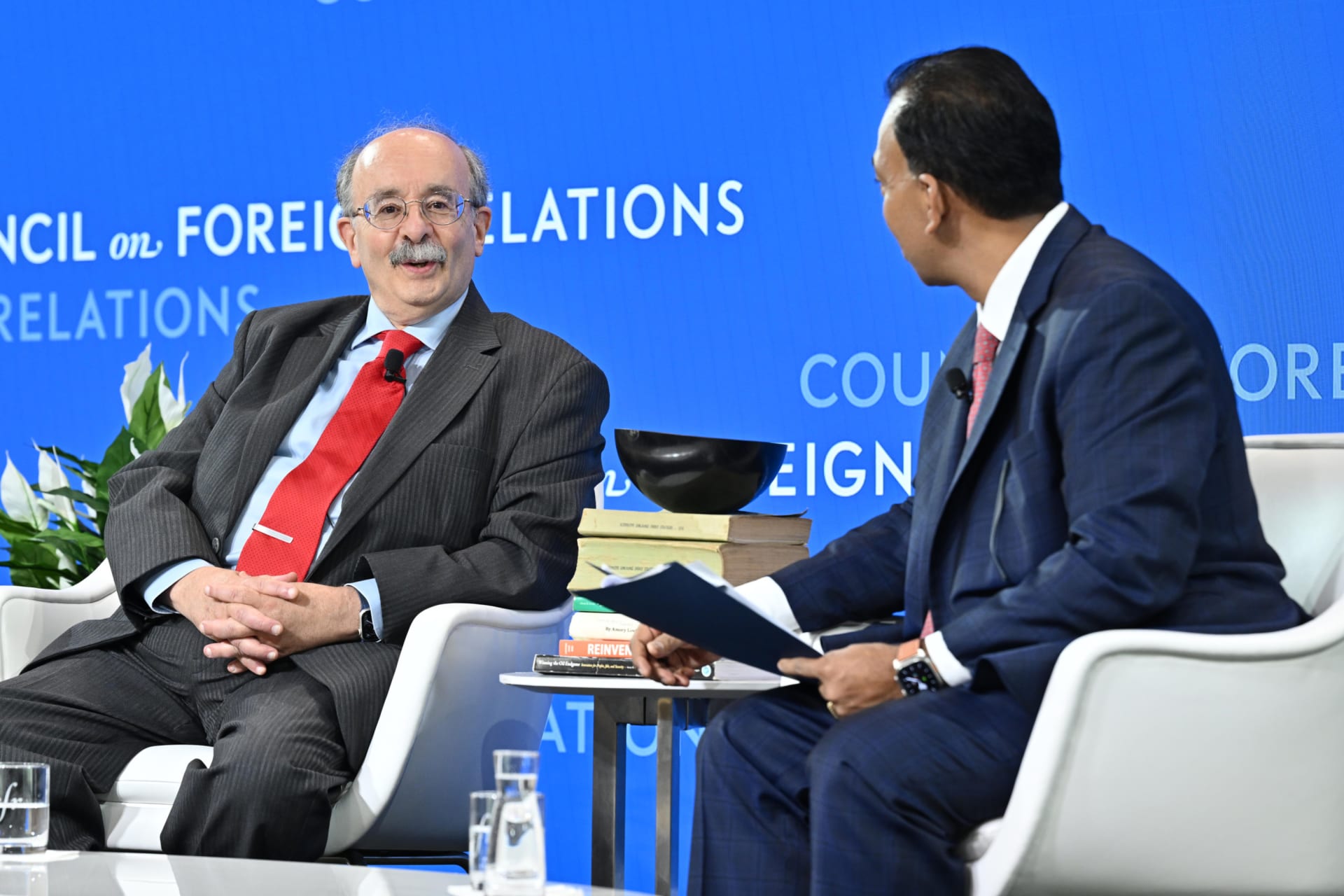
YERGIN: Thank you, Chris. And thank you for being here, and the folks in New York who are watching as well.
I think I know people—we want to get to climate. We want to get to electric power for AI. But I think we’ll start just with some scene-setting. You have described yourself as—when you were growing up as a nerdy science kid. You ordered—and not only ordered, but read—a textbook on nuclear engineering in ninth grade. Why? (Laughter.)
WRIGHT: I’m a strange guy. I’m a strange guy.
So, young, I was super-fascinated with history and with science. And maybe the most basic thing was I’d look up at the stars, think of all the stars you can see at night, and as just a quantitative kid I’m like, how far away are those stars? Well, you can quickly learn, you know, the closest one’s over 20 trillion miles away. You can see things quadrillions of miles away without binoculars or a telescope. Like, that is a badass candle. How does that—how does that work?
So I started to learn about how stars work and how our universe works. And stars, of course, are fusion energy. They’re just compression of nuclei together. You fuse light nuclei and you release a lot of energy. The nuclear engineering textbook I bought is for fission because that’s what we’ve harnessed on Earth. You take heavy nuclei and you split them, and it releases energy.
YERGIN: You then went to MIT to study fission or fusion?
WRIGHT: Fusion.
YERGIN: And what happened?
WRIGHT: See, I read about fission in high school, then I went to fusion. Also because we had a professor come to my high school. I went to a big public high school in Colorado, and we had a professor come down from CU, and he said industrial civilization was going to collapse around the year 2000—this is the early 1980s—and oil, gas, and coal are the culprit of it, and the world’s going to end. So very familiar to today’s story.
The one difference was then it was because we were running out of oil and gas and coal, and we knew we were running out of oil and gas and coal. Could be 1995, maybe 2005, but around the year 2000. And we’ll have mass starvation because we’re going to lose the ability to produce a lot of energy, industrial civilization will collapse. And I’m an optimistic kid whose other dream was to climb the mountains of the world. So I’m like, I’ve got to work on the solution to that. We’re running out of hydrocarbons. I went to work on fusion energy.
YERGIN: And then fusion didn’t quite take off. Then you went to Berkeley to study solar, and what happened there?
WRIGHT: I worked on solar energy and I met a girl. But I—(laughter)—I’d actually met the girl before I went to Berkeley, but I partially went to Berkeley for that reason. And so when they missed my first paycheck at UC Berkeley, I called up this gal—now my wife and, obviously, mother of children—I called up this gal and I said: I need a job. You know, they said they’re going to give me two paychecks next month. I got to get from this month to next month. And she got me a job at a tiny company in Silicon Valley called Hunter Geophysics, and that was my—that had a technology they were applying in oil and gas. So I started in fusion/solar, I—
YERGIN: And so that’s how you got in there.
WRIGHT: That’s how I got into—
YERGIN: So you played a pretty critical role in the whole shale revolution. What lessons do you take away from that?
WRIGHT: Well, I guess the same lessons I made in the night I met the girl, is that the big things in life, they’re not generally planned, right? They happen. I describe the shale revolution and certainly my role in it very much as blind squirrel finds nut, you know? (Laughter.) You’re out there trying to do things. You may have a narrower objective. But when innovation happens, we don’t see where that—how far it can run.
YERGIN: So you could not have imagined when you got going that the scale would make the U.S. by far the world’s largest producer of oil and gas.
WRIGHT: No appreciation of that whatsoever. No appreciation. So it took years to realize, oh my gosh. And then, of course, even a few years later we realized, OK, we’ve completely transformed the United States’ natural gas production. We were building import terminals then to bring gas into the U.S.; we won’t need those. But it took a while before we built export terminals, which also made a collapse in natural gas prices. Pretty quickly we could produce more than all the gas the United States could consume, and that collapsed the price. Then we had to figure out, can we do the same thing for oil?
YERGIN: Right. So in terms of innovation, is there a lesson you take away from innovation from the shale experience that applies more generally to energy?
WRIGHT: You have to be willing to take a risk on something. Anything that can be planned out or seen ahead is incremental. If there’s ideas that might work, you have to be able to risk money and try them.
But the other thing, the caveat to that—because I see a lot of this in Silicon Valley—is physics, thermodynamics, and math, they work. There’s a lot of investment in the energy space that I get passed on later the simple physics, thermodynamics, and mass say not going to work, and it still gets funded. So don’t blindly try things. But if the physics, math, and thermodynamics might work, I mean, there’s a pathway. If you can achieve A, B, and C, then try it. You got to try stuff.
YERGIN: So let’s turn to climate. At the end of June, you—a report that you ordered up, “A Critical Review of the Impact(s) of Greenhouse Gas Emissions on the U.S. Climate.” It’s kind of created an extreme weather of its own. It’s 141 pages in length. There’s been a 400-page rebuttal. I noticed that the lead author of the rebuttal is somebody who debated twice one of the lead authors of the—of the study. Why did you order up this study?
WRIGHT: Because this is this incredibly important topic. Climate change for impacting the quality of your life is not incredibly important. In fact, if it wasn’t in the news and the media you wouldn’t know it. You know, the planet’s warmed about two degrees Fahrenheit in 130 years. I could change the temperature of this room two degrees Fahrenheit warmer over twenty minutes and you wouldn’t notice. So there’s subtle changes. They’re not trivial changes, but they’re subtle changes. But politically, it’s been used to remake society—to end industries, to move stuff.
I’m a lifelong Anglophile. Like, we’re a child of the United Kingdom, the United States, you know, and the most successful society ever. The birthplace of the Industrial Revolution, really the most important birthplace of the scientific revolution is the United Kingdom. To see the United Kingdom deindustrialize its economy and just shut down the factories and plants that were innovated in the United Kingdom—and they shut down these natural gas powered steel plants and fertilizer plants and aluminum manufacturing plants. These plants get shut down, they get—they’re made now in China or Vietnam in a coal-powered power plant, and then the goods are loaded on a diesel-powered ship that ships halfway around the world to a port, and then the truck them to where they’re going to go, and they call that green. Like, this is—this is just nonsense.
The United Kingdom is very proud they’ve reduced their greenhouse gas emissions on a percent more than any other country, 40 percent reduction in greenhouse gases. So the argument is, well, we’re the model for the world; they’re going to follow this. What they—what they never say out loud is that 40—where did that 40 percent reduction come from?
Their total energy consumption has gone down 30 percent, so three-quarters of the reduction in greenhouse gas is they just don’t use that energy anymore, which comes from two sources. The biggest source? Industry left. They still consume those products. They are the largest importer per capita of greenhouse gas emissions in the world.
And the other piece of that is impoverishment. If you make energy very expensive, people will heat their homes to lower temperatures in the winter—which, incidentally, caused thousands of additional excess deaths. Elderly people in poor health, very easy to die in the cold. Five or ten times more people globally die of the cold than die of the heat. So there’s health impacts of this.
It’s blue-collar jobs get exported. If you’re an investment banker or an advertising agent, doesn’t cramp your lifestyle. But for low-income, blue-collar people, you just shrink their life opportunities. And you’re not reducing the global greenhouse gas emissions. That will only come from technologies that can bring equally reliable, equally affordable, equally flexible energy sources with lower emissions.
YERGIN: So let’s go to the climate report. I mean, a lot’s been written on different sides about it. What is the main takeaway message of those 141 pages to you?
WRIGHT: So here—well, the biggest secret of the report, at least secret in the press, is over 90 percent of what’s in the report is straight out of the Intergovernmental Panel on Climate Change reports. Like, this is not new, revolutionary science; this is just making more accessible to the public what’s actually in those gigantic, thousands-of-page-long reports that no one ever reads because they write a summary for policymakers that the press and people read that’s often directly contradictory to what’s in the report itself.
So we tried to take five high-end scientists across different, from atmospheric physics to nuclear physics, to chemistry and botany, and deliver a summary of what do we know about climate change. And of course, the facts that are there are just so little known, you know, and a few of them—you know, the rise in temperature is real. The rise in sea level is real. Both of them are rather gradual and rather modest. If you extrapolate them for another century, we’ll be a little bit—the world today is a little bit warmer, a little bit greener, and a little bit wetter than it was a hundred years ago. That’s what putting 50 percent more plant food in the atmosphere does. So there’s positive implications of it; there’s negative implications of it.
One of the negative implications you hear all the time in the news is that tornadoes are getting worse; and hurricanes are worse; and floods and droughts and storms, they’re more frequent and larger in magnitude. This is just simply untrue. Like, in the Intergovernmental Panel on Climate Change, the collections of data are there. That’s not actually happening. The world is a little warmer. It’s a little wetter. It’s a little greener. Extreme weather damage as a percent of the economy globally and in the U.S. is on multidecadal declines. Not that extreme weather’s reducing—it basically goes on long-term cycles—but it’s not increasing, it’s not decreasing. But in a more energy-intensive, resolute society, the economic damage from climate change is on a continual downward trend as a percent of our economy.
The number of people that die from extreme weather, it was 500,000 people a year a hundred years ago, when the world had one-quarter of the population it has today. Today, it’s, like, 10(,000) or 15,000 people. Ninety-seven percent decline in the deaths from extreme weather in a world with four times as many people.
So, again, it’s real. Sea-level rise is real. It’s going to continue. It’s not nothing. If you look at the economics the IPCC does, they extrapolate that this rate of temperature rise to the end of the century, their estimate of the reduction in per-person GDP is somewhere from, like, 0.2 percent to 3 or 4 percent. So that means, like, in the next seventy-five years we might lose a few months, maybe a year of economic growth over seventy-five years. Like, that’s not great, but is that a crisis? Is that more important than people having a job today and affording to pay their bills? Is that worth getting 20 percent of children having nightmares about climate change, people agreeing that they shouldn’t bring children into the world that’s rapidly falling apart? We’ve just so exaggerated what climate change is.
In the media it’s a great, exciting story. But worse, for politicians it’s a reason for greater top-down control. It’s a reason to shrink the production of energy.
I’ll stop in a second, Dan.
The biggest—the most offensive thing to me was at the COP—Congress of the Parties—climate conference in Glasgow a few years ago nineteen of the richest nations in the world pledged that they would no longer supply capital to the developing world for anything to do with hydrocarbons. So why do I care about that? It’s not to grow the hydrocarbon business; it’s that 3 million people every year die from indoor air pollution because 2 billion people cook their meals and heat their homes burning wood indoors in their huts. The solution is a propane cookstove. It’s not more expensive, it’s clean air, and it’s completely liberating to women because you can turn it on and turn it off. Women are the ones that gather wood, that wake up early to get the fire down, have to again at dinner stoke the fire back up. I’ve traveled to fifty-five countries. If you live in a traditional society, women do all of the—of the physical labor, bear these risks. And we lose 3 million people. That’s easily solvable problem.
YERGIN: All right.
Well, let me—you mentioned the cost of electric power or energy rates, so let’s pivot now to electric power. Now that you’re in this job looking at the U.S. electric power system and the expectations that AI will impose a lot more demand on electric power, how does our system—electric power system look to you?
WRIGHT: Oh, very concerning, very concerning. Again, people are angry today, and rightfully so, because the policies of Europe got adopted here. We’ve had a relatively rapid rise in our electricity price. Electricity prices are still rising. And why are they rising? They’re rising all in this name of climate change that in the—we’ve shut down the things that have powered our electric grid.
Coal was the largest source of global electricity for 125 years, is today, and will be for decades more to come. Not in the United States. In the United States, it was the largest source of electricity for almost a hundred years and then natural gas outcompeted it. Today, natural gas is by far our biggest source of electricity at over 40 percent. Nuclear’s about 20 percent. Coal’s a little bit less than 20 percent. But we’ve put a whole bunch of wind and solar and batteries on our grid, and the impact of that is for almost a hundred years we had declining inflation-adjusted prices of electricity and now we’ve started to make electricity prices more expensive.
And as we walk into—I walk into this seat, the FERC—our Federal Energy Regulatory Commission—the queue at FERC and the resource plans as filed by the utilities, they have the plan to close a hundred gigawatts in the next five years—that’s, like, 10 percent of U.S. capacity, a hundred gigawatts—mostly of coal and natural gas but plants that can produce electricity 24/7 whether the wind is blowing or the sun is shining, and build twenty-two gigawatts. So a net shrinkage of seventy-eight gigawatts is the plan that’s in our—in our system right now over the next five years. If we want to stay ahead of China in AI, we need to grow our firm generating capacity by at least a hundred gigawatts.
YERGIN: So will—
WRIGHT: So I inherit a plan that’s minus-seventy-eight and I got to get it to plus-a-hundred.
YERGIN: So how do you see AI—the pressure that AI’s going to put on the system?
WRIGHT: It’s—well, we have to move fast. I’ve called AI Manhattan Project 2. We developed an atomic bomb during World War II. Germany had a(n) atomic bomb program as well. Imagine our world today if we got second and they got the atomic bomb first. I don’t know what it is, but it’s not this world.
AI is going to have massive national defense and national security ramifications. If China got meaningfully ahead of us in AI, we become the secondary nation of the planet, that’s a different world we don’t want to go to as well. We need to lead in AI. We have the companies. We have the technology. We have the scientists. We have the private capital here. So the only thing that’ll prevent us from leading in AI is the failure to build this electric generating capacity that needs to happen.
So I’m using emergency powers to stop closure of coal plants. We’re expediting the permitting of building of new plants. And we’re doing everything we can to make it easy to build power generation and datacenters in our country.
I think AI will be a homerun for productivity of businesses, for consumer—it’s going to make everyone smarter and more effective. I think it could also be a leveler in our society. When computers and programming came out when I was young, it was a—it was a bit of an attenuator. The people that were at the high end of intellectual capabilities, they got accelerated even more and they left behind others. It grew—it magnified gaps. AI could do the opposite. If you’re curious and you’re inquisitive and you want to know something but you don’t have great quantitative skills, the computer’s going to do that for you. It’s going to—it’s going to lift everyone else up and maybe be a little bit more of a leveling force. We want that coming.
YERGIN: Right.
So I’m just going to ask a couple more questions because then we’re going to open it up for questions. But you’ve mentioned wind and solar. We’ve just seen the—is it a cancellation or termination; you’ll explain what it is—of the Revolution Wind project off of Rhode Island when it’s 80 percent. What is the—what is your attitude—what’s the administration’s view of wind and solar and their role in the mix?
WRIGHT: So there’s a stop-work order on Revolution, so it’s not a cancellation. It’s under construction. These were permitted rather quickly. I don’t know if everyone remembers last summer when the giant turbine blade fell in the ocean and littered the beaches of Nantucket, closed the beaches—
YERGIN: I remember.
WRIGHT: —for the second half of the summer in Nantucket. If you do something fast and quickly because we’re in a crisis and it must happen, bad things happen. You know, why are right whales dying and what’s happening to our fish population? The Defense Department, of course, is worried. If you want to bring a drone swarm into the United States, you could fly right through a wind farm and no one would detect a huge drone swarm. And of course, the coastal residents don’t like them either. So there’s a lot of opposition to offshore wind that was just, you know, shoved under the rug. So I think a more thorough look is going on about that.
YERGIN: What about onshore wind and solar?
WRIGHT: Let me—yeah. And the other thing, about the cost, offshore wind is roughly twice the cost of onshore wind.
But the problem of wind and solar—and look, I worked in solar. Solar has a future. One of our things was get rid of the subsidies. You know, we shouldn’t be paying people—you know, wind subsidies are thirty-three years old. If an industry can’t stand on itself after thirty-three years, it’s not an industry; it’s just a farmer of subsidies.
The problem of wind and solar is the sun doesn’t always shine and the wind doesn’t always blow. So peak demand here in PJM, where we’re sitting, right, 65 million people—Inauguration Day was very cold. That was peak demand. It was very cold. At the peak demand time, we got less than 3 percent of our electricity from wind, solar, and batteries. Coal, natural gas, hydro, well over 80—I mean, not hydro—coal, natural gas, and nuclear, over 80 percent of that power. Hydro—we even burnt oil; was 4 percent of the electricity at peak demand. If you’re burning oil for electricity, it means the grid is very tight. It’s an emergency thing. I forced to keep open a hundred-year-old oil plant, too, because otherwise you get blackouts. But if wind and solar aren’t there at peak demand, they don’t really provide any value to the grid.
People say we need all the electrons we get. It’s not like a gas station, I mean—or, a gas tank, where you just fill it up. You have to match supply and demand at all times. If the wind blows a lot at night when demand for electricity is low, that doesn’t enable us to do anything else. It just means all the other generating capacity has to turn down a little bit.
YERGIN: Right.
So let me ask you—take you back to your youth, full circle, nuclear fission/fusion. Really, a renaissance of discussion going on about it now, renaissance of effort. How do you see its role and its evolution and the timing for small nuclear reactors?
WRIGHT: So commercial nuclear power started in the United States in the mid-1950s. By the mid-1970s, we had a hundred plants under construction, a lot of them completed. Twenty percent of U.S. electricity came from that.
Then we created the Nuclear Regulatory Commission. Since the creation of the Nuclear Regulatory Commission, there have been two reactors that have been permitted, construction, and online. So—and there’s other reasons besides the NRC, but I think our government smothered and killed nuclear power.
YERGIN: Does nuclear come back in a significant way?
WRIGHT: That is the hope, but it’s hard. If you kill something for a few decades, the supply chain’s gone, the efficiency’s gone. We don’t even enrich uranium in the United States by—no American company enriches uranium in the United States to go in any of our hundred plants. So we’ve just strangled so much of that supply chain.
So the administration and my department is doing everything we can to get the nuclear industry back on its feet. And the hyperscalers, the people that want to build datacenters, are massively helpful for that. They’ll put in equity capital. They want—they are helping hugely to get nuclear going again. But, yes, we will see shovels in the ground. A dozen plants will be under construction in the next couple years.
YERGIN: Does DOE have a timing for when they think small modular reactors, roughly, will start to roll out?
WRIGHT: We’ll have them under—we will—well, we will have multiple small modular reactors critical—meaning running and producing heat—next year at our Idaho National Lab. So the same reactors that’ll be built to generate electricity, but they’ll be built in a—in test lands and we’ll have them running. But, again, to be producing electrons going into the grid, that’s probably more five or six years out. But lots will be under construction in the next couple years, and they will become a major energy source again.
Look, if the climate movement was really about incrementally reducing greenhouse gas emissions, it would be celebrating natural gas—by far the biggest source of reduced greenhouse gas emissions—and nuclear, which is the other energy technology that could reduce it a lot. Nuclear was 6 percent of global energy in the year 2000. It’s 4 percent today. We need to get that reversed and get nuclear rolling again, because it’s 24/7/365 and not just electricity. It can provide process heat, the most important sort—the most important kind of energy.
YERGIN: One last quick question before we go to the audience here and in New York. You’re leaving shortly for Milan for the big gas conference there. Role of U.S. LNG internationally? I’m sure that will be a subject of discussion.
WRIGHT: Yeah. Twenty years ago, the United States was the biggest importer of natural gas in the planet and we had over a thousand drilling rigs drilling for natural gas in our country. Today, we’re by far the largest exporter of natural gas in the planet, we’ve more than doubled our gas production, and we have a hundred and ten rigs drilling for natural gas. Like, that’s technology. That’s innovation, 1,100 rigs to 110 rigs and now we’re the world’s largest exporter.
It’ll soon be, I think—I think in this administration it’ll become the single largest export of our country because exports will double during this administration. So this is a way to get European allies off Russian gas. This—
YERGIN: I mean, people don’t think about it as our largest export.
WRIGHT: It is—and natural gas also—I’m sorry; I’m very much a numbers nerd. From the end of the financial crisis—2010—to today, the fastest-growing energy source on the planet by far is natural gas.
YERGIN: Right.
WRIGHT: So I’m going to bring that message of natural gas is a rapidly-growing fuel, it’s a way to get off Russian gas, it’s for countries to have—build up industries in their countries as well. It’s much cheaper than oil.
The great thing about gas is, much more plentiful than oil, it’s much cheaper than oil. China and India are going to convert a third of their trucks that run on diesel today to run on natural gas, even though they’re getting natural gas shipped over the ocean from us so it’s much more expensive than the natural gas in the United States. But it’s still much cheaper than diesel.
Think about reshoring energy-intensive manufacturing in our country with this abundant source of natural gas. That’s what’s going to power our datacenters. That’s what’s going to bring semiconductors and steel and aluminum back to the United States, and jobs.
YERGIN: Right.
So we’re open for questions. I think there are four roving mikes here and somebody has it under control in New York as well. So any questions? Henri. And, please, short questions. (Laughter.)
Q: Yes. Henri Barkey from the Council.
What I don’t understand is you want the private sector to do whether it’s nuclear or gas, et cetera, and now you have—you’re essentially putting stop orders on a whole series of wind farms. Why don’t you let us—and they’ve already invested billions of dollars in the—in this endeavor and you’re stopping them from producing or from finishing that—their projects. And the more—the more energy’s produced—
YERGIN: Let him answer now. Henri—(inaudible).
WRIGHT: Totally legitimate question. That’s exactly the hard dialogues that are going in right now. But if you look at the permitting that was done, you know, it was going to be protect the fisheries, protect the whales, protect the coastlines, were things—were things done legitimately in a safe and beneficial way to our country is a very real question mark. So it’s a stop-work order to understand is this actually beneficial.
I understand your concern. I share it. But there’s a flipside to that. There is massive environmental and economic opposition to offshore wind, and this is going to be sorted out.
YERGIN: Right.
There’s a question—
WRIGHT: A legitimate question.
YERGIN: Right here in this first table, and then the person behind.
Q: Puneet Talwar, former U.S. ambassador to Morocco.
Could you tell us a little bit about, Mr. Secretary, where you see fuel cells fitting into the mix, particularly to meet the surge that we’re seeing in demand right now?
WRIGHT: Surge in—well, fuel cells take hydrogen, and instead of combusting it, you know, it’s a—it’s a different chemical process to release energy. The problem there is hydrogen really has come out as an energy source as a way to store more energy than batteries can store.
Q: Or natural gas.
WRIGHT: Or natural gas. Well, using that you got to strip the hydrogen from the natural gas to run it in a fuel cell.
So the question is economics. Energy is about—in my mind about humans—we want more energy because it benefits humans—and does the math work. So if fuel cells become economically competitive—and in some applications they are—they will grow and I’ll celebrate it.
YERGIN: Right behind. Mic there.
Q: Thank you, Mr. Secretary. Jeremy Harrell. I’m the CEO of ClearPath, the clean-energy organization here in D.C.
I wanted to ask about the innovation agenda. Your team has been reviewing how the Biden administration utilized resources and tools to try to drive new technologies forward over the last seven months. How has that review shaped how you view the department’s going to partner with the private sector to bring new technologies forward that can meet that rising demand that we’re seeing from AI, from American manufacturing tools like LPO?
WRIGHT: Yeah. Yeah, innovation is the—besides my wife and children, the love of my life. And we have ARPA-E at the department where we fund a lot of small innovative companies, then we use both grants that are money from Congress and our Loan Program Office to spur innovation.
Fusion is coming. We are supporting multiple fusion efforts.
We are restarting the first-ever restarted nuclear power plant in Michigan. We’re supporting the development of that.
We’re supporting the development of new energy technologies, new innovations, onshoring materials.
So, yes, the seventeen national labs, truly gems of our country, are all under the Department of Energy. I have visited fourteen of the seventeen already in my first eight months. I will visit the last three before the year is over. And I could not be more excited about what’s coming in the innovation pipeline.
YERGIN: All right.
I see there’s a question from New York.
OPERATOR: We’ll take the next question from Barbara Slavin.
Q: Hi. I’m actually in Washington, but I’m Barbara Slavin from the Stimson Center.
And my question is about batteries. You talked about wind and solar, and how you can’t use the energy if the wind doesn’t blow or the sun doesn’t shine. There are batteries now which can solve that problem. Are you investing in massive batteries that can provide cheap energy, that are built in this country, and that can use all sorts of energy including solar and wind very, very productively?
WRIGHT: So short answer is yes. We have multiple projects we’re supporting for both supply chain for batteries in the U.S. and maybe most importantly for a new battery technology that can store long-duration energy at a lower cost. But, yes, we are all about that. Definitely energy storage is a plus.
But again, I’m about the numbers. If you take all the batteries in the United States, including all the batteries in the electric cars, you can store our electric grid energy production for five minutes. So when you get a cold front, like when 200 people died for Storm Uri in Texas, that was three or four days of massively elevated demand. So the road from five minutes to seventy-two hours to a hundred hours is a very long road.
So we need more affordable energy storage. Today, the cost of energy storage makes firming, or making wind and solar firm meaning twenty-four hours a day, increases their cost five- to fifteenfold. So we don’t have a practical way to firm wind and solar today, but it would be awesome if we did.
YERGIN: Right.
Question right there.
Q: Hi. Rod Lewis, The Jones Group founder. I do some strategic advising for private equity and universities.
You mentioned that you were inspired when a CU instructor came down to your high school. You mentioned the Manhattan Project. The crown jewel of our innovation is higher education and our labs. Can you just talk to us a little bit about how you will utilize higher education in the U.S. and how that ties to the labs with some of the policies that are moving forward within your department, sir?
WRIGHT: No, absolutely. I love that question.
Energy and everything has so much room for innovation in the future. Like, I’m so excited about the next generation. But it depends on our kids. It depends on people that are going to school. I speak in elementary schools, junior highs, high schools, and universities trying to get people fired up about innovation and to study math, science, and technology careers. Of course there’s other things to study too, but I’m biased. And so I really want to get that going. The labs are great places where kids intern. It gets people into technical fields.
I will say climate change has been a major negative here too. When I go to high schools and people hear about “the science,” if you’re against “the science” it’s an authoritarian, top-down thing. That’s a turn off for kids. Who wants to be part of a thing where you got to conform or you’re going to be scorned? We got to reinvigorate the excitement of science. There’s no “the science.” There’s science, which is challenging and investigation and debate and data.
But, yes, we want to any way we can energize our universities and get them going again. I have visited with a lot of university students and universities in my first eight months’ tours. And of course, we got a lot of great, excited, optimistic Americans. We got to—we got to arm them and we got to keep arming them with optimism and belief in their own ability to make change.
YERGIN: Mark? And I see there are some questions in the back, and I’ll try to come to the front again.
Q: Thank you, Dan. Thank you, Secretary Wright. Mark Finley with Rice University’s Baker Institute.
How do you manage the tension between a desire for cheap, affordable oil and gas, you know, for our domestic economy and our allies and a need for a price that’s sufficiently high enough to drill, baby, drill to have the supply to meet that?
WRIGHT: Oh, so, yeah, I get asked that a lot. And, Mark, thanks for the question. But again, markets set prices. Markets set prices.
So what you see right now, I think, is the markets reflecting, like, oh my God, this administration’s serious; they’re going to allow entrepreneurs to build pipelines, and processing facilities, and export terminals. We’re going to get more production. And if you’re going to get more production, you don’t see more demand, well, prices get pushed down. But marketplaces will continue to reflect that.
Our goal is if we can lower the cost to produce all forms of energy and the way we can do that. If we can lower the price to produce it wherever the—the price will oscillate, but that center point will be pushed down. Right now prices are low and we’re seeing reduced drilling, but still record-ever oil prices (sic), record-ever national gas production. But marketplace is going to move prices around. We hope their average is lower than it used to be, and today it is.
YERGIN: So I think back there, the lady. Right there, sort of in the middle.
Q: Thanks. Dan. Alisa Newman Hood with Excelerate Energy.
I did want to ask you, Secretary Wright, how you believe that—or, how you see that U.S. LNG can help redress trade imbalances, which is obviously of such importance to this administration, and in particular which countries can we expect to see import more U.S. LNG as a result.
WRIGHT: So great question and thanks for your—thanks for your role in this—in this very effort.
As I mentioned, today, it depends how you categorize them or count them, but natural gas is one of the top few exports of the United States, but it’s the fastest-growing. In a few years, it’s probably our single largest export. So, yes, if we want to reduce trade deficit, growing natural gas exports is a huge opportunity.
We see it across the world.
I think Europe are pretty dead set on getting off Russian gas. They still consume Russian gas. They still consume pipeline gas and Russian LNG. So there’s a lot of market share grab we can still do in Europe.
Asia, of course, is the fastest-growing market for LNG. Our allies all in the Pacific Rim—Taiwan, Japan, South Korea, Philippines, Vietnam—like, I think we will see.
But Hawaii and Puerto Rico need more natural gas, and that’ll be LNG. Latin America, North Africa. So I’m quite bullish that the market pull on natural gas growth is there.
In fact, the first—on inauguration night the Indian foreign minister came up to me and said: We’re investing in infrastructure to use natural gas. Coal is our main energy source, but can we trust the United States as a supplier? There was still a pause in place at that time on new LNG export terminals. How can we invest—you need infrastructure. Natural gas is cheap, but you need infrastructure to move it. Should we invest in it if you’re going to be an unreliable supplier? So one of my jobs in the last eight months has been—through approvals, through permitting, through speaking, is to build confidence the U.S. will continue to grow our LNG exports and we will be a reliable supplier.
YERGIN: Right here. There’s a question right in front here.
Q: Mr. Secretary, Odeh Aburdene, Capital Trust Group.
Historically speaking, the highest inflation rate in the U.S. occurred because of oil disruption in the Middle East—
YERGIN (?): Speak a little louder.
Q: —in 1973, during the Iranian Revolution.
YERGIN (?): Yeah, the question—I’ll repeat it to you, yeah.
Q: What are you doing to keep the price of oil stable in view of the fact that the region, the Middle East, is very volatile, very unstable, war could break out any time?
WRIGHT: So great question, which was the highest—
YERGIN: And of course, back then we didn’t have shale, so—
WRIGHT: Right. The highest inflation we have experienced in the United States was in the 1970s because of threats, and real and perceived threats, on oil supply out of the Middle East. And the world runs on oil. That drove huge inflation. There’s a lot of turmoil in the Middle East today. How are we going to prevent prices from rising there?
And I would say one thing is the shale revolution, and the messaging and posture and policies of the Trump administration, allowed us to go through Israel attacking Iran, the United States playing a role in that all over fear of Iran’s nuclear weapons program—we went through that with a little bit of a bump up in oil prices, but not a lot, actually. And so I think we showed that we’re a little bit more—we’re much more resilient than we were in the 1970s to that thing of oil prices.
And it is very key. As Churchill said, you know, security comes from diversity. We have—we need oil production all around the world. But the U.S. being by far the largest producer and actually having room to ramp up our production—not rapidly, not overnight, not in weeks but in months and years—to grow our production I think has been a stabilizer on oil prices. They’ve been volatile the last five years, but less volatile than they were before. I hope we see—continue to see a reduction in the volatility of oil price, and I hope a reduction in the inflation-adjusted average price of oil going forward as well.
But, again, great question.
YERGIN: Secretary Wright has a(n) intense travel schedule, so he’s going to have to leave us now. So I know there are several questions that haven’t been called upon, but please join me in thanking Secretary Chris Wright for being here today. (Applause.)
(END)
This is an uncorrected transcript.