The Geoeconomic Ripple Effects of the Iran War
Event date
Speakers
- Senior Advisor and Commodities Analyst, Hartree Partners, LP; CFR Member
 Director and Professor, Belfer Center for Science and International Affairs, Harvard Kennedy School; Member, Board of Directors, Council on Foreign Relations
 Brad W. SetserCFR ExpertWhitney Shepardson Senior Fellow, Council on Foreign Relations
- Senior Research Scholar, Center on Global Energy Policy, Columbia University School of International and Public Affairs; CFR Member
Presider
 Edward FishmanCFR ExpertSenior Fellow and Director of the Maurice R. Greenberg Center for Geoeconomic Studies, Council on Foreign Relations
Panelists discuss the ongoing geoeconomic consequences of the conflict in Iran, including global energy flows and oil prices, economic development and AI buildout in the Gulf region, sanctions on Russia, and inflation and interest rates as markets respond.
FISHMAN: Thanks, Olivia. Good morning everyone. And thanks so much for joining us early on a Tuesday morning. I’m Eddie Fishman, senior fellow and director of the Greenberg Center for Geoeconomic Studies here at CFR.
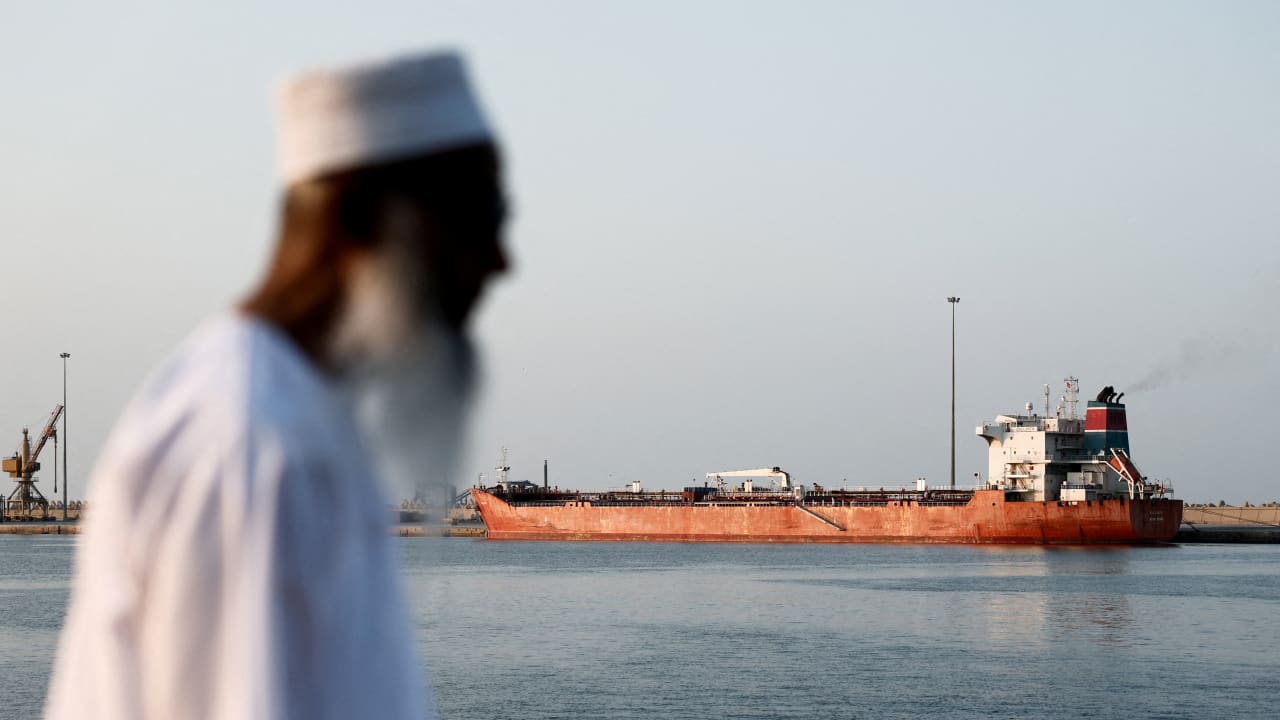
So in just over two weeks the world has already experienced what the International Energy Agency calls the largest supply disruption in the history of the global oil market. Before the war in Iran, roughly twenty million barrels per day of oil moved through the Strait of Hormuz, which is the world’s most important maritime chokepoint. Well, that flow has now slowed to a trickle and oil prices have surged. And we still don’t know what the way out of the crisis will be. Thankfully, we have a remarkable panel here today to help us analyze this situation and see where it might be headed.
We have with us today, Meghan O’Sullivan, who’s director of the Belfer Center at Harvard, a member of our board of directors at CFR, and the former deputy national security advisor for Iraq and Afghanistan during the Bush administration. We also have Ed Morse, a senior advisor and commodity strategist at Hartree Partners, and a member of CFR, and one of the world’s leading analysts of global oil and gas markets. We have Brad Setser, my colleague, a senior fellow here at the Council on Foreign Relations. And previously, the deputy assistant secretary at the U.S. Treasury and a senior advisor to the U.S. Trade Representative. And finally, my colleague from Columbia, Karen Young, a senior research scholar at the Center on Global Energy Policy, a member of CFR, and one of the top experts on the political economy of the Gulf.
So just to sort of give everyone expectations about how this morning is going to run, for the next thirty-five minutes or so I’m going to moderate a conversation with the panelists. So get your questions ready, because we will break for questions around 9:35 or 9:40. And in the conversation I’m going to start by unpacking the disruption in global energy markets, then turn to the broader macroeconomic and geopolitical implications, and finally we’ll look ahead about what this means for the future of the world economy. And I’ll aim to keep us moving briskly so we can cover a lot of ground before moving into the Q&A.
So with that, Meghan, I want to turn to you first. You know, the closure of the Strait of Hormuz is perhaps the most war gamed contingency for both the national security community as well as the energy community. And yet, the severity of this disruption in the past few weeks seems to have taken both policymakers and markets by surprise. What is it about this crisis that has confounded expectations? And how do you interpret what’s happening in the market right now?
O’SULLIVAN: Sure. Thank you, Eddie. And it’s fantastic to be here with Ed, and Brad, and Karen, three people who I’ve really enjoyed working with and talking to over many years.
So I think you’re quite right to point out that of all the—what is the most unexpected in this conflict moving into its third weeks, I think is the unpreparedness that we seem to be facing around the closure of the Straits of Hormuz. As you’ve said for decades, energy analysts, government, people, political leaders have all thought about this particular contingency. And unquestionably, the U.S. military has planned for how to secure the Strait of Hormuz under a variety of different circumstances. Now, I think what is surprising here, and what it suggests, is that perhaps there was not—that the leadership—that the Trump administration, and perhaps others, did not expect that Iran would react in the way it reacted.
And I can only really attribute that to the fact that the Trump administration, in the first Trump administration and then in the second Trump administration, we have two military actions—sets of actions against Iran at a very significant level—first, the assassination of Quds Force leader Qassem Soleimani in the first Trump term, and secondly the barrage of military attacks around Iran’s nuclear capabilities in the second term—that did not result in any real backlash from the Iranian regime. And perhaps the instigators of this next round of military force just did not anticipate that Iran would go all out and try to close the Straits of Hormuz and maximize the leverage that it has on the United States, but on the global economy as a whole.
And I think there it gets to just some assumptions that were probably made by the administration about how Iran would or would not want to find itself in a full confrontation with the United States. I would say, once the operation assassinated the military leadership, killed the supreme leader and the military leadership of Iran, then it became an existential war. And then Iran was going to use every effort and tool that it has to try to extend the war and to survive the war. And so I think it should have been better anticipated that some kind of effort to close the Strait of Hormuz would be very much part of the toolkit that Iran would be grasping for. And that we would regret not having taken out some of the military sites, that we are now moving to take out, in the early days of the war.
FISHMAN: Thanks. Meghan. Yeah, I mean, I agree with your interpretation. That it feels like there may have been some level of overconfidence coming into the contingency, you know, that has happened.
Ed, I want to turn to you for a second to look at some of the efforts that the Trump administration and the international community is taking to ease this price shock. So we’ve seen crude prices go over $100 a barrel. We’ve seen similar spikes in products, in liquefied natural gas. The International Energy Agency has coordinated the release of 400 million barrels from strategic stockpiles of crude oil. It’s the largest in history. It doesn’t seem really to have moved the needle on prices. Does that suggest, Ed, that the only way to bring down prices is to restore flows through the strait? And if so, what would it actually take to make that happen, given that, you know, the other efforts we’ve seen—like government-backed insurance policies through DFC—don’t seem to have worked either?
MORSE: Complicated question. And I’ll try to be as succinct as I can, Eddie, in answering it to the best I can. And part of the answer goes back to something that Meghan probably was about to say, but didn’t say. The really surprising thing is that the military understood that Iran had drones to use, and anti-drones to use. And the military has understood that the Ukraine-Russia conflict has transformed the use of these military weapons and instruments dramatically, such that Russia couldn’t take over Ukraine in two weeks and now it’s over two years, because of the anti-drone missiles that Ukraine has, and has perfected. So why there was no thought about this is mindboggling, in terms of the way the conflict went through.
There is really no assured way of reopening the Strait of Hormuz, which is the big dilemma. And there is no assured alternative. We are losing about ten or eleven million barrels a day of crude in product as a net number. And that means, in a thirty-day period of time, 300 million barrels are lost to the market. And a lot of those are critical barrels on the product side which cannot be replaced. So we have a problem against time with the release of the strategic stocks of the IEA. They also aren’t the right stocks, in terms of a balance of what needs—what’s needed. They’re not the right quality of crude oil. They’re not the right mix of products. We’ve already seen a skyrocketing of prices of jet fuel and of diesel. And that’s a combination of factors that begin with the crude slate that’s now available, X the Gulf, is not going to be rich in distillates. And that is a problem that is going to continue because there is no solution to it.
On the insurance side there is a relatively new situation. And that situation is that it’s very expensive to get a new tanker. And a five-year-old tanker is worth almost as much as a brand-new tanker. It’s about $100 million in value. A new tanker might cost—a new VLC might cost 130 million (dollars). So not much difference on the depreciation side. Tanker rates are enormously high. They’re at probably a record level. And that means that a tanker owner can make as much as $20 million on a long-haul tanker utilization—$20 million on a $100 million asset, and with, you know, basically $200 million worth of cargo. But if they lose the tanker they’re going to be out of the ability to make any money for a two-year period of time. So avoiding the Gulf becomes not an issue of what the cost of insurance is, but rather what the value of the lives are of the people on the tankers and what the value of the tanker itself is—something that people probably hadn’t thought about when they thought about putting in subsidized rates for insurance.
So we’re in a situation where the only solution is really an end to battle in the Strait of Hormuz. So you have to look at what might do that. And what might do that really amounts to what the punishment level is in Iran. One of the things that, you know, the Israelis have been doing is decapitating. And they’ve done it again with the head of the Basij Forces and with one of the three most important officials of the government, in Larijani, overnight. And they’re going to continue to go after leadership. And we know that the supreme leader’s successor has gotten this position by virtue of his being a hard liner, by virtue of who his father was, and by virtue of an existential threat that was in the market. He probably would not have otherwise gained this position. But chipping away at the leadership is important.
Getting in place other weapons is important. Part of it will be lasers, that are very inexpensive ways of shooting down drones. Part of it will be anti-drone drones. And there has been, you know, public notions. The New York Times had a good story on Sunday on the manufacture of anti-drone drones in the U.S. that is being stepped up. And it’s a matter of weeks now. These anti-drone drones will be effective, but not 100 percent effective. So the question still will be, is there anything that can end the closure of the strait, other than the Iranians deciding that it was time for truce? And that’s a question of wearing them down. Can they be worn down quickly enough so that we have an end of the battle in a month or two months? Or is it going to be a multi-month length situation where price is going to go up significantly?
FISHMAN: It’s a bleak outlook, Ed, but I think it’s probably helpful for us to have that dose—that dose of reality. And we can get back to sort of some of these questions in a little bit. But before that, Brad, it does feel like this could last quite some time, given both what Meghan and Ed just laid out. Tell us how this crisis is rippling through the U.S. economy, through markets, growth, inflation. Where do you see the biggest macro effects showing up? And how serious do you think they could become in the weeks and months ahead?
SETSER: Well, thanks, Eddie. It’s an important question. You know, the general rule of thumb is that for the U.S. a $10 a barrel increase in the price of oil is roughly a twenty-five basis points, or a quarter point of GDP, shift from consumers to producers. Now, the hit to the economy is a fraction of that. Some consumers just dip into their savings and spend as much on other goods as they would have, even if their oil bill has gone up. Some producers feel wealthier, spend more. And, at least in theory, if it’s a sustained shock you’ll get a bit of an offset from increased domestic oil production. So kind of a standard estimate of a $10 a barrel move in the price of oil is that it sort of lowers U.S. growth by about ten basis points, one-tenth of a percent. That maybe is a little on the low side compared to what I would normally put in, but that’s a very reasonable general estimate. So with a $30, roughly, increase in the price of oil, you would expect U.S. growth to slow by about a third of a point, and something similar to what happened to—a little bit higher, actually, of an increase in the price level, the CPI. Modest, but not entirely unnoticed.
But I think the key thing here is that $30 a barrel increase in the price of oil is not a price which reflects Ed’s scenario, where eight, nine, ten million barrels a day have actually been lost to the global market for a sustained period of time, and demand has to fall to get rid of—to match reduced supply. The minimum estimate of the short run elasticity of oil is about point-one. So if we’re really losing 100 million barrels a day—(laughs)—sorry, not 100 million barrels a day—ten million barrels a day, you would you would expect a price increase of the range of $100 a barrel, which would put oil in sort of 170-ish range. And, you know, a decent amount of uncertainty about exactly where. There are probably some nonlinear effects. But you’re looking at a level of the price of oil that would be exceptionally noticeable, and would it be at least a percentage point hit to the U.S. economy, probably more. There’s probably some non-linearities.
For other parts of the world economy, there are additional risk of physical shortages. Most of the oil coming out of the Gulf flows to Asia. Now, that doesn’t mean it doesn’t have an impact on the U.S. What it does mean is that parts of Asia will be bidding for oil that’s going to be taking the long way to Asia, and other grades of oil will be bid up. And then there are additional shortages. We’ve discussed jet fuel. LNG coming out of Qatar is going to be another one. There’s some concerns about some industrial gases like helium. So, again, you would be looking at an even bigger set of impacts. So there’s going to be a pretty big shock, the kind of shock that might lead to something close to a recession if there isn’t a resolution in the near term. The current change in the price of oil is, in some sense, a balanced probability between the probability that this lasts for a really long time and the possibility that the U.S. declares victory, Iran reciprocates as we’ve won, and the straits reopen. In which case, the global market is well supplied, and it falls—the oil price falls relatively quickly back to its pre-military operation levels.
FISHMAN: Got it. Thank you, Brad. That was a really helpful rundown.
Karen, I want to go to you. I mean, one part of the global economy that seems almost certain to be affected by this is the Gulf and the Gulf states. You know, in recent years many of them have made significant strides transitioning from being kind of pure energy producers to being more diversified economies. And yet, I just saw this morning that British Airways is now canceling flights to the Gulf. And there are a number of estimates that suggest that you can have really substantial GDP contractions in different GCC states this year. So can you just help us understand how this shock is being felt within the Gulf? And is it similar across all the GCC states, or are there specific Gulf countries that are feeling the pain more acutely?
YOUNG: Well, thank you, Eddie. And just fabulous to be with this panel. Respect all of your work so much.
Yeah. I mean, the point is well taken. The GCC states as a unit are not feeling this pain the same way. And they have different, you know, capacities, certainly in continuing the ability to earn revenue from oil exports because of pipelines. So that’s the first kind of differentiating factor. Many people have seen the Goldman Sachs estimate that came out last week which was basically looking at an end of hostilities by the beginning of May, and a gradual resumption of flows through the Strait of Hormuz, would mean that we would see, on a yearly basis, a contraction of GDP in places like Qatar and Kuwait of about 14 percent, in the UAE of about 5 percent, and 3 percent in Saudi.
And the difference there, that big jump, is on those alternative routes, the pipelines that Saudi Arabia and the UAE have, which are really lifelines right now. Problematically, the pipeline that goes in the UAE to Fujairah, the Fujairah loading facility was hit. And we’re seeing kind of the stoppage of Abu Dhabi ADNOC’s offshore production. And one onshore oil field, the Shah Field, was hit just in the last day or so. So, you know, all of the estimates that we see change quickly when we have, you know, continuation particularly of attacks on oil and gas infrastructure.
So all GCC states are not the same in terms of how they will, you know, bear the impact of this crisis. Oman, sitting outside the Strait of Hormuz, we will probably see a 1 percent impact in terms of their hit to GDP growth this year. But Oman has also seen attacks from Iran. So they are not necessarily immune to continuation. So, I mean, all these contingencies are on the duration of hostilities, on the kind of price over volume that oil is still getting out and contributing to oil revenue. You know, a non-GCC state, but Iraq is especially vulnerable. So 90 percent of Iraqi government revenue comes from oil exports. And right now, they’re not getting any out.
And the one kind of pipeline that would go through Iraqi Kurdistan, the Kurdistan Regional Government is not opening. And that has to do with longstanding tensions and, you know, disagreements between the KRG and the central government of Iraq. But it’s not helping right now. And so the vulnerabilities are definitely different. You mentioned, of course, in terms of the non-oil economy. And, you know, the UAE is the most diversified of all the GCC states, but it’s received the most attacks from Iran. Yesterday we saw the closure of UAE airspace for a limited period of time. That’s devastating to just the notion of, you know, being a hub for logistics, for tourism. And that is really, you know, in question right now.
I would, you know, make one point. There’s kind of a difference right now in the way people are interpreting this crisis and thinking about it as it impacts globally versus regionally. And there’s some people who see the sky is falling, and this is absolutely a real energy disruption. But then there are other people who say, well, look, wait a minute. The non-oil kind of exports and share of the—kind of, you know, global share of GDP of the GCC states is about 1 percent. They are not major exporters or manufacturers of other things. And so, you know, maybe this was some of the administration’s calculation. You know, this will be a hit to oil prices, but we have a well-supplied market. It’ll, you know, rebound relatively easily. And this part of the economy is not a major kind of conduit of other things.
In my view, that is shortsighted because it kind of confuses—and Brad would be a better, you know, explainer of this than I would—but it confuses trade and investment, right? And so when we see the real power of the GCC states, particularly Saudi Arabia and the UAE, it’s their capacity as allocators of capital. And right now that is something that we don’t know how it will change. We don’t know what, you know, the kind of sovereign funds are thinking. And it’s unfortunately, I think, a view from the United States, and perhaps the administration, that sees these as just oil wells and not as dynamic parts of our growing economies, especially across emerging markets.
FISHMAN: So what I take from Ed’s point, that this could be a prolonged crisis and that there’s no assured way to open the strait in the near term absent, you know, the Iranians effectively agreeing to, from Brad’s point that this could actually create recessionary conditions if it lasts as long as it potentially could, and for yours, about some of these—I mean these numbers, GDP contraction of 14 percent in Qatar and Kuwait, that just sounds really, really painful.
Meghan, I want to go back to you because, you know, it does feel like, in some ways, this challenges the whole notion that the United States could become energy independent. You know, over the last decade the United States has become a net exporter of oil and gas. And the shale revolution really, I think, still—we still haven’t appreciated just how remarkable that growth has been in the U.S. output of both oil and liquefied natural gas. And yet, at a time like this it does make me wonder, well, what is this all for? Is the U.S. actually shielded from this type of an oil crisis? And also, if you—you know, if might too, does this have any impact on sort of the longstanding goal of multiple American presidents to pivot away from the Middle East to other priorities like China, or this administration’s desire to focus on the Western Hemisphere?
O’SULLIVAN: A whole great set of questions, Eddie. I’ll try to take them each and do it succinctly. So first, your question about, like, what is this energy independence all about if we find ourselves here? And I think this is a question that many Americans are probably asking themselves. They’ve been hearing about America’s energy prowess and how America is energy independent for quite some time. And then at this particular moment it probably doesn’t feel that way, as the price of gasoline goes up close to, you know, almost a dollar in the last two weeks. And here, I think the answer is known to many on this panel, but it’s worth reiterating. That energy independence isn’t the same thing as what we might call energy autarky. Like, we don’t—energy independence never meant that America was meeting all of its energy needs independently and was disconnected from global markets. That energy independence could mean a number of things.
I mean two interpretations. One is the kind of more literal interpretation, that America has been a net energy exporter, and now a net petroleum oil and refined product exporter. Meaning that it’s exporting more than it’s consuming. And that is certainly one form of energy independence. The problem is, when it comes to the kind of crisis we’re seeing, of the magnitude that the other speakers have discussed, America is still very, very deeply integrated into global markets. It both exports oil and imports oil.
And so because oil is set—the price of oil is set on the global market, and there’s all kinds of ways in which a price hike, a supply disruption in the Straits of Hormuz, and a price hike that emanates from conflict in the Middle East reverberates through the whole global system, Americans find that they’re experiencing price spikes. Not exactly in the same way they would if they were importing all, you know, oil from the Middle East, but, you know, in a similar kind of immediate fashion. The reality is that, actually, in 2024, the United States only imported 2 percent of its oil from—or, 2 percent of its consumption from Saudi Arabia. So we’re not importing a lot of Middle Eastern oil. But we are tied to the global market. And that’s why we have the price increase.
Another interpretation of energy independence would be one that I’m more sympathetic to, which is simply the idea that policymakers don’t need to think about energy as centrally as they have had to for decades when they think about what they might want to do or need to do to protect America’s broader national security interests. And I’d say certainly we saw that here. I think it was mentioned, or at least kind of suggested in someone’s comments earlier, that probably the Trump administration looked at the state of global oil markets, the sense that they were oversupplied and that America is the largest producer of oil in the world and a net exporter, and felt like, you know, it didn’t really have to think too seriously about an oil shock in calculating what it was going to do to advance other non-energy interests in the Middle East. This turned out, I think, to be a miscalculation, as we’re seeing, but certainly the sense that, you know, energy is no longer the driving force behind American foreign policy I think is a powerful one.
And then I’ll just end on your question about the Middle East. And this is a broader geopolitical question, not just an energy or economic one. In my mind, I find it extremely hard to imagine a world in which the United States is able to pivot away from the Middle East. I don’t really like that that verb, “pivot.” But I think that this conflict and the lasting effects of it are going to require the United States to maintain a significant engagement with the Middle East going forward. Now, what the nature of that engagement, I think, is still very much to be seen, because it has to do with how the conflict ends. If the conflict ends with just an entrenchment of the regime in Tehran, it is possible that this could be managed—you know, this could be a problem of containment.
If this ends with the regime collapsing, with Iran fragmenting and creating a lot of instability in the region as a whole, this might require more American involvement over a longer period of time. I’m not saying that’s my base case. I’m not predicting a regime collapse or a country fragmentation. But certainly in the realm of—you know, in the scope or the spectrum of possible outcomes that you think policymakers would be thinking about, this would be one of them. And could be one that would involve more American engagement in the Middle East for the foreseeable future.
FISHMAN: Yeah. I mean, there is, like, that irony, right? Where if the Gulf states feel more insecure in the wake of this, and given that we still are in a global energy market, we actually might have to double down, right, and increase our security—you know, the security umbrella we provide over some of these partners in the region.
O’SULLIVAN: If I could just say one thing, and Karen will have more to say about this. But I do think the Gulf states will be thinking about their relationship with the United States, and kind of appreciating that they were in a very difficult position where they were housing American bases, but they didn’t have, you know, alliances or defense agreements with the United States to defend them in case they were attacked. And so it could mean—you know, one way this could play out is that Gulf states, you know, continue to house American bases and be close to the United States, but ask more of the United States in terms of what kind of defense agreements they do have. And that would be, again, one way in which the United States might get more involved with the Middle East after this war, rather than less.
FISHMAN: Yeah, Karen, if I could bring you in there, I’d love to hear your thoughts on that. And additionally, I also want to talk about what the U.S. has been hoping for in the Gulf. I mean, it seems like a big—a lot of our hopes about our leadership in artificial intelligence have become tied to the prospect of building very large datacenters in the Gulf. We don’t have the access to power and energy here in the United States. It’s one of our, I think, comparative disadvantages relative to China in the AI competition. And we were sort of looking at the Gulf to fill that void. So I wonder if you can sort of piggyback on what Meghan was talking about in terms of what the Gulf might be expecting from the U.S. And then in turn, can the U.S. still kind of look to the Gulf as a key to the AI race as well?
YOUNG: Thanks, Eddie. Yeah. I mean, I agree with Meghan’s assessment. This will absolutely make the GCC states think about their existing basing relationships, their procurement relationships. And the U.S. security umbrella really has been under the microscope now for many years. I mean, we saw the 2019 attack in Saudi Arabia on the Aramco facilities at Abqaiq and Khurais. And that’s what led Saudi Arabia to begin its rapprochement with Iran, that China helped facilitate by 2023. So they have had lots of doubts.
There have been cracks sort of in the surface of this for many years now. I think what you’re going to see is absolutely diversification in terms of where they buy weapons and weapon systems. They’re going to spend a lot more money on defense. And that takes away from other diversification efforts. But it, I think, in many ways reinforces their view of being all-of-the-above energy giants. So it will actually make the Gulf states more invested in their supply chains with China on renewables, in their capacity for manufacturing those kind of components at home. They’re just going to be diversifying in every way they can. And that will still mean a U.S. partnership, but it’s going to be with, I think, a lot more caution.
And in terms of the ability to allocate capital, particularly into new technologies, this is where the Gulf sovereign funds have been incredibly important. And I think they will continue to be so, maybe not just necessarily only in their own home geographies. And it always has been their intention to, you know, deploy capital in the United States for technology to support many of our companies, but to do that on a global scale. So you’re going to see the construction of datacenters. You know, of course, these existing plans to create, you know, cables that run up the Red Sea corridor, across the Indian Ocean to South Asia, that are both electricity transits and data transits. So, you know, the Gulf states are going to be more invested in in that. And that is their future.
I think we, as the United States, have not necessarily acknowledged where the growth will be, where that opportunity is. We’ve seen them too much as just, you know, piggy banks and oil wells. And that is—that is just not accurate. But it is—you know, and they feel that too, right? They feel particularly exposed. They didn’t choose this war. They are not sad to see Iran weakened, but also, as Meghan said, it depends on what the cessation of hostilities, what end state that leaves Iran in, and how long any sort of transition to a new order in Iran takes. And the longer it is, and the more fragmented it is, if we get the case of, like, warlordism—which the Israelis would be perfectly happy, I think, to see, a really fragmented and disorderly Iran, that is not in the interest of the Gulf states. They need stability for the investment climate, for tourism, for the buildout of these logistic hubs. And continued threats by, you know, guys in dinghies, or suicide boats attacking tankers, or any kind of just major trade transit points is going to be a problem for them.
FISHMAN: No, thank you for that, Karen. So we’re going to break for questions in just a moment, but I have two more topics I want to quickly address. And first for you, Brad. So you and I first got to know each other working on Russia sanctions after the 2014 Russian invasion of Ukraine and annexation of Crimea. We mentioned earlier that one strategy the U.S. has had to try to tame oil prices is this strategic stocks release from the SPR. But they’ve also eased sanctions on Russia. And that’s been a big part of the strategy for the Trump administration. How do you see that playing out for Russia? How much of a windfall is it? And do you think it’s actually going to affect the prices of global oil?
SETSER: Sure. Maybe I’ll start with one comment on Saudi Arabia as well, because I do think it’s important to recognize that the Saudi financial position was quite different than the financial position of the much wealthier Emirates, Qatar, Kuwait. The Saudis actually were running a meaningful current account and fiscal deficit when oil was at sixty. Their break-even is around ninety. And if they’re not getting all the oil through the East-West Pipeline, it’s actually a little bit above that. So the Saudis have not been in a position where they are a net supplier of capital to the global market. They’re actually a net borrower. And they have to borrow to invest, as well as—to invest abroad, as well as to invest at home. I think that’s relevant when thinking about Russia, because Russia has been—even before the sanctions, even before Russia’s special military operation in Ukraine—Russia had one of the lowest break-even oil prices of any of the big oil exporting economies—somewhere between $30 a barrel and $40 a barrel.
What does that mean? Well, it’s meant that Russia has been pretty resilient, actually, in the face of fairly severe sanctions. And now, with those sanctions being modulated, effectively lifted I would guess, Russia is going to benefit from a quite significant windfall. Some of the sanctions had sort of maybe finally started to bite a bit earlier this year, when volumes were down and the price of Russia’s export blend, Ural, all was around fifty. That was a bad combination. You could see that revenues from the oil export tax were maybe half what they had been at some points in the previous year. Kind of the beginnings of a bit of a squeeze. That squeeze has disappeared. Ural barrels are selling at ninety to one hundred. I don’t think there’s any will to try to keep India from getting Russian barrels. The U.S. has signaled at least a temporary lifting of the sanctions. I assume those sanctions are lifted throughout the period when the straits are closed.
So if you combine that—more volume, huge increase in price—Russia’s finances have basically gotten topped up, in a way that have taken away any real financial pressure on Russia to limit its operations in Ukraine. And it does provide the possibility that this is the beginning of a new regime where on a sustained basis instead of the sanctions getting tighter, the sanctions may be progressively eased as well.
FISHMAN: I share your analysis. It’s hard for me to see the Trump administration reimposing sanctions on Russia. I expect that the license that was issued will probably be renewed, but, you know, we will find out in just a few weeks. Ed, one final question for you, and then we’re going to break. I’ll turn it over to Olivia for questions from the audience. I want to play out an optimistic scenario. Let’s say there is some sort of a deal that occurs in the next couple of weeks, and the Iranians do agree to reopen the strait, to stop threatening shipping. Do you think that we return back to the status quo antebellum? Or are we going to have sort of a sustained level of risk around the Strait of Hormuz moving forward, given this known risk from Iranian drones?
MORSE: So the issue is, what is the change going to be, not whether there’s a change, and how people will be. My judgment is that the change will be nothing like what happened after the Arab oil embargo in 1973-74. That major change was structural. It resulted in OPEC understanding that they had a role to play in putting a floor under prices and getting their own incomes to a higher level. And it led to the nationalization of the seven or eight sisters, depending on how you define them. So the world in 1970 was one, Russia aside, in which seven or eight companies produced most of the oil in the world. And by the end of that decade, they were—they were crude oil short and had to look for oil elsewhere. So that was a structural change that I don’t see happening now.
I do think that we’re going to be seeing changes depending on which country we’re talking about in the Gulf. Just as there was a change in Kuwait, basically, after the Iraqi invasion of Kuwait. It was a more open society. It was a more feisty society. It was one more willing to invest at home. And it has never recovered from the Iraqi invasion, even with the U.S. help in freeing up and reuniting Kuwait. So I think there will be, you know, significant change at home and abroad. The Saudis will undoubtedly accelerate their energy diversification. They’re already trying to accelerate it. They are opening themselves up for the first time to foreign investment, in the sense that they’re allowing foreign companies to make money, and investing in critical minerals, and investing in metals, investing in AI, and in power generation. So there is a structural change of work that we’ll see country by country.
I want to note something before you turn it over to questions. And that is a comment on where Meghan was going. And I think it’s important to look at two other aspects of what she was talking about, with respect to U.S. energy independence. One is the government follows something called energy dominance, using energy for foreign policy purposes in a way that has been unique to this government. And that’s worth talking about a little bit. But more importantly, energy independence disguises as a slogan the fact that the United States is not one country when it comes to the global economy, let alone the global energy system. It’s six countries. We have Alaska, which is essentially an exporting unit. We have the U.S. Gulf Coast, which is essentially an oil and gas exporter. We have the East Coast and the West Coast, which are essentially importers from other countries. And even if the Jones Act were lifted the economics wouldn’t work. And that’s a very complicated subject, because the Jones Act lifting has failed every time the government has done it, except for a small emergency.
And then we have the Canadian border, most of it which is a two-way street for energy flows—U.S. to Canada, Canada to the U.S. And then there’s a small part of the northwestern part of the U.S., not coastal, which is totally self-sufficient. So that’s six different countries. not one energy independent entity, except for a very small part of the United States. And I think that makes a difference in thinking about the use of energy as an economic instrument and the dilemma that the U.S. is in, much of the same way that other oil importing, net importing countries, are in. I’ll leave it at that.
FISHMAN: Yeah, no, thanks, Ed. That’s really illuminating and, I think, a really helpful way to view this situation that I hadn’t done before.
So at this time, I would like to invite members to join our conversation with questions. And a reminder that the meeting is on the record.
OPERATOR: (Gives queuing instructions.)
We’ll take the first question from Federico Sequeda.
Q: Hello, everyone. This is Federico from the emerging markets team at Morgan Stanley Investment Management. Thank you all for the call.
A question for Ed. And, Ed, really great to hear from you. So, as you said, the U.S. is integrated into the global oil market, but I’m curious your views as to the political economy of this, especially if the conflict continues for some months. Whether the U.S. administration may try to break that integration—try being the operative word—(laughs)—with export taxes or any sort of other mechanism to try to drive down U.S. crude and product prices relative to a more global or seaborn benchmark.
MORSE: So that’s—Federico, that’s a very important question. And I’d say it was—it would be better dealt with and more rationally dealt with if there were not a conflict and we were not in the middle of a conflict. And the problem really goes back to 2013-2014, when President Obama lifted the restrictions on U.S. exports of oil, and, with congressional help, lifted the restrictions on natural gas exports. When that was done, there was not a thoughtful process that went into the situation. And it wasn’t because nobody—or very few people, but there were some—but very few people said that the shale revolution was going to be transformative. The administration thought it was going to be incrementally—you know, small, making a small difference. They still saw the U.S. as a net importer at the time.
So they didn’t think about the old-world system of having a strategic petroleum reserve for a net importing country. They didn’t think about potential restrictions on exports. They didn’t think about other ways to balance a market. And I’m afraid that if the government does it in an emergency condition, we’ll have new emergency procedures that will gum up the works going forward. But, yes, I think it could have been better thought through. And certainly, you know, government should have the ability that maybe China has used a little bit too harshly, that is to say China is worried about its inventory and therefore is saying, too bad, neighbors, we’re not going to export our diesel to you anymore. We’re not going to export jet fuel until you hear from us again.
OPERATOR: Great. And we’ll take the next question from Matthew Aks.
Q: Hi. Thanks so much, everyone. Matt Aks from Evercore here.
This picks up a bit on the last question Eddie asked about the outlook for Strait security. And my question is, is there any sort of near-term tipping point where you think Iran’s capabilities would be sufficiently degraded to where the risk return of trying to get through the strait would actually tip? And the reason I ask that is because it strikes me that a lot of damage is still being done to tankers that are just sitting in the Gulf, you know, anchored nowhere near the strait. And so, you know, what is the calculation eventually that those tankers are going to have to make, especially as their supplies may be dwindling? Thank you.
FISHMAN: Who is it directed to?
Q: Welcome if you want to start, Ed, and then anyone else who wants to come in, certainly.
MORSE: Yeah. So I honestly think that this is an issue that requires a decision of the Iran government to say, we’ve got to move on. We’ve got to move forward. We have to have the workings of a reasonable ceasefire, knowing that the world now knows that we have the ability to close the Strait of Hormuz. So the issue really is at what point will the governing body in Iran decide that, you know, it’s time to move on, that the pain is growing faster than the benefits of the counter attacks. And that could be a matter of weeks. It could be a matter of months. But I think it’s eventually likely to happen.
O’SULLIVAN: Could I jump in very briefly, Eddie, on this point as well?
FISHMAN: Yes, please do, Meghan.
O’SULLIVAN: Sure. Just two points. I agree with Ed that certainly the most sustainable way of opening the straits is with some kind of end to the war, some kind of negotiated end, preferably where the intentions of the Iranians are clear. But I would say two additional things. First is that there is a precedent of the U.S. escorting tankers around the strait, in and out of the strait, during periods of conflict. You know, this happened during the Iran-Iraq War in the 1980s and it happened again a couple of times subsequent to that. So, you know, there is a scenario in which the degradation of Iranian capabilities around the strait is sufficient enough that there could be some escorts. So I wouldn’t rule that out. It’s certainly not the kind of situation that’s going to restore full confidence. It may not restore the ability to have the full flow of tankers moving in and out of the straits. But it could certainly move us from where we are now, which is an effective closure, to something much more.
The second possibility that I would highlight, and this has come out in the news as we’ve seen a little bit about Iran toying with idea, or at least some parts of the Iranian government, of allowing selective passage, of certain tankers from certain countries are allowed to go through the strait. This, of course, could be very hard to operationalize, but, you know, it could suggest that Iran perhaps would see it of value in terms of using the strait as a political tool to try to, you know, create or maintain—or to prevent cohesion around the desire to have Iran open the strait, you know, to kind of hive off potential supporters from the United States by allowing selective passage. Of course, because of the way the global market works this would be of benefit to everybody, if more tankers got out, not just to the countries who happened to own the tankers. But it could still be a tool that Iran uses in the larger political execution of the war in trying to win over friends and allies.
FISHMAN: Yeah, and maybe one other thing—and Meghan, if you don’t mind, because you made me think of something. You know, one of the things, I think, that’s surprised me the most about this crisis, I totally got wrong, was that Iran is the one country from the region that is still selling oil. And it’s interesting, because it shows that—I mean, clearly, I mean, the Trump administration has shown that they can interdict tankers very easily, right? They’ve done that to Venezuela. They could have destroyed Kharg Island’s oil facilities. They only destroyed the military facilities. What does this tell you about the strategic dynamic right now in the Gulf, and where the U.S. really stands in the conflict?
O’SULLIVAN: Well, I think, you know, what is very surprising—and I’m sure of great concern to policymakers in Washington and elsewhere—is that Iran—in terms of the strategic picture, Iran effectively is controlling the straits and using that for economic and the political execution of the war. It has a very real leverage over the United States and other members of the global economy because of this particular chokepoint. So otherwise Iran is an incredibly weak position, especially vis-à-vis Israel and the United States. But because it is able to effectively control this twenty-one-mile, you know, passage, it is really batting way above what you would think it would in terms of exacting a price from the United States, and otherwise.
FISHMAN: That’s helpful. So we’re going to go—I know, Olivia, there’s some additional questions. Other folks, if you have questions please do feel free to raise your hand in the Zoom app. But, Olivia, back over to you.
OPERATOR: Yes. We’ll take the next question from Chris Isham.
Q: Thank you very much. Very good discussion.
I just have a follow on to this point we’ve been on for the last few minutes, which is: Is there a scenario in which—talking about the dynamics inside the Gulf and the fact that Iran is exporting oil—in which the U.S. could exercise leverage via Kharg Island, shut down Iran’s ability to export oil? Eddie, as you mentioned, the U.S. has hit military targets, but not economic targets or oil targets on the island. There may be other ways, blockades, shutting down power sources, et cetera, that could be exercised. Is that a possible scenario? And could that exercise—hat kind of leverage could that give the United States in this picture?
FISHMAN: Meghan or Ed, do you want to start?
MORSE: Happy to start. Oh, Meghan, you can go.
O’SULLIVAN: Let me just say two words about Kharg Island and then ask you to address the larger piece. You know, there’s a lot of speculation about what the intentions are in Kharg Island, and whether or not the U.S. administration is interested and able to take control of Kharg Island. We’ve seen that there is a—what is called a Marine Expeditionary Unit, a MEU, that is—has left Asia and is moving towards the Gulf. And I think there are a lot of questions about whether that is the force that—it certainly is a force that would be able to undertake that kind of operation. Whether or not that’s the intention of the U.S. administration, I don’t know. But that would certainly be one way in which Iran’s ability to export oil could be terminated. Ninety percent of their exports go through Kharg Island. And that would be an escalation of the war, but it would also really put a strong chokehold on Iran and its ability to export and would probably increase or change the dynamics in a pretty significant way. Ed, you may have more details.
MORSE: I agree with that. And I would add to it that the other option is to interrupt shipping from Hormuz on Iranian vessels. And the U.S. has been quite adept at interrupting shipping. It’s done it with the Venezuelan vessels. It’s done it with Russian vessels. And there’s no reason why, given the number of vessels coming out of Iran, whether U.S. could not make a very strong dent into the Iranian exports, and therefore the Iranian revenue. That would put a squeeze on the country.
O’SULLIVAN: And just one point about why not use, you know, air power to take out this capacity on Kharg Island? I think that’s a legitimate question. My guess is it just has to do with the fact that once that happens, that capability is going to be very hard to restore. And certainly, you know, if there is a different kind of government in Iran, one that the United States and others want to support, it will certainly need to have that export capacity, to have revenues to build itself. And, of course, the global economy is likely to be interested in Iran’s oil as well. So I think that’s why other options for shutting down Iran’s export capacity right now are being explored.
FISHMAN: Thanks, Meghan and Ed. Olivia, you want to take the next one?
OPERATOR: Yes. We’ll take the next question from Steve Freidheim.
Q: Hi. Steve Freidheim, Cyrus Capital, fellow board member with Meghan on the Council.
Two-part question, so both related to China specifically. First of all, on their substantial reserves—and, perhaps, Brad, Ed, you could address—is the substantial reserves, which, what, 120 days, how that figures into your calculations of the impact of time on the price of oil. That is, if you’re looking at 120 days, at eleven, twelve million barrels a day, are you factoring that in? Are you factoring into drawing these down, or not? Second, I guess more to Meghan, do you see China being drawn into this conflict, given their cushion that they have they don’t need to act now, but at some point are they going to get drawn in? And if they do get drawn in, in what way do you think they are going to act? Thank you.
FISHMAN: Brad, do you want to—do you want to start off?
MORSE: Do you want Meghan to, since she’s got more limited time than we do?
O’SULLIVAN: Go ahead, Brad. I’ll come in, because you may have points on China as well.
SETSER: Well, my points on China will be—I mean, my operating assumption is one of the reasons why the price of oil has only shot up to thirty—and, to be fair, thirty is the price in the North Atlantic. There’s been—there are higher prices in the oil-starved parts of Asia. But one of the reasons is that China does have the option of radically reducing its imports and drawing on stocks. I don’t have data that says that it has started to do so, but my operating assumption is that it will. And that does, you know, at the margin, take some of the heat out of the market.
O’SULLIVAN: So, Steve, good to see you, or hear you. On China, I think—I agree with Brad’s comments. I would say that this is obviously having a big impact on China. Seventy percent of its oil consumption, or 70-plus (percent), is imported. So I think it will do a couple of things in China. China does have more tools to respond to this. The cushion that you mentioned, and Brad mentioned, but also its ability to recalibrate demand, I think, is stronger than most other economies. And its ability to demand fuel switching, I think, is also higher than other countries. And so those will be two additional levers. And I would say, in a broad sense, this really vindicates China’s, I would say, long-standing strategy to try to move in the direction of other forms of energy, to get away from its dependence on imported energy. So I think it validates China’s energy strategy in a pretty significant way.
I think your question was more was—would China become involved in the conflict in some capacity? And I would say that it’s hard for me to imagine exactly what that would look like, except that China might try to get involved diplomatically. You’ll remember that China—and Karen might want to comment on this—China, you know, helped broker this Saudi-Iran detente a few years ago. It’s hard for me to see where the United States or others would really welcome China as a diplomatic actor, but that’s one place where China might try to get involved. In terms of military capability, the Chinese absolutely are not interested in getting militarily involved in the Gulf. I think there’s certainly—perhaps there would be an interest to have them come in and help escort tankers. I think President Trump is trying to make the point to Americans and to others that a lot of this oil is not going to the United States, and therefore people should take responsibility for the oil that they’re going to consume.
I just think that this is an operation that the Chinese are going to be very reluctant to get involved with, because there is risk associated with this. And certainly, China does not want to insert itself ostensibly on the side of the United States in a war with Iran. So I don’t see the Chinese becoming involved in a meaningful sense in terms of moving the needle on the playing out of the war. Perhaps as it comes to a close the Chinese might come in. I’d be interested to see what Karen would say as well.
SETSER: Let me chime in with a couple of other thoughts. One thought is that, in addition to supporting China’s general desire to move towards an electrified economy which is a little less oil dependent, this very much ratifies China’s decision to stockpile oil rather than U.S. Treasurys. And, you know, China has done more than any of the other big powers, us included, to build up strategic stockpiles across a whole range of commodities. And this really has reaffirmed the importance of that strategy. The second one is in gas, where China is—they’re not the swing producer, but they’re the swing source of demand. And so they will burn coal. And that can free up some LNG cargos from Australia and other places to meet demand elsewhere that was met by Qatar. So that’s a very expected source of flexibility in what’s going to be a very tight LNG market in Asia.
FISHMAN: Karen, can we have you come in on the potential Chinese diplomatic intervention?
YOUNG: Yeah. I mean, they took a lot of credit for the 2023 rapprochement between Saudi Arabia and Iran. Really, those were negotiations that had been hosted by the Iraqis for many months. But, all the same, they got the credit. And, yeah, it’s possible that they could try to do so again. I think they’re also just really showing strategic patience. And in this case, Iran has sort of anticipated that the United States might, you know, ask China to be more interventionist. And the Iranians are basically, like, you know, if you’re not part of this conflict, your oil can travel to you freely. How they differentiate in that transit, and it can get very crowded and messy especially if we see military escorts of tankers, but that is essentially where we’re headed. And because of their stockpiling, because of their flexibility in their domestic energy use, they can also last this crisis a bit longer, right?
So, you know, I think China will probably just wait it out. And they have very good relationships with the GCC states. Iran is sort of in the palm of their hand. They can, you know, use them when they want to, or not. And they come out, certainly, I think, in a better position and less vulnerable position than perhaps some other economies, especially economies that are more reliant on LNG and gas for industrial use. So Europe, looking much more vulnerable right now than the Chinese economy.
FISHMAN: Great. Thanks, Karen. I think we can go—oh, Meghan.
O’SULLIVAN: No, I just wanted to wave goodbye. As you know, I have to drop off at 10:00, and it’s a little after. Really enjoyed this conversation. Thanks to all.
FISHMAN: Yeah, thank you, Meghan, for being with us this morning and sharing all of your great insights. Olivia, I’m going to go back to you to take the next question in the queue.
OPERATOR: Yes, we’ll take the next question from Stan Polovets.
Q: Hello. My question is for Ed Morse.
Ed, how do you think the relations between Israel and the various Gulf states will change after the end of the war—militarily, diplomatically, economically?
MORSE: Thanks, Stan. And I think it all depends on which country you’re talking about. So I think the good relations that Israel has had with the UAE is going to continue. The UAE has been, you know, hurt by the Iranian response, particularly to them. And they were hurt by Iranian action even earlier. But I think it’s really going to be, you know, kind of differentiated across the countries. Bahrain, in particular, is in a situation that it never wanted to be in. It’s been attacked by Iran for things that it was not responsible for, other than housing American armed forces. But no actions were taken from there. So I think it will be varied and it will be very complicated. And their own relations with Iran will very much be dependent upon what the next Iranian government looks like. We probably don’t have time to speculate on that, but that certainly is a possibility.
FISHMAN: Thanks, Ed. Let’s go to the next question, Olivia.
OPERATOR: We’ll take the next question from Abhinav Ajmera. Hi, Abhinav. You’re able to speak as you’re now unmuted. Looks like we’ll go to the next question, from Augustinas Savayles (ph).
Q: Thank you. I have a question on Russia. So taking into account potential windfalls for Russia’s budget and strengthening its position vis-à-vis Ukraine, does it even makes sense to you, geostrategically, to lift sanctions from Russian oil? Was the benefit for the global markets that significant?
FISHMAN: I’m happy to—happy to share my thoughts. But maybe, Brad, do you want to talk about maybe some of the—how this potentially is affecting prices, if at all? And also maybe what’s happening with the price of Russian Urals crude and their barrels, since the sanctions have been eased?
SETSER: Well, Urals has gone from basically fifty to just under—last I checked—just under 100. So big move up. Does it make sense? Look, when you’re short barrels, you’re short barrels. And there are barrels—there were barrels floating around available to meet India’s immediate need. And if those barrels weren’t going to come from the floating Russian crude, India would have had to go out into the market and bid up the price of other barrels. So it’s always a pragmatic consideration. I think it makes sense to certainly allow the floating storage, the Russian barrels that were close by, to meet India’s need. India has some of the lowest stocks, so there’s a sort of more acute need there.
And, you know, just the reality is in the global oil market, I think it’s just very, very hard to sustain closed straits and hefty sanctions that take your next biggest source of supply, net supply, off the market. That pushes oil up into the stratosphere. So in some sense, I don’t think there is much of a choice, unless you’re in a world where you’re simply immune to any concerns about how this impacts the global economy.
MORSE: In addition to that, had India not gotten the Russian oil it was in the process of negotiating with the U.S., which would be more expensive. And it was in the process, we know from Trump’s statements, that one Indian company, Reliance, was about to announce investment in a new refinery in Texas. So there were, you know, benefits that, you know, Trump apparently is allowing India to continue to think about buying American crude, investing in the U.S., while giving it the benefit of being able to not bid up prices around the world even higher by getting the Russian oil they were originally getting.
FISHMAN: Yeah, one thing—one thing to add to that is, you know, the Trump administration actually has done two licenses. The first license just allowed India to buy Russian crude. And then a week later, they expanded it such that anyone can buy Russian crude. You know, for the last couple years there’s really only been two big buyers of Russian oil—you know, China and India. And so the thing I’m watching out for with this second license, are there other buyers who maybe previously were potentially worried about secondary sanctions or the stigma of buying Russian oil, that are going to get into the market for it? And I think that would be interesting. So far, it does—to Ed and Brad’s point—it does feel like this is primarily about India and about, you know, giving India comfort that they can buy the Russian barrels that have been stuck in floating storage. But if this does, you know, completely change the risk around Russian crude, you could wind up seeing an even bigger benefit to Russia, because it wouldn’t just necessarily have a windfall in terms of prices but also diversifying its customers.
OK, Olivia, I think we have another question in the queue.
OPERATOR: Yes. We’ll take the last question from Abhinav Ajmera.
Q: Hi. This is Abhinav from Lutron Electronics.
My question is, how do you see this war affecting Saudi Arabia’s efforts to diversify its economy beyond oil, and the UAE’s positioning as a global hub that attracts top talent, investment, and long-term residents?
FISHMAN: Thanks. Let’s go to Karen first with that, and then others from the panel can jump in.
YOUNG: Sure. Yeah. This is absolutely a threat to the logic of Vision 2030, which requires foreign direct investment, requires, you know, the location of manufacturing facilities. And of, you know, more expatriates, more human capital as well. So right now when people are trying to get on planes and get out of the Gulf, not everybody but many people are, and many people particularly within financial services are probably reassessing their commitment for being located there full time. And, you know, over time there have been movements of groups of people and different, you know, kind of commitments from firms in the region. So this may be just another blip, and it could—you know, could resume in a couple of years. But it will be a hit. And there’s a big difference—I think Brad explained pretty well—in terms of the fiscal positions of Saudi Arabia versus a much smaller country with a smaller size of a national population. UAE, you’re taking care of less people. You can spend very differently. Saudi Arabia will really have to demonstrate, first of all, its capacity to defend its people. And it has been doing that. UAE has as well. But that is going to require a redirection of some spending, and that means taking away from other projects.
Now, there was already, you know, very much a sort of re-strategy or new strategy of domestic spending, especially within the PIF, underway, and sort of plans for working on those twin deficits. And, you know, again, it just sort of depends. We just don’t know the capacity to continue to get volumes out of the East-West Pipeline to Yanbu at high prices. That could still be quite comfortable, right? That could be, you know, not such a huge change of the deficit position from what was already forecast. But we just don’t know how long this is going to last. And we don’t know about the increase or escalation of threats to energy infrastructure. And that would certainly change all of the calculations for, you know, the non-oil economy and the other industries which are so important for their development. So it’s a big “if.” We just don’t know. I do think, particularly the UAE, can rebound from this. And one thing that the Gulf states are very good at, that they demonstrated during the COVID pandemic, is that they have a large capacity for controlling information flow and for, you know, people’s safety. And they’re doing that again, and I think in a quite commendable way.
FISHMAN: All right. We have about one more minute. Ed, do you have a final word that you want to make?
MORSE: It’s not a final word, but it’s a comment. You know, people are not going to be building glass apartment buildings or office buildings as frequently as they have been in Dubai and other parts of the UAE. But the attraction for people to be there and not pay taxes in the U.K. or some other place, the adequacy—more than the adequacy—the excellence of schools for children and the like, I think we’ll still have—it’ll still be an attractive place to be for the long haul. I think one concern may be that American investors, which have been targeted already and would be targeted if they’re investing in AI, in datacenters, and other tangible assets, they may have second thoughts. But I think the opportunities to invest in the kingdom or the UAE are going to remain. So I don’t think that the dent is going to be as strong as other people may think.
FISHMAN: All right. Well, thank you so much to everyone for joining us today. We are just about at time. And thank you to Ed, to Karen, Brad, and Meghan for their insights. This clearly is a crisis that’s going to keep playing out over the coming weeks and months, and so I’m sure you’ll be hearing back from us at the Council soon. I hope everyone has a good morning and a great week.
(END)
This is an uncorrected transcript.
Transcript
FISHMAN: Thanks, Olivia. Good morning everyone. And thanks so much for joining us early on a Tuesday morning. I’m Eddie Fishman, senior fellow and director of the Greenberg Center for Geoeconomic Studies here at CFR.
So in just over two weeks the world has already experienced what the International Energy Agency calls the largest supply disruption in the history of the global oil market. Before the war in Iran, roughly twenty million barrels per day of oil moved through the Strait of Hormuz, which is the world’s most important maritime chokepoint. Well, that flow has now slowed to a trickle and oil prices have surged. And we still don’t know what the way out of the crisis will be. Thankfully, we have a remarkable panel here today to help us analyze this situation and see where it might be headed.
We have with us today, Meghan O’Sullivan, who’s director of the Belfer Center at Harvard, a member of our board of directors at CFR, and the former deputy national security advisor for Iraq and Afghanistan during the Bush administration. We also have Ed Morse, a senior advisor and commodity strategist at Hartree Partners, and a member of CFR, and one...