 Council of Councils
 Think Global Health
Human Rights
Refugees and Displaced Persons
-
Responding to the Rise of Global MigrationFASKIANOS: Thank you and welcome everybody. I'm Irina Faskianos, vice president of the National Program and Outreach at the Council on Foreign Relations. As a reminder, today's session is on the record. I am delighted to be moderating today's conversation on the rise of global migration and to introduce a wonderful panel. Nazanin Ash is vice president for public policy and advocacy at the International Rescue Committee and a visiting policy fellow at the Center for Global Development. Previously, she served as deputy assistant secretary in the Bureau of Near Eastern Affairs at the State Department, and as a principal advisor and chief of staff to the first director of U.S. foreign assistance and administrator at USAID. Elizabeth Ferris is a research professor at Georgetown University's Institute for the Study of International Migration and a nonresident senior fellow in foreign policy at the Brookings Institution. She spent twenty years working in the field of international humanitarian response, most recently in Geneva, Switzerland, and at the World Council of Churches. And Krish O'Mara Vignarajah is president and CEO of Lutheran Immigration and Refugee Service. She previously served in the Obama White House as policy director for First Lady Michelle Obama. She's also served as senior advisor under Secretaries of State Hillary Clinton and John Kerry at the State Department where she coordinated development and implementation of programs including those concerning refugees and migration and engagement with religious communities. So thank you all very much for being with us. I thought we would first go to Nazanin to set the table and to provide an overview of global migration trends, where people are migrating from, where they're migrating to, and why are they fleeing? ASH: Thanks so much, Irina. Thanks so much for your introduction. Thanks so much for hosting us today. I'm so pleased and excited to be here with you and with my distinguished colleagues. It's going to be a great and necessary discussion. You get to convene this discussion at a moment of unprecedented global migration. There are over eighty million people displaced worldwide today. That's the highest number ever recorded. Thirty million of those are refugees, and importantly, that number is double what it was just a decade ago. So if you consider many decades, that it took to get tothe forty-one million globally displaced just a decade ago, and then the doubling in the last decade, the right question to ask is, “Why?” You know, why these ever-increasing numbers of those who are displaced. And while there are a number of factors that contribute to that displacement, including climate change, conflict remains the number one driver of displacement today accounting for 80 percent of those displaced. If you assess that same figure a little over a decade ago, you would have found that 80 percent were displaced as a function of natural disasters. But today, it's really conflict that's driving displacement. That tracks really closely with trends in conflict. The number of conflicts globally is 60 percent higher today than it was a decade ago. And civilian deaths account for 75 to 95 percent of all conflict-related deaths. So when we ask the question about “why” this global displacement, I think it's critically important to center on the fact that these are civilians fleeing violence and oppression, rising violence and oppression. Almost 70 percent of all refugees come from just five countries—Syria, Venezuela, Afghanistan, South Sudan, and Myanmar. These are all countries that we know well for long-standing and deepening conflict, and for social and political oppression. So again, it’s critical to remember the reasons why the numbers are rising as they are. People are fleeing for their lives and they're fleeing for safety. The other trend that's really different in the context of global displacement today is its protracted nature. And again, that tracks closely with conflict as the driving trend. Today's conflicts are most often civil wars with multiple actors; they're very difficult to resolve. Conflicts on average today last thirty-seven years, and they're well beyond the reach of some of our typical tools for addressing conflict. So unsurprisingly, displacement is increasingly protracted. And in a context where just 1 percent of refugees globally have the opportunity to resettle permanently to a third country and less than 3 percent on average over the last decade are able to go home, you have almost 90 percent of the world's refugees hosted in low- and middle-income countries, neighboring countries in conflict, and struggling to respond to the development needs of their citizens and also hosting large populations of displaced people in great need of safety and protection for long periods of time. FASKIANOS: Thank you very much for that. I'm going to go next to you, Beth, to talk about the Biden administration's immigration policies. We've seen that this has been already just, well, a bit over a hundred days in, this has become a flashpoint for the administration on the border. But it's much broader than that. So if you can talk about what you see and how it compares to prior administrations that would be great. FERRIS: Great, thanks a lot. And thanks for an opportunity to talk about this issue. Maybe to draw the link with your title, I mean, faith-based communities have really been in the league for advocating for changes in U.S. policy for immigration, both refugees and immigrants, and had very high hopes when Biden was elected that he would reverse some of Trump's anti-immigrant policies in a range of areas. And indeed, on his very first day in office, he introduced legislation on a comprehensive immigration reform bill, which right now people don't think has a great chance of being passed, but certainly indicating his commitment. He's issued a number of executive orders according to the Migration Policy Institute as of a couple of weeks ago. He's done ninety-four executive actions on immigration, over half of which have been to overturn some of the policies that were enacted under the previous administration. And the focus seems to be primarily on the border where I'm sure you've all seen that, in March of this year, the highest number of apprehensions on the border and nineteen thousand unaccompanied children. The crisis on the border is a humanitarian crisis—how to meet the needs of all of these people. The Biden administration has overturned some of the worst aspects of Trump's policy, particularly the Migration Protection Protocol so that people are no longer being sent back to Mexico to wait to ask for asylum. And indeed, some of those who've been waiting for a couple of years are being allowed to enter the United States and ask for legal protection. But at the same time, some policies remain, this so-called Title 42, which essentially closes the border because of COVID and health concerns to all but essential travel. Most countries in the world have closed their border to most travelers. And yet, certainly in Europe, there's an exception made for people who are fleeing persecution to be able to ask for asylum. That hasn't happened yet on Biden's watch. Another major area is that of refugee resettlement. The numbers of refugees resettled in the U.S. plummeted under the Trump administration. And Biden campaigned on pledge to increase those numbers from a paltry fifteen thousand to one hundred twenty-five thousand. Refugee advocates were really disappointed when, for a couple of months, there was no action. This is what Biden said he was going to do, but he didn't sign the presidential determination until two months later. And at that time, he kept with the Trump number of fifteen thousand, largely due to concerted action by advocates, members of Congress, members of local communities who recognized that refugees are a benefit to our country. That was reversed, and we now have a ceiling of sixty-two thousand five hundred by the end of October. But as of right now, less than twenty-five hundred have arrived, partly because of COVID. People can't travel as easily to do the interviews or prepare people and partly because of the effects of the Trump administration in terms of our domestic capacity to have offices with interpreters, for example, to welcome newcomers. It's going to be a while before that program has been built up. So a lot of attention is focusing on those two issues. They're two very different programs. But in the public's mind, they're linked. They're all refugees. And I think that one of the challenges for faith-based communities and others is to educate the public in terms of the differences between some of these categories and processes. And I'll just add, I could talk on and on about this, but there also have been a number of other actions that haven't received as much attention but, an effort on the DACA, seven hundred thousand people, young people, mostly young people now in the United States. Biden has offered temporary protected status to Venezuelans, which is great, and to people from Myanmar, which is great, and really, really cutting down on enforcement action. So people are being deported now for their threat to national security or public safety, really trying not to separate families so much. A change in terminology—the Biden administration said they will no longer use the term “illegal alien,” and will talk about undocumented non-citizens. That's a rhetorical change. But I think in the eyes of many, it represents something far more. So there have been a lot of changes that have occurred, but expectations are very high. Under the Biden administration, the United States will affirm its identity as a nation of immigrants and come up with ways so welcome people more effectively. FASKIANOS: And just to follow up, do you think that changing the name will help reduce the political debate about—it becomes less, it might make it a little bit less partisan if— FERRIS: That's, you know, you change the terminology. But habits die hard. I heard this morning from people on the border that many of our border patrol are still using the term “illegal alien,” so it has to be more than symbolic but somehow to, again, to affirm that immigrants are bringing many talents and resources. They're not just by any means rapists and murderers and drug dealers, but they're honest, for the most part, decent, hard-working people who are fleeing violence, persecution. This country has a rich tradition of welcoming people that nobody else wants. Our country is better for it, so I think we need to reaffirm those values and not be shy about it. FASKIANOS: Thank you. And I'm going to go next to Krish to talk about faith-based immigration interventions and how faith communities can mobilize to assist refugees and immigrants, what you're doing with your organization and the agency that you have. VIGNARAJAH: Wonderful. Well, thanks so much for having me. It's really delightful to speak, especially alongside Elizabeth and Nazanin. Having been a CFR term member, it feels wonderful to convene. Once again, obviously, I have especially fond memories of being able to sit around those large circular tables, but for the moment I suppose this will do. So I am the president and CEO of Lutheran Immigration and Refugee Service, and we are the largest faith-based nonprofit dedicated to refugees and immigrants. And I will tell you that it is not just the Lutherans that have a particular focus on working with refugees. The vast majority of the nine refugee resettlement agencies are faith-based. And I think that for so many faiths welcoming the stranger is literally a part of scripture. So I think that I can certainly speak on behalf of myself and some of the faith-based organizations where for so many faith organization congregations it is essential, and they have been central to the broader process of resettling families into new homes and cities and towns across the country. Communities of faith have been critical to our organization, whether it's sharing information, advocating on behalf of refugees, and conducting programs to support our clients. And so I'll try to kind of briefly summarize some of the incredible and substantive ways in which faith communities assist refugees and immigrants. So, first in terms of advocacy, we have certainly seen that faith communities can uniquely navigate the intensified politicization of refugee and immigration issues. Obviously, it was just kind of talked about some of the politics that play into this. And I know, Irina, you just asked the question about how do changes in terminology even affect policy, and they can be significant. We'd like to believe that moving away from the dehumanization of immigrants by using terminology like “aliens” can recognize that tenant of human dignity, which is that whether we're talking about unaccompanied children or families, that what we are talking about are people and family units, that I'd like to believe that as a core American value treating a child with dignity and respect is something that whatever side of the aisle you sit on that you can agree that kids don't belong in cages. So what we have found is that faith leaders are key participants in our work of advocacy to try to move this issue area out of the political arena. So in fact, we have an upcoming World Refugee Day that a number of organizations are a part of. We're doing it virtually, not surprisingly, this year on June 22, and faith leaders will be a key part of that advocacy. We also do action alerts with our congregations and other faith communities in order to kind of pinpoint specific pieces of legislation and to engage them. In terms of programming, volunteering is such a critical part of our work that relies on those of faith communities. Much of our work is very time intensive so volunteers can provide transportation for refugee and immigrant families. They can serve as teachers of English for those who English is a second language. They can help us set up apartments for refugee families as they're first arriving at the airport and we're, identifying a modest apartment for them to move into. I can tell you even from my personal experience, I wasn't technically a refugee when my family came to this country, but we fled Sri Lanka when it was on the brink of civil war. Coming from a tropical island and, you know, I was nine months old at that time, but my parents recall how they'd never seen a winter. And so having churches and temples who literally equipped us with winter coats, it was those faith communities that really stood up and stood by us as we were foreigners on American soil. We find that our faith communities are actively engaged in programs where we rate immigrants in detention to let them know that they're not alone or even to open up their homes and hearts and serve as foster care parents. We run programs, including transitional foster care, for unaccompanied children so as we're trying to reunite them with their sponsor, it's incredibly important for us rather than warehousing these children in large facilities that we can provide them a safe, small, family centric home. And so faith communities are very actively involved in that. And then I think the final piece I'll end with is just talking about some of our annual programs are really focused knowing that this is an incredibly engaged community. So just to give you a couple programs, we have one program called Stand Up, Speak Up!, which is an interfaith vigil. We have a program called Gather, which equips congregations and communities to learn about a region or country. As Nazanin mentioned, we do see concentrations of refugees and other immigrants coming from specific countries. So explaining who these families are, why they're fleeing the desperate circumstances and seeking refugee protection in the United States, it's been important for us to launch programs like this, or EMMAUS, which is a three-part congregational discernment program, to allow congregations to work alongside refugees. And then the final program, just because it is one of my favorites, I'll note, is Hope for the Holidays. This is a program and we find our faith communities incredibly excited each year. It's how we send cards to families in detention. So we have found that even during the pandemic we were able to send gifts to children who found themselves in detention during the Christmas holiday. We sent more than sixteen thousand cards to families and individuals, and many thanks to faith-based communities as well. FASKIANOS: And just to follow up, Krish, how have you pivoted during the past year of the pandemic and lockdown? I mean, how has that changed your work and has the Zoom format enabled you to do more or less? VIGNARAJAH: Yes, it's a great question because it has actually been incredibly inspiring to see the creativity and the flexibility with which our staff and our affiliates all across the country have mobilized. So rather than doing in-person check-ins in a living room, those who transition to porch check-ins, I think that there's actually some real room to grow and adapt, frankly, by being forced into more of a virtual environment. I think there's ways in which some of our mentoring—when I mentioned kind of English as a second language, that training—I believe that we could actually engage individuals all across the country who may not be in an urban center or close to one of our offices who, thanks to a computer and this kind of format, could engage. So I think that is where it's been really exciting to see the options opened up by these possibilities. We've also mobilized knowing that so many of the clients that we serve have been on the frontlines. They've served as essential workers. They've been in our fields literally providing food on our tables. They've been at grocery stores.I think one of the things that we've also seen unfortunately is our workforce development programs overnight have become unemployment offices. So we launched a fund called Neighbors in Need, which was an emergency fund, in order to help so many of our clients who worked in hospitality, the service sector, tourism, who lost their jobs. It's been incredibly exciting to see how many people who may have been also financially affected. They got the $1,000 stimulus check, and they said, “You know what, I could use this but honestly these families could use it more,” and sent that donation to us. So it's actually been really an incredible time to see how Americans have continued to show that we are a welcoming nation. FASKIANOS: That's very inspiring. Nazanin, I want to go back to you to talk about what you see as the responsibilities of wealthy nations to help resettle refugees. What are the trends? And what do you think wealthy nations—what is their moral obligation? ASH: It's a really important question, Irina. I think we have to understand the obligations of wealthy nations in the context of global responsibility for refugees and displacement. The global rules and norms, the Refugee Convention, was really born out of both a humanitarian and a strategic necessity at the end of World War II and a recognition that unmanaged displacement, unmanaged migration of desperate people, poses extraordinary dangers for those individuals and dangers for the stability of receiving nations, again, many of which are poor and middle-income countries. There are just ten countries representing two and a half percent of global GDP that hosts the vast majority, not the vast majority, over 50 percent of today's refugees. And so while conventional wisdom and watching media in U.S. and European outlets would really lead you to believe that wealthy nations are hosting the vast majority of refugees and asylum seekers, the truth is very different and 90 percent of them are hosted in those neighboring countries. The obligations of wealthy nations are multifold. One in addressing the root causes and really putting shoulder to the wheel and resolving the conflicts that are at the root of the displacement and mobilizing international tools to do so. But also in sharing responsibility for refugees through humanitarian aid, which has, up until this last year, surprisingly leveled off and even declined in the face of rising need. There's now an over 50 percent gap between humanitarian need and the provision of humanitarian assistance. So wealthy nations have not kept pace with humanitarian needs as they've grown. And then another important role is in having generous refugee resettlement and asylum policies that at least match the generosity of those neighboring countries taking so many refugees. I often note that Bangladesh, over the course of three weeks, took in more Rohingya refugees fleeing incredible genocidal violence in Myanmar. They took in more refugees over the course of three weeks than Europe took across the central Mediterranean in all of 2016. And that's a country with barely 1 percent of Europe's GDP. So wealthy nations are quite far behind the generosity of low- and middle-income countries neighboring conflict. And the Trump administration led a global race to the bottom. And that's really, getting back to Beth’s point, the opportunity of the Biden administration. I think it's clear that where the U.S. leads others follow, whether that's a global race to the bottom or whether it's a global race to the top. Under the Trump administration, global resettlement slots dropped by over 50 percent. The number of countries committed to resettling refugees dropped by almost a third. At the end of the Obama administration, anchored by commitments of the Obama administration to raise refugee resettlement and increase humanitarian aid, they achieved a doubling in the first year and a tripling in the second year of commitments to resettlement by wealthy nations, a 30 percent increase in humanitarian aid, and importantly, recognizing trends and protracted displacement commitments from many low- and middle-income countries, who are and always will be hosting the vast majority of refugees, to allow access for refugees to work and to send their kids to school and to be able to rebuild their lives and thrive alongside their new host communities. That's a demonstration of what the leadership of wealthy nations can help drive globally in matching the generosity of those neighboring states to conflict. FASKIANOS: Thank you. Beth, I think given this group it would be wonderful if you could really talk about the role of faith communities working with refugees and migrants in other countries to build on what Nazanin has spoken about. FERRIS: So to follow up on Nazanin's point that most of the world's refugees are not hosted in developed countries but rather in neighboring countries, which [inaudible] they turn to houses of faith, whether its temples, or mosques, or local churches, you know, knocking on the door when you're desperate. At least there's a chance of getting some assistance. As an academic, as a scholar, I'm often struck by how little we've studied these phenomena of faith-based organizations globally. There are lots of good books on the UN and on NGOs, nongovernmental organizations, on government policies. But I suspect if we looked very, very deeply into it, we find that faith-based organizations are in the forefront, that their contributions are rarely counted. I mean, the contributions of a local mosque or church is oftentimes not figured into official aid statistics anywhere. The very first humanitarian crisis I worked on was the Ethiopian famine in the mid-1980s. And I remember standing in Addis Ababa and watching the Canadians deliver hundreds and thousands, I don't know, lots and lots of metric tons of grain, as far as you could see there were trucks piled high with grain. And I said to the guy next to me, I said, “Wow, that's really impressive.” And the guy next to me happened to be an Ethiopian Orthodox priest and he said, “And does anybody mention that there are forty thousand Ethiopian Orthodox congregations that are going to distribute that food? And it's going to be mainly women in our churches who are cooking up the food to serve to needy people.” Yes, the Canadian grain is wonderful and needed, but also those contributions of people working because of their faith are rarely counted in these statistics. And while UN agencies and a lot of international NGOs will come into a community and do wonderful things when there's an emergency, it's the local communities that will be there afterwards. They were there before the crisis, during the crisis, and after the crisis. So I think that giving more power, more resources to local communities to working on issues of accountability and capacity and being able to fill the hundreds of pages of reports that are required by donors are not easy tasks for anyone but for local communities, not so much. But anyway, people have faith and whether it's individual houses of worship or big, huge multimillion dollar organizations like World Vision or the U.S. Conference of Catholic Bishops, these are major organizations that deserve much more attention and to look at the ways that they work together often in responding to emergencies. FASKIANOS: Thank you. Before we go to questions to the group, I want to get in one more question. President Biden has made climate one of the central areas of his focus. And we talk a lot about the violence that is driving immigration. But climate is definitely increasing and is going to be part of this global migration trend. So Krish, can you talk about the effect of climate on migration patterns, climate-induced migration? What is it? What are understood as the domestic international consequences and challenges, and how is that relating to U.S. refugee resettlement? VIGNARAJAH: Yes, thank you for the question because I do think it is a trend that we're already seeing, and it's going to be a trend that will continue to grow exponentially. So right now, we know the United Nations High Commissioner for Refugees, UNHCR, has said that about an average of 22.5 million have been displaced by climate each year between 2000 and 2018. That number is going to continue to rise. The International Organization for Migration has indicated that by 2050, there will be two hundred million climate-displaced persons. The global displacement obviously is a record high today, and while the need to migrate due to political instability, persecution, and economic reasons has always been present, and as Nazanin noted, it is still the majority of why people are migrating. We're seeing more and more people on the move due to extreme weather events. So, at present, about one-third of those displaced worldwide are forced to flee by sudden onset weather events. And by 2050, twenty-five million to one billion people are expected to be displaced by climate-related events. So this is a stark reality that we face today, and we need to act with urgency knowing the reality is that no country in the world has recognized a separate legal pathway to accept climate-displaced persons. In our own hemisphere when we talk about the northern migration coming from Central America, it's really important to recognize that 42 percent of El Salvadorans currently lack a reliable source of food in large part due to climate-exacerbated drought and crop failures. The region has equally been battered by consecutive climate-fueled hurricanes that have displaced hundreds of thousands of people. And the reality is that there is an interplay between the traditional factors that are recognized like war, violence, and persecution. And it's something that we are experiencing here at home, whether it's Western wildfires, hurricanes or other natural disasters, we're starting to see climate-induced migration here in the U.S. Historic wildfires on the West Coast, tropical storms, hurricanes in the Southeast are the kinds of extreme weather events that have forced Americans to truly consider in a personal way what displacement and relocation looks like here at home. And just to kind of contextualize this, because I do actually think that this might foster empathy, maybe we don't know what it means when a country is engulfed by civil war in a way that you literally must flee your home. But more than 1.2 million Americans were displaced in 2019 because of climate and weather-related events. And thirteen million could be displaced by 2100 due to sea-level rise and other natural disasters. So this is an issue that we are facing here at home and across the globe, and one that we need to address. It is heartening to know that the administration, through an executive order, recognized that this is an issue that not just needs to be studied but needs to see action. FASKIANOS: Thank you. So I just want to give an opportunity to either Nazanin or Beth to comment on the climate issue before we turn it over to the group for their questions. FERRIS: I can jump in. I certainly agree with Krish that the projected numbers of people displaced by climate are going to be far higher than we've seen in the past. But it's a complicated issue. We had hurricanes before human-induced climate change, separating out who's been displaced by climate versus normal. Environmental variation is a tricky thing. And then there are kind of ethical issues: Should people who are displaced by sea-level rise or hurricanes be given preferential access to a country compared to those who suffer a volcanic eruption or an earthquake? So these aren't easy issues, but I think we've got to begin to address them and ask these questions. And I'm encouraged that the Biden administration has asked for a report on climate migration in one of his very first executive orders. So lots of people are working on this. FASKIANOS: Nazanin? ASH: Nothing to add on the climate front. I did want to come in on Beth's earlier comments on the role of faith communities, but I'm also happy to give the floor to questions and come back to it later. FASKIANOS: Why don't you just—it would be great to also—since this group is very diverse, I would love to hear your views on the interplay of faith. ASH: Sure, well, I just wanted to emphasize what both Beth and Krish have said and give an example from our own experience here in the United States. I mean, we're living in a period of, as Krish said, extraordinary politicization of refugee policy and asylum policy. But it really is inconsistent with what's been a long bipartisan history and a welcoming tradition in the United States for refugees, certainly, since the 1980s. And, as there's been such a politicized debate at the federal level and an appropriate amount of attention on the real destruction of the Trump administration to refugee resettlement, asylum and then immigration policy, I think what's been missed is the sea change of support that's happened at the state and local level driven by faith and community organizations. And so the International Rescue Committee operates on the ground in twenty-five cities across the United States—they're red, and they're blue, and they're purple in their politics—but they're all very much defined by their welcome. And we have refugee resettlement sites where in the last few years of the Trump administration, volunteers outpaced the number of refugees by two to one. And those faith communities, the private sector, and state and local elected officials have collectively in their advocacy turned back over a hundred state-led anti-refugee policies and implemented a total reversal such that last year the number of pro-refugee proposals at the state and local level outpaced negative ones by seven to one. So states are really leading the way in policies of welcome, in policies of integration and support, and creating pathways for refugees and other immigrant populations to access education more quickly, to access the job market, fill crucial gaps in health and in hospitality and in our global food supply chains. So states are really leading the way supported by their faith communities. And it's really different than what we hear at the federal level. And, just a final point on that front, support for refugees and for the U.S. as a place of welcome is higher in many ways than it's been in years. So a solid majority, 73 percent of Americans, believe the U.S. should be a place of refuge. And that's driven by an 18 percentage-point increase among Republicans over the last two years. And again, that's very much rooted in the advocacy of faith communities across the United States. FASKIANOS: Thank you. Wonderful way to end our discussion. We are going to go now to all of you for your questions. So Grace, if you could give us the instructions, that would be wonderful. OPERATOR: [Gives queuing instructions] We will take the first written question from Homi Gandhi of the Federation of Zoroastrian Associations of North America, who asks, “Where do you place the major responsibility for creating this displacement? Is there a penalty for those responsible for creating the situation? Who should enforce that penalty?” FASKIANOS: Beth, go ahead. FERRIS: I can go ahead on this one. It's usually oppressive governments that violate the rights of their citizens or warring parties in the conflict, at least those displaced by conflict. Right now, our system doesn't do a good job of holding governments responsible when they displace people. The first case to go to the International Court of Justice was filed last year, and really charging Myanmar, for example, for its responsibility for displacing close to a million Rohingya into Bangladesh. That's going to be a really important case. It’s supposed to get some preliminary decision this summer. But, so far, governments have been able to displace people in their countries with virtual impunity. When it comes to climate change and disasters, responsibilities are more diffused. Certainly those who emit large amounts of gas are responsible for global warming, but usually don't feel a corresponding responsibility to accept those displaced by the consequences of their actions. So in terms of responsibility for displacement, we have a very, very weak international system. FASKIANOS: All right, we'll go next question. OPERATOR: Our next live question will come from Simran Jeet Singh of YSC Consulting and Union Theological Seminary. SINGH: Thank you for your expertise and for sharing your insights. It's been a great conversation. My question—I submitted it as a written question as well— we were talking a bit about specific countries where a majority of the refugees are coming from some of the worst violators of human rights. And so in some of these places a lot of these communities are targeted for their faith. And so the question here is what would it look like for the Biden administration to prioritize refugees fleeing religious persecution in particular? And I'm asking this because today because in addition to our conversation around the Rohingya Muslims in Myanmar, I'm thinking about Hindus and Sikhs in Afghanistan who are left vulnerable as the U.S. pulls out of that region. Thank you. VIGNARAJAH: I can start—oh, no, no, Nazanin, go ahead. ASH: Go ahead, Krish. VIGNARAJAH: I'll just quickly answer and then hand it over to my very learned colleague, Nazanin. It is a great question because I do think that there are certain areas of refugee resettlement that have especially strong bipartisan support. And I'd like to believe that this is one of those areas. Thankfully, the Biden administration did remove some of the restrictive eligibility categories that the Trump administration had imposed where, you know, that there is a virtue to having regional allocations as opposed to specific categories. But I also realized that there is a benefit to signaling the importance of religiously persecuted refugees because I do think that they garner strong support. I think that this is an area where we could use this to expand the number of refugees accepted under the presidential determination. But our view is that the regional allocation giving Asia and regions that, for a variety of reasons, do have a significant number of refugees does afford us an opportunity to respond. I also believe and I know that there's been a few questions on this issue of Afghanistan. This is going to be a central focus, certainly for us, and I think of some of our colleagues in advance of September 11 because we know that we can't wait until September 10 in order to sufficiently address the need. We have to recognize that those who advocated for democracy, who advocated for religious open-mindedness, frankly, who even advocated for gender equality are going to be targeted because of Western values. So I think that this is an area where there needs to be strong advocacy and real focus because I do think that there is a lot of support. And I think that there's a dire need of individuals who are really going to be targeted between now and then. FASKIANOS: Nazanin, do you want to pick up? ASH: I can add to that, and Beth, I know you will have deep scholarship to add to this, too. I mean, just to say that prioritizing those fleeing religious persecution and those who have been targeted on the basis of their religion or their politics is built into the refugee definition. It has been a central driving force, especially in U.S. refugee policy. So I'm thinking about specific legislation that has created programs like the Lautenberg Program that assists refugees who've been religiously persecuted or priority categories that have been created for some religiously persecuted populations to access the Refugee Resettlement Program. A number of those priority categories are under consideration in the Biden administration's executive orders examining ways to expand the pathways to protection for precisely the populations you're identifying. And then as Krish talked about there is special focus right now on planning for and creating pathways to protection for those in Afghanistan persecuted on the basis of their religion or their politics in the run up to the anticipated troop withdrawal. And I'd also add to what Krish said to note that some of those policy proposals are looking at even more immediate channels than what's available through the Refugee Resettlement Program where you can often wait months and even years for background checks and security vetting procedures or where even embassy referrals and priority categories can take a long time to process. But the advocacy from our community has been around the urgent need for an emergency response recognizing the imminent danger for some populations. FASKIANOS: Thank you. Let's go to the next question. OPERATOR: Our next written question is from Elaine Howard Ecklund from Rice University, who asks, “How can faith communities advocate for the rights of refugees and immigrants more broadly, especially in the midst of the pandemic?” VIGNARAJAH: So I can start there. The reality is that 99 percent of us trace our ancestry to another nation, right, and I think that, as I mentioned earlier, so many faiths in different ways believe that welcoming the stranger is a matter of faith or religion. I do think it's really important for these communities to be particularly vocal, especially because we have seen some evangelical communities that have taken a strong stance in opposition to immigration. And so my view is that if we can invoke scripture, if we can try to find some commonality and try to use that as a starting point, it could help. We've got work ahead of our ourselves, and we realize that public support does impact the policies. By some accounts, immigration is more popular today than it's ever been if you look at the Gallup poll that shows that nearly 8 in 10 Americans believe that immigration is a good thing for our country. But if you look at other polling it suggests that the executive order that the president signed on refugees was his least popular executive order, that there was actually more opposition to it than support. And this is where I think that faith communities, hopefully, will continue to be strong ambassadors in their communities for why this issue is important to them as a matter of religion. I think this is also why the previous question on religious persecution is an important hook. Because there are clear communities like the Chin Christians that I've spoken to members of Congress on both sides of the aisle where they do believe that it is important for us to engage. In terms of the pandemic, I think that the two areas that I would highlight are one, I think all of us have spoken on the presidential determination. It took some effort to get to that figure right now of sixty-two thousand five hundred. It will also take some effort for us to get to the figure of one hundred twenty-five thousand, which is what President Biden pledged to as a candidate. So we need to continue to be vocal and show to the White House that this is an issue of importance to us. And then the other piece is Title 42, which is still being used. It's basically an emergency order indicating that because of the pandemic, individuals seeking to exercise their legal right at the southern border can be turned away. As we as a nation get to a better spot we need to look closely at that policy, and it needs to be lifted. So I think that faith communities can play an active role here as well. FASKIANOS: Beth, you have anything? FERRIS: I'll just kind of build on that. I think what we've seen both with refugee resettlement and immigrants in the U.S, it can be a great interfaith endeavor. I mean, a lot of times religious groups that don't have a lot in common with each other theologically can come together to furnish an apartment or to help a family or to make sure that something concrete is done. I think in those tangible efforts of working together we’re really moving toward more interfaith action, which is good for lots of reasons in this country, not least to overcome some of the terrible anti-Muslim and other religious sentiment that we've seen in recent years. FASKIANOS: Thank you. Let's go in next question, Grace. OPERATOR: We will take the next live question from Frances Flannery at Bio Earth, LLC. FLANNERY: Oh, thank you so much for discussing climate displacement and the two hundred million to one billion anticipated climate-displaced persons by 2050. But even if this is a current priority in the Biden administration, how can we face this enormous problem over so many coming decades in the U.S. considering that the political parties in the White House will alternate, especially since the U.S. plays an outsized role in influencing the actions of host countries? And what I'm wondering is can faith communities play that role of adding more stability to the response between now and 2050 so that we can be proactive with what we know is coming? Thank you so much. FASKIANOS: Go ahead, Krish. VIGNARAJAH: Sure. Yes, I certainly think that faith communities can play a critical role here of highlighting that, again, this is a nonpartisan issue. This is not an issue that should feel foreign to Americans because whether it is the Indigenous population living off the coast of Louisiana, on Isle de Jean Charles, which are literally getting federal taxpayer dollars today as they prepared to resettle due to sea-level rise, or the Indigenous population in Shishmaref, Alaska. This is an issue that is coming home and is felt by, I think, all Americans. The fact that climate denial is slowly decreasing as people are literally feeling the impacts in their own backyards is unfortunate. But it is an opportunity. My hope is that America can actually lead the charge by creating two pathways for climate-displaced persons. One would be a permanent solution, which, candidly, as you highlight the politics, that is going to be a heavier lift. And that would actually be to create an allocation for those who literally lose their home. When New Zealand tried this and they tried to create a humanitarian visa, it's important to recognize that it ultimately failed because there was a recognition that for these individuals affected, this was the issue, it was the option of last resort. No one wants to flee the only home that they've known. And so part of the solution needs to be in creating a pathway for those who no longer have a home. Another needs to be creating a temporary protected status for those who are affected by a sudden onset disaster. And I think that this is where faith communities can highlight kind of their support for finding solutions. FERRIS: A lot of people are moving away from talking about climate change displacement to focusing on disasters because it's less politicized. People may not agree with climate change, but they can agree that the flooding is getting worse every year. So talking about flooding somehow is easier to deal with than big climate change and questions of who's responsible and so on. I think we also need to recognize that migration is adaptation to climate change. It's a way of people surviving. If your land is no longer habitable, you move. There's nothing new about this. We've had people move for environmental reasons from the Maya, from the Romans. I mean, for thousands of years people have moved in response to drought and famine. And yes, it's getting worse and likely to get worse because of climate change, but I think that trying not to make it this huge, insurmountable crisis, we can deal with this. We know what's coming. We have the tools. We have the will. This isn't some huge threat hanging over our head. Sometimes I think that advocates that are working on climate change really do a disservice by overhyping the threat of migration. I remember Archbishop Desmond Tutu, who's a great human rights champion, saying something to the effect of, “If you rich countries don't stop your global emissions, you're going to have millions of people turning up on your border.” Let's stay away from that language of migration as a threat. I mean, migration is normal displacement. When people are forced to leave their homes it’s bad, and we should try to prevent it. But not everybody who moves because of the effects of climate changes is a threat. FASKIANOS: Next question, please. OPERATOR: We'll take the next written question from Bruce Compton from the Catholic Health Association, who asks, “It is my understanding that most migrants and refugees do not desire to leave but economic and social factors force them to seek refuge. While being welcoming under those circumstances is imperative, how do we best address the root causes? How are your organizations involved in this work?” ASH: I can start on that answer because I think it's a really, really important question not just for our organizations in their work we're doing but, as I referenced at some point in this discussion, for the global community. The International Rescue Committee does an annual watch list of countries. It’s the twenty countries most at risk of descending into further crisis with greater humanitarian consequence. The twenty countries on our watch list this year account for just 10 percent of the world's population, but they account for 85 percent of all humanitarian need and 84 percent of refugees. So it just gives you a sense that as vast as the challenge can seem flipped on its head, it's about bringing new approaches and all of our international tools and resources to bear on resetting the conflict in twenty countries, putting those conflicts on different and sounder footing, and getting to a place where the humanitarian needs of those populations are met. That's, as Beth and Krish talked about, is what people on the move are seeking. They're seeking safety. They're seeking survival. They're seeking the basic things that they need to be able to create security and achieve the human potential of themselves and of their children, and so providing the social and economic and political underpinnings for responsive government and inclusive government that meets the needs of all their people. Providing it is a weird statement to make because it can't be provided from the outside but creating the incentives, organizing international assets and diplomatic interventions to achieve that outcome, including for addressing challenges like climate change, right, adapting and addressing the needs of your population and the challenges that they're addressing is a responsibility of states to their citizens. And so where we have fragile, oppressive, belligerent, unaccountable governments, you see the proliferation of conflict and displacement. And so that's a critical part of addressing the root causes. And to say one more thing about that, I mean, the challenge we have now, as Beth alluded to earlier and as what's prompted by the first question from participants today, is very little accountability for oppression and non-responsiveness to the needs of your citizens. Many of our international tools think about the UN Security Council and our other conflict resolution tools were built to resolve conflicts between states, again, that post-World War II context of resolving conflicts between states when the vast majority of conflicts today are within states. There are civil wars with sometimes as many as forty-plus internal actors and parties to conflict and violence. And it's incredibly difficult for sort of our traditional global tools and norms to reach into those conflicts and hold nonstate actors or belligerent states who hide behind the assumed protection of sovereignty to help resolve some of those conflicts and insist on accountability for the protection of their citizens. But it's increasingly what the international community needs to do. FASKIANOS: Okay, we'll go next question. OPERATOR: We'll take the next live question from Tom Getman of the Getman Group, the World Vision director, and Senate and UN staffer. . GETMAN: Hello, friends. Could I segue on my colleague Beth's earlier comment and could you please give us some sense of how the COVID crisis has added to or taken from the Good Neighbor programs like here on Capitol Hill that facilitate LSS and LRS resettlement of Afghans and El Salvadorian refugees? These special visas of former endangered employees of the U.S. military or State Department still have needed urgent attention even during the Trump era. And it increased Christian, Jewish, Muslim, and even Mormon cooperation here on the Hill—remarkably, more money, more involvement, more setting up of apartments. Is this common across the country? It's certainly has increased prep for soon increases of regular arrivals. Thanks a lot. VIGNARAJAH: Sure, so I'm happy to jump in there. Tom, it's a great question because it is one of the blessings of my job. Even in 2019 I had the chance of going to the southern border. And while it felt at that time like a war on immigration and immigrants, I got a chance to see the interfaith effort there where you would see a Lutheran working alongside a Catholic working alongside a Jew working alongside an Episcopalian. And to me the idea of some immigrants who may have been fleeing religious persecution, to see and be welcomed into a nation where so many people of faith work alongside in this critical work of welcome, to me that's inspiring and to me that is American. So it is not unique in terms of what you're describing. And in fact, we have a program called Circle of Welcome. The idea is that it's critically important for us to engage non-faith communities that are the community-based anchors, pillars of their community, knowing that this work is not done in a few months’ time or even a few years’ time. I just want to touch on the SIV issue because I know that it also came up, I think, in a couple other questions. This is an area of critical importance. I know that Nazanin also mentioned this because it is going to be something we need to work on and really ramp up our advocacy and highlight that faith communities feel very strongly alongside national security officials and allies because we have more than seventeen thousand Afghans, who, for those of you who don't know, SIVs, or special immigrant visas, they are given to individuals who served as an interpreter, a driver, alongside our military as we have troops deployed, particularly in Afghanistan and in Iraq. And we know that when we talk about this population, looking at Afghanistan specifically, we have the seventeen thousand that I've identified, but also their family members who also become targets. That total is estimated at about fifty-three thousand. So we're talking about a population that is narrowly defined at least seventy thousand individuals. And so one of the things that is critically important for us to put the pressure on the administration to think through now, as Nazanin mentioned, this is a years-long process. And so what policy solutions can organizations like CFR be a leader working alongside immigration organizations like IRC and LRS to advocate? We strongly believe and we've actually sent a letter to the White House indicating that just as we've done in the past these individuals should be evacuated to American toward territory like Guam where they can be processed and ultimately resettled to the United States. But this is an area where I do believe, to your comment, there are a number of faith communities who strongly believe that this is a priority area. And then hopefully, we can see some results not just in the next few months’ time, but really in the next few weeks' time. FASKIANOS: And I'm going to go to—oh, go ahead, Beth. FERRIS: In Biden's executive there was a lot of emphasis placed on moving people who have been waiting for far too long for these special immigrant visas. I think many of us are deeply worried about Afghanistan and what's going to happen when U.S. troops withdraw. Will there be increased persecution of those who've worked with Americans? Will there be new refugee outflows? This is one of those cases where the early warning signs are all there. I mean, we should be thinking and preparing and in case the worst happens we need to take early action when we see these dangerous signs. FASKIANOS: Thank you. Next question. OPERATOR: We'll take the next written question from Guthrie Graves-Fitzsimmons from the Center for American Progress, who asks, “What religious arguments do you hear against welcoming refugees? And how do you challenge those arguments?” VIGNARAJAH: One of the most insidious arguments that I have heard is actually one that Attorney General Jeff Sessions used in justifying the family separation policy. It was essentially invoking scripture to say that God requires us to follow the rule of law. And so if you don't, apparently anything goes. And first, I think, it's important to recognize that those families that are seeking asylum are obviously seeking legal relief. It is legal to present at the southern border. And second, in no circumstance is family separation justified in my mind as a policy. So I think that that is one of the worst ways in which I've seen religion used by anti-immigration advocates. FASKIANOS: Okay, next question. OPERATOR: We'll take another written question from Reverend Canon Peg Chemberlin, founder of Justice Connections Consultants, who asks, “Could you comment on the level of anti-refugee movements in other countries as compared to the U.S.?” FERRIS: I'll take a stab at that. I mean, it varies a lot from country to country and from time to time. Even in the United States if you look back over the past two hundred years, you see periods of apparent welcome but also always a little bit of anti-immigrant sentiment whether it was the Know Nothing Party in an earlier time. But, it's never been pure welcome nor has it ever been pureanti-immigrant, everybody-stay-out sort of mentality. So you see different things in the United States. And similarly in Europe you have the rise of these right-wing populist parties, spurred in part by the 2015 arrival of over a million refugees, asylum seekers, and migrants in Europe, really fueling these questions around identity and culture often mixed in with religion not wanting Muslims to come to “our” country because we consider ourselves to be a Christian country, even if, in fact, they're actually a pretty secular country. So, I mean, there have been these kinds of reactions. You also see it in countries hosting large numbers of refugees, whether it's Lebanon or Jordan or Turkey where you see attitudes after a while become less welcoming even when initially the population was supportive of the refugees coming. It just kind of natural. People overstay their welcome. It's what Nazanin named talked about in the beginning about these protracted situations. I remember one time in Lebanon in the Beqaa Valley talking to this older woman of a very modest background who had a little tiny shop who said, “Two years ago, I saw a Syrian couple and a toddler walking in front of my house. And because of my faith, my Muslim faith, I knew I had to welcome them, but there was no room. So I said, you can stay in this shanty out back of my house because it's better than sleeping on the road.” And then she said, “That was two years ago. Now there are twenty-two people back there. There's no running water. There's no toilet. I want them to leave, but I can't tell them to go back to Syria.” And so you see that this natural solidarity and hospitality when time goes on, it's natural, it wears out. And so that's where I think the international community really has to step up in these protracted situations. ASH: I got two things to what Beth noted. One, how much political leadership matters. So if you think about the differences across Europe and you consider the comparison of Angela Merkel versus Viktor Orban, or where you look at our own politics here in the United States and where in a very limited amount of time, I mean, over the course of a year you had a single leader who really politicized refugees and disrupted a forty-year bipartisan political consensus on the U.S. as a place of refuge for those fleeing violence and persecution. So I think that political leadership matters a lot. I also think policies matter a lot to managing the reactions of populations as Beth has noted. I think, in the U.S. when you look across polling what's really fascinating is, as I noted earlier, by wide majorities, Americans believe the U.S. should be a place of refuge, but they also want to know that the process is orderly. They want to know that it's secure. And so, support for refugees rises with the knowledge of what the process is, how refugees are vetted, how they're supported to integrate when they arrive, and how they're economic contributors. The same is true, as Beth is talking about, in countries all over the world where they face the same domestic political challenges in hosting large numbers of refugees but where the actions of leaders can help frame the narrative in important ways and where policy is domestic and with the support of the international community can help ease the impacts on host communities and ensure that we create the conditions where, again, communities can thrive together, old and new. FASKIANOS: Thank you. Let's take the next question. It'll be the last question. OPERATOR: We'll take a live question from Katherine Marshall of Georgetown University. FASKIANOS: Katherine, you need to—yes, there you go. MARSHALL: Looking at the sort of foreign policy aspects of this and maybe looking at a specific case, what can religious communities collectively and individually do to address some of the long-standing issues in Central America that are such a such a cause of the migration crisis at this point? FASKIANOS: Why don't I let each of you take a pass at that since this is the last question and it allow you to leave us with your answer to the question and leave us with one final word. So should we go—Beth? FERRIS: I can jump in. Yes, I mean, I think that churches and other faith communities in Central America have an important role to play in terms of addressing problems of governance, in terms of corruption, in terms of education, in terms of addressing poverty. This is a tall order. I think that the situation, these causes are complex, and they require more than local communities can provide. So I hope to see a very robust response by the Biden administration to addressing the causes. And my final comment would be that, yes, it's really important to have welcoming policies to immigrants and refugees, but also important to address those causes that force way too many people to flee their communities. FASKIANOS: Krish? VIGNARAJAH: Sure, we know that when it comes to refugees even under the most kind of generous and welcoming conception of a functioning refugee resettlement infrastructure, only 1 percent of refugees will be resettled. So to the extent that as a matter of foreign policy and as a matter of faith, America exercises its global humanitarian leadership when it has a robust refugee resettlement and immigration system. I think that's critically important for faith communities to be actively engaged in highlighting that obviously this is not just the right thing to do, but it's also the smart thing to do. And appreciate with an audience like here at CFR highlighting that when we talk about population decline and what we can learn from Japan and the stagnation there that the census numbers have shown us that immigration is a part of our foreign policy solution. When we're talking about what some may describe as a cold war with China, being welcoming of dissidents who may be actively expressing their frustrations in Hong Kong is a tool of our foreign policy. But I think as Beth has mentioned, I think each of us has highlighted we know that the root causes have to be addressed because that is the bulk of the way by which we respond and help those who, frankly, aren't as lucky and don't hit the jackpot and come here to the United States. That is where I think that the active communities, particularly in our own hemisphere, of the sister churches in Central America, are certainly a way in which we can actively engage to the extent that there's dysfunction in some of the governmental structures. We know that the churches and other faith institutions are critical pillars of their community. And my hope is that there are nongovernmental ways in which we can exercise support to stabilize these regions as well. ASH: Yes, maybe I'll just add—we're over time so let me know, Irina, even if you'd like to pause? FASKIANOS: No, I would like you to conclude. ASH: Going from the global to the local, I mean, the foreign policy imperative for responding here is so clear. When countries are not supported and equipped to receive refugees and asylum seekers fleeing immediate violence and persecution, it results in additional humanitarian and political crises. Of the fifteen largest returns that have happened since the 1990s, a third of them have resulted in the resumption of conflict. So if we just consider how much worse the Syrian crisis would have been if Jordan, Turkey, and Lebanon turned back five and a half million Syrians? How much worse the crisis in Myanmar would have been if Bangladesh refused the nearly one million Rohingya who crossed their borders in an extraordinary short amount of time? If Colombia returned the over one million Venezuelans to a very unstable Venezuela? If Kenya returned three hundred thousand Somalis to an unstable Somalia? Pakistan, two million Afghans to an unstable Afghanistan? You see the foreign policy imperative in responding to displacement and refugee crises. It's about stabilization as much as it is about humanitarian response. At the local level, again, as Krish and Beth have said, it's been faith communities and local organizations that have seen the writing on the wall that have taken in their neighbors and that have provided that first round of welcome and support. But if that's not supported and sustained with the resources of wealthy nations in the international community, we see these protracted contacts, we see welcome wearing thin, and we see populations moving on. What I think is so interesting about the Central American context is that it's indeed churches and faith groups that have provided that essential safety, security, food, shelter, water along migration routes, but it's been about the conversion of your church to provide for some temporary assistance to migrants as they're passing through. If those efforts were sustained and expanded such that Central Americans moving to that safe community were supported there and given opportunity there and given a leg up there and able to go to school and begin work anew in those communities, the work of those faith leaders could be extended from something that's been a temporary safe home on your route to something that is about expanding the ability of local communities to provide refuge and to help integrate those who are internally displaced. FASKIANOS: Thank you all. I apologize for going a bit over, but I wanted to give each of you a chance to sum up. This has been a very rich discussion. Thank you for your devotion to these issues and your work over the years. It is really heartwarming to know that that so many people are working on this issue and it's so important. So thank you all, I really appreciate it. Nazanin Ash, Elizabeth Ferris, and Krish O'Mara Vignarajah—we appreciate it.
-
Attacks Against Security Facilities Accelerate in Former BiafraOn April 5, gunmen attacked a prison in Owerri, Nigeria, freeing 1,844 inmates. (Owerri, the capital of Imo State, is a major trading center with more than one million residents.) On April 6, “bandits” stormed a police station in Ehime Mbano, also in Imo State, freeing detainees. No group has claimed responsibility, but police say the likely perpetrators are the Eastern Security Network, the armed wing of the Indigenous People of Biafra (IPOB). President Buhari, in London for medical reasons, characterized the perpetrators as “terrorists”; the army pledged to “flush out the miscreants” from the region. Vice President Yemi Osinbajo arrived in Imo State yesterday to assess the damage in Owerri. Imo is mostly Igbo and Christian in population. It was the heartland of support for an independent Biafra during the 1967-70 civil war. Since then, successive federal governments have taken a hard line on separatism. Since 2015, when Buhari, a northern Muslim, was elected president, separatist sentiment has been growing. The movement of Muslim, ethnically Fulani herdsmen into the region looking for pasture has exacerbated the situation, as has the influx of mostly Muslim internally displaced persons fleeing Boko Haram in the North East. Some advocates for renewed Biafran separatism claim an Islamic plot, abetted by the Buhari government, to place all of Nigeria under the crescent. The jailbreaks will likely increase violence and insecurity in Imo State. It should be noted, however, that pro-Biafra sentiment is not widespread in the adjacent oil patch in the Niger Delta, specifically Bayelsa and Rivers States. The low-level insurrection in the Niger Delta has different drivers.
-
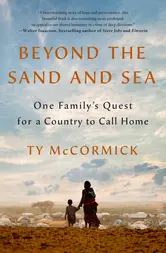
Beyond the Sand and Sea
![]() From Ty McCormick, winner of the Robert F. Kennedy Journalism Award, an epic and timeless story of a family in search of safety, security, and a place to call home.
From Ty McCormick, winner of the Robert F. Kennedy Journalism Award, an epic and timeless story of a family in search of safety, security, and a place to call home.
-
Migration at the U.S.-Mexico BorderPaul Angelo, fellow for Latin America studies at the Council on Foreign Relations, discusses the migrant situation at the U.S.-Mexico border. This webinar is part of the Religion and Foreign Policy Program's Social Justice and Foreign Policy series, which explores the relationship between religion and social justice. Learn more about CFR's Religion and Foreign Policy Program. FASKIANOS: Welcome to the Council on Foreign Relations Social Justice and Foreign Policy webinar series. I'm Irina Faskianos, vice president for the National Program and Outreach at CFR. As a reminder, today's webinar is on the record, and the audio, video, and transcript will be made available on our website CFR.org, and on our iTunes podcast channel, Religion and Foreign Policy. As always, CFR takes no institutional positions on matters of policy. We're delighted to have Paul Angelo with us today to talk about migration at the U.S.-Mexico border. We have shared his bio with you, but I'll give you a few highlights. Paul Angelo is a fellow for Latin America studies at the Council on Foreign Relations, where he focuses on U.S.-Latin American relations, transnational crime, military and police reform, and immigration among other topics. He was formerly an international affairs fellow at CFR and in this capacity, he served in the State Department as a political officer at the U.S. Embassy in Honduras, where he managed the ambassador's security and justice portfolio. He provided technical assistance to the Honduran Police Reform Commission, supported strategy development agenda-setting for Afro-descendent, indigenous, and LGBTQ networks to improve civic engagement; and led policy and legal analysis on violence, crime and migration trends. He's a former active duty naval officer, and has completed several tours. And he has written commentary in many publications, including Foreign Affairs, our magazine, The New York Times, Survival: Global Politics and Strategy, and the Miami Herald to name just a few. So Paul, thanks very much for being with us today. Obviously, we're seeing a lot of movement on the U.S.-Mexico border. Some have argued that it is mushrooming now that the Biden administration has come to government, so if you could talk about what's happening and maybe address the root causes, as to why migrants are making their way to the U.S. ANGELO: Great, thank you, Irina, and thanks to our support teams at CFR for setting this up. And for the invitation to join you all today. It's a pleasure to be on this call with you. And I think my real value add in this conversation is in the discussion of the root causes of migration, because of all the time that I've spent living and working in Central America, particularly in Honduras, but I also have experience in El Salvador, Guatemala and Nicaragua doing field work. But before I get into that discussion on the drivers of migration at the U.S. southern border, I'd like to clarify what's actually happening at the border today, because I think that there's a lot of misinformation in the news. Indeed, the news media has latched onto the term "crisis." But I think that betrays the reality of what we're observing. Yes, of course, there's a lot of desperation at the border. Yes, there are a lot of people, and we are likely going to see for the year 2021 a significant jump from pre-pandemic migration levels. But what we're seeing at the border state is not materially different from what we were seeing in the fall, or even just prior to COVID-19. The truth is that we've been managing a crisis on the southern border for decades now. And every single year from 1973 to 2009, there were more than 500,000 migrants apprehended, irregular migrants apprehended annually at the U.S. southern border. During the past decade, what we were actually seeing was historic lows in terms of the number of undocumented migrants seeking to gain access to the United States. There was only one year in the past decade, where the number of migrants apprehended at the U.S. border peaked over 500,000, and that was in 2019, when the Trump administration had purportedly sealed off the border and effectively closed off opportunities for asylum. In fact, 2019 was a banner year and I think a lot of what we're seeing for 2021 is going to be built up or pent up demographic pressure that accumulated over 2020 when the Trump administration was not actually enacting protocols to allow migrants and asylum seekers access to U.S. territory. I'd also like to take advantage of this moment to remind everyone that surges at the border are cyclical and seasonal. They respond to weather patterns, labor demands, and enforcement regimes, not just in the United States, but also elsewhere in Latin America, especially in Mexico. And so I would say that due to the Trump era programs, such as the migrant protection protocols, known as the “Remain in Mexico” program, and the process of metering, in January of 2020, just as President Joe Biden was on the eve of the inauguration, was set to take office in the White House, there were already some 42,000 asylum candidates who were camped out on the Mexican side of the border, who had not yet been processed for U.S. immigration hearings, or excuse me, asylum hearings in the United States. And so what we're seeing right now is a build up in demand, in addition to regular migration patterns. And these points of clarification are not to deny that irregular migration is a major challenge for the United States in the southern border. But I want to make sure that we're having an honest conversation about what's happening today. And in fact, it's unclear to me why what's happening at the borders is a surprise to so many people because worsening conditions in Mexico and Central America are a well-trodden narrative. And although we saw an overall dip in migration during 2020, due to COVID-19 pandemic, and the closure of borders in response to the pandemic, the pressure to migration, excuse me, the pressure to migrate in Central America and Mexico only accelerated. And so the only sustainable solution to help Central Americans and Mexicans address the root, contain migrant flows, is to help address the root causes. And to this end, the Biden administration is requesting four billion dollars in foreign assistance from Congress. And it started to make positive personnel decisions to shepherd this initiative. Why is it so necessary and what will it address? I'd like to zero in on four main issues. Firstly, the economy. Secondly, security. Thirdly, governance. And fourthly, climate change. On the economic front, I don't think we can talk about economic issues in Latin America in 2021, without having a discussion about COVID-19. In absolute terms, Latin America and the Caribbean has been the most affected region in the world by the pandemic. It is a region that comprises only 8 percent of the world's population, but 18 percent of the known COVID cases, and some 27 percent of the known COVID deaths. And that's not accounting for systematic underreporting by Mexico's, excuse me, by the region's second-most populous country, which is Mexico, it's estimated that there were over 300,000 excess deaths in 2020, which were likely attributable to COVID-19. We've also seen that the region was impacted due to the interruptions in supply chains, and the imposition of very strict lockdowns. And because of these factors, regional economic contraction in Latin America for 2020 was at around 7.7 percent. I would also note that Guatemala and Mexico, which are two of the countries of most concern to us today, were both above that regional average. In 2020, 34 million Latin Americans lost their jobs. We saw a dip in remittances from the United States. Given the economic recession here in the United States, that dip has now recovered. But nonetheless, it exposed the fragility of finance networks for many living in Central America and southern Mexico. I remind everyone that a majority of people in Guatemala and Honduras already live below the poverty line. And across the Northern Triangle, more than 70 percent of the workforce is employed in the informal economy, which means that these people do not have access to insurance or protections, and their access to medical attention is scarce. The tragedy, the travesty, that the region has faced on the economic front has only been exacerbated by a long-standing pandemic, excuse me, a long-standing epidemic of insecurity. Although in 2020, we saw reductions in homicide across the Northern Triangle, the Northern Triangle countries still rank among the most dangerous countries in the world. And in 2019, Mexico had set a record for the highest number of homicides in the country's recent history. It almost equaled that number in 2020, despite the fact that it was imposing strict measures to contain the pandemic in some parts of the country, especially in parts of the country that had previously been reporting very high rates of violence. There are a lot of factors that we can go into in the question and answer period if you'd like to discuss why we've seen a dip in homicides, but I don't suspect that that dip is sustainable going forward. And I think that we will see insecurity, high rates of insecurity resume for 2021 and 2022. The third factor that I'd like to point to is an overall failure in governance. In addition to state capture by criminal groups, Central America is rife with political corruption. And we've already seen the inflation of government contracts to distribute humanitarian relief and COVID-19 vaccines in places like Honduras. This will remind close watchers of Honduras, or close watchers of Central America in general, of the Astrapharma scandal back in 2015, in which the Honduran government provided preferential access or preferential contracts to a pharmaceutical company that was owned by the National party's congressional leader, who happened to be in the business of making placebos or inert medicines that were being administered in public hospitals that resulted in the deaths of dozens of people. Likewise, there was the Pandora scandal in Honduras that emerged in the following years in which the government was diverting public funds to shell NGOs as a way of paying off bribes to members of Congress, or members of the judiciary. And, likewise in neighboring Guatemala, everyone will remember the Alenia scandal which saw the ouster of former president Otto Pérez Molina in 2015. There was some progress that was being made on going after perpetrators of major political corruption in Central America with the internationally-backed CICIG, and the internationally-backed, OAS-backed MACCIH in Honduras, which were beginning to show results. But as these internationally supported investigative bodies, that were seeking to combat impunity and corruption in Honduras, and Guatemala, were making impressive results. And as their investigations get closer to the inner ring of presidents at the time of their mandates, were cut short. And so we've seen an overall reversal in terms of the anti-corruption crusade that was gaining steam and starting to bear impressive results in Central America, in the 2016-2017 period. And then finally, when we talk about root causes, we can't have this conversation and particularly not at this moment without talking about climate issues. Everything that I've just mentioned, there's mounting demographic pressure for people to migrate. But I think the most proximate cause for migration in this current wave that we're seeing, are the two back-to-back category five hurricanes that hit Central America in the fall. They destroyed 90 percent of Honduras's bean and corn crops, which was a death sentence for many in a region where food insecurity was already pervasive. For those of you familiar with the region, you'll know that there's a stretch of territory called the Dry Corridor that starts in Costa Rica and extends all the way up to southern Mexico. And in that tract of territory, in 2019, there were already 1.4 million people in Central America who were food insecure. These hurricanes also didn't just destroy crops, they displaced people in communities, many of which had settled or built their livelihoods alongside river beds, killed some 140,000 livestock, and completely devastated plantain and banana farms, and other large large-scale agriculture. So further reducing employment opportunities for the agricultural workers in Central America. I would also note that this is coming on the heels of a decade of disruption of traditional livelihoods due to climate change. The region was already seeing 40 percent less rain than historical annual averages, and rising temperatures and regular rainfall led to anything from coffee rust, to a bark-eating beetle that was disrupting timber crops, to the black sigatoka, which is a fungus that has been ravaging banana crops in Honduras in recent years. And so the travesty that we saw in the fall with the hurricanes, the two back-to-back hurricanes, has only compounded the issues, the pressures to migrate that many subsistence farmers were already facing. So that sort of addresses the root causes conversation, I don't want to deny that there are also pull factors here in the United States, most notably our own economic prosperity as a country. But I'm happy to go into those with the time we have remaining, but at this point, I'll cede the conversation back over to Irina, and look forward to having a good question and answer period with all of you. FASKIANOS: Paul, that was fantastic. Thank you very much for dispelling the misinformation and addressing the root causes. So we want to go to all of you if you want to ask a question, please raise your hand by clicking on the icon. And you can also type your question in the Q&A box, but we'd love to hear from you live. So please do raise your hand. And there are just thank-you notes in the chat, saying this is very informative, and will will it be available after the fact? And yes, it will be available after the fact, we'll have a transcript and a link to the webinar, so you can capture all the facts that Paul has mentioned. And in this short time, it's really been enriching. So, while we wait for questions, let me see hold on a minute. We do have questions. Three hands. Okay, so I'm going to go first to Todd Scribner. And please identify yourself, your affiliation. And please unmute yourself. SCRIBNER: Hi, my name is Todd Scribner. I'm here from the United States Conference of Catholic Bishops’ Migration and Refugee services, their policy office. I'm curious, we're really big on the issue of root causes and addressing root causes is really the long-term solution to any of these problems. I'm wondering if you can point to any models from the past in which countries have worked with other countries to address root causes of this sort, that might be driving migration, that can be seen as a successful example of working with another country to kind of fix problems that are that are underlying drivers in the first place. Do you know of any? ANGELO: Yeah, thank you, Todd. And in terms of this hemisphere, it's very hard for me to point to any positive, enduring examples of that. But I would sort of divert everyone's attention back to what the Obama administration was attempting to do in its final years. You will all likely recall that in 2014, there was an uptick in child migration, or unaccompanied child migration to the United States. In the span of nine months, we saw over 60,000 unaccompanied minors, most of whom were from Central America presenting themselves and seeking asylum at the U.S. southern border. And the Obama administration recognized that the only way that we were going to be able to turn the tide on that wave of migration was to help address the root causes the things that were propelling these young people from Central America and southern Mexico to the border. And the narrative that took hold here in Washington was one that was focused on violence and insecurity. Of course, these had long been some of the most violent countries in the world. In 2014 and 2015, I believe, San Salvador and San Pedro Sula were the murder capitals of the world. Honduras and El Salvador for a couple of years were competing back and forth for having the highest national homicide rates. And so the idea was that many of these young people were vulnerable to gang recruitment. And the U.S. government sought to help reform security sectors and judicial sectors to combat impunity, which over the span of the operation of the CICIG, we saw the homicide rate in Guatemala, for instance, dropped by more than half. But also, just as important, there was a real focus on providing community policing, and improving relations between the state and the most vulnerable communities in the countries of the Northern Triangle. This is something that I worked on in 2015-2016 in Honduras, it was an initiative known as the “place-based” strategy. And what it really focused on was firstly instituting community police units. And these were police that were specifically trained not to have a repressive presence of the state, but police units that were there to help with things like getting the cat out of the tree, or providing directions to somebody passing through a community. Also, these units of a community, police engaged in things like medical brigades, or providing educational materials to schools in their areas of operation. And with this model, and with a significant investment from both the Honduran government and the U.S. government in building things like infrastructure in the most vulnerable communities, in the span of two and a half years, we saw significant reductions in homicides. And in the two communities where I worked [inaudible] we saw homicide reductions by over 60 percent in both of those communities in just over two years. That was a model that was working. Unfortunately, the Trump administration came into office and in 2019, throws all U.S. assistance to the countries of the Northern Triangle on the pretext that the governments of these countries weren't doing enough to help stem migration. And I have to believe that that decision to freeze aid, and then the decision not to turn all that aid back on for the remainder of the Trump administration, really disrupted the momentum needed for the place-based strategy to take hold. The idea is that in a place-based strategy, these communities where we saw significant success, they were meant to be a geographic nucleus. And so the idea was that the community policing model would extend to neighboring communities until it had encompassed the most vulnerable areas of places like Guatemala City, San Salvador, [inaudible] San Pedro Sula, and that just hasn't happened. And so I think that going back to that model, and reinvigorating the place-based strategy is one example of how the Biden administration can once again start chipping away at the drivers that have been propelling people, and particularly young people, to the U.S.-Mexico border. FASKIANOS: Thank you. Let's go next to Tereska Lynam. LYNAM: Hi, thank you for taking my call. Can you hear me okay? FASKIANOS: We can. LYNAM: Oh, and thank you. So, wonderful presentation, thank you so very much. I'm from Oxford University and my experience, but I live in the U.S., my experience is that, at least in my circle of people, we're really interested in the human rights abuses that have occurred, particularly through the Trump administration with the separated families. That's what the media focuses on, obviously. Because you're talking about policy and policy, unfortunately, is boring to most people. So they don't really look at the underlying causes. They look at what's being blared at them that day. So I would love it if you could talk about how these human rights abuses are being managed right now, how people are being processed, and the border issues that we're continuing to hear. And then what kind of media advice, if you could, give to Vice President Harris, who's been charged with taking this over, in terms of doing the razzle dazzle that will make people happy, give them the sound bites they want, while also addressing these very complicated policy issues? Thank you. ANGELO: Great. I think the answer to your second question second question helps inform the response I have to the first question. So I'll tackle that first. I think the most important thing that Vice President Harris and Ricardo Zúñiga, who's the new presidential envoy for the Northern Triangle of Central America, can do is try to relocate the drama that is unfolding at the border, and the attention that's unfolding at the border to other countries. And it's not to say that we should close off our asylum system. But what we need to do is introduce or reintroduced programs that gave people the opportunity to seek asylum or to claim refugee status abroad. There was a pilot program that was started in the Obama administration that would allow migrants, or refugees, excuse me, from the Northern Triangle countries to seek asylum via the United States in a place like Costa Rica, which is considerably safer, has higher sort of indicators for all measures of socioeconomic development. Likewise, there was an initiative that the Obama administration instituted and has now been turned back on by the Biden administration, called the Central American Minors Program, which allows for in-country refugee processing. And so to the extent that we can exert a degree of control over by preventing people from taking a dangerous journey northward, one in which every step of the way, their human rights are likely being violated. Keeping them in the region and giving them opportunities to seek relief in the region, is probably the best bet for giving our Vice President the sound bites that she would need to satisfy a rather demanding and perhaps even unrealistic public here in the United States. But in terms of what's happening at the border, vis-a-vis human rights abuses, and/or the denial of asylum that was happening quite systematically during the Trump administration, the Biden administration has sought to bring back online our asylum system, reinstate processes to manage cross border flow responsibly, and to surge assistance to address the root causes. Those are the three main pillars. We've seen already thousands of individuals who are being held under the migrant protection protocols, indefinitely, brought across the border and assigned dates for their initial asylum hearings. And I'll just remind everyone that during the Trump administration, there were over 42,000 cases of individuals who were being held in Mexico under MPP, that faced consideration by U.S. immigration courts, but only 638 of those people were granted relief. And so it was a very, very high bar for asylum seekers to actually be granted asylum under the Migrant Protection Protocol Program. It's too early to tell what kind of results or what kind of yield the Biden administration will produce given that it's so early, but nonetheless, that the MPP participants are going to be the initial priority for the Biden administration when it comes to delivering on the issue of asylum. Likewise, unaccompanied minors are no longer being turned away, and instead, are being brought and transferred to Office of Refugee Resettlement facilities until they can be relocated to sponsors who are already in this country. The Biden administration, like I mentioned, had already turned back on the Central American Minors Program, so that refugee children can request protection in their countries of origin and then be safely flown to the United States if they qualify rather than having to pay into the pockets of human traffickers and human smugglers across the Central American isthmus and into Mexico. We've seen that other agencies in the U.S. government have now sought to bring on temporary shelters, like FEMA is building temporary shelters to deal with this ballooning of migrants that we're seeing at the border. And most of the incapacity that we have at the moment has to do with the fact that we're also confronting a pandemic and have to implement appropriate public health measures. And so in order to make sure that people are sufficiently distanced, and that we're engaged in the best, most up-to-date and best public health measures to deal with this pandemic, that's really driving the need for the construction of additional shelters. But broadly speaking, I think that the situation is certainly better. We're seeing refugee families as well, or asylum seeking families, being brought into the United States, not all of them are being turned away, as they were under the Trump administration under the pretext of Title 42, which allows the U.S. government to turn back people who are seeking to gain access to the U.S. national territory on the pretext of public health measures. So I think we're slowly and methodically seeing the Biden administration turn back on many of the processes that were stunted during the Trump administration, and particularly with the advent of the pandemic. FASKIANOS: Thank you. Just to build on that question, from Michael Thomas of Dartmouth College. Do you think that the appointment of Vice President Harris to oversee this is a good move, essentially? And I'm assuming the answer to this is yes, but is there a number that you're hearing about the number of Central American refugees who can be resettled this year? ANGELO: So great question. One of the things that the Biden administration has in terms of outstanding work, is that it has yet to raise the refugee cap or the asylum cap that was introduced under the Trump administration. Some of you will remember that during the Obama administration, there was a cap on 110,000 refugees who are granted relief here in the United States annually. And that was reduced from the Trump administration to a mere 15,000. And so I fully expect in the weeks to come that the Biden administration will resume or reinstate the cap that was operating under the Obama administration, and may even expand it a bit to offer more generous relief, given the upswell in demand that had been building because of the restrictions that were imposed by the Trump administration. But in terms of the appointment of Vice President Harris to deal with this issue, I think really, I think symbolically, it's a very clever move. Vice President Harris herself is the daughter of two immigrants, one of whom is from the Caribbean region. And so I think that the empathy that she would bring to that role is symbolically important for the administration. I think it makes sense from a political standpoint, it just shows that this administration is taking very seriously the issues from the border, and not just build a wall and seal off the border to prevent migration, but rather, really wanting to engage with the countries of the region and providing and implementing sustainable solutions. And so I think that it's a win across the board. And like I said, I think the team that the Biden administration has brought online to deal with border and Central American issues, Ricardo Zúñiga and Roberta Jacobson, Ambassador Jacobson, who was our ambassador to Mexico under the Obama administration into the early first year of the Trump administration, he couldn't find a better group of people to shepherd this reengagement with Central America and Mexico on the issue of migration. FASKIANOS: Great. Let's go next to Alan Bentz-Letts, who has his hand raised? And please unmute yourself. BENTZ-LETTS: Oh, hi. Thank you for your talk so far and for the chance to ask a question. I'm a retired chaplain, and a member of environmental and peace and justice groups at the Riverside Church in Manhattan. In 2009, both President Obama and Secretary of State Clinton supported what was really a coup against the existing president who was working to help the poorest people in Honduras. And since then, there's been just president who has been corrupt and decimated human rights in that country. And so there's a lot of evidence for saying that it's the existence of corrupt and very right-wing governments in Central America that link to gangs and that are causing the really terrible situation for poor people and for the common people in those countries. How would you respond to the claim that unless the United States changes its foreign policy, that this situation of migrants coming to the U.S. is going to continue and continue to be a serious problem? ANGELO: Yeah, I appreciate that question. And I think that the, particularly the Trump administration's decision to really cozy up to President Juan Orlando Hernandez in Honduras was problematic for so many reasons. In fact, in 2017, you'll likely remember that there was an election that took place in which the opposition candidate Salvador Nasralla was set to win the election, was leading in the polls. And then in an act of God, the counting machines lost their electrical feed, and when they were turned back on some twelve hours later, President Juan Orlando Hernandez, the incumbent, was winning. And then he actually ended up winning the election, at least in the formal count that was made, despite the fact that there were significant international protests to that election, to include from the Organization of American States, which was suggesting that Honduras redo the election, and invite international observation mission to oversee it. The Trump administration just outright recognized the incumbent government, which was a huge setback for democracy, was a huge setback for the opposition, and really took the wind out of the sails of people who felt that that finally Honduras was turning the curve. And that finally there was going to be some accountability for the corruption that had been, for many years, perpetrated by the National Party, which has been in power for most of the past decade. And so I do think that single foreign policy decision, the recognition of Juan Orlando's victory in 2017, was a major setback. And now that we're seeing in any number of drug trafficking cases that are being processed in U.S. courts to include a case of President Hernandez's own brother, who was found guilty of cocaine trafficking and money laundering in a New York District Court. We're seeing just how deep the tentacles of these organized crime groups run inside the Honduran government. And just this past week, an associate of Los Cachiros implicated Juan Orlando Hernandez again, in drug crimes, but also implicated former President Manuel Zelaya in the same kinds of drug corruption. And so what it really points to is, in a very nonpartisan way, pervasive corruption across the political class in Honduras. And the only way to tackle that, is really for the international community, led by the United States, to go after politicians and public officials who are engaged in public corruption. And to do so is something that has been at least floated by the Biden administration as a possibility through the establishment of a regional anti-corruption body that would be supported by perhaps the UN, or the Organization of American States, to really help nascent and sometimes inexperienced investigative and judicial officials in Honduras, Guatemala, El Salvador, conduct the kinds of investigations that are needed in order to bring public officials to justice. FASKIANOS: Thank you. I'm going to go next to Mark Hetfield, who runs HIAS, and has done so much work in helping refugees. So Mark, if you can unmute yourself. HETFIELD: Thanks, Irina. And thanks, Paul. I wanted to follow up on what Paul had said about the refugee ceiling and the presidential determination in the context of the Central American issues. You said that you believe that President Biden will raise the ceiling and I think all of us think he will, but the question I have for you, if you have any ideas, or insights, or theories, as to why hasn't he done it yet? Because on February 12, he sent Secretary Mayorkas and Secretary Blinken to Congress to present their fifteen page document explaining the urgent need for an emergency presidential determination on refugee resettlement. Again, February 12. And we're still waiting for it. The Biden administration has just continued to carry out the Trump administration's refugee resettlement policies 100 percent. Refugees were literally booked on flights and then had to be unbooked by the State Department, 715 of them, because of Biden's failure to sign the presence of determination that he promised on February 12. So, what's the holdup? And what's the tie in, if any, to the to the issues at the border? ANGELO: Yeah, I would just offer that I think likely part of it has to do with optics. I mean, now that the media has latched on to this so-called crisis at the border, any sort of major move that would signal a major increase in people who are being resettled in the United States, might not be politically palatable at the moment. But I would also say that we don't really fully have our immigration, and asylum, and refugee systems fully running and back online yet, this is a process. A lot of what the Trump administration did was tweak within bureaucracies. And so even though there are executive orders that signal in the direction of a more humane migration policy, more humane asylum policy, a lot of the procedures that have been enacted are bureaucratic procedures that have to be undone by the individual agencies or by the departments that are implementing them. And so I think there's probably an instinct to wait on raising the refugee cap until we have more sustainable, and workable, and regularized mechanisms in place that are happening at the level of the bureaucracy. FASKIANOS: Paul, I'm going to take a written question from Mary Yelenick, who is with Pax Christi International. She writes: “Can we fairly address the crisis in Latin America without a discussion of the U.S. historic military and economic interventions in the region?” ANGELO: Right, I mean, the United States, it's no secret that it had been specially trained, the Cold War played a less than positive role in the countries of the Northern Triangle, and the militarization of the region during that period is largely why we're seeing such high levels of violence across society today. A lot of the excess arms that were left over in the wake of civil conflict in Central America have been made available to the [inaudible] the street gangs, and drug trafficking organizations that in many spaces of Central America, rule the day and can exert significant armed influence over communities. And so I think that more than anything, is the reason why the United States needs to have a prominent seat at the table. The United States has a responsibility, I think, more responsibility to help alleviate a lot of the strife that was left in the wake of the conflicts that defined Central America in the 1970s and 1980s. Likewise, I would just say on the issue of firearms and the United States, I think in terms of building the kinds of confidence with the Mexican government right now, on the issue of migration, and in seeking a more positive working relationship with the administration of President Lopez Obrador in Mexico, the United States has to get a handle on its own obsession with firearms. A couple of years ago, I was speaking to a police officer in [inaudible], who gave me a figure that on average, there are 2,000 firearms that are either legally or illegally purchased in the United States that cross over the border to Mexico illegally on any given day. And that was in probably I think, that was a conversation I had in 2018. I'm not sure what the most updated figures are right now. But nonetheless, the scourge of violence that we're seeing beset Mexico right now, which, Mexico had historically had high elevated levels of violence, but in terms of high homicide rates, it wasn't typically among the top ten to twenty countries in the world, the homicide rate. Now we're seeing Mexico is exceeding Guatemala and El Salvador in terms of its own homicide rate, and for a heavily populated country, like Mexico, that's tens of thousands of people in any given year. And inevitably, when you trace the origins of the firearms that are being used in these homicides, a vast majority of them were purchased in the United States and illegally exported to Mexico. And so in terms, it's something that the Mexican government has long laid as an agenda item for bilateral relations with the United States. But until the United States is enforcing better its own border, and attempting to more systematically prevent the export of firearms from the United States to Mexico, I really don't think that we're going to see any sustainable gains in bringing violence down in Central America and Mexico. FASKIANOS: And, of course, we have our own debate now on gun policy in the wake of the tragic shootings in Colorado, and last week in Atlanta. So we have a lot of work to do here. Let's go next to Steven Gutow. And unmute yourself, Steve. Okay. GUTOW: I did it. FASKIANOS: You did it. GUTOW: You know, it's not easy for me, Irina, but I did do that. So. FASKIANOS: You did do it! Good. GUTOW: It's good to see you, Irina. And, Paul, thank you, thank you, for your service to our country, and also for your presentation to all of us. I live in the world of both policy and politics, and I never let politics get too far away from me, because I know that's a sure way to not be successful in winning anything. We live in a country that's very divided in terms of, I'm already seeing that the numbers going up and the concerns going up that Biden didn't do X and didn't do Y. And I'm more interested in what he hasn't done and what he has done. I'm more interested in hearing things he could do better than have and have been sort of shaded over by how great he is and how bad Trump is, because we all, I don't know if we all, I think that. But with that said, what is wrong? I mean, somebody woke up at 6:00 a.m. yesterday and said, "We can bring all the immigrants we want can't we?" I said, "Yeah, but we can't we can't win the 2022 elections if we do." My questions is, what is Biden doing wrong? And what did he do wrong, did he make some suggestions that everybody, we should basically should start coming over before he decided to say that they should wait? It's one of the things that the Democrats can do better and do better with not in terms of doing the more just things. I'm a rabbi, according to God, but doing the more just things according to the politics of America. ANGELO: Well, you know, I actually think that the administration has taken some very early and positive steps in signaling to migrants in Central America and Mexico not to come. In fact, you know, within a week of being named as the president's advisor on migration issues, Roberta Jacobson, Ambassador Jacobson, was on the airwaves, using the podium of the press secretary at the White House saying in Spanish, "Do not come. Do not come now. Now is not the time. We don't have any, our processes fully in place yet." And she did so in Spanish. And it was something that was replicated and aired on radio and TV throughout Central America. That's the kind of signaling that I think is so incredibly important, mostly because we're living in an environment right now in which misinformation creates reality. And so people in Central America, in the absence of that kind of signaling, in the absence of that kind of messaging, are going to latch onto whatever the human smugglers or traffickers are pushing out to them on social media or on radio spots, or even on WhatsApp chats. And so to the extent that the United States can help control that narrative, I think we're all the better for it. Likewise, as I mentioned, the restarting the Central America Minors Program is just, it's firstly, symbolically important, but secondly, it's practically important. The less that we can, or the more that we can prevent young people from Central America and their parents from putting them in harm's way by paying human traffickers to smuggle them across borders, and into the United States, or at least to the U.S.-Mexico border, the better off we can be, and the better off we can protect their rights. And so I think from that program, as well, we can contemplate other in-country refugee processing, that can help us in a more sustainable and more humane way manage the desire and flow to access the United States. FASKIANOS: Paul, to pick up on that point, from David Greenhaw, formerly of the Eden Theological Seminary, can you talk about the internal struggle on process in a family when they're so desperate as to send their children across the border unaccompanied? Because we know so many children are coming accompanied? ANGELO: Well, I think this is actually part of the incentive structure that we have given our policy in the United States. That because the Biden administration is now allowing minors, unaccompanied minors, to come across the border, and it's processing them and within a couple of weeks will likely, for many of them, find sponsors, family members who already live in United States with whom they can stay. I think that's actually encouraging people to send their children across the border and accompanied. Even if these entire family units are on the Mexican side of the border together. Many of them, and I don't have any firm statistics on this, but many of them may be presenting their children as unaccompanied minors, or their children may be presenting themselves as unaccompanied minors, knowing that it's a decision between, well, if my whole family can't make it together, at least, my son or daughter can have a better future. And they have a grandmother, or an aunt, or an uncle, or a cousin who's already in the United States. And so it's the sort of discretionary policy, which doesn't treat all migrants as equals, and not saying we should from a humanitarian standpoint, that is perhaps fueling the surge in unaccompanied minors that we're seeing at the border right now. Which is why the activation of the Central American Minors program is so incredibly important in preventing future waves of irregular migration of young children to the U.S.-Mexico border. FASKIANOS: Great, I'm going to go next to Alejandro, I'm sorry, I'm just pulling up the list. Yes. Alejandro Beutel, who has his hand raised. BEUTEL: Hi, can you hear me? FASKIANOS: Yes, we can. BEUTEL: Okay. Dr. Angelo, thank you very much for an illuming presentation. And Ms. Faskianos, thank you for facilitating this conversation today. This is an issue that is near and dear to me for both professional and personal reasons. The latter being myself as someone of Central American descent with family in Honduras and El Salvador, professionally, though, as well, even taking a more domestic lens on this. At New Lines, several colleagues and I are looking at the issue of far-right extremism here in the United States and in Europe. And one of the components to that is looking at nativism in a transatlantic setting. And obviously, that includes here in the United States. One of the things that we are doing as part of that is sort of a threat assessment of the impact that nativism can have on particular communities, including ones that have been historically disenfranchised, or marginalized, or targeted. And so in the context of the present discussion today, one of the things that is sort of on our radar, and I would love to sort of get your thoughts on this, is at the moment, it appears as though far-right extremist actors within the United States have their attentions diverted elsewhere. Certain rhetorical targets, like Antifa, Black Lives Matter, even the general opposition to the Biden administration, perhaps. But that said, is that in prior years, they have also, had a very strong emphasis on nativism, which operationally, we could define as Muslims and immigrants in general. And so my question then, in the context of this, given the fact that there is this sort of crisis narrative, if you will, that's butting up against an empirical reality that you've described at the beginning of your excellent presentation. My question would be, then, in terms of trying to diminish the prospect of sort of the social aperture, the permission structures for nativist violence and harassment, what could be done in terms of policy and political tone to diminish that, in your opinion? ANGELO: Yeah, I mean it's, I think the initial signaling from the Biden administration is an important one. The Biden campaign and the administration have long said that we are a nation of immigrants, but we're also a nation of laws. And so in order to make sure that we are living up to our, or fulfilling our promises as a nation, we need to continue to be a welcoming place for migrants. And at the same time, we also need to have the right procedures and processes in place in order to handle both the demands here in the United States for labor, particularly agricultural labor, which is a contributor of migration from Central America and Mexico. But likewise, the demand for opportunity, and even refuge here in the United States. And so, I think that's rhetorically, I think, signaling in that direction as a way to push back against the sort of nativist instincts. But I would also just cite that the Biden administration has presented to Congress a comprehensive immigration bill, which would provide a pathway to citizenship for the approximately 11 million undocumented migrants or immigrants who are already in the United States. And depending on the poll you look at, a majority of Americans support this measure. I've seen recent polling anywhere between 57 and 69 percent. But there doesn't really appear to be the kind of support for, in either chamber of Congress, for that kind of comprehensive immigration reform. And so I think that in terms of showing progress on immigration, and showing progress on a pathway to citizenship for undocumented immigrants in this country, I think getting bipartisanship, piecemeal legislation focused on issues relating to migration, will help address some of that nativist instinct. If you can show that Republicans and Democrats in Congress can both agree on things like providing relief for DREAMers or for agricultural workers, which are currently under consideration in Congress at the moment, I think that's the most sustainable or feasible way of getting essential relief as quickly as possible to people who need it, and for an immigration system that needs it, and to do so in such a way that doesn't inflame the sort of the nativist segments of the U.S. electorate. FASKIANOS: Thank you. I'm going go next to Gonzalo Alers's question in the chat. He's at Drew University. And can you talk a little bit about the conditions of the detention centers, the relationship between the agents of governments represented, treatment of these peoples, and the presence of world observers, in terms of human rights organizations, and then just expand on that? And bringing in Hannah Stewart-Gambino's question, and religious actors on the border? Is the religion community helping affect change, or is that decreasing? Or what do you see? ANGELO: Right, so I think religious and civil society organizations are so incredibly important. Firstly, in monitoring and making sure that the United States actually is fulfilling its promise as a nation, and is living up to its values as a nation, in the administration of our migration and refugee systems. But that being said, at the moment, because of the restrictions on movement or on access, given the public health concerns in the midst of a pandemic, I think that there's certainly some understandable hesitancy to provide access to civil society organizations that have long been guarantors of transparency in the system. But nonetheless, I mean, I myself have not been to any of the detention facilities, and certainly not the makeshift ones that have come up in recent months, that have been brought online to deal with the surge. But nonetheless, my sense is that the administration is trying to do right by the individuals who are being detained and being held. And likewise in terms of the unaccompanied minors, there's a real commitment to trying to get unaccompanied minors who have come into United States, outside of these detention facilities, and inside the homes of sponsors who already live here in the United States. And so I would just say more broadly speaking, I think that civil society also has an incredibly important role to play in the administration of assistance, U.S. foreign assistance in Central America, as a way of addressing the root causes of migration. The Biden administration has already said that we are not going to engage with or provide assistance to institutions or individuals in Central America, who don't have our best interests or the best interests of democracy at heart. And that means that the aid is going to be largely conditioned on anti-corruption progress. And that aid that is not made available to governments, which will likely not be the majority of the aid, we made available to civil society, and especially religious organizations who are doing some of the most impressive humanitarian work coming around in Central America. And so I think that those kinds of partnerships and the ability of the United States government organizations, and departments like the Department of State, USAID, Department of Homeland Security, to outsource a lot of the good work that it's doing, that it intends to do in addressing the root causes of migration, to local civil society organizations and religious organizations is an incredibly important piece and should not be discounted in this broader discussion of how we're going to address the root causes. FASKIANOS: Fantastic. And I just want to raise Sister Donna Markham, who is with the Catholic Relief Services, put something in the chat she has noise in the background, so she can't say it herself. But just to bring to this discussion. For meeting with our agencies serving along the border, many of those seeking asylum are targets of the drug cartels, this fear of death or torture of their children is a major reason parents are sending the kids by themselves. And then she said, are there any successful strategies from the Obama administration for curbing the public of the cartels? ANGELO: I mean, I think this just goes to a broader conversation that is being had right now. In fact, earlier this week, Ambassador Jacobson, Ricardo Zúñiga, and Juan Gonzalez, who's the senior advisor, senior director for Western Hemisphere Affairs on the National Security Council, all met with the Mexican government on cooperating for a more sustainable and humane migration system, and greater cooperation, collaboration between the United States government and the Mexican government. And so, Mexico itself is dealing with a plethora of issues at the moment. As I said, it's one of the worst, in statistical terms, one of the worst affected countries in the world, when it comes to the pandemic. It hasn't secured the sufficient number of vaccines for its population, the vaccines it already has on the ground are not being distributed well enough. The U.S. government, in a good faith gesture, just made available 2.5 million vaccines to the government as well. But really, when it comes to migration and making, cutting down on the vulnerability of migrant populations to organized crime, and organized crime groups and gangs, particularly in Mexico, because of the migrant protection protocols, I would say that cooperation with Mexico is key. And in order to engender the kind of confidence that will reactivate U.S.-Mexico security cooperation, more broadly speaking, because much of that security cooperation, which had become a staple of the U.S.-Mexico bilateral relationship under the Bush administration, under the Obama administration, had lapsed during the Trump years. I would say that the U.S. government, as I mentioned earlier, really needs to get a handle on its own firearms issues, and greater enforcement of our own border and making sure that what's going across the border from the United States to Mexico, is regulated, just as much as we regulate what's coming across from Mexico to the United States. FASKIANOS: Great. And my apologies, Sister Markham is with Catholic Charities USA. So toggling between too many screens here. We are at the end of our time, and I apologize. I just wanted to see if you could close out, Paul, with a question from Tom Walsh, just about how we are engaging with the UN agencies such as the UN Office of Drugs and Crime, or International Organization on Migration? Or if this crisis is mostly a domestic and a regional multilateral issue? ANGELO: That's a fantastic question. And I think that there's a bigger role for the United Nations in particular to play in helping set up in-country refugee processing in the countries of Central America. Not all of the people who are seeking refuge in another country from the Northern Triangle need to find their relief in the United States. Many of them want to because they have family ties to the region, to the country, or it seems as though it's the biggest economy that is the shortest geographic distance from them. But there are other countries in Latin America and elsewhere in the world, that could also provide the same kind of relief that the United States or Mexico can. And we can only engage in that conversation if the United Nations has a bigger seat at the table. And so I would just offer that the United States certainly does, or the United Nations certainly does have a role to play. And I would encourage the Biden administration to really seek opportunities with UNHCR and UNODC, as you mentioned, in trying to really tackle the issues, both in terms of the proximate causes for migration, but also in addressing more broader issues relating to the root causes. FASKIANOS: Wonderful. Well, we couldn't get to all the questions but we covered a lot of ground. Thank you, Paul Angelo for this. It's great to have you at the Council. And to all of you for your terrific questions, and comments, and the work that you're doing in your communities. We appreciate it. You can follow Paul Angelo on Twitter @pol_ange. You can also find his op-eds, and testimonies, and other pieces on our website CFR.org. So I encourage you to go there. Please follow us on Twitter @CFR_Religion. And, as always, send comments, suggestions to us at [email protected]. We love hearing your suggestions of future topics we should be covering. So thank you all again for doing this, for being with us, and stay well, and stay safe.
-
Why Central American Migrants Are Arriving at the U.S. BorderThousands of people are arriving at the U.S. southern border after fleeing the Northern Triangle countries of El Salvador, Guatemala, and Honduras. President Biden is reviving efforts to tackle the problems that are prompting them to migrate.
-
Virtual Roundtable: Can Social Bonds Help Save the World?Scheffer: Thank you, Julissa, and good day everyone. I am David Scheffer, a visiting senior fellow at the Council on Foreign Relations and the Tom Bernstein fellow at the U.S. Holocaust Memorial Museum. I'm working on a project for both the museum and the Council on the subject of today's roundtable. Today's discussion is part of the Council's Roundtable Series on Human Rights Issues, and it is on the record. Before I introduce our speakers, I want to convey to you that for several years, I've been exploring the social bond market for the purpose of enhancing the funds available to meet the needs of international criminal justice and the victim populations of atrocities. At the beginning of this inquiry, the idea of social bond funding seemed almost bizarre to most of my audiences, whether they be tribunal or humanitarian organization officials. But within the last two years, the social bond market has exploded, not only in its magnitude, but in its range of social policy objectives. The COVID-19 pandemic, and the surge of social bonds in Europe, including with the European Commission, has been a shot in the arm, no pun intended, for this form of private financing for very worthy public causes. Now in the result, bonds that address social themes and appeal to the rapidly expanding class of socially concerned investors have continued to be the fastest growing sector of the bond market, and they have become a pillar of humanitarian investing. The rising appeal has been influenced by evidence that sustainable investments can outperform traditional ones. So while COVID-19 catalyzed the rapid rise of social bonds issued in 2020, the interest in these bonds is expected to last far beyond the crisis, and to increase further in 2021. Meanwhile, victim populations are suffering not only from the pandemic, but also the atrocities inflicted upon them in the past, and currently, such as vast victim groups in South Sudan and Central Africa, the Rohingya of Burma, the civilian population of Yemen, the Syrian people writ large, and the nearly eighty million refugees and displaced people usually fleeing atrocities across the globe. Are their opportunities to meet these challenging needs in the social bond market? To help us answer that question today, we have two experts, one on the social bond market, and the other on the needs of atrocity victims, who, by the way, seek not only reparations, and basic support for their survival, but also justice. And those are expensive propositions. Our first speaker is Maud Le Moine, the head of SSA debt capital markets at Goldman Sachs and based in London, SSA standing for sovereign, supranationals, and agencies. She has a fifteen-year track record at Goldman Sachs and worked on one of the very first social bonds, which she'll describe, and in this position, she interacts with many international organizations, including the World Bank, African Development Bank, and European Commission. She has provided invaluable advice to me over the years about the social bond market. The second speaker is Maya Shah, the head of operations of the Global Survivors Fund, which focuses on victims of sexual violence arising from atrocities in Africa and elsewhere. So she is on the front line along with GSF’s Dr. Denis Mukwege, who won the Nobel Peace Prize in 2018 for his work with victims of mass sexual violence. Prior to joining GSF, Maya worked for twenty years with Médecins Sans Frontières in field positions and headquarters where, until recently, she successfully ran large-scale innovation projects. I've asked Maud to go first and provide her perspective on the social bond market, including briefing those in the audience who may not know much about this specialized market. Maud the floor is yours for about ten minutes. Le Moine: Thank you very much, and good morning. Good afternoon, everyone. And thank you again, David, for having me today to discuss such an important topic in the market. As David mentioned, my name is Maud Le Moine. I'm responsible for debt capital markets coverage of public sector clients at Goldman. And as such, I've worked with a number of multilateral development banks in structuring and issuing debt products in the markets including social bonds. So perhaps I thought I would start with a little bit of background on the ESG bond market as a whole and the evolution of the social bond market specifically. Really, it has started fifteen years ago with the first social bond at the time, not called a social bond. But IFFIm was really the true first social bond issuer. The International Finance Facility for Immunization issued the first bond with a specific use of proceeds at the time directed towards vaccination programs in poorer countries. It has since evolved to include: the European Investment Bank issued the first climate awareness bond in 2007, then the World Bank issued the first green bond. And from sporadic issuance, the market has grown to represent around €400 billion of issuance for 2020, which to give a little bit of perspective represents a huge increase from only five years ago, where it stood around €90 billion. So this is obviously a substantial growth in a very short period of time. But just also to give a little bit of context, it's still a fairly small portion of the overall bond market. It's sub-10 percent of the overall bond market. So really, what are ESG label bonds and what role do they perform in the markets? ESG label bonds are fixed income debt instruments, which means that they are issued in the market with a specific use of proceeds. This is the key difference with any normal debt instruments, where usually the use of proceeds are for general corporate purposes. In this case, they are issued with a specific purpose. They can take several forms. The most common are still green bonds with proceeds directed towards environmentally friendly projects. And in the family of ESG bonds, you’ll also find the likes of sustainability bonds, social bonds, and many subcategories (climate transition, climate resilience, education, sustainability in bonds, etc.). They all perform a very similar function, which is to direct investments towards a specific set of projects. I think that's incredibly key, as they perform the role of aggregating demand towards a specific set of projects that have a social outcome. And since 2017, ICMA, which is the International Capital Markets Association, has worked on a set of guidelines called the Social Bond Principles that really lay out the objective criteria for social bonds. And they are based on four pillars: the use of proceeds, the project evaluation, management of proceeds, and reporting. And the purpose of the Social Bond Principles is to set out a common base for the definition of social bonds and really ensure the transparency and accountability. So the way they work is the issuer, if we take an international organization, such as the World Bank or the African Development Bank, will set out a framework in which they describe the types of projects that they intend to finance. Sometimes they'll have very clear exclusions as well. But generally describe the types of eligible projects that will be financed under that framework. And they also usually explain the performance metrics and also how they will report. The reporting is very key, as investors at the point of investment do not necessarily know exactly how their funds will be allocated into certain projects. They will only know later on when it's reported by the issuer. So the social bond also performs the function of issuing upfront for needs of projects that will be dispersed over time. This is a key element, which was the entire construct of IFFIm at the time, as the needs are usually very important to tackle quickly. And so there's a need to raise money upfront. And projects can be dispersed over time. To give you perhaps an idea of the types of projects that are included as eligible projects under the Social Bond Principles and what most social bonds finance, these would include, for example, affordable infrastructure, access to essential services, affordable housing, employment generation, food security, or any social or economic advancement or empowerment. This is a broad definition of what the project can include, but to give you an idea of what they have financed in the past. So why are they so important? And I think that's quite an important topic of discussion here. And I think, for me, the key is that really any of these projects would not normally be financed directly. They would be too small, too risky for any investors to be financing directly or at attractive economic terms. So really what the World Bank or African Development Bank or any other multilateral development institution, the role that they perform, is to aggregate demand for this product and therefore ensure the deployment of capital in the most needy places. So if we take an example of the World Bank raising a billion bond, for example, they'll manage their balance sheet dynamically. Therefore, this billion will really serve to finance a number of different loans. And over time, the World Bank is able to access the market thanks to its high credit rating, their standing in the market, their global investor following, and their longstanding market presence. They're able to raise this billion at very favorable terms, and they're therefore able to lend at very favorable terms, and this is the key to the entire construct. Given the COVID crisis, somewhat unfortunately, it has resulted in a significant surge in the social bond market last year as a portion of the overall ESG market, given all of the difficulties that countries have faced to cope with lockdown measures and generally the effect that it had on people, small businesses, the healthcare sector, etc. So if we take the difference between 2019 and 2020, the social bond market has almost increased tenfold. So it's a huge increase. And one of the biggest portions of this development was the EU SURE program, which has become one of the largest social bond issuers in the market since they created the program in the summer of last year. The SURE program is a €100 billion temporary support to mitigate unemployment risk in an emergency, and it is intended to be entirely financed in social bond format. They have already issued €53.5 billion of that program and have an entire envelope of €100 billion. So they can fund the rest over the course of this year. It was entirely created as a result of the pandemic and is designed to urgently provide financial assistance in the form of loans to member states. And so, I think the question that we are often asked about social bonds is really, who buys social bonds? What is the appeal for investors? What is the difference between a normal bond in terms of payout structure, and things like that? And so, first of all, I think the background is that, generally speaking, what we are seeing is there is an increasing realization from both public and private sector market participants that a lot more needs to be done in the field of sustainability as a whole. ESG investors and social bond investors can really be any investors. What we're seeing in the market is central banks, asset managers, pension funds, retail investors, foundations, etc. can be interested in this product. Generally, the investor community as a whole is increasingly putting in place sustainable investment strategies, and as such, they're trying to find suitable financial products to fit their strategies, and social bonds are one very good example. How are investors repaid? Well, social bonds themselves are really used to finance loans. So the purpose of these multilateral organizations is to aggregate the demand. They have the expertise on the ground. They are able to do the due diligence of the project, and they have backings of governments that are their shareholders and, therefore, have higher credit ratings and are able to access the market at favorable terms. As such, the projects themselves really finance loans and therefore generate a return themselves, part of which is paid to investors in the form of usually a fixed rate coupon. Some instruments have been designed to have a slightly different payout structure with predefined targets. For example, it's been seen in KPI-linked bonds, where there is a step-up or step-down coupon when the targets are met or not met, depending on what the targets are. But the very vast majority of social bonds issued in the market have a fixed coupon and therefore fixed return to investors. I think that's quite an important point because the growth of the social bond market is also driven by the depth of the fixed income investor base. And this is an investor base that's generally focused on the liquidity and generally conservative in their risk profile. And therefore, it's important that there is a fixed return. For example, there are other types of instruments that exist in the market, such as social impact bonds, and it's important to differentiate those two social bonds that I'm talking about, because social impact bonds are slightly different instruments. They're generally much smaller in size, and they have a payout structure that's directly linked to the successful outcome of pre-agreed social benefits, but they are much more similar to equity products in nature, and they are much higher risk instruments, and they do not have a fixed return. So they are different instruments. They are called bonds as well but generally not issued as broadly in the market as social bonds are at the moment. Scheffer: Maud, if I may, perhaps another thirty seconds or a minute, and then we'll move on to Maya. Le Moine: No, of course. I mean, I think that's a broad overview. I think you wanted to discuss specifically, the application that it can have on international criminal justice, but I can take it as a question afterwards. Scheffer: Exactly. Thank you so much. That's an excellent brief. I'll share that with every student I ever teach. Maya, the floor is yours. Shah: Thank you. So good morning, and good afternoon, everyone. And thank you, David, for inviting me today. And as you mentioned, yes, I'm the head of operations for the Global Survivors Fund. So this is a global fund for survivors of conflict-related sexual violence. The fund’s mission is to enhance access to reparations and other forms of redress for survivors of conflict-related sexual violence across the globe. So the fund was established in October of 2019 by Dr. Denis Mukwege and Ms. Nadia Murad, a survivor herself, after they both received the Nobel Peace Prize in 2018. It is also the realization of a vision that was long held by survivors through the SEMA network. So this is a network of survivors from over twenty countries in the world that have been lobbying for reparations. Additional to this, the fund was endorsed by the UN Secretary General in his statement to the Security Council in April of 2019, where he strongly encouraged governments to support this fund. So what is the purpose of the Global Survivors Fund? Well, it's to fill a gap in addressing the rights of survivors by providing interim reparative measures, and this is when states are unwilling or unable to do so. And while we recognize that it is a government's responsibility to provide reparations, often they are not able or not taking this responsibility. But we cannot leave survivors behind, because reparations are a right. So the main principles to the fund’s approach are, one, a survivor centered approach, and this is really to co-create projects with survivors, so not for survivors but really with survivors. The second fundamental approach is local and contextualized solutions. So really looking at the different countries where there are projects and the local solutions available in those countries with survivors. The third is a multi-stakeholder approach. So that's including survivors, civil society organizations, activists, local authorities, and UN agencies within what we call the steering committee that runs the project, so that there is a lasting impact of these projects. So the three main pillars of our work at the fund are what we call act, advocate, and guide. The act pillar is really to provide interim reparative measures. So we work with local civil society organizations that are our implementing partners, and we provide interim reparative measures in the form of compensation. Currently, we have three projects in the Democratic Republic of Congo, in Guinea, and in Iraq. And we're looking later this year to open in Central African Republic and Nigeria and possibly South Sudan. I was in the Democratic Republic of Congo three weeks ago, where there is an estimate of between 200,000 and 400,000 victims of conflict-related sexual violence. And I was discussing with the head of the National Survivors Movement there what it means. And she basically said that survivors, what they want really is an acknowledgment of the crimes that were committed against them, to not be blamed for what happened to them, and to receive some sort of compensation. And whilst at the fund, there is no way we're going to be able to cover all the victims of conflict-related sexual violence in the Democratic Republic of Congo. What we can do through our project is to show that interim reparative measures are possible and to act as a catalyst then for governments to take on the responsibility. The second pillar of our work is called advocate, where we really want to make survivors’ voices heard in order to influence at the international, regional, and national level policies that will then prioritize reparations and allow governments to take their responsibilities in providing reparations. And that leads me to the third pillar of our work, which is the guide pillar. And in this pillar, this is where we look to provide technical assistance and expert advice to support governments who want to put in place reparation programs, but to ensure that these programs are really survivor-centric and that they have a survivor-centered approach. Another part of our work is we are currently doing a country mapping study of over twenty countries to look at the state of reparations in different countries around the world and then to be able to make a better informed decision of where we want to put in place projects. So currently, the fund is funded through institutional funding, so through government donations. But in general, there is not a lot of sustainable funding for human rights abuses, but specifically for conflict-related sexual violence. And the needs in this field really vary from the immediate life saving needs of health care and psychosocial support, then to much more long-term needs, such as restitution of livelihood, education, support, and financial compensation, which these require, of course, substantial resources and extended periods of time. And as I mentioned before, when you look at a contextualized approach, these kinds of reparations are going to differ whether you're doing it in Ukraine compared to Central African Republic compared to Iraq. You know, one size doesn't fit all in these different contexts. But I don't think that this should be a deterrent to start providing reparations, and neither should having to put in place all the transitional justice mechanisms before. We strongly believe at the Global Survivors Fund that reparations are a right. Survivors have a right to them. And therefore, in fact, when you put in place interim reparative measures, often you are empowering survivors by making them reestablish dignity, have livelihoods, have health care, and so to be able to benefit from this, to be able to then go through the transitional justice mechanisms. But of course, all these need some form of sustainable financing and innovative financing mechanisms. So I hope that we'll be able to discuss this further today. Thank you. Scheffer: Thank you so much, Maya. That is excellent. I'm going to ask a few questions and then at the thirty-minute mark, or approximately that, we'll open it up to the audience. Maud, could you dip into what we worked on for a couple of years whereby we were looking at a particular type of social bond that is of an endowment character that's generating annual revenue. That could be extremely useful either for a tribunal or for an organization like Maya’s that might be looking for a steady stream of revenue year after year as sort of a base set of revenue that they could rely upon, as opposed to a huge expenditure of money in the first or second year of a bond. Le Moine: Yeah, absolutely. I know we've been discussing this for a couple of years. So first of all, perhaps I should mention that it's an extremely worthy cause, and one that should generate interest from ESG investors. I think the problem is trying to find a structure that works and fits within the criteria of investments of fixed income investors, if large sums of monies need to be raised, or other types of investors depending on how much is needed. The idea of an endowment social bond is certainly an option. But I would raise a couple of points that I think are important to understand. In order to attract fixed income investors, and I say fixed income investors because they are the largest pool of investors out there in terms of ESG investors at the moment, the fund itself would need to have a certain rating if the fund is to issue a bond in the market and generate interest. And that's unlikely to be a high rating without the backing of certain sovereigns and a structure that, David, we have discussed over the years. If the structure were to work, the fund would need to have, ideally, at least an AA rating in order for the money to be raised in the market at a certain economic term, which would then be able to be invested in the market to generate enough returns to generate a steady stream of revenue. And so a high rating is really the key to making the structure work in order to have affordable terms in the market and be able to invest it and generate the needed returns. Scheffer: Thank you so much. Maud. Maya, you touched on this in your remarks and I want to try to emphasize it to our audience. You used a couple of examples of a gap between the need and the actual resources available to deal with reparations. Could you expand on that just a little bit and sort of emphasize how large is this gap of funding for these humanitarian purposes for victims, particularly when they involve issues of reparations? Shah: Thank you, David. I mean I certainly can't put a monetary figure on it today. But what we know is that the needs of victims are huge, because it goes from life-saving care, long-term psychosocial support, to compensation, restitution, and rehabilitation. And if you look at that, that can be from livelihood programs; reinsertion because often they're completely stigmatized out of the communities, lost all their jobs; education for children, children born out of rape particularly that also are ostracized from society; and if reparations programs are being put in place, it's also compensation on a monthly basis for the survivors. So there is a range of needs that are there, and each with varying amounts, but we can see that the numbers of survivors are enormous. And so yeah, I can't give you a monetary figure, but just the needs are huge. Scheffer: And let me jump back to Maud. We've talked, you and I, about the whole phenomenon of pre-qualified investors. I get this question quite often from organizations. They don't want any and all investors stepping up to help them. For example, if they're a humanitarian organization, they may not want gun manufacturers to be in their investor pool. Can you just expand on that a little bit? When you put a social bond together, how do you structure the pre-qualified investors so that the organization is confident in that investor pool? Or do you do it at all for some of the bonds? Le Moine: That's a good question. When we issue social bonds in the market, it's a fairly quick process. And so there's a lot of preparation ahead of the issuance itself, setting up the framework in place, perhaps marketing for a number of weeks ahead of a potential bond issue, but the issuance itself is fairly quick. The issue will rely truly on the banks and the lead managers of the bond to have KYC. So know your customer. KYC to all of the investors that are in the transaction, and they will have access to the list of investors. And they can choose to exclude some of them if there were any concerns with the background of the issuer. They will mostly rely on the bank’s proposal of allocations and things like that, but they have the ability to exclude any investors if they wanted to. I must say we've never come across an issue, given the types of investors that are generally interested in these bonds. We're talking about central banks and large asset managers that are very well known, pension funds that are also large pension funds, European pension funds, Canadian pension funds, or U.S. pension funds that are very well known. So these are large institutional investors that are very well known by the market. Scheffer: Thanks so much. You know, I think I'll be following strict rules here. We're at the thirty-minute mark, and I want to open up the floor to our participants in this roundtable. I'd like to first just see, I see on my list of participants that Naomi Kikoler is actually with us. Naomi, I wanted to give you a chance to say just a few words, if you wish to. But now would be the opportunity, if you'd like to come on board. Kikoler: Thank you so much, David. Appreciate that. And just want to congratulate also Maud and Maya just for the phenomenal presentations. On behalf of the U.S. Holocaust Memorial Museum, we're incredibly honored to be able to help advance the work that you're doing, David. Along with CFR, I did want to thank our colleague, Erin Rosenberg, and your colleague, Madeline Babin, for their work. I think from our perspective, as Maya especially highlighted, this is one of the most challenging, vexing, and urgent issues that many of the communities that we work with are seeking to find a way to address and are seeking innovative solutions too, so I really commend the effort that all of you are doing to try to find innovative sources of funding. I think we all know, as we look at the experience of the Holocaust, the importance that reparations has played for many communities, while recognizing that you can never truly restore or return a person to the life that they had prior. But the importance of finding creative solutions, as you're doing, is really I think something that needs to be commended. I think the big challenge, and the challenge that I've raised with you, David, at times, and I'd be curious for Maya and Maud to build a little bit on your comments is around the political will, especially of governments and large multilateral organizations, to step up and increasingly support these types of initiatives. I'd be curious where you see there being potential openings. Are there specific governments that you think are particularly promising, or other multilateral institutions that have shown an interest in using things like social bonds? But again, just a profuse, on our behalf, honor to be involved in this particular project, and we very much hope that for the various communities we work with today, the Yazidi, the Rohingya, the Uighurs, and others, that your innovative approach to this will help to ameliorate the very big challenges that they face for the future. So thank you so much. Scheffer: Thank you, Naomi. Maud, would you like to just take on Naomi's question about the willingness of the multilateral banks and of governments and I might also add of large foundations to step into this breach? Le Moine: Absolutely. And I mean, generally speaking, multilateral development banks are incredibly willing to step up to the plate when they can. If you think of all the ones that are currently existing and active in the market, they have responded incredibly quickly last year to the needs of their member states following the pandemic; have mobilized incredible amounts of resources; issued very quickly what was needed to disperse funds very quickly to the most needed places. So I think the multilateral development organization family as a whole has been incredibly quick to respond. And that has shown the willingness of the institutions to help when they can. At the political level, it differs from time to time, I think. We've also seen with the pandemic that there's also a great political willingness to step up. If you think about the European member states incredibly quickly getting together and forming a budget that was on multi-year to support the European recovery fund, but also their SURE program and other initiatives that were done in Europe. And over the years, capital increases of these multilateral development institutions, new ones have been put in place over the last few years in Asia, most notably with the Asian Infrastructure Investment Bank and the New Development Bank, to try and support the needs of specific regions. So I think there's an incredible political willingness as well. Generally speaking, what we're seeing, however, is that the structures also need to be quite clear. And accountability of these institutions is very high. So they have very high standards to uphold in terms of the types of project that they lend to and the result, as they have the impact in the local community. It's very important to guarantee their political willingness to participate. Scheffer: Thanks a lot. And I want to get to our other questioners. But Maya did you have anything you wanted to add to that because you do have government contributors to GSF? Shah: Yes, thanks, David. I mean, we do, but I think there are two things. I think governments sometimes will react when the political will is strongly there, when it affects them. So we saw that, for example, previously in the Ebola crisis, governments reacted when it started happening to them. And now in the pandemic, when it's happening to governments, they will have the political will to react quickly. We do have governments on our board, but I don't think there is enough being done. And the governments where these crimes are committed are perhaps not the ones reacting as quickly or as much as they should be. And while we believe that they do need to be taking their responsibility, I don't think we can always wait for political will to be there because the needs are so urgent, and we need to address them, but it's definitely a joint responsibility. Scheffer: Thanks, Maya, shall we now go to Jonathan Berman. Jonathan, are you there? Berman: Thank you. Sorry about that. I'm in a remote area. So if I phase out again, please go on to the next questioner. But while I'm in touch, David, thank you for hosting this meeting. And thanks also for asking Naomi to say a word. As a Holocaust descendant, it's uniquely gratifying to see the Holocaust Museum active on this topic. Maud, my question actually was for you. I just wanted to go back to what you said about the distinctions between social bonds and social impact bonds. Could you just confirm that social bonds, the terms of the bonds are uncorrelated to the outcomes that are received, and if that's correct, and then on social impact bonds, if you could say a little more about how that correlation is achieved? Thanks. Le Moine: Thank you, Jonathan, for the question. And yes, I can confirm that the terms of a social bond are uncorrelated to the outcome. And that reason is, if you think about the World Bank as a whole, they will have an issuance program per year of somewhere in the context of €60 to €70 billion. And part of this, they issue now all of their bonds under their sustainability debt framework. But if you think about perhaps the African Development Bank, they have a social bond framework, and that is only a portion of their debt issuance, but when they access the market to raise this portion of their program in social bond format, they access the market at the terms that are available to them at the time of accessing the market. What the investor is really buying at the time of the investment is the African Development Bank credit within the context of their social bond issue. So they know where their investment is going, they know the eligible project that will be financed with their funds, but the actual outcome is de-correlated to the terms. The market moves all the time, and at the time of issuance, the African Development Bank will be able to access the market at specific terms, and other times at other terms. However, the investor will have access to the impact of their investment, because all of the issuers of social bonds have the obligation to report on the use of proceeds and what they were used for and what the impact was. So the investor will have access to that. And I guess in theory, they can choose later on in the process to reinvest or not, if they are not satisfied with the impact that they are seeing. On the social impact bond, it's a slightly different construct where usually you have an outcome that is decided between a public institution in an area, if we take early childhood education, for example, where a municipality doesn't have upfront money to invest in early childhood education, but there's a strong correlation between making sure early childhood education is taken care of to influence the greater social benefits later on. And there's a study to make sure that the correlation is important. Then, effectively, it's calculated as whatever the municipality is saving in early investment by the private investor is returned to the investor if the social outcome is met. Scheffer: Thanks, Maud. Le Moine: I hope that's clear. Scheffer: Yes, I hope so, Jonathan. Sarah Whitson, I think you're next on our list. Whitson: Hi. Thanks to both of you. Maya, I'm particularly grateful for your characterization of the funds that you're raising and distributing as reparations and not charity. And two questions is why the focus exclusively on survivors of sexual violence, which is, of course, a much smaller pool, and much more idiosyncratic, frankly, than the larger population of victims of violence. And I wonder whether you are looking or considering assisting victims in places like Yemen or Gaza, which are much harder to get to, and yet where the needs are overwhelming, with thousands of people disabled by sniper fire or bomb attacks. And Maud for you, in terms of the social bonds, which, as you describe are effectively loans to governments, what are the criteria? Particularly given the fact that the reason that many of these countries are in such catastrophic economic situations is because they have tyrannical, abusive, corrupt governments, like Egypt, for example, where the World Bank and the IMF continue to provide loans to a government that is wholly corrupt, wholly controlled by the military, which enriches itself at the expense of its own people. So how do you ensure that you're not a part of the problem when you make loans to corrupt, abusive governments, where the World Bank and IMF fail actually to do meaningful due diligence? Scheffer: Maya, why don't you go first on this one? Shah: Okay, thank you. Thank you for that question. Yes, why are we focusing on conflict relating to the sexual violence victims? Because we feel that they are one of the most vulnerable populations. They are often very much overlooked due to stigma and shame and hardly ever recognized as war victims. And they really do merit the focus. And through this focus, we can break the silence because of the stigma. There's so much stigma attached, particularly to conflict-related sexual violence. And to your to your second question, yes, we are looking at, as I mentioned previously, in the country study, one of the countries where we're trying to look and work is Yemen, and Syria both, but particularly looking into Yemen and seeing how we can support survivors, whether they are outside of the country, and then to look to support through, but in very difficult circumstances. So indeed, we're looking into it. Le Moine: Yeah, perhaps I can try to address your question to me as well. I think, first of all, I really cannot comment on behalf of any of these multilateral development institutions on what their due diligence procedures are. However, I would mention that they lend to individual projects, rather than at the sovereign level. The projects themselves are subject to scrutiny and due diligence, and they have the sovereign backing, so that in case the project becomes insolvent and is unable to pay back the loan, there is a sovereign guarantee, which is part of the reason the construct works. So that's a key part of the understanding of how the whole lending works. One thing I would say, though, is that if you think about the number of projects that are financed, it's really absolutely key infrastructure, or education, or healthcare projects on the ground. There might be issues at the broader level in the country where you also have to think about the number of people that these projects help on the ground. And I think that's the real key to these organizations and their purpose. Scheffer: I see that Erin Rosenberg is on our list. Erin, did you want to perhaps ask any questions, since you've been so deeply involved in this project? Rosenberg: Thank you so much, David. Um, yeah, actually, this is perhaps speculative, but I am quite curious of maybe digging into the question of political will matched with the issue of victims of atrocity crimes. I’m wondering whether both of our panelists, just in terms of bringing this concept, and recognizing as Maud you have identified, the types of projects that are typically funded. How would you view in terms of political will or just more generally the viability of projects that are aimed specifically at the reparative aspects addressed by Maya for victims of atrocity crimes? Le Moine: Thank you, Erin, for the question. And I think that this is a topic that David and I have discussed in the past. And I think in the case of victims of atrocity crimes, there's a real strong case for frontloading support. And I think when we think about garnering political support, what is important to try and highlight is that the need to tackle mental health issues, quick economic recovery, integration, and early education upfront have long-term strong benefits. And I agree with Maya when she said earlier that countries step up when it's in their interest, and I think that's part of the answer. In trying to garner political will for this specific topic, it's very important to frame it in the context of the long-term benefits globally but also to specific countries. It has benefits that can transcend the actual quick reparation; it has long-term benefits in the economic development of the country, and therefore, its security, international relations, etc. And I think that's the framework in which to try and garner political support for this specific issue. Scheffer: Thank you, Maud. I see we have Whitney Debevoise, who would like to interject. Debevoise: Thank you very much. This is Whitney Debevoise of Arnold and Porter. I’m former U.S. executive director of the World Bank. This question is for Maud, could you talk about the various initiatives to start to regulate this ESG bond world in terms of standards and the like? And what impact, if any, you think that may have on the growth of this market? Le Moine: Absolutely. Thank you, Whitney. The main development has been the development of the Social Bond Principles by ICMA, the International Capital Markets Association, which followed the Green Bond Principles. And now we also have another set of principles for sustainability bonds and sustainability-linked bonds. Generally speaking, the issuance of the first bonds have always preceded the existence of the principles, and the ICMA body has gathered private market participants, banks, investors, and regulatory bodies to try and understand how to frame the discussion, making sure that there's a common set of standards that are upheld by issuers, and that the word social bonds was not going to be used for just any types of issuance. And the green bonds have been accused of doing a little bit of greenwashing at some point when there wasn't enough of a standard. So I think that's the main development of the social bond market. And it has, I think, helped the social bond market, because it has provided issuers with very detailed guidelines and made the market a lot more transparent and also accountable. So I think it has greatly helped the issuers know how to frame their social bond issuance and how to focus their eligible projects, and it’s also given some confidence to the investor base as well that they are investing in a project that has a certain standard. Scheffer: Thank you, Maud. Can I just ask a question? Oh, I see we have Patricia Rosenfield. Rosenfield: Thank you so much for that question. And the earlier one about the role of philanthropies, private philanthropies investing in social impact bonds, particularly social impact bonds not just social bonds, prompts this question. I'm Patricia Rosenfield. I'm president of the Herbert and Audrey Rosenfield Fund, but I also work at the Rockefeller Archive Center where we look back at things like program-related investments and mission-related investing, and that's what I'm wondering if you're seeing. If foundations or some foundations are increasingly looking at mission-related investing, and divesting themselves of oil and gas and perhaps negative impact investments, if you're seeing an increase in philanthropic assets being invested in social impact bonds, and if not just in the United States, but in other private grant-making activities around the world? Scheffer: Maud, I think that's for you. Le Moine: Okay, and perhaps Maya will have a view as well on what she's seeing on the ground in terms of types of philanthropic investments, but on my side, absolutely. It's a general development that investors are incredibly focused on re-centering their strategies and making the sustainable, or ESG, or philanthropic part a greater part of their investment strategy. Foundations have been, in fact, the very early investors in social impact bonds. So I'm not sure if that has necessarily increased so much, but they were at the very beginning of the product when it first was coined and evolved. So I think that's still the case. In social bonds, specifically, we're seeing also foundations being active. But I would say that it's not the dominating investor base because of the sheer amount of volume that is issued in the market. So they don't represent the largest investor base. We're still talking about larger institutional money being the driver of social bonds. Scheffer: Maya, did you want to add something to that? Shah: Well, I think Maud covered it very well on who is investing. I don't have much authority on that. Scheffer: Okay. Let's go to Jennifer Warner. Warner: Hi, thank you both for your time. This is Jennifer Warner from the Elton John AIDS Foundation. As we're talking about social bonds and how they might relate or be different from social impact bonds, as well, it would be interesting to hear, Maud, your perspective on what problems are best suited for a social impact bond or social bond? So the distinction between why you might pursue one or the other? Le Moine: I think there's one element that's absolutely key to a social impact bond, which is the correlation that we were talking about earlier. So, for example, I have looked in the past at doing impact bonds in developing countries. And very often the problem is that we lack data. So the problem in structuring the social impact bond is that you need a very strong historic correlation between a certain a certain problem and a certain outcome in order to build the case for a social impact bond. And that's really, I think, the key difference between the two. The other thing that is important to differentiate the two is that the social impact bond will generally be a much smaller scale and very targeted. Therefore, it will be municipal level, a small issue that can be tackled with specific investment and has a great social benefit. Social bonds, generally speaking, are much larger, because we're talking about a much larger scale of projects that are being financed. I’m looking at the clock, which is why I stopped here. Scheffer: No difficulty at all. I just want to cover one last issue if I might, and I'm afraid it's a question for Maud. When governments guarantee the social bonds, particularly if it's a reparations issue in the future, it's one way for the government to, and particularly if it's the subject government of the reparations, to actually weigh in with its own responsibility towards the victims. Rather than making a cash payout under reparations to the victims, they can step forward and guarantee a social bond, which, of course, the social investors, particularly if it's AA or AAA, will want to respond to. Can you just briefly tell us how concerned governments are about the contingent liability of providing a guarantee? Why would that worry them? Le Moine: Fair enough. I think the general worry about contingent liability, and that's obviously a very generic statement. It does differ from country to country. But when we look at sovereign or state budgets, if the liability of the guarantee goes beyond the term of the governing body at the time, then it's very difficult sometimes for governments to be sure that the next government will uphold the similar guarantee. So it's difficult for governments to justify sometimes having guarantees or contingent liabilities over a period of time that goes beyond their term. That's generally the issue. But there are systems in place, and the shareholding of a multilateral organization is without limit in time. So, there are plenty of situations where governments have pledged over a period of time that goes beyond their term. But in the discussions that we have sometimes this is the problem that's being raised. Scheffer: Thank you very much Maud. I think this brings us to the conclusion of our hour. I just want to say how pleased I am with our speakers. Maud, I know it was years ago, but you made the London School of Economics proud today. And Maya, for our friends at Médecins Sans Frontières, they're probably asking why in the heck are you at GSF still, so you made both of them proud. Thank you so much to our audience. And we will continue to forge ahead.
-
Conflicts to Watch in 2021In CFR’s annual Preventive Priorities Survey, U.S. foreign policy experts assess the likelihood and impact of thirty potential conflicts that could emerge or escalate in the coming year.
-
Academic Webinar: Migration in the AmericasPaul J. Angelo, fellow for Latin America studies at CFR, and Angela M. Banks, Charles J. Merriam distinguished professor of law at Arizona State University’s Sandra Day O’Connor College of Law, discuss migration dynamics in the Americas, including ramifications of COVID-19, drivers of migration in the Northern Triangle and Venezuela, and U.S. policy responses. FASKIANOS: Good afternoon. Welcome to the Council on Foreign Relations Fall 2020 Academic Webinar Series. I'm Irina Faskianos, vice president for the National Program and Outreach at CFR. Today's webinar is on the record and the video and transcript will be available on our website, cfr.org/academic. As always, CFR takes no institutional positions on matters of policy. So we're delighted to have with us today Paul Angelo and Angela Banks for a discussion on migration in the Americas. Mr. Angelo is a fellow for Latin American studies at CFR. His work focuses on U.S.-Latin American relations, transactional crime, violent actors, military and police reform, and immigration. Previously, he was a CFR international affairs fellow, in which he represented the U.S. Department of State as a political officer at the U.S. Embassy in Honduras. And there he managed the ambassador's security and justice portfolio. He's a former active duty naval officer and was deployed to Colombia on three occasions. His longest mission there, he served as U.S. Embassy's principal liaison to the Colombian military and police along the Pacific coast. And Ms. Banks is the Charles J. Merriam distinguished professor of law at Arizona State University Sandra Day O'Connor College of Law. Her research focuses on membership and belonging in democratic societies. Previously, she was a professor of law at William and Mary Law School. She also has served as the Reginald Lewis fellow for law teaching at Harvard Law School, a legal adviser to Judge Gabrielle Kirk McDonald at the Iran-United States Claims Tribunal, and a law clerk for Judge Carlos Lucero of the U.S. Court of Appeals for the Tenth Circuit. And those are just to name a few of what she's done. So Paul and Angela, thanks very much for being with us. Paul, let's start with you to talk about the push and pull factors of migration from the Northern Triangle and Venezuela, and how COVID-19 has fundamentally altered human movement in the Americas. And then we'll turn to Angela for her perspective on the legal landscape. ANGELO: Thanks, Irina. And as you mentioned in my bio, I was an international affairs fellow with the Council on Foreign Relations from 2015 to 2016, which is really the height of the child migrant crisis. So actually, in the wake of the height of the child migrant crisis that we saw on the U.S.-Mexico border. It was that crisis and the drama that ensued for the subsequent years that propelled me to assume this job, this role at the U.S. Embassy in Honduras, in an effort to help address—by the Obama administration to address the root causes of migration in the Northern Triangle countries of El Salvador, Guatemala, and Honduras. And I was in Honduras when Congress approved $750 million that were devoted to addressing those root causes. And just over the past year, I’ve also undertaken a major effort at CFR in running a Council Special Report about the multiple crises affecting Venezuela, to include the displacement of five million migrants and refugees across Venezuelan borders. And so it's with that perspective that I offer my comments to you today. Discussing the push and pull factors, on the one hand, you have pull factors that, in many ways, are related to our own prosperity as a country. People want to come to this country because it's a place where you can seek and achieve opportunity. And in terms of U.S. policy, there's really not a whole lot that we can do, or we want to do, to make this country less attractive, if only because we also depend on migrant labor, the undocumented migrant labor beneficiaries of work visas for critical sectors of our economy. Some other pull factors have to do with U.S. border policies in general. But the expedited removals that have been imposed by the Trump administration starting in April of this year, which is, ironically enough, because individuals who attempt to gain access to the United States are deported and sent back to Mexico without being detained for long periods of time in U.S. detention facilities; it's actually fueling increased Mexican migration, because we're seeing Mexicans try again and again to cross the border because they really—there's no cost to them to do so other than the cost that they pay to a coyote to get them across. And then another pull factor that we have to take into account is family reunification. And I believe last year, there were over one million citizenship extensions granted to individuals who had come, having been sponsored by family members already in the United States. But on the whole, and this is what I learned working at the U.S. Embassy in Honduras is that we can do a lot more about the push factors of migration and particularly those from Central America. So I'll just briefly list a couple of those. I'd say, you know, the first and probably the most obvious is economic underperformance which has led to pervasive poverty in Latin America, but specifically in the countries of Central America. Honduras, after Haiti, is the most impoverished country in the hemisphere and Guatemala as well has denigration and extreme poverty, particularly in the rural space. In Honduras, two-thirds of the population lives below the poverty line. And concurrent with that, when you're looking at surveys that are conducted of migrants who end up in U.S. detention facilities, we find that in a given—I believe this is a study from two years ago—seventy-two percent of Honduran migrants identified unemployment in their home country as the principal reason for leaving. Across the region, we have a workforce that is largely employed in the informal economy, which means that individuals in Central America tend not to have access to credit and thus have diminished opportunities for social mobility. And many of them are also sort of off the grid and, as a consequence, lack health insurance and, particularly in the face of a pandemic like the COVID-19 pandemic, you can only imagine sort of what kind of dire straits many people in Central America find themselves today. And I'd just say the most dramatic case of this is Venezuela. But in Venezuela, a lot of what we're seeing is more south-south migration, rather than migration from Venezuelans to the United States. Certainly it does exist and Venezuelans are using the Central American isthmus to access the U.S. border, but nonetheless, I think the vast majority of Venezuelan migrants and refugees have left. They've attempted to resettle in places like Colombia, Brazil, and Peru. And in Venezuela, we're seeing what was once the wealthiest country in South America now has a poverty rate of ninety-six percent. Six out of every ten hospitals in the country does not have access to consistent running water or electricity. And in the past seven years, we've seen a contraction of the Venezuelan economy by seventy percent. And so very clearly poverty and, by extension, inequality are drivers of migration from places like Venezuela and the Northern Triangle. Another root cause of migration, I'd say, is corruption. And we see sort of two types of corruption in sort of a macro corruption in Latin America. First is the infiltration of state institutions by organized crime. And I would just point to the arrest of General Cienfuegos, who is the former secretary of the army in Mexico last week in Los Angeles for his accused collusion with cartels is sort of emblematic of the kind, the level of infiltration that we're seeing in the countries, in Mexico and in the Northern Triangle countries. But then there's that sort of another class of corruption, that is political corruption, which has existed in Latin America for decades. And some of you may be familiar with the Astropharma scandal in Honduras from 2015, or the La Linea scandal in Guatemala, which saw the basically resignation of Otto Pérez Molina, who was the president. This is the kind of corruption that generates a sense in Central America that the rule of law does not work for me. And so I would point to that as another instance or push factor that encourages people to pick up and move northward. We've seen attempts to combat the impunity for that kind of corruption and impunity for homicide in Central America and institutions like the CICIG or the MACCIH in both Guatemala and Honduras, respectively, but the mandates for both of these international missions to help the countries to curb corruption and curb impunity for corruption were suspended as of the end of last year and the beginning of this year. And really, I think that has set us back in terms of helping address many of the root causes. And then I would also point to repression as a root cause. The use of security forces and informal security providers, gangs, or illegal armed groups to silence opposition, be it political or social mobilization. In El Salvador, in Honduras, a case that I have dealt with directly was the Berta Cáceres assassination. Many of you will know that she was an environmentalist who was killed for her opposition to the construction of a dam on Honduras's last free-flowing waterway. In El Salvador, we saw earlier this year that President Bukele had used the military to intimidate lawmakers over the past two major electoral cycles. In El Salvador, we're also seeing that gangs are campaigning on behalf of certain candidates, which shows the kind of corporate power that informal security providers exert in communities in Central America. And then of course, there's the dramatic case of Venezuela where the United Nations High Commission for Human Rights released a report in September indicating that the Maduro regime was guilty or responsible for crimes against humanity. In Venezuela, since 2016, we've seen over eighteen thousand extrajudicial murders and of course, the jailing and torture of political opponents. And this points to, this is part of what we also see throughout Latin America, which is generalized societal violence, and the countries of Central America, and especially Venezuela, have among the highest homicide rates in the world. Venezuela, for the past three years, has been the homicide capital of the world, and El Salvador and Honduras both had that dubious distinction earlier in the decade. And so, although the proximate cause of migration or security, insecurity, as the proximate cause of migration only affects about twenty percent of cases, according to U.S. asylum approvals, I would just point that not. although not everyone is fleeing a direct threat to their lives, everyone who is fleeing Central America, who's fleeing Venezuela, they are fleeing a violent context. And so we should be cautious about the intersectionality of the average migrant who seeks refuge in the United States. A woman who works in the informal economy and whose children are vulnerable to gang recruitment, who faces domestic abuse in her home, she would have sort of three aspects of her identity that would encourage her to pick up and leave. And we should be mindful that people often do not leave for a single reason. And then finally, in terms of root causes, I would point to climate change. Over the past two decades, we've already seen an increasing concentration of people in the cities but now I see climate change is a threat multiplier. The Northern Triangle, for example, in certain years—I think 2018 was probably most emblematic—it saw forty percent less rain than the annual average. So, we saw prolonged periods of drought, higher temperatures, which have contributed to things like coffee rust, which is a fungus that, basically from 2012 to 2017, put 1.7 million coffee farmers out of work. And in 2018, in an area of Central America known as the dry corridor, the governments of the Northern Triangle issued an alert signaling that about two million people of those three countries lacked adequate food due to crop failure. These are trends that are only accelerating or only stand to get worse over time. Honduras, I recently read a report from a German NGO that lists Honduras as the second most vulnerable country in the world to extreme weather events. I think Guatemala was number nine. And this is, honestly, this is taking center stage really in terms of the calculus that many people, the personal calculus that many people are using in deciding whether or not they pick up and go. And then just sort of finally, touching on some of the trends that we've seen in the wake of the COVID-19 pandemic, I would just note that over this year, because of border closures, we saw initially reduction in migration from the Northern Triangle but it hasn't stopped completely. And in fact, over the past couple of months, as border restrictions have relaxed, we've seen again an uptick of people coming from the Northern Triangle. Many of you will probably have seen the news about a migrant caravan leaving Honduras a few weeks ago that was stopped in Guatemala because the migrants were not abiding by COVID testing protocols. And they were summarily rounded up and deported back to Honduras. In Mexico, because of the concerns about COVID, we've seen a number of migrant shelters that traditionally would house Central American migrants being closed, which is forcing a lot of people, more people to live on streets and in these sort of tent cities in border cities. And I would also just point that over the first half of this year, although we saw reduction of migration from individuals in the north from the Northern Triangle countries, we saw a commensurate increase in the number of individuals and family units and unaccompanied minors immigrating from Mexico. This, I think also points to my earlier suggestion that, in fact, the Trump administration's policy of expedited removal is encouraging Mexicans to attempt to migrate with greater frequency. And I would just sort of close this as well with the pandemic has caused a serious contraction in Latin American economies. It's expected the regional economy, or the regional GDP, is set to contract by about ten percent this year. So we can already expect sort of the steady gains over the past fifteen years of poverty relief in Latin America to have been severely damaged over because of the consequences of this pandemic. But it's sort of an unseen side of this is the reduction in remittances that we can expect from United States to Central America and southern Mexico. In the first six months of this year in El Salvador, we saw an eight percent drop in remittances. And if, depending on the kind of recession or perhaps depression that we are confronting here in this country or in other countries in the region, I would expect a significant reduction in remittances, which has proven to be a main source of poverty relief in the countries of Central America in particular, which would then serve as a contributor of increased migration from the region. And with that, I think I'll turn it over to Angela. FASKIANOS: Thank you. And Angela, that's a perfect segway to the legal landscape and U.S. policy on asylum, detention, et cetera. BANKS: Right. So thank you, Irina, for inviting me to participate in this. And, Paul, thank you for laying out that great foundation in terms of why people are sort of migrating to the United States. And so I thought I would frame my comments around the Migration Protection Protocols, not only because this is a topic that's been in the news, but it does a really good job of sort of highlighting some of the policy changes that we see with regard to asylum and detention. So, the Migration Protection Protocols were instituted in January of 2019 and it was a response to the increased numbers of individuals who were approaching the southern border of the United States seeking entry into the United States. Now, a lot of these individuals were seeking asylum. As Paul mentioned, there are a variety of reasons why people move and decide to try to migrate. Asylum only recognizes a fraction of those reasons as a basis for entry into the United States, but for people who are seeking entry, there's sort of two main ways that they might enter the United States. Traditionally, to enter the United States, you need some sort of visa, either an immigrant visa or a non-immigrant visa indicating that you have permission to enter. When you're seeking asylum, generally, you're fleeing. You have not been to a consulate to get a visa or whatnot. And that's perfectly fine when you're seeking asylum. So individuals will either present themselves at a port of entry. So I'm in Arizona, and Nogales is one of our ports of entry in Arizona, and you approach the port of entry, and you tell the authorities that I'd like to seek asylum. At that moment, you are scheduled to get a credible fear interview, and I'll come back to that. And if you pass that interview, then you are entered into immigration proceedings to adjudicate your asylum claim. The other way is that you would sort of just enter the United States at some other place, not a port of entry, cross a river, cross the desert. And then once you encounter an immigration authority, you would tell that individual I would like to seek asylum. So for example, if you are identified by Border Patrol, or you might even walk to the Border Patrol station after you cross the border, and say, I'd like to seek asylum. So between, in fiscal year 2018, approximately four hundred thousand individuals were apprehended along the southwest border by Border Patrol. And another approximately—I think it was a hundred twenty-five thousand individuals—were denied entry at ports of entry. So the administration was concerned about these large numbers of individuals who were seeking entry into the United States, and of all of these individuals, almost, a little over half a million individuals, around ninety-seven thousand were granted credible fear interviews. And so the credible fear interview is sort of the first step to determine whether or not someone has a plausible asylum claim. And it is an effort to determine whether or not the individual has a credible fear of either being persecuted or having been persecuted on account of race, religion, nationality, public opinion, or membership in a particular social group. And I'm happy to talk about that in more detail during the Q&A if you would like. But if the individual can show that there is a sort of possibility of persecution on one of those accounts, then they are allowed to proceed to adjudicate their asylum claim. Now, the adjudication of that asylum claim traditionally happened in the United States and the individual would be detained. So after they passed a credible fear interview, they would be detained in the United States and detention for immigration purposes looks a lot like prison. So individuals are in sort of prison-like facilities while their case is being adjudicated. And then, once the case is adjudicated, if they are successful, they would be released and allowed to enter the United States and if they are unsuccessful, they would be deported. Now, there are opportunities for individuals to get bond when they are being detained, but they are less available for individuals seeking asylum because of the often high cost of the bond. So bonds can range from anywhere from under $2,000 to over $10,000. In, I think was fiscal year 2018, less than five percent of bonds that were issued were less than $2,000 and over forty percent of the bonds that were issued were over $10,000, and unlike in the criminal proceedings, where you can go to a bail bondsman and you only have to put up ten percent and the bail bondsman puts up the rest, that doesn't really exist in the immigration context. So individuals seeking bond have to come up with the full amount in cash. And so you can imagine someone fleeing for their life for the reasons that Paul articulated, probably not going to have access to $10,000 to get released on bond from asylum detention. So that is the situation regarding detention. So in, I think it was fiscal year 2018, almost seventy-seven percent of individuals who got a credible fear interview passed, and then they moved on to the removal proceeding to adjudicate their claim. Now, part of the challenge was that in January of 2019, the administration was concerned with these increasing large numbers, what they considered sort of surges at the border. And so they implemented a new policy, the Migration Protection Protocol, also referred to as the Remain in Mexico Policy, that changed how this asylum process works. So now under these protocols, individuals who present themselves at the border, who are seeking asylum, they will get the credible fear interview. And if they pass, they're no longer put in detention in the United States; they are now returned to Mexico. Now, again, many of these individuals are not Mexican nationals. They are from various Central American countries, but because they entered the United States through the Mexican, through the border with Mexico, they are returned to Mexico, and they are required to wait in Mexico while their asylum claim is adjudicated. Now, what that means is that individuals who, again, are not from Mexico, are not—even if some individuals from southern Mexico might be migrating, but again, they're sort of home base is not in sort of northern Mexico— they do not have the resources or the network to sort of have a long term stay in Mexico. And as a result, you had the creation of an incredibly vulnerable population in Mexico. Individuals did not have the resources to rent apartments or long-term hotel stays while their claim is being adjudicated. And so we have seen as a result, the development of what are essentially refugee camps along Mexico's northern— the border with Mexico and the United States. And so one of the things that has happened as a result is that because—So let me back up for a second. The way that people are adjudicating their claims from Mexico, you might say how is that possible? The individuals are given sort of information about when their court dates will be. And the idea is on the day that they have a court proceeding, they are told a specific port of entry to appear at and Customs and Border Patrol agents will then transport them from the port of entry to their hearing location. And then after the hearing, they are returned to the border and then required to return to Mexico. Now there are a whole host of logistic challenges with that system, with attorneys not being able to adequately communicate with their clients, with individuals who are adjudicating their claims not getting adequate notice about their hearings and other information. So there are some technical sort of challenges with the program. And that gave rise to a legal challenge that was filed, I think less than a month after the program was implemented. And it's the Wolf v. Innovation Law Lab case. And the Supreme Court actually just granted cert in that case earlier this month, and so we will get a Supreme Court decision. And so what the legal challenge—there were several claims that were raised, but they were sort of two main claims. And one claim was that the Migration Protection Protocols violate the Immigration and Nationality Act, which is the federal law governing immigration law in the United States. There's a provision in that law that says that individuals who enter the United States from a contiguous border—Canada or Mexico—can be returned to that country while their immigration claim is being adjudicated under certain circumstances. And so the question is whether or not the MPP, the Migration Protection Protocols, adheres to those requirements under the INA, the Immigration and Nationality Act. And then the second issue is that they are under—the United States is a party to the Refugee Convention and the Protocol on Refugees. We have sort of implemented those international agreements within U.S. federal law. And within refugee law, there is a requirement of nonrefoulement, and that means that we have, the United States has an obligation not to return people to places where they will be persecuted or where they have been persecuted. And so one of the questions with the MPP is whether or not we are in compliance with that nonrefoulement obligation in requiring people to wait in Mexico while their claims are being adjudicated, where they are sort of vulnerable to a variety of different kinds of mistreatment in Mexico right now. They've been victims of assault, robbery. Gangs are sort of taking root in the refugee camps and surrounding the refugee camps. And so there is a question about perhaps whether or not individuals are being sent to a place where they could satisfy the definition of persecution. Let me then just say a quick thing about DACA. Because I know that was something that Irina had asked about. And so, as you may recall, the Supreme Court in June of this year decided that the winding down of DACA, the elimination of DACA by this administration, was unlawful. And it wasn't that the administration doesn't have the power or the authority to end DACA. It's just procedurally the way they went about doing it did not comply with federal law. As a result, the administration rescinded the memo that ended DACA or wound down DACA and issued a new memo indicating what was going to happen in the meantime, while they decided what the future of DACA would be. So the new memo scales DACA back a fair amount in three sort of specific ways. One, there are no new applications. So if you were too young to apply for DACA when it was instituted but now you're of age and can apply, it is not available to you right now. You cannot issue, you cannot apply for DACA now. If you already have DACA, you are allowed to apply for renewals. And the second change is that renewals will now only be made for one year, rather than two years. Now, the fees haven't changed, but the renewal, the validation period of your DACA is one year rather than two. And then, finally, no applications for advanced parole will be granted. And advanced parole is simply a mechanism whereby individuals who do not have lawful immigration status in the United States can ask for permission to leave the country and return and be allowed to enter when they come back. And so individuals with DACA—they would be submitting applications for advanced parole, if, for example, a family member in a foreign country got sick, and they wanted to return and see that individual or they wanted to attend a funeral or something of that nature—and then be able to come back into the United States to resume their life here. And those advanced parole applications were often granted, but now the new scaled-back DACA says those applications will not be granted. So let me end there, and I look forward to the discussion that we will have as a group. Thanks. FASKIANOS: Fantastic. Thank you both. So now we're going to go to all of you. [Gives queuing instructions.] And I'm going to take the first question from Kazi Shahid Mehmoud. Please say what institution you're with and be sure to unmute yourself. Q: Thank you so much. Are you listening to me? FASKIANOS: Yes. Q: Thank you so much for taking my question. I am Kazi Shahid Mehmoud, department of political science at Emory University, Atlanta. My, first of all, my question is to Paul. The question is very much related with the national security of the United States of America and then the issue of the securitization. I have been doing my thesis in regard to the securitization and international security so, I would like to, I am interested to ask the question: how far the migration has been securitized and how far that migration has badly affected the national security of the United States of America? And because there are a number of things, there are the number of gaps and there are a number of, for example, the hostile or the negative trends, we can point out in terms of the national security and the securitization. So I am interested to ask the pertinent question that, how far that the migration has been securitized and how far the national security of the United States of America has negatively affected because of migration? If you give me only one minute then I can ask the question to the Angela that, when we talk about the migration, so do you think that the migration is one of the fundamental issues and one of the fundamental, we can say the tendency in terms of international law? So do you think that international law has been permitting, for example, the legal migration are, there are a few existing gaps in terms of international law and how these gaps could be bridged? Thank you so much. ANGELO: Great, thank you, Kazi. Yeah, so I think you're absolutely right in highlighting the securitization of the U.S. border and particularly rhetoric that points to the threat that migration poses to U.S. national security. We saw, in the aftermath of 9/11, the securitization, sort of the militarization of enforcement of U.S. migration policies at the border. And sort of, ironically, what that did is actually help spur a wave of violence and criminality on sort of the Mexican side of the border. In 2004, we saw the collapse of the assault rifle ban, excuse me, in the United States, and Mexico imports about two thousand illegally imported firearms to the United States daily. And so, as we securitized the border and made it more difficult for cartels and drug gangs to get their product to market in the United States, these drug gangs and cartels then basically had a surplus on the Mexican side of the border and began to openly challenge security forces because they were so well armed in Mexico. And what they did is basically create a domestic market for drug consumption in Mexico. And as that market became saturated, they pushed further down into the northern triangle countries. And, in fact, a lot of the violence that we're seeing today is violence that is perpetrated by individuals and criminal organizations that are pushing drugs in particularly vulnerable neighborhoods or communities in Central America. And that there has fed back into sort of the securitization loop in United States. And I think Donald Trump sort of epitomizes this the securitization of border issues, when he launched his presidential bid in 2015 with an infamous speech about how Mexicans weren't sending their best, but rather they were sending rapists and criminals to the United States. And so, you know, most certainly there has been a securitization of the border. But whereas it started in perhaps what was a well-founded fear that terrorist groups like al-Qaeda were going to try to access the United States via a porous U.S.-Mexican border, now I'd say the focus or the security focus, at least rhetorically on part of the Trump administration, centers on the risk that is posed by violent actors already existing in Central America and Mexico. BANKS: So I'll just add, that was a great question to ask about the role of international law in migration. So I think one of the things to keep in mind is that the international movement of people is treated very differently than the international movement of goods and services. Countries are much more willing to engage in international cooperation around the movement of goods and services in ways that they are not around the moving of people. And so one of the reasons is that immigration is considered sort of one of the last bastions of sovereignty. States have this idea that one of the ways we define a state is by its ability to control its borders, and the movement of people across those borders is seen as so fundamentally tied to a state sovereignty, that there has been very little willingness to enter into sort of international agreements that would limit that sovereignty in any way. Now, we see it happening more on a regional basis. So for example, the EU and other sort of regional arrangements that allow for the free movement of people, again, based on certain very specific characteristics. But I think in the long term, recognizing that migration is a global phenomenon and a global issue, it is going to take more cooperation among states to come up with any sort of solution that is going to be effective. I mean Paul has just highlighted we change one thing in the United States, and then the ripple effects in Mexico then ends up being a loop that then impacts migration in the United States. And so absent some sort of coordination about the different policies that are being enacted, we're going to continue to see these migration issues around the world. FASKIANOS: Thank you. I'm going to take the next question from the chat box from Labiba Faiaz Bari from Bangladesh. She has recently completed MSS in international relations from Dhaka University. There are many push and pull factors for migrating to the United States. People migrate to the U.S. to join their families, seek employment, to gain refuge from or to shelter from war and climate change, as Paul mentioned, et cetera. Considering the causes of migration, especially after the ongoing global health crisis, which will lead to global recession worldwide, how do you think the newly elected U.S. administration will respond to the arrival of new migrants? Well, I guess, play that out with Trump being reelected or Biden assuming the presidency. ANGELO: I'm happy to take an initial stab at that. I think the migration crisis is going to be the first challenge or the first crisis of whatever administration we have in 2021. As I mentioned, we've already seen a massive surge in Mexican migrants and Mexican applicants for asylum, particularly unaccompanied minors from Mexico. And now we, as we've relaxed border restrictions in certain countries, and as people are pursuing more dangerous illegal border crossings from Central America to access Mexico and thereby the United States, I think we can anticipate another surge of Central American migration and it's really just a perfect storm given how a lot of the spaces in which these individuals exist, whether it's along the sort of the migrant route or in these MPP camps on the Mexican side of the border, these areas are ripe for viral spread. And we still haven't gotten a handle on the pandemic here in this country. And so I would say that, regardless of who wins this election next week, either administration, I think, is going to lean just as heavily on Mexico to enforce its own southern border. This is something that we saw actually, in 2014, 2015 during the Obama administration. President Obama and President Peña Nieto of Mexico worked very closely on surging resources, law enforcement, and migration resources, to Mexico's southern border through a program known as Frontera Sur. And we saw during that period of operation a forty-two percent decrease in migration from Central America, through Mexico to the United States during six months, the first six months of operation of Programa Frontera Sur. The Trump administration has sought to do the same, basically imposing stopgap measures at each border crossing, using both Guatemala and the Mexican southern border as sort of limits where local border enforcement, be it Mexican or Guatemalan, can push or deport individuals back to their countries of origin if they're leaving from other Central American countries. And I think that regardless of who wins, we will see sort of a more concerted pressure on the part of Mexico, on Mexico to enforce its own southern border. If we have a Biden victory next week, I would say that a lot of sort of the inhumane aspects of U.S. border policy or immigration policy that would, that have come out over the past several years of the Trump administration— things like enforced child separations, or the Migrant Protection Protocols. We may see, in particular for MPP, a reconfiguration of that. I think it was sort of just depend on about sort of where we sit with regards to combating COVID-19 as to whether or not we're going to start letting migrants and asylum seekers back into us detention facilities en masse. But I think if Vice President Biden wins, we're going to see a reorientation towards addressing the root causes of migration from Central America and southern Mexico. President Obama had assigned this task to Vice President Biden from 2014 through 2016, and Vice President Biden has enduring and deep relations with movers and shakers in the Northern Triangle countries, with individuals in the private sector, and already has a template for engagement on how to help address the root causes of migration. And I suspect that he will likely go, in the early months of his presidency, go back to implementing those kinds of programs. FASKIANOS: Angela, yes. BANKS: Yeah, I was going to say, the only thing I would add is that I think, if President Trump is reelected, we're going to see more changes to U.S. rule, law, about procedure, and procedural changes that make it much more difficult for individuals to access asylum or other immigration benefits in the United States. So I think one of the sort of hallmarks around his immigration policy over the last four years have been changes along these lines, procedural changes such as the MPP, the Zero Tolerance Policy, meaning that anybody who crossed the border without authorization was criminally charged, which led to the child separation in consequence. That was apparently known at the time that this was going to be a consequence of the policy but the idea was institute rules and procedures that can disincentivize people from migrating in the first place. So it's a very different approach to thinking about the root causes, or not thinking about the root causes. Building on what Paul said, a Biden administration may go back to thinking about, okay, so how are the ways that we can support economic development, et cetera, in the countries that people are migrating from as a way to limit their desire or need to move. Whereas, and I think this is an important thing to think about in terms of when you have very harsh responses to migration, the idea that people will be disincentivized doesn't fully acknowledge the sort of difficulty of the circumstances that Paul described. So that, when people are moving under these circumstances, it's because it's their best hope, it's their best chance. And so the idea of being detained in the United States or even having to spend time in a refugee camp, south of the border, is not necessarily going to be the kind of action that is going to cause people not to leave a country where they're afraid their child is going to be murdered. And so thinking about different approaches as to what can actually be effective in encouraging people to stay in their home countries, I think is going to be one of the aspects of what the different approaches to migration will be between the Trump administration and a Biden administration. FASKIANOS: And in fact, the number, the Trump administration has reduced the number of refugees admitted to this country to, I think it's about fifteen thousand. Is that correct? And in the Obama-Biden administration, it was at one hundred thousand? ANGELO: Over one hundred thousand. FASKIANOS: How much? ANGELO: It was over one hundred thousand. It was like one hundred ten thousand, I think. BANKS: Right. Structurally, just limiting the number of opportunities that people have to migrate to this country. And one of the interesting things is that it started with a focus on unauthorized migration and we see it expanding to other forms of traditional, lawful migration. FASKIANOS: Thank you. So I'm going to go next to Aman Tune who has raised a raised hand, and please unmute yourself and tell us your affiliation. Q: Hello, my name is Aman Tune. I am a graduate student at the University College of London pursuing my master's in international public policy. And I actually wrote my undergraduate senior thesis on the geopolitics of migration between the United States and Mexico so I'm really interested in this conversation. And I wanted to ask you both if you had any thoughts, really, on if you think at any point in the upcoming presidency, whether that be Donald Trump, possibly, or Joe Biden, possibly, if you think there—we could see any forms of comprehensive migration policy. Because I feel like in the past, we had President George Bush, who did the Secure Communities, and the, excuse me, and then President Obama kind of took that away. And then Donald Trump brought it back. And I just feel like there's been a lot of acts that we've passed and protocols that have been put into place, but nothing necessarily that's really comprehensive, that states like this is what we want to happen thoroughly for the next however many years. And so I would love to hear your thoughts on that. BANKS: Yeah, so thank you for that question. It's a great one. And I think one of the major challenges with getting comprehensive immigration sort of reform or approach to immigration that is more comprehensive is it is difficult. So let me back up for a second. So, the last time we had a major comprehensive immigration bill move forward, individuals who were long standing members of Congress got primaried and lost their seats. And so politicians, in many respects, are afraid that where they go on immigration is going to be, could be, the end of their political career. And one of the reasons that this happens is not that there isn't widespread agreement on certain chunks of immigration reform. There absolutely is. For example, for Dreamers, there's widespread political support for some sort of pathway to citizenship for dreamers, the recipients of DACA. But what happens is that it gets paired with; well, it's like, we can't move ahead on something for Dreamers unless we also get something on border security. And so then the tension becomes okay, so what are we willing to what are what are the compromises we're willing to make on border security, in order to get a pathway to citizenship for Dreamers or a larger package of a pathway to citizenship. And so these politics of the give and the compromise, the give and the take, is what is really bogging down movement on immigration reform. And I think that's why you see a move towards more discrete immigration reforms that don't have to, that don't have to tackle everything, but we can look for the small chunks where there might be abilities to make movement. And I think that's going to be one of the challenges now. It depends what this election, what happens in this election with regard to the House and the Senate. So perhaps if we have one party that isn't, if Democrats win the House, the Senate, and the presidency, then maybe we can see something more comprehensive done in immigration. But if there is a split Congress, or, any sort of other combination, I don't know that we will see that. FASKIANOS: Okay, so I'm going to combine a few questions that are all on the same, sort of, getting at the same thing, from Blake Schlueter and Ana Maria Mayda, about the root causes. What policies can the United States enact to help bring social and economic stability to Central and South America in order to address mass migration at its source out? Alexa Huether are also asked that question. She's a student at Georgetown University. And Ana Maria talked about, there's considerable empirical evidence in the economic literature that improving economic conditions at the origin might increase, as opposed to decrease migration outflows. Reason being that higher income allows potential migrants to afford the moving costs. So if you could take those on, that would be great. ANGELO: Yeah, I think you're absolutely right, which is why, in terms of U.S. policy, regardless of who's in the White House, the U.S. government needs to pursue an integral approach to helping address the root causes of migration. If we somehow find a way to reactivate economies in Central America, and people have a higher standard of living, but the rule of law is still fragile and people are still living in this violent context that I mentioned, then sure, we're going to continue to see people pick up and move, which is really why I see in Central America all the conditions to be a really great opportunity to reshape society and U.S. investments can be—these are small enough countries where a little bit of money can go a long way. I referenced a case that I know very well of Plan Colombia, which essentially amounting to about $10 billion over just a little more than a decade. And we saw a complete revitalization of the Colombian economy and the assertion of a monopoly on violence on part of the Colombian state in parts of the country that had been bereft of the presence of the state for decades, if not for the entirety of Colombia's history as a republic. And so I think in terms of actual practical solutions, one, we need to find ways to bring people into the formal economy. As I mentioned, in places like Honduras, and Guatemala, more than seventy percent of the population is working in the informal economy, which means that people don't have the opportunity to even open bank accounts, they don't have access to credit. And they don't have health insurance, which is provided by employers, which means that they don't have opportunities for social mobility. And so part of it is going to require that the United States government and local governments lean on the private sector to raise taxes on the wealthy. The countries of Central America have among the lowest effective tax rates in the world. I believe Guatemala has the lowest effective tax rate in the world, and also among the countries of the hemisphere reinvest the least amount of its GDP back in social services. That simply just can't stand anymore. And I think that, you know, a credible U.S. administration is willing to work hand in hand with partners in Central America will be able to get local governments and local private sectors on the right side of history, helping build and invest in the human capital of Central Americans. Another thing that we can do, particularly as a stopgap measure for helping build climate resilience, is diverting more of our foreign assistance to the rural space. Even during the best years of assistance to the Northern Triangle under the Obama administration—in El Salvador a mere one percent; in Honduras a mere fourteen percent; in Guatemala, sixteen percent of U.S. assistance went to the rural space. That meant most of our investments were being made to address insecurity in Central American cities. But as I mentioned, the climate factors and the displacement of farmers and displacement of people from the rural space is gaining steam and has over the past decade. And so the United States would do well to invest more of its energy in helping create conditions so that farmers can continue to grow the crops they always have or help them transition, through technical assistance and through mechanization and investment in Central American rural space, transition to new kinds of crops. And I think lastly, when it comes to helping reduce violence and insecurity, we can go back to what works. During the last years of the Obama administration, there was a concerted effort to implement something known as the place-based strategy in urban areas of Central America. And it was something that I worked on directly in San Pedro Sula in Honduras, when I was working at the embassy there and in the two communities that I was directly working with: Chamelecón and Rivera Hernandez, for those of you who are familiar with San Pedro Sula. We saw during two years of operation of the place-based strategy, which was the implementation of a community policing model and investment on part of the state, building community infrastructure, et cetera, we saw reductions in homicide in those two communities by over sixty percent in two years. Unfortunately, when the Trump administration came to power, the Trump administration halted aid to Central America for about a year, and a lot of the momentum that had been built up in the place-based strategy disappeared. And I haven't seen any indications that we've tacked back in that direction. But I think that, it's a model that works empirically. The data suggests that what we were doing was working, and it's something that certainly we can build on in the future. FASKIANOS: Thank you. I'm going to take the next question from Stephen Elliott-Gower at Georgia College. What sorts of issues do refugee seekers weigh when deciding whether to report to a legal point of entry or take their chances with an illegal crossing border? What misinformation might typically affect this decision-making? And I'm also going to add on to that a question from Beatrice Guenther at Bowling Green State University in Ohio about the number, the drop in the number of refugees admitted. What are the factors that could reverse this trend should a new administration come in, a Biden come into the White House? I mean, is that a change that Vice President Biden or President Biden can make without having to have, you know, all the House and Senate be Democrats? So I will get both of those questions to you, Angela. BANKS: Yeah, those are good. So let me start with the last one. That is sort of more in the executive prerogative about what the refugee numbers will be. So that is something that a Vice President Biden, who became president, even without control of the House and the Senate could institute. With regard to how people decide which sort of type of entry they will make to the United States, it really varies. So one factor that comes to mind is, there was a period of time—well, something called metering that happens at the border. When there have been over the last sort of couple of years, when there were large numbers of individuals presenting themselves at the border for entry, the immigration authorities were not processing sort of everybody who was there—everybody who showed up on a Tuesday would not necessarily get through. They said that there were just too many people, and they couldn't process everybody in a timely manner. So they were closing the border at particular point in times of day, and people just wouldn't be allowed to enter. And so what would happen is that these sort of informal systems developed on the Mexican side of the border where the individuals would create sort of queues and people would have numbers and understand and they would work with some unofficial sort of coordination with how many people are allowed to enter that day, and which people who had been waiting would be the people who got to go through. But people were waiting months, months on the other side of the border waiting to enter in the United States. And so many of those individuals, some of those individuals who had planned to enter at a port of entry and seek asylum, got very frustrated, were worried that they may never be processed. They may have had small children with them and sometimes they would then decide to take entry across water or land border and not enter through a port of entry. Oftentimes, those individuals, though, would seek out a Border Patrol agent to say I'm seeking asylum. So it's not as though they were trying to surreptitiously enter the United States and stay here. Because, of course, life as an undocumented migrant in the United States is a lot more vulnerable than an individual who is granted asylum. And so to the extent that you believe that you have a viable asylum claim, you want your day in court to be able to adjudicate that asylum claim, so you are seeking out the opportunity to do that. But that can be one reason why people choose different paths. FASKIANOS: Thank you. I'm going to go next to a raised hand, to Noe Ramirez, and if you can unmute yourself. Q: I am really learning quite a bit, getting quite a bit of insight from this webinar. My question is real simple. A question that I have asked before but I want to first make a comment on what was mentioned, in this case with respect to the push and pull factors. It seems that this is the first time I've seen where the pull and push factors model, if you will, is not playing out. All the, in the U.S. we had an economic boom during the first three years of the current administration, our immigration, immigrants were being pulled back. They were not being attracted. They were not being welcomed into the United States. Okay, that's one thing. I think the global question here has to do, and Angela mentioned very precisely the need to improve on socioeconomics of the nations, but more globally, I think the U.S. needs to get more involved in improving not only the economic institutions, but other institutions in these countries for purposes of preventing the ongoing influx of immigration, illegal immigration. Okay, so what is your opinion, either Angela or Paul, in this case, with respect to the U.S. needing to target the improvement of institutions by prioritizing funding, particularly for that purpose, that is to improve the institutions that are linked to the immigration like the judicial system, for example, law enforcement, education, the family, the electoral college and such? So I'll that is, I think, a valuable and important question for you all to address. FASKIANOS: Thank you. And Noe is with the University of Texas Rio Grande Valley. ANGELO: I'll take a stab at that initially. Thanks, Noe. I would just say that, in order for us to create an economic miracle out of the Northern Triangle countries, you have to make this space safe for investment. And because of the fragility of the rule of law, and because of the lack of professionalism or the corrupt ability of the judiciary in most of these countries, I think you're absolutely right. I identified that as the cornerstone in which should be featured prominently, in terms of the targeting of U.S. investment. You know, as I mentioned in my initial comments, there were two anti-corruption, anti-impunity initiatives, one sponsored by the United Nations in Guatemala, known as the CICIG, and another sponsored by the Organization of American States in Honduras, known as the MACCIH that really did help restore faith in the judiciary. In fact, in Guatemala, the CICIG was the most popular institution in the country at a seventy percent approval rating. And over the span of its operation from 2006 to 2019, we saw Guatemala's homicide rate halved. We saw four former presidents or current presidents either being indicted or put away in prison for malfeasance or major acts of corruption. And because of the success of the CICIG as a model, it was that very success that led to its demise. As the CICIG opened up investigations into Jimmy Morales and people in Jimmy Morales's family and inner circle, it was then that the mandate was revoked for the anti-corruption body. And I think lamentably on part of the U.S. government, the Trump administration did not say anything in response that would that would have given the CICIG the kind of boost it needed for Morales to feel pressure to keep it ongoing. So now that that model exists, and that the CICIG has left behind a body called the FECI in Guatemala, which is a special investigative unit that has a higher level of judicial training and investigative training. I think it's something that, some variation of the CICIG, we could go back to, but I certainly don't see it happening under the Trump administration, we'd certainly need sort of a transition and executive power in the United States to see sort of any both rhetorical and then actual practical financing that would push us back in that direction. FASKIANOS: I'm going to squeeze in one last question from Ernesto Fiocchetto, who's a PhD student in IR at Florida International University. He's originally from Argentina. And the protocol then enables us to send asylum claimants back to Mexico not only challenged the refugee’s rights, but also jeopardize Mexican sovereignty. How do both national governments tackle the situation? And, Angela, I think I’ll throw that to you. BANKS: Sure. So that's a very interesting question. And one of the reasons the MPP is even possible is because we have cooperation from Mexico. So Mexico agreed that they would allow individuals who had a pending claim in the United States to have temporary lawful status in Mexico, so that they would be—because Mexico has its own immigration laws, we couldn't just require noncitizens to be, say you have to go to Mexico and Mexico might say, no, they're not allowed to stay here either. So it did require some sort of cooperation. Another piece that's interesting is that Mexico has been reluctant to declare the sort of refugee camps that have been sort of cropping up as refugee camps. And as a result, the UN body that's responsible, UNHCR, for refugees isn't able to assist. So there are some ways that again, thinking about sovereignty and the international cooperation that's necessary. If Mexico were to recognize this as sort of a refugee situation and if these camps were arriving, or were existing, there could be some more institutional support, as opposed to just relying on volunteers and the individuals there being on their own. But this does, it is a result of bilateral cooperation. FASKIANOS: Thank you. Sorry to go over but you were you were concise, Angela, in answering that question. I'm sorry we couldn't get to everybody's questions, written questions and raised hands, but we do try to end on time. Paul Angelo and Angela Banks, thanks very much for being with us. Really a valuable conversation for this hour. We appreciate it. You can follow Paul on Twitter at @pol_ange and Angela at @profangelabanks. That's easier to remember. And as Paul mentioned, he did just recently produce a Council Special Report entitled The Day After in Venezuela, which you all should take a look. You can find it on our website for free. So please go there. As a reminder, our next academic webinar will be on Tuesday, November 10, at 1:00 p.m. Eastern time with the president of the Council on Foreign Relations, Richard Haass, and he'll talk about the United States’ role in the world in the wake of the U.S. election. So I hope you will join us for that. So please, I encourage you to follow CFR Academic on Twitter at @CFR_Academic and visit CFR.org, ThinkGlobalHealth.org, and ForeignAffairs.com for additional information and analysis on a vast number of topics. So thank you again. (END)
-
As Cameroon Crisis Continues, U.S. Officials Struggle to Exert Positive InfluenceOn September 8, U.S. Senators Jim Risch and Ben Cardin, joined by an impressive bipartisan group of cosponsors, introduced a resolution calling for an end to the violence in Cameroon and for inclusive dialogue to address the underlying political tensions that are at the root of the conflict between the state and anglophone separatists. They are the latest in a large and diverse group of senior U.S. officials who have worked to highlight the crisis in Cameroon. Assistant Secretary for African Affairs Tibor Nagy has engaged in direct and personal diplomacy aiming to influence the situation. Congresswoman Karen Bass, chair of the House Foreign Affairs Subcommittee on Africa, has been resolute in condemning abuses, and has worked on a bipartisan basis to clearly communicate U.S. concerns and support for peace talks to Biya’s government, including in a resolution introduced in the House of Representatives last year. The Trump Administration removed Cameroon from the list of countries eligible for trade benefits under the African Growth and Opportunity Act, and has scaled back military assistance to the country. But Cameroon is a case in which concern in Washington does not translate into effective influence. In Cameroon itself, little political progress has been made as various factions grapple for control of the talks and sometimes competing lines of effort stop and start. Meanwhile, the people of Cameroon continue to suffer despite calls for a ceasefire in light of the COVID-19 crisis. Just this week, the army launched a new campaign in Bamenda, ostensibly to bring law and order to the city. The BBC reported that the operation involved house-to-house searches, seizures of citizens’ property, and even indiscriminate shooting. Residents of the city largely stayed home, caught between the government and separatists who have called for citizens to stay home as a form of protest, in an all-too-familiar impossible situation. This summer the Norwegian Refugee Council named Cameroon the world’s most neglected displacement crisis, noting that half a million people have been forced from their homes. It can be painful to reckon with the limited capacity of the United States, or of any external power, to bring seriousness of purpose to urgently needed political dialogue. But ultimately civil conflicts with political roots cannot be resolved without domestic will and leadership, and Cameroon’s ossified political class has thus far failed to muster either. But the efforts of U.S. officials still matter. Should those vital domestic ingredients emerge, the United States is well-positioned to support a process that prioritizes the urgent needs of civilians and gives all parties in a tremendously diverse country greater opportunity in the future.
-
Peace, Conflict, and COVID-19The Center for Preventive Action has created this resource for those seeking information and analysis about the effects of COVID-19 on peace and conflict.
-
The COVID-19 Risk for RefugeesCOVID-19 has spread across nearly every country in the world, disproportionally infecting and killing the vulnerable. Densely populated refugee camps with limited access to medical care are one of the most high-risk population on the globe. This video explores how international aid groups have stepped in amidst further hardship in refugee camps.
-
Recent Flare Up in Violence Across Northwestern NigeriaSome five hundred "bandits" attacked a village (or perhaps several villages) in Katsina State in northwest Nigeria over May 30 and 31. They made off with "thousands" of livestock, presumably cattle, and killed eighteen villagers and a local headman. The bandits (as the Nigerian police are calling them) were mounted on motorcycles and armed with "sophisticated" weapons, including assault rifles. This episode seems to be part of a slew of attacks across Nigeria’s northwest region, which is made up of Jigawa, Kaduna, Kano, Katsina, Kebbi, Sokoto, and Zamfara states. While levels of violence in Zamfara have long been high, it appears that violence is spreading throughout the region. Across the northwest, an employee of the well-regarded International Crisis Group estimated that about 550 people, comprising villagers, bandits, and police were killed in such violence in May. From 2011 to 2020, the Nigeria Security Tracker recorded 8,500 deaths related to political violence across those seven states. Crisis Group reports similar numbers. Thousands have fled their homes. Questions abound about this and other attacks. How did bandits mount such a large operation? If they indeed numbered five hundred, their attacking force would be far larger than almost any mounted by Boko Haram to date. How did bandits procure so many motorcycles? Where did the "sophisticated" weapons come from? If this was only a cattle-rustling operation (now common in the northwest and the middle belt), it appears to have been exceptionally well-resourced and organized. Finally, who exactly is responsible for the many recent attacks? Possibilities include criminal syndicates, jihadi militants, aggrieved farmers or herders, or perhaps some combination. Conflict between farmers and herders over water and land has been intensifying in Katsina and the northwest during Nigeria's coronavirus lockdown. Perhaps this particular episode was a farmer revenge attack on herdsmen, or vice versa? In Katsina, conflicts over water and land do not usually have a religious dimension; the populations is mostly Muslim, except for the minority that live in the Sabon Gari, or "strangers quarters," neighborhoods and towns. Hence there is less media attention than in the middle belt, where conflict often has an ethnic or religious dimension and grabs the attention of the mostly southern and mostly Christian media. Whatever the answers to these questions, the northwest seems to have become almost as insecure as the northeast, where Boko Haram has been active for a decade.
-
The Humanitarian Response to COVID-19: Protecting the World's Vulnerable PopulationsBESCHLOSS: Thank you very much. I want to welcome everyone to the inaugural Silberstein Family Annual Lecture and to today’s Council on Foreign Relations Virtual Meeting. We’re very grateful to the Silberstein family for being behind this very, very important topic, especially today given the COVID situation. My name is Afsaneh Mashayekhi Beschloss, and I’m founder and CEO of RockCreek, and member of the Board of Directors of the Council on Foreign Relations, and I’ll be presiding over today’s discussion. As I mentioned, this endowed annual lecture was established in 2019 through a very generous gift from Alan Silberstein and the Silberstein family. The lecture provides CFR with an annual forum to explore emerging challenges in refugee and migration policy in the U.S. and around the world, and it is especially timely that we’re having this discussion today. And this inaugural lecture is titled “The Humanitarian Response to COVID-19: Protecting the World’s Vulnerable Populations.” We are incredibly fortunate to have three of the most important and vocal participants in the world related to humanitarian aid with us today. I’m going to only provide a very short introduction. None of them need real introductions. David Miliband is president and CEO of the International Rescue Committee, where he oversees the agency’s humanitarian relief operations in more than forty war-effected countries and its refugee resettlement and assistance programs in over twenty U.S. cities. David was secretary of state/foreign affairs of the U.K., secretary of state for the environment, and member of the Parliament. Michelle Nunn is president and CEO of CARE USA, a leading humanitarian organization that fights global poverty and provides lifesaving assistance in emergency. And Eric Schwartz is the president of Refugees International, advocating for lifesaving assistance and protection for refugees. And for everyone in this group, I wanted to ask you, if you don’t mind, to provide an overview of what’s going on right now in refugee and IDP camps worldwide in regard to the impact of the pandemic, and what your specific organizations are focused on, and what are your partners on the ground seeing. Michelle, did you want to start, maybe, and we can go on to Eric and David? NUNN: Yes. So, first of all, thank you. It’s wonderful to have the opportunity to share with you and with this audience at a really critical and challenging time. So just to give you a little bit of background, CARE operates in a hundred different countries around the world. We both do emergency response, humanitarian response, and also long-term development. At this moment, as you can imagine, the nexus of those two things is coming together in a significant way. And CARE is now responding in sixty-four-plus countries to the COVID-19 epidemic, and we are doing everything from basic community education—there is so much misinformation out there—to the—to the actual wash—the fact that, for instance, a fourth of hospitals and facilities around the world don’t have access to basic water; that 90 percent, for instance of the Syrian refugees that CARE surveyed didn’t have access to soap; and that we need to ensure, again, some of—as much as possible the preventative measures that can keep this pandemic from really wiping through the most-vulnerable communities. And in addition to that, CARE really puts a premium on women and girls and their leadership. We know that they’re 70 percent to 80 percent to 90 percent of the frontline caregivers, that they’re giving 70 to 80 percent of the informal care in families and communities, so we want them to not only be equipped and prepared but also to have a seat at the table for the work that they’re doing. And finally, we’re looking at what we call sort of the downstream impacts of this because it’s not just a health crisis. It’s an economic crisis. It’s a food-insecurity crisis. And we are both looking at preparing for that now and ensuring that we are getting, for instance, cash vouchers to people who are vulnerable, and also looking at the mid- and long-term response for this which we envision over the next few years. BESCHLOSS: Eric, did you want to share what you’re up to? SCHWARTZ: Sure. Thank you very much for the opportunity to talk to you this morning. Well, first let’s talk about the populations that we’re concerned about. There are more than seventy million forcibly-displaced people around the world: the majority internally displaced within their countries of origin, about twenty-five million or more refugees outside their countries of origin, and probably another twenty/twenty-five million each year displaced as a result of natural disasters. And so over the past several days—and that’s the population we’re talking. And Refugees International exists solely to report and advocate on behalf of the well-being and the interests of these communities. And the COVID-19 pandemic has only underscored the importance of this job because those who are most vulnerable in the United States, as we have seen, are suffering disproportionately, and that is certainly the case and will be the case with respect to displaced communities. And this has been our focus and our concern. My concern is that I fear that the COVID-19 pandemic is a test of our common humanity that we are at risk of failing. In his statement announcing an increased U.N. COVID-19 appeal for about $6.7 billion for about sixty-three countries, Mark Lowcock, the U.N.’s humanitarian chief, talked about a need of about $90 billion for fragile states for the challenges that are related to COVID-19. I’m not even sure that’s high enough, but I know that—I know that not all of it will be provided through U.N. appeals, but even so I think we should be deeply concerned that the international response is going to be inadequate. Why do I have this fear? First, as limited as our health capacity is in the global north, in poor states, in fragile states, whether in the Middle East, Africa, South Asia, that capacity is nearly nonexistent. In much of the global south, the worst effects of the coronavirus are still three to six months away. The vast majority of the world’s refugees don’t live in camps, but within communities or in areas contiguous to communities with citizens. So failure to address the most vulnerable will have dramatic impacts for broader communities. And perhaps most tellingly, the U.N.’s annual global humanitarian appeal of some $29 billion, which they issued in December, was already dramatically underfunded, which only increases the fragility of this situation. And so what about the United States? I took a look at the list of invitees and I see that many are focused on U.S. foreign policy. In the COVID-19 appropriations, amounting to some $3 trillion, we could have designated 1 percent, a half of one percent, to the humanitarian response. That would have been—that would have amounted to $30 billion or $15 billion, respectively. But instead, the U.S. COVID-19 supplemental—supplementals—contain about $900 million for humanitarian response, give or take a few hundred million, meaning that .03 percent of the supplemental went to this critical area. So my overwhelming concern from a (rights-based ?) perspective is that we need to be doing much, much more in this test of our common humanity, and I fear that we’re going to fail. BESCHLOSS: Thank you, Eric. David. MILIBAND: Thanks very much. So I’m David Miliband. I’m the president of the International Rescue Committee. And we work—(audio break)— STAFF: Just a moment, ladies and gentlemen. We’re having a few technical difficulties with Mr. Miliband’s audio. We will be removing video from our speakers and going now to an audio-only discussion. Afsaneh, if you could keep the conversation going right now, that would be great. Everyone should be— BESCHLOSS: Of course. Absolutely. Absolutely. So maybe we’ll go to Michelle. Michelle, you mentioned how CARE has been involved in a lot of the emergency response, and talked—you talked a little bit about what are doing to stop the spread through providing access to clean water, sanitation, community education. Beyond these, Michelle, what else is keeping you up at night when it comes to providing relief to the people of these many, you know, developing nations? And how have you had to adapt your protocols during the crisis? NUNN: Yeah, thanks. And I would—I just want to reinforce Eric’s point advocating for American—U.S. leaders—American leadership at this critical moment. It is incredibly important and I think it’s one of the obstacles that we’re facing. As an organization that was born out of crisis post-World War II seventy-five years ago and has lived through seventy-five years in which America has played a meaningful humanitarian role in every crisis, I think we are faced with a new day here that we need to, as advocates, I think shift and change as we go forward. So I would just—maybe just articulate a few of the challenges that CARE is seeing and that I’m sure that many of our peers are seeing. So, first of all, we have—are inventing, like everyone else, global pandemic protocols. So we are used to working in seven, twelve, fifteen, perhaps, hotspots, but sixty-four hotspots all at once is an extraordinary challenge. We are looking at the difficulty of raising money at a time when resources are feeling very scarce based upon the economic realities that so many face and also the sort of turning inward that Eric well articulated. I think we also are looking at access issues for humanitarian response. In so many countries our teams are finding it hard to operate, literally, and so we’re having to find new ways of navigating, for instance, digital cash transfers, as an example, in Ecuador, which the team was able to create within the first week. And then there’s also just an underinvestment in some basic community prevention. We know from Ebola, we know from Zika, we know from AIDS that community trust and community—basic community public health is so important, and yet we are rightly investing in some of the medical provisions, clinical and vaccine. But we also, at the same time, need to be supporting the community-based leadership that I think are represented by local organizations and INGOs. So those are just a few of the things that I would highlight as being the challenges. And the next order, again, I talked to our team in Syria this morning, and while they have not yet felt the full repercussions of the health issues, as they described it they are experiencing an economic tsunami and at this juncture facing some of the greatest hunger challenges that they’ve faced throughout the conflict. So, again, health, economy, hunger: this is a great convergence that we’re going to have to respond to in unprecedented ways. BESCHLOSS: David, you were starting to talk when you got interrupted by technology, but I would love to hear from you. But also, maybe in your comments you could mention a little bit more about the programs that you find have been most effective through the crisis to provide safety and security, especially for women and girls, because as you’ve always spoken about women—as has Michelle—more than 70 percent of health workers around the world are women, a lot of the people at risk are women. And it would be great to hear from you. MILIBAND: Thanks very much. I hope you can hear me clearly. I was trying to say that the framing for this has to be to see that there’s a double emergency. There’s a health emergency, which is acute in some advanced industrialized countries like the United States, but is many times more grave and dangerous in countries where the underlying health conditions are poor and the health infrastructure is weak to nonexistent. But the second part of the emergency is the economic and social collateral damage that arises from this disease, but also from the consequential policies—notably lockdown and various other forms of economic change that are necessitated by our response to the disease. I think that if you take that frame, you then have a five-part policy response. The first is prevention. One of my greatest frustrations with the major donors, including the United States but also U.K. and EU, is their negligence. They’re frozen in the headlights when it comes to the preventative activities that are still necessitated. By fluke or for other reasons, the disease has not yet become a tsunami in the places where we work—thirty-four countries, two hundred field sites that the International Rescue Committee focuses on. That may be because of the demography of the populations, but it also reflects the lack of connection to the global economy. The disease is there. It’s in danger of shooting up in a very dangerous fashion. But there is still time for prevention. And the fact that that’s not being taken seriously I think is grave and worrying. Michelle’s points about fake news and disinformation is absolutely right. Secondly, we need a frontline health response which is not about jetting ventilators in South Sudan. It is about building up primary care up to the level of oxygen provision. But strengthening primary care, including the support for health workers in that context is worth remembering. Seventy percent of health workers around the world are women. And so the disease threatens them especially. Some statistics show four, five times the level of disease prevalence among health workers as among the rest of the population. A third element of any systematic response has to be the focus on the immediate collateral damage, which is on two areas. One, livelihoods and, second, violence. We are already seeing across our programs obviously a cratering of livelihoods, and so an immediate need for cash support for these marginalized communities that are living on the edge, but also significant rise in violence against women and girls. And so protection services are doubly and trebly needed. The fourth aspect of any programmatic response has to be to make other services outside health, education, livelihoods protection, COVID-proofed. We’re turning our education programs to radio because it’s not enough just to rely on online. That may be OK in some of the advanced industrialized countries. It’s not OK in many of the places that we work. I’m really proud of the way our team in the Middle East are working with the Sesame Foundation. We won the MacArthur Award to deliver 1.4 million children in-person support and 7.9 million children educational support digitally. I’m really proud of the way we’re pivoting our services to make sure that although we can’t bring people together in the way that we used to, we’re able to continue to reach out and deliver programs. And that pivoting of programs is a critical piece of innovation. And then the fifth and final part, which is in danger of being completely forgotten, is that the true lessons of this crisis are about the holes in the global safety net. And if we’re not careful when it comes to discussions of vaccines, we’ll replicate many of those holes in the way that we deliver vaccine support. So we’re already saying to people: Look, we are the last ten miles when it comes to delivering vaccines. We’ve got to learn the right lessons of this crisis. And so I think we have to think about this across the arc. Just one final point, since we’re speaking at the Council on Foreign Relations, the geopolitics of this are really quite grave. I’m very concerned that the democracies of the world couldn’t even agree a statement at the G-7 meeting because of a ridiculous feud about whether to call it a Wuhan virus or not. And so the geopolitics of this are that liberal democracies look like they’re struggling. And I’m afraid that the autocracies of the world are making hay with the argument that they’re dealing with this better. Now, the facts don’t support that, because there are plenty of democratic countries—from Germany, to South Korea, to Ireland, to New Zealand—who are marshalling the strength of liberal democracy to tackle the disease and build on the social trust that exists in those countries. But we also know that there are liberal democratic countries that are not dealing with the disease well. And that’s being used in quite dangerous ways. And I think that the geopolitics of this crisis, as well as the humanitarian aspects of this crisis joined together in fueling the sense of urgency that my colleagues on the panel have reflected. BESCHLOSS: Thank you, David. Eric, you just argued about the lack of resources going—or the very, very small amount of resources going internationally from the U.S. But if you put the resource issue aside for a second, what else do you think needs to be done so that local and international response—that has been another very big issue that has been discussed. SCHWARTZ: Yeah. Thank you for that question. And I want to follow up on David’s points to really—to really focus on the fact that, to my mind, you know, all of these operational barriers, and policy operational barriers that both David and Michelle have alluded to, are critically important. But I believe this is also a challenge and a crisis of governance. And fundamentally, as I said before, a crisis that tests of our common humanity. And you know, I think that—I think that that factor has got to be injected into the discussion, because the operational imperatives flow from that factor. The importance of resources—resources flow from that factor. So I want—maybe as an example I’ll talk a little bit about, you know, the situation of asylum seekers or people who are fleeing. You know, over the past several days many of you have no doubt read about the tragic situation of hundreds of Rohingya refugees in the Bay of Bengal. These are among the more than one million who have fled, you know, the brutal Myanmar military campaign against their Rohingya, and a campaign that we characterized as crimes against humanity and genocide. And it’s hard to argue that these beleaguered people should be left to perish at sea. I think most of us would urge both the governments of Malaysia and Bangladesh, in the Bay of Bengal, not to abandon the principle of tolerance, non-return to persecution and torture, violations of human rights. Our common humanity demands no less. And I think that the conversations around resources have to include a discussion of rights. And that’s been the focus of our transition, transformation of our work around COVID-19. But if that position makes sense, if it’s justified as a matter of humanitarianism, if it’s justified as a matter of decency, then governments must practice at home what we would preach abroad. And our position, and the position of—on this issue of many groups—is based on our common humanity. And so I think that the most important sort of undiscussed or unhighlighted elements in the response to this crisis has really been, you know, the focus on the rights and well-being of those who are most significantly disenfranchised in this—in this crisis. Policies need to be evidence-based, whether they’re about—whether they’re focused on the border—the southwest border of the United States or the borders of Bangladesh, or the borders of Iran, or the borders anywhere around the world. And I think that focus, and that concern, and that accountability has really got to be part of this discussion. Otherwise, the operational imperatives, about which we all agree, are going to—are going to be given short shrift continually as governments really kind of vote with their dollars. So that, I think, has been our major concern. And I think it—I think it needs to be a greater concern of nongovernmental organizations, of governments, and others who, again, are really committed to our common humanity. BESCHLOSS: Thank you, Eric. That’s really interesting. And also, I think, you know, as you’re talking about governance, at the same time the U.N. government and aid organizations have been talking how important it is to ensure local partners receive more funding and have more decision-making power in emergency response. Do you all, as you look at what each of you is doing, find that, you know, this is a time where more resources should go to the local level? More resources should be spent globally across? How do you see this dichotomy right now with COVID-19? MILIBAND: I don’t think it’s right to see it as a dichotomy. I hear a lot of rhetoric about this, but I think that framing it as a dichotomy is real mistake. Because the truth is that if you localize without national, regional, international support, then you’re expecting people to sink or swim. When you pile onto that compliance requirements from international donors, then local groups are going to suffer and, more likely, sink. And I think it’s really important that we insist that the role of an international NGO is, of course, to support local action. And it does that in a myriad of ways, including—and I’m sure this is true for CARE as well as for the International Rescue Committee—is to employ local people, is to support local capacity, is to partner with local groups in a range of different ways. But to recognize that global expertise, global standards, global insight, global evidence, global comparison is very, very important indeed. And so there is a danger of lurching into a crude embrace of, quote/unquote, “localism” that is not borne out by the facts. And I feel quite strongly that many of those who are most instant about localization are also most insistent about compliance standards that local community groups cannot be expected to meet. And so I think it’s much more significant for us to recognize that international NGOs, international actors are needed when national and local action is ineffective. In some of the places where we work, there is no health system. And that’s why international engagement is important. It’s international engagement that must win the trust and support the action of local people. But I think we’ve got a real responsibility to speak the truth about this issue, which is that when it’s framed as a local versus national versus international, the people who lose are those in the greatest need. NUNN: Let me just add— BESCHLOSS: I think that’s really—I think, Michelle, that will be great to hear from you. And I think the experience in the U.S. also has been very consistent with what David’s saying. But please go on. NUNN: Right. I think you’re right, that you can see here that of course a local response is required and necessary, but a coordinated response is most important, and one that is multilayered, and that is networked. And so I think at every level—at the national, at the local governance level, and certainly at the international level—there has to be a degree of cooperation, coordination, shared learning and planning together. I do think, of course, that David is right, that we need to lean into our local partners, and we do. You know, CARE is—95-98 percent of our staff teams are from local communities, local organizations. But we also do have an opportunity for scale through global engagement. And I do think that this COVID-19 response will propel localization. Those who are our neighbors are going to be the ones that can most help us. And we are going to—and most quickly. But it has to be, I think, a broad international cooperation that is dependent upon national and local actors coming together. SCHWARTZ: If I could just say a word on this, I agree with almost all of what David and Michelle has said but let me make another point. And I also agree with the notion that we’re in a situation now where we will make—where we will be forced, in a good way, to make virtue out of necessity, right? With limited travel—international travel, there will be—and concerns about spreading of the pandemic, there will be opportunities, and there have been opportunities, and will continue to be opportunities for localization. And when we talk about localization, we’re talking about not only local responders, but national responders. And for CFR participants who aren’t kind of steeped in humanitarian—the humanitarian world, in 2016 governments, and NGOs, and others at a world humanitarian summit made a commitment or target—identified a target of 25 percent of humanitarian funding to local and national responders. And we have come really nowhere near that target, in part because governments, as David correctly said, have imposed the kind of requirements, the kind of reporting requirements that really made it much more difficult to move toward localization. But I think it’s fair to say that, number one, had governments or the world, or NGOs, and others moved more quickly towards that objective, we would be in a stronger position today. But I don’t see—there’s not much value about looking at the past. I do think that this crisis does provide us with a real opportunity to move forward on that important agenda, but very much in coordination—in close coordination with international NGOs and governments of the world. BESCHLOSS: It’s very interesting, as you’re talking, a lot goes on in the technology world, not just in Silicon Valley but also in Africa, in the Middle East, in Latin America, Asia, of course. At the same time, it seems like not a lot of that is going towards improving supply chain difficulties. And some of the challenges that the IRC, the Refugees International, CARE, and other organizations have been facing I think, as you continue to assist the vulnerable populations, has been on distribution. So it’s not just a question of availability, or resources, or having more funding going to the vulnerable populations, but also how distribution gets improved. Going back a long time ago, for those of us who studied development economics—and Martha Sands’ (sp) famous book on famine, where it was not about the availability only but also, very importantly, about distribution. As you’re thinking practically about the issues that you all are looking at, how are you looking at the supply chain difficulties? And how is that impacting what you’re doing? And do you have any solutions? Sorry for this very long question. David, did you want to jump in? MILIBAND: Sure. I think the question was about supply chains. We were mobilizing in February to make sure that PPE kit was bought. I’m very proud that our emergency response in Bangladesh was buying PPE kit on the 8th of February. And so I think there’s been some quite impressive pre-positioning. We also—the biggest supply is people. And we’ve over the last five years trained in our country programs emergency reservists. So you might be a finance manager, you might be working on education, but you’re trained for emergency response. And I think that’s stood us in reasonably good stead. The biggest blockage is actually not kit, per se, it’s actually domestic travel restrictions. And obviously we’ve moved to remote management in a number of areas. But it’s actually domestic travel restrictions that are preventing the movement of local staff that is the greatest impediment at the moment. We’re obviously concerned about the PPE supply issue, but one of the biggest problems is that because the funding for new health facilities, new isolation centers hasn’t come from the traditional donors, we actually want to be using up more PPE kit than we currently are. And that’s, I think, an important blockage. So I’m concerned about PPE, but I don’t think it’s the main issue at the moment. The main issue at the moment is about a lack of mobilization to configure an effective response. I don’t want to sound like I’m just doing special pleading, but it is really important for people to understand that the funding of the frontline has come last in this crisis. Even the U.N. appeal document that came out first in March had a $2 billion appeal, and only $100 million for the frontline workers of NGOs who end up doing a majority of the work. And so the focus of activity should be on driving up preventative and response activity. And at the moment, I don’t see the kit issue as being the major constraint. NUNN: I’ll just jump in and reinforce that. I do think that this issue of the local humanitarian access is perhaps the biggest impediment, as David said. I do think that there are opportunities, as alluded to, around really this question of frontline workers. I think it is so important to recognize that we need to get ahead. That prevention is the key to this dynamic of really flattening the curve or preventing a disaster in the making. And I do not think that we collectively have done enough around that. And, again, I think it’s less around the PPE than it is some of the more basic resourcing of the community ground troops, so to speak. And some of that is basic wash, and hygiene, and training, and supplies, and kits. And some of that also will go into how do we ensure that people can stave off the hunger issues and the livelihood challenges that are before them with things like cash transfer? So I think all of us are very much mindful of also the local marketplace and doing whatever we can to support the local marketplace—whether it’s the procurement of PPE or whether it’s the procurement of foodstuffs for people who are in need. SCHWARTZ: I’ll just make three very brief points and associate myself with both Michelle and David’s remarks. But first, I would just say I think the supply chain issue is not unconnected to the resource issue. And so I would, again, underscore your earlier point that I made about resources. I would also note that the U.N. has established a taskforce to coordinate a procurement and distribution in this area, supply chain taskforce, I think, with the WHO and World Food Program. And so that’s worth just being aware of. But I think the most important point I want to make is that with respect to vulnerable populations, populations in need of relief, displaced populations—whether that’s seventy million or 100 million around the world—the large majority of these populations are not in camps. They’re not in formal encampments. And so your supply chain question is as relevant to the broader issues and will impact those who are affected by humanitarian disasters as it is to those—to those seventy, eighty, a hundred million people who are in need of humanitarian relief. Which underscores a point that we’ve been making about the critical importance of an integrated response. In so many ways, the displaced, the vulnerable, the victims of disasters are part and parcel of the broader populations. And so I think the supply chain issue has to be considered from that context. BESCHLOSS: Thank you, Eric. At this time, I would like to invite members to join our conversation with their questions. And I just wanted to remind everyone that this meeting is on the record. Megan (sp), may we have the first question, please. OPERATOR: Sure. (Gives queuing instructions.) Our first question will come from Bob Rubin. Q: Thank you. The question is this: Eric referred to our common humanity. I’ll say this as a comment, but it’s actually a question. Having been involved around political activity for a long, long time, Eric, I think an appeal to common humanity is likely to have very little effect in today’s politics. So my question is, why aren’t there more voices making the case that this is enormously in our self-interest to deal with these issues because of the spread of disease in an interconnected work, supply chain issues people raised already, political instability, and so much else? Why aren’t you all making the case, but not only you all but those who engage with your activity, or in the political or maybe financial realm, making the case this is in our self-interest, leaving aside moral, social, and common humanity perspectives? SCHWARTZ: Well, since—Bob, since you mentioned my name, I will—you know, I think yours is less of a question of why than an admonition that we ought to be doing that, to a much greater extent. Advocates must be—should be doing that to a much greater extent. I think that’s absolutely right. I think it’s related to the point I made before, about the fact that vulnerable communities are, by and large, not sitting in refugee camps. And so a failure to respond to the needs of the most vulnerable, whether it’s in the United States or whether it’s in Bangladesh, will have significant and substantial impacts with respect to the spread of this pandemic. I think we need to be doing much more in terms of advocacy in that respect. And frankly, you know, that’s also the kind of messages that you would expect governments of the world, or at least some governments of the world, would also be articulating. Because I don’t completely agree with the notion—I know you aren’t necessarily suggesting it—but the issues of common humanity are not of concern to governments. They are, or they should be. And people who are very wise within governments, you know, fashion the kind of security-related arguments, to which you’ve alluded, in making the appeals to common humanity. So, you know, I just—I guess I am just affirming the comment that you made. MILIBAND: I think I would answer it in a rather different way than Eric. First of all, I think you’re right, Bob, to say there’s a strategic, hard-headed interest in recognizing that there must be global action in this area. That’s a rational and good argument. The way I put it is to say there will be no return to anything like normality until the disease is defeated beyond our own borders, not just within our own borders. So I think that’s a powerful case. I think there’s a different argument, though, which is that the blessings of globalization, for those who’ve enjoyed them, will not be continued unless they shoulder the burdens of globalization. And I’m afraid this something where there has been a real trepidation in too many quarters, not least in the business community but not only in that. And that trepidation stems from a range of fears, but I think is real. In the same way that wars shouldn’t be left to generals, and science can’t be left to scientists, I’m afraid the public policy debates about global humanitarianism can’t be left just to the humanitarians, because people expect us to make the moral case. And I think it’s very important that we make the strategic case too. But the real power comes from a wider coalition. That’s the significance of something like the U.S. Global Leadership Coalition, which has military and business support, as well as humanitarian and development aid support. And so my answer to you, Bob, is you and I should do an op-ed together. And you can speak for the hard-headed strategic interests, as well as the humanitarian, and I will speak to both as well. BESCHLOSS: Well, we look forward to reading that. Michelle. NUNN: Yeah. I just want to add, Bob, thanks for your point. I do think we all agree that there is both a values-based and a strategic argument on health security and economics. I do think that we have a coalition of organizations, as David said. But it’s no surprise that you don’t think it’s breaking through, partly perhaps because we do have a hard time breaking through sometimes around this issue. And especially in a political moment in which, for instance, any suggestion that PPE, as just one example, would leave our own borders to go assist or support somewhere else is considered to be, you know, something that would be quite I think—well, poorly regarded by some factions. (Laughs.) That we do need to break through on this argument of our strategic interest as well as our values. I would highlight for this group, because it’s important, that we are hoping that in the next tranche of legislation will be a $12-point-something billion actual allocation to the international affairs, aid, humanitarian. And I will say, as Eric I think well-articulated, that that is very small in the realm of what is needed. And so this ability and necessity of making this argument more loudly with more actors and with a greater breakthrough I think is vital. And this is a group that can help shape that. SCHWARTZ: Can I—can I just—I realize I’ve already spoken, but I want to make one quick point. I agree wholeheartedly with what everyone has said, in particular the point about humanitarians, the point that David made, that humanitarians cannot be given the responsibility of making these arguments by themselves. And I think that’s a critical point. But I would not underestimate the common humanity point. When I served in government, when I was assistant secretary for refugees in the Obama administration, when I was at the NSC, and in the administration that Bob also served, in the Clinton administration, I was continually taken by the fact that our huge allocations on the humanitarian side, far more than, in many cases, that we actually requested in Congress—we would request a certain amount from an administration, and Congress would come back with much more—was primarily informed by the sense of members of Congress that we wanted to do the right thing in the world. So without dismissing any of the points about realpolitik, I think we don’t want to understate the political impact of humanitarian arguments as well. BESCHLOSS: Thank you, Bob. And I think everyone will be looking forward to this op-ed that you both will be writing. Megan (sp). OPERATOR: Our next question will come from Maryum Saifee. Q: Thank you. So my question—I’m Maryum Saifee. I’m a CFR term member. We know the pandemic has exposed deep-rooted structural inequalities in every part of the world, including right here in the U.S. According to a recent Bridgespan study, 92 percent of foundation presidents and 83 percent of full-time staff members in the U.S. are white. How can we build a more inclusive leadership pipeline in philanthropy and other institutions involved in humanitarian response, so that those most affected by the pandemic are actually at the decision-making table? BESCHLOSS: Michelle, did you want to take this? NUNN: Sure. I think this is a big part of CARE’s message. We’ve come out with two reports over the last couple of weeks that have focused on, for instance, the issue of gender and COVID-19, as an example, which I know is just one dimension of your question. But the importance of, for instance, gender equality and having women have a seat at the table I think is vital. We’ve seen, you know, anecdotally perhaps, but that those leadership—those in leadership positions in places like Taiwan, and Germany, and New Zealand, we’ve had some terrific examples of women in leadership. We all know, I think, that when we have diverse tables that we have better decisions. And if you look at just the U.S. COVID taskforce, twenty-two members, two women, there is an opportunity to really ensure that as we respond to this crisis that we shift the dynamics for a more equitable and better future, and that in fact it will—it will be necessary in order for us to have the kinds of efficient and effective response that we need. And that’s also true, of course, as it relates to members of the Global South being at the table and leading in their own responses, as it relates to international NGOs, and the philanthropic tables. So I think we’re all mindful of that. I know that probably each of our organizations is and has very specific plans around that. But this idea of equitable tables, I think, is going to be critical to our efforts in this—in this response. SCHWARTZ: I would say that—I would second everything Michelle said. I would say I think we are doing better as an organization, Refugees International, in terms of our policy advocacy and our reporting on the issues around diversity, equity, inclusion. We are doing better in terms of our reporting and advocacy than we are doing in our own organization. And both are critically important priorities. You know, in the first domain we have been extremely active in efforts to ensure refugee participation and inclusion in international deliberative processes involving humanitarian response. And that’s been a major priority for our organization. We’ve just issued a report over the last several days, and we’re advocating around the report, on the impact of COVID-19 on women and girls. And I think it’s a very important issue that we—that requires the focus and attention of the international community. We are also in our own organization working hard to promote a more inclusive, diverse staff in our organization. And I think it’s incumbent upon advocacy and operational organizations to be practicing what we preach. And I think we have made progress in that regard, but there is much more that we can and will do. OPERATOR: Our next question will come from Hadi Ghaemi. Q: Yes. Hi. This is Hadi Ghaemi, director of center for human rights in Iran. I want to ask you about vulnerable populations in heavily sanctioned countries, such as Venezuela and Iran. There have been questions if the existing humanitarian channels are adequate at the time of this crisis in being able to address the needs of vulnerable populations, such as Afghan refugees in Iran. And so I have two questions for you. The first is, I want to ask if any of your organizations has a presence in Iran, which has the largest outbreak in the Middle East. And if yes, what has your experience there been like? And also, how could the international community address legitimate concerns regarding transparency and making sure any aid will get to vulnerable populations in sanctioned countries? Thank you. BESCHLOSS: David, did you want to talk about this? MILIBAND: Sure. Thanks for the question. I’m afraid we’re not present in Iran. There are about seven hundred thousand Afghan refugees there. You’re right to highlight the danger. But the Venezuela case is one which I think brings out the enormous strains that are put on a society when it’s imploding and then has a health crisis piled on top of it. Where I think we do have some relevant experience for your question is on ensuring that there is no aid diversion. And the transparency with which NGOs work—Michelle runs a delivery agency, like I do. Eric is more on the advocacy side. But the transparency to which the international NGOs commit themselves to is very significant indeed. And you can trace the aid all the way through with the right systems, not least by systems for client engagement so that it’s your clients who give testimony as to whether or not they received the aid. So I think there is some good experience from many countries that can apply not just in sanctioned countries, but elsewhere as well. SCHWARTZ: I guess the only thing—I certainly agree with everything that David has said. And those accountability issues are really important because they help, you know, if you can—if you can equip your organization with respect to those issues, you can deliver assistance. And that’s really important. As you know, Iran has suffered significantly from the COVID-19 pandemic. And as of many weeks ago, and those numbers may well have changed, there were about a couple of hundred thousand Afghans who had reportedly left Iran for Afghanistan, creating a potential and significant public health emergency in Afghanistan. And we don’t have—we haven’t visited, we haven’t done a mission to Iran, at least during my tenure as president of Refugees International. But I do think, you know, humanitarian organizations, especially organizations like ours, do need to take a very close look at sanctions, and examine where sanctions are playing a significant and substantial role in limiting the capacity of international providers to supply critical assistance. I think that’s very, very important. And it’s our job to deliver hard truths to governments and international organizations. NUNN: This is Michelle. I would just add, we do not work in Iran, but I do I think it’s critically important to raise the issue of, for instance in the Venezuela situation, and Iran it’s also true, how do we ensure that we do not neglect or displace the humanitarian crises that are in politically difficult environments. And so as you think about Venezuela, will millions of refugees, the ability for us to support them is now in many ways called into question, and both physically in terms of our access, but also from a perspective of the continued resources. That’s going to be true in many other places, like Syria as an example. So how do we ensure that COVID-19 does not displace our current humanitarian relief, and thereby cost the lives of many additional people, and create additional crises? BESCHLOSS: Megan (sp). OPERATOR: Our next question will come from Nili Gilbert. Q: Hi, everyone. Thank you so much for hosting this important discussion. I’m Nili Gilbert. My question is, in the current environment with unprecedented amounts of funding, political will, recognition of our human connectedness coming forward, and while at the same time it seems clear that many parts of our economy and society that are currently failing will need to be rebuilt, what is the scope for building back better, with the resources and energy that’s rising in the current moment? Remarkably, in a recent poll asking U.K. citizens whether they wanted life to go back to normal after their shutdown ends, only 9 percent said that they wanted to return to the old norms. Do you see opportunities to leapfrog on some of the preexisting challenges that we’ve been urgently seeking funded solutions for anyway? Or do you think that the current crisis is so urgent that it’s difficult to execute deep, strategic, long-term reimaging and redesign, while also delivering urgent solutions? MILIBAND: Nili, I think that’s a great question. And I only have one quibble with it, which is when you referred to building back better, because I very strongly believe that for the people that we serve around the world the idea of going back really doesn’t appeal to them at all. The old normal was not a good normal. And they want a new normal. So I think that you’re putting your finger on the leadership challenge that exists at the moment, which is to respond to an overwhelming once in a hundred year crisis with real dedication and professionalism, but at the same time preserve the brain space for thinking and addressing the larger questions that are raised by this crisis. As I said with our—the five points that we’re working on, the third one—the fourth one around pivoting of our programs is precisely to embrace the kind of thinking that you’re referring to. And I just want to give one example. The digital revolution has basically not yet hit the humanitarian sector in the way that it works. In part, that’s because of the fact that too many of our clients are beyond the reach of a smartphone. But it’s also because of the funding structure and the market structure that the humanitarian sector works in. From our point of view, the fact that we’re being required to close all of our offices gives us a new opportunity and a responsibility to think in different ways around the way that work, not just for our officer workers but for our frontline aid workers as well. And so from my point of view, the point you’re making is absolutely key. But it’s not a choice of whether to respond to the crisis or whether to think in new ways. It’s absolutely essential to do both. And I think you—I think you referred to unprecedented amounts of funding. If only that was the case. What we’ve got is unprecedentedly little funding coming into the top of the hopper from our traditional governmental donors. But I don’t that’s a sufficient excuse not to embrace the question that I’ve raised, and to provide some challenging answers. SCHWARTZ: That would have been the only correction I would have also made to the question. I think the real challenge now is resources and leadership. And I think back to 2004, the Asian tsunami. And just prior to the tsunami there was a meeting in Kyoto, Japan, where governments of the world developed the Kyoto Framework for Action on Disaster Prevention and Response. And the meeting did not get a huge amount of attention until the Asian tsunami, which—in December—which resulted in the loss of—I believe over two hundred thousand lives were lost in that tsunami, maybe more. And all of a sudden that Kyoto Framework for Action for Disaster Prevention took on a great deal of importance. And governments of the world, to a considerable extent—not as much as they should have—but to a considerable extent, you know, really used that experience to develop a range of disaster prevention mechanisms which were significant and substantial. And, you know, I think at this point, with the right international leadership, we have the opportunity to seize that kind of—that kind of opportunity again. But I think a lot—it will all depend on international coordination, on leadership, and, as I said at the outset of this conversation, the provision of resources. BESCHLOSS: Excellent point. Well, I wanted to thank you all for joining today’s meeting. And thank you to our speakers. And also thank you to the Silberstein family. Thanks for being with us today. (END)
-
The Confluence of Conflict, Corruption, and Coronavirus in Burkina FasoThe confluence of political, institutional, and societal breakdown, the murderous activity of militias and radical jihadist groups, the predation of criminal networks (often allied with other groups), corrupt and unresponsive government, and the coronavirus has produced a perfect storm of human misery in the small West African state of Burkina Faso. Burkina, with a population less about 20 million, is described as one of the world's poorest countries in normal times, which these are not. Burkina may be only the first of poor West African states already reeling from poverty, marginalized territories, and insurrection to be pushed over the edge into societal disintegration. Mali could be next. Jihadis are also beginning to threaten Ivory Coast and Ghana. Before the coronavirus arrived, Burkina faced growing fighting among rival jihadi terrorists that the share goal of the destruction of the state, rival political and ethnic militias, political groups associated with the business community, remnants of the networks of former dictator Blaise Compaore, deposed in 2014, and the state security services. According to the Armed Conflict Location and Event Data project (ACLED), fatalities caused by violence against civilians and in battles between armed actors has dramatically increased since 2018, and 2020 is on pace to surpass the highs set in 2019. Such violence killed over 250 people in 2018, over 2,000 in 2019, and 871 in the first four months of 2020. About 800,000 Burkinabes had fled their homes as of March 2020, according to the UN, or about 4 percent of the population. The French anti-jihadi Operation Barkhane is allied to the Ougadougou government, which commands little legitimacy in much of the country. Some from Burkina have described the breakdown of the country's social fabric as "incivisme,” and the breakdown of personal security as "insecurite." Burkina Faso reported its first two coronavirus cases on March 9; by April 16, there have been 542 total cases in the country, with 32 deaths and 226 recoveries. The health ministry and Western non-governmental organization have been advocating the standard response of social distancing and testing. But, testing materials hardly exist any more than ventilators do. For the displaced and for ordinary slum dwellers, social distancing is impossible, as is hand-washing, where water is so precious it is reserved for drinking. There is anecdotal evidence of the security services attempting to enforce social distancing by the liberal use of whips. Meanwhile, jihadi groups, seeing their moment, are moving against the government and their rivals, and criminal networks are flourishing. The Macron government in Paris appears to remain committed to the Ouagadougou government. France seeks with some success to increase the engagement of some of its European Union partners, and has pushed back against Trump administration proposals to reduce the U.S. military presence in the Sahel. Though small in number, U.S. forces provide logistical and intelligence support to the French. However, in France, comparisons are being drawn between Burkina Faso and Afghanistan, with growing concern as to how France can extract itself. But, French withdrawal and the likely subsequent collapse of the Ouagadougou government risks the domination of the state by anti-Western jihadis that France regards as part of its "near abroad."
-
Human Trafficking Helps Terrorists Earn Money and Strategic AdvantageAs the United States renews its commitment to protecting freedom and ending slavery—with its annual observation of National Slavery and Human Trafficking Prevention this month, culminating on National Freedom Day on Feb. 1—it should address the many ways that human trafficking imperils global security.