Publishing in a Polarized World
In a wide-ranging conversation, Foreign Affairs Editor Dan Kurtz-Phelan joins Why It Matters to discuss nonpartisan publishing in a polarized political climate, the state of press freedom around the world, and the future of journalism.
Published
Host
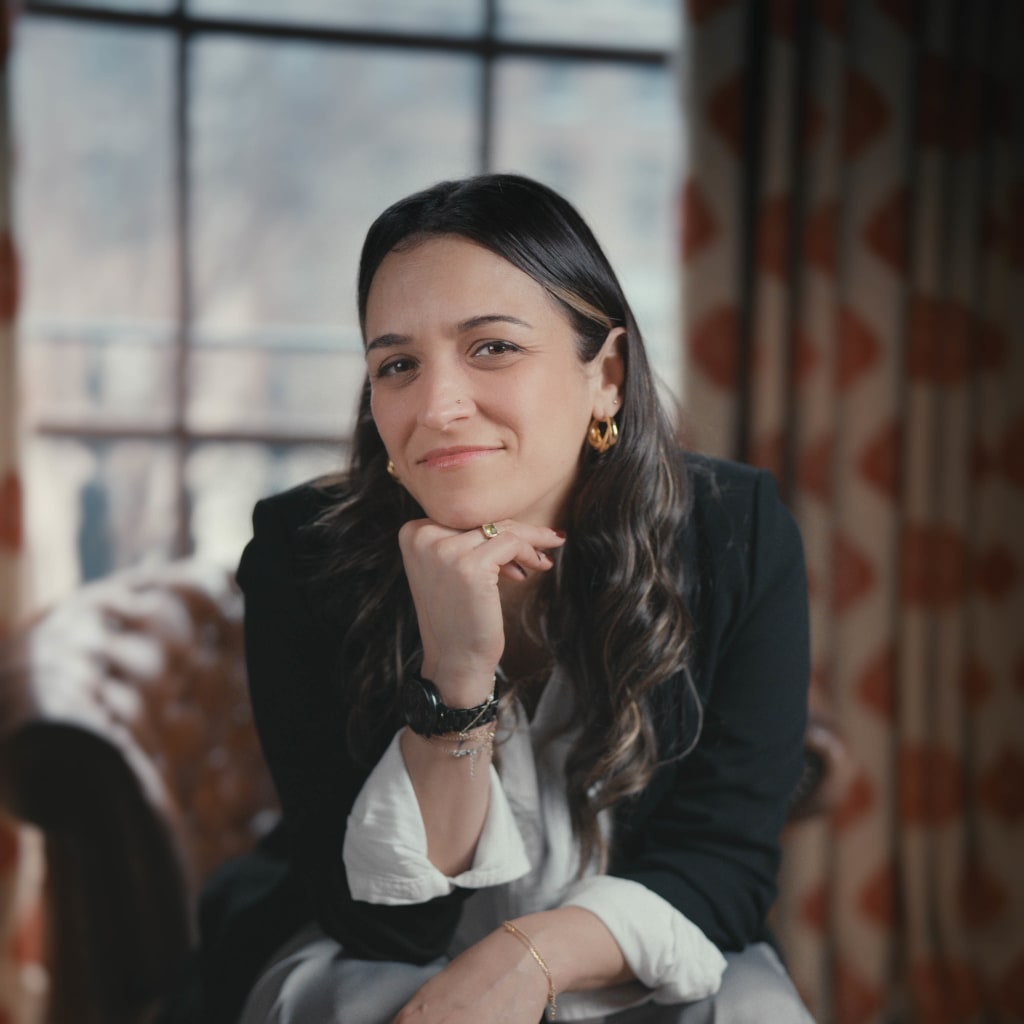 Director, Podcasting
Guest
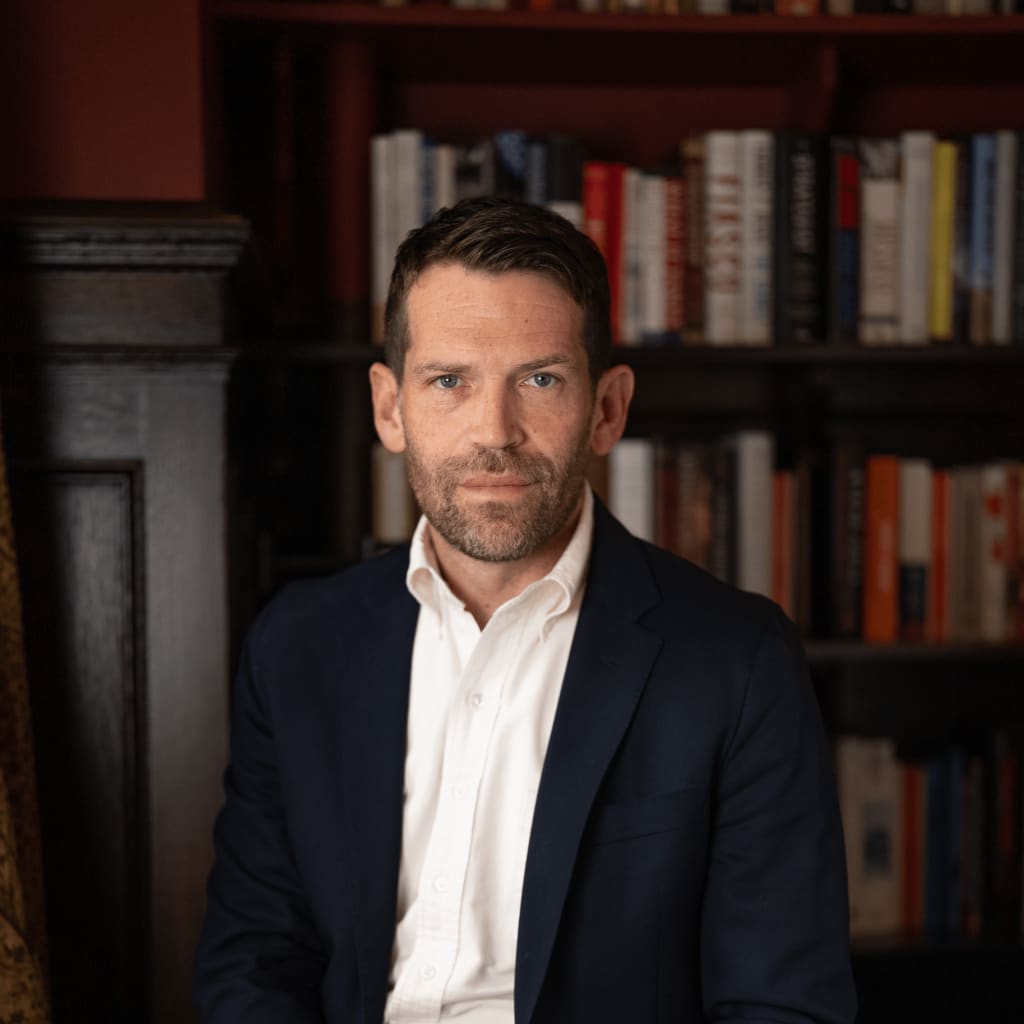 Daniel Kurtz-PhelanCFR ExpertEditor, Foreign Affairs; Peter G. Peterson Chair
Show Notes
A free and independent press is at the core of many democracies. But threats to the safety of journalists abound worldwide, and the rise of generative artificial intelligence has raised concerns about the future of media. At the same time, more people have access to high quality news now than perhaps ever before. Where does all this leave the state of the current media climate?
In this episode, Host Gabrielle Sierra and Foreign Affairs Editor Daniel Kurtz-Phelan talk about the future of journalism, and whether political polarization presents a challenge to nonpartisan publishing.
Mentioned on the podcast
W.E.B. Du Bois, “Worlds of Color,” Foreign Affairs
Mike Gallagher and Matt Pottinger , “No Substitute for Victory,” Foreign Affairs
How to Avoid a Great-Power War: A Conversation With General Mark Milley, Foreign Affairs Interview
Transcript
Hello everybody! So, you, my dear listeners, may know that CFR publishes Foreign Affairs magazine, and for years it’s been required reading for policymakers both here at home and abroad. Foreign Affairs also publishes a daily stream of web content on global developments of the moment, and now has a successful podcast series, which you may have heard on this feed last week, the Foreign Affairs Interview.
So in honor of World Press Freedom Day, we thought we would do something a bit different - a Why It Matters-Foreign Affairs collaboration!
I’m Gabrielle Sierra and for this special episode of Why It Matters, I’m sitting down with the editor in chief Foreign Affairs magazine, Dan Kurtz-Phelan, to discuss the state of global press freedom and the challenges of publishing in a polarized world.
Gabrielle SIERRA: Dan, welcome to Why It Matters.
Dan KURTZ-PHELAN: Thank you so much. Really glad to be here. This has been a long time coming.
SIERRA: Yeah seriously! The world has been asking, you know, and here we are, delivering. So I just want to kick off and say in honor of World Press Freedom Day, which happened this month and in honor of, you know, the pretty wild news cycle we’re in, the media environment we’re in. So if you had to assign it a grade, what grade would you give the state of press freedom globally at this point?
KURTZ-PHELAN: You know, I think it’s a really complicated picture because on the one hand, we know the incredible challenges and threats to journalists working around the world today. The obviously most extreme examples are journalists in prison, whether that’s Evan Gershkovich in Russia or lots of journalists whose names we probably don’t know or most people don’t know who are imprisoned in places all over the world. There are record numbers of journalists being killed in war zones, whether that’s in Gaza and in places that are suffering extreme violence who are not at war in Mexico and Central America. So it’s a grim picture in that sense. It’s a grim picture in the commercial or economic sense in this country and lots of others just because the models that had traditionally supported journalism have, as everyone knows, fallen apart over the last twenty years. And it’s been, I think, it’s been a struggle for a lot of publications to figure out what to do with that. On the other hand, there are way more people who have access to really high quality journalism and analysis than has ever been true in, you know, certainly the history of America as a global power. But I would say probably in the history of humanity. So there is I think much more access to that even as you see those really awful threats and in some cases mortal threats to journalists working all over the place and the just incredible financial challenges for institutions of sustaining all this. So I’m in many ways gloomy because it’s easy to be gloomy about this, but I think we need to remember that that access and everything that technology has enabled, even as it’s disrupted, those financial models really does change the ability of people to access information. So I don’t know if that takes me to a B or what, maybe a C because it’s a complicated picture. But, um...
SIERRA: Pretty wide ranging.
KURTZ-PHELAN: You know, I try to hold both of those things in my mind at one time, and whether that makes me kind of optimistic or pessimistic, depends sometimes on my mood on any given day.
SIERRA: Makes sense. Alright, so let’s just kind of go into what made you want to do this? What made you want to get into this business to begin with and take the path you’ve taken so far?
KURTZ-PHELAN: So I have been, probably since high school or middle school, quite focused on this set of questions. It goes back, I’m a child of the end of the Cold War in the nineties, so very much shaped by the experience of watching the fall of the Berlin Wall, which probably feels like ancient history to many listeners, but it was kind of fascinating to me as a child and trying to understand the context and the reverberations and then watching everything that played out from there. And then again, seeing 9 /11 and the Iraq War when I was in college and trying to make sense both again of the context, but also especially in the Iraq context, to understand the debates and what, in that instance, went wrong in some ways. What was the debate that we should have been having before Iraq that perhaps was not had in the way it should have by people in the foreign policy world, you know, sometimes called, not especially affectionately the blob, but what did the blob get wrong in trying to scrutinize those decisions and look at options in that moment? So that’s a lot of what, as I think about our task now, I’m informed by is that context, and you know, I’ve been kind of always torn between, to go back to that idea of those few different worlds, I’ve been torn between them and I teach, I’ve spent time in government, I’ve written books that are intended for a larger audience. And so in some ways it’s a kind of indecision or a lack of decisiveness that maps perfectly onto the way that Foreign Affairs tries to exist among those worlds.
SIERRA: Yeah, I was going to say you sort of emerged from the blob because you served in the State Department. Do you feel like that experience really shaped the way that you approach telling stories or communicating bigger issues to readers?
KURTZ-PHELAN: It did in a huge number of senses. In some ways that makes me more kind of sympathetic to the people, you know, sitting in the State Department or the NSC or elsewhere trying to kind of think through options, but also gave me an awareness of the kinds of blind spots and limitations that you almost inevitably have when you’re sitting in those jobs, which has been, I think, hugely useful and influential in terms of how we think about what we do at Foreign Affairs. It’s easy on the outside to admire problems and critique approaches without really having anything to say about what you think a better option would be. It’s obviously a cliché in foreign policy or policy of any kind that you’re dealing in many cases with the best of only bad options, that there’s not a really ideal solution and you know that there are lots of risks and trade offs and costs of what you’re doing. But in order to really critique that with I think intellectual honesty and real ethical gravity, you need to be able to say, “Look, there is a better way of doing this that will not bring inordinate risks of its own or have other costs or trade-offs that would outweigh whatever benefit might come.” So, if you’re talking about the failure to address nuclear weapons in North Korea, it’s very easy to lay out a record of failures across administrations for many decades. It’s much harder to say what else you would do. So we would press an author to again, put forth a real constructive solution there. In other cases it might be, you know, I brought this kind of new maybe kind of scholarly framing to a problem or used data or empirical academic work to shed light on in some new way and then we’d say, “Okay, so what if I’m a policymaker? I’m someone trying to act on that in government, or it might be in business or a nonprofit or other kinds of institutions. What should I do with that?” If that framework is useful, it should tell me that I should approach these problems that I’m dealing with every day in a new way.
SIERRA: Well, so you recently, I guess it’s been, how long has the Foreign Affairs Interview been on at this point? Over a year?
KURTZ-PHELAN: It’s almost two years.
SIERRA: Wow. Oh my gosh.
KURTZ-PHELAN: It might be a two year anniversary like this week so it’s been a couple years. It does not feel like that.
SIERRA: It does not - standing there in that studio with you when you first started, so...
KURTZ-PHELAN: And I will say you put me through my paces trying to get my basic podcasting skills and hopefully I’ve gotten some more so...
SIERRA: Well, this is an extremely successful show and you have made this jump from sort of behind the scenes to in front of the scenes or at least in front of a mic. How has that transition been for you?
KURTZ-PHELAN: It’s been more fun and more seamless than I imagined. I anticipated it with some degree of dread, mostly because it was something that I had not spent a ton of time doing in the past. But the advice I got from you and others is that what you’re really doing, and I think this is a great thing about the podcast form, is you’re trying to have a conversation with someone that I think we’re lucky in that most of the people we have conversations with on air are people that I would love to sit down with over a coffee and talk to them about an issue. So on the show, we’re dealing mostly with either people who have written for Foreign Affairs or in a few cases sitting government officials or military officials. We did an episode with General Mark Milley, the former chair of the Joint Chiefs when he was still in the military about a year ago. And with each of those, it’s really just about curiosity and being engaged with the person. So that’s been in some ways a more natural process than some other formats. And it’s also quite close in some ways to what we do in the editing process. So when you’re talking to an author about a draft or talking through an idea, it’s in some ways you’re trying to ask them the right kinds of questions to elicit answers that would, again, shed light on some of the issues that we’re trying to cover. So that’s in some ways very similar if you’re doing that on air with a podcast guest and doing it over the phone with an author trying to get the elements of an essay down.
SIERRA: Any favorites so far? I know you mentioned Mark Milley. Any others jump to mind?
KURTZ-PHELAN: I mean, Milley was totally fascinating as this is someone who had become a complicated political figure in the Trump context especially, and had not really done long form interviews like that at that point. He was several months away from retirement and had been as a good military officer, fairly restrained in what he was willing to talk about, but at that moment had a huge amount of experience, was willing to talk kind of expansively, not so much talking out of school about policy issues or military challenges at the moment, but really kind of reflecting on history that he’d lived, history in a much deeper way. And being able to get someone who isn’t often heard or seen in that kind of context, talking over the course of an hour was quite fun.
SIERRA: That’s awesome.
When we come back, we’ll talk to Dan about whether publishing has gotten more challenging amid mounting global challenges. Stay tuned!
SIERRA: I want to pivot a little bit. What about the climate in international affairs right now? There’s obviously a lot of debate on college campuses elsewhere. Do you feel like our world, that this world of foreign policy is polarized?
KURTZ-PHELAN: I mean it certainly is in the way that so many issues are. At the same time I am struck, there’s obviously a level on which these kinds of conversations, whether it’s about Israel and Gaza, whether it’s about Ukraine, whether it’s about China, whether it’s about our own politics in the state of democracy in the United States. There’s a kind of incredibly fraught and often bad faith version of this conversation that plays out. At the same time I’m struck… When I look at really all of those issues, that there’s also a really, I think, constructive, good faith version of those debates and conversations that play out. And when I look at, not to be too self-referential here, but when I look at the work that authors have done in Foreign Affairs, there’s a very wide range of views. There are people who write advocating for one state, the two state solution is dead, and there should be one binational, Israeli-Palestinian state. There are people advocating for traditional focus on the two state solution. There are people who believe the two state solution is dead, but that instead Israel needs to kind of be aggressive in the ways the current Israeli government is and guaranteeing its own security. So you can get those people in one publication I think offering, you know, serious good faith arguments, grounded in analysis and speaking to one another in ways that I think probably were more challenging in the past or, I’m not sure it’s any worse now than it was, so if I were sitting on a college campus as a student or professor at this point, you do see a wide-ranging conversation, I think, that represents a really serious engagement with this.
SIERRA: Have you been feeling like a really stark generational divide?
KURTZ-PHELAN: That’s the kind of question that makes me feel old because I have to reflect on where I fall in those generational divides. I don’t know. When I look at the kind of samples of our readers that I see in people involved in the foreign policy debate, there are of course generational differences. If I was shaped by my memories of the Berlin Wall and the humanitarian debates of the 1990s, anti WTO protest and everything that kind of consumed attention before before 9/11, and then I look at students who are very, very shaped by the experience of 9/11 and the Iraq war and kind of bring up skepticism to the use of American power that I think is different than is the case for people who were shaped by early earlier experiences. And I think it’s this kind of fascinating question of what college students or high school students now will take away from these last few years because on the one hand I think you saw around Ukraine one shift and then another since October 7th and the war in Gaza started, and what they’ll take away from that, I’m not totally sure, but it seems clear to me both in working with authors and teaching and interactions with our readers, that that formative experience as people are first starting to pay attention to international affairs and foreign policy becomes a framework that they’re going to in some ways bring to problems through the rest of their careers. I think you see this with policymakers as well. There are generational differences even in the Biden administration and I think that explains some of the differences in policy preferences and focus.
SIERRA: Do you find that it gets harder to remain nonpartisan in this climate, or at least has it become more challenging to engage in published debate over issues in this divisive time?
KURTZ-PHELAN: I think what’s become especially complicated here is that the way that partisan divisions mapped a foreign policy debates has changed a lot. So if we were having this conversation fifteen years ago or even ten years ago, I would kind of have a sense of what, like, a Republican viewpoint on most issues was and a Democratic viewpoint on most issues was. I wouldn’t be able to predict that with perfect accuracy. There was obviously variation in debate within the parties, but you kind of had some understanding of how debates about specific foreign policy issues mapped onto that partisan spectrum or onto the political landscape. And that’s become really complicated in interesting ways, right? The kind of way that Trump has disrupted debates about American foreign policy in the Republican Party has been, you know, obviously a total transformation in both what Republican foreign policy looks like, but also what those debates look like. You have probably a somewhat more subdued version of that on the Democratic side, but with a left in this debate that has a much bigger voice than it would’ve, you know again, ten or fifteen years ago. So we work very hard to represent a fairly broad range of views, both what would be considered traditional blob perspectives on a problem, but also more pro-restrainer views, which could come from the left or the right. We’ve had a slew of very senior former Trump officials and perhaps future Trump officials who have written in our pages and engaged in debate with officials from different administrations. We published a piece that’s in our current issue by Matt Pottinger, who was deputy national security advisor in the Trump administration writing with Mike Gallagher who just resigned as a Republican member of Congress from Wisconsin and led the China subcommittee and was a strong voice on a kind of new Republican foreign policy. We’re going to have in our next issue a set of responses to that, including from people who served in the Biden administration, the Obama administration, members of the intelligence community. So, again, the partisan lines are not totally clear there.
SIERRA: Yeah. I want to push you a little bit on that because I know like, obviously, most publications, some pieces Foreign Affairs has published, have drawn criticism, not necessarily to the magazine, but perhaps to the writer. Where is the line between fostering debate and sharing a viewpoint that is potentially problematic? You know, at what point do you decide not to publish an essay by perhaps an otherwise esteemed commentator?
KURTZ-PHELAN: We bring a couple of questions to this when scrutinizing an idea and one, is the author bringing real credibility to the issue and the problem. And that could be someone who’s done great dissertation research. It could be someone young who’s done great PhD research on migrant caravans coming out of Guatemala, but is someone who just knows more about the reality of that problem and drivers of migration than anyone else. It might be someone who’s served in government in a serious role. It might be someone who’s done really fascinating reporting or historical work and that brings real credibility to it and is engaging in that debate and with a degree of good faith. If something is kind of trollish or just a provocation that is not of interest to us. You know, it should also have at least the ambition if you should have the ambition to kind of drive debate forward. It shouldn’t be just kind of rehashing a consensus or admiring a problem, but really kind of driving debate forward about how to constructively address something. So that’s always a judgment call. And there are people who scream at us every day on Twitter and sometimes in real life about specific pieces. And that’s true across a whole range of issues. If you talk about Israel-Gaza, it’s kind of obvious what the challenge of managing those responses would be. But it’s true on Ukraine policy now, right? That if we publish a piece that explores a possibility of negotiations, then there’ll be a set of responses from one camp. We publish a piece that is advocating for a more assertive or aggressive or riskier response from the U.S. and its partners. Making an argument in good faith is trying to drive debate forward. If someone wants to respond to that in a constructive way where they are similarly engaged in that same enterprise, then that’s the kind of debate we love.
SIERRA: Right. Have you had a hard time finding journalists from countries and regions where the press is not so free? You know, how do you balance that with the desire to include essays from undercovered areas?
KURTZ-PHELAN: In places where there’s authoritarian systems, it’s challenging in two ways. So we look at Russia at this moment. There are people writing for Foreign Affairs who still live in Russia, who are, I think every time they write, taking certain risks that are willing to do that and doing that with eyes open. And so we work very hard to continue to publish those people if they’re so willing knowing that there’s some risk there. Another challenging but important case right now is China, where I think it’s quite important to get serious Chinese voices into the magazine. And there are a slew of really impressive Chinese scholars who I’ve talked to a lot over the years at this point who write occasionally for Foreign Affairs. The challenge there is they’re always navigating very complicated dynamics on their own side. So in an ideal world, that’s the kind of thing we’d be doing all the time. But that takes, you know, a lot of work and judgment calls and kind of framing things carefully to make sure that it’s something that meets the test that I laid out a bit ago, but still allows us to bring in perspectives from places that don’t always feed into American foreign policy debate in the way they should.
SIERRA: I know, like, every day we talk about audience. I’m sure you also talk about audience. So in the world of short videos and YouTube and TikTok, do you think there is and will continue to be room for long form pieces? Do you think that, you know, people will grow into Foreign Affairs?
KURTZ-PHELAN: So look, I don’t know, and I have the same concerns about where a magazine will be twenty-five years from now as anyone else, but I don’t have acute short-term concerns. I have to say, when I look at, again, just the number of people who will read a three or four thousand word Foreign Affairs piece online, a lot of them not in the United States, a lot of them under the age of thirty-five, that looks like a much bigger audience willing to spend the time reading that then was the case, you know, fifty years ago. So, I think it’s easy to think back to that golden age. But I see people reading, I mean podcasts are a amazing demonstration of the willingness, it’s obviously a different format than you or I would’ve been working in twenty years ago, but we do hour long interviews with scholars and the number of people who are willing to listen to most of that hour if the scholar is interesting continually surprises me. So, one of the things that we are very focused on, even as we think about the kind of credibility of author and how this engages into a fairly elite policy debate, you know, elite in the sense that it’s among people who are really working on an issue professionally in intense ways, is how you kind of provide the context and framing for things, whether that’s in a podcast or in a written piece so that that nineteen-year-old college student sitting in a university in Colorado where I’m from, can read it and also understand not just the basic terms, but really how this fits into debate. And so without compromising the kind of seriousness and ambition of what we do in the policy sense, making sure that we are providing ways in for that newer readership and broader readership.
SIERRA: You know, the magazine was first published in 1922, so obviously things have changed in that time, but people really respect this magazine, what was it like inheriting such a legacy? Does that weigh heavily on your shoulders all the time when you’re making decisions?
KURTZ-PHELAN: It does in some sense. So I spent the first few years of my career at Foreign Affairs, so before going into government. So I feel very much shaped by the magazine and I’ve kind of been, in some ways, imbibing that legacy for a very, very long time. It both weighs on us but I think it’s also kind of fascinating and sometimes, sorry to sound a little bit corny, but kind of inspiring to go back and read issues in the 1920s that is impossibly dry or really embarrassing or offensive, but there’s also a lot that you go back that is totally fascinating if you go back and read like W.B. Du Bois Writing in Foreign Affairs in the 1920s or 1930s, the kind of pieces that seem incredibly contemporary in many ways and really kind of searching and fascinating on issues that we’re still grappling with as a policy community, as a society now. So there’s a lot in there that I think could be a reminder of what we could do with the magazine. And, you know, you go back to the kind of founding mission statement, and it was about democratizing the foreign policy conversation, bringing in a wider range of voices. And that doesn’t mean in our case millions and millions of people, but by 1922 standards, it was kind of radical to say that we should have a kind of public conversation about these issues that goes beyond the walls of the State Department and the White House and military circles. And that in some ways, is what we’re still trying to do, that means doing it in a podcast or doing it online now, but the mission is in some ways very consistent.
SIERRA: So FA is obviously foreign policy focused, it’s in the name, but in recent years it feels like the line between foreign and domestic has grown more blurred even here at CFR. So where do you see the distinction between domestic and foreign issues and at what point does a story become too domestic for you and your audience?
KURTZ-PHELAN: It’s a really great question. One we grapple with all the time, especially at a moment that is so politically fraught and where the range of outcomes for the United States and for American democracy and American policy in various areas, just the set of possible outcomes in the coming years just feels much wider than it has been for much of my professional life. The questions that we try to bring to the - I mean the biggest one is ‘Can we add value to this conversation in some way?’ We’re not experts on healthcare reform, so we probably wouldn’t run a piece just on how to approach healthcare reform better, but we might run a piece as we have on foreign healthcare systems that can help us understand the best models out there. You know, if I look at the political context now, we’re not covering Trump’s trials, but we have run pieces and we’ll continue to run pieces looking at comparative studies that might, again, shed light on what this means for U.S. politics and American democracy. We might look at the global repercussions of something happening here. So you’re totally right that it’s a much blurrier line and a harder question than I think it would’ve been twenty years ago. But I think this was also probably a shortcoming of the foreign policy conversation to not understand both the consequences at home and the consequences abroad of events at home. So in some ways that’s complicated, but it’s healthy.
SIERRA: Sort of piggybacking off of this, we’re also abuzz about how we’re all going to cover the U.S. election. Do you have plans? How are you sort of approaching this time?
KURTZ-PHELAN: One role of Foreign Affairs with any election is to look at policy options for 2025, regardless of who’s president, but then also at how the two parties or the two candidates are approaching key policy questions. So in more traditional elections, that was somewhat simpler to do because there was I think a much more substantive public debate that was playing out between surrogates for campaigns and aspiring officials. And I think a lot of that has changed in this context, in ways that make it a little bit harder. But we will try to do both of those things. And some of that will mean bringing in perspectives from people who have served in administrations from either party, may serve in a second Biden term or a second Trump term, and trying to get a sense of what they might do based on what they’re trying to lay out in our pages. So we will try to do that and then also try to make sense of what disinformation and threats to democracy and risks of violence might mean for America’s role in the world. Again, we don’t have a staff of reporters who are going to go out and cover it in the way that lots of publications will be doing, which is obviously the essential work. But I think our role here can be to try to both bring international context to some of that, but also try to understand the global consequences of it, both for America’s role in the world, but also for global democracy or global economy or global issues more broadly.
SIERRA: We’re in the era of AI, you know, what do you think the future of journalism looks like? What sort of debates are you guys having?
KURTZ-PHELAN: So I don’t want to sound too pollyannaish here either, but my sense is that AI will be a huge challenge to lots of media organizations, but will in some ways raise the value or clarify the value of places that do really kind of bespoke work, right? That put a lot of editorial care into selecting articles and publishing them, and those will stand out. What happened in the markets that day, or what an annual report said, or what the weather is or when the Grammys are on or whatever. That will be done by AI. But I have a hard time imagining that a complicated 5,000 word argument about what to do about the Chinese economy is going to be done in the way that an author would do it. So my sense is that it’ll in some ways be clarifying and be beneficial to places like us. It creates, you know, as you know, all kinds of challenges for audience and finding people and there are lots of business challenges, but if we can work those out, I think on the kind of core substance, it’s not a terrible thing and could be a good thing in some ways.
SIERRA: Last one. So most of the writers and editors I know, and of course people in other industries as well, worked in a different industry to support their writing dreams. I was a bartender, I was an executive assistant, worked for free for a lot of small magazines. I once had to book my boss a facial. I think it all makes you stronger. That’s the way that I look at it, or at least I hope it does. Do you have any gigs that sort of stand out to you from your path along the way?
KURTZ-PHELAN: Yeah, I mean the one that I would offer is an unhappy memory. I was a caddy briefly and I was so bad at it that I stopped. Like, I would go sit on the bench waiting for work and they would basically never give it to me. So I wasn’t quite fired, but I just stopped actually getting - I would put on like a white jumpsuit at this country club and wait for caddy jobs and not get them. So thankfully I did not have to do it that long.
SIERRA: So you weren’t even a caddy. You were waiting around to maybe be selected.
KURTZ-PHELAN: I did caddy sometimes. I was just extremely, extremely bad at it.
SIERRA: Well, again, builds character and thank you for running through all of this. You can breathe out. You made it.
KURTZ-PHELAN: Thank you. That was fun. Alright.
For resources used in this episode and more information, visit CFR.org/whyitmatters and take a look at the show notes. If you ever have any questions or suggestions or just want to chat with us, email at [email protected] or you can hit us up on X, better known as Twitter at @CFR_org.
Why It Matters is a production of the Council on Foreign Relations. The opinions expressed on the show are solely that of the guests, not of CFR, which takes no institutional positions on matters of policy.
This episode was produced by Molly McAnany, Noah Berman and me, Gabrielle Sierra. This episode was also edited by Molly McAnany, she does a lot around here. Our interns this semester are Olivia Green and Meher Bhatia. Robert McMahon is our Managing Editor. Special thanks to Mariel Ferragamo. Our theme music is composed by Ceiri Torjussen.
You can subscribe to the show on Apple Podcasts, Spotify, YouTube or wherever you get your audio. For Why It Matters, this is Gabrielle Sierra signing off. See you soon!
Associate Podcast Producer
- Producer, Podcasts
 26:04Podcast
 38:36Podcast
 31:35Podcast
 37:32Podcast
 32:26Podcast
 32:47Podcast