China in Europe: October 2025
In October 2025, the Netherlands took temporary control of Chinese-owned chipmaker Nexperia, the European Parliament resumed interparliamentary talks with China, and the EU sanctioned four major Chinese oil firms.
By experts and staff
- Published
- Turner RuggiResearch Associate, U.S. Foreign Policy
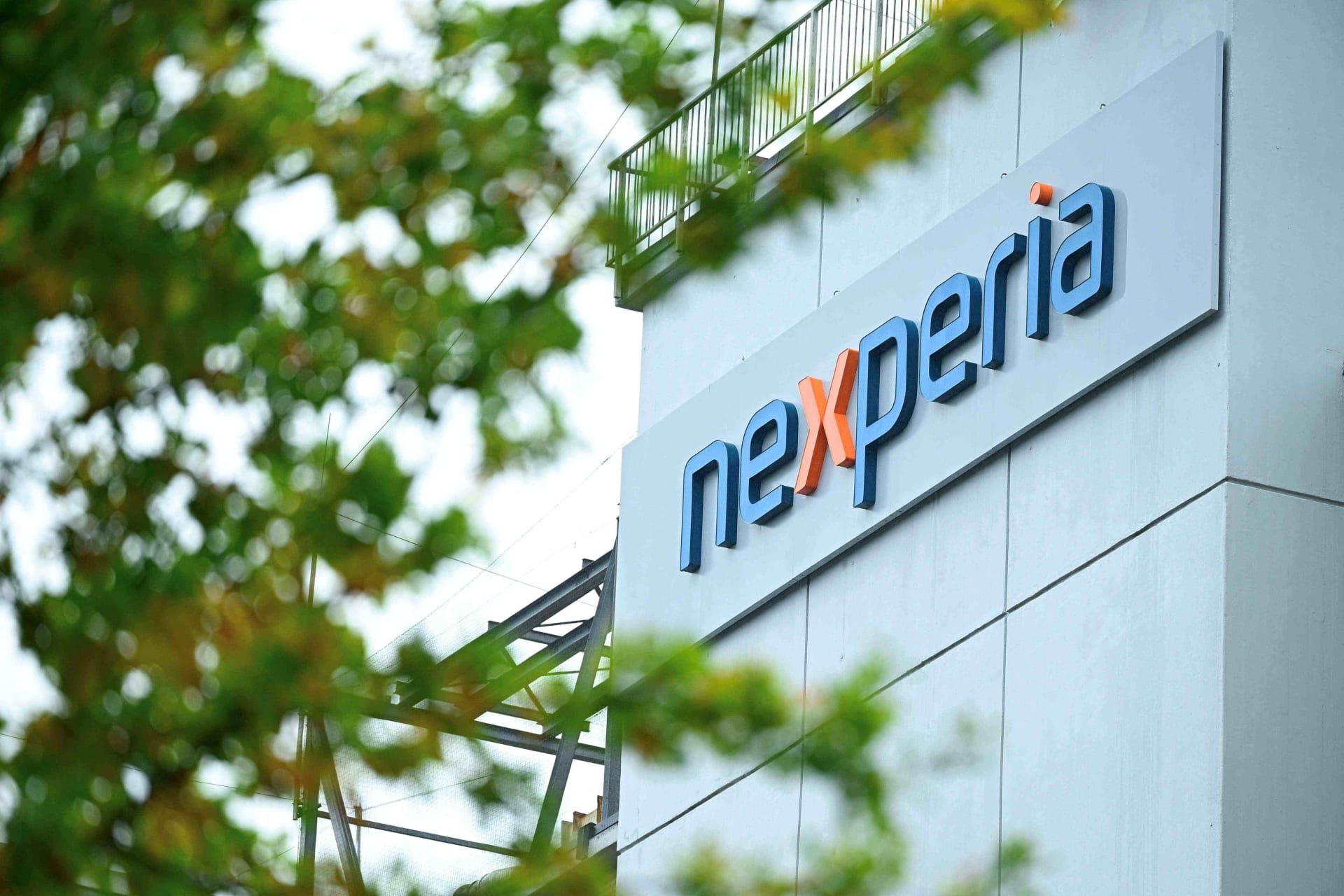
Nexperia Dispute: On October 13, the Dutch government invoked emergency economic-security powers to take temporary control of Chinese-owned chipmaker Nexperia. According to the Netherlands’ minister of economic affairs, the government made the decision “to prevent a situation in which the goods produced by Nexperia (finished and semi-finished products) would become unavailable in an emergency.” The government cited “major shortcomings that could jeopardize security of supply” for chips to European factories. Court documents revealed that the move followed months of U.S. pressure on Nexperia’s Chinese parent company, Wingtech: in June 2025, the U.S. Bureau of International Security and Nonproliferation told the Dutch foreign ministry that “the fact that the company’s CEO is still the same Chinese owner is problematic. . . . It is almost certain that the CEO will have to be replaced.” Washington also added Wingtech to its “entity list” of sanctioned firms in December 2024. Beijing responded by imposing export controls on Nexperia’s Chinese facilities, restricting outbound shipments of basic chips and subassemblies outside of China. The Chinese state-owned People’s Daily described the Dutch intervention as “robbery in legal disguise” and reported that “China’s scientific and technological progress has profoundly shaken the nerves of Western hegemony. Both the Chinese government and its enterprises must be fully prepared for this.” Nexperia is one of the world’s largest manufacturers of transistors, which automobile producers need in significant quantities, and the European Automobile Manufacturers’ Association voiced particular concern due to their reliance on Nexperia’s chips.
EU–China Interparliamentary Meeting Resumes: On October 16, the European Parliament and China’s National People’s Congress held their forty-second interparliamentary meeting. It was the first interparliamentary meeting since 2018, as the dialogue was canceled following China’s sanctions on members of the European Parliament (MEPs), EU institutions, and European researchers in 2021 over their comments on Chinese human rights abuses of Uyghur Muslims in Xinjiang. During the session, MEPs raised long-standing human rights cases, including Sakharov Prize laureate Ilham Tohti, the Hong Kong publisher Jimmy Lai, the Panchen Lama, and the Swedish citizen Gui Minhai. They also voiced alarm over the tripling of the EU’s trade deficit with China since 2019 [PDF] and warned that structural imbalances have reached an “unsustainable” point of inflection, threatening unilateral EU action under its economic security strategy if dialogue fails. The Chinese delegation expressed its frustration with the “intrusive reporting requirements” of EU export controls on rare earths.
EU Sanctions Chinese Firms: The European Union adopted its nineteenth sanctions package against Russia, which included four large Chinese companies involved in the oil industry, as well as refineries and a trading firm. The targets of the sanctions were Tianjin Xishanfusheng International Trading, Liaoyang Petrochemical Company, Chinaoil Corporation, and Shandong Yulong Petrochemical. In response, Beijing’s Ministry of Commerce said in a statement that “China strongly deplores and firmly opposes this move” and that the sanctions “lack a basis in international law.”
ASEAN Summit Sidelines: On October 27, European Council President António Costa met Chinese Premier Li Qiang on the sidelines of the Association of East Asian Nations (ASEAN) leaders’ meetings in Kuala Lumpur, Malaysia, using the encounter to press EU concerns on trade and security. Costa called for constructive China-EU relations while urging “concrete progress” on rebalancing trade and the economic relationship, and he outlined his concern over Chinese export controls on critical raw materials. He also stressed that Russia’s war in Ukraine is an “existential security threat” to the EU and expressed the “expectation” that China would help end the conflict. In China’s statement, Li said that “China-EU relations face both development opportunities and challenges,” and that China is open to addressing their trade disputes “through dialogue and consultation.” Li focused on expanding cooperation in green and digital sectors, scientific innovation, and industrial and supply chains. Notably, the Chinese readout omitted any reference to Ukraine or the Middle East.
Wang Yi Visits Italy and Switzerland: Chinese Foreign Minister Wang Yi traveled to Italy on October 8 for the twelfth session of the China–Italy Government Committee, meeting Italian Deputy Prime Minister and Foreign Minister Antonio Tajani and President Sergio Mattarella. The two sides discussed the wars in Ukraine and the Middle East, and China’s support for an Italian-backed Winter Olympics global ceasefire. But the talks centered on trade and tourism, including plans for a new direct Beijing-to-Venice flight path and working groups on economy and finance, culture, and higher education. Chinese readouts framed China and Italy as “ancient civilizations” that should draw on historical wisdom to manage today’s turbulence. Wang then moved to Switzerland for a strategic dialogue with Swiss Federal Councilor and Foreign Minister Ignazio Cassis, where both sides pledged to accelerate an upgraded free-trade agreement and expand cooperation in artificial intelligence, green development, finance, and services trade.
Spanish Foreign Minister in China: On October 15, Spanish Foreign Minister José Manuel Albares Bueno met Wang in Hangzhou, China, to mark the twentieth anniversary of the China-Spain comprehensive strategic partnership. Both sides highlighted economic cooperation through “green and digital empowerment.” They also stressed the importance of cultural, educational, and tourism links, with China signaling readiness to expand visa-free access for Spanish travelers. The Chinese readout stated that the two ministers exchanged views on the Ukraine war, the Middle East peace process, and “other international and regional issues of common concern.”
Germany Postpones China Trip: On October 24, Germany announced that Foreign Minister Johann Wadephul’s planned late-October visit to China would be postponed after China confirmed only a single high-level meeting (with Wang) and declined to schedule additional appointments. The German foreign minister stressed that the trip was “postponed, not cancelled,” and the deputy government spokesperson in Berlin said the cancellation would not cause “any major impact on the federal government’s further policy,” as he insisted that Germany remains committed to a “respectful and good exchange” with China.
Belgian Espionage: Belgian authorities arrested a police officer on October 2 on suspicion of spying for China and Russia. He was accused of taking images of opponents of the Chinese and Russian governments amid demonstrations in Brussels. The officer was released on bail under strict judicial conditions but remains under close supervision. In April 2024, Belgium altered its penal code to expand the possibility of espionage charges, and a federal investigation is underway.