China in the Middle East: January 2025
Chinese firms announced a plethora of renewable energy infrastructure projects across the Gulf this month, including the world’s largest battery energy storage system to be built in UAE. Another op-ed battle over Xinjiang and Tibet raged in the Israeli press as a ship from China transported 1,000 tons of a primary precursor for ballistic missiles fuel to Iran.
Zhai Visits the Middle East: China’s special envoy for the Middle East, Zhai Jun, traveled to Israel, the West Bank, and the UAE from January 16 to 21. It was his first time in Israel and the West Bank since October 7. On his first stop in Israel, Zhai met with senior foreign ministry officials and discussed bilateral relations, the ceasefire, and the release of hostages. Beijing’s envoy emphasized cooperation between China and Israel, striking quite a different tone from his foreign ministry and China’s ambassador to the United Nations. The Chinese readout also asserts Israel highlighted its commitment to the One China principle. Zhai’s subsequent talks with Palestinian President Mahmoud Abbas in Ramallah reaffirmed China’s long-standing support for Palestinian national rights and the two-state solution, emphasizing the need for a comprehensive and permanent ceasefire in Gaza and pledging continued Chinese backing for Palestine’s bid for full UN membership. In the United Arab Emirates, Zhai and Emirati leaders discussed deepening bilateral ties and regional stability.
Saudi Arabia
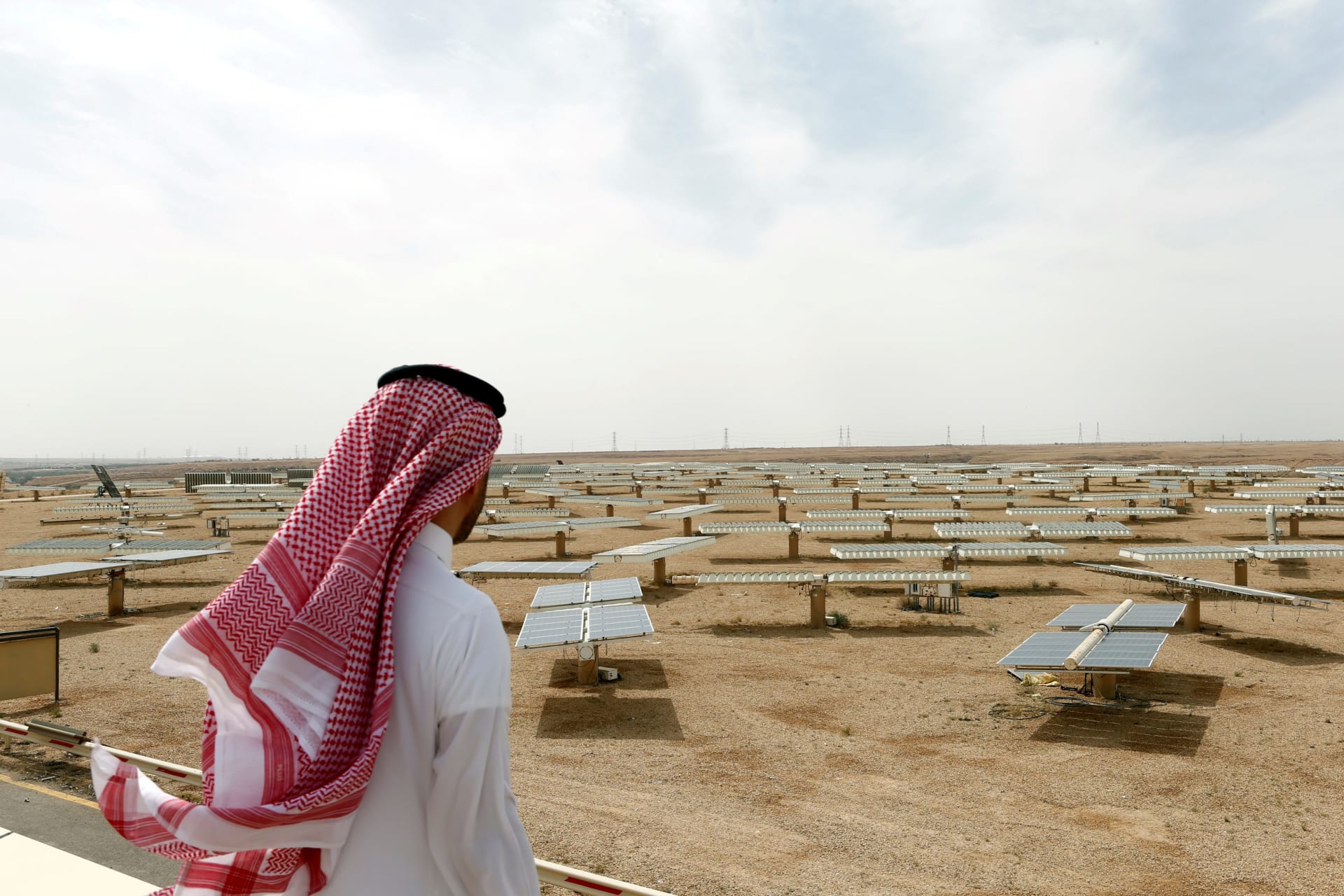
Renewable Energy Deals: In December, Saudi Arabia’s state-owned energy company ACWA announced its plans to invest $50 billion in China by 2030. By mid-January, ACWA got started with two deals valued at $312 million. The first project, done in partnership with Chinese company Sungrow Renewables, is a 132-megawatt (MW) solar photovoltaic across three sites in the Guangdong Province. The second, a joint agreement between ACWA and Mingyang Smart Energy Group, focuses on a 200-megawatt project using wind energy. According to the ACWA press release, the second project serves as only the beginning of an expanded partnership with Mingyang to “jointly develop and invest in China’s wind energy assets.”
In the middle of January, GD Power Development, a subsidiary of a Chinese state-owned enterprise, announced it would invest in and codevelop a two-gigawatt (GW) solar photovoltaic project in As Sadawi, in the north of Saudi Arabia’s Eastern Province. A joint venture with Abu Dhabi’s state-owned renewable energy company Masdar and state-owned Korea Electric Power Corporation, GD Power will hold a 40 percent stake, with a total investment of approximately $1.1 billion. The plant is expected to operate for twenty-five years, generate about six billion kilowatt-hours (kWh) annually, and sell electricity at an average price of 1.29¢ per kWh.
Qingdao TGOOD Electric Co Ltd, a Chinese electrical transformer manufacturer, secured a $94 million contract with state-owned Saudi Electric Company subsidiary National Grid to supply and install 132-kilovolt mobile substations by end of April 2025.
In the same week as those two deals, Saudi Arabia officially launched the kingdom’s largest battery energy storage system (BESS), developed in close collaboration with leading Chinese companies. State-owned electric utility company State Grid Corporation of China worked with a private Saudi company on engineering, procurement, and construction (EPC) while BYD designed and delivered the system’s 122 prefabricated storage units.
A few days later, state-owned PowerChina Guizhou Engineering Co., Ltd. secured contracts for two more photovoltaic power station projects in Saudi Arabia. PowerChina will oversee the engineering, procurement, and construction of the 1,250 MW al-Masa’a and 500 MW al-Henakiyah 2 projects alongside another Chinese company, SPIC Huanghe Hydropower, and some regional firms.
Those projects reflect China’s growing role in Saudi Arabia’s energy transformation, central to the goals of Saudi Vision 2030.
New Deals: In mid-January, Saudi company Al Watania for Industries and China’s Donghexin Group announced a joint venture to establish Saudi Arabia’s first integrated tinplate production plant in Ras al-Khair Industrial City. With an estimated production capacity of four hundred thousand metric tons, the factory will meet the kingdom’s domestic demand and position Saudi Arabia as a regional exporter of tinplate. In further alignment with Saudi Vision 2030, the project supports the localization of key industrial supply chains and is estimated to create over five hundred direct jobs.
In the last days of January, Shandong Tiejun Electric Power Engineering Company signed a deal with Saudi Arabia’s Alian Industry Company to build and operate a concrete mixing plant. The new facility will support the expansion of the PP12 power plant in Saudi Arabia’s central town of Dhurma.
Saudi Arabia Wants Chinese Investments: On the sidelines of Davos toward the end of January, Saudi Arabia’s minister of industry and mineral resources, Bandar al-Khorayef, told the South China Morning Post, “We would like to see investments from Chinese companies bringing know-how, technology, and also capturing the value that we have in Saudi Arabia.” Al-Khorayef emphasized twelve industries of potential cooperation with China, with a strong focus on manufacturing taking place in the kingdom.
Justice Meeting: On January 22, China’s ambassador to Riyadh Chang Hua, met with the kingdom’s justice minister, Walid al-Samaani. According to the Saudi readout, Samaani “highlighted the significant advancements in the Kingdom’s judicial and legal sectors,” while China’s readout said the two discussed hopes to cooperate “in the fields of law and justice.”
Cultural Exchanges: In early January, Chinese Dunhuang Academy and the Saudi Royal Commission for AlUla announced a strategic partnership “to expand cultural, touristic, and heritage collaborations” between China and Saudi Arabia. In addition to cohosting exchange programs and exhibitions, the two sides will develop a conservation program for sites and artifacts in al-Ula, Saudi Arabia, and in western China.
Then in mid-January, China’s embassy in Riyadh hosted the 2025 Spring Festival Fair to showcase Chinese culture and celebrate the “Year of Culture” between the two countries established in October 2024.
Chicken Cooperation: Saudi food company Tanmiah and Chengdu Design & Research Institute formed a strategic partnership in January. The two entities will work together on one hundred poultry broiler houses across the Gulf country.
UAE
Renewable Energy Deals: In early 2025, Chinese firm Arctech signed a deal to supply 1.5 GW of its SkyLine II 1P single-axis solar tracking systems to state-owned PowerChina for the United Arab Emirates’ Al Ajban solar project. The tracking systems hold and rotate solar panels to ensure they continuously face the sun. When completed, the project will be one of the world’s largest single-site solar plants, generating enough clean electricity to power approximately 160,000 households. A January Xinhua article praised Chinese contributions to the UAE’s clean energy transition.
On January 14, the head of Chinese solar panel company Trinasolar’s Middle East business told the UAE state-owned National that the firm aims to invest $5 billion in the Gulf country.
Chinese companies dominated another BESS project in the region as the UAE’s state-owned renewable energy company Masdar announced a landmark partnership with Power China, Jinko Solar, JA Solar, and CATL for its $6 billion Abu Dhabi project, featuring 19 gigawatt-hour battery energy storage. Jinko Solar and JA Solar will supply 5.2 GW of high-efficiency TopCon solar modules, while CATL will provide its advanced TENER battery technology to enable 24/7 renewable power delivery. Power China will serve as an EPC contractor for this gigascale project, expected to be operational by 2027 and the world’s largest BESS.
Electric Planes: The South China Morning Post reported in early January that China aims to export electric aircraft to the UAE after the Civil Aviation Administration of China certified the four-seat electric aircraft RX4E. Developed by the subsidiary of Shenyang Aerospace University, RX4E is the “first purely electric aircraft” to comply with Chinese regulations. The planes will be sold by Volar Air Mobility in Hong Kong.
Electric Cars: The UAE has become a center for Chinese electric vehicles (EVs). Reuters reported that the UAE, alongside Russia and Mexico, was in the top three markets for Chinese vehicles in the first eleven months of 2024. After opening its first Middle East showroom in Abu Dhabi in November 2024, Chinese EV company NIO opened a showroom at the Gate Avenue outdoor mall in Dubai. As part of the PRC embassy’s Chinese New Year event in Dubai, thirteen automakers showcased their electric vehicles.
Chinese Investments: In an interview with the South China Morning Post, Hareb al-Mheiri, executive director of the investor growth sector at Abu Dhabi Investment Office, praised Chinese investments in the UAE. According to the Hong Kong–based outlet, Mheiri said, “Chinese companies are contributing to the diversification of Abu Dhabi’s economy with increasing investments in ports, industry, energy and property,” and “investments by Chinese companies into the capital of the United Arab Emirates are creating jobs, fostering infrastructure development and strengthening the emirate’s status as a global business hub.” With China-UAE trade blossoming, Mheiri specifically highlighted Chinese investments in ports and industrial zones. According to a report put out in late January, Beijing-based companies have invested $10 billion in the China-UAE Industrial Capacity Cooperation Demonstration Zone within Khalifa Economic Zones Abu Dhabi.
Investment Conference: On January 7, the UAE Ministry of Investment and Chinese Minsheng Securities, alongside the UAE China Innovation Center, hosted the China (Shanghai)-UAE Industry and Investment Cooperation Conference. The event convened government officials, financial leaders, industry experts, and business elites to discuss investment opportunities between the two countries.
Improving Financial Ties: In mid-January, the Dubai Financial Services Authority granted China International Capital Corporation (CICC) a license to operate in the Dubai International Financial Centre (DIFC). The license enables CICC to arrange and advise on credit, financial products, and investment deals, further diversifying the financial services available in DIFC and supporting cross-border trade, sustainable finance, and Chinese enterprises’ overseas investments. CICC joins China’s five largest banks in the special economic zone.
New Cultural MoU and Ties: The China Shanghai International Arts Festival and Abu Dhabi Music & Arts Foundation signed a memorandum of understanding (MoU) “to boost cultural cooperation and understanding between the UAE and China.” The two entities will coproduce new events and launch cultural exchanges.
Israel
Taiwan’s Representative Strikes Back: As reported in December, Xiao Junzheng, Beijing’s ambassador in Israel, penned an op-ed in the Jerusalem Post, “One-China Is An Indisputable Fact, and Israelis Must Know This.” On January 3, Taiwan’s representative, Ya-ping Lee, wrote a response titled “The People’s Republic of China Has No claim on Taiwan,” where she asserted that Taiwan “is a sovereign, independent country,” pushed back against the PRC’s narrative, and appealed to Israel’s democracy. She made similar appeals in interviews, arguing that Israel and Taiwan are both democracies under siege that face disproportionate pressure on the international stage.
Ambassador Gets in Another Media Spat: After December’s Jerusalem Post piece, Xiao wrote again for the Israeli presses in January. Xiao’s Times of Israel blog post, “The Real Xizang: China Responds to a Times of Israel Article,” responds to an article in the same outlet that describes Chinese crackdowns in Tibet. Using the PRC-preferred term Xizang for the autonomous region, Xiao calls the article “false” and defends Beijing’s actions.
Beijing’s Response to Ceasefire: In a foreign ministry press conference, spokesperson Guo Jiakun expressed Beijing’s support for the ceasefire, sharing, “China welcomes the agreement and hopes that this agreement will be implemented effectively and that there will be a full and permanent ceasefire in Gaza.” Another ministry spokesperson, Mao Ning, repeated the sentiment in a January 20 press conference.
Demand for Chinese EVs: SAIC Motor, a Chinese state-owned automotive manufacturer, launched three new EVs in Israel. Then, at the end of the month, Chinese EV company Zeekr announced it would install an ultrafast charging network across Israel, with an initial eight stations as a pilot. Those developments came as China was the top source of car imports in 2024 for Israel.
Iran
China Supplies Ballistic Missile Fuel to Iran: The Golbon and Jairan, two Iranian-flagged ships, set sail from China to Iran in late January with one thousand tons of sodium perchlorate—a primary precursor for making solid fuel for ballistic missiles. Financial Times reporting confirmed that the chemicals, among those controlled by the anti-proliferation Missile Technology Control Regime, “were being shipped to the Islamic Revolutionary Guard Corps.” Beijing denied knowledge of any shipments.
Sanctioned Oil: Following the U.S. sanctions imposed on vessels known to carry Iranian oil in December, China’s Shandong Port issued a notice that banned those ships from entering. As reported by Reuters, the Shandong Province “imported about 1.74 million barrels per day of oil from Iran, Russia and Venezuela last year, accounting for about 17% of China’s imports.” The action is likely to hurt independent refiners that are major importers of sanctioned, discounted oil from Iran, Russia, and Venezuela. Although Shandong Port claims the ban will have limited drawbacks, as most sanctioned oil arrives on non-blacklisted ships, traders warn it could slow China’s overall oil imports and tighten tanker availability. The resulting logistical constraints have already pushed up prices for sanctioned crude and could further reduce Iranian and Russian oil exports to China.
More Oil Trouble: In early January, Reuters reported Iran seeks to recover twenty-five million barrels of oil, worth $1.75 billion, that have been stranded in Chinese ports since 2018 due to U.S. sanctions that year. Although China has continued to buy 90 percent of Iran’s oil at a discount, this particular cargo is clearly documented as Iranian and has therefore been stuck in storage. The Wall Street Journal then reported that three million barrels were released with Chinese approval. According to the outlet’s sources, Beijing gave the green light in late November and December 2024 after multiple requests from Iran to release the ships.
Renewable Energy Cooperation: In the first few days of January, Iranian state-directed news agency Mehr reported that China and Iran were to cooperate on renewable energy, according to the Islamic Republic’s deputy energy minister. Then, in the last few days of the month, the Tehran Times announced a “preliminary” deal among Iran’s Chamber of Commerce, Industries, Mines and Agriculture Energy Committee, the Atomic Energy Organization of Iran, and Hainan Elite Energy. The outlet reported that 70 percent of the investment will be provided by Hainan with 30 percent covered by an Iranian company.
Meetings: Chinese Ambassador to Iran Cong Peiwu met with Iran’s Minister of Culture and Islamic Guidance Abbas Salehi in early January. As reported by the Islamic Republic News Agency, Salehi shared with Cong, “Relations with China are strategic and serious in the pillars of Iran’s Islamic system. . . . The Iranian government and people know their friends in difficult times and don’t forget them.” Mirroring a Chinese diplomatic practice, Salehi referred not simply to the two countries but the civilizations of Iran and China as the basis for strong relations.
Iranian Artifacts on Display in Chengdu: Building on similar developments in October and December, Chengdu’s Sichuan University Museum featured 151 artifacts from Iran’s most famous museums in the second half of January.
Turkey
Tariffs: Effective January 1, Turkey raised tariffs on Chinese gas and hybrid cars from 40 percent to 50 percent. With the standard 10 percent customs tax, Chinese nonelectric vehicles will face a 60 percent customs duty. Beijing’s electric and plug-in hybrid vehicles will maintain a 40 percent tariff. Chinese auto manufacturer BYD is exempted from the tariffs due to the company’s plans to build a factory in Manisa, Turkey.
WTO Dispute: After initiating the dispute in October, China officially requested a dispute panel on January 27 on Turkey’s import measures targeting Chinese EVs. Beijing called the duties “protectionist and discriminatory,” while Istanbul claimed the actions “are completely justified against the backdrop of the strong challenges its automotive industry has been facing for many years due to anti-competitive practices, subsidization, and excess capacity.”
A $60 Billion Investment: In an interview with the South China Morning Post, the president of Invest in Turkey’s government promotion office announced China will likely invest $60 billion to upgrade Turkey’s rail infrastructure. The development would offer trade between China and Europe to bypass the challenges to northern rail corridors running through Russia. A path to Europe through Istanbul would also promote Beijing’s China Railway Express cargo system. Although the proposal has generated optimism, experts caution that its benefits will hinge on Turkey’s ability to implement the upgrades efficiently amid ongoing regional and economic challenges.
Accepting Chinese EVs: While the two disputed at the WTO, and a week after the tariffs, SAIC and Turkish automotive group Doğan Trend announced progress in establishing an SAIC vehicle manufacturing plant in Turkey. Doğan Trend officials traveled to Shanghai on January 10 at SAIC’s invitation to move the project forward. It is unclear whether the visit happened.
SAIC’s initiative is part of a broader trend of Chinese automotive investments in Turkey, with other major companies such as BYD and Chery also announcing or negotiating large-scale factory projects in the country. Those investments are strategically important for China as Turkey’s customs union with the EU provides a gateway to European markets, especially amid rising tariffs on Chinese electric vehicles in the EU.
New Chinese Ambassador: China’s new ambassador to Turkey began his tenure in early January. Jiang Xuebin delivered his first address upon his arrival at Ankara Esenboğa Airport and was then received by Ankara’s deputy foreign minister in mid-January.
New Air Routes: In early January, a new air cargo route opened between Istanbul and Ürümqi Diwopu International Airport in the northwest of Xinjiang. The seven-hour flight is scheduled weekly and aims to increase logistical support for bilateral trade. A Chinese readout described the new flight as part of the Belt and Road Initiative.
Syria
Fu’s Four Points: As the UN Security Council met to discuss the evolving situation in Syria, China’s ambassador to the body, Fu Cong, delivered four points to characterize the Chinese position. China (1) supports a “Syrian-led and Syrian-owned political process,” (2) has zero tolerance for terrorism, (3) calls for humanitarian assistance, and (4) criticizes Israel’s occupation of the Golan Heights, championing “the sovereignty, independence, unity, and territorial integrity of Syria.