A Conversation With Representative Adam Smith
Event date
Speaker
- U.S. Representative From Washington (D); Ranking Member, House Armed Services Committee; CFR Member
Presider
- Senior Contributing Editor, The Cipher Brief; CFR Member
Representative Adam Smith discusses his vision for U.S. global engagement, defense, and diplomacy, and shares his insights as ranking member of the House Armed Services Committee.
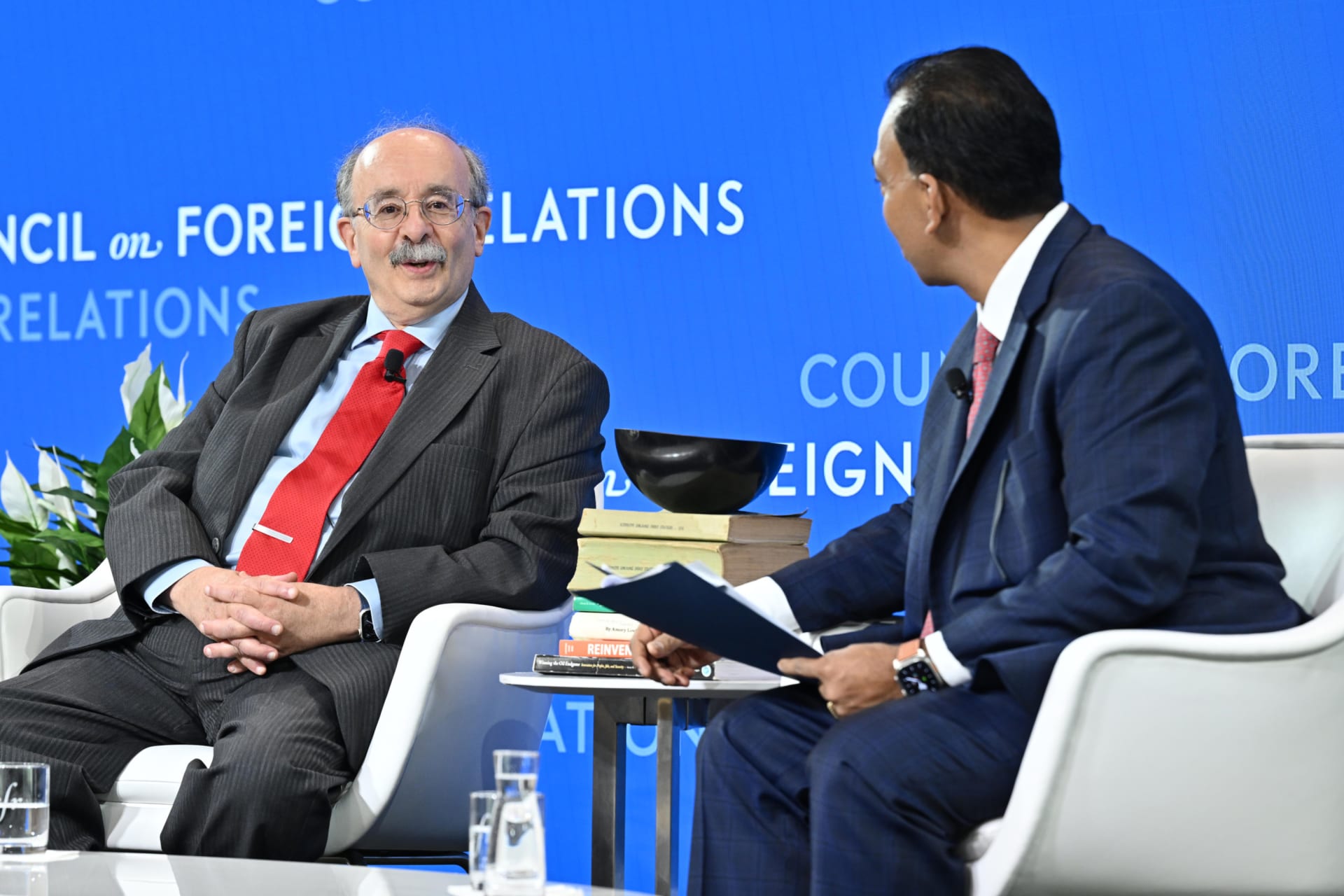
NAGORSKI: Good morning, everyone, and welcome to the Council on Foreign Relations, those of you here and those watching and listening elsewhere. I’m Tom Nagorski, with The Cipher Brief.
You all know our guest, Congressman Adam Smith. What you may not know, although this audience probably does, is that he has a long and distinguished not only history and record in the Congress, but also is a great expert I would say and a voice of experience when it comes to global and national security affairs. So delighted, Congressman, that you can be with us.
SMITH: Thank you for having me.
NAGORSKI: I have to remind that we’re on the record. And just one Council on Foreign Relations note that’s not in my script. I’m a little disappointed, Mike Froman, that the costume has come off. (Laughter.) I don’t know if others had a chance to see it.
SMITH: (Laughs.) Would be hard to sit, I would imagine.
NAGORSKI: The meticulous preparation staff at the Council did not give us a Halloween protocol. So, anyway. (Laughter.) I decided to come as a moderator.
Congressman, we were going to start with China in our conversations with your staff yesterday, but just to flip things a bit, given some morning news, I’m not really sure how hard and fast it is but there are a couple of reports in the press this morning suggesting that what has, to this point, been a campaign against these vessels in the Caribbean and in the Pacific, that there are now—depending on which report you read—that the U.S. is poised to, or has made the decision to, actually strike military targets in Venezuela. And, first of all, I should start by asking you, you had a briefing yesterday, you and your committee in Washington. What can you share about that, and about this latest report?
SMITH: Sure. There’s a lot of layers to this. One is that the administration has been less transparent than any administration I’ve ever dealt with on a wide range of issues, but certainly when it comes to what they’re doing in the Caribbean and against Venezuela. And this has been a frustration on the Hill. Normally, when you’re going to launch an operation like they did when they began doing kinetic strikes against drug boats down in Latin America, there would be briefings on the Intel Committee, briefings on HASC, explained to us what DOD is doing, and the basis for the intel. They haven’t done that, particularly on the intel side. They have not presented any of that information.
Now, what we can glean from what they’ve said publicly there’s sort of two overlapping objectives. One is to try to stem the flow of drugs into America and two is to undermine Maduro’s regime. And those two things are not necessarily in concert always. So it is not surprising to me that they might do this, because they see it as achieving both of those objectives. On the drug side, and this is something we pressed them on yesterday, no one denies that drugs are a major problem in the United States of America. The question is whether or not blowing up a couple dozen—well, I think we’re up to like fourteen now and continuing—boats with cocaine on them in Latin America is going to have a significant impact on that drug trade in America. There is considerable reason for doubt.
One is demand is what drives the drug trade in the United States of America. And if you start blowing up boats of cocaine in Colombia, well, then they’ll find a different route. They’ll push other drugs. There’s a whole bunch of different ways they will go. So the administration, right, thus far, has only targeted in international waters. Which means, in all likelihood, the cartels are pivoting to other routes. And that might take them into territory—now, it’s interesting, Venezuela is not the biggest drug country in terms of either producing or shipment. They’re involved, no question. So it seems that that then bleeds over into that other objective, which is regime change. Which I would have hoped we would have learned that that is not something the United States of America should be engaged in.
NAGORSKI: So you’ve raised a lot of the policy questions inherent in both potential—
SMITH: I left out a big one, but—
NAGORSKI: Well, no, go ahead.
SMITH: Oh, sure. The big one is, is this legal?
NAGORSKI: That’s what I was going to ask.
SMITH: Does this make sense? Because, I mean, look, and this came up in the briefing, basically, we—the president of the United States has decided that he will institute the death penalty for drug dealing. Now, that’s an interesting policy question. All right, it’s been debated. Different countries have gone in different places on it. But it’s not a policy question that we’ve had in the United States of America. That’s not legal. That’s not something that we’ve decided to do. So not only has the president of the United States decided to circumvent all of that and say, yeah, we’re going to have the death penalty, but he’s decided to do it without any due process, to appoint himself judge, jury, and executioner.
And who are they targeting? From what we can glean both from the brief yesterday and from what they’ve said publicly, there are twenty-four different narco-terrorist groups, as they call them. We have no details on who’s the twenty-four, who’s in the twenty-four. But it’s also not just people who are part of those twenty-four drug cartels, but anyone who is affiliated with those drug cartels. Which also comes without much of a definition. So the president has basically empowered himself to use the United States military to do lethal strikes against tens of thousands of ill-defined people, without any oversight.
That is a clear abuse of power and a massive expansion of the power for the president of the United States. And I believe it undermines the Constitution and the rule of law, to the extent that we care about those things anymore. You can talk about the policy, but the Constitution and the rule of law, I’m still of the opinion, matter in maintaining a peaceful civil society. And those are being shredded by the way he is implementing this policy.
NAGORSKI: I assume you can’t get into any detail about it, but was the legal question addressed in the briefing you got yesterday? Or was it merely a policy conversation?
SMITH: No. Sorry, there was one particularly amusing thing that happened on this front that I’m trying to figure out whether or not I can tell you. But they pulled the two lawyers right before the brief. We were supposed to have the chief counsel to the chairman the Joint Chiefs of Staff and the chief counsel to the Department of Defense. They were pulled. I challenged—I will tell you—I challenged the leg liaison on that by saying, you know, you pulled these folks at the last minute. And he explained, no, we know we didn’t pull them. We took them off. (Laughter.) At which point I pointed out, I hate to tell you this, but “pulled,” “took off,” literally synonymous. So we didn’t make a lot of progress in getting an explanation for why that happened. But I think it’s because they didn’t want to have to try and defend the legality of this. It’s the same reason they fired all those inspector generals and all of those JAGs. The president wants to do what he wants to do. And he does not think that the law should literally ever be an impediment to what he wants to do.
NAGORSKI: So, Congressman, before we leave this subject, I just want to ask you what you think you, your committee, your fellow members, can do about any of the things you’ve just been talking about. And specifically, it does seem, but correct me if I’m wrong, as if this issue has—maybe not galvanized, but it has least—you know, it’s gotten some Republicans hot and bothered too. I’m thinking of Rand Paul and other people. And I don’t know whether it’s the legal, or the policy, or the lack of information, but what’s your next step, besides talking to forums like this one?
SMITH: Sure. Well, fortunately it goes beyond Rand Paul—who’s in a unique little category—you know, to other Republicans. And, look, you know, we’re about liberty. And you worry about the power of the state. Individual freedom is supposed to be important to Republicans of all stripes. You know, even MAGA Republicans. And now you’ve got a president of the United States saying that he can kill people basically on his own accord without any check on that. And, yes, that is becoming alarming to some Republicans. Now, I have to bifurcate your first question in terms of what can Congress do about it, because one of my frustrations in the era of Trump is, you know, people tend to equate Congress with Democrats and Republicans. (Laughs.) So what Congress could do about it, and then saying that they’re not doing, and implying that—implies that Congress isn’t doing, when, in fact, it is the Republicans who are not doing it.
We’re all part of Congress, but if Democrats were in charge we would be—well, for one thing, we would compel the appearance of Admiral Holsey to explain to us why he left his job and what he thoughts—what his thoughts are on what’s going on in SOUTHCOM right now. There are also all kinds of, you know, restrictions that we could pass and put in place. And we could certainly shine a brighter light on what’s going on. But as much as the Republicans in Congress are troubled, I don’t know what the right word would be, by some of the things Trump has done, they have shown an almost 100 percent reluctance to date to use their power as a Congress to do anything about it. And I really want to foot-stomp a point that I’ve been trying to emphasize here recently. Mike Johnson has effectively dissolved the United States House of Representatives because the president of the United States asked him to.
That is insane, OK? We have had shutdowns before. We have. We have always been in session during the shutdowns. In fact, usually we are in session more often we had—than we had planned, for rather obvious reasons. We had something important to do, which was figuring out how to open the government back up again. But now we haven’t been in session since September 19. I mean, I’ve been in Congress now twenty-nine years. And if you’d told me during any one of those years that between September and November we wouldn’t be in session, I would have looked at you like, A, you’re insane or, B, something really, really bad happened, all right? I mean, this is when we’re supposed to be finalizing the budget. We’re supposed to be finalizing the NDAA. We are still working on that, and other things. And effectively we do not have a United States House of Representatives because the speaker of the House has decided that we don’t really need one right at the moment.
And that undermines everything that we’re trying to do in terms of oversight, in terms of legislation, in terms of dealing with the shutdown. We’ve got the SNAP benefits that are about to expire tomorrow. A, the president has billions of dollars to go ahead and pay those SNAP benefits—an emergency fund that we, in Congress, set up, that he is choosing not to use. But, B, in a crisis like that, the House of Representatives should be in session trying to do something about it. So we are in a very, very dangerous place. And Venezuela is but a tip of the iceberg.
NAGORSKI: OK. Well, consider that point well, foot-stomped, to use your words.
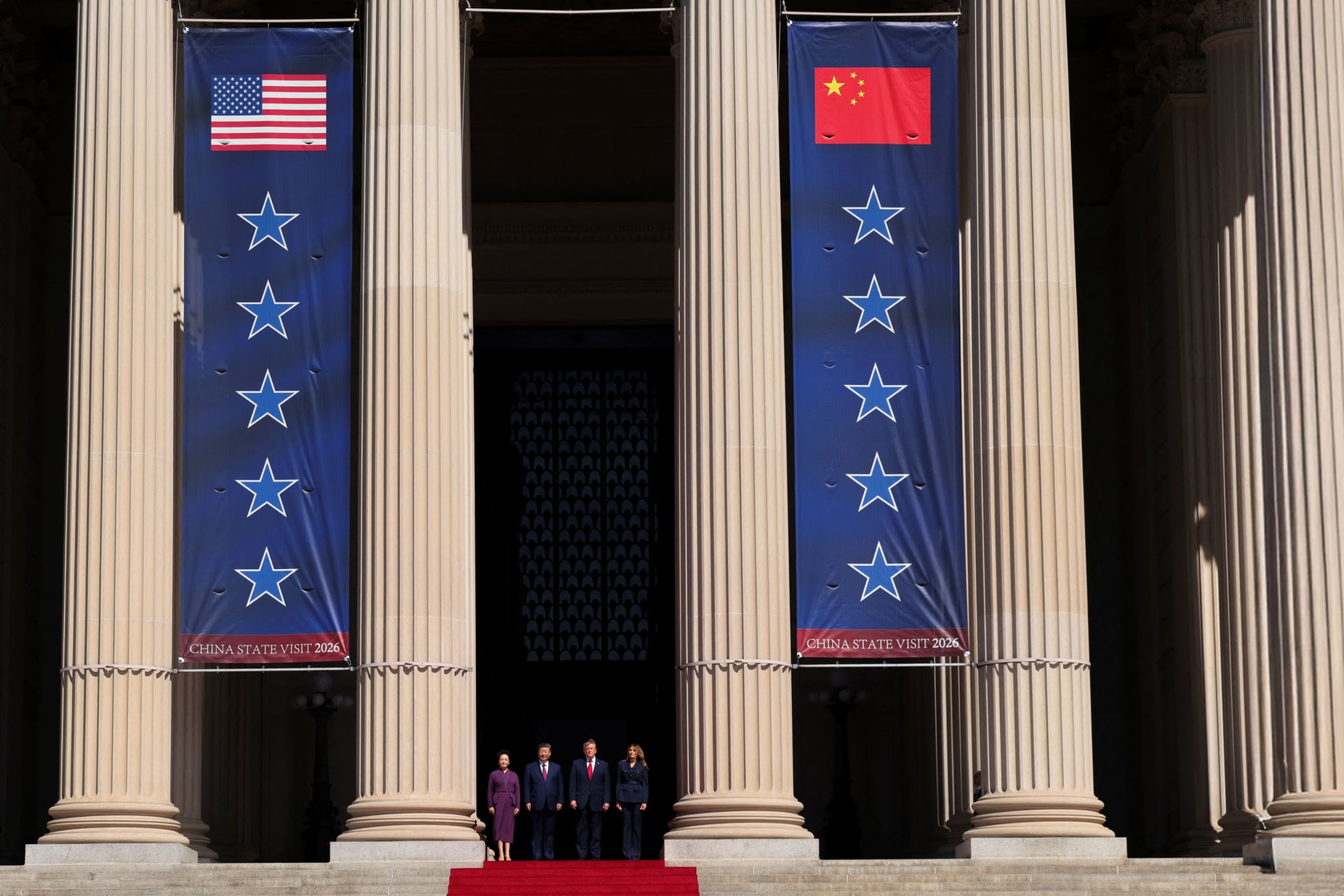
Let’s go to China then. It seems like a long time ago now, but it was only yesterday in Korea that we had this agreement between President Trump and Xi Jinping. And this—talk about something that’s getting a different play depending where you read and listen, it’s, you know, back from the brink moment, and some are saying back to square one, just where we started. What’s your take on this twelve out of ten meeting that President Trump said—rare earths issues settled, and so forth. You’re smiling, what—
SMITH: No, I’m smiling because I’m thinking about the fact that he’s also said he’s going to reduce the price of things by like 1,400 percent. And you’re going, yeah, sure, here, cross the—(laughter)—yeah, doesn’t really work out. But anyway, he, as they—he says stuff. Let’s say, because I was in—I led a CODEL to China in the middle of September, first House CODEL that had been there since—(off mic)—for a variety of different reasons. And my personal overarching take on China is we have to figure out a way to coexist with them, number one. And, number two, that is considerably more possible than most people are saying publicly.
Now, it’s difficult. Don’t get me wrong. But I don’t buy into this zero-sum game—we win or they win, so let’s go. We have to figure out how to defeat them. I think that is the wrong way of looking at it, because China is a big, powerful country. And they’re not going anywhere. Now, I want to make a point that I tend to leave out and forget. China needs to recognize this, too. This isn’t all on us. I mean, China has been running around for the last decade, you know, with this BS notion of late-stage capitalism, in Marxist-Leninist language, that somehow the U.S. is going to go away and they’re going to become the transcendent power. That’s not going to happen. We’re not going anywhere. So they need to get over that.
And we need to get over the notion that somehow we’re going to keep China down and they’re not going to be able to compete with us. If you do that, then you can begin a discussion about how you coexist. Now, that discussion is really complicated and very, very difficult on a wide range of issues. You know, sovereignty of other Asian nations, certainly Taiwan, the economic trade relationship, military build-up. You know, what’s—you know, what’s China doing in Latin America and Africa? There’s a thousand different issues that are not easy to resolve, by any stretch of the imagination. But once you embrace the notion, instead of saying I have a plan to beat China, what’s your plan for coexisting effectively with China?
Now, against all of that, you’ve got our president and what he’s trying to do. And he has a rather unique way of approaching things. The positive and the good news is, he wants to talk with Xi. He wants to engage with China. He wants to cut a deal, as he always says. And that instinct is a positive in this situation because it gets us off of the we’re never going to China, we’re never talking to them. Now we have to get them to want to talk to us. I think that’s improved a little bit in the last couple of years. So there’s the possibility, you know, that they could work something out. But then once you get into the details, the trade war that Donald Trump brought against them—and Nicholas Kristof summed this up better than I could—you know, he lost. He started a fight that he couldn’t win, and, unsurprisingly, he lost it.
All he got back was, basically—and I I’ve lost track of how many soybeans we buy in an average year. I don’t know if what China committed to in this agreement is more or less than what they were doing before the trade war started, but I suspect it is less than or equal to.
NAGORSKI: Sounds like it’s roughly the same. You would probably know, right? A little less.
SMITH: Yeah. Yeah, yeah. So we got them to agree to do a little bit less than they were doing before Trump launched his trade war. And we got them to stop doing something that they weren’t doing, again, before Trump launched his trade war, which is restricting rare earth minerals. So he basically lost on that. But then there’s multiple different layers below this. The New York Times has a good article this morning about, you know, the decision on export restrictions from a national security standpoint, and how Trump sort of put that on the table. And all these things are, I think, important things to talk about.
I just—I wonder if Trump and his team are the ones that are really going to negotiate the types of deals and the type of agreements that are going to get us to the best outcome. But we need to be talking about it, in my view. Most of the Washington, D.C. establishment would chastise me at this point for being naive. China is out to crush us. There’s nothing we can—we must stop them. OK. I don’t agree with that. But that is—you know, the China Select Committee is very focused on decoupling, which I don’t agree with. I do agree with derisking, but not decoupling, because I don’t think decoupling is possible or desirable. Whole bunch of different layers in there, but.
NAGORSKI: Well, can I ask you about one of the layers which you raised, which is the rare earths situation, issue. The president said it’s been settled. Sounds like it’s a one-year pause. But not only is it an economic or U.S.-China matter, I wonder—again, you’re on the Armed Services Committee. It’s clearly a national security issue too, right, because these things are—as we keep hearing everywhere, they’re in all sorts of weapon systems. And it does seem—and I imagine this is a failing of multiple administrations—that China’s—I mean, they have a near-monopoly on the minerals themselves, the processing, and so forth. I saw, by the way, someone surfaced, it might have been CFR, a quote from Deng Xiaoping, early ’90s. “The Middle East has oil. We have rare earths.” And they acted on that, right, for decades. How dangerous is this, in your view, quite apart from what happened yesterday in Korea, for the United States?
SMITH: Yeah, apparently it’s very dangerous. It’s always at this point that I say I wish I’d paid a lot more attention in chemistry class when I was in high school because a lot of—every time you turn around, it’s, like, oh, we really need that. What’s that? And it seems to all be in one place that’s problematic to get to. So it’s really important, no question. And this gets into the derisking conversation. I think it’s fine to get a one-year pause. We better get busy about generating alternatives. Because the trap that we sort of fell into—and I’m not one that says, oh my gosh, we should have never let China into the WTO. They were coming, all right? The notion that we’re going to hold them—wrong. But we became too reliant upon it. Starting in the late ’90s, for ten, fifteen years, China became the global corporate easy button, all right? That’s where we go to manufacture. And everything went there. And it was we everything, and it was all—and we woke up and we were, like, really dependent upon them.
So balancing that back out is crucially important. And this is another, I believe, fundamental flaw in the Trump approach. To do that—we’re not going to be able to make all of the stuff that we need, rare earths and others, in the United States of America. We’re just not. But the good news, for the moment, we have partners and allies that have a wide variety of different capabilities and are similarly concerned about China having too much control over them. So let’s figure out what we need. And let’s start, I don’t know, making it in Vietnam, or Malaysia, or Mexico. Let’s work with Australia on the rare earth question. Let’s sort of build our alliance. But instead of doing that, Donald Trump punched literally every country in the world—and, as your chart showed, Antarctica. (Laughs.) Which I don’t know if they’re a country or not.
But basically—and now—and I know a lot of people who are in manufacturing, who have some stuff in China and elsewhere. In the last year it’s been whiplash. All right, we got to get out of China. No, I guess we’re back to China. OK, we’re going to go to Vietnam. Oh, can’t go to Vietnam. We’ll go to Malaysia. Eh. That doesn’t help. We need to balance it out with having other countries that we can rely on. The rare earth problem is a particular problem, as I think most people in this room know. It’s not so much a matter of who has the rare earths. They’re kind of all over the place. It’s the mining and processing, which are expensive, difficult, and brutal for the environment, as they are currently done. So we need to figure out—we can certainly find the rare earths. But then, how are we going to mine them? How are we going to process them?
I have it on my to-do list, after reading that article yesterday, to check back in with my team and figure out exactly where we’re at in that process. I know there is, I believe, in the U.S. we’re thinking of doing a mining operation somewhere. I forget where. Australia—
NAGORSKI: There’s a deal now with Australia, or at least on paper.
SMITH: Australia could be a huge partner in this, because they have a ton of rare earths as well, and could conceivably process it. But that’s where we need to get into the mentality of not decoupling, derisking, all right? China’s not going anywhere. Fine. But we also don’t want them to have their hand around our throat. So if we can use this year as an opportunity—and, also, China plays dirty. I am fully aware of that. So do we, from time to time. Just ask someone on a boat in the Caribbean. They are trying to undermine the efforts to mine and process rare earths and other places, in a variety of different ways. They want to keep their monopoly. So part of the conversation that I hope that Trump had with Xi, and that our leaders are having with their leaders, is you got to get your foot off our throat here. And that includes not just lifting your restrictions on export, but stop on trying to block the ability to develop rare earths. Either they flood the market, from time to time, when a country is trying to do this. They do various different things to block the ability of anybody else to become effective at mining and processing rare earths. We ought to stop them from doing that.
NAGORSKI: OK. We’re about seven minutes shy of your questions. A couple more from me. I want to talk about Ukraine for a moment. And I think it’s fair to say, even by the sort of standards of volatility of President Trump’s statements and policies and so forth, this has been a kind of mind-bending year. I think if you’re President Zelensky—you know, it was in February, I think, when he was berated in the Oval Office, he then was praised for his and his countrymen’s courage and so forth.
SMITH: It’s actually shockingly simple and alarming to understand. But—
NAGORSKI: Well, OK, I won’t go through the whole pendulum that swings. But I mean, you know, for a while Vladimir Putin seemed in the doghouse. Let me just ask you a fundamental question, what do you think right now is American foreign policy towards Ukraine? And what do you think it ought to be?
SMITH: Well, here’s where the conflict came from. So, first of all, Trump always overstates what he can do. And he was convinced that he could solve it like that. As we know day one, he was going to do it. No problem. Nothing to worry about. He said that with absolutely no clue whatsoever of what that would mean, but with absolute conviction. So that’s number one. Number two, there are a couple of problems within the MAGA base about Ukraine and Russia. Problem number one is Zelensky refused to dig up dirt on Biden when Trump asked him to, as we’re very much aware of, which led to all manner of different conspiracy theories in a thousand different directions in the MAGA world—that this is all a hoax, and blah, blah, blah. So there’s this desire not to like Ukraine and not to like Zelensky, specifically, which undermined any effort to want to help them once Trump got back in office.
Problem number two is—I love Liz Cheney’s line about the Putin wing of the Republican Party, best represented by Marjorie Taylor Greene, whereas Putin presents himself as a white Christian nationalist combating wokeism, which he does present himself that way, by the way. There’s a fascinating propaganda video that he did about people on an airplane—that if you haven’t seen it on YouTube it’s really funny—that presents himself as attacking, you know, wokeism. And so there are some in the MAGA movement who see Putin as an ally. And why are we messing with what an ally wants to do? So that was influencing Trump world when he came into office.
But then I and a lot of other people who wanted to defend Ukraine started to make a very simple point. Does Donald Trump want to be the president who gave Putin Ukraine? Does he want to be the one who let that happen? I said a while back that, you know, nobody gave Chamberlain a Nobel Peace Prize for letting Hitler have all of Czechoslovakia, just to sort of underline the point. And that pressure started to build. And let me also say, shoutout to Republicans in Congress, which I haven’t done much thus far this morning. So, you know, they are staunch defenders of Ukraine in very large numbers, in certain influential positions. And people like Mike Rogers, and Mike Turner, and Roger Wicker, and others really pressed Trump on this point to say, you can’t let the Russians win this.
So when you see—what you see as confusion is you see the vestiges of those two things I mentioned about the MAGA movement, and then you see the other things sort of creeping in. And you sort of track that timeline over the course of the ten months of the Trump presidency. As up front he was bashing on Zelensky, taking Putin’s side, doing the whole thing. And now he’s moved back to a more neutral place, where he’s not actively undermining Ukraine but still not really doing enough to support them. Because the formula that the Biden administration had, which I’ve always subscribed to, was we have to have two goals. One, preserve a sovereign, democratic Ukraine, don’t get into a war with Russia. That’s what we’ve been doing. And for all the criticism of Biden, some of which I have participated in, on this subject I think he has been unfairly maligned because they did that really, really well. Built a fifty-three-nation coalition. Everyone thought Ukraine would collapse in a month. Here we are, what, three and a half years later, little over. They’re still fighting.
And it’s in large part because Ukraine has really, really tough people. There’s actually a line from the movie The Italian Job that summed that up pretty well. And they’ve done a great job. But also, fifty-three nations stood up and helped them and gave them a whole lot of stuff that kept them alive and breathing. And now we’re at the point where Putin is either stalled or moving really slowly, and bearing an enormous cost for this war. If we can keep helping Ukraine and convince Putin that he can’t achieve his maximalist goals, that is what drives Putin to the bargaining table. Trump was under this misapprehension that the war was Zelensky’s fault, for those reasons I stated earlier, so we had to put pressure on Zelensky. It’s like, Putin is the one who actually started the war. And he didn’t have a good reason for doing it, with all due respect to Jeffrey Sachs, and all those people out there that blame us for it.
Ukraine, in no way, shape, manner, or form threatened Russia. It did not. Putin invaded Ukraine because he wanted to add to his empire—period, full stop. Convince him that he can’t do that, then he has to, you know, basically try to come to some sort of peace agreement. Will Trump get there? I mean, the sanctions he talked about kind of a half-step in the right direction. We need to keep pushing to get more support to Ukraine.
NAGORSKI: Quick follow up. And maybe it’s not fair because it’s not a quick answer. But what are the measures that you think can be taken right now by the United States to affect that behavioral change? Because the one criticism of the Biden administration that has stuck is it took a long time almost with every single weapon system to come to the moment. Do you think Tomahawks should be sent to the Ukrainians? Just—
SMITH: A lot is made of those weapons systems. A, it underestimates the difficulty that was involved on our side, OK? You have to be able to produce these things and get them to them. And you do also have to pay at least a little bit of attention to our national security needs and other issues. We gave them a lot. And it was very, very helpful. But to answer your question in a simple way, more sanctions, more weapons, and an absolute, ironclad commitment. I think the rhetoric matters as much, because if you’re Putin right now you still have a little bit of a reason to believe that Trump might lose interest and either walk away or undermine the support he’s giving to Ukraine in a way that would weaken them. The single most important thing we could do right now would be for Trump, J.D. Vance, Hegseth, Rubio, Elbridge Colby might be too much to hope for, but come out and say: We’re with Ukraine and we’re not going to back down until Putin stops his war. If that message was sent, I think that would make a huge difference.
NAGORSKI: All right, Congressman. We’re half past the hour.
And the usual reminder. A, we’re on the record. B, if you’re in this room wait for a microphone. C, if you are not in this room, wait for the prompt and unmute yourself and identify yourself.
We’ll start with you.
Q: Thank you. Yes. I’m Arlene Getz. I’m a journalist and a Council member.
I wanted to ask you a little bit more about the effective shutdown of the House, the back story. What is going on behind the scenes to try and stop this? Are there any signs of bipartisanship? Because presumably it’s not only the Democrats who are disturbed by this. And the messaging as well. If and when SNAP stops tomorrow, what kind of message—
SMITH: If what stops?
Q: SNAP. SNAP, yeah. What kind of messaging are the Democrats planning, because, you know, the propaganda war is pretty fierce on this.
SMITH: Sure. There’s a lot in that question. As far as what we’re doing on the shutdown, we are trying to continue—we are continuing operating. We’re negotiating the NDAA as if we were in session. We’re doing that. You know, we’re trying to get briefings, unsuccessfully. But, no, there are really no Republicans in the House that I’ve seen—other, ironically, than Marjorie Taylor Greene—who are trying to put pressure on the House to open back up. So, again, behind the scenes, there’s considerable concern from my Republican colleagues. They’re not—I don’t know a single one of them that’s called up Mike Johnson and said, what are you doing, man? You got to open this place up.
On SNAP benefits, the messaging—and I was—I’ve been on CNN/NewsNation in the last twenty-four hours talking about this. As I said, I believe, in the opening, there is, I don’t know, $7-8 billion in a fund that Congress set aside for this emergency situation. So understand—and we have to message this very clearly—there is one and only one reason why SNAP benefits are not going out tomorrow. Because Donald Trump has decided not to send them. All right? He has the option to send them out. He is choosing not to, all right? That’s it. And that ties into a second message which is, you know, people are, like, well, Democrats shut down the government just to make a point or whatever. It’s like, hmm. No. We wanted the Republicans to negotiate with us on how to deal with the health-care crisis that was coming November 1.
And they said, well, we’ll talk to you about it on November 21. It’s, like, one, November 21, you know, that’s too late. Doesn’t help. But they wouldn’t do anything about it. So we have been trying for a month to get them to care about a major health-care crisis about to hit this country. And I will say what maybe some of my Democratic colleagues wouldn’t. I’m not hung up on one solution. You got something else? Happy to see it, OK? You know, if you don’t think we should just extend all the ACA tax credits, what do you got? Thus far, they got nothing. So they haven’t negotiated with us. Their plan has been to inflict as much pain as possible on the American people and try to blame the Democrats for it. That’s it.
And there is nothing noble about that at all, OK? You know, we could have done a variety of different things to reduce the impact of the shutdown. Trump has tried to maximize the impact of the shutdown because he sees it as a political advantage. So—and then, you know, a lot of, well, you guys are playing political games too. It’s, like, million people losing their health care, how is that a political game? You know, that is actually trying to help people. And it’s secondary issue of Trump ignoring the appropriations process and cutting off programs all across the country that’s having a huge impact, which we would like to see addressed as well.
All of that said, you know, if we get into the next two or three days and the Republicans make it clear that they simply want to torture the American people for their own political advantage, I think we should have a conversation about what do we do to get out of this? The point of this was not to blackmail the Republicans or to, you know, score political points on one issue or another. The point of this was to get to better policy. And if what we are doing with the shutdown isn’t getting us to better policy, then, yeah, we recalibrate and we have a conversation. But it worries me.
And I’m sorry this is way too long of an answer. But it worries me, because within the Democratic Party we have a certain confidence problem right at the moment, if you hadn’t noticed. (Laughter.) And, you know, oh, you caved, and we start using, like, third grade language. It’s, like, no. We had a very clear plan. We implemented it intelligently. And now we are adjusting to the circumstances in front of us. That’s what you should want out of your leaders, in my humble opinion. And if you don’t want that out of your leaders, then we need to work harder to convince you that you should. So that would be the message.
NAGORSKI: OK. Mike.
Q: First of all, Congressman, thank you for joining us. It’s great to have you here.
As you laid out, the president has a rather unconventional approach to foreign policy. But if we look at a series of issues, his use of tariffs, whatever their cost, has brought other countries to the table to negotiate. In the Middle East, he was able to secure—again, whether the long-term ceasefire will hold or not—
SMITH: I’m not really going to give you that one, but go ahead.
Q: Whether it holds or not, he was able to get the live hostages released, and many of the remains returned. Something that, again, previous—the Biden administration worked very hard to do as well. But he was able to achieve that. And in Europe, previous presidents pushed the Europeans to spend more on defense, to support NATO more. He finally got them to get there. What does this tell you about—what are the lessons of the Trump administration for the use of U.S. power, and how a future president should think about what leverage we have and how to use it?
SMITH: I think it’s fine to say—and I will say two decent things before I get a little critical. I think Trump’s instinct to say, let’s talk, let’s figure this out, whereas I think within the typical sort of D.C. establishment foreign policy there’s all these rules, OK? We can’t do that. Why? Well, we just don’t, OK? Trump’s instinct to say, I’m not paying attention to some rule that was developed fifty years ago that we never changed our mind on, let’s be more adaptive, more daring in terms of changing things, I think that’s a positive. I think it’s one of the problems we have in a number of different areas. And the Pentagon has this problem with just, you know, sticking to whatever the process says, instead of trying to get to a solution. Decent instinct. Second, I think it’s perfectly fine to speak strongly and put pressure on people. I think that is OK.
The problem is, a lot of what Trump is doing—first of all, understand, he has one operating principle, and that is to consolidate as much power as humanly possible in his hands. That’s half the tariffs, to my mind. He just wants the power to be able to do what he wants, when he wants, where he wants. He doesn’t like what Brazil is doing to Bolsonaro, 50 percent tariff. He doesn’t like that Modi didn’t give him credit for the India-Pakistan deal, that he didn’t deserve, 50 percent tariff. So he’s consolidating power around himself. And, as I mentioned earlier in the China example, it doesn’t necessarily adhere to our strategic benefit. Doesn’t come to our strategic benefit. So, yeah. I mean, I think we can learn those two things. But be willing to negotiate. Be willing to think outside the box. Be willing to put pressure on people. I don’t think there’s a problem with that.
Now, I do think that Trump has a tendency—well, it is his great skill set. He has the ability to take credit for absolutely everything, responsibility for nothing, and exaggerate his accomplishments to a level which, honest to God, nobody I have ever encountered in my life or read about in human history is as good at, OK? Well, and part of it is just I can’t believe people buy that stuff. I just—it’s the subject for another time. And so he’s good at that. It’s like, you know, what he accomplished in the Middle East is a ceasefire. Do you know how many presidents since 1993 have achieved a ceasefire between Israel and somebody? Every single one of them. Some of them multiple times, all right? OK? That’s just been sort of the rotation since the First Intifada. So that, in and of itself, is hardly worthy of something unique.
Now, if that peace lasts, if Hamas actually is driven out and the Palestinian people have a future, and Israel and Saudi Arabia actually sign a peace agreement, awesome. But the other thing that’s worrisome about Trump is he doesn’t have a very long attention span. And this is going to require a very long attention span. So if he takes those first few assets, applies them over here and gets it done, I will be happy to praise him. I don’t think you should campaign for a Nobel Peace Prize. (Laughter.) I mean, I think if you’re campaigning for it, that means you probably shouldn’t get it. (Laughter.) So I’m not going to get into that.
But certainly I will—you know, yeah, that’s great. But we are a long way from having achieved that. I mean, the ceasefire hasn’t held. I saw, I think was Michael McFaul who was on—they asked, is the ceasefire holding? Let’s see, ceasefire. That means you’re not shooting. They are shooting. So I’m going to go with no. (Laughter.) Now it’s not as bad as it could be, but it’s very fragile.
NAGORSKI: Can I just—on the Europe, would you give him the 5 percent spending? Because that really was going nowhere.
SMITH: No, actually. Well, yeah, but, you know, it’s hard to say. Certainly, I think putting pressure helped. I think Russia invading Ukraine helped a whole hell of a lot more, OK? That is what really focused the mind of Europe, if we’re being perfectly fair about that situation.
NAGORSKI: OK. Fair enough. Yes.
Q: Mark Kennedy. Great to see you again, Adam. Taking it to your HASC role—and I’m with NYU.
But, taking it to your HASC role, we’re in a very dangerous world. And yet, we still have this pension of holding onto capabilities that are not really for the fights that we’ll be having today. You’ve been an advocate for moving us forward more fast in modernization. Would something like a capabilities BRAC, where we had a congressionally chartered commission to look at the capabilities we don’t need and figure out a way to move those away quicker, would that be something that we should consider?
SMITH: Ah, too much process involved in that. What we are doing—and I will, again, praise Republicans in Congress. Mike Rogers has done the best job on acquisition reform of anybody I’ve ever worked with. He has spent the last two years of his time and our committee’s time really focused on figuring it out. How do we get the Pentagon to buy innovative technologies more rapidly in the things that we need. So doing that acquisition reform to empower the Pentagon, and then to encourage the Pentagon to make those decisions, to see the future of warfare and not be stuck in the past, is the single best thing that we could do. And we have a very aggressive acquisition reform proposal that we passed out of the House, we’re in good shape on the negotiations with the Senate, that we’re going to put in place in the NDAA. I think if you start setting up committees and having a lot—no. Let’s go. That’s the opposite of it.
We know where the future of warfare is headed. It is secure communications, information systems, drones, counter drones, missile, and missile defense, all right? And it has got to be an integrated set of systems that are going to be very dependent upon space. And, man, we have a ton of really innovative companies in this country right now that are coming up with solutions on all of those systems. I know a portion of it, but there’s a huge portion out there. Let’s go get those companies involved. Let’s get their drones. Let’s get their secure communication systems. So let’s get their missile defense systems. We’re starting to make progress on that. I think this acquisition reform will help. And if we can get the Pentagon to do that type of outside-the-box, you know, the Trumpian way of thinking, don’t just follow the rules, do what works, I think that’s what gets us there.
NAGORSKI: Quick follow up on that, and speaking of really innovative companies, the only ones that are battle tested, and I gather they’re really innovative, are in Ukraine. And there is this proposal out there for—I mean, they talked—I think, overshadowed by the Tomahawk issue, Zelenskyy and his team were pushing this mega drone deal. Do you believe the United States defense sector is going to buy or buy into Ukrainian drone companies, drone technology?
SMITH: He should. I mean, please don’t ask me to predict what Pete Hegseth is going to do. (Laughter.) But he should, absolutely. I mean, what Ukraine has done—I mean, and they’re in a position to start exporting key technologies and key weapon systems. That’s how good they’ve been at—
NAGORSKI: I think we have questions online. I’ll come back to the room in a second. Yeah.
OPERATOR: We will take our first virtual question from Michael Gordon. Please remember to state your affiliation.
Q: Michael Gordon, Wall Street Journal. Thank you, Congressman.
A question for you. It was announced this week that the U.S. is taking out a combat brigade from Europe, on the southern flank of Europe from Romania and the countries adjoining it. And this is—appears to be part of the Global Posture Review that is yet to be presented, and the emphasis on the Western Hemisphere and Asia. What is your assessment of this move? Your Republican colleagues, the chairman of the SASC and the HASC have criticized it severely. What’s your view? Is this a step do you think should go ahead? Is it taking—
SMITH: No. It’s in the wrong direction. And it sort of gets back to—undermines the whole, you know, we’re going to show Putin that we’re not going anywhere think. If we’re withdrawing, you know, significant forces from Eastern Europe, that undermines that message. And that’s sort of the third piece, in addition to the, you know, we don’t like Zelensky because he didn’t help us on Biden, you know, we think Putin might be, you know, anti-woke, there’s the isolationist sort of we just need to get out of wherever we can get out of because the rest of the world isn’t worth our time way of thinking, which is in the Trump White House as well and Trump DOD. And this is reflective of that. Troubling and problematic. We in Congress are going to try to put things in place to block them from doing that because I think it’s the exact wrong signal to send to Putin and our European allies right at this moment.
NAGORSKI: Back of the room. Yes, ma’am, in the back.
Q: Thank you. Mojúbàolú Olúfunké Okome, Brooklyn College.
I just—I worry about democracy, our institutions, and the way in which there are, I think, citizen expectations about how institutions should function, and the disparity between that and what we see now. So if Congress is not Congress, but Republicans and Democrats, then that institution is not living up to citizen expectations about what he should do in relation to the other branches of government. And then there’s the Supreme Court and the president. And, you know, when we talk about the presidencies, like Trump is doing this and that, but Trump has—I mean, the presidency should function a certain way.
So I see politics in terms of people wanting to get what they want, with President Trump wanting to get his way, as challenging expectations of how American democracy should function. And the impact that this has on American relationships with the world—I mean, I’m from Nigeria. So when people in Nigeria see what America is doing in terms of its foreign policy, then it seems as if, OK, Nigeria, in the region it’s in, should also push—I mean, push its weight around and do—a president should do whatever he wants in democratic politics inside. And this is very disruptive.
NAGORSKI: Do you have a question? I’m sorry—
Q: So my question is, shouldn’t—what should we expect from Congress in terms of how American foreign policy is being rolled out in the world?
SMITH: There are probably a half-dozen books that could be written in answer to everything that you raised in that question. So I’m going to—I’m going to try to consolidate this into a more useful space. Democratic institutions are under a great deal of threat. And I think it’s because we’ve lost track of what it really means to have those institutions. And I think blaming simply those who happen to be in elected office at the moment completely misses the point. This is being driven by American culture and what we as a people are wanting, demanding, and asking for. There are things we can do in the institution, but it requires the entire country to address this problem because we’ve moved away from understanding what those institutions mean. And I’ll circle back to the foreign policy thing here in a moment.
But we have—instead of teaching people how democracy works, you know, which is basically, OK, you have a voice in government, here’s the system, you know, and here’s how it comes out, we have begun to teach everyone to be an activist for their cause. And that’s part of a representative democracy. It absolutely is. You know, petitioning your elected officials, whatever you individually want, whatever the groups you belong to want. That’s a huge part of it. But if you’re really going to be part of a civil society in a representative democracy, the other part of it is to understand how you balance that, what you want, against what other people want, and what’s the good of society.
In the last thirty years, thirty-six years that I’ve been doing this, there’s been this steadily accelerating ignorance on behalf of the people who come up to me and say, I want this, this, and this. That there’s people around them who don’t want that. They’ve completely moved past that, right? The reason I’m not getting what I want is because you suck, OK? And Congress sucks, and the institution sucks, the establishment sucks. And I’ve always tried to temper that, to get people to embrace representative democracy, because that’s an incredibly frustrating moment, isn’t it? You want something that you think everyone wants, and it’s not happening. Well, it must be the establishment’s fault.
I always tell the story of this guy who started harassing me at my local gym back in 2007 to impeach George W. Bush. And I was, like, not really where I want to go for a variety of different reasons. And he wouldn’t let it go. And then finally one day, he said: 80 percent of the country wants this. How come you’re not doing that? And then I made a tactical error. I laughed. (Laughter.) He didn’t appreciate that, but it was kind of funny. Are you out of your fricking mind? What do you mean eighty—but they believe that, OK? And then once they believe that, once they believe, gosh, everybody agrees with me, and it’s not happening, the system is terrible. OK, but let’s walk back through these steps, all right?
No, this system isn’t terrible, you’re being stupid in this particular moment. (Laughter.) So can we think about this more broadly? Embrace the idea that there are other people out there that are different from you. And increasingly we are siloing ourselves. And then we’re turning it over to our institutions to fix an unfixable problem. You know, we want a balanced budget but we don’t want to raise any taxes or cut any spending. And why doesn’t that happen? Well, because the system. No. It’s because of, well, math, all right? You know, we want everyone to have all the health insurance they want, but we only want them to have to pay for it when they feel like it. (Laughter.) OK. We’ve moved away from that. And that’s really undermined basic institutions. And it’s opened up the space for someone like Trump to come in and say, yeah, it’s all bullshit. I’m going to do whatever I want.
How does that affect our foreign policy? In the short term, it concentrates it much more in the hands of the executive because the credibility of our democratic institutions—whether you’re talking about Congress, the judiciary, the Cabinet, whatever—recedes, and the president is left with that level of power. And then Congress has an increasingly difficult time to influence that because everyone has said we’re a joke and we don’t have any credibility, so why the hell are we listening to you? And that is a problem. You know, if we’re going to get after this we need to start to understand that civil society and democracy is hard, OK? You know, it’s hard to give people the health care that they want. It’s not because I got a pay raise. I didn’t, by the way. But, you know, it’s not because, you know, members of Congress go to these—no. It’s because it’s fricking hard, all right? You know, there’s only so many resources in the world.
And the same with foreign policy. You know, Sudan is an awful, awful problem. And I keep reading, how come the world hasn’t solved this? I’m like, you got an idea, please, don’t keep it to yourself, all right? I think we have to have an appreciation for the difficulty involved in civil society representative democracies. Right now we’re tearing down the very institutions that preserve it. And this is not a new thing, OK? It’s happened throughout history. And what always happens is chaos, anarchy, fascism. That’s what happens, OK, when we decide that the institutions that we’ve built aren’t worth preserving—chaos, anarchy, fascism. That’s what happens.
NAGORSKI: On that cheery note, we’re going to go back to online for a moment. If we—do we have another question?
OPERATOR: We will take our next virtual question from Missy Ryan.
Q: Hi there. Thank you very much. Can you hear me?
SMITH: Yes.
Q: OK.
I just wanted to follow up on Venezuela. And I’m hoping that you can tell us—you know, I know that there have been a lot of complaints about this briefing that you have spoken about, I think, since yesterday. But I’m wondering what you can tell us about what you know about what we should expect in the next week or so regarding the administration’s actions on Venezuela. First strikes starting anytime on Venezuelan territory. And what the response will be from Congress?
SMITH: Yeah. No. I think we talked a little bit about that. I don’t know what to expect. (Laughter.) They’re not telling us. That’s the whole problem. But they’re—I think, you know, just reading the tea leaves, not that I have any particular inside information, I would imagine they will strike—start doing strikes on land, would be the way I would put it. Where, how many, to what effect, I don’t know. I would expect that Trump will continue to ramp up the pressure. They’ll blow more things up and keep moving forward in that direction. I expect Congress’s response—and, again, I want to emphasize there’s the response from we, Democrats, who don’t have the power—which has been outraged from the jump and will continue to be outraged and ask for more accountability, more transparency, more restrictions on what can be done. As far as what you can expect from the Republicans in Congress, I think more kvetching that doesn’t actually lead to any action, I think is the reasonable anticipation. Which is—unfortunate doesn’t really begin to capture it. But we’re going to try to keep pressing for more action. But I don’t see President Trump stopping what he’s doing. I see him expanding it.
NAGORSKI: Let’s come back to the room. Oh boy, there’s a lot for a little time. Yes sir, in the back. You’ve had your hand up from the beginning.
Q: Hi. My name is Hall Wang. Many years ago I was a crab fisherman of Dungeness crabs in your district.
SMITH: Yeah? Cool.
Q: And I want to ask you a question about agriculture. You know, one of the things China has leveraged—
SMITH: Dangerous thing to do, but yes.
Q: One of the things China has leverage over United States on is our farmer’s dependence on being soybean exporters. And looking forward, you know, even though there might be agreement for a short term, it’s devastated a lot of farmers. And our dependence on Chinese exports for soybeans isn’t getting any better. But agriculture is a place, at least in this case, that Democrats have previously worked with Republicans. I just want to get your perspective from a strategy perspective and the economic perspective, where can you work with your Republican colleagues to put American farmers in the country in a better place?
SMITH: Look, the reason that we opened up to China in the first place, 1.4 billion people, massive market. We want them to buy our stuff, all right? And, to a far greater degree than most people are willing to acknowledge, they have. And now they’re leveraging that power. I think it feeds back into the conversation we had about why it’s important to try to figure out how to coexist with China instead of imagining that you’re going to somehow win and beat them. We still want them to buy our stuff. And to do that, we’re going to have to have something approaching a normal economic trade relationship.
Now, I think it’s perfectly reasonable for us to look at some of the things that China is doing that are unfair competition, as I mentioned, you know, suppressing rare earth mineral development elsewhere, whole range of issues. I’m not saying that we just, you know, prostate ourselves in front of China and do whatever they want. But I think we need to enter into it with the idea that we need to negotiate a good, tough deal that gets us to coexistence, instead of entering into it, like, how do we decouple and beat these people? And I think farmers are the ones who are going to—they are, right now, paying the highest price for that.
Because, again, 1.4 billion people, massive market. If we decide we need to decouple ourselves from that market, damn. That is an economic challenge that I don’t have a particular solution to. So we need to negotiate good deals and try to figure out how to have a stable, workable economic relationship with China. And nobody needs that more than farmers in this country.
NAGORSKI: Yes, here.
Q: Hi, Maryum Saifee. I’m a CFR life member, but started my career actually as an AmeriCorps volunteer in Seattle, in Washington state. I most recently was a foreign service officer. Was swept up in the purge in July 11, so no longer.
My question is, I worked in cyber and digital policy. And on the federal level, it looks like there’s not as much movement happening when it comes to guardrails around AI, but at the subnational level, we’re seeing, you know, regulation in California and elsewhere. So my broader question is, what role can subnational diplomacy—mayors and governors sort of crafting foreign policy on tech policy—what role can that play in this current moment, where the federal government might be retreating on regulatory guardrails?
SMITH: Yeah. I think they play a crucially important role. Number one, they can make a difference state by state. But, number two, the more states that actively engage in it, that serves as a forcing mechanism for the fed to get engaged. Because there needs to be, you know, federal involvement here. And we’re not doing it for a variety of different reasons. One of the problems is DOGE came in and fired most of our cyber people. Well, they didn’t fire them. They gave them the fork in the road. And the cyber people—yeah. You’re one of those forks, yes. You know, but on the cyber front, it’s, like, oh yeah, you need to get out of here. And it’s, like, the cyber, OK, I’m a highly experienced person in a technical field that not many people have skills. You trained me, OK? I could go outside and make a lot more money. And now you’re saying you don’t want me, you don’t like me, you’re going to give me a little bit of money to leave? Yeah, see ya. I’m out.
Q: I did not—I did not take the fork. I was fired.
SMITH: Oh, understood. Sorry. Yeah, yeah, yeah, yeah. And there was that too, OK, you know, in addition to the people taking the fork, there was a whole lot of people who just got fired. Or they got fired, and then a month later said, no, we really didn’t mean it. And it’s, like, yeah, I’ve kind of moved on. So yeah, the DOGE thing significantly underlined our ability to address cyber issues. I hope states can step up and that will get the fed back in the game. But that’s the role I think they can play.
NAGORSKI: We have time for one more, if it’s tight. Yeah, back to this side.
Q: Thank you. Thank you for being here. Patrick Brett, with Citi.
We talked about drug wars. And we talked about China. But I wanted to ask a little bit about fentanyl in that vein. I’m curious kind of how you compare and contrast kind of both the importance and the efficacy of the administration’s approach to cocaine in Latin America with fentanyl in China.
SMITH: Yeah. It’s a really important point. It’s something—gosh, there’s so many aspects to this. And that’s one key aspect to your very first question that I left out. You know, because fentanyl doesn’t come from any of the places that we’re currently bombing. Now, there’s some convoluted argument about how they’re all connected. Maybe they are. I don’t know. They haven’t showed us the intel. But, by and large, fentanyl comes from precursors coming out of China, that are developed in Mexico, and sent up to the U.S. And it is absolutely devastating, much more so than any of the cocaine problem that we’re seeing. And I don’t know. In fact, I’m going to speak with David Perdue, the ambassador to China, later today to see, you know, what exactly was worked out. Because David, brilliant guy, by the way. As critical as I can be of a lot of things Trump has done, picking David Perdue to be the ambassador to China was spot on one of the best moves he made.
And if we did, in fact, cut a deal, when I was over there a number of Chinese officials said, look, we’re willing to do this. You know, but you slap the 20 percent fentanyl tariff on us, and we said, we’ll do this if you take the tariff off. And you said, do it, but we won’t take the tariff off. So we said, no. (Laughs.) Which kind of makes sense when you think about it. And as I understand it, they took 10 percent of the 20 percent off. I mean, I think there is a deal to be made there. And the real key is if we can get China to regressively stop sending those precursors, that’s what will have the biggest impact. I mean, the development in Mexico and elsewhere is a whole different thing, but, you know, I guess, you know, the drug dealers—(laughs)—the drug dealers are China dependent too, and that they’ve cornered the market on those pieces. So if we can get China to cooperate with us on that, that should be the focus. I mean, spending more time getting that deal done instead of blowing stuff up in the Caribbean would have a much greater impact on reducing drug use in this country.
And then the other part, which I won’t get into, is, again, demand problem. Our approach to drugs in this country is very, very problematic, you know? And I’ll tell you one small piece of it. You referenced I wrote a book about a chronic pain anxiety thing I went through. You know, when we’re telling people the drugs are the solution to absolutely everything, and then we’re saying don’t do drugs, that’s a tiny little mixed message. All those advertisements—one minor thing that Trump’s FDA did—I used—those commercials with people dancing and singing about their drugs used to drive me insane because it’s, like, you know, how did you pick your antidepressant? Well, you know, I like the choreography in that one—(laughter)—but the singing was so much better in the other one, so it’s hard. They finally said, no. You know, we’re not doing a Broadway fricking musical here. So you can’t do that. So we need to—we need to rethink how we do that.
The other—sorry, just one other thing that really amused me is when Meghan and Harry did their big interview with Oprah it was shown live in Great Britain on our networks. And there was this meme that developed all the people of Britain—so they so they were watching our commercials. And it was, like, you all OK? (Laughter.) Because, damn. I mean, they’re trying to solve, like, a thousand different problems. And it seems—it seems really, really bad.
NAGORSKI: I used to work at the evening news. And that was one out of every three ads. I think we—oh.
SMITH: So that would be the better approach, yes.
NAGORSKI: I’m mindful of the CFR time rules, of everybody else’s time. A reminder that the transcript and recording of this will be on the CFR website. And please join me in thanking the congressman for a great global tour. (Applause.)
(END)
This is an uncorrected transcript.