The Geopolitics of Critical Minerals: Risks, Resilience, and Resource Control
Event date
Panelists discuss the current global state of the critical mineral landscape, the importance of supply chain resilience to address national security concerns in an evolving geopolitical environment, and the recent minerals deal between the United States and Ukraine.
This meeting is presented by RealEcon: Reimagining American Economic Leadership, a CFR initiative of the Maurice R. Greenberg Center for Geoeconomic Studies.
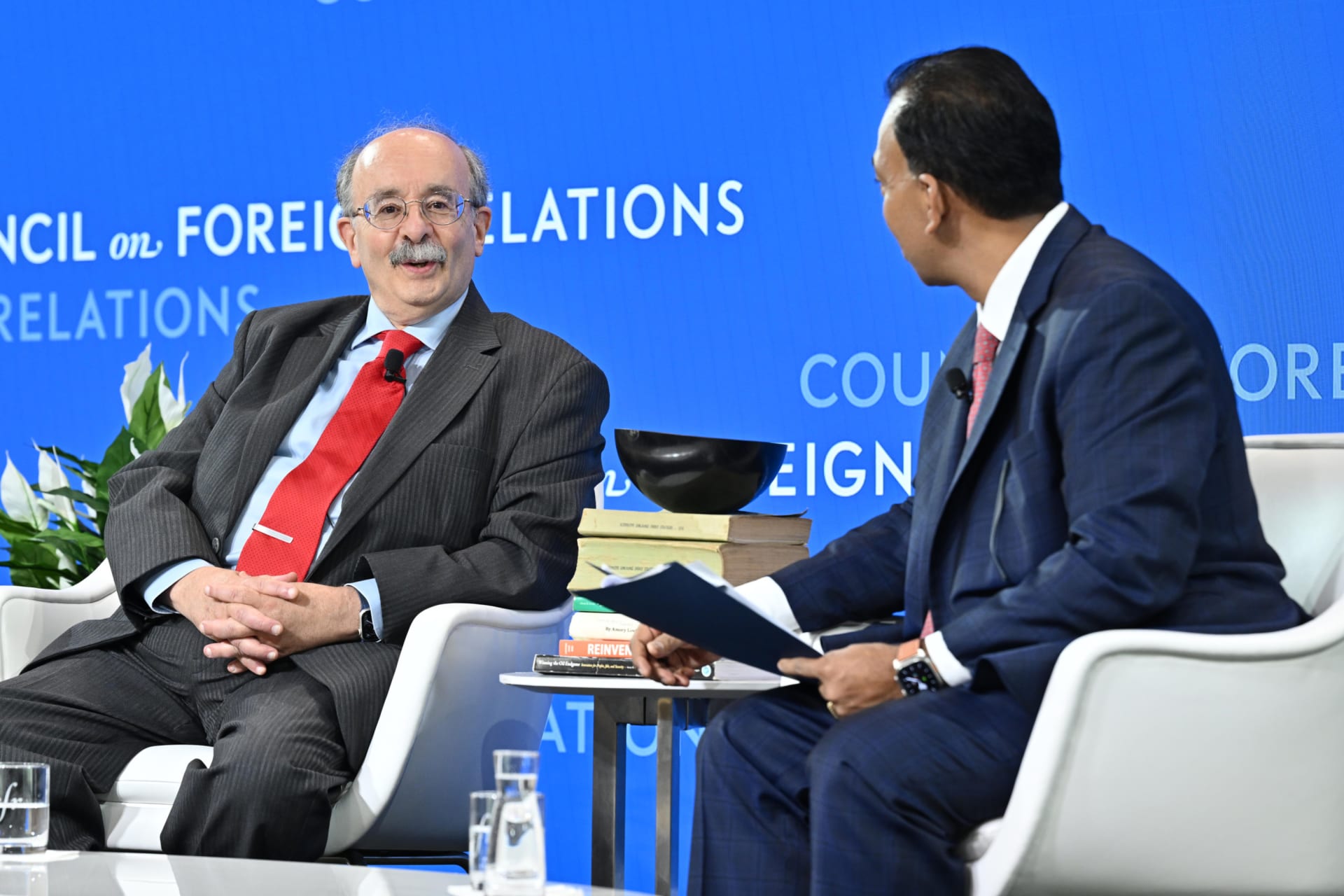
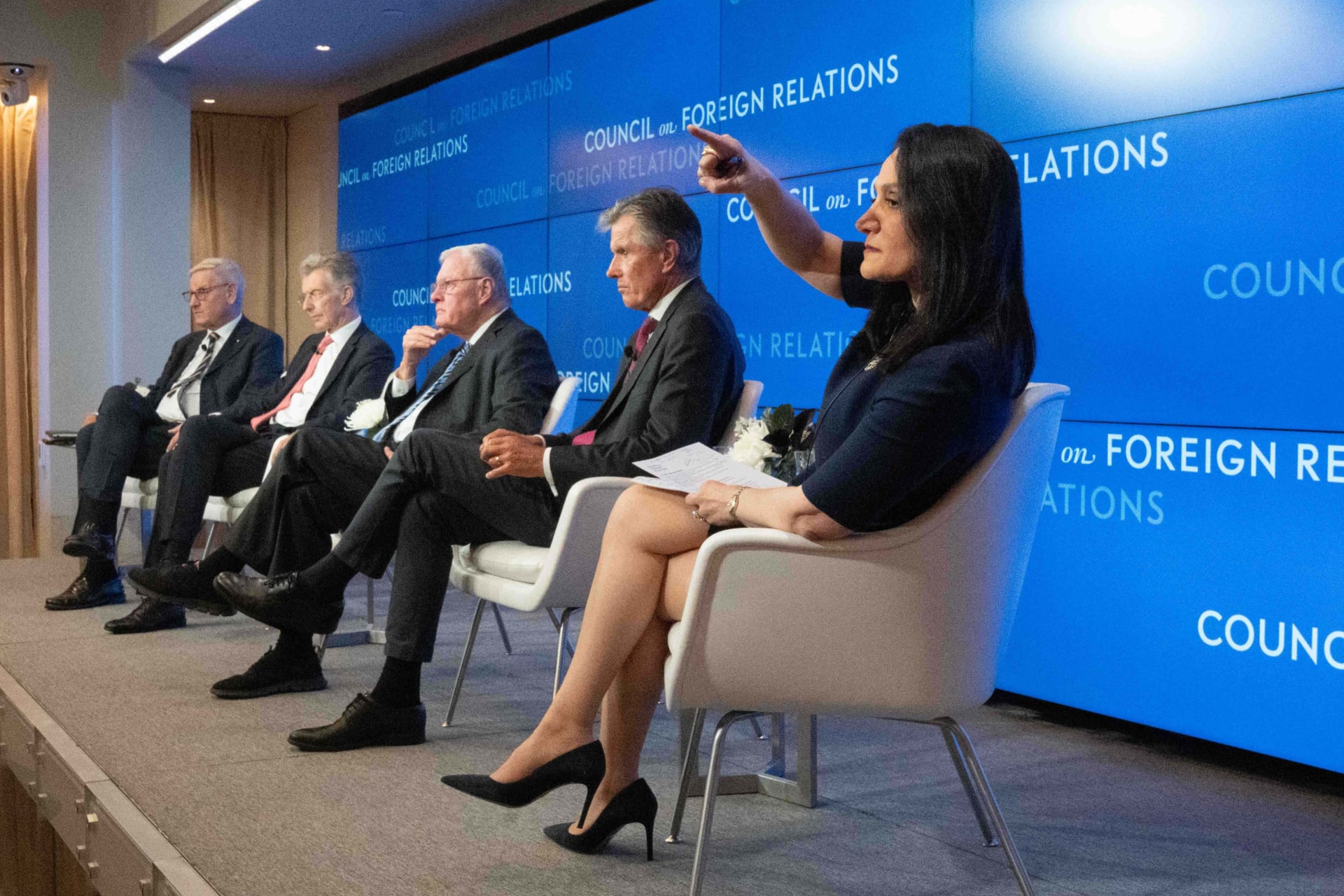
CREBO-REDIKER: So it’s 12:15. So I’d like to kick it off today and welcome you all here to our CFR meeting on “The Geopolitics of Critical Minerals: Risk, Resilience, and Resource Control.” And we have an amazing, amazing panel of speakers here today.
In addition to all of you in Washington, D.C., we have about 300 members that are online joining us virtually. And I want to mention that this entire session is on the record. So for both the conversation that we’re having now as well as the Q&A that will bring all of you into this—the discussion, that is on the record.
My name is Heidi Crebo-Rediker. I’m a senior fellow with the Council on Foreign Relations in geoeconomics.
And to my right I have Laura Taylor-Kale, who is a colleague of mine. She’s a senior fellow for geoeconomics and defense. And she joins us from the Defense Department, served in the Biden administration as the first assistant secretary for defense industrial base. And she led the expansion of DOD strategic investments in rare earths and critical minerals, and a lot of the other upstream supply chain materials.
And then to her right we have Helaina Matza, who also served in the Biden administration, and I think before in the State Department as a Foreign Service officer. She has just recently joined TechMet as the chief strategic development officer. And before that she was the former acting coordinator for the Partnership on Global Infrastructure Investment. That’s a G-7-plus initiative to mobilize investment based on foreign international partnerships.
And to her right, we have Gracelin Baskaran, who is the director of critical minerals security at the Center for Strategic and International Studies. And we’re delighted to have her here today.
And then to my far right over here—not to—not to—there’s no political implication—(laughter)—but David Abraham is the director of technology, rare earths, and electronics materials center. He’s at Boise State University. And he is the author of Elements of Power, which is a foundational text on critical minerals and rare earths. And it was written about a decade ago, so you’re ahead of the curve here on a very topical subject today.
So as we get started, geology is geopolitical. It has been for a long time, when we were talking about oil and gas and the dominance of certain players in energy security. But it’s not just geopolitical in terms of where the geology is, but it’s also where it is refined. In the past several decades, China has invested in the full supply chain of critical minerals and rare earths. And, because of that, has a fairly significant choke point—chokehold. And it’s not just on the U.S. but it’s on our allies, it’s on the EU. it’s on Japan. They’ve weaponized rare earth exports against Japan over a geopolitical issue, regarding the challenge in the Senkaku Islands. And they’ve also put in place a new export control regime and licensing regime that’s actually proven quite effective as a retaliatory force to some of the—some of the export controls and tariffs coming from the U.S.
And critical minerals have also made a lot of headlines recently because of the foreign policy objectives of this new administration. And I think we’re going to—we’re going to try and bring the—not only what we’ve done, but what the new administration is doing. Ukraine, with its critical minerals deal, the security for cobalt and mining in DRC, and the general desire to acquire Greenland. (Laughs.) I mean, it’s sort of—it’s very top of mind in this administration. And what we’re facing is, you know, very much a generational challenge, not just a mining challenge. There are many dimensions to it. The Chinese have made a generational investment in the full supply chain and the U.S. has not.
It helps, if you’re China, you are state-led. You are not—you’ve invested in your Belt and Road Initiative over many, many years. You have a state-led economy that doesn’t require your refiners or your miners to be commercially viable. That’s a huge challenge to companies that do need to be commercially viable in the West. So this should not be a surprise that we’re having this conversation today.
And I’d like to turn to David first as sort of an old timer—(laughter)—in looking at this issue. Can you just level-set? Talk a little bit about how we got here. We focus a lot on the mining and the refining, but there’s also a demand side of this, the downstream. Just give us a full picture in, like, a snapshot.
ABRAHAM: OK. Thank you very much, Heidi. And thank the Council. So my writing started with the Council in 2010. And there’s actually a long history at the Council going back to the 1930s focusing on materials that are necessary for the economy and also for the war. Most of the thinking around critical minerals now would probably come from the 1990s. So this is when you hear a lot of focus in China on rare earths. And I also want to give the disclaimers, as many people do, that rare earths are a subset of critical minerals. So you have lithium, cobalt, and a whole bunch of other materials that are critical minerals. But rare earth is a subset of that. And I spent a lot of my time focusing on rare earths because I think, due to their challenging mining—well, more of their processing line, they give insight into a lot of other critical minerals, like lithium, or cobalt, or selenium, or tellurium.
But back in the—back in the 1990s you look at the U.S. We’d just won the Cold War. The markets are ascendant. You started to see us getting involved more in tech. And there was a lot more focus on services and how we could grow the economy in that way. And then China was just trying to emerge to get a hard—you know, to get hard currency. They started to realize that they had some foundational elements that would be important to them. These were rare earths, and a whole bunch of other critical minerals. And they started to focus on these materials at that time, mostly for the capital but also because they started to realize that these materials were foundational in the products that they were making. They started to make components and they started to make magnets. And they realized the ingredients for these magnets, where they were coming from, they were rare earths. So they started to invest in the supply line.
So they used a lot of—overabundance of state capital. They used a lot of—they gave short shrift to the environment. They focused in any way they could to build up these supply lines. And in the West, that had a lot of this technology, it was just not a focus for us. We were fine to outsource the mining, and the material development, and the environmental challenges, while we focused on what we thought were higher-value services and products that we could—we could build. Just going through the 2000s, that process really continued. China was laying the foundation for saying that we’re going to use these materials to develop high-tech industries. And if you fast forward to 2015, when they developed their Made in China 2025 Strategy, they were very clear. We are going to use these materials and we’re going to dominate the production of these materials so that we can supply the end use—for end uses that are important to us—high speed rail, aviation.
And so that was all happening while in the U.S., Japan, and the rest of the world, we’re thinking the market will be able to supply the needs. So we’ve come up into a situation where we are now, where China has experience in this industry. They know what they’re doing. They know how to develop markets. They know how to develop projects. They know how to make the equipment that goes into the aircraft that we use. And we do not have that same level of expertise, although we have an abundance of interest at this moment in being able to figure out how to do that.
CREBO-REDIKER: That was an excellent start. And that’s a good segue to Laura. I’m going to turn to you to talk a little bit about, we know—we know that there are—you know, there’s huge demand in sort of the final products, whether they’re batteries, part of, you know, the demand in high-tech autos. But there’s also a big defense component. You know, and so I just want to ask you, you know, what do—where do the defense requirements for both critical minerals and rare earth separately come in, in our weapons systems? And then talk a little bit about what DOD has done—and under—you know, both before you got there and when you got there—to sort of provide the kind of capital that was needed to get a lot of these refineries and new mines off the ground?
TAYLOR-KALE: Sure. Thank you. And thank you to Heidi and to the Council for hosting this meeting. I don’t know if we’ve ever had a meeting on critical minerals at CFR before. So I think this is—this is wonderful.
The DOD and general defense needs with critical minerals. You know, the DOD purchases weapon systems and supplies. And critical minerals are part of the upstream supply chain for that. So the DOD is not—unless it’s for the national defense stockpile—it’s not actually purchasing critical minerals and rare earth elements, going out to miners or processors and picking up key elements. But nearly every major defense system, plus many others that are even less closely related to the defense systems, all use critical minerals or rare earths.
Now the percentages, the amount of demand that DOD has for critical minerals, can be a small part, but it’s a very important part. Even, you know, we talk about now issues with the F-35 and rare earth magnets that are not going to go away over the next couple of years. And the DOD has worked hard to try to establish a mine to magnet capacity over the last few years. This is something that my office, the Office of Industrial Base Strategy, the team that was working on the Defense Production Act Title Three, as well as the Industrial Base Fund, spent a lot of time, and money, funding as well.
So, again, for DOD it’s part of the upstream of the supply chain. But, you know, under the first Trump administration, under the Biden administration, as David noted and as you noted, started to really see more of a focus on how to really stabilize these parts of the supply chain. And part of the focus was in concert with Congress really a focus on honing in on adversarial sources of supply. And we used the Defense Production Act Title One, which is a security of supply arrangements with key allies and partners, as well as Title Three, which is actually the funding mechanism. The Industrial Base Fund, the National Defense Stockpile Transaction Fund, and the newly set up Office of Strategic Capital is also engaging in this area.
We have to remember that we have a lot of authorities within the Department of Defense, but some key things to remember. One, the Defense Production Act is actually a presidential authority. Is up to the president to decide which agencies use it, and also when. We were fortunate in 2023 in the Biden administration that we were able to get through—a supply chain waiver through the White House that allowed the DOD—it’s good through ten years—and really allowed the DOD a lot more flexibility to move more quickly to allocate resources, particularly Title Three and IBAS. So, you know, the authority is presidential. It’s delegated across agencies.
If you looked at the recent Trump administration March executive order, it starts to delegate authorities to the Development Finance Corporation—DFC—Ex-Im Bank, others, and instructs the assistant secretary for industrial base policy to look closely at mineral production and to allocate resources for that. The other thing that I want to highlight, while we have the authorities, and now we have the supply chain waiver that’s good through this administration and beyond, it’s not just authorization that’s important. It’s also appropriations. And while I was in office we were able to really address the critical minerals needs.
But it was not through the budget. It was through supplemental appropriations, out of cycle appropriations for Ukraine, for Taiwan, for Israel, that—the IRA as well, for energy storage and batteries, that allowed us to be able to actually have the muscle and the flexibility to address emergency issues, but also more long-term planning issues. And so there’s a very—there’s a tendency in Washington to want to focus on authorizations and focus on the National Defense Authorization Act, which absolutely is very important. But we have to work very closely with appropriators. The resource planners within DOD also have to work very closely with the policy side and the acquisition side to determine, you know, how much of the budget and how much of supplemental spending should go towards these very important and critical areas.
CREBO-REDIKER: So, just before we move on to Helaina, you mentioned working with global allies and partners. One of the elements of the Defense Production Act allowed for the U.S. to treat Canada as part of—part of the universe of potential recipients of Defense Production Act funds. But the Biden administration expanded that when you were there to include Australia and the U.K. I think, you know, one of the last things that your office did was actually fund the electric cobalt refinery in Canada, which is the first North American cobalt refiner, which is partially funded by the U.S. Department of Defense. So I think it’s important to sort of look at how the building on allies and the ability to work together with them and use things like the Defense Production Act. And I’ll bring you back in just to talk a little bit about how that worked, where you had—were able to create a footprint with some strong strategic allies, and where you think that might go now.
TAYLOR-KALE: Yeah. You know, the expansion of the Defense Production Act to include Australia and the U.K. as domestic sources, along with Canada, is really the first major change in the Defense Production Act over its seventy-five year history. Canada was brought in as a—as a domestic source in the ’80s, I believe it was 1985. So between then and now this was the first major change. And it’s really partly because of, you know, AUKUS and wanting to find ways to, you know, really much more concretely support work between the U.S., the U.K. and Australia. The critical minerals aspect of it will be especially important.
So I’m going to be a nerd for a second, and while I was—(laughter)—
CREBO-REDIKER: We could have, like, done a chart on the—
TAYLOR-KALE: I know. Sorry. (Laughter.) So this is the Periodic Table that my team developed in in the Office of Industrial Base Policy. And what we did was we overlaid with the Biden Executive Order on Supply Chain Resilience the parts of the Periodic Table that have defense critical elements. And if you were—you know, I won’t go through all of this. It talks about germanium and, you know, where—you know, which weapon systems. We’ve mapped all of that out. But the important piece of this is that some of our allies, if you look at this and look at all the colored pieces, that’s the part where the DOD is most interested in. Australia is one of those places that has almost all of these.
So working with our allies and partners are particularly important. But it’s not just in the digging, and the—it’s also in terms of processing. They’re facing some of the similar challenges that we’re facing. Australia has exceptional capacity for mining and exceptional supply. But a lot of their processing also goes offshore to China, to other parts of Southeast Asia that are also connected to China. So we’re all dealing with the similar challenges of how do we secure the minerals that we need for defense critical systems at defense grade, both in terms of the digging, but also in terms of the processing. It’s also a workforce issue, which we can talk about a little bit later.
CREBO-REDIKER: We’ll get to workforce later.
TAYLOR-KALE: Yeah, we’ll get to workforce later.
CREBO-REDIKER: But this is—but I think—because that is—that is key in the United States. But, Helaina, you actually were the diplomat who went around and—you know, because we obviously can’t tackle this issue alone. We actually have shared vulnerabilities with a lot of our allies. The State Department created the Mineral Security Partnership with fourteen countries that was based on sort of a trust that if one of us got—had critical minerals weaponized against us, we would all be there for one another. And then you also worked on the—with the DFC and other parts of the U.S. government on the build out of infrastructure like the Lobito Corridor, which a big—you know, a very big infrastructure project in Africa to get critical minerals out of DRC and create export in Angola. So that is actually—I mean, this is—that was—that was all—that’s very long term, very big diplomacy on a lot of—in a lot of areas. But can you talk a little bit about what you did, what you saw, and then—and then I’m going to push you on where you think it’s going to go during the Trump administration.
MATZA: Sure. Thank you so much, Heidi, for having me here. And it’s a real pleasure. I see so many familiar faces. And this is my first time talking to an audience as a non-government official in, like, almost fourteen years. So it’s quite exciting. And this is one of my favorite topics in the foreign policy context for lots of reasons, including a little bit of a history of what I’m going to share. But I had an opportunity to cover international economic issues during the Obama administration, Trump one, the Biden administration, and then a little bit of Trump two. And I think the story is quite interesting. So maybe I’ll share just a couple highlights, so we actually have enough time to chat in a little bit as well.
But, you know, the realization that there are geopolitical challenges related to upstream supply chain constraints wasn’t a completely foreign concept. And it was really in Trump one when we started asking our questions, as we saw policies around the rest of the world pushing forward a clean energy future in other markets. And what would it look like if we ultimately stayed Paris-aligned? What would be the implications on a different set of materials that would ultimately be part of our story? In addition to the very clear national security defense story that we were trying to understand beyond just its implication for that sector, but the carry-ons for electronics, and so forth. And so I call it kind of the early days of thinking. And a couple pretty essential things happened during that administration.
One is we got serious—and you can argue this is a good or a bad thing—in really taking a look at our critical mineral list. And at one point, and still our largest one, is up to fifty critical minerals. But you ultimately started the process of creating a subset of minerals and materials that would have a really challenging national security issue for us if we were no longer to have access. And we’re talking about an environment across critical minerals including rare earths, where you have a 60 to 90 percent concentration of ownership either at the actual production of those minerals and materials or at the processing, meaning that that chokepoint can exist. And when markets are operating well and prices are good, we see the markets continue to move along, but when there are general political tensions they can often be weaponized. And we’re seeing some of those examples, including the one Laura shared on, you know, concerns around the F-35 and others.
So the list was really getting us started. The second thing was in 2018 the BUILD Act, creating the new version of the DFC, has this very outsized opportunity set for the critical mineral and associated infrastructure sector. It’s one of our best tools, right, that we have, including the expanded authorities that we saw with Ex-Im during the Biden administration to really be able to tackle, from an investment perspective, this opportunity to get more of these minerals and materials into our market or into friendly adjacent markets, creating that resiliency that we desperately want to see in that supply chain. And we started kind of beefing up some of our foreign policy work. And I see some of our initial partners there as we started looking at a deeper dive on technical assistance for countries that operate mining jurisdictions, but maybe, at that point, were rewriting parts of their mining code to be able to do complicated extraction that might have, like, a uranium component, or thinking through new ways to really tackle the social license to operate. So Trump one, really kind of early days.
And then we go into the Biden administration, where we’re still in the middle, in many ways, of the COVID crisis. We’re seeing supply chain constraints play out real time in the Port of L.A., right? And now we’re starting an administration with a very, very strong view on what the clean energy future should look like, ultimately leading to—ultimately leading to interesting and useful for this conversation pieces of legislation passing, with the IRA and BIL, which created an incentive scheme that put, of course, more opportunity and pressure on deploying clean energy and electrifying. So one of the things that was really interesting in my job during the Biden administration was to say, how do we look at all of these issues together? And what are really now in the geopolitics of the energy transition? And what do we tackle at home?
And there’s a lot of amazing work and conversations that happen in that space. And I think many of you who cover domestic stuff might be a little more familiar with the Department of Energy tools, which are now looking to be revamped a bit in the Trump administration. But nonetheless, those incentives did create, now for the advanced battery materials, another massive push on a demand story that we knew was growing, but now, you know, numbers like 10 percent lithium demand by 2050, whole new constraints on cobalt and others in the 2030 timeframe.
So lastly, what we tried to do was think through how, from a foreign policy perspective, not only do we capture our allies and partners to deal with the diplomacy around challenging times or take advantage of opportunistic ways to partner with the Canadians and Australians, but also how do these emerging markets that have these resources have the best opportunity to interact with us instead of players like China, which were very heavily investing in those critical mineral sectors abroad? And the theory of the case that we had with the partnership, with PGI, was if we wanted to bring the best in class investment, if we wanted to be the partner of choice, we had to invest in the ecosystem, not only around the mining sector to support extraction, but to also create jobs—and I promise I won’t get into that too much now—but there are other ancillary sectors that are super important for local economic development that then have a connection back to some of our market objectives.
And that’s why the Lobito project, which is supporting the mining industry in the copper-cobalt belt, really is a series of investments in energy, and rail refurbishment, and rail restructuring, and agriculture. And so now we’re looking now into the early days of Trump two. And what we’re seeing is a few things that are kind of happening at once, and a few—maybe it’s more than a few things. But a couple, I think, notable elements really lies around how critical minerals are clearly an important part of this administration’s foreign policy approach. And I imagine, and we can talk more about this in a bit, that you’ll see a lot of effort to supercharge and refine all of those skills that we built over the last ten years.
And what we’ll see is what we’re starting to see, very clear list of transactional objectives that the administration will have in certain markets and certain partnerships. They all will look slightly different, whether it’s Ukraine, DRC, or Greenland. But you’ll see a targeting, right, of an opportunity set that us on the private side and many others in the thought leadership space can play a lot of really important role helping to shape as we move forward. So I really do see it, my own eyes as a one story, although I know maybe others would see it slightly differently.
CREBO-REDIKER: So I think—I mean, there’s a lot to this being one story, because a lot of the objectives, and particularly in building resilience, are very much the same. And I want to bring Gracelin in to talk a little bit about that, but particularly on the on the domestic side. Because what we’ve seen from—you know, from President Trump and his executive orders, and the creation of National Energy Dominance Council, and really prioritizing an all-of-the-above strategy within the United States. You know, how different is the approach that the Trump administration is taking from where, you know, if you look at that progression, Helaina, just from Trump one to Biden to Trump two, how different is that approach?
BASKARAN: Thanks, Heidi. It’s great to be here.
This administration is really looking at all of the above, right? We’re talking about underwater with the deep sea. We’re talking above the ground, home, abroad, new allies, traditional allies. So really, what we’re saying is it’s going to take everything in this administration. Now there’s a couple of things that I want to point to. So first is, you know, we talked about geology, to start this conversation. And one of the big questions is, where can we mine cost competitively? You know, when we look at China, China’s great advantage over time is it doesn’t always have to operate profitably. We know it’s willing to, A, absorb long-term losses in exchange for long-term dominance. The second thing we know is that they are willing to roll out extraordinary fiscal measures to reach that dominance and command a larger market share.
We’ve seen this with cobalt, right? You know, even though, you know, there’s, like, a lot of whims and winds that were relying on the DRC, the U.S. opened and closed its only cobalt mine in 2023. And that was because prices had fallen so much that it was so difficult for them to compete. It’s similar to the nickel story in Indonesia. We’re building our nickel mining capabilities here in the U.S., but we’re up against this steep price struggle when we consider that, you know, BHP closed their nickel mine in Australia and Glencore in New Caledonia because the economics don’t actually work out.
So here in the U.S. we’re kind of looking at, in a way, taking a page out of China’s playbook. Which was, as we’ve discussed on this panel, connecting our foreign policy to source minerals from everywhere, right? We’ve seen that President Trump’s policy has kind of left, you know, at a time when it feels like it’s, like, America first, only, alone, we’re still connected. We’re still leaving that international cooperation angle open to source minerals. But then it’s to bring it back home to the U.S. for mineral processing, acknowledging, as I think many panelists have said quite well, that that is our critical chokepoint.
And the one of the difficulties in the U.S., you have to remember that mining is a pain of an industry because it’s long term. On average globally from the time I identify a deposit to the time that it is being mined is eighteen years. Here in the U.S., that number is twenty-nine years. And there’s some, you know, debates on the assumptions of some of that figure, so I want to caveat that. Either way, it’s a really long time. In that time, I need permits. In the U.S. it can be up to thirty permits, sometimes duplicative, between local, state, and national land, different for federal land versus non-federal land. So one of the priorities that we’ve seen, including with the National Energy Dominance Council, is speeding that permitting up, number one.
Two is finding economic projects. So there’s really three—and I’m making a generalization here because we’re talking about over fifty minerals. There are really three things we think about when it comes to, like, what makes an economic project, right? One is, how deep do I have to dig? The deeper I go, the more expensive it gets, right? One of the reasons the Congo is so attractive, if you ever go driving through Katanga you can basically see the minerals at soil level because you barely have to go underground. A lot cheaper than digging three miles underground. Second, what is it found with? Because minerals are rarely found alone. So what are the byproducts? I just told you cobalt prices are absolutely rubbish, right? But, again, why is the Congo attractive? It’s because cobalt is secondary to the copper deposits. And copper is doing extremely well right now because we need it for AI and AI datacenters, transmission lines, and a whole range of uses, right?
And then the third thing is, what is the ore grade? And I’m going to go back to the Congo because it’s a complicated place to do business. But at the same time, when you take the twenty biggest operating copper mines in the world, by ore grade or quality, number one and two are still in the Congo. Which is why, even though it’s complex, we continue to look at it. But ultimately, right now the difficulty we have in the U.S., in my opinion, is we’re not thinking about vertical integration strong enough. So there was an MSP-backed project in Brazil for rare earths, you know, looking for DFC financing. And then it was announced that that—they had signed offtake to China. We’re not actually strategically helping ourselves in that situation. So connecting our foreign policy, as China has, to source minerals from around the world and bring them back home for domestic processing or allied processing, is going to be really important.
The final bottleneck I’d point to, though, is mining is never about the hole in the ground. In some cases, that’s the best of our—least of our problems, right? And as Helaina pointed out, the Lobito Corridor is about creating an infrastructure ecosystem. And we think about this a lot in developing countries, but, boy, do we need this in the United States too. And the reality is, there’s a reason that we prefer doing our aluminum refining in Canada. And the reason is because Quebec has so much cheap hydroelectric power. Mining and processing are so expensive. And we don’t have the energy at scale to do it here in the U.S. cost competitively. Remember, I told you about project economics. I’m from Detroit originally. When the automakers are looking to source minerals, they’re looking at what is the cheapest possible input that I can get so that people buy my EVs and I can cut a profit? Because not a single EV that GM produces is profitable today. Everything is cash negative.
So these kinds of things, of how we make the supply chain more competitive here in the U.S. by supporting that infrastructure development, particularly on energy, being able to cost-competitively source minerals from abroad, is going to determine whether our Western companies, who have a shareholder obligation, can operate profitably and succeed. Because at the end of the day, we don’t have—we don’t mine as a government—as a government. We don’t have a state-owned mining company. I can only create an enabling environment for my private sector. And that is the challenge that we see playing out in this administration.
CREBO-REDIKER: So I think that is—that is the key. That is, if you are up against—if, collectively, market-based economies are using market-based companies to go up against a non-market economy with state-backed investors, with a long-term perspective, then we need to figure out how do we—how do we solve for that? And it’s even more challenging with rare earths. In terms of, like, being able to hedge different commodities, the ability to do that in many of the more—if you go through Laura’s Periodic Table, it gets harder and harder, less liquid markets to actually hedge those things for a traditional commercial player.
But I guess, just in the in the last few minutes, the—I think one of the big opportunities, because this could be all gloom and doom in terms of how far behind the U.S. and a lot of our allies actually are in this race, is through some of the—some of the new technologies, and some of the innovation that’s coming out of the Department of Energy, a lot of our national labs, a lot of the research universities, the spinouts. Some of the—some of the really creative abilities to take from non-traditional waste sources, non-traditional sources of mining. And actually some of the material engineering that is—we’re either replacing the minerals or the rare earths themselves in the process, or creating, you know, engines that don’t require rare earths at all. So that it’s—are there ways to actually leapfrog? And, you know, also the recycling part of this we haven’t really—we haven’t really touched on so much.
So there’s this whole world of opportunity in an area where I think the U.S. is actually poised to really dominate, if we make sure that we fund and support a lot of the new technologies. That’s something, you know, to put in one plug, which is that CFR and Silverado Policy Accelerator are launching a study on exactly these new technologies and how—what are the ways that we can strategically leapfrog over the critical minerals crisis that we’re facing right now? So stay tuned. And we’ll come out with a paper on that in the not-too-distant future. But I know that David’s done a lot of thinking and writing about new technologies and different ways to think about advantage for the U.S.
ABRAHAM: I do want to get to that. I think one thing that’s really important to understand is that we’re talking a lot about supply. But it’s demand, in my belief, that drives consumption. So the reason why rare earth companies are signing deals with China is because no one buys dysprosium. No one buys—no one buys these materials in the U.S. So if I’m running a company I don’t have many options. So that it becomes a challenge. The demand is also important in terms of EVs. So if you want to see defense systems that have missile actuators made in this country, then you need a robust market to make that happen. Nothing uses the materials, next generations, more than EV technologies. We want advanced robotics? We need an EV industry. A strong defense? We need an EV industry.
Otherwise, we’re in a situation where, like, if you can imagine, I came back here to D.C. and &pizza is a big chain now. And they can grow infinitely because there’s a strong wheat market and there’s a strong tomato market. But if they had to grow their own, they’re stuck, right? So we don’t want to be in this situation where we don’t have a robust market. And right now, there is no robust demand market. So in the future, if we’re trying to get these future technologies produced here, we have nothing to build it on. So we have to think about demand as well as upstream.
Now, midstream. There’s a lot of opportunity with technologies in developing new alternatives to processing things more efficiently. Gracelin talked about—I’m going to go upstream, even though I said that—Gracelin mentioned that, you know, we can become more efficient. You know, ore grades are dropping. So there’s great technology, AI, that can do a better job of analyzing where the material—where the resources are in the ground, so that we could be more efficient with our mining methods to reduce costs to make what was once an unprofitable resource turn into a profitable mine.
In the midstream, there’s—especially for rare earths—there’s this brew of acids and heats and magnetics that help coax the elements out of the minerals. And in the case of rare earths, there’s about a hundred—several-hundred mixer settlers. So what happens is it’s a flow of liquid and minerals from one container to the next. And if you can start to use AI to process the amount of time it’s in one settler, or mix the acids in a certain way more efficiently, you can start to increase production and yield at percentages that make, again, new ore deposits much more profitable. So we’re competing in this way. China is competing in this way. But it’s these kind of breakthroughs that are 10, 15, 20 percent more efficient that can bring new resources to life.
CREBO-REDIKER: Perfect. And that brings us exactly to 12:55, which is when we open up to questions from you. And I am going to—I’ll take a couple from the audience, and then we’ll go to Sam, who will check who we have online. But right here—sorry?
TAYLOR-KALE: I want to add a quick addendum.
CREBO-REDIKER: OK, go for it.
TAYLOR-KALE: Very quick. I think, on the innovation side, what a lot of this highlights is the importance of funding basic science research. I think, in an environment where there’s a lot of attention on how universities are funded, I think I worry about what it will look like over the future as we continue to rely on university systems for the kind of research that we need for this kind of innovation. So it’s basic science research, directed research, prototyping. Department of Defense, through our various other transactional vehicles, can fund research, prototype, as well as production. But we also need the whole ecosystem of innovation to be working, and really to focus on the funding part. All right.
CREBO-REDIKER: Would like to, like, double whatever emphasis Laura just put on that. A lot of the new—pretty much all of those new startups that are creating this technology are coming out of the research universities that are getting government funding, and the National Labs.
Right here in the front, for the first question, please. Introduce yourself, and look forward to hearing your question.
Q: Great. Hi. I’m Lesley Warner. I’m establishing the Africa Practice at Aurora Macro Strategies, which is a geopolitical risk and macroeconomic advisory.
I’m an Africanist. So my question is going to be on the DRC critical minerals deal. I’m struggling to understand, given China’s dominance of the supply chain, what role there would be for U.S. companies. So could you help us understand, you know, both from the mining perspective and from the processing perspective, what the role for the U.S. would be? And then a question for David directly would be, you know, in your opening remarks you talked about—you alluded to the fact that we seem to be about three decades behind in terms of how we’re thinking—how we planned for how we would use critical minerals. Which seems like a bit of a strategic oversight. So sitting where we are now and projecting three decades into the future, going back to what you said about, you know, you need to think about the demand, what do you think we need to be thinking about now with regard to critical minerals that will benefit us three decades down the road? Thanks.
CREBO-REDIKER: So first question. Do either Helaina and Gracelin want to tackle that?
MATZA: Do you want to go first, and then?
BASKARAN: The one thing I would say is only 20 percent of the Congo has been mapped. Which means 80 percent is completely unexplored land. So these great mineral reserve numbers that we have is based on the 20 percent that we have actually looked at. So there’s a couple areas, right? The U.S.—there was a bipartisan piece of legislation that was introduced recently, the Finding Ore Act, which actually looks at how the U.S. can better support exploration in exchange for making sure that a Western company has first right of refusal for whatever we find. So how do we get companies into the early kind of stage, project development, new projects, greenfield projects is going to be really important.
The second thing I would say about refining, and we have to remember to keep this grounded in the reality, again, of that project economics. One percent of rural DRC is electrified. And, like I said, mining is extremely energy intensive. So there’s a lot of room to develop the energy capabilities of the DRC, because ultimately a mining—a Western mining company cannot afford to mine, build the energy, build the transport, build the whole ecosystem alone. So thinking about how we can leverage more strategic, for example, energy investments to stimulate that ecosystem. We’re now—Xcalibur is now mapping Kasai, kind of in the central DRC, and it has already come across incredible nickel deposits and lithium deposits. So, again, I think it’s thinking across the project development and the ecosystem. I think there’s a lot of room for U.S. companies.
MATZA: Yeah, and maybe I’ll just double down on a few of those points. And just say that there’s not been a lack of interest in how to interact with the DRC market, but I think more of a question—from my experience with U.S. and Western industry—on how would those opportunities be structured, and would the USG bring anything to the table to help make that work, right? And so now we’re in this really interesting moment. A lot of the work on DRC really starting—or, restarted again with the Biden administration and trying to bring investors into the country and connect DRC to the Lobito Corridor, because it’s an incredibly important element, right, of the copper-cobalt belt. And part of the rail project is designed to go all the way into Kolwezi, which is really one of those beachheads, right, into the Katanga region.
And so what you’re seeing already, if you’re a company, is the U.S. government is standing behind the associated infrastructure it takes to continue to build out this sector. Not only for a Western-facing route, but the actual practicality of how do we operate these, for lack of a better term, evacuation routes or connectivity, right, from products that we would hopefully ultimately produce and maybe process and DRC to multiple markets, not just in one direction. I think that’s somewhat attractive to investors. I think the rubber is going to hit the road when we see ultimately what the terms are around the DRC-U.S. deal, and if there’s a way to bring the DFC more holistically to the table. Because what investors are really going to want to ensure is not only a deeper understanding of what their experience will be on the ground, but what types of tools around—whether that’s political risk or others—that are going to be available to them as they structure deals to operate in that market.
And, you know, the DRC government, in my opinion, is also working on what they can do to help continue to open up that market to a different set of investors. And so I don’t see the DRC government saying, hey, maybe—I’ve heard two different numbers—twelve of the fifteen or fifteen of the nineteen cobalt projects are pretty much totally lead, produced by the Chinese, that’s good enough. They’re saying, we want diversity in that investment in our country for our own resiliency purposes as well. And so I think as we continue to see a little bit more transparency on how the parastatals will interact, that will help as well. So I just think it’s a really interesting moment. It’s, like, really complicated and nuanced. But there’s definitely interest there to get it right from all parties.
ABRAHAM: And in terms of—I would want to know what our strategy is. I don’t see it. What my sense is, is that the past ten or fifteen years—and you guys can correct me if I’m wrong—the strategy is: We need resources in this country for critical—we need critical mental resources in this country for defense. But it seems to be moving from that goal post. And I can’t tell if that’s the strategy, or is the strategy we need to ensure that we have the minerals and resources we need to develop industries so that our children will have an opportunity for a strong economy that’s based on what’s going to be important in the next twenty to thirty years. Or is it we want to make sure that we’re producing the high-tech wizardry we need in this country because it’s going to be embedded with surveillance technologies if it’s made overseas, and we need to be able to protect the homeland?
MATZA: May I just offer a little response? I actually think—and I think Gracelin would say the same thing—it’s and, and, and, right? So you need them to bring that story together of a strategic approach, if it’s beyond defense industry, to kind of open up, which we’re seeing the administration start to do and certainly has been part of the process over a long time, what a(n) approach will look like that can answer the mail to all the—dealing with the hypocrisies that come with that. You know, you’re getting feedstock from one market to process here at home. You know, you have to pick, potentially, not winners or losers, but areas that you’re going to focus in harder than others. And so from a policy perspective, that’s a challenging master kind of paradigm to create.
But I think whether it’s—you know, we see, of course, these rollbacks, you know, in planned, you know, budgets. We’ll see how it comes out of the Senate about, you know, the IRA and BIL looking quite different. Doesn’t change the fact—and I don’t mean to diminish it. I think it’s really important for everyone to have certainty of their experience. But now you’re seeing all of these new demand—or, excuse me—projections for energy demand for AI and what we need for those chips. So the evolution of what’s next I think is going to continue to evolve. And it’s clear, I think, to almost everyone in the foreign policy community that we have to think upstream in that conversation.
ABRAHAM: The reason why a strategy, for me, is important is because then you start to know what we necessarily need to produce. Because an everything-all-at-once strategy is difficult and will fail. Why? Because it’s failed in Japan. It failed in 2010. And if we have to be realistic to where we are now, and to where we want to be—and what happens in mining, what happens in this industry is that there’s a lot of enthusiasm, and there’s a lot of talk, and there’s a lot of discussion of mine to magnet. I’ve heard that in 2010. I heard that in 2015. Heard it 2020. And we still don’t have the development of that industry here. Now what I am excited about is from 2017, when there’s an executive order that the last Trump administration put out, there’s a larger flag. And there’s a lot more enthusiasm this time. And there’s a lot more capital at this time. And there’s a lot more interest at this time.
So I think we’re going to see much more results because we can put an event like this together and get 300 people online. So, yes, there will be results. But I think without that clearness of where we need to be—I mean, we don’t dominate the oil production but we produce 20 percent of the of the of the world’s oil. We refine 18 percent. That’s good enough. We don’t need to produce the world’s dysprosium here, we just need international supplies. And we need to focus on education, because we don’t have the necessary skills in our—in our wheelhouse here. We need to focus on partners who can develop upstream industries. It doesn’t matter if the material comes from Australia, Indonesia, or Estonia. But we need those partnerships. And then we need a flood of capital. And then we also need demand. Our rare earth facility, up until this year, has produced—85 percent of its material went to China. We need demand here.
CREBO-REDIKER: So, just, like, a datapoint. The Chinese actually increased their dominance of market share from 2020 to 2024, where they went from 82 percent to 86 percent in copper, lithium cobalt, graphite, and rare earths elements. So in terms of the full supply chain, it’s actually not a good story. But I want to—I want to make sure that Laura comes in on the workforce issue, because that is—that’s something I know that’s near and dear to her heart.
TAYLOR-KALE: It’s important. I actually did not want to talk about workforce. I wanted—
CREBO-REDIKER: Sorry!
TAYLOR-KALE: Well, no. I think—so, at the end of the day, I’m a money person. I care about what resources we have and how do we use strategy to direct our resources. And everything that we’re talking about from the policy front, the diplomatic engagement, the enthusiasm, as David noted, that we see in the mining industry as well as in policy, the fact that we’re having these conversations at the Council on Foreign Relations on the big stage, at the end of the day what resources we allocate towards actually supporting startups that are creating innovative technologies and new technologies for recycling, as well as new ways of figuring out what resources we have below ground, what kind of resources we have available for supporting offtake agreements and using Defense Production Act to not just provide grants for mining or feasibility studies, but to also do offtake agreements that go into the national defense stockpile, all of that requires appropriations, for the government side.
And it certainly also requires capital resources from the private sector, venture capital. I’m also starting to see venture capital become very interested in this area as well, as everyone gets sort of excited about the buzz of critical minerals. But at the end of the day, what do those dollars look like? What does—what do the resources look like? What’s actually in the government’s budget? Again, as I noted at the beginning, whereas the Office of Industrial Base Policy, we allocated over a billion dollars in strategic and critical materials—so including critical minerals—in the Biden administration, much of that money came out of supplementals. It was not part of the actual budget. So while we need the conversations, while we need the agreements, we also need to align them with our resource planning. And while, you know, Department of Energy, you know, EVs are still critically important, at the end of the day the largest budget is going to be the Defense Department. So our needs are going to be driven by where we see the capacity and the necessity on the defense side, and oftentimes for appropriations as well.
CREBO-REDIKER: So the one—so the area that you also mentioned earlier was the Office of Strategic Capital. And when it comes to funding some of the valley of death innovations that don’t necessarily have a commercial offtake or a commercial partner or future, that is so—that’s relevant for getting their equity or their, you know, rising debt. It’s a very powerful tool that I think we’re going to see more and more of as they switch not just from the military-industrial complex funding, but also to critical minerals and rare earths.
Do we have any other questions from the audience? I saw your hand go up first, please.
Q: Hi. Avery Alpha, intelligence community.
So a lot of attention goes to rare earths and cobalt. Otherwise, what’s top of the mind for you all as to critical minerals, just a few, that you’re most concerned about, and why?
CREBO-REDIKER: Do you want to take from the defense and from the commercial?
TAYLOR-KALE: Yeah. A lot of what I thought about and just sort of thinking about as a result of the Russian war in Ukraine, focus on building out and replacing kinetic capabilities, building out new kinetic capabilities. Antimony. Of course, China’s actions and trade with respect to gallium and germanium, something that we also focused on in defense side as well, and made counter moves to be able to address those. But a lot of the—a lot of what we’re thinking about in defense is certainly the innovation and where we can get sort of new innovative capabilities to provide for the war fighter, but certainly the kinetic pieces as well.
MATZA: Do you want to go?
BASKARAN: I worry about uranium, which is actually not on anybody’s critical list.
TAYLOR-KALE: Oh, no, it’s on our list. It’s on the list.
BASKARAN: Oh no, no, but it’s not on the stockpile list, right?
TAYLOR-KALE: It’s not on the stockpile list.
BASKARAN: It’s not on the strategic materials list from DOD. It’s not on Interior. And it’s not on Energy’s. And, you know, we are still importing—we never stop importing uranium from Russia throughout the war. And nuclear power is going to be really important here in the U.S. It’s bipartisan. We need to increase it to be able to fund all of our mineral processing ambitions here. But until we identify it as critical on our strategic list, Interior, you know, that’s going to be a—I mean, we signal to the private sector in other countries what’s important to us by the list. That’s my list gripe. So uranium is something I still worry about, because we’re still getting it—a lot of it from Russia. We’ve never stopped. And I don’t think we have a viable plan, to be honest, to be able to scale up, not even our current consumption levels, let alone our growth ambition levels.
MATZA: Yeah, and, look, you know, all these markets operate so differently, it makes me yearn for the days I was looking more at oil and gas and other things. (Laughs.) But, look, I think there’s different layers of things that I think are worth paying attention to. In kind of the more, you know, battery metal space, I still think there’s a lot to look towards in lithium and lithium conversion projects, and where they play out, and are we seeing some breakthroughs in DLE and other technologies that allow us to utilize other resources? I think that will be important definitely in the near, medium term.
And then if we’re looking at other areas where—you know, part of the rare earth story, besides the fact that it’s used in so many applications, and there’s many of them, and there’s a real bottleneck on the different ways that you would process, right, and develop permanent magnets that play out differently in the defense industry than it does in the electronics industry, is really any place where you see that extreme chokehold, right? And so that 90 percent processing in rare earths is quite scary. And I know that number kind of jumps up and down. So if you, like, kind of look out, you know, what does that mean over the long—the medium term for, like, gallium and germanium, and anything that gets put on one of those export license things? Maybe less relevant from some of the things that I’m investing in today, but nonetheless an area of geostrategic concern.
CREBO-REDIKER: I think we have a question from the virtual audience.
OPERATOR: We’ll take our next question from Munish Walther-Puri.
Q: Hi. Thank you for a really robust discussion. Munish Walther-Puri, Institute for Science and Technology.
I look at the intersection of cyber and supply chain. I would love to hear more about battery energy storage sector. And if you could try and chart a pathway for the U.S. to develop a—I won’t even say industrial policy—but more robust pathways to reduce our vulnerability and dependency? Because whoever controls the infrastructure controls the technology. Thank you.
CREBO-REDIKER: Does anyone want to tackle that? And this is obviously linked to some of the IRA funding that actually, you know, catapulted the battery belt into existence, really, over the past five years or so.
TAYLOR-KALE: Yeah, at DOD we used the IRA funding for battery and energy storage, making investments in lithium. But, of course, you know, it’s a much bigger issue than just a DOD issue and a defense issue. And certainly requires—gets back to what David was saying earlier about electric vehicles, and sort of thinking of it as a foundation for a lot of the capabilities—the innovative capabilities that we need for the future.
MATZA: Maybe just one kind of thought as well. As we’re looking to see—obviously, a lot of questions especially of where the government’s going to align those resources is still out, right, because OMB has done some reviews. We have obviously a budget up for consideration right now. And so some of the authorities that we saw that DOE had, and some of the conditional grants, we’re going to kind of see how everything plays out. And I think there’s a couple areas that will be really interesting to kind of see that carry on. First off is materials that I was myself less thinking about before on vulnerabilities, like vanadium, and that have role in batteries and other battery technologies.
Also, like, going back to the innovation front, there are elements of processing, recycling, and, like, this is going to sound so nerdy, but like novel cathode, which is part of a battery component, development that in the midstream can save so much time and money as it’s being developed. And a lot of the interesting, smaller-scale projects can be here in the U.S. And so ensuring that that story and that access to funding exists for projects like that is going to be really important, both from a leapfrog perspective but also to stay in the conversation around battery development. And then I know there’s lots of questions about, you know, LFP or flow batteries. I’ll leave that to those smarter than myself. But I do think there’s a lot—(laughs)—yeah, our former government folks have to be careful. (Laughter.) But nonetheless, there’s a lot of innovation in places that can be really exciting to see how it plays out here in the U.S.
CREBO-REDIKER: I mean, that’s—actually, the battery space is one of those leading areas of innovation, where you—you know, you’ve seen that, you know, cobalt actually made completely redundant in the LFP batteries. And then we have this potential out there for sodium ion batteries, which would, like, completely be a gamechanger and be very disruptive if that actually were to move forward at scale.
Do we have any other questions in the audience? Right here, please, in the front.
Q: Thank you. Chris Isham with CT Group.
Yesterday Treasury Secretary Bessent conceded that the Chinese have been withholding critical minerals and rare earths as part of the agreement that he made in Geneva a few weeks ago—in contradiction to that agreement, I should say. My question is very simple. Is how vulnerable is the United States today to these kind of tactics by the Chinese? How much of an effect can China have today on our dependence on critical minerals and rare earths?
CREBO-REDIKER: Gracelin, you want to take that?
BASKARAN: Yeah. You know, it’s interesting, is these export restrictions—I know David thinks a lot about this as well—is when they went to Switzerland to negotiate with tariffs and critical mineral—or, rare earth export restrictions, they didn’t end their export licensing framework. What they did is they took American firms off of the ban list. So, like anyone, they could apply to get a license to send them to these American firms. The difficulty is we’re not happy with the pace at which these licenses are being issued. But that is the reality of the world that we live in, is these minerals are being weaponized. And it really depends on the mineral, right? When China imposed an export restriction on germanium, we were able to lean into our Canadian friends across the border because Teck Resources takes zinc from a variety of places, including the U.S., refines it, and we buy some of that germanium back.
The difficulty with China in these heavy rare earth export restrictions is we don’t really have those separation capabilities anywhere else. And they know that. They’re going to continue to hold on to that and until we bring alternate supply online, which we’re working. There was a cooperation agreement signed between Maaden in Saudi Arabia and MP Materials, an American firm, because they have heavy rare earths in Saudi, to develop a mine to magnet supply chain. We’re building these capabilities here in the U.S. through the Defense Production Act. Until these are online, China holds that leverage. And they do get to decide. It’s their—unfortunately, their sovereign right to determine who gets these licenses, and how fast that they’re going to do them. So we’re not satisfied with the pace, but China never agreed to lifting the export restrictions. They just agreed to taking American firms off the ban list for dual use materials.
ABRAHAM: Yeah, the question of to the extent of how reliant on them are we, and how impactful it could be, very. Because there are very strong pain points. If you don’t have a certain magnet in a certain—in a certain size, that can fit into a motor, then you can’t create that motor, and then it has downstream impacts. I mean, are we on the record or off?
CREBO-REDIKER: This is on.
ABRAHAM: So in terms of—(laughter)—
CREBO-REDIKER: We’re on.
ABRAHAM: In terms of the export restrictions, they were going on. And there was a lot of paperwork that’s involved to get the exports out. And so the question was happening, and I don’t know exactly what happened in Europe in terms of the exact wording in the agreement, but they did not—China did not say that they would remove the export restriction. So when they started to put in a new government function that has a heavy administrative component and they didn’t remove it, it necessarily slows things down. And if China didn’t pull it pull that administrative work away, then we’re dealing with government processes that are—that are taking a while. And Beijing doesn’t seem interested in making quick moves that could appease negotiators, at least as I see that from the outside.
CREBO-REDIKER: So, just two things. One is that the export restrictions also on the technology for the refining, the extracting and refining of rare earths. So that’s actually something that we don’t have here, which is another pressure point. And the—and do you really want to be that guy sitting in that new export, you know, licensing seat in China, granting that first, sort of, we’re all good here, let’s export to the U.S., when we’re in such a volatile time of negotiations? So I think that’s going to be a challenge, just as you said. I think it falls into the procedural side of it, but it’s—but you can just sort of put a pin there and say, you don’t want to be that guy—or woman. (Laughter.)
Odeh, you had a question.
Q: David, I heard the word “strategy” a few times. And I agree with you. But strategy requires allies, resources, capital, technology. To counter China, what countries should the U.S. work with to achieve your goal?
ABRAHAM: Well, we had a Periodic Table before. I would show a globe and then just spin it and say, all of them. There are a couple of things. One, we have to realize the way the world is now. And we have to recognize where we get our resources from. And then we have to be able to take that and say, where do we—where do we want to be in the future? I was at kind of a closed-door advisory event. And I’m sure Gracelin and the rest of the team have been in similar ones. And I started to look around the table as it was focused on how do we—how can you advise the U.S. government. And 40 percent of the room were Canadians or Australians. So they’re in the room. They’re in the conversation. They have similar concerns that we do. So how do we find a way to work through larger issues not related to critical minerals that don’t bog down critical mineral development, critical mineral supply line development? But I think we have to work with almost everyone who has a similar interest that we do in ensuring supplies.
BASKARAN: Can I add to David? I do think we need a strategy. I mean, forgive me for the S word at this point, but we can’t work with every country all at the same time. So some of the questions I think we have to ask ourselves, from a minerals diplomacy point of view of how we develop, deploy strategic capital, strategic human capital, strategic infrastructure, is, like, we kind of created a framework looking at five factors. So one is geology, right? If you only have lithium and nothing else, you’re slightly less interesting at this point. If you’ve got rare earths and a number of other strategic—you’ve got tungsten and titanium, we’re a little bit more interesting, right? One is geology. The second thing is, what is our historical trade ties? Countries that we have historically enjoyed positive trade ties become really good allies to continue building with because it’s less likely to future geopolitical disruption.
The third consideration is infrastructure. Mining requires a lot of it. Countries where I don’t have to go build everything are slightly more appealing when I think about I need to get offtake quickly. Fourth thing, social license to operate, which is your ability to operate a mine without disruption because of whatever reason—governments, communities, et cetera. Mining is an extremely up and down challenging industry. A country like Peru, that’s had a lot of social license to operate issues and mines have stopped working, again, it’s a risk, right? We’re trying to find jurisdictions where we can minimize our risk. And so these are some of the kind of considerations.
And, ultimately, private sector has to go in and mine. I want—I asked Brian, the CEO of TechMet, one day: So tell me why your DFC equity was important. Brian says, because when you get this much government ownership, this much government equity, it’s the only company we have government equity in, you get this much private capital because it’s such a positive market signal to have that equity. That is a good deployment of capital, in my opinion. So finding priority jurisdictions is going to be really critical to then aligning it with our limited tools, and limited budgetary resources, because we can’t do everything.
TAYLOR-KALE: I would also add logistics to your list. Where, you know, at a certain point moving some of these materials across oceans and across land masses gets really expensive. And so we’d also have to add that as part of the calculus for whether or not it makes sense strategically. You know, I’ll also note that in the Department of Defense we created the first-ever National Defense Industrial Strategy and put it out last year, as well as an implementation plan, which includes a significant portion that talks about supply chain resilience, in particular of critical minerals and strategic materials. So having that strategic focus, certainly very important. And everything that Gracelin mentioned in terms of how to think about it strategically. I add the resources to the top of that list, as well as, at the end of the day, how does it affect our warfighting capabilities from a defense side. But I also think adding that logistics piece will be really important as well.
CREBO-REDIKER: So I am determined to get workforce into this conversation, because I think on the U.S. side that’s one of our biggest weaknesses. We don’t have—you know, we’ve very limited training in mining and a lot of the—you know, a lot of the skills that we need. That I know you helped to fund some workforce programs. But on the other side, on the technology side, I’m also worried that, you know, we’re losing talent and we’re losing funding for basic research all at the same time. So can you guys talk a little bit about both the low tech, the jobs, mining, geology studies, and also the high-tech as well?
TAYLOR-KALE: Yeah. David and I had talked about sort of the weaponization, I guess you could say, of workforce. And how another aspect of China’s strategy has been to really usurp the workforces, particularly in processing. So even though there’s training, excellent training, in Australia, and the United States, and other countries, much of the talent—workforce talent for processing still is very much connected to Chinese companies.
ABRAHAM: Well, and coming from a university, there’s just not the number of people coming through and studying. Back when, you know, ten years ago, I was talking to a materials scientist who was coming out of MIT. And most of her classmates weren’t going into material science. They were going into finance. So there was a lack of sexiness in material science. And the same with mineralogy and processing. You can go through a number of different studies and say, oh, there are forty programs in China that are studying metallurgy, and they’re just a few here, and a few in Europe, or we only have 600 students studying mining and related degrees annually, compared to 12,000 in China.
But those numbers, you know, they give a difference in scope, but the question is really what’s needed here? And I think that context I can’t give, because I don’t know. But what I do know is that I go to a mining conference and I feel I’m the youngest guy in the room. (Laughter.) And I should not be at the age of my career where I’m the youngest guy—and I do say guy—in the room. (Laughter.) So there’s going to be even a further loss of expertise. And so this enthusiasm, I don’t want to sell it short, it is important to have these conversations. It is important to have discussions because it gets people enthusiastic about coming to courses, coming to classes. And hopefully a few smart people will switch industries, because if we can start to harbor ambitions at the dawn of AI, there’s a strong future for us to come through with breakthroughs that we really haven’t thought about.
MATZA: And I think it creates some new types of jobs and opportunities in the sector, right? And so we know in the U.S. there’s really one or two, maybe a little bit more, you know, mining schools designed for engineers and geologists. But what we’re seeing is, you know, schools all over the west coast and other places really expanding those types of programs to try to bring people, and frankly, that would have been, like, me, an international policy person wanting to be a diplomat, quite a bit younger, to understand the need and ability to develop either of those more materials science skills or also the finance skills that are really unique to being able to get projects off the ground in a sector like this, that not only has a very long timeline to get projects off but is competing with extremely, for lack of a better term, a version of patient capital from players in the industry that will look at a much bigger portfolio set and have a longer time horizon.
That requires a different type of financial thinker, a different type of project developer. And all things that our education system, I think, is uniquely designed to train and develop if we continue to for that push forward. But one other piece is also workforce development. If we’re talking about a handful of these deals and many different jurisdictions in, you know, emerging economies around the world, what is our role and responsibility on the associated workforce development in those markets? One, to run and operationalize those minds, and then interact with our sector, hopefully developing more here at home.
And that brings another way to look at the partner question. I’m used to answering all the diplomacy questions, so I can’t help myself—(laughs)—which is, not only the countries that fit Gracelin’s criteria, which is super important to think about where jurisdictionally we look for projects and have to tackle some of those questions raised, but also looking through it through the perspective of how we’re thinking about what likeminded countries that have shared interest with us and their view on workforce, and where that can be a value-add for us in developing projects around the world.
BASKARAN: To add one thing, I think it’s really important to—I think what all my fellow panelists have said—is that the composition of the workforce is changing in mining. If you went fifteen years ago and you looked at a mine, it was rock blasters physically going to place the blast and then blasting it right? You go to a mine now, you have about 10 percent of the workforce compared to a conventional mine. They sit five miles away in a room that kind of looks like a mission control room, and they completely blast using AI. I mean, it’s incredible. As a kid who spent time in a NASA control room and has spent a lot of time in adulthood, and did my Ph.D. on the platinum sector, a lot of time aboveground in these rooms. Like, wow, this is, like, the coolest thing in the world, right?
So the composition is shifting to a much more high-skilled labor, number one. Two is, in keeping with that, I think we all have an obligation. I mean, we hosted our first Critical Minerals and National Security Conference at West Point. It was pretty much cadets only. And, like, I thought the coolest part of it was a bunch of cadets going to the superintendent and saying, wow, this is really cool. Like, I kind of want to go into this. Like, how do I change my major, right? It’s like mining is just an interesting thing we don’t talk about. So we all have a shared commitment when it comes to young people, because I can’t turn a forty-five-year-old into a mine engineer, right? Is starting younger, engaging actively, playing that mentoring role, helping them understand is how we get a younger group to go in. And this is particularly true in places, you know, where we need to build our STEM education if we want to create that later pipeline of talent.
CREBO-REDIKER: So we ended on an optimistic note, which is very, very good. (Laughter.) And we almost ended on time, which is a CFR thing. But I’d like to thank everybody who joined us here in person, everyone online. And also especially to our great panel today—to Laura, to Helaina, to Gracelin, and to David—for really a tour de force performance on a very, very topical and important issue. Thank you. (Applause.)
(END)
This is an uncorrected transcript.
DC In-Person: The Geopolitics of Critical Minerals: Risks, Resilience, and Resource Control
Speakers
- Faculty, Boise State University; Author, The Elements of Power; CFR Member
- Director, Critical Minerals Security Program, Center for Strategic and International Studies; Editor, Critical Minerals and the Future of the United States Economy
- Chief Strategic Development Officer, TechMet Ltd; Former Acting Special Coordinator for the Partnership for Global Infrastructure and Investment, U.S. Department of State (2023-25)
- Laura Taylor-KaleCFR ExpertSenior Fellow for Geoeconomics and Defense, Council on Foreign Relations; Founder and Chief Executive Officer, Strategic Capital Advisory LLC; Former Assistant Secretary of Defense for Industrial Base Policy, U.S. Department of Defense (2023-25)
Presider
- Heidi E. Crebo-RedikerCFR ExpertSenior Fellow, Center for Geoeconomic Studies, Council on Foreign Relations