Greenland in the Geopolitical Spotlight
Event date
Speakers
- Nonresident Senior Fellow, American Enterprise Institute, Foreign and Defense Policy; Former President of the German Marshall Fund of the United States; CFR Member
- Senior Fellow, Foreign Policy Research Institute; Senior Fellow, Transatlantic Security, German Marshall Fund of the United States; Former Director, Polar Institute, Wilson Center
- Senior Managing Director, McLarty Associates; Former Assistant Secretary of State for Energy Resources and U.S. Ambassador to Ukraine and Greece
Presider
 White House and National Security Correspondent, New York Times; CFR Member
Panelists discuss renewed U.S. interest in Greenland and what it means for Arctic security, alliance cohesion, and great power competition, as the Trump administration argues the island is critical to U.S. security in an increasingly contested Arctic.
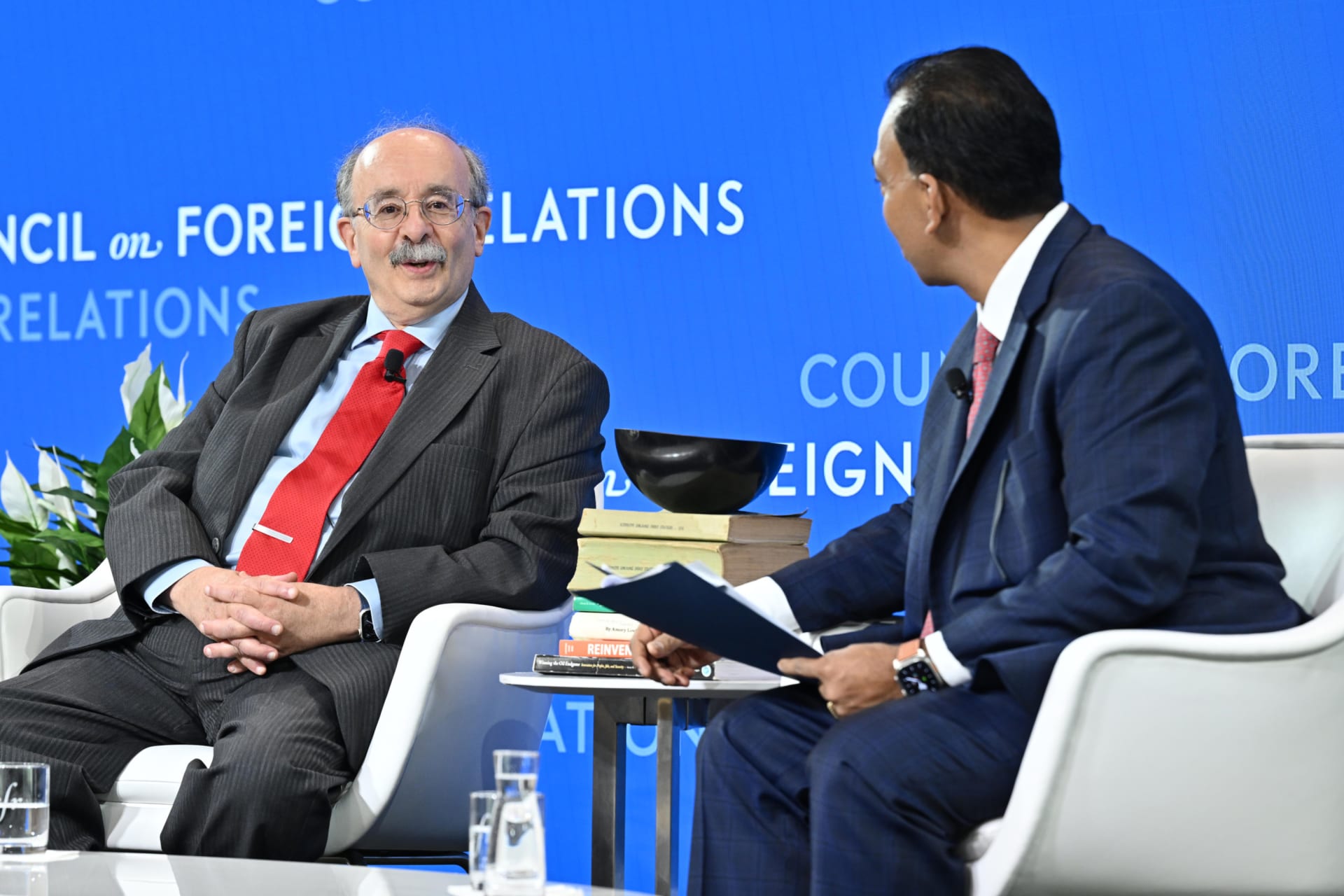
SANGER: Thanks, Valia. This is the most topical CFR immediate program I can imagine. So thank you all for joining.
And we’ve got a terrific panel for you today. Let me briefly introduce the members, all great friends, and tell you a little bit about how the day will go. We’re going to talk for about thirty minutes, and then we’re going to open this to Q&A from all of you. And Valia will give you the directions along the way for that.
We have with us today Heather Conley, who’s the nonresident senior fellow for American Enterprise Institute, and was the former president of the German Marshall Fund of the U.S. And, of course, she is a member of the CFR.
Rebecca Pincus, who was a colleague of mine at the long-lost Wilson Center but is now a senior fellow at the Foreign Policy Research Institute and a senior fellow for transatlantic security at the German Marshall Fund. And when we were all at Wilson, I was there writing a book so I was just a visitor, but she was actually doing work. She was running the great Polar Institute that they had.
And Geoff Pyatt, who is the senior managing director of McLarty. He was assistant secretary of state for energy resources. He was U.S. ambassador to Ukraine, which is where Geoff and I first met, I think. And also, to Greece.
So let me start first just by sort of setting the tone here. The president first started talking about Greenland in the first term. A significant donor of his, Ron Lauder, had suggested that it would be a worthwhile project for the U.S. to get—to get Greenland in hand. But at the time they were discussing it more as a purchase. And at that time we were all fascinated that this would come back up. This had happened at least twice in American history before. Seward tried to buy Greenland during the Johnson administration—the Andrew Johnson administration, after the Alaska purchase. And Harry Truman tried in 1947, or thereabouts, after World War II. Both times they were turned down.
When President Trump was elected for the second time the issue came back up again. He was talking at that moment about Panama. He was talking about Greenland. And, of course, he was urging Canada to become the fifty-first state. And the first week of January of last year, 2025, I remember being down in Mar-a-Lago. I had sort of Trump-watch duty for the Times. And he had a number of reporters into Mar-a-Lago. Quite an experience. And I was the one who asked him, would he use—be willing to use military force to obtain—to get to his objectives here? And it was interesting because he never even let me finish the sentence before he said, well, I could never let out that possibility. And you remember the reaction.
But then he went quiet on Greenland for some time. He had his spats with Canada. Panama made him happier when the Chinese basically, or a Chinese company—or, Hong Kong company gave up control of any of the port facilities. That helped a fair bit on that. But then Greenland came rushing back at the end of the year. And the president has only dug in further and further. I saw him a week ago Wednesday for that lengthy New York Times interview that you may have seen. And I asked him about Greenland. And specifically, I asked him: Why do you feel like you need to own it? Since the 1951 treaty that was signed with the U.S. would give the U.S. the right to reopen any of the fifteen or sixteen bases that we closed over the following years because they were too expensive, we didn’t need them.
But if you read the treaty, which is still in effect, Section Two of the treaty clearly gives the United States, if it just wants to write a check, the chance to reopen air bases, reopen ports, base weapons there, do what fundamentally it wants. And he paused for a moment and looked at me—you’ll see this on the transcript, and you may have heard the audio of it—and said: You know, psychologically, I just think I need to own it. And I realized at that moment, this was kind of the New York real estate developer who, you know, knew the difference between owning and leasing, and what kind of rights that would give you. And he has doubled down on that in the week since our interview. And today threatened tariffs against any country that did not support the U.S. takeover of Greenland. Obviously, Denmark thinks this is the greatest crisis they’ve gone through since the end of World War II. I’m not sure it is, but it certainly has huge implications for the future of NATO.
So we’re going to talk about all of this. And, Heather, I’m going to start with you, because you’ve spent so much time on Arctic security issues, and also NATO issues. So just give us your sort of overview on Arctic security for what you believe is critical and not so critical about Greenland.
CONLEY: David, thanks. It’s great to be with everyone. Yeah, I mean, I begin to say that the Arctic is incredibly important to U.S. national security. And we’ve been slow to, you know, really awaken to that fact. But we’re getting there. And the president, though, and the focus on ownership, acquisition, that’s moving us off into a different direction. There is a reason why our most northerly space base, Pituffik, is on the coast of northwest Greenland, because the Arctic provides this important geographic approach for early warning missile defense. It the Arctic shortens distances, whether that’s missiles, whether that’s submarines, you know, maritime vessels, undersea cables. And as the Arctic transforms environmentally, we’re seeing a lot of additional economic activity. It’s not massive, but it’s certainly increasing.
For Russia, the Arctic is essential to their future, economically as well as militarily. It protects—the Kola Peninsula is where—is their nuclear second strike capability, their nuclear submarine capability. And if you remember your Cold War history, the Greenland-Iceland-United Kingdom gap, that is where we patrol for Russian subs, as they would try to come down that gap and potentially threaten the East Coast, North America. So there is a growing challenge, more maritime, more commercial activity. We need to have greater awareness of what is in the Arctic, for sure. We see increased Russian submarine activity, hybrid activity across the Arctic.
And increasingly, we see Sino-Russian—China-Russian action in the Arctic, air and maritime. That’s much more focused on the North Pacific than in the North Atlantic, for sure, but we certainly see a Chinese scientific presence, undersea cables. They’re doing a lot of acoustical science research. And that’s for deep sea mining, potentially, as well as undersea cables and submarines. So there is a challenge there. We’ve all been slow to it. But the United States is certainly now focused on it. Canada, new security package. The Kingdom of Denmark, significant security package. And now NATO, because of all of this, is certainly finally stepping up to increase exercising presence, domain awareness capabilities.
SANGER: A couple of questions, Heather. Thank you for that overview. So I mentioned that we had at the peak of the Cold War, I think, sixteen bases, something like that? Fifteen, sixteen. I’m not sure they were all open at exactly the same time. As base closing commissions came and all that we closed all but two. And there was a CFR trip this summer out to Greenland. We visited one of them, which is used by the New York Air National Guard mostly to get scientists up onto the polar ice cap. And then, of course, there’s the main one U.S. space base—force base that you saw Vice President Vance go to in the spring. If this is so critical to our security, why did we close so many of the bases?
CONLEY: Well, after the end of the Cold War we really, you know, did not believe the Arctic would be an area again of strategic competition. We viewed it as a zone of peace and collaboration and cooperation. And it was for quite some time. But that began to change as Russia began to militarize, reopened many of its closed bases, and we began to see much greater economic activity. And so but you’re right. And this is—this is the frustrating part about all of this. Our Danish friends have said, what do you want? Do you want to increase your posture? Open. Do you want to increase your economic opportunities? Yes, please.
But that’s not what we’re interested in. In fact, there was, this summer, a very—a small exercise, 500 to 600 forces, called Arctic Light that happened on Greenland. And the U.S. did not participate in it. So we’re sending very mixed messages. Of course we want more Arctic security. We need more cold weather fighting capabilities and training. We let that atrophy very much since the end of the Cold War. But we’re not participating. We’re not gaining that expertise, necessarily, when we refuse to participate in exercises on Greenland.
SANGER: And one last one. It’s about NATO itself. So, obviously, there’s the U.S. presence. Describe the NATO presence, other than the fact that, you know, Denmark has ownership, at least for now, out there. Is it a place of regular NATO exercising? Is it a place that NATO—because when we were there, and we were only there for a couple of days, you didn’t see the NATO, you know, beautiful blue flag flying very far.
CONLEY: Yeah. It really—it’s been really the last few months—I mentioned this exercise, Arctic Light, that happened this summer. There’s now a new exercise, Arctic Endurance, which is where several NATO members are sending, again, more symbolic forces. But the plan will be to do more exercising. But, no, Greenland has not—on land—has not been an area of NATO operations. But, again, we created—or, we reconstituted the Second Fleet to protect those vital sea lanes in the North Atlantic. That’s based in Norfolk, Virginia. That’s also a Joint Forces Command of NATO. Very important. And those were the five Nordic NATO members. That’s where they do command and control via Norfolk.
We understood, because Russian anti-sub—the submarine activity became so significant, we needed additional focus, and that’s, again, sensors, satellites, more P-8s to conduct antisubmarine warfare. And increasingly we’re seeing Russian shadow tankers, like the one that was just captured off of the coast of Iceland, that these tankers also sometimes carry Russian intelligence, GRU, members. They are where they allegedly put drones on and certainly wreak havoc with NATO members. So there’s a whole lot of reason why we need to be very focused on the maritime domain in the Greenland-Iceland-U.K. gap.
SANGER: Great. So, Geoff, one of the other big arguments that the president was making—we’ve had many arguments for why he needs Greenland—has been the critical minerals. But, again, when we were there on the CFR trip, it was all pretty notional, right? Some of the surveys they showed us estimating the minerals that they had went back decades. They didn’t seem to have, you know, at high speed anyway, done much to exploit this stuff. They admitted that even if they did pull out those minerals, they didn’t have the processing capability. They’d probably have to ship it to California, which seemed to add to the expense out here. Is the critical minerals argument a real one?
PYATT: I don’t think so, David. And thanks for bringing it up because this is a set of issues that I did a lot of work on in the previous administration. And the Trump administration has really supercharged the conversation around critical minerals, and especially reducing our dependence on China. That’s a good thing. I would also put a spotlight on something that happened on Wednesday, which is the president issued a proclamation in the Oval Office concluding the 232 investigation that he had directed on critical minerals. And, very importantly, after pretty much a year that was very strongly focused on we’ve got to do this all in the United States, a sort of pure MAGA approach to solving the critical minerals challenge. The proclamation said something very different. It mandated USTR and the secretary of commerce to negotiate agreements and to build partnerships to reduce our dependence on China and make our supply chains more secure.
That, of course, is exactly what the Biden administration committed to. And so it’s really a puzzle to me that even as the administration is acknowledging the interconnected nature of this issue, we’re doubling down on an approach in Greenland that could do enormous damage to those partnerships. In this regard, I should also note I had the opportunity in government to work quite a bit with the Danish energy minister, Lars Aagaard. He was a fantastic partner. Denmark was a great supporter of energy resilience in Ukraine. Denmark led the conversation in Europe about phasing out Russian gas. I remember meeting the minister last February, right after the transition. He came here to Washington. He wanted to talk about importing more U.S. LNG. And he doubled down on all these points in Houston a couple of weeks later. And so I can imagine that the Danes are completely puzzled about how we got to this place.
Also I should note on Greenland in particular, we created in the last administration something called the Mineral Security Partnership, which has lived on under a different name in this administration. We also created the MSP Forum to engage with countries that have the resources. So Ukraine was brought in, in that context. Serbia was brought in, in that context. Argentina. But the territory of Greenland was a participant as well and was very enthusiastic about it. So we were working in the right direction on this. But this is a sector in and industry that takes a long time to get stuff done.
SANGER: Just to—Geoff, that was—that was sort of where I was headed. They clearly didn’t have the capital. They didn’t really have the expertise. I mean, it’s a country of 57,000—or, it’s a territory of 57,000 people. Things did not look like they were happening in a hurry in critical minerals. And it didn’t sound like they were planning to operate in a hurry. They were discussing five- and ten-year, you know, mineral exploration timelines, which is sort of not how you capture Donald Trump’s attention. So I’m wondering, are they lacking urgency on this? Are we expecting something that isn’t there? What’s happening here?
PYATT: I think it’s—essentially, it’s the nature of the industry. And I should point out, David, it’s clear Greenland has some good geology. But geologically Greenland, Canada, Alaska, it’s all part of the same ancient territory. And we have fantastic—we have our own Greenland, in Alaska. I spent a lot of time with Senator Sullivan, with Governor Dunleavy talking about the opportunities there. I think I’m the only State Department assistant secretary who traveled to Anchorage, Alaska, because it’s such a fantastic opportunity for us to work with partners. Ditto on Canada, a country with one of the world’s greatest mining industries. So that’s where we’re going to move the needle anytime that you or I are working on these issues, because it’s simply the nature of this industry that it takes typically a decade to get to first production.
And I think the risk is—and I want to, again, applaud the Trump administration for focusing on these issues. I would also note that just this week, on Tuesday, both the HFAC, Republicans and Democrats, Chair Young Kim, Representative Bera introduced a bill to mandate the State Department to do more work on these kinds of agreements. That’s the right way to go. And, frankly, I think if you take a wrecking ball to the transatlantic relationship with some of these more aggressive approaches on Greenland, you will destroy the atmosphere to make progress. And because the European economy is so large they are an absolutely essential partner for us in reducing dependence on China. And during the last administration we made huge progress.
Now I remember starting the conversation with the Europeans soon after the Inflation Reduction Act was passed. And what you got from them on critical minerals was, it’s so cheap in China we can’t afford not to continue to source materials from China. By the end of last year, the message from the Europeans was, we can’t afford to repeat with China the mistake that we made with Russia of becoming dependent and allowing them to weaponize their resources. And we will destroy the climate to make progress on that if we don’t accept the importance of having a collaborative approach to solving these issues.
And maybe last point on this. This is an industry where you depend on private companies. The president’s meeting with oil companies last Friday, and the message from Darren Woods in particular, was a reminder that the market is going to decide what is a—what is a bankable project. You mentioned the challenges that Greenland presents. I would flag two others, of infrastructure. This is a territory with less than a hundred miles of roadway in the entire territory. The largest port in Greenland, in Nuuk, I checked the numbers, in 2021 handled two million tons of cargo. The largest Australian port handling the iron ore out of Port Hedland handled 660 million tons a year. So that gives you a sense of the magnitude of investment that would be required. And I think industry is unlikely to—is unlikely to proceed any more quickly whether there’s an American flag, or a Greenland flag, or anybody else over the territory.
SANGER: Interesting that you mentioned that geologically Alaska, Canada, Greenland are all unified. Politically that’s basically what Trump’s trying to recreate, right? I mean, he is—if you think about this, the whole fifty-first state, that he’s—I’m not sure that he’s doing this from a geologic knowledge base, but certainly that seems to be where his head is.
Let me turn to you, Becca, and ask you a little bit about the other argument that we have just seen emerge from the president. Which is, we need this for Iron Dome, the missile defense system that he thinks is going to get built very rapidly. I think it’s technologically a real stretch. Do we really need it for Iron Dome? Do we need it more than we need Canada for Iron Dome?
PINCUS: Yeah, thank you. And, you know, I think it was interesting seeing that argument emerge. And I appreciate you sort of reviewing the history of President Trump’s interest in Greenland because, you know, Golden Dome is a signature priority for this administration. They’re certainly putting a lot of money into it. It’s colossally expensive. I think there are some really significant technical hurdles with regards to the architecture. But he did mention Greenland as being required for Golden Dome just recently. And that was—you know, my ear is kind of pricked up there because there is this national security argument. Greenland and the Pituffik Space Base, which formerly was known as Thule Air Base until 2020, is part of the NORAD homeland defense architecture. It’s part of our early warning system, our missile defense system. And the radars across Alaska, Canada, and Greenland give us, you know, early warning of incoming ICBMs from across Eurasia.
And that is certainly a current, you know, national security priority. We need to upgrade our missile defense architecture. That’s been recognized on a bipartisan basis for a long time. There’s been significant talk about modernizing NORAD. And Greenland is certainly part of that. Golden Dome is—if successful, would be a massive step forward. And you can kind of break this down a little bit. We have early warning radar systems in Alaska, Canada, and Greenland. We have missile interceptor systems in Alaska. We don’t have interceptors in Canada and Greenland. And you could make an argument that we should have interceptors in Canada and Greenland. I don’t know that that argument would be sort of widely persuasive. Again, we have interceptors up in Alaska.
If you think about sort of the Golden Dome system, the idea is that new and novel missiles and missile delivery systems could increasingly take alternative, very challenging, routes to reach the United States, going over the southern pole, for example. You know, some of the new technology—
SANGER: You’re talking about hypersonics, would go in reverse.
PINCUS: Yeah, exactly.
SANGER: That’s right. And much of the interceptor work from a few early designs we’ve heard about Golden Dome would actually be based in space, not based on land.
PINCUS: Yeah. Yeah, absolutely. You know, increasingly this architecture is conceptualized as being moved up into space. You know, obviously that raises a whole other bucket of questions. But, you know, I think it does kind of call into question our need to put interceptors in Greenland. You mentioned at the top that we have a very robust bilateral defense agreement that would, in theory, permit the installation of missile interceptors in Greenland. You know, I think that would obviously be diplomatically very, very challenging. We have not had interceptors in Canada or Greenland because of the sort of sensitivities around that.
You know, I think there’s an argument to be made that the U.S. should have more missile interceptors and that, you know, we only want them on U.S. territory, and that’s why we need Greenland. But then, you know, the implications of that for Canada, I think, are pretty alarming. And that is a—that is a pretty extreme argument to make. And I haven’t heard it articulated clearly. You know, the president’s sort of mention of Golden Dome kind of bring some of these issues to the fore. But I haven’t yet seen sort of a persuasive case.
SANGER: Well, that’s because you haven’t seen an architecture.
PINCUS: (Laughs.)
SANGER: OK. And are there other—apart from Golden Dome, and apart from what Heather was describing as our overall interest, do we have other technologies that can only be based—or, would require Greenland? And is there anything that we couldn’t do through the existing treaty that I mentioned at the beginning?
PINCUS: I have been asking former colleagues in the Pentagon, and sort of anyone I can get a hold of from the U.S. military, sort of, what is the specific need, right? What are we trying to get in Greenland that we—that we don’t have access to right now? Because that defense agreement is incredibly broad. You know, as you said, if you look at the language of it—
SANGER: You could—you could drive a truck and a battleship through it.
PINCUS: Mmm hmm. Incredibly broad. It’s really unique, honestly. And so, you know, what would we need? And I think it’s hard to know. You know, Heather mentioned the ISR—the intelligence, surveillance, reconnaissance—capabilities that we need to have in the North Atlantic. Obviously, the antisubmarine warfare piece is important. But we are currently running maritime patrol aircraft and P-8s out of Iceland. You know, doing that out of Greenland would be really expensive. And so it’s not—
SANGER: But we have the right to do—we could reopen the—if we wanted to spend the money, we could do it tomorrow.
PINCUS: Yeah. I think, you know, it’ll be interesting to see if this conversation, the working group, brings up the Grondal Base in southern Greenland. I think that’s something, if I was Denmark and Greenland, I would be sort of trying to steer in that direction because it’s an existing base. You know, it’s sort of on the opposite side of the island from Pituffik. And, you know, certainly there’s more maritime activity in the North Atlantic so you could imagine—I mean, I haven’t heard the U.S. Navy saying, you know, we want to—we want to have a base in—a port in Greenland. The Navy does not have ice-hardened ships. That’s been a real issue of sensitivity for the Navy. They clearly don’t have interest in it.
The U.S. Coast Guard is certainly recapitalizing the icebreaker fleet. And they’ve talked about stationing some of those future icebreakers on the East Coast of the United States. So you could imagine pulling those into Greenland would be useful. But does the U.S. want a port there? I mean, the costs would just be astronomical, as you have pointed out. So, you know, I haven’t really seen kind of a clear articulation of need. And I do think that what we’ve heard from the Danish and Greenlandic side is that they would welcome that articulation.
SANGER: Mmm hmm. OK.
CONLEY: Well, and, David, this is the crazy part. We need a deepwater port in Nome, Alaska first, which has been delayed. So, you know, again, we need to really make sure that Alaska is able to detect increasing Chinese research vessels, Sino-Russian military exercises. So, again, this is—where’s the budget for this increased posture? I guess the budget’s being more focused on, you know, acquisition. But this is where our own cold weather capabilities are not where they need to be. So we need to do our homework too.
SANGER: So, Heather, just a quick one on this, and Geoff jump in on it as well. The Chinese and Russian activity the president has been discussing is mostly in the Bering Sea, if I’ve got it right. But tell me if I’m wrong. And therefore—yeah—and therefore not really relevant to the Greenland discussion.
CONLEY: So I don’t know whether the president’s sort of trapped in what happened in 2018-2019, where we did see China attempt to invest in Greenland infrastructure, three airports. This is—it was, again, more tourism related. And what happened? The right thing. We got involved. Copenhagen got involved. And then China did not continue its investment. And so you don’t see as much, you know, Chinese physical presence. Most of the mining licenses—again, Geoff, correct me if I’m wrong—they are British, they are Australian, they are Canadian, they are not American. Again, we’d love to see American investors in Greenland potentially. They are not there. But the Chinese really aren’t there.
The one thing that I am seeing that is of concern to me—Becca. I don’t know if this is something that you’re tracking—China’s research vessels and their increased icebreaker fleet, which is growing now substantially. They have manned submersible elements that are doing a lot of seabed floor science. It’s acoustical. It’s also for future deep sea mining. And they’ve been particularly focused on the Gakkel Ridge, which is a potential for an extended continental shelf. It’s a disagreement area between the Kingdom of Denmark and Canada.
Russia had said that it thought it was within its extended continental shelf. The U.N. commission designated to approve scientific claims has said, nope, not quite. You don’t have enough material. I worry that China is exploiting that governance seam a little bit there. But that’s really around Greenland—I think is the most—for me, the most concerning Chinese activity. You’re absolutely right. We are seeing Sino-Russian maritime air exercises for the first time, I think, two years ago, strategic bombers. That’s Alaska. We’re seeing the North Pacific, what I call the third island chain, activity. That’s, I think, where we’re seeing China express itself the most.
SANGER: And, Geoff, one for you before we go to questions. What struck me when I was in Greenland was if ever there was a place to build data centers, this was it. We’ve got melting polar ice cap. The rivers were running, it was summertime when we were there, so heavily from that melt that I didn’t even bother to go fishing because it was—the water was churning too much. Heather’s smiling because she knows it takes a lot to kill me off from fishing. And, obviously, you want to—you want to build those, if you can, on permafrost, for all the obvious keeping things cool reasons. There didn’t seem to be a lot of activity. Nor did there seem to be the fiber optic, you know, undersea cable that would allow them to do rapid communications. Am I right there, or?
PYATT: Exactly, David. And it’s the flipside of the answer to the question, why are companies building data centers in Louisiana? It’s because the binding constraint on data centers today is power. And so you go where the power is. So developers are building in Louisiana because there’s a gas resource there. And both for mining and for data centers, one of the other hurdles that Greenland would face is that it’s very, very expensive to generate power that far in the high north. Same applies, to a significant degree, in Alaska.
And, again, I want to come back to this point, because I think if you’re—if you want to develop Arctic critical mineral resources, the place to start is here in Alaska working with the Canadians. And, oh, by the way, most of the mining companies active in Alaska today are Canadian ones, like Vale and Graphite One. And I think we—and I think, you know, we should continue to look at commercial opportunities in Greenland. And we should be very confident that both the Danes and the Greenlanders have clearly associated themselves with the U.S. effort to derisk from China. As Heather said, they’re not interested in being a Chinese cat’s paw on any of these issues. But we risk spoiling all of that with essentially what looks like a hostile takeover from a commercial standpoint.
SANGER: Very good. Becca, did you have a last word you wanted to get in before we open this up, or do you want to take the first question?
PINCUS: I think just one last issue to sort of throw on the table is the fact that the U.S. and Greenland were just connected by direct flights last year. And—
SANGER: This is the United flight into Nuuk. And there’s a—is there another one as well?
PINCUS: I think it’s just the one out of Newark. But they’re planning—
SANGER: And it’s not—and it’s not every day, yeah. Mmm hmm.
PINCUS: Yeah. Yeah, yeah. But, I mean, it’s sort of ironic, I think, that the U.S. and Greenland are closer together—closer connected than ever before, and now we’re sort of at this place of tension that we’ve never had before at this level. But also, you know, Greenland is poised for a tourism boom. And it’s really, I think, illustrative to sort of look at Iceland’s trajectory as it sort of became, you know, the country it is today. In many ways there’s a lot that, I think, Greenland is learning from studying that example. You know, Iceland modernized sort of during the Cold War, and was able to sort of leverage its geography in interesting ways that I think Greenland has studied pretty carefully. So I do think that’s a case study that we can all learn from.
PYATT: And, David—
SANGER: Also it is quite a cultural shift to get on in Newark and get off in Nuuk, let me tell you. (Laughter.)
PYATT: Can I put a question on the table?
SANGER: You don’t have to take it as the first one. But I think one thing—it would be wonderful to use the next half hour to try to drill down on the question of what’s the middle ground that might satisfy President Trump at this point? And I say that because you mentioned Ron Lauder. And I met—I engaged with Ron during the Biden administration. I worked very closely with the company that he’s working with in Ukraine on what became the Ukraine Reconstruction Investment Agreement. And I give enormous credit to Secretary Bessent for what started out in a pretty awful place as the Trump administration demand to Ukraine and landed in a very good place.
And so I guess one question in the back of my mind is, is there a scenario that addresses the same kind of rescoping of the White House demand in a way that meets the realities of the marketplace? And I should point out, on Ron Lauder and on Ukraine, you know, the proposal that he was making there on the Dobra lithium deposit, as the Times has reported, just landed the right way up. So the Ukrainians have now issued their first production sharing agreement in the mining space to the company that Ron Lauder is working with, under the framework that Secretary Bessent helped to land.
SANGER: That’s really interesting. I mean, the question here for all of us White House reporters on the call—that would be me—is, is there a middle ground—certainly, there’s a middle ground that his aides have been discussing, Secretary Bessent, Secretary Rubio. But if the president says, psychologically I need to own it, it’s a little hard to get around that one, you know?
All right. So what do we need to do here to get our questions in, Valia?
OPERATOR: (Gives queuing instructions.)
We will take our first question from Gideon Rose.
SANGER: Gideon, I think your mic ought to be open and—
Q: It should be on now. Can you hear me?
SANGER: Good. And if anybody has not read Gideon’s new essay on the collapse of the global nuclear structure, as soon as this event is over go out and read it. It’s terrific.
Q: Thank you very much, David.
If Trump, for whatever reasons, chooses to continue down the path of coercion on this issue, would the executive branch just simply do what he says? And at what point would there be any internal dissent within the administration sufficient to change course, if Trump said, no, I actually want it because I want to enlarge the map and have my name be on this property. At what point would there be any internal USG pressure sufficient to stop it? Or can he do whatever he wants eventually?
SANGER: Geoff, as our most senior former diplomat on the on the panel, what do you think?
PYATT: The voice of Congress is really important in this regard. And the fact that you have bipartisan delegations traveling to Denmark these days is probably helpful. But I think it’s also caught up with the larger dynamic of the deference to the White House, and the extraordinary capacity that President Trump has to force the rest of the agenda. I have no doubt where most of the State Department—I have no doubt where most of the State Department lands on these issues. It does concern me a little bit that there’s a narrative among some of my Republican friends that started to take hold that, well, maybe this is a great idea. That it’s a great geopolitical play, you know, on par with the Louisiana Purchase or the Purchase of Alaska.
And I would be open to that conversation if the Greenlanders or Denmark were interested in conducting that transaction. But that’s not where we are at this point. And so I think—I come back to my question. I think having made the commercial offer, having received a very clear response from Greenland and from the sovereign, I think the task now is to figure out is there some alternative association, enhanced access, on top of the significant scope we already enjoy, that would address the president’s concerns, short of having an American flag over Nuuk?
SANGER: Rebecca, is it your sense that in DOD if they are—I can’t imagine it quite coming to this—but the natural question has come up. If they are ordered to take Greenland, I didn’t notice any defenses there. It wouldn’t take terribly long. Would DOD do it?
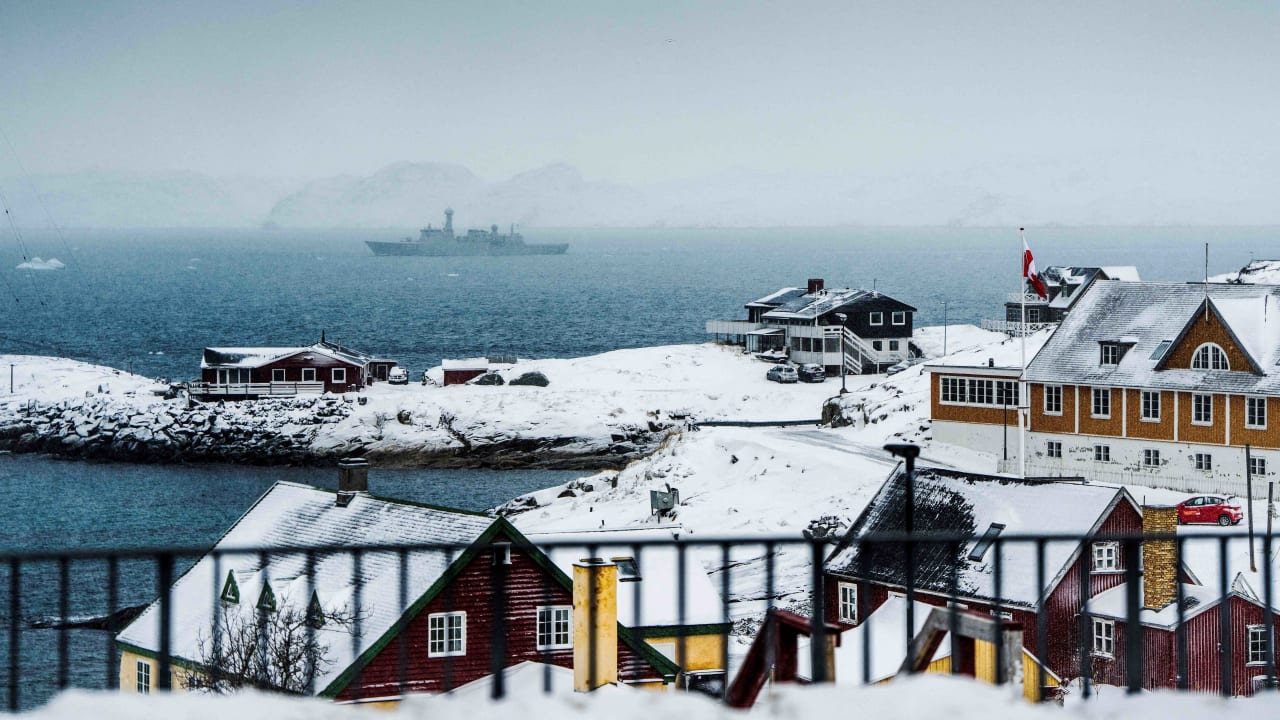
PINCUS: Yeah. Really interesting question. So we are not seeing any of the groundwork being laid. No one is articulating sort of a legal argument for this which would justify military orders. And, you know, obviously Denmark is a founding member of NATO. Greenland is covered by the NATO Alliance. We don’t have U.S. forces in position, right? Most U.S. forces are in the Caribbean and in the Pacific. And, you know, right now it’s January. It is not that easy to get into Greenland. So while it is relatively lightly guarded right now, I will say that Denmark’s got a couple of warships near Nuuk. The Nuuk harbor has ice in it. You know, we don’t have a Navy ship that can pull in there, quite frankly. We’d have to bring in an icebreaker. We don’t have an icebreaker available. You could do standoff operations and fly in. Flying into Greenland, as you probably know, can be pretty dicey. So the weather would be a really interesting complicating factor.
And while there are not a lot of troops there, European countries are sending in contingents. And they’re fairly small numbers. You know, the British are sending in one person. But Germany’s sending in, I think, thirteen. France is sending in, I think, a team of fifteen. And at this point, I think the coalition is about six or seven. We’ve got Estonia, the Netherlands—
SANGER: And what’s this all about? Defending against another NATO member? Or are they saying that they’re out there to inspect the Chinese and Russian threat?
PINCUS: So, you know, Heather mentioned there’s a snap NATO exercise called Arctic Endurance, which was not announced prior to a couple of days ago and has no official start or end date. But it’s been sort of—clearly sort of cobbled together to bring European forces in to, you know, complicate the stakes. This would involve NATO troops firing on each other. And I don’t think—it’s hard to imagine there is any appetite for that. You know, I think we’re seeing a lot of effort, including the Republican senators in Congress trying to kind of steer this away. Clearly, across Europe. We haven’t really heard Secretary Hegseth say much about this. You know, so I think everyone’s trying to get this into a diplomatic track. And we saw the meeting that took place in Washington, you know, on Wednesday. The outcome was a working group.
So everyone, I think, sort of breathes a sigh of relief there. Now, interpretations of the function of that working group vary, right? We saw Karoline Leavitt say that it’s about working out technical details. And the Danes and Greenlanders say, no, no, you know, we don’t have an agreement. But I think, you know, the longer this goes the closer the midterms get. So I think, you know, we’re just going to see efforts to kind of slow roll this until time—you know, until it’s overtaken by events.
SANGER: Great. Valia, you want to see if there’s another question out here?
OPERATOR: We will take our next question from Sherri Goodman.
SANGER: Hey, Sherri. Welcome.
Q: Hi, all. Good to hear you all. Thank you for sharing your wisdom. Sherri Goodman, formerly of the Wilson Center Polar Institute, and others, and now with the Atlantic Council and the Harvard Arctic Initiative.
So, you know, we never thought we’d be in this place, but those of us who have been involved in Arctic security for a long time also know that we have needed to up our game across the Arctic for quite a long time. And so is there an opportunity through this working group and the opening of some diplomatic channels to make some lemonade out of the current lemons, using the predicted plus-up in the defense budget, much of which for Golden Dome, and create out of that, or other funds, some kind of Arctic security initiative that goes to addressing shortfalls in ISR, or other maritime patrol capabilities, in conjunction, and work out what those requirements are?
And then also some economic development initiative that would address—I think there are some Trump-aligned affiliates interested in the mining opportunities in Greenland, as difficult as they may be, Geoffrey. But pursuing some opportunities there, plus the economic development that comes with, you know, the move towards increased tourism. I, too, was in Greenland, you know, recently, and can see that they are on the verge of a big change, both from the changing climate but the openings through the new network of access on the flights and their desire for their own driven economic development.
SANGER: So, Heather, can you address Sherri’s good points? But it seems that Sherri is doing—and, Sherri, don’t let me put words in your mouth here so jump in, but everybody’s still asking, like, versions of the same question, which is can we do something that looks like a good cooperative action that President Trump can claim as a victory here, and get him off of the thought that he actually has to own it? Sherri, is that—is that too blunt a way—
Q: That’s largely where I’m going. Could you actually use the idea of a working group to create something that’s beneficial, both from security, economic development, that would be useful to the Greenlanders, but protect their—you know, recognizing their sovereignty. Short of ownership, but that goes to address both national security and economic opportunities?
SANGER: Heather.
CONLEY: So I’m a little pessimistic. And I’m going to tie Gideon’s question of, like, the how. Because I think we’ve actually begun to see the administration take steps. That’s the how. So I believe we can have confidence that there have already been covert actions within the Greenlandic community to try to stir a desire for an independence referendum. The Danish government, in fact, called those actions out. So maybe not quite as covert as they should. The president just said today that he will tariff now those European governments that will get in the way of his plans. That’s the next step. That’s economics.
And the economics of this, this is where it’s the European Union, of course. And we’ll have to see if the economics of this play out. And then if that doesn’t work, then sort of you get to the next step which is the military dimension of it. And for all the reasons that Becca noted, our own, you know, lack of military capabilities for the Arctic, it makes it so un-logical. And just the fact that we’re having this conversation, of NATO forces are now on Greenland to obviously increase Arctic security, to meet the president’s concerns, but it’s also about limiting the president’s options militarily.
I actually think this may be a place where this will be a stand that the Europeans are going to have to take on Greenland. And they have been taking it. They have been the most clear about Greenland than I’ve heard them even on Ukraine. You know, constantly negotiating around this. And, you’re right, Sherri. I mean, I held high hopes on Wednesday. I’m, like, great, let’s get this into a constructive channel where we can get to—exactly to Geoff’s point—why haven’t we put a similar critical minerals agreement in front of Greenland and Denmark to get some things moving? We had the whole year to do that.
Because that’s not what they’re interested in. And this is what I fear. I fear this president wants to be the historic leader to enlarge the United States. And nothing will stop him, unless he is stopped. And that—I think we’re just going to keep climbing this ladder. I hope I’m wrong. I hope the dialogue presents opportunities. But if we can’t even agree on what this dialogue is, it’s a technical talk to lead to acquisition versus a high-level dialogue to get to win-win outcomes, that’s where I don’t know where we go from here. Sorry, David. Over to you.
SANGER: I was about to say, I’m with you, Heather. When we were doing the interview, after it was over, we were admiring some of the presidential portraits that the president’s put up in the Oval Office.
CONLEY: Like Mr. Polk, David. Like Mr. Polk?
SANGER: We dwelled on Polk, as you may have seen from some of this reporting. And I think it’s very much in his mind. And I have every confidence that if you put this in the hands of the Treasury, the State—particularly the State Department, people would work out working groups and, you know, win-win, whatever. I don’t think that’s where the president’s head is, based on my conversation with him. But I could be wrong.
Valia, who do you have next?
OPERATOR: We will take the next question from Lindsay Iversen. We will take our next question from Benjamin L. Schmitt.
Q: Hello. Can you hear me?
SANGER: Yeah. We’ve got you, Ben.
Q: OK, great. Thanks so much. Great discussion. I wish the deep dive that Heather, Rebecca, and Geoff are going into on defense and Iron Dome and—or, Golden Dome and critical minerals was really what’s behind this, but I fear it’s not. I worked with Geoff at the State Department in the past, and also in my astronomy career have looked at science infrastructure that we’ve desperately needed in the Arctic space, and have been unable to get more funding for science infrastructure in the Arctic, right? The Greenland Summit Station, I believe, was the last major station—research station the U.S. has built in the Arctic, in any location in the Arctic. And that was, I believe, 1989. And, you know, we just can’t get more astronomy infrastructure up there. A lot of—a lot of problems. So, again, it’s a lot of discussion about what we could have been doing, and we certainly haven’t been doing, both during the first Trump administration and in other administrations.
I want to actually ask David a question. Something that’s been bothering me from just a raw political sense. In addition to the possibility that President Trump simply wants to get his name in the history book for expanding the U.S., is there any partisan thoughts creeping in saying, well, you know, you have Alaska, and that’s a generally Republican, you know, leaning state. If only Greenland were here, that would flip the map further electorally? And I know it’s so crazy to ask such a question, but I think that’s where we’re at. And so I don’t know, David, or anyone else wants to answer that. But is that what you hear right now?
SANGER: You know, it’s an interesting question because if Canada joined as the fifty-first state, it’s a little bit too—a little bit difficult to imagine that it would go Republican or go MAGA, right? So that part has confused me. Greenland, with a mere 57,000 people, might not add up to much. And we don’t even know—he has—he has said he wants to be part of the United States, but he’s not said in what form. So we don’t even know if they would have voting rights.
CONLEY: Well, this is where they’ve talked about the Compact of Free Association, and sort of treating it like the Marshall Islands, Micronesia, Palau. Of course, that would be under the Interior Department. So you’re right, David. I think they’ve been pulsing a variety of ways to think about it.
SANGER: Anybody else on that one?
PINCUS: You know, I think it’s probably safe to assume that a Greenland voting polity would be in the Democratic column in the United States. And I think it’s important to note that Greenlanders currently, you know, enjoy the sort of Nordic social safety net that Denmark also has in terms of free health care, free education. The Danish government spends about $10(,000) or $12,000 per capita annually in Greenland. And so in addition to a significant annual grant, that’s about 5(00 million dollars) or $600 million a year. So I think, you know, there’s a fair amount of Danish support to Greenland right now. And it’s hard to imagine that the U.S. could put together a deal that would tempt Greenlanders away from that.
I think it’s also important to note that Greenlanders only gained control over their natural resources in 2009, so about fifteen years ago. And that was after a pretty long-fought battle with the Danish government. And so it’s equally hard to imagine a deal in which Greenlanders would never give up their authority to control their natural resources, including their minerals. Which is another reason I’m a little bit pessimistic also that any sort of deal can be worked out. I know there’s people in the State Department who are sort of trying to find a price point, but it’s just—there’s a lot of room for skepticism there.
SANGER: I think that’s right. I think we may have time for just one or two more, Valia.
OPERATOR: We will take our next question from Jay Parker.
Q: Yes. Hi. Jay Parker. School of Foreign Service at Georgetown.
To take this to its most dark and extreme possibility, is this at least not in part an effort, if not by the president then certainly by some in his inner circle, to force a crisis with NATO that leaves NATO very significantly weak, and possibly even provides an avenue for withdrawing U.S. membership from NATO and ending our obligations to that alliance?
SANGER: Let’s see, Geoff, you want to take that? And then, Heather, you want to go on with it?
PYATT: Let me leave it to Heather, because it’s in her lane.
SANGER: OK.
CONLEY: Thanks, Geoff. (Laughs.) Jay, I hate that we’re really dark on a Friday afternoon, that’s for sure. So the president has, in fact—and, right, David, this was during the New York Times interview, so you and I can both answer this, I guess. You were in the room. That, I guess, questioned, saying, well, do you have to make a choice between NATO or Greenland? I mean, and the president said, well, you know, I may have to. And then he sort of went, well, you know, I saved NATO. I was—you know, in some ways NATO, I think, in the president’s mind, is his great foreign policy success. And European leaders, they get along so well.
But he really wants Greenland. And he seemed to struggle with that. And as—you know, this is where you sort of get to this passion. You don’t need to choose. You have everything that you want. You need to help the Kingdom of Denmark and Greenland understand what security enhancements you want, what economic enhancements—you don’t need to own it. You can strengthen American security and Arctic security. You can get win-win outcomes. But if you keep going down this acquisition lane you’re going to have to encounter stronger and stronger resistance.
So I’m going to end on a more positive note on this. This is where we’re seeing, as Geoff mentioned, the CODEL that’s been in Copenhagen and Nuuk, the immediate legislation, which, again, in my professional lifetime I never thought we would have to see legislation to prevent the United States from annexing, invading, you know, using funds to try to occupy Greenland. You see the unpopularity of this in opinion polls across the United States. This is not what anybody wants to do. And I think you saw that NATO members, even if it’s one person, it’s a small contingent rotating, they’re saying, no. This is not something that you can take.
Now, I don’t know how long they can resist what could be enormous pressure, but this starts to feel like, to me, that, no, this is a line that we’re not going to be able to cross. And hopefully the president can be given some good outcomes that he can get the win-win and leave this. But if he can’t, I think he’s going to continue to, rightly, encounter a lot of pushback—painful pushback. And his plate is very full, right, David, with Venezuela, with Iran. Adding Greenland to this—Ukraine. We’ve got negotiations going on in Mar-a-Lago this weekend. I mean, this is a lot for a foreign policy president—even for a foreign policy president. So I think this is not the road—he’s going to be shown this is not the road to take, but it’s going to be painful.
SANGER: Very good. Valia, do you have one more quick one, or are we running out of time?
OPERATOR: At this time, we’re running out of time.
SANGER: OK. So I want to thank all three of our panelists. Since we have about a minute left, I just wanted to see if Becca or Geoff had any last thought here that they have not conveyed already. If so, please let us know.
PYATT: So, David, I would just emphasize, you know, back to my first point. It’s a good thing that the Trump administration has focused as strongly as it has on the critical minerals equation. Greenland can be part of the solution to that, but through exactly the kind of partnerships that the president’s proclamation on Wednesday talked about. And conversely, I just see an enormous downside risk if we go down the road that some of this conversation has suggested, because it really would involve a fundamental rupture with Europe. Which, for all of its debilities, remains our most important, largest market outside of North America and is going to have a critical role in tackling a lot of the issues that Heather talked about when she went through the catalog of national security challenges we confront.
SANGER: And, Becca, is it your instinct that the administration finds an off ramp here, or doesn’t want one?
PINCUS: You know, I think—Heather already mentioned this. U.S. opinion polling is pretty clear. This is not a vote-getting issue for the president. The more time goes by, the closer the midterms come. We can tell that he and his party are very concerned. So the pressure is going to grow internally to focus on domestic issues. And there isn’t a sort of constituency pushing this forward. You know, when we think about Venezuela, Iran, Cuba, there’s sort of big constituencies in the United States that are—that are sort of trying to advance that issue. The Greenland contingency is—it’s very—it’s a handful of people in the administration, right? So there’s not a lot of gas in the tank. And I think the longer this plays out the more likelihood that it just sort of runs out of steam, and the president’s attention is pulled elsewhere.
SANGER: Well, I want to thank all three of you. I want to thank everybody who participated. This was put together hastily, but then again so was the whole policy here. (Laughter.) So it’s wonderful to have everybody on. I wish you all a good and quiet weekend.
(END)
This is an uncorrected transcript.